.webp)
.webp)
Discovering Family-Friendly Kuwait
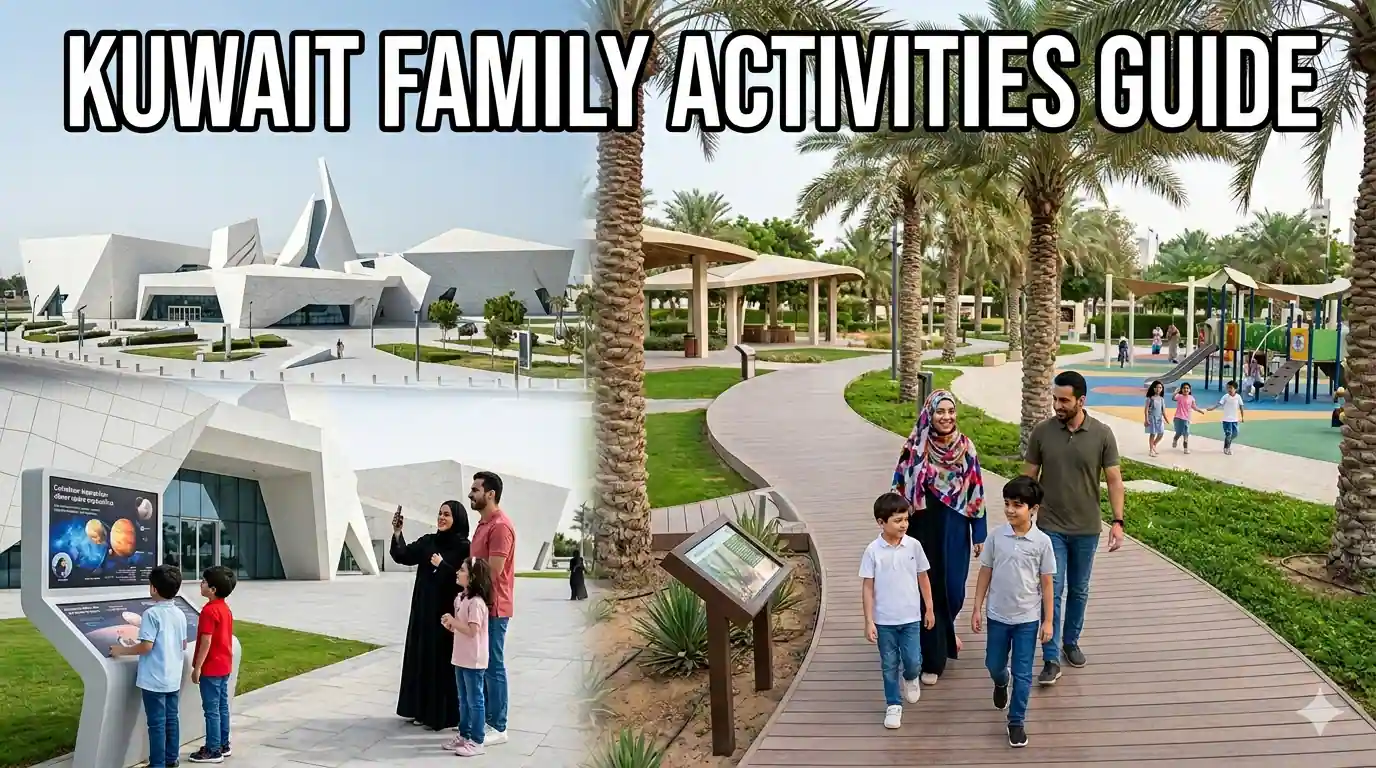
Kuwait has emerged as an exceptional family destination offering world-class attractions that combine education, entertainment, and cultural enrichment. Al Shaheed Park and Sheikh Abdullah Al Salem Cultural Centre stand as the crown jewels of family tourism in Kuwait City.
These two remarkable destinations provide diverse experiences suitable for children of all ages, from toddlers to teenagers. Parents will appreciate the thoughtful design, educational value, and comprehensive facilities that make family outings enjoyable and stress-free.
Al Shaheed Park represents one of the largest urban parks in the region, featuring lush green spaces, modern architecture, and interactive installations. The park seamlessly blends nature with culture, creating an environment where families can relax, learn, and play together.
The Sheikh Abdullah Al Salem Cultural Centre houses four world-class museums under one roof, offering immersive exhibits on natural history, science, space, and Islamic art. The centre's interactive approach makes learning engaging and fun for young visitors.
Together, these attractions provide full days of family entertainment while exposing children to Kuwait's heritage, scientific discovery, and environmental awareness. This comprehensive guide explores everything families need to know for memorable visits.
Al Shaheed Park Overview and History

Al Shaheed Park opened in twenty fifteen as a memorial to Kuwaiti martyrs and has since evolved into the country's premier urban green space and cultural destination.
The park spans seventy-two hectares in the heart of Kuwait City, transforming what was once barren land into a verdant oasis. This ambitious project demonstrates Kuwait's commitment to creating sustainable public spaces for residents and visitors.
Named to honor those who sacrificed for Kuwait's freedom, the park balances commemoration with celebration of life. Memorial elements coexist harmoniously with recreational facilities, creating a space that educates while it entertains.
The park's design incorporates sustainable practices including water conservation, native plant species, and energy-efficient systems. These features provide valuable environmental education opportunities for children while demonstrating ecological responsibility.
Multiple zones within the park cater to different interests and age groups. Families can explore museums, enjoy outdoor activities, attend cultural events, or simply relax in beautifully landscaped gardens.
Al Shaheed Park Attractions for Children

Al Shaheed Park offers numerous attractions specifically designed to engage and delight young visitors while providing educational value.
Tareq Rajab Museum
The Tareq Rajab Museum within Al Shaheed Park showcases Islamic art and calligraphy in a format accessible to children. Interactive displays help young visitors understand Arabic script and Islamic artistic traditions.
Children can participate in calligraphy workshops where they learn to write their names in Arabic. These hands-on activities make cultural education engaging and memorable.
The museum's colorful exhibits featuring ceramics, textiles, and metalwork capture children's imaginations. Visual storytelling helps explain the historical and cultural significance of displayed artifacts.
Family-friendly guided tours adapt content to different age groups, ensuring children remain engaged. Knowledgeable guides use age-appropriate language and interactive techniques to maintain interest.
Outdoor Play Areas
Modern playgrounds equipped with safe, age-appropriate equipment provide active recreation opportunities. Separate areas for different age groups ensure toddlers and older children both find suitable play structures.
Shaded play areas protect children from sun exposure while allowing parents to supervise comfortably. Seating areas positioned near playgrounds enable parents to relax while watching their children play.
Water features and splash pads offer cooling fun during warmer months. These interactive water elements provide sensory play experiences that children love.
Natural play areas incorporate elements like logs, boulders, and sand, encouraging creative, unstructured play. These spaces help children connect with nature and develop physical skills.
Green Spaces and Gardens
Expansive lawns provide space for family picnics, ball games, and casual recreation. Families can bring blankets and enjoy outdoor meals in the pleasant Kuwaiti climate during cooler months.
Botanical gardens featuring native and adaptive plant species offer educational opportunities. Interpretive signs help children learn about desert ecology and plant adaptation.
Walking and cycling paths wind through the park, allowing families to explore together. Bike rentals enable children to experience the park on two wheels safely.
Sensory gardens engage children through touch, smell, and sight. These specially designed spaces help young children develop their senses while enjoying nature.
Cultural and Educational Programs
Regular workshops and events cater to children's interests and educational needs. Programs cover topics from art and music to science and environmental awareness.
Seasonal festivals and celebrations provide special family entertainment. These events often feature performances, activities, and food that appeal to children.
Educational tours teach children about Kuwait's history, environment, and culture. School groups and families can book guided experiences tailored to specific learning objectives.
Art installations throughout the park spark creativity and conversation. Children enjoy discovering sculptures and interactive art pieces as they explore.
Al Shaheed Park Practical Information for Families

Planning your visit to Al Shaheed Park requires understanding practical details that affect the family experience.
Opening Hours and Admission
Al Shaheed Park operates daily with extended hours during weekends and holidays. Typical opening times range from eight in the morning until ten at night, though hours vary seasonally.
Admission fees are reasonable with discounts for children and families. Some areas and museums within the park require separate tickets, while general park access may be free or low-cost.
Annual membership options provide value for families planning multiple visits. Memberships often include perks like free parking, event discounts, and priority booking for programs.
Special events may have separate pricing and require advance booking. Check the park's calendar before visiting to plan around special programs or temporary closures.
Facilities and Amenities
Family restrooms and baby changing facilities are available throughout the park. These clean, well-maintained facilities make visiting with young children more convenient.
Nursing rooms provide private, comfortable spaces for mothers with infants. These dedicated areas demonstrate the park's commitment to family-friendly design.
Stroller rentals allow families to explore without bringing their own equipment. This service proves particularly useful for traveling families or those whose children have outgrown their strollers.
Wheelchair accessibility ensures all family members can enjoy the park. Paved paths, ramps, and accessible facilities accommodate visitors with mobility challenges.
Dining Options
Cafes and restaurants within the park offer family-friendly menus with options for children. Healthy choices alongside familiar favorites ensure even picky eaters find something appealing.
Picnic areas allow families to bring their own food. Designated spaces with tables and shade make outdoor dining comfortable and enjoyable.
Ice cream shops and snack kiosks provide treats that delight children. These options offer quick refreshment during park exploration.
Dietary restrictions are accommodated at most dining venues. Vegetarian, vegan, and allergen-free options are increasingly available.
Safety and Security
The park maintains high safety standards with regular inspections of equipment and facilities. Parents can feel confident allowing children to play and explore.
Security personnel patrol the grounds ensuring a safe environment. Visible security presence provides reassurance without creating an intimidating atmosphere.
Clear signage and maps help families navigate and locate facilities. In case of separation, designated meeting points and staff assistance help reunite families quickly.
First aid stations staffed with medical professionals handle minor injuries and emergencies. Having medical support on-site provides peace of mind for parents.
Sheikh Abdullah Al Salem Cultural Centre Overview

The Sheikh Abdullah Al Salem Cultural Centre represents one of the world's largest museum complexes, offering extraordinary educational experiences for families.
Opened in twenty eighteen, the centre honors Sheikh Abdullah Al Salem Al Sabah, Kuwait's ruler during the oil era and a champion of education and culture. The complex embodies his vision of knowledge and progress.
Four distinct museums occupy the centre: the Natural History Museum, Science Museum, Space Museum, and Islamic Art Museum. Each museum offers unique exhibits and learning opportunities.
The centre's architecture itself serves as an educational tool, blending traditional Islamic design elements with contemporary museum design. Children can appreciate the beautiful buildings while learning inside.
Interactive, hands-on exhibits characterize the centre's approach to education. Rather than passive observation, children engage directly with displays, making learning active and memorable.
Natural History Museum for Families

The Natural History Museum captivates children with exhibits on Earth's history, wildlife, and ecosystems.
Dinosaur Exhibits
Life-sized dinosaur models and fossils fascinate children of all ages. The impressive scale and realistic recreations bring prehistoric creatures to life.
Interactive displays allow children to dig for fossils, assemble dinosaur skeletons, and learn about paleontology. These hands-on activities make science tangible and exciting.
Educational panels explain dinosaur biology, behavior, and extinction in age-appropriate language. Visual aids and animations help children understand complex concepts.
Regular paleontology workshops let children experience real scientific methods. Young visitors can participate in mock excavations and learn from experts.
Kuwait's Natural Heritage
Exhibits on Kuwait's native wildlife and ecosystems teach children about their local environment. Displays feature desert animals, marine life, and migratory birds.
Interactive maps and dioramas show Kuwait's diverse habitats from desert to sea. Children learn about conservation challenges and environmental protection.
Touch tanks and observation areas allow close encounters with local species. These experiences foster appreciation for Kuwait's natural heritage.
Conservation programs educate families about protecting native species. Children learn how they can contribute to environmental stewardship.
Earth Science Displays
Geology exhibits explain rock formation, minerals, and Earth's structure. Hands-on specimens let children touch and examine different rock types.
Volcano and earthquake simulations demonstrate geological processes safely. These dramatic displays capture children's attention while teaching scientific principles.
Climate and weather exhibits help children understand atmospheric phenomena. Interactive models show how weather systems work and why Kuwait has its particular climate.
Science Museum Interactive Experiences

The Science Museum makes scientific concepts accessible and fun through interactive exhibits and demonstrations.
Hands-On Science Stations
Dozens of interactive stations allow children to conduct experiments and explore scientific principles. From physics to chemistry, exhibits cover diverse scientific topics.
Simple machines, electricity, magnetism, and optics exhibits demonstrate fundamental physics concepts. Children manipulate controls and observe results, learning through direct experience.
Chemistry stations with safe, supervised activities let children mix substances and observe reactions. These experiences spark interest in scientific inquiry.
Technology exhibits showcase robotics, coding, and digital innovation. Children can program simple robots or create digital art, developing STEM skills.
Science Demonstrations and Shows
Regular science shows feature dramatic demonstrations that make learning entertaining. Explosions, levitation, and other spectacular effects capture children's imagination while teaching scientific principles.
Demonstration schedules allow families to plan visits around shows. These performances typically run multiple times daily during peak visiting hours.
Live presenters engage audiences with questions and participation. Children become part of the show rather than passive observers.
Age-appropriate content ensures shows appeal to different developmental stages. Some demonstrations target younger children while others challenge older students.
Innovation and Technology Zones
Emerging technology exhibits introduce children to cutting-edge innovations. Virtual reality, augmented reality, and artificial intelligence displays prepare children for the future.
Makerspaces provide tools and materials for creative projects. Children can build, design, and invent, developing problem-solving skills.
Robotics workshops teach programming and engineering concepts. Children build and program simple robots, gaining practical STEM experience.
Space Museum Cosmic Adventures

The Space Museum takes families on a journey through the cosmos, exploring astronomy and space exploration.
Planetarium Shows
State-of-the-art planetarium features immersive shows about stars, planets, and galaxies. The dome theater creates the illusion of traveling through space.
Multiple shows run daily covering different topics from solar system tours to deep space exploration. Shows are tailored for different age groups.
Advanced projection technology creates stunning visual experiences. Children feel as though they're floating among the stars.
Live planetarium presentations allow astronomers to guide tours and answer questions. These interactive sessions make astronomy personal and engaging.
Space Exploration Exhibits
Scale models of spacecraft, satellites, and space stations inspire wonder. Children can see replicas of famous missions and learn about space exploration history.
Interactive simulators let children experience astronaut training. Gravity simulations, spacewalk experiences, and mission control activities provide thrilling educational experiences.
Moon rock samples and meteorites offer tangible connections to space. Children can touch actual pieces of other worlds.
Future space exploration exhibits discuss Mars missions and beyond. These displays inspire children to dream about space careers.
Astronomy Education
Telescope viewing sessions allow children to observe celestial objects. Evening programs take advantage of Kuwait's clear skies for stargazing.
Astronomy workshops teach children to identify constellations and understand celestial movements. These skills connect children to ancient astronomical traditions.
Space science exhibits explain physics concepts through space exploration examples. Children learn about gravity, propulsion, and orbital mechanics through engaging displays.
Islamic Art Museum Cultural Exploration

The Islamic Art Museum introduces children to Islamic civilization's artistic achievements and cultural heritage.
Interactive Art Displays
Hands-on exhibits let children try Islamic art techniques. Calligraphy stations, geometric pattern creation, and tile design activities make art accessible.
Digital interactives explain artistic concepts and historical context. Touchscreens provide layered information allowing children to explore at their own pace.
Art creation workshops teach traditional techniques. Children create their own Islamic art pieces to take home as souvenirs.
Storytelling sessions use art to illustrate historical narratives. Children learn about Islamic civilization through engaging stories connected to displayed artworks.
Cultural Heritage Exhibits
Displays on daily life in historical Islamic societies help children understand the past. Reconstructions of homes, markets, and schools make history tangible.
Textile exhibits show traditional clothing and weaving techniques. Children can touch fabric samples and learn about textile production.
Scientific instruments from Islamic Golden Age demonstrate historical contributions to knowledge. These exhibits connect art, science, and history.
Planning Your Cultural Centre Visit

Successful family visits to the Sheikh Abdullah Al Salem Cultural Centre require advance planning and practical preparation.
Ticketing and Pricing
Combination tickets provide access to multiple museums at discounted rates. Families planning to visit several museums should purchase package deals for best value.
Children under certain ages enter free while youth and student discounts apply. Check current age categories and pricing before visiting.
Online booking offers convenience and sometimes discounts. Pre-purchasing tickets avoids queues and ensures entry during busy periods.
Annual memberships make sense for families planning multiple visits. Memberships often include special event access and educational program discounts.
Operating Hours and Best Times to Visit
The Cultural Centre operates Saturday through Thursday with limited Friday hours. Weekend hours may differ from weekday schedules.
Morning visits typically see fewer crowds, making for a more relaxed experience. Afternoons and evenings can be busier, especially on weekends and holidays.
School holiday periods attract larger crowds. If possible, visit during school terms for a more comfortable experience.
Special evening events and programs extend hours on certain days. Check the calendar for special programming that might interest your family.
Facilities for Families
Family restrooms and nursing rooms provide necessary amenities for parents with young children. These facilities are clean, modern, and conveniently located.
Stroller access throughout the centre ensures easy navigation. Elevators and ramps accommodate families with strollers or mobility needs.
Cafes and restaurants offer family-friendly dining options. Healthy meals and snacks keep energy levels up during museum exploration.
Gift shops feature educational toys, books, and souvenirs. Children can purchase mementos of their visit that reinforce learning.
Educational Programs
School holiday camps provide full-day or half-day programs for children. These camps combine fun with education, giving parents respite while children learn.
Weekend workshops cover diverse topics from science experiments to art projects. Registration is often required as spaces fill quickly.
Guided family tours adapt content to engage both children and adults. Knowledgeable guides make exhibits come alive through storytelling and interaction.
Online resources extend learning beyond the visit. Activity sheets, videos, and games available on the centre's website reinforce museum experiences.
Combining Both Attractions in One Day

Al Shaheed Park and Sheikh Abdullah Al Salem Cultural Centre are located near each other, making combination visits feasible and rewarding.
Suggested Itinerary
Morning arrival at Al Shaheed Park allows families to enjoy cooler temperatures and fresh energy. Spend two to three hours exploring outdoor areas and the Tareq Rajab Museum.
Midday transition to the Cultural Centre for indoor museum exploration. Air-conditioned museums provide relief from midday heat while offering educational experiences.
Lunch at one of the Cultural Centre's dining venues or return to Al Shaheed Park for outdoor picnic. Both options provide family-friendly meals.
Afternoon dedicated to museum exploration with breaks as needed. Younger children may require rest periods, so plan flexibly.
Evening return to Al Shaheed Park for outdoor activities and dinner. Cooler evening temperatures make outdoor time pleasant.
Transportation Between Venues
The two attractions are approximately two kilometers apart, easily accessible by taxi or rideshare. Short drives take five to ten minutes depending on traffic.
Walking is possible for families with older children and good weather. The walk takes about twenty-five minutes and allows sightseeing.
Parking at both venues accommodates families driving themselves. Validating parking tickets may be available with museum admission.
Public transportation connects the areas though may be challenging with young children. Taxis provide the most convenient option for families.
Pacing for Different Ages
Toddlers and preschoolers require frequent breaks and shorter visits. Plan for two to three hours total with plenty of rest time.
School-age children can handle full-day visits with appropriate breaks. Mix active and passive activities to maintain engagement.
Teenagers may prefer focusing on specific interests rather than comprehensive tours. Allow them to choose which museums or exhibits most appeal to them.
Multi-generational families should plan flexible itineraries accommodating different energy levels and interests. Build in rest time and options for splitting up if needed.
Seasonal Considerations for Family Visits

Kuwait's climate significantly impacts the family experience at these attractions, requiring seasonal planning.
Winter Visits November to March
Winter offers the most pleasant weather for outdoor activities at Al Shaheed Park. Temperatures range from fifteen to twenty-five degrees Celsius, ideal for exploration.
Outdoor play areas, gardens, and walking paths are most enjoyable during winter months. Families can spend extended time outside comfortably.
Winter break and holidays attract larger crowds. Book tickets and programs in advance during peak season.
Special winter events and festivals often occur at both venues. Check calendars for seasonal programming that enhances family visits.
Summer Visits April to October
Summer heat limits outdoor time at Al Shaheed Park to early morning or evening hours. Plan outdoor activities for before ten in the morning or after six in the evening.
Air-conditioned museums at the Cultural Centre provide comfortable summer activities. Focus indoor time during midday heat.
Summer programs and camps offer structured activities for children. These programs provide educational entertainment during school holidays.
Hydration and sun protection are essential for any outdoor time. Bring water, hats, and sunscreen even for brief outdoor periods.
Budget Planning for Families

Understanding costs helps families plan enjoyable visits without financial stress.
Admission Costs
Al Shaheed Park general admission is often free or minimal cost. Specific museums and attractions within the park charge separate fees.
Cultural Centre museum tickets range from five to fifteen Kuwaiti dinars per person depending on museums visited. Children typically receive discounts.
Combination tickets and family packages provide savings for those visiting multiple museums. Calculate whether packages offer better value than individual tickets.
Annual memberships pay for themselves after two to three visits. Frequent visitors should consider membership options.
Additional Expenses
Food and beverages at both venues cost moderately. Bringing snacks and water reduces expenses, especially for families with young children.
Parking fees are reasonable or sometimes free with admission. Check current parking policies before visiting.
Gift shop purchases can add up quickly. Set budgets for souvenirs before entering shops to avoid overspending.
Special programs and workshops often charge additional fees. Budget for these enriching experiences if interested.
Money-Saving Tips
Visit during free admission days if offered. Some venues provide complimentary entry on certain days or during special events.
Pack picnics for Al Shaheed Park visits. Designated picnic areas allow families to enjoy meals outdoors economically.
Look for online discounts and promotional codes. Booking in advance sometimes provides savings.
Focus on free activities like outdoor exploration and gardens. Not every paid attraction is necessary for an enjoyable visit.
Accessibility and Inclusion

Both attractions strive to be welcoming and accessible to all families regardless of ability.
Physical Accessibility
Wheelchair-accessible paths and facilities exist throughout both venues. Ramps, elevators, and wide doorways accommodate mobility devices.
Accessible restrooms are available in all buildings. These facilities are well-maintained and conveniently located.
Wheelchair rentals may be available for those who need them. Check in advance to ensure availability.
Parking includes designated accessible spaces near entrances. Valid disability permits required for these spaces.
Sensory Considerations
Quiet spaces allow children who become overwhelmed to decompress. Both venues recognize sensory needs and provide appropriate areas.
Sensory-friendly programs occasionally offered for children with autism and sensory processing differences. Check schedules for these specialized events.
Noise-canceling headphones can be helpful in busy museum environments. Families with sensory-sensitive children should bring these if helpful.
Visual schedules and social stories available online help prepare children for visits. These resources reduce anxiety for children who benefit from predictability.
Educational Value and Learning Outcomes

Both attractions provide substantial educational benefits beyond entertainment.
Curriculum Connections
Science museum exhibits align with school science curricula. Children encounter concepts they study in class in engaging, hands-on ways.
History and social studies content appears throughout both venues. Kuwait's heritage, Islamic civilization, and natural history provide contextual learning.
Art and creativity are fostered through interactive exhibits and workshops. Children develop artistic skills and appreciation for cultural expression.
Environmental education at Al Shaheed Park teaches sustainability and ecology. Children learn about conservation and their role in protecting the planet.
Skills Development
Critical thinking develops through problem-solving exhibits and interactive challenges. Children learn to analyze, experiment, and draw conclusions.
Creativity flourishes in art studios and makerspaces. Open-ended activities encourage imaginative thinking and innovation.
Physical activity at Al Shaheed Park promotes health and motor skill development. Active play is essential for children's development.
Social skills improve through family interaction and group programs. Collaborative activities teach teamwork and communication.
Safety Tips for Families

Ensuring children's safety allows families to relax and enjoy their visits.
Supervision Guidelines
Always maintain visual contact with young children in crowded areas. Museums and parks can be busy, making it easy for children to wander.
Establish meeting points in case of separation. Teach children to find staff members if they become lost.
Set clear boundaries about where children can go independently. Age-appropriate freedom balances safety with growing independence.
Keep current photos of children on your phone. In the unlikely event of separation, this helps security personnel.
Health Considerations
Stay hydrated, especially during warmer months. Kuwait's climate requires conscious fluid intake even when not feeling thirsty.
Apply sunscreen before outdoor activities and reapply as needed. Sun protection prevents burns and long-term skin damage.
Recognize signs of heat exhaustion in children. Symptoms include fatigue, dizziness, and irritability. Move to cool areas and hydrate if these appear.
Bring necessary medications and first aid supplies. While facilities have basic first aid, having personal medications ensures immediate access.
Making the Most of Your Visit
Strategic planning and realistic expectations enhance family enjoyment at both attractions.
Before You Go
Review websites for current hours, special events, and closures. Information can change, so verify details close to your visit date.
Discuss expectations with children beforehand. Explain what they'll see and do, building excitement while setting behavioral expectations.
Pack appropriately with snacks, water, sun protection, and comfort items. Being prepared prevents problems and keeps everyone comfortable.
Wear comfortable shoes suitable for walking. Both venues require considerable walking, making footwear important.
During Your Visit
Follow children's interests rather than trying to see everything. Quality engagement with select exhibits beats rushing through everything.
Take breaks when children show fatigue or overstimulation. Rest periods prevent meltdowns and maintain enjoyment.
Ask questions and encourage children's curiosity. Engagement deepens learning and makes visits more meaningful.
Document the experience through photos and conversations. These memories extend the value of your visit beyond the day itself.
After Your Visit
Discuss what children learned and enjoyed. Conversation reinforces learning and helps process the experience.
Extend learning through related books, activities, or projects at home. Continued engagement maximizes educational value.
Share photos and stories with family and friends. Reflection solidifies memories and allows children to articulate their experiences.
Plan future visits based on interests discovered. Both venues offer new experiences on return visits.
Conclusion Creating Lasting Family Memories
Al Shaheed Park and Sheikh Abdullah Al Salem Cultural Centre offer Kuwait's families world-class attractions that educate, entertain, and inspire. These venues demonstrate Kuwait's commitment to providing enriching experiences for residents and visitors of all ages.
The combination of outdoor recreation, cultural exploration, scientific discovery, and artistic appreciation creates comprehensive learning environments. Children develop knowledge, skills, and appreciation for their heritage while having fun.
Thoughtful facilities, accessible design, and family-focused programming ensure visits are comfortable and enjoyable for parents and children alike. These attractions understand that happy families return repeatedly, creating traditions and memories.
Whether you're a Kuwaiti family seeking weekend activities or visitors exploring the country, these destinations deserve priority on your itinerary. The investment of time and money yields rich returns in learning, bonding, and enjoyment.
Plan your visit, pack appropriately, set realistic expectations, and approach the experience with curiosity and openness. Al Shaheed Park and Sheikh Abdullah Al Salem Cultural Centre await to provide your family with unforgettable Kuwait experiences that combine education, culture, and fun in equal measure.
0 Comments