.webp)
.webp)
Budget Travel in South Korea: How to Explore on a Student Budget
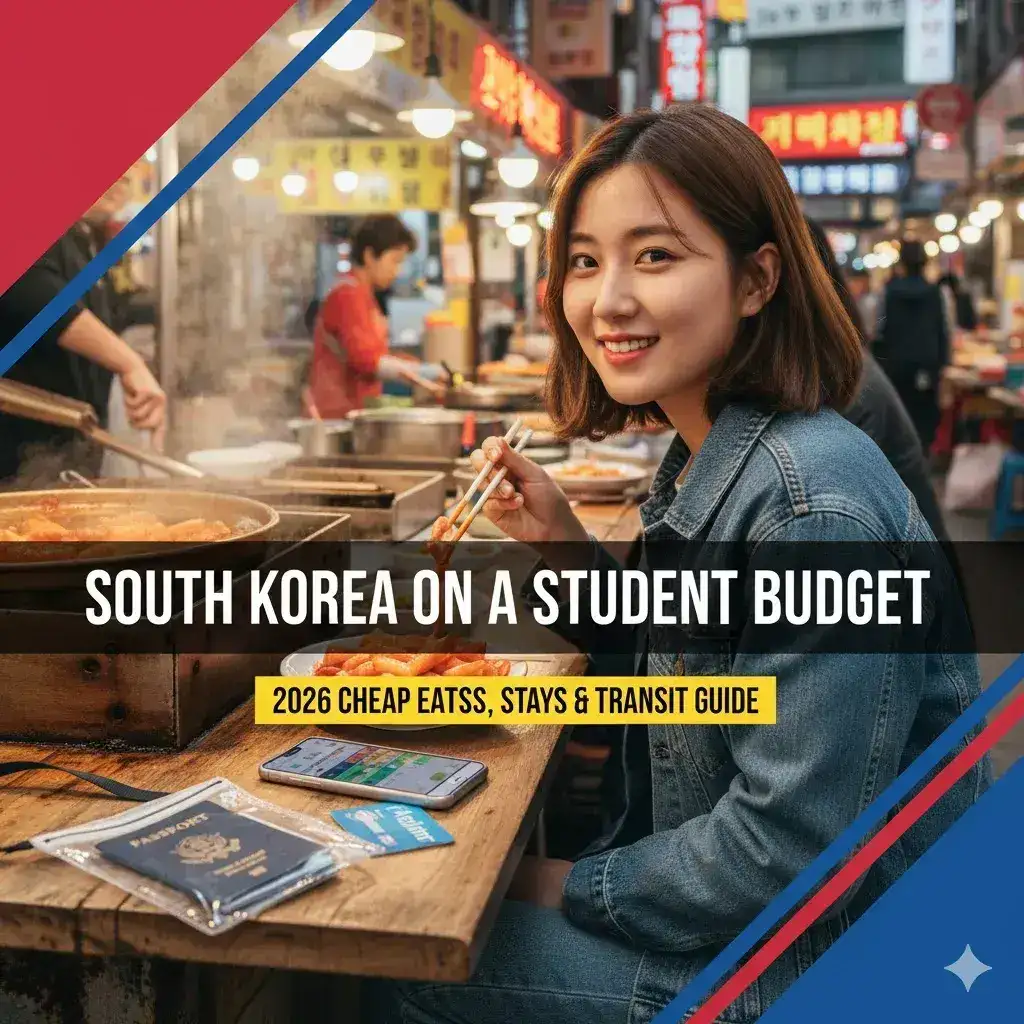
BUDGET TRAVEL IN SOUTH KOREA: HOW TO EXPLORE ON A STUDENT BUDGET
South Korea is often perceived as an expensive destination, with its cutting-edge technology, luxury shopping districts, and world-class infrastructure. However, the reality is that South Korea can be an incredibly affordable destination for budget-conscious travelers, especially students. With smart planning, local knowledge, and a willingness to embrace the local way of life, you can experience the best of South Korea—from ancient palaces and mountain temples to K-Pop culture and incredible food—without breaking the bank.
This comprehensive guide provides everything you need to know about traveling South Korea on a student budget in 2026. We will cover affordable accommodation options, budget-friendly food strategies, free and low-cost attractions, transportation hacks, money-saving tips, and practical advice for making the most of your Korean adventure without overspending. Whether you are a gap-year student, a university traveler on semester break, or simply a budget-minded explorer, this guide will help you discover South Korea's incredible value and cultural richness while keeping costs manageable.
Understanding budget travel in South Korea requires more than just finding cheap options; it demands engaging with local culture, embracing simplicity, and prioritizing experiences over luxury. By approaching South Korea with curiosity, flexibility, and respect, you will discover not just affordable travel but a deeper connection to Korean life, values, and hospitality.
ACCOMMODATION ON A BUDGET: WHERE TO STAY WITHOUT BREAKING THE BANK
Accommodation is often the largest expense for travelers, but South Korea offers numerous affordable options that provide comfort, convenience, and cultural immersion without the luxury price tag.
Hostels and Guesthouses:
Seoul, Busan, and other major cities have a thriving hostel culture that caters to budget travelers and backpackers.
What to Expect:
- Dormitory Rooms: Shared rooms with 4-12 beds, typically ranging from 15,000-30,000 KRW ($12-24 USD) per night
- Private Rooms: Small private rooms in hostels, typically 30,000-60,000 KRW ($24-48 USD) per night
- Amenities: Most hostels offer free WiFi, communal kitchens, laundry facilities, lockers, and social common areas
- Locations: Popular areas include Hongdae (youth culture, nightlife), Myeongdong (central, shopping), and Insadong (traditional culture) in Seoul; Haeundae and Seomyeon in Busan
Recommended Hostel Chains:
- K-House: Multiple locations in Seoul, clean and social atmosphere
- Guesthouse Korea: Network of guesthouses across major cities
- Bed & Breakfast Korea: Budget-friendly with local character
Booking Tips:
- Use platforms like Hostelworld, Agoda, or Booking.com to compare prices and read reviews
- Book in advance for peak seasons (cherry blossom April, fall foliage October-November)
- Look for hostels near subway stations to save on transportation costs
- Read recent reviews for cleanliness, safety, and social atmosphere
Jjimjilbang (Korean Bathhouses):
For an ultra-budget and uniquely Korean experience, consider staying at a jjimjilbang—a traditional Korean bathhouse with overnight accommodations.
What to Expect:
- Cost: 8,000-15,000 KRW ($6-12 USD) for overnight stay
- Facilities: Gender-separated bathing areas, communal sleeping rooms (ondol heated floors), saunas, restaurants, and entertainment areas
- Experience: Sleep on the heated floor with a provided pillow and blanket; bring your own toiletries or purchase on-site
- Locations: Available in most cities; popular options in Seoul include Dragon Hill Spa and Siloam Sauna
Pros and Cons:
- Pros: Extremely affordable, authentic cultural experience, 24-hour access, great for late-night arrivals
- Cons: Shared sleeping spaces, limited privacy, not ideal for extended stays
Tips for First-Timers:
- Bring a small towel and toiletries, or purchase on-site
- Respect bathing etiquette: wash thoroughly before entering communal baths
- Keep valuables in provided lockers; bring a small lock if concerned
- Try the various sauna rooms with different temperatures and themes
Hanok Stays on a Budget:
While luxury hanok (traditional Korean house) stays can be expensive, some budget-friendly options exist.
What to Expect:
- Cost: 40,000-80,000 KRW ($32-64 USD) per night for budget hanok guesthouses
- Experience: Sleep on traditional ondol heated floors, enjoy traditional architecture, and experience Korean hospitality
- Locations: Bukchon Hanok Village in Seoul, Jeonju Hanok Village (more affordable than Seoul)
Booking Tips:
- Search for "hanok guesthouse" or "budget hanok" on booking platforms
- Book directly with properties for potential discounts
- Be prepared for traditional amenities: floor sleeping, shared bathrooms in some cases
Camping and Outdoor Options:
For nature-loving budget travelers, South Korea offers camping opportunities in national parks and coastal areas.
What to Expect:
- Cost: 5,000-20,000 KRW ($4-16 USD) per night for campsite fees
- Facilities: Vary from basic (pit toilets, water) to developed (showers, electricity, convenience stores)
- Locations: Seoraksan National Park, Nami Island, coastal areas near Busan
Tips:
- Reserve campsites in advance during peak seasons via Korea National Park Service website
- Bring or rent camping gear; some sites offer equipment rental
- Check weather forecasts; Korean summers can be hot and humid, winters very cold
FOOD ON A BUDGET: EATING WELL WITHOUT SPENDING MUCH
South Korean cuisine is not only delicious but also incredibly affordable if you know where to look and what to order. From street food stalls to convenience stores, you can enjoy authentic Korean flavors on a student budget.
Street Food: The Ultimate Budget Option
Street food is the cornerstone of budget eating in South Korea, offering delicious, filling meals for just a few dollars.
Must-Try Budget Street Foods:
- Tteokbokki (spicy rice cakes): 1,000-3,000 KRW ($1-2.50 USD)
- Gimbap (seaweed rice rolls): 1,000-2,500 KRW ($1-2 USD)
- Hotteok (sweet filled pancakes): 1,000-2,000 KRW ($1-1.50 USD)
- Odeng/Eomuk (fish cake skewers): 500-1,000 KRW ($0.50-1 USD) per skewer
- Bungeoppang (fish-shaped pastry with red bean): 500-1,000 KRW ($0.50-1 USD)
- Sundae (Korean blood sausage): 2,000-4,000 KRW ($1.50-3 USD)
Where to Find Street Food:
- Myeongdong Street Food Alley (Seoul): Tourist-friendly with English signs, wide variety
- Gwangjang Market (Seoul): Authentic local market with affordable prices
- BIFF Square (Busan): Famous for street food near Busan International Film Festival area
- University Areas: Hongdae, Ewha, and other university districts offer student-priced food
Budget Tips:
- Go early or late: Some vendors offer discounts near closing time
- Share with friends: Many items are portioned for sharing; split costs
- Carry cash: Most street vendors do not accept cards
Convenience Stores: Your Budget Best Friend
Korean convenience stores (CU, GS25, 7-Eleven) are treasure troves for budget travelers, offering high-quality ready-to-eat meals at incredibly low prices.
Budget-Friendly Convenience Store Finds:
- Kimbap and Triangle Gimbap: 1,000-2,500 KRW ($1-2 USD)
- Cup Ramen and Instant Noodles: 1,000-2,000 KRW ($1-1.50 USD); use hot water dispensers in-store
- Ready-to-Eat Meals: Bibimbap, fried rice, and noodle dishes for 3,000-6,000 KRW ($2.50-5 USD)
- Snacks and Drinks: Korean chips, cookies, and beverages at low prices
- Breakfast Options: Yogurt, bread, and fruit for under 2,000 KRW ($1.50 USD)
Money-Saving Strategies:
- T-Money Card Discount: Some convenience stores offer small discounts when paying with T-Money
- Meal Deals: Look for combination deals (ramen + drink, kimbap + beverage)
- Late-Night Discounts: Some stores discount perishable items near closing time
Local Restaurants and Budget Eateries:
Beyond street food and convenience stores, local restaurants offer affordable, authentic Korean meals.
Budget Restaurant Strategies:
- Look for "Baekban" (백반): Set meals with rice, soup, and multiple side dishes (banchan) for 6,000-10,000 KRW ($5-8 USD)
- Try "Gukbap" (soup with rice): Hearty, filling, and affordable at 5,000-9,000 KRW ($4-7 USD)
- Visit University Areas: Restaurants near universities cater to student budgets with generous portions at low prices
- Lunch Specials: Many restaurants offer discounted lunch sets (11 AM-2 PM) that are cheaper than dinner menus
Recommended Budget Dishes:
- Bibimbap: Mixed rice with vegetables and gochujang, 6,000-10,000 KRW ($5-8 USD)
- Jjajangmyeon: Black bean noodles, 6,000-9,000 KRW ($5-7 USD)
- Kimchi Jjigae: Kimchi stew with pork or tofu, 7,000-12,000 KRW ($6-10 USD)
- Samgyeopsal (pork belly): Share a grill with friends; budget 10,000-15,000 KRW ($8-12 USD) per person when sharing
Budget Dining Etiquette:
- Water is typically free; ask for "mul" (water) if not provided
- Banchan (side dishes) are usually refilled free; it is polite to try a bit of each
- Tipping is not expected; service charges are included in prices
TRANSPORTATION ON A BUDGET: GETTING AROUND WITHOUT OVERSPENDING
South Korea's transportation system is efficient, extensive, and surprisingly affordable—especially when you use the right strategies.
T-Money Card: Your Budget Transportation Essential
The T-Money card is a rechargeable transportation card that works on subways, buses, and taxis across South Korea. It is essential for budget travelers.
Why Use T-Money:
- Discounted Fares: Save 100-200 KRW ($0.10-0.20 USD) per ride compared to single tickets
- Free Transfers: Transfer between subway and bus within 30 minutes for free or reduced fare
- Convenience: Use at convenience stores, taxis, and some retail locations
How to Get and Use T-Money:
- Purchase: Available at convenience stores (CU, GS25, 7-Eleven), subway stations, and airports for 2,500-5,000 KRW ($2-4 USD) for the card plus initial load
- Load: Add funds at convenience stores, subway station machines, or via mobile app
- Usage: Tap on and off when entering/exiting subway or bus; tap when entering taxis
Budget Tip: Load 10,000-20,000 KRW ($8-16 USD) at a time to avoid frequent top-ups and minimize transaction fees.
Seoul Subway: The Budget Traveler's Best Friend
Seoul's subway system is clean, efficient, English-friendly, and incredibly affordable.
Budget Strategies:
- Avoid Rush Hours: Travel outside 7:30-9:30 AM and 6-8 PM on weekdays to avoid crowded trains and potentially save time
- Use Express Trains Wisely: Some lines have express trains that skip stations; use them for longer journeys to save time (not money)
- Plan Routes with Apps: Use Naver Map or KakaoMap to find the most efficient routes and avoid unnecessary transfers
- Consider Day Passes: For extensive subway travel in one day, consider the Seoul City Pass Plus or similar day passes (evaluate if cost-effective for your itinerary)
Intercity Travel: KTX vs. Buses vs. Other Options
For travel between cities, you have several budget-friendly options:
Korail Pass (Korea Rail Pass):
- Best For: Travelers visiting 3+ cities by train
- Cost: Approximately 100,000-200,000 KRW ($80-160 USD) for 3-5 consecutive days
- Savings: Can save money compared to individual KTX tickets if traveling extensively
- Booking: Purchase online before arrival; exchange for physical pass at designated stations
Express Buses:
- Best For: Budget travelers, flexible schedules, destinations not served by KTX
- Cost: Typically 30-50% cheaper than KTX; Seoul to Busan approximately 20,000-30,000 KRW ($16-24 USD)
- Comfort: Modern buses with reclining seats, WiFi, and restrooms
- Booking: Use Kobus website or app; book in advance for popular routes
Night Buses:
- Best For: Saving on accommodation by traveling overnight
- Cost: Similar to daytime express buses; saves one night of accommodation
- Comfort: Reclining seats or sleeper buses; bring earplugs and eye mask
Budget Tip: For short distances (under 2 hours), buses are often more cost-effective than KTX. For longer distances, compare KTX advance purchase discounts vs. bus prices.
Walking and Biking: Free Transportation
Many of South Korea's attractions are best explored on foot or by bike, which is free and offers a deeper connection to local neighborhoods.
Walking Strategies:
- Cluster Attractions: Plan days around neighborhoods (e.g., Insadong-Bukchon-Gyeongbokgung in Seoul) to minimize transportation costs
- Use Free Walking Tours: Many cities offer tip-based walking tours that provide orientation and local insights
Bike Rental:
- Seoul Bike (Ttareungyi): Public bike-sharing system; first 30 minutes free with registration
- Cost: Approximately 1,000 KRW ($1 USD) per 30 minutes after free period
- Availability: Stations throughout Seoul and other major cities; use app to locate bikes and docks
FREE AND LOW-COST ATTRACTIONS: EXPERIENCING KOREA WITHOUT SPENDING MUCH
South Korea offers countless free and affordable attractions that provide rich cultural experiences without straining your budget.
Palaces and Historical Sites:
Many of South Korea's palaces and historical sites offer free or discounted admission, especially with smart strategies.
Free Palace Entry with Hanbok:
- Strategy: Rent hanbok (traditional Korean dress) for free entry to Gyeongbokgung, Changdeokgung, and other palaces
- Cost: Hanbok rental 10,000-30,000 KRW ($8-24 USD) for 2-4 hours; palace entry normally 3,000 KRW ($2.50 USD)
- Locations: Numerous rental shops near palaces in Insadong and Bukchon, Seoul
- Bonus: Beautiful photo opportunities in traditional dress
Free Historical Sites:
- Bukchon Hanok Village: Free to explore traditional neighborhood (respect private residences)
- Insadong Street: Free to wander traditional craft street, galleries, and tea houses
- Namsan Park and N Seoul Tower Exterior: Free to hike or cable car to base; tower observation deck requires ticket
- Dongdaemun Design Plaza (DDP): Free to explore exterior and some exhibitions
Hiking and Natural Attractions:
South Korea's mountainous landscape offers incredible free outdoor experiences.
Popular Free Hiking Destinations:
- Bukhansan National Park (Seoul): Multiple trails with panoramic city views; free entry
- Namsan Mountain (Seoul): Easy hike with city views; free
- Geumjeongsan Mountain (Busan): Popular hike with temple visits; free
- Seoraksan National Park: Entrance fee approximately 3,500 KRW ($3 USD); worth it for stunning scenery
Budget Hiking Tips:
- Bring Water and Snacks: Purchase at convenience stores before hiking to avoid expensive park vendors
- Check Weather: Korean mountains can change weather quickly; dress in layers
- Respect Nature: Follow Leave No Trace principles; pack out all trash
Markets and Cultural Experiences:
Traditional markets and cultural neighborhoods offer free immersion in Korean life.
Free Market Experiences:
- Gwangjang Market (Seoul): Free to explore; budget 5,000-10,000 KRW ($4-8 USD) for street food sampling
- Namdaemun Market (Seoul): Free to browse; great for window shopping and people-watching
- Jagalchi Fish Market (Busan): Free to explore Korea's largest seafood market; budget for seafood meal if desired
Cultural Performances and Events:
- Free Traditional Performances: Check tourism websites for free cultural performances at palaces, cultural centers, and festivals
- Seasonal Festivals: Many festivals (cherry blossom, lantern, harvest) offer free admission to outdoor events
- University Events: Student performances, exhibitions, and cultural events at universities are often free or low-cost
Museums with Free Admission or Discounts:
While some museums charge admission, many offer free entry or discounts.
Free Museum Strategies:
- National Museum of Korea (Seoul): Free admission to permanent collections; special exhibitions may charge
- Seoul Museum of History: Free admission
- War Memorial of Korea: Free admission
- Discount Days: Many museums offer free or discounted admission on specific days (e.g., last Wednesday of month); check websites
Student Discounts:
If you are a student, leverage your status for discounts.
ISIC Card Benefits:
- International Student Identity Card (ISIC): Provides discounts at museums, attractions, transportation, and some restaurants
- Cost: Approximately $15-20 USD; can pay for itself with a few discounts
- How to Get: Apply online at isic.org before travel or at designated offices in Korea
Other Student Discounts:
- Palace Admission: Students with valid student ID may receive discounted palace entry (carry ID)
- Transportation: Some regional bus companies offer student discounts; inquire when purchasing tickets
- Attractions: Always ask "Haksaeng harin isseoyo?" (Is there a student discount?) when purchasing tickets
MONEY-SAVING TIPS AND HACKS: MAXIMIZING YOUR BUDGET
Beyond accommodation, food, and attractions, these strategies can help stretch your budget further.
Tax Refunds for Shopping:
South Korea offers tax refunds for foreign visitors on purchases over 30,000 KRW ($24 USD) at participating stores.
How to Claim Tax Refunds:
- Look for "Tax Free" signs at stores
- Request a tax refund form at checkout; bring your passport
- Claim refunds at airport kiosks before departure; allow extra time at the airport
- Some stores offer instant refunds; ask at checkout
Budget Tip: Consolidate purchases at tax-free stores to reach the 30,000 KRW threshold; focus on items you actually need or want as souvenirs.
Free WiFi and Connectivity:
Staying connected is essential for navigation, translation, and booking, but data costs can add up.
Free WiFi Strategies:
- Public WiFi: Seoul and other major cities offer free public WiFi in parks, plazas, and some subway stations; look for "Seoul Free WiFi" or "T WiFi Secure"
- Convenience Stores: Most CU, GS25, and 7-Eleven locations offer free WiFi for customers
- Cafes: Many cafes offer free WiFi with purchase; purchase a low-cost drink for extended access
Budget Connectivity Options:
- SIM Cards: Purchase budget SIM cards at airport or convenience stores; 10GB data plans approximately 20,000-30,000 KRW ($16-24 USD) for 10-15 days
- Portable WiFi: Rent pocket WiFi at airport; approximately 5,000-10,000 KRW ($4-8 USD) per day; cost-effective for groups
- eSIM Options: Some providers offer eSIMs you can activate before arrival; compare prices and coverage
Timing Your Visit for Budget Savings:
When you travel can significantly impact costs.
Budget-Friendly Seasons:
- Shoulder Seasons: Late March-April (after cherry blossom peak) and October-November (after fall foliage peak) offer good weather with lower prices
- Winter: December-February offers lowest accommodation prices; pack warm clothing and enjoy winter activities
- Avoid Peak Holidays: Seollal (Lunar New Year) and Chuseok (Harvest Festival) see price spikes and business closures
Day-of-Week Strategies:
- Weekday Travel: Accommodation and some attractions are cheaper Sunday-Thursday; weekends see higher prices
- Museum Free Days: Many museums offer free admission on specific weekdays; plan accordingly
Budget Apps and Tools:
Leverage technology to save money and time.
Essential Budget Apps:
- Naver Map/KakaoMap: Free navigation with public transit directions; essential for avoiding expensive taxi rides
- Papago: Free translation app with image and voice features; helps navigate menus and signs
- T-Money App: Manage transportation card balance and view transaction history
- Klook/KKday: Book discounted tours, attractions, and transportation passes; compare prices before booking
- Couchsurfing/Beacon: Connect with local hosts for free accommodation (use with caution and verify profiles)
PRACTICAL BUDGET ITINERARIES: SAMPLE PLANS FOR STUDENT TRAVELERS
To help you visualize budget travel in South Korea, here are sample itineraries for different trip lengths.
7-Day Seoul Budget Itinerary (Approximate Daily Budget: $40-60 USD):
Day 1: Arrival and Orientation
- Accommodation: Hostel dorm in Hongdae, 20,000 KRW ($16 USD)
- Food: Convenience store dinner, 3,000 KRW ($2.50 USD)
- Activity: Free walking tour of Hongdae, explore neighborhood
- Transportation: Airport Railroad + T-Money, 5,000 KRW ($4 USD)
- Daily Total: ~28,000 KRW ($22.50 USD)
Day 2: Palaces and Traditional Culture
- Accommodation: Hostel dorm, 20,000 KRW ($16 USD)
- Food: Street food lunch, local restaurant dinner, 10,000 KRW ($8 USD)
- Activity: Gyeongbokgung Palace with hanbok rental (free entry), Bukchon Hanok Village, Insadong exploration
- Transportation: Subway with T-Money, 3,000 KRW ($2.50 USD)
- Daily Total: ~33,000 KRW ($26.50 USD)
Day 3: Markets and Modern Seoul
- Accommodation: Hostel dorm, 20,000 KRW ($16 USD)
- Food: Gwangjang Market street food, convenience store snacks, 8,000 KRW ($6.50 USD)
- Activity: Gwangjang Market, Myeongdong shopping (window), Namsan Park hike
- Transportation: Walking + subway, 2,000 KRW ($1.50 USD)
- Daily Total: ~30,000 KRW ($24 USD)
Day 4: Day Trip to Suwon or DMZ
- Accommodation: Hostel dorm, 20,000 KRW ($16 USD)
- Food: Packed lunch from convenience store, local dinner, 9,000 KRW ($7 USD)
- Activity: Suwon Hwaseong Fortress (free) or budget DMZ tour (approximately 50,000 KRW / $40 USD)
- Transportation: Subway + bus, 4,000 KRW ($3 USD) or tour transportation included
- Daily Total: ~33,000-83,000 KRW ($26-66 USD) depending on activity choice
Day 5: Hiking and Nature
- Accommodation: Hostel dorm, 20,000 KRW ($16 USD)
- Food: Convenience store breakfast, packed lunch, local dinner, 10,000 KRW ($8 USD)
- Activity: Bukhansan National Park hike (free entry)
- Transportation: Subway + bus to park, 3,000 KRW ($2.50 USD)
- Daily Total: ~33,000 KRW ($26.50 USD)
Day 6: K-Pop Culture and Youth Districts
- Accommodation: Hostel dorm, 20,000 KRW ($16 USD)
- Food: University area budget meals, street food, 9,000 KRW ($7 USD)
- Activity: Hongdae street performances, K-Pop merchandise browsing (no purchase), free cultural experiences
- Transportation: Walking + subway, 2,000 KRW ($1.50 USD)
- Daily Total: ~31,000 KRW ($24.50 USD)
Day 7: Departure or Extension
- Accommodation: If departing, no cost; if extending, hostel dorm 20,000 KRW ($16 USD)
- Food: Airport convenience store meal or local breakfast, 5,000 KRW ($4 USD)
- Activity: Last-minute souvenir shopping at traditional market, airport transfer
- Transportation: Airport Railroad, 5,000 KRW ($4 USD)
- Daily Total: ~10,000-30,000 KRW ($8-24 USD)
7-Day Total Estimated Budget: ~198,000-238,000 KRW ($158-190 USD) excluding international flights and travel insurance
10-Day South Korea Budget Itinerary (Seoul + Busan + Gyeongju):
Extend the Seoul itinerary with:
- Days 8-9: Busan (KTX from Seoul, hostel accommodation, Jagalchi Market, Haeundae Beach, Gamcheon Culture Village)
- Day 10: Gyeongju day trip from Busan (bulguksa Temple, Daereungwon Tomb Park, bike rental)
Additional Budget Considerations:
- KTX Seoul-Busan: Approximately 50,000 KRW ($40 USD) one-way; consider bus alternative for 20,000-30,000 KRW ($16-24 USD)
- Busan Accommodation: Hostel dorm 15,000-25,000 KRW ($12-20 USD)
- Gyeongju Day Trip: Bus + bike rental + entry fees approximately 15,000 KRW ($12 USD)
10-Day Total Estimated Budget: ~350,000-450,000 KRW ($280-360 USD) excluding international flights and travel insurance
SAFETY AND PRACTICAL TIPS FOR BUDGET STUDENT TRAVELERS
Traveling on a budget does not mean compromising on safety or preparedness.
Safety Tips for Budget Travelers:
- Keep Valuables Secure: Use hostel lockers; carry only daily spending money in a secure money belt or hidden pouch
- Emergency Numbers: Save 112 (police), 119 (ambulance/fire), and 1330 (tourist assistance) in your phone
- Share Itinerary: Let someone know your daily plans, especially when hiking or traveling solo
- Trust Your Instincts: If a situation feels unsafe, remove yourself; budget travel does not require taking unnecessary risks
Health on a Budget:
- Travel Insurance: Essential even for budget travelers; covers medical emergencies, evacuation, and trip interruption. Cost: Approximately $30-50 USD for 2 weeks
- Medications: Bring essential medications in original packaging with doctor's note; purchase basic over-the-counter items at Korean pharmacies (affordable)
- Water and Food Safety: Tap water is safe; street food is generally safe if busy and freshly cooked
Cultural Respect on a Budget:
- Dress Modestly for Temples: Cover shoulders and knees; many temples provide wraps if needed
- Learn Basic Phrases: "Gamsahamnida" (thank you), "Annyeonghaseyo" (hello), "Mianhamnida" (sorry) show respect
- Tipping: Not customary; do not feel pressured to tip in restaurants, taxis, or hotels
CONCLUSION: SOUTH KOREA ON A STUDENT BUDGET IS NOT ONLY POSSIBLE—IT IS REWARDING
Traveling South Korea on a student budget is not about deprivation; it is about prioritizing experiences over luxury, embracing local culture, and discovering the incredible value that South Korea offers to mindful travelers. By staying in hostels, eating street food, using public transportation, and focusing on free and low-cost attractions, you can experience the best of South Korea—from ancient palaces and mountain temples to K-Pop culture and incredible cuisine—without breaking the bank.
In 2026, as student travelers seek meaningful, affordable adventures, South Korea stands out as a destination that rewards curiosity, flexibility, and respect. By approaching your Korean journey with an open mind and smart planning, you will create memories that last a lifetime while staying within your budget.
May your budget travels in South Korea deepen your appreciation for Korean culture, connect you with fellow travelers and locals, and inspire your continued exploration of the world. As the Korean concept of "jeong" (deep emotional connection) teaches, the richest travel experiences often come not from spending the most but from engaging the most. May you carry that understanding forward, wherever your journey leads.
Useful resources include the Korea Tourism Organization at visitkorea.or.kr for trip planning, Korail at letskorail.com for train travel, and the 1330 Korea Travel Hotline for 24/7 tourist assistance in multiple languages. Emergency services in South Korea can be reached at 112 for police and 119 for ambulance and fire. Disclaimer: Information is accurate as of early 2026. Prices, hours, and policies may change; verify details before travel. This guide is for informational purposes only and does not constitute professional travel advice.
0 Comments