.webp)
.webp)
Planning Sustainable Glacier Monitoring Volunteer Trip in Kyrgyzstan
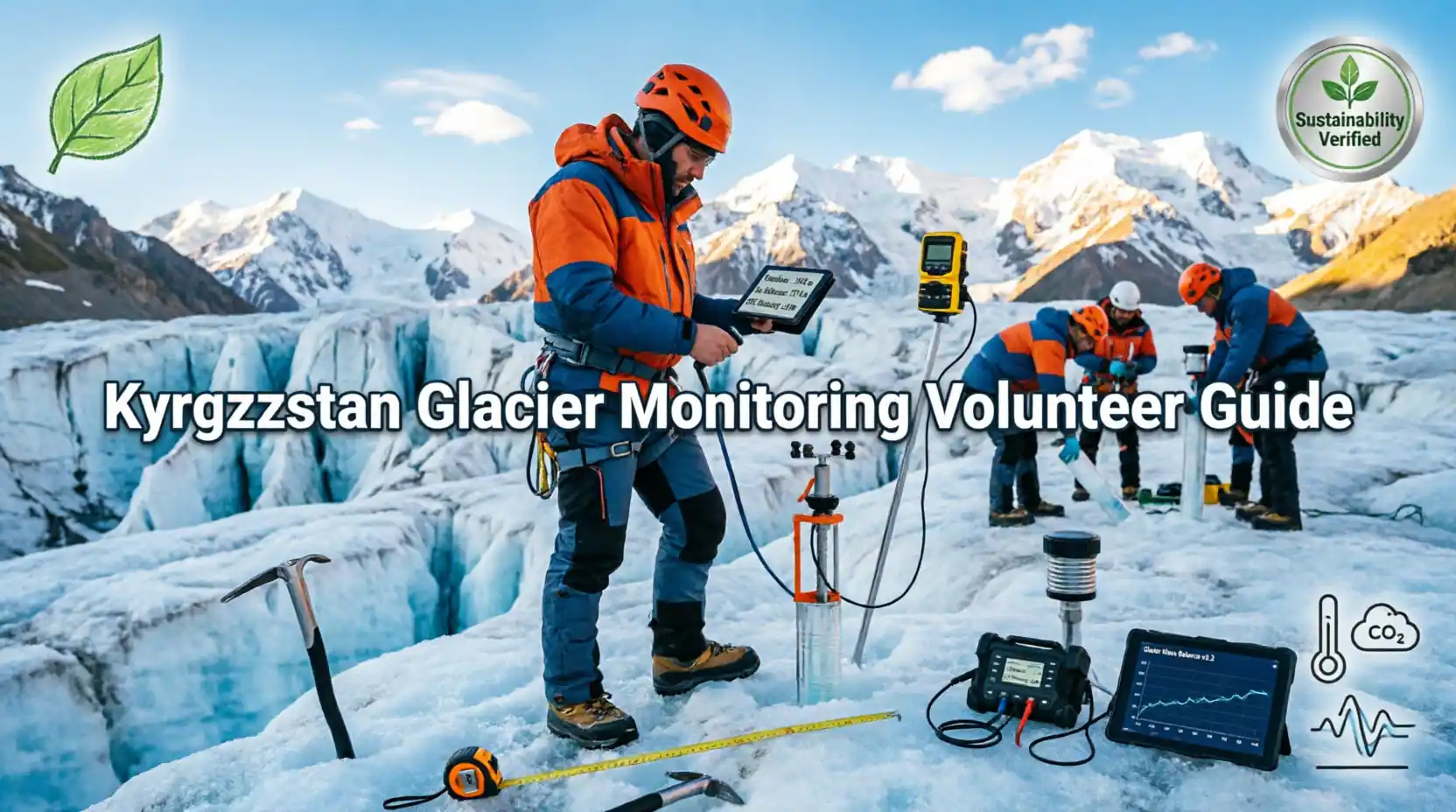
Introduction to Glacier Monitoring Volunteering in Kyrgyzstan
Kyrgyzstan's glaciers represent critical water resources for Central Asia facing rapid climate change impacts.
Volunteer programs offer unique opportunities to contribute to vital glacier monitoring and conservation research.
Sustainable volunteer trips combine scientific contribution with responsible tourism practices in fragile mountain environments.
This comprehensive guide prepares environmentally conscious travelers for meaningful glacier monitoring volunteer experiences.
Understanding program requirements, preparation, and impact ensures your volunteer trip benefits both science and local communities.
Why Kyrgyzstan for Glacier Monitoring

Kyrgyzstan contains over 6500 glaciers covering approximately 6600 square kilometers of the Tian Shan mountain range.
These glaciers provide essential water resources for agriculture, hydropower, and communities throughout Central Asia.
Climate change is causing accelerated glacier retreat requiring urgent monitoring and research efforts.
Local scientific capacity is limited creating opportunities for international volunteer contributions.
Volunteer programs support both critical research and sustainable development in mountain communities.
Glacier Retreat and Climate Impact
Kyrgyzstan's glaciers have lost approximately 20 percent of their volume since the 1950s.
Accelerated melting threatens long-term water security for downstream populations.
Monitoring data helps predict water availability and inform adaptation strategies.
Volunteer contributions expand monitoring coverage beyond what local scientists can achieve alone.
Research findings inform regional climate policy and conservation planning.
Scientific Value of Volunteer Programs
Volunteers assist with data collection expanding spatial and temporal monitoring coverage.
Long-term datasets require consistent monitoring that volunteer programs help sustain.
International volunteers bring diverse skills and perspectives enhancing research quality.
Programs often include training building local capacity for ongoing monitoring work.
Published research from volunteer programs contributes to global climate science understanding.
Finding Reputable Volunteer Programs

Selecting ethical, scientifically valid volunteer programs is essential for meaningful contribution.
Reputable programs prioritize scientific rigor, volunteer safety, and community benefit.
Understanding program structures helps identify opportunities matching your skills and interests.
Due diligence prevents supporting exploitative or ineffective volunteer tourism.
These criteria help identify programs delivering genuine scientific and conservation impact.
Program Types and Structures
Research expeditions led by scientists with volunteer assistants for data collection tasks.
Community-based monitoring programs training local residents with international volunteer support.
University-affiliated programs offering academic credit and structured research protocols.
NGO-led conservation programs combining monitoring with community development activities.
Short-term intensive programs versus long-term placements depending on availability and commitment.
Evaluating Program Quality
Verify scientific oversight by qualified glaciologists or climate researchers.
Confirm partnerships with Kyrgyz scientific institutions like National Academy of Sciences.
Review volunteer training protocols ensuring meaningful contribution to research goals.
Assess community engagement and benefit sharing with local mountain communities.
Check transparency about fund allocation and program impact reporting.
Reputable Organizations to Consider
Mountain Societies Research Institute at University of Central Asia runs glacier monitoring programs.
Kyrgyz Hydromet collaborates with international partners on glacier observation projects.
Earthwatch Institute offers volunteer expeditions focused on Central Asian glacier research.
Local NGOs like Biofile and Camp Alatoo organize environmental monitoring volunteer opportunities.
International programs through universities often accept volunteers for field research seasons.
Program Requirements and Eligibility

Glacier monitoring volunteer programs have specific requirements ensuring safety and research quality.
Understanding eligibility criteria helps determine program fit before application.
Physical, technical, and personal requirements vary by program and research objectives.
Preparation begins well before departure with training and skill development.
Meeting requirements ensures productive and safe volunteer experience.
Physical Fitness Requirements
High altitude trekking demands excellent cardiovascular fitness and endurance.
Ability to hike 6-8 hours daily with 15-20 kg pack at elevations exceeding 3000 meters.
Previous high altitude experience preferred though not always required.
Medical clearance may be required confirming fitness for high altitude work.
Pre-trip conditioning program essential starting 3-6 months before departure.
Technical Skills and Training
Basic GPS navigation and map reading skills valuable for field data collection.
Some programs provide training in glacier measurement techniques before fieldwork.
Data recording accuracy and attention to detail critical for scientific validity.
Photography skills useful for documenting glacier changes and field conditions.
Language skills in Russian or Kyrgyz helpful though not always required.
Personal Qualities and Commitment
Adaptability essential for remote field conditions and changing weather.
Teamwork skills important for working with scientists and local community members.
Cultural sensitivity and respect for local customs required in mountain communities.
Commitment to sustainable practices and environmental ethics fundamental.
Willingness to learn and follow scientific protocols ensures research quality.
Application and Preparation Process

Successful volunteer trip planning requires systematic application and preparation.
Early application improves chances of placement in competitive programs.
Preparation phases include training, equipment acquisition, and logistical planning.
Understanding timeline prevents last-minute complications and stress.
These steps ensure you arrive prepared for meaningful volunteer contribution.
Application Timeline and Steps
Research programs 12-18 months before intended travel dates.
Submit applications 6-12 months in advance for competitive programs.
Interview process may assess motivation, skills, and program fit.
Acceptance followed by pre-departure training and preparation requirements.
Final logistics coordination 1-2 months before departure.
Pre-Departure Training
Online modules covering glacier science, data collection methods, and safety protocols.
Physical conditioning program building endurance and altitude tolerance.
Cultural orientation covering Kyrgyz customs, language basics, and community engagement.
Technical training on GPS, data recording, and equipment use.
First aid and wilderness medicine training for remote field conditions.
Equipment and Gear Preparation
Personal gear list provided by program including clothing, footwear, and camping equipment.
Technical equipment like GPS, cameras, and data tools often provided by program.
Test all gear before departure ensuring functionality and familiarity.
Pack light but comprehensively for variable mountain weather conditions.
Consider gear rental options in Kyrgyzstan to reduce transport burden.
Costs and Funding Your Volunteer Trip

Glacier monitoring volunteer trips involve significant costs requiring financial planning.
Understanding cost structure helps budget appropriately and identify funding opportunities.
Some programs offer scholarships or fundraising support for qualified volunteers.
Transparent cost breakdown ensures funds support program objectives effectively.
These financial considerations enable accessible participation for committed volunteers.
Typical Program Costs
Program fees typically range from 1500 to 4000 USD depending on duration and inclusions.
Fees usually cover in-country transportation, accommodation, meals, and equipment.
International airfare to Kyrgyzstan not included in most program fees.
Travel insurance, visas, and personal gear represent additional expenses.
Some programs offer partial scholarships or work-exchange arrangements.
Funding and Scholarship Opportunities
University programs may offer academic credit reducing overall education costs.
Environmental organizations sometimes provide grants for volunteer conservation work.
Crowdfunding platforms enable community support for volunteer travel expenses.
Some employers offer volunteer time off or matching gift programs.
Apply early for limited scholarship opportunities with competitive selection.
Maximizing Value and Impact
Choose programs with transparent fund allocation showing direct research and community benefit.
Longer commitments often provide greater scientific contribution and personal learning.
Skills-based volunteering leverages professional expertise for enhanced impact.
Post-trip engagement through advocacy and fundraising extends program benefits.
Document and share experiences responsibly inspiring others to participate.
Field Work and Daily Activities

Glacier monitoring fieldwork combines scientific rigor with challenging mountain conditions.
Understanding daily activities prepares volunteers for realistic expectations.
Work varies by program objectives, season, and specific research protocols.
Balance between data collection, training, and community engagement shapes experience.
These activities deliver meaningful scientific contribution while developing valuable skills.
Glacier Measurement Techniques
Mass balance measurements using ablation stakes to track ice loss over time.
GPS surveying of glacier termini documenting retreat or advance.
Photogrammetry using repeat photography to document surface changes.
Snow depth measurements and density sampling for accumulation assessment.
Weather station maintenance and data collection for climate context.
Data Collection and Recording
Standardized protocols ensure data quality and comparability across time and locations.
Digital data entry using tablets or field computers with backup systems.
Quality control procedures including duplicate measurements and verification.
Metadata documentation capturing context essential for scientific interpretation.
Regular data backup and transmission protocols preventing loss.
Community Engagement Activities
Meetings with local communities sharing research findings and climate impacts.
Training sessions for local residents in basic monitoring techniques.
Cultural exchange activities building mutual understanding and respect.
Collaborative planning for community-based adaptation strategies.
Support for local livelihoods through sustainable tourism and conservation.
Safety and Health Considerations

High altitude glacier environments present specific risks requiring proactive management.
Understanding hazards and mitigation strategies protects volunteer wellbeing.
Emergency preparedness essential for remote field locations with limited medical access.
Health precautions prevent illness that could compromise fieldwork and safety.
These safety measures enable confident participation in challenging environments.
Altitude and Health Precautions
Gradual ascent protocols allowing acclimatization to elevations above 3000 meters.
Recognition of altitude sickness symptoms including headache, nausea, and dizziness.
Hydration strategies combating dehydration at high altitude with dry air.
Medication considerations including acetazolamide for altitude prevention if appropriate.
Descent protocols for severe altitude illness as only effective treatment.
Glacier and Mountain Safety
Crevasses present hidden dangers requiring rope travel and crevasse rescue training.
Weather monitoring and retreat protocols for rapidly changing mountain conditions.
Avalanche awareness and avoidance in steep terrain during certain seasons.
Rockfall and icefall hazards requiring careful route selection and timing.
Emergency communication plans with satellite devices for remote locations.
Medical Preparedness
Comprehensive travel insurance covering high altitude rescue and medical evacuation.
Personal first aid kit with medications for common ailments and injuries.
Pre-existing condition management plans coordinated with program medical staff.
Vaccination requirements and health screenings before departure.
Emergency contact information and evacuation procedures clearly communicated.
Sustainable Practices and Environmental Impact

Sustainable volunteer tourism minimizes environmental impact while maximizing conservation benefit.
Understanding and implementing sustainable practices protects fragile glacier ecosystems.
Leave No Trace principles adapted for high altitude glacier environments.
Carbon footprint considerations for international travel and field operations.
These practices ensure volunteer contributions support rather than undermine conservation goals.
Minimizing Field Impact
Established campsite use preventing vegetation damage and soil erosion.
Proper waste management including packing out all trash and human waste.
Water source protection maintaining distance and using filtration for all water needs.
Minimal disturbance to wildlife through quiet movement and appropriate distances.
Fire restrictions at high altitude using stoves instead of campfires.
Carbon Footprint Management
Calculate travel emissions and purchase verified carbon offsets for international flights.
Choose programs with local hiring and sourcing reducing transportation emissions.
Efficient field logistics minimizing vehicle use and fuel consumption.
Offset remaining emissions through credible carbon offset programs.
Advocate for climate action based on firsthand glacier monitoring experience.
Community Benefit and Equity
Ensure volunteer programs provide fair compensation to local staff and guides.
Support local businesses through procurement of supplies and services.
Capacity building through training and skill transfer to local community members.
Respectful engagement avoiding cultural appropriation or exploitation.
Long-term partnerships rather than one-off volunteer trips for sustained impact.
Post-Trip Engagement and Impact

Volunteer impact extends beyond fieldwork through ongoing engagement and advocacy.
Post-trip activities amplify scientific contribution and conservation awareness.
Sharing experiences responsibly inspires others while respecting communities and research.
Continued learning and action translate volunteer experience into lasting change.
These practices maximize long-term value of volunteer investment.
Data Contribution and Reporting
Complete all data entry and quality checks as required by program protocols.
Participate in debrief sessions sharing observations and insights with research team.
Contribute to reports or publications acknowledging volunteer contributions appropriately.
Maintain connection with research team for ongoing monitoring opportunities.
Respect data ownership and publication policies protecting scientific integrity.
Advocacy and Awareness
Share glacier monitoring experiences through presentations, writing, or social media.
Educate others about climate change impacts using firsthand observations and data.
Advocate for climate policy and conservation action based on volunteer experience.
Support organizations working on glacier conservation and climate science.
Balance compelling storytelling with scientific accuracy and cultural respect.
Continued Learning and Action
Deepen understanding of glaciology and climate science through courses or reading.
Apply skills learned to local environmental monitoring or conservation projects.
Consider career paths in environmental science, conservation, or sustainable development.
Maintain connections with fellow volunteers and program staff for ongoing collaboration.
Plan return visits or long-term engagement with glacier conservation work.
Conclusion and Final Recommendations

Glacier monitoring volunteer trips in Kyrgyzstan offer meaningful opportunities to contribute to critical climate research.
Success requires careful program selection, thorough preparation, and commitment to sustainable practices.
Physical fitness, technical skills, and cultural sensitivity enable productive and safe fieldwork.
Responsible volunteer tourism supports both scientific advancement and community wellbeing.
Your contribution can help document and address one of climate change's most visible impacts.
Begin planning early allowing time for application, training, and preparation.
Prioritize programs with scientific rigor, community benefit, and transparent practices.
Embrace challenges as opportunities for growth while maintaining focus on research objectives.
Share experiences responsibly to inspire others while respecting communities and science.
Kyrgyzstan's glaciers need dedicated volunteers to help monitor and protect these vital resources.
0 Comments