.webp)
.webp)
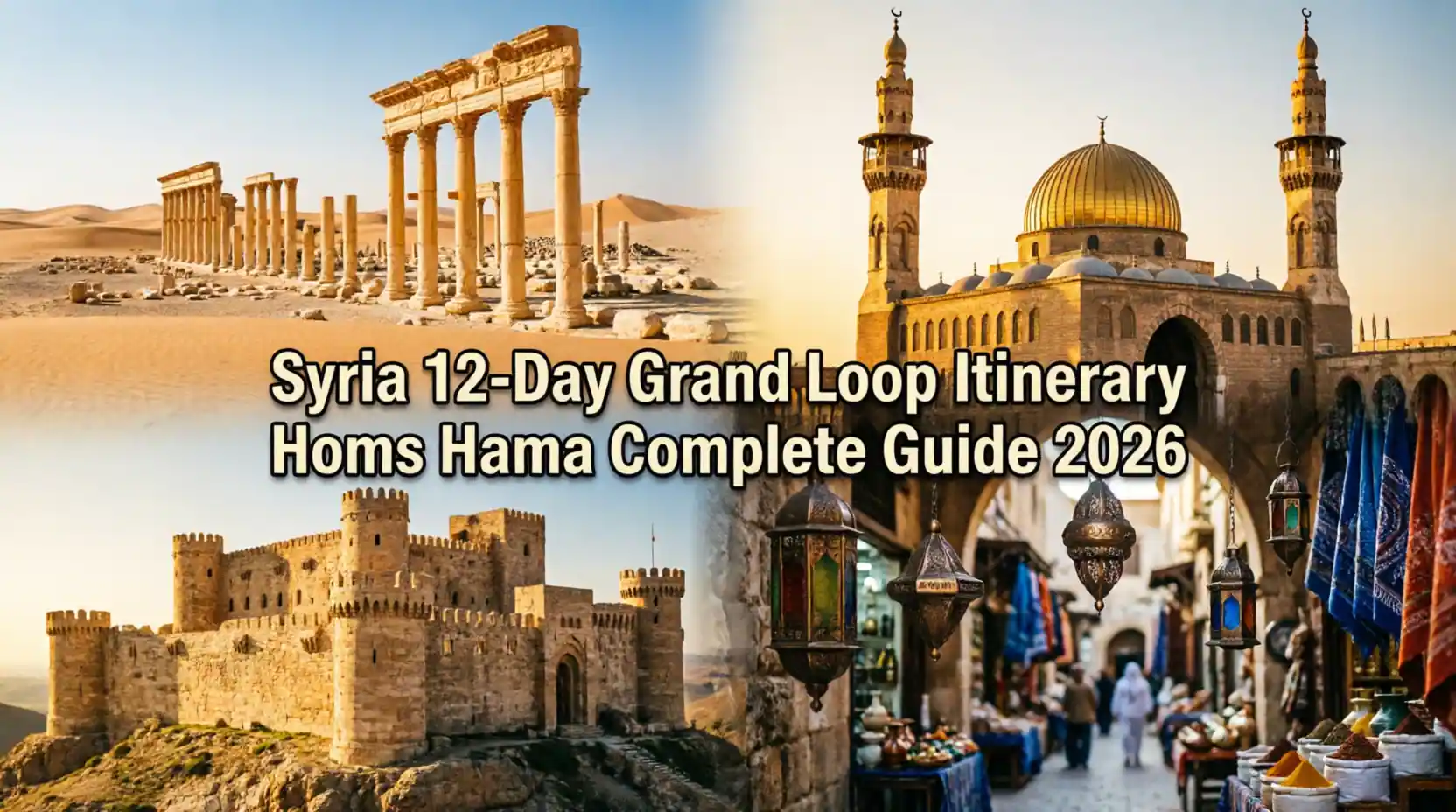
Introduction to Syria Travel and the Grand Loop Itinerary
Syria possesses some of the world's most remarkable historical and cultural heritage sites, spanning thousands of years of civilization from ancient Mesopotamia to the Islamic Golden Age.
This comprehensive 12-day grand loop itinerary covers Syria's most significant destinations including Damascus, Homs, Hama, Aleppo, and the Mediterranean coast, offering travelers an immersive journey through history.
Important notice: Syria has experienced significant conflict since 2011, and travel conditions vary considerably by region. This itinerary focuses on areas that have been relatively stable and accessible.
Travelers must check current security conditions, obtain necessary permissions, and consider traveling with organized tour groups experienced in Syrian travel logistics.
This guide provides detailed information about routes, accommodations, attractions, and practical considerations for experiencing Syria's extraordinary cultural heritage responsibly and safely.
Critical Safety Considerations and Travel Advisories

Before planning any travel to Syria, understanding the current security situation is absolutely essential for personal safety and informed decision-making.
Most Western governments maintain travel advisories warning against non-essential travel to Syria due to ongoing security concerns, though conditions vary significantly by region.
Government-controlled areas including Damascus, Homs city center, Hama, and Aleppo have seen improved stability in recent years with restored basic services.
Certain regions remain extremely dangerous including border areas with Turkey and Iraq, Idlib province, and parts of eastern Syria, which should be strictly avoided.
Travel insurance covering Syria is extremely difficult to obtain, and most embassies have limited or no capacity to provide consular assistance to citizens in Syria.
Essential Pre-Travel Preparations
Obtain a Syrian visa well in advance through a Syrian embassy or consulate, as visa-on-arrival is not available for most nationalities.
Register with your embassy if they maintain a presence in Damascus, and share detailed itineraries with trusted contacts at home.
Consider hiring local guides or joining organized tours with companies experienced in Syrian travel for enhanced safety and logistics support.
Learn basic Arabic phrases as English proficiency varies significantly outside major hotels and tourist sites.
Carry multiple forms of identification including passport copies, visa documentation, and hotel reservations at all times.
Visa Requirements and Entry Procedures for Syria

Obtaining a Syrian visa requires advance planning and documentation, with processes varying based on nationality and purpose of travel.
Tourist visas typically require a completed application form, passport valid for at least six months, passport photographs, and proof of accommodation.
Some nationalities may require a security clearance process that can take several weeks, making early application essential.
Visa fees vary by nationality and processing time, typically ranging from fifty to one hundred US dollars or equivalent.
Entry stamps from Israeli authorities or passports containing Israeli visas will result in denial of entry to Syria.
Entry Points and Border Crossings
Damascus International Airport serves as the primary entry point for international travelers, with limited flights from regional hubs.
Land border crossings from Lebanon at Masnaa-Jdeideh Yabous remain the most common overland entry route for travelers.
Border procedures can be time-consuming with detailed questioning about travel purposes, itinerary, and accommodations.
Ensure all documentation is complete and accurate before attempting border crossing to avoid delays or denial of entry.
Keep copies of all entry documentation as exit procedures also require verification of legal entry status.
Best Time to Visit Syria for the Grand Loop Tour

Timing significantly impacts the comfort and enjoyment of traveling through Syria's diverse climate zones and historical sites.
Spring from March through May offers ideal conditions with moderate temperatures, blooming landscapes, and comfortable sightseeing weather.
Autumn from September through November provides similar advantages with pleasant temperatures and clear skies perfect for photography.
Summer months from June through August bring extreme heat particularly in inland cities like Damascus and Aleppo, making extensive outdoor touring challenging.
Winter from December through February can be cold and rainy with occasional snow in Damascus and mountainous regions, though sites are less crowded.
Seasonal Considerations for Historical Sites
Spring wildflowers enhance the beauty of ancient ruins and archaeological sites throughout Syria.
Summer heat makes early morning and late afternoon site visits essential, with midday rest periods recommended.
Autumn harvest season offers opportunities to experience local agricultural traditions and seasonal foods.
Winter visits to coastal areas like Tartous and Latakia remain pleasant while inland areas can be quite cold.
Religious holidays including Ramadan and Eid affect opening hours and crowd levels at attractions and restaurants.
Day 1-2: Damascus - The Ancient Capital

Your Syrian journey begins in Damascus, one of the world's oldest continuously inhabited cities with over eleven thousand years of history.
Day one focuses on acclimatization and exploring the UNESCO World Heritage Old City, starting with the magnificent Umayyad Mosque.
This architectural masterpiece combines Byzantine, Roman, and Islamic design elements, featuring stunning mosaics and three minarets.
Walk through the Straight Street, an ancient Roman road that has served as a main thoroughfare for two thousand years.
Explore the vibrant Al-Buzuriyah Souq, experiencing traditional commerce, spices, textiles, and local crafts.
Damascus Historical Highlights
Day two continues with visits to the Azem Palace, an exquisite example of eighteenth-century Syrian architecture housing traditional arts and crafts.
Visit the National Museum of Damascus to understand Syria's rich archaeological heritage spanning millennia of civilization.
Explore the Mausoleum of Saladin, honoring the legendary Kurdish Muslim leader who recaptured Jerusalem from Crusaders.
Wander through the Christian Quarter and visit historic churches including the Chapel of Saint Ananias.
End your Damascus exploration with traditional Syrian cuisine at a local restaurant serving mezze, kibbeh, and baklava.
Day 3: Damascus to Homs - Journey Through History

The journey from Damascus to Homs covers approximately one hundred sixty kilometers through central Syria's agricultural heartland.
Depart Damascus in the morning, making a stop at the Crusader castle Krak des Chevaliers, one of the world's best-preserved medieval fortresses.
This UNESCO World Heritage site showcases military architecture from the twelfth and thirteenth centuries with massive walls and towers.
Continue to Homs, Syria's third-largest city, which has undergone significant reconstruction following years of conflict.
Check into accommodation and begin exploring the city center and restored historical areas.
Homs City Exploration
Visit the Khalid ibn al-Walid Mosque, named after the famous Muslim general, featuring distinctive black and white striped architecture.
Explore the Old City of Homs, observing ongoing reconstruction efforts and resilient local communities.
Walk along the Orontes River that flows through the city, enjoying views of urban renewal projects.
Visit local markets to experience daily life and purchase traditional Syrian products and souvenirs.
Dine at local restaurants serving Homs specialties including kebabs, fattoush salad, and traditional sweets.
Day 4: Homs to Hama - The City of Waterwheels

The short journey from Homs to Hama covers approximately fifty kilometers, arriving in one of Syria's most charming historic cities.
Hama is famous for its ancient norias, enormous wooden waterwheels that have lifted water from the Orontes River for over three thousand years.
These magnificent structures, some reaching twenty meters in diameter, create a distinctive soundtrack as they turn continuously.
Visit the Noria al-Muhammadiya, the largest and most famous waterwheel, dating back to the fourteenth century.
Explore the riverside gardens and parks that showcase Hama's unique relationship with the Orontes River.
Hama Historical and Cultural Sites
Tour Hama's Old City, wandering through traditional neighborhoods with Ottoman-era architecture and narrow alleyways.
Visit the Great Mosque of Hama, an important Islamic site with historical significance dating to the Umayyad period.
Explore the Hama Museum housed in a former palace, displaying archaeological finds from the region spanning various historical periods.
Walk through Al-Asi River parks, enjoying green spaces and local families enjoying leisure time.
Sample Hama's culinary specialties including traditional bread baked in clay ovens and local cheese varieties.
Day 5: Hama to Aleppo - Syria's Commercial Heart

The journey from Hama to Aleppo covers approximately one hundred twenty kilometers northward to Syria's largest city and historic commercial center.
Aleppo has endured significant damage during the conflict but is undergoing extensive reconstruction of its historic core.
Upon arrival, check into accommodation and begin exploring areas that have been restored or remained intact.
Visit the Aleppo Citadel, a massive fortified structure rising above the city with origins dating back thousands of years.
This UNESCO World Heritage site showcases layers of history from Hellenistic, Roman, Byzantine, and Islamic periods.
Aleppo Historical Treasures
Explore the restored sections of Aleppo's Old City, a UNESCO World Heritage Site featuring medieval architecture and traditional souqs.
Walk through Al-Madina Souq, one of the world's largest covered historic markets, observing reconstruction progress.
Visit the Great Mosque of Aleppo, featuring a distinctive minaret and significant historical importance in Islamic architecture.
Tour the Beit Ghazaleh and other restored traditional houses showcasing Aleppine architecture and craftsmanship.
Experience Aleppo's renowned cuisine, famous throughout the Middle East for dishes like kibbeh, shawarma, and sweet pastries.
Day 6: Aleppo Exploration and Cultural Immersion

Dedicate a full day to deeper exploration of Aleppo's cultural heritage, historical sites, and contemporary reconstruction efforts.
Visit the Aleppo Museum, housing important archaeological collections including artifacts from Ebla, Mari, and other ancient Syrian sites.
Explore the Armenian Quarter, experiencing the cultural diversity that has characterized Aleppo throughout its history.
Visit restored khans and caravanserais that once served merchants on the Silk Road, now being revived for cultural and commercial use.
Observe traditional crafts including soap making, textile weaving, and metalwork that continue despite challenges.
Aleppo's Living Heritage
Meet local artisans and shopkeepers, learning about their experiences and hopes for the city's future.
Visit the Al-Othmanieh Mosque and other religious sites representing Aleppo's diverse spiritual heritage.
Explore modern Aleppo neighborhoods to understand the city's contemporary character alongside its ancient history.
Enjoy traditional Aleppo coffee and sweets at historic cafes that have served residents for generations.
Document the contrast between damaged areas and reconstruction efforts, understanding the complexity of post-conflict recovery.
Day 7: Aleppo to Latakia - Journey to the Mediterranean

Travel westward from Aleppo to Latakia, Syria's principal port city on the Mediterranean coast, covering approximately one hundred eighty kilometers.
The journey transitions from inland plains to coastal mountains and finally to the Mediterranean shoreline.
Stop at the Crusader castle Sahyun Castle (Salah Ed-Din Castle) en route, another impressive medieval fortress in the coastal mountains.
Arrive in Latakia and check into accommodation, enjoying the different atmosphere of this coastal city.
Stroll along the corniche, the seaside promenade popular with locals enjoying Mediterranean breezes and views.
Latakia Coastal Attractions
Visit the Latakia Museum displaying artifacts from the region's Phoenician, Roman, and Byzantine periods.
Explore the ancient site of Ugarit (Ras Shamra) nearby, where one of the world's oldest alphabets was discovered.
Walk through Latakia's souqs and markets, experiencing coastal commerce and Mediterranean-influenced culture.
Enjoy fresh seafood at waterfront restaurants, sampling the catch of the day prepared in traditional Syrian styles.
Relax on Latakia's beaches or visit local cafes serving Arabic coffee and hookah with sea views.
Day 8: Latakia and Ancient Coastal Sites

Dedicate this day to exploring Latakia's surroundings including significant archaeological sites and coastal attractions.
Visit the ancient port city of Seleucia Pieria, though access may be restricted depending on current conditions.
Explore the Basilica of Saint Simeon Stylites, a remarkable Byzantine church built around the column where the ascetic saint lived.
This UNESCO World Heritage site represents important early Christian architecture and pilgrimage traditions.
Return to Latakia for leisure time, shopping for local products including olive oil, soap, and traditional crafts.
Coastal Culture and Cuisine
Experience Latakia's distinctive coastal culture that differs from inland Syrian cities in cuisine, dialect, and lifestyle.
Visit local fishing ports to observe traditional maritime activities and purchase fresh seafood.
Sample regional specialties including seafood kibbeh, grilled fish, and dishes featuring coastal vegetables and herbs.
Explore modern Latakia's universities and cultural centers, understanding the city's role as an educational hub.
Enjoy sunset views over the Mediterranean, reflecting on the journey from ancient inland cities to the coast.
Day 9: Latakia to Tartous - Crusader Heritage

Travel south along the Mediterranean coast from Latakia to Tartous, covering approximately ninety kilometers of scenic coastal road.
Tartous is Syria's second-largest port city with significant historical importance from Phoenician, Crusader, and Islamic periods.
Visit the Cathedral of Our Lady of Tortosa, one of the best-preserved Crusader churches in Syria, now functioning as a museum.
This twelfth-century structure showcases Gothic architecture and provides insight into the Crusader presence in the region.
Explore the ancient Phoenician temple foundations beneath the cathedral, revealing layers of religious history.
Tartous Historical Sites
Walk through Tartous Old City, observing the blend of architectural styles from different historical periods.
Visit the National Museum of Tartous housing important archaeological finds including Phoenician sarcophagi and artifacts.
Explore the city's port area and waterfront, understanding Tartous's continuing role as a Mediterranean trading center.
Visit local markets selling traditional products, fresh produce from the fertile coastal plain, and handcrafted items.
Enjoy Tartous's relaxed coastal atmosphere at cafes and restaurants serving Mediterranean-Syrian fusion cuisine.
Day 10: Tartous to Palmyra - Ancient Desert City

Journey eastward from the coast to Palmyra, one of Syria's most iconic archaeological sites, covering approximately two hundred kilometers.
This route transitions from Mediterranean greenery to arid Syrian desert landscape, arriving at the ancient oasis city.
Palmyra, known as the "Bride of the Desert," was a crucial caravan city linking the Roman world with Persia, India, and China.
Check into accommodation in modern Palmyra (Tadmur) and prepare for extensive exploration of the ancient ruins.
Visit the site museum to gain context and understanding before exploring the extensive archaeological remains.
Palmyra's Monumental Ruins
Walk along the Great Colonnade, the monumental street that formed Palmyra's main thoroughfare, lined with columns.
Visit the Temple of Bel, Palmyra's most important religious structure, though damaged, it remains architecturally significant.
Explore the Roman Theatre, one of the best-preserved structures, offering insights into Palmyrene culture and Roman influence.
Climb to Qalaat ibn Maan, the Crusader castle overlooking the city, for panoramic views of the ruins and desert.
Visit the Valley of the Tombs with its distinctive tower tombs that housed the remains of wealthy Palmyrene families.
Day 11: Palmyra to Damascus - Return Journey

Depart Palmyra in the morning for the return journey to Damascus, covering approximately two hundred fifteen kilometers through desert landscape.
Make stops at points of interest along the route, perhaps visiting smaller archaeological sites or traditional desert communities.
Arrive in Damascus in the afternoon with time for final exploration or souvenir shopping.
Visit any Damascus sites missed earlier in the itinerary or return to favorite locations for deeper appreciation.
Enjoy a farewell dinner at a traditional Damascene restaurant, reflecting on the journey through Syria's diverse regions.
Final Damascus Experiences
Shop for traditional Syrian crafts including Damascene steel, mosaic tables, textiles, and sweets to take home.
Visit a traditional hammam (Turkish bath) for a relaxing experience and cultural immersion.
Enjoy final evenings in Damascus cafes, experiencing the city's renowned coffee culture and social traditions.
Document your journey through photos, notes, or journaling to preserve memories of this remarkable experience.
Prepare for departure, ensuring all documentation is organized and transportation to the airport or border is arranged.
Day 12: Departure from Damascus

Your final day in Syria allows for last-minute experiences and preparation for departure.
Depending on departure time, enjoy a final Syrian breakfast featuring fresh bread, olives, cheese, and traditional dishes.
Visit any remaining sites on your wish list or return to locations that particularly resonated during your visit.
Complete final souvenir shopping, ensuring you have mementos representing different regions of your journey.
Transfer to Damascus International Airport or border crossing with ample time for departure procedures.
Reflection and Future Travel
Reflect on the extraordinary diversity of Syria's landscapes, history, and culture experienced over twelve days.
Consider the resilience of Syrian people and ongoing reconstruction efforts witnessed throughout the journey.
Share experiences responsibly, highlighting Syria's cultural heritage while acknowledging current challenges.
Stay connected with guides, hosts, and new friends made during travels, supporting Syrian communities through continued interest.
Consider future visits as conditions evolve, as Syria's depth of history warrants multiple journeys to fully appreciate.
Accommodation Options Throughout the Itinerary

Syria offers diverse accommodation options ranging from traditional heritage hotels to modern establishments, though choices have been affected by years of conflict.
Damascus features the widest selection including restored traditional houses in the Old City and international standard hotels in modern districts.
Homs and Hama have limited but adequate mid-range hotels, with options improving as reconstruction continues.
Aleppo's accommodation sector is rebuilding, with some historic hotels reopening and new establishments emerging.
Coastal cities like Latakia and Tartous offer seaside hotels and guesthouses with Mediterranean views.
Booking and Payment Considerations
International booking platforms have limited Syrian listings, so working with local tour operators or direct hotel contact is often necessary.
Cash payments in Syrian pounds or US dollars are common, though credit card acceptance is increasing in major hotels.
Prices range from budget options at twenty to forty dollars nightly to mid-range hotels at fifty to one hundred dollars.
Luxury heritage properties in Damascus can cost one hundred fifty dollars or more per night.
Confirm reservations in advance and maintain communication with accommodations regarding current conditions and accessibility.
Transportation and Logistics for the Grand Loop

Navigating Syria's grand loop requires careful transportation planning considering distances, road conditions, and security checkpoints.
Private drivers with local knowledge offer the safest and most efficient option for completing this itinerary.
Domestic flights are extremely limited, making road travel the primary mode of transportation between cities.
Public buses and shared taxis (servees) connect major cities affordably but with less flexibility and comfort.
Rental cars are available but not recommended for international visitors unfamiliar with local driving conditions and checkpoint procedures.
Checkpoint and Security Procedures
Numerous security checkpoints exist between cities requiring stops for document verification and vehicle inspection.
Always carry passport, visa, and hotel reservations for presentation at checkpoints.
Cooperate politely with security personnel, answering questions about travel purposes and destinations clearly.
Allow extra time in travel schedules for checkpoint delays, which can range from minutes to over an hour.
Local drivers familiar with checkpoint procedures can significantly smooth the travel experience.
Culinary Experiences Along the Route

Syrian cuisine represents one of the world's great culinary traditions, with regional variations reflecting diverse geography and history.
Damascus offers refined urban cuisine including kibbeh, warak enab (stuffed grape leaves), and elaborate mezze spreads.
Homs and Hama feature hearty agricultural dishes showcasing local produce, grains, and traditional cooking methods.
Aleppo's cuisine is renowned throughout the Middle East for sophisticated flavors, use of spices, and sweet-savory combinations.
Coastal regions emphasize fresh seafood, olive oil, and Mediterranean vegetables prepared in Syrian styles.
Must-Try Syrian Dishes
Kibbeh appears in numerous regional variations including raw kibbeh nayyeh, fried kibbeh, and baked versions.
Fattoush and tabbouleh salads showcase fresh vegetables, herbs, and the distinctive tang of sumac.
Mansaf and other lamb dishes demonstrate the importance of hospitality and generous portions in Syrian culture.
Sweets like baklava, knafeh, and maamoul provide sweet conclusions to meals using nuts, cheese, and dates.
Arabic coffee and tea service represents important social rituals throughout the day and during hospitality.
Cultural Etiquette and Responsible Tourism

Respectful behavior and cultural sensitivity enhance travel experiences and support positive interactions with Syrian communities.
Dress modestly particularly when visiting religious sites, covering shoulders and knees for both men and women.
Ask permission before photographing people, especially women, and respect refusals without argument.
Learn basic Arabic greetings like "Marhaba" (hello), "Shukran" (thank you), and "Min fadlak" (please).
Accept hospitality graciously when offered tea or coffee, as refusing can be considered impolite.
Supporting Local Communities
Purchase crafts and products directly from artisans and local markets to support traditional livelihoods.
Dine at local restaurants rather than international chains to support Syrian businesses and employees.
Hire local guides who provide employment and share authentic perspectives on history and current conditions.
Respect historical sites by following guidelines, not touching fragile surfaces, and staying on designated paths.
Engage thoughtfully with discussions about recent history, listening more than speaking and avoiding political debates.
Practical Travel Tips for Syria

Successful travel in Syria requires preparation, flexibility, and awareness of practical considerations specific to the country.
Carry sufficient cash in US dollars and Syrian pounds as ATMs are unreliable and international cards often don't work.
Mobile phone coverage is generally good in cities but can be spotty in rural areas and desert regions.
Purchase local SIM cards upon arrival for affordable data and calling, though registration requirements apply.
Bring essential medications and basic medical supplies as pharmaceutical availability can be inconsistent.
Communication and Connectivity
Internet access is available in hotels and cafes though speeds may be slower than in Western countries.
Social media and messaging apps generally work though occasional restrictions may occur.
Download offline maps and translation apps before travel as backup when connectivity is unavailable.
Establish communication plans with family at home, understanding that contact may be intermittent.
Keep embassy contact information accessible and check in regularly if required by your country's protocols.
Making the Most of Your Syrian Journey

Traveling Syria's grand loop offers extraordinary opportunities to witness millennia of human civilization and contemporary resilience.
Approach the journey with patience, curiosity, and respect for the complexities of Syria's past and present.
Allow flexibility in schedules for unexpected discoveries, extended conversations, and spontaneous hospitality.
Document experiences thoughtfully through photography, journaling, or other means while remaining present in moments.
Return home as an ambassador for Syria's cultural heritage and the hospitality of its people.
Long-Term Impact and Engagement
Share experiences in ways that highlight Syria's cultural treasures and human stories beyond conflict narratives.
Support organizations working on Syrian cultural heritage preservation and humanitarian relief.
Maintain connections with people met during travels, fostering cross-cultural understanding and friendship.
Advocate for informed policies regarding Syria based on firsthand experience rather than media simplifications.
Consider return visits as conditions evolve, as Syria's depth rewards multiple journeys of discovery.
This twelve-day grand loop through Syria offers an unparalleled journey through human history, from ancient civilizations to medieval fortresses, from Mediterranean coasts to desert oases.
While challenges exist, travelers who approach Syria with preparation, respect, and open hearts will discover one of the world's most rewarding and transformative destinations.
The resilience of Syrian people, the magnificence of cultural heritage, and the warmth of hospitality create memories that last far beyond the journey itself.
May your travels through Syria deepen understanding of our shared human history and inspire continued engagement with this remarkable land.
0 Comments