.webp)
.webp)
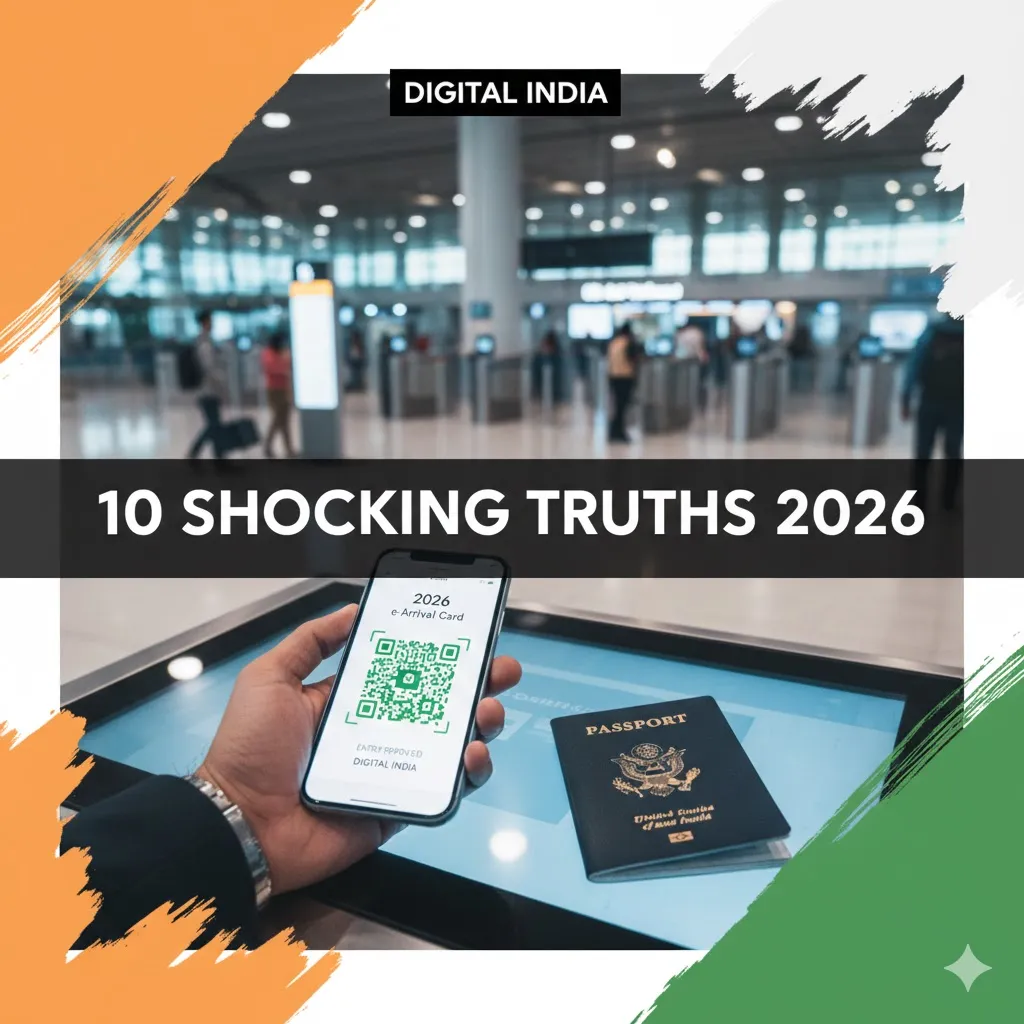
Digital Immigration Meets American Expectations: A Cultural Collision at the Airport
For Americans accustomed to the relatively streamlined immigration processes at US airports—where paper forms are often optional, digital kiosks are intuitive, and backup options abound—arriving in India in 2026 can be a surprisingly challenging introduction to the country's ambitious digital transformation of border control. India's new digital disembarkation forms, which replace or supplement traditional paper arrival cards, represent a significant leap forward in immigration technology. But for US travelers unfamiliar with the system's requirements, quirks, and cultural context, these digital forms can produce a series of genuine shocks that range from mild inconvenience to genuine anxiety.
The digital disembarkation system, which includes the Air Suvidha successor portal, the Digital Immigration Card platform, and integrated health declaration systems, requires travelers to submit detailed personal, travel, and health information before arrival. While designed to speed up processing and enhance security, the system's implementation reflects different priorities, technical assumptions, and cultural expectations than those prevalent in American travel infrastructure.
This comprehensive guide explores the ten most shocking aspects of India's digital disembarkation forms that leave American travelers stunned, confused, or frustrated. From mandatory pre-arrival submission deadlines to stringent photo upload specifications, from QR code dependencies to data privacy concerns, these revelations challenge everything Americans think they know about airport immigration procedures. Understanding these shocks beforehand can transform a potentially stressful arrival experience into a manageable—and even enlightening—cultural adaptation.
Whether you're a first-time visitor to India or a seasoned traveler returning after a few years away, preparing for these digital form realities will help you navigate India's immigration process with confidence, patience, and perhaps even appreciation for the different approach to border management.
Shock #1: Mandatory Pre-Arrival Submission—No Doing It on the Plane

Americans are accustomed to the convenience of completing arrival forms during their flight. On most international flights to the United States, flight attendants distribute paper customs and immigration forms about an hour before landing, giving passengers ample time to fill them out while enjoying their in-flight entertainment. Even when digital options exist, they're typically available as a backup rather than a requirement.
The Indian Reality
India's digital disembarkation system operates on a fundamentally different principle: submission must be completed before you board your flight to India, not during the flight or upon arrival. The official portal typically requires submission 24-72 hours before your scheduled departure, and airlines are increasingly instructed to verify completion before allowing boarding.
This means:
- No last-minute completion: You can't fill out the form while sipping your in-flight ginger ale
- Internet dependency: You must have reliable internet access before departure to submit
- Airline enforcement: Gate agents may check your submission confirmation before allowing boarding
- No paper backup: At many airports, there's no option to complete a paper form if the digital system fails
- 👉 Singapore’s New No-Boarding Directive 2026: Everything US Travelers Need to Know
- 👉 Ningxia Luxury Wine Tasting Exclusive Gobi Desert Cellars Guide 2026
- 👉 The Blue Mosque (Sultan Ahmed Mosque) Guide: 2026 Edition
Why Americans Are Shocked
The American travel culture values flexibility and contingency planning. The idea that a mandatory government form must be completed days in advance, with no backup option, feels restrictive and risky. What if your internet fails? What if you make an error and need to correct it? What if your flight is delayed and your submission timing becomes invalid?
Additionally, Americans are accustomed to government systems offering multiple pathways to compliance. The Indian approach—digital-first with limited alternatives—represents a different philosophy of administrative efficiency that can feel inflexible to those used to more accommodating systems.
How to Cope
The key is preparation and early action:
- Submit your digital disembarkation form 48-72 hours before departure
- Save confirmation emails and QR codes to your phone and print physical backups
- Test the portal before your travel day to familiarize yourself with the interface
- Build buffer time into your pre-departure schedule for form completion
- Carry a portable WiFi hotspot as backup internet access
- 👉 Singapore’s New No-Boarding Directive 2026: Everything US Travelers Need to Know
- 👉 Ningxia Luxury Wine Tasting Exclusive Gobi Desert Cellars Guide 2026
- 👉 The Blue Mosque (Sultan Ahmed Mosque) Guide: 2026 Edition
Shock #2: Photo Upload Requirements That Would Challenge a Professional Photographer

Americans are accustomed to passport photo requirements that are strict but straightforward: plain background, neutral expression, no glasses. India's digital disembarkation forms often require additional photo uploads with specifications that can feel surprisingly demanding.
The Specific Requirements
Typical photo upload specifications for India's digital disembarkation forms include:
- File size: Between 10KB and 100KB (extremely narrow range)
- Dimensions: Exactly 35mm x 45mm or 600px x 600px (no flexibility)
- Format: JPG or PNG only (no HEIC from iPhones without conversion)
- Background: Pure white (not off-white, not light gray)
- Lighting: Even illumination with no shadows on face or background
- Expression: Neutral with both eyes open and mouth closed
- Recency: Taken within last 6 months (strictly enforced)
- 👉 Singapore’s New No-Boarding Directive 2026: Everything US Travelers Need to Know
- 👉 Ningxia Luxury Wine Tasting Exclusive Gobi Desert Cellars Guide 2026
- 👉 The Blue Mosque (Sultan Ahmed Mosque) Guide: 2026 Edition
Technical Challenges for Americans
Several factors make these requirements particularly challenging for American travelers:
- iPhone HEIC format: Most Americans shoot photos in HEIC format, which the Indian portal often doesn't accept without conversion
- File size compression: Reducing a high-resolution smartphone photo to under 100KB without losing required detail is technically challenging
- Background removal: Few Americans have access to professional photo editing tools to create pure white backgrounds
- Dimension precision: Cropping to exact millimeter or pixel specifications requires software many travelers don't have
- 👉 Singapore’s New No-Boarding Directive 2026: Everything US Travelers Need to Know
- 👉 Ningxia Luxury Wine Tasting Exclusive Gobi Desert Cellars Guide 2026
- 👉 The Blue Mosque (Sultan Ahmed Mosque) Guide: 2026 Edition
Why the Strictness?
From the Indian government's perspective, these specifications serve important purposes:
- Automated processing: Standardized photos enable facial recognition and automated verification systems
- Security: Strict requirements reduce fraud and identity manipulation
- Efficiency: Uniform photos speed up manual review when needed
- Database integrity: Consistent formatting maintains clean immigration records
- 👉 Singapore’s New No-Boarding Directive 2026: Everything US Travelers Need to Know
- 👉 Ningxia Luxury Wine Tasting Exclusive Gobi Desert Cellars Guide 2026
- 👉 The Blue Mosque (Sultan Ahmed Mosque) Guide: 2026 Edition
Practical Solutions
To meet photo requirements without stress:
- Use free online tools like Remove.bg for background removal
- Convert HEIC to JPG using iPhone settings or free converters
- Use photo compression tools to hit the exact file size range
- Take your photo against a plain white wall with even lighting
- Prepare your photo 1-2 weeks before travel to allow time for adjustments
- Save multiple versions with different compressions as backups
- 👉 Singapore’s New No-Boarding Directive 2026: Everything US Travelers Need to Know
- 👉 Ningxia Luxury Wine Tasting Exclusive Gobi Desert Cellars Guide 2026
- 👉 The Blue Mosque (Sultan Ahmed Mosque) Guide: 2026 Edition
Shock #3: The QR Code Dependency—Your Phone Is Now Your Passport

Americans are accustomed to carrying physical documents as primary identification. While digital boarding passes have become common, there's typically a paper backup option. India's digital disembarkation system elevates the QR code to a status that can feel uncomfortably central to the entry process.
How the QR Code System Works
Upon successful submission of your digital disembarkation form, the system generates a unique QR code that serves as your digital arrival credential. This QR code:
- Must be presented at immigration counters along with your passport
- Contains encrypted data about your submission, travel details, and health declarations
- Must be scannable by Indian immigration systems (no blurry screenshots)
- Should be accessible offline in case of poor airport connectivity
- May need to be shown multiple times during the arrival process
- 👉 Singapore’s New No-Boarding Directive 2026: Everything US Travelers Need to Know
- 👉 Ningxia Luxury Wine Tasting Exclusive Gobi Desert Cellars Guide 2026
- 👉 The Blue Mosque (Sultan Ahmed Mosque) Guide: 2026 Edition
American Concerns
Several aspects of QR code dependency create anxiety for American travelers:
- Battery anxiety: What if my phone dies before I clear immigration?
- Connectivity concerns: What if I can't access my email or portal at the airport?
- Technical failures: What if the QR code won't scan or the system is down?
- Security worries: Is my personal data safe in a QR code that anyone could theoretically scan?
- Backup uncertainty: Is there really no paper alternative if the digital system fails?
- 👉 Singapore’s New No-Boarding Directive 2026: Everything US Travelers Need to Know
- 👉 Ningxia Luxury Wine Tasting Exclusive Gobi Desert Cellars Guide 2026
- 👉 The Blue Mosque (Sultan Ahmed Mosque) Guide: 2026 Edition
The Cultural Context
India's rapid adoption of QR code technology reflects broader digital payment and identification trends in the country. Systems like UPI (Unified Payments Interface) have made QR codes ubiquitous in Indian commerce, and the immigration system is extending this digital infrastructure to border control. For Indians accustomed to QR-based transactions, this system feels natural; for Americans used to more analog backup options, it can feel risky.
Practical Preparation
To manage QR code dependency confidently:
- Save your QR code to your phone's photo gallery for offline access
- Print 2-3 physical copies as backup (yes, really)
- Ensure your phone is fully charged before arrival; carry a portable charger
- Take screenshots of your confirmation email and portal dashboard
- Write down your submission reference number in case you need manual lookup
- Test your QR code's scannability with a friend's phone before travel
- 👉 Singapore’s New No-Boarding Directive 2026: Everything US Travelers Need to Know
- 👉 Ningxia Luxury Wine Tasting Exclusive Gobi Desert Cellars Guide 2026
- 👉 The Blue Mosque (Sultan Ahmed Mosque) Guide: 2026 Edition
Shock #4: Health Declarations That Feel Like Medical Interrogations

Americans are accustomed to relatively simple health declarations when entering the United States—typically a yes/no question about symptoms or recent travel to disease-affected areas. India's digital disembarkation forms often include health sections that feel surprisingly detailed and medically specific.
Typical Health Declaration Requirements
India's digital health declaration sections may ask for:
- Detailed symptom checklist: Fever, cough, breathing difficulties, loss of taste/smell, etc.
- Temperature readings: Some forms request your temperature within 24 hours of travel
- Vaccination documentation: Upload of vaccination certificates with specific format requirements
- Recent travel history: Detailed list of countries visited in past 14-30 days
- Contact information: Indian address, phone number, and emergency contact details
- Pre-existing conditions: Questions about chronic illnesses that might affect care needs
- 👉 Singapore’s New No-Boarding Directive 2026: Everything US Travelers Need to Know
- 👉 Ningxia Luxury Wine Tasting Exclusive Gobi Desert Cellars Guide 2026
- 👉 The Blue Mosque (Sultan Ahmed Mosque) Guide: 2026 Edition
Privacy Concerns for Americans
These detailed health questions raise several concerns for American travelers accustomed to stronger health privacy protections:
- HIPAA expectations: Americans expect health information to be protected under HIPAA-like standards; it's unclear how Indian systems handle this data
- Data retention: How long is health information stored, and who can access it?
- Insurance implications: Could disclosed pre-existing conditions affect future travel insurance?
- Accuracy pressure: The fear of accidentally providing incorrect information that could delay entry
- 👉 Singapore’s New No-Boarding Directive 2026: Everything US Travelers Need to Know
- 👉 Ningxia Luxury Wine Tasting Exclusive Gobi Desert Cellars Guide 2026
- 👉 The Blue Mosque (Sultan Ahmed Mosque) Guide: 2026 Edition
The Public Health Rationale
From India's perspective, detailed health declarations serve legitimate public health purposes:
- Disease surveillance: Early detection of potential outbreaks among incoming travelers
- Resource planning: Preparing medical facilities for travelers who may need care
- Contact tracing: Ability to reach travelers if health concerns emerge post-arrival
- International compliance: Meeting World Health Organization reporting requirements
- 👉 Singapore’s New No-Boarding Directive 2026: Everything US Travelers Need to Know
- 👉 Ningxia Luxury Wine Tasting Exclusive Gobi Desert Cellars Guide 2026
- 👉 The Blue Mosque (Sultan Ahmed Mosque) Guide: 2026 Edition
How to Navigate Health Declarations
To complete health sections accurately and confidently:
- Answer questions honestly but precisely—don't over-disclose or speculate
- Have your vaccination records readily available in digital format
- Take your temperature before submission if requested
- Prepare your Indian address and contact information in advance
- Understand that health declarations are routine and not personal interrogations
- Keep copies of your health declaration submission for your records
- 👉 Singapore’s New No-Boarding Directive 2026: Everything US Travelers Need to Know
- 👉 Ningxia Luxury Wine Tasting Exclusive Gobi Desert Cellars Guide 2026
- 👉 The Blue Mosque (Sultan Ahmed Mosque) Guide: 2026 Edition
Shock #5: Different Forms for Different Visa Types—A Bureaucratic Maze

Americans are accustomed to relatively standardized immigration forms regardless of visa type. In India, the digital disembarkation system often requires different forms or form sections depending on your visa category, creating a bureaucratic complexity that can feel unnecessarily confusing.
Visa-Specific Form Variations
Depending on your visa type, you may encounter:
- e-Tourist Visa holders: Simplified form focused on tourism details and accommodation
- Business visa holders: Additional sections for company details, invitation letters, and business purpose
- Medical visa holders: Health-specific questions, hospital details, and treatment information
- Employment visa holders: Employer information, work location, and duration details
- Student visa holders: Educational institution details, course information, and guardian contacts
- 👉 Singapore’s New No-Boarding Directive 2026: Everything US Travelers Need to Know
- 👉 Ningxia Luxury Wine Tasting Exclusive Gobi Desert Cellars Guide 2026
- 👉 The Blue Mosque (Sultan Ahmed Mosque) Guide: 2026 Edition
The Confusion Factor
Several aspects create confusion for American travelers:
- Portal navigation: It's not always clear which form version applies to your situation
- Visa category definitions: Indian visa categories don't always map neatly to American expectations
- Dynamic form fields: Some sections appear or disappear based on earlier answers, which can be disorienting
- Error messages: If you select the wrong visa type, error messages may not clearly explain the issue
- 👉 Singapore’s New No-Boarding Directive 2026: Everything US Travelers Need to Know
- 👉 Ningxia Luxury Wine Tasting Exclusive Gobi Desert Cellars Guide 2026
- 👉 The Blue Mosque (Sultan Ahmed Mosque) Guide: 2026 Edition
Why the Complexity?
India's visa-specific forms reflect legitimate administrative needs:
- Tailored processing: Different visa types require different verification steps
- Regulatory compliance: Various visa categories have distinct legal requirements
- Resource allocation: Routing travelers to appropriate immigration counters based on visa type
- Data collection: Gathering visa-specific information for policy and planning purposes
- 👉 Singapore’s New No-Boarding Directive 2026: Everything US Travelers Need to Know
- 👉 Ningxia Luxury Wine Tasting Exclusive Gobi Desert Cellars Guide 2026
- 👉 The Blue Mosque (Sultan Ahmed Mosque) Guide: 2026 Edition
Strategies for Success
To navigate visa-specific forms without confusion:
- Double-check your visa type on your visa sticker or approval email before starting the form
- Use the portal's help section or FAQ to understand form variations
- If uncertain, contact the Indian embassy or consulate for clarification
- Save draft submissions frequently to avoid losing progress if you need to restart
- Take screenshots of completed sections as backup documentation
- Allow extra time for form completion if your visa category has complex requirements
- 👉 Singapore’s New No-Boarding Directive 2026: Everything US Travelers Need to Know
- 👉 Ningxia Luxury Wine Tasting Exclusive Gobi Desert Cellars Guide 2026
- 👉 The Blue Mosque (Sultan Ahmed Mosque) Guide: 2026 Edition
Shock #6: Real-Time Verification That Can Delay Your Entry

Americans are accustomed to immigration processing that, while sometimes slow, follows predictable patterns. India's digital disembarkation system introduces real-time verification steps that can create unpredictable delays, particularly if there are any discrepancies in your submission.
How Real-Time Verification Works
When you present your QR code at Indian immigration, the system:
- Instantly cross-references your submission with government databases
- Verifies your passport details against your submitted information
- Checks for any alerts, watchlist matches, or travel restrictions
- May trigger additional verification if any data points don't match perfectly
- Can require manual review by immigration officers if automated checks flag concerns
- 👉 Singapore’s New No-Boarding Directive 2026: Everything US Travelers Need to Know
- 👉 Ningxia Luxury Wine Tasting Exclusive Gobi Desert Cellars Guide 2026
- 👉 The Blue Mosque (Sultan Ahmed Mosque) Guide: 2026 Edition
Common Verification Triggers
Several factors can trigger additional verification steps:
- Name discrepancies: Slight differences between passport name and form submission (middle names, hyphens, etc.)
- Passport number typos: Even a single digit error can halt automated processing
- Date format confusion: MM/DD/YYYY vs. DD/MM/YYYY inconsistencies
- Visa validity questions: System checks that your visa is valid for entry on your arrival date
- Health declaration flags: Any "yes" answers to symptom questions may trigger health screening
- 👉 Singapore’s New No-Boarding Directive 2026: Everything US Travelers Need to Know
- 👉 Ningxia Luxury Wine Tasting Exclusive Gobi Desert Cellars Guide 2026
- 👉 The Blue Mosque (Sultan Ahmed Mosque) Guide: 2026 Edition
American Expectations vs. Indian Reality
Americans often expect immigration systems to be forgiving of minor errors or to have clear escalation paths when issues arise. India's real-time verification system, while efficient when everything matches perfectly, can feel unforgiving when discrepancies occur:
- Limited self-service correction: You typically can't fix errors on the spot; an officer must intervene
- Potential for delays: Manual review can take 15 minutes to over an hour depending on airport traffic
- Communication challenges: Officers may not always clearly explain what needs correction
- Stress amplification: Being tired after a long flight while navigating bureaucratic hurdles
- 👉 Singapore’s New No-Boarding Directive 2026: Everything US Travelers Need to Know
- 👉 Ningxia Luxury Wine Tasting Exclusive Gobi Desert Cellars Guide 2026
- 👉 The Blue Mosque (Sultan Ahmed Mosque) Guide: 2026 Edition
Prevention Strategies
To minimize verification delays:
- Triple-check all data entry against your passport before submission
- Use copy-paste for passport numbers and other critical fields to avoid typos
- Ensure date formats match the portal's requirements (typically DD/MM/YYYY)
- Submit your form early enough to allow time for corrections if needed
- Carry printed copies of your visa approval and passport bio page as backup verification
- Remain patient and polite if additional verification is required—officers are following protocols
- 👉 Singapore’s New No-Boarding Directive 2026: Everything US Travelers Need to Know
- 👉 Ningxia Luxury Wine Tasting Exclusive Gobi Desert Cellars Guide 2026
- 👉 The Blue Mosque (Sultan Ahmed Mosque) Guide: 2026 Edition
Shock #7: Data Privacy Concerns in an Era of Digital Surveillance

Americans are increasingly conscious of data privacy, particularly regarding government collection of personal information. India's digital disembarkation forms collect extensive personal data, raising legitimate questions about how this information is stored, used, and protected.
What Data Is Collected
India's digital disembarkation forms typically collect:
- Biographical data: Full name, date of birth, nationality, passport details
- Travel information: Flight details, intended address in India, purpose of visit
- Health information: Symptoms, vaccination status, pre-existing conditions
- Contact details: Phone numbers, email addresses, emergency contacts
- Device information: IP address, device type, and submission timestamps
- 👉 Singapore’s New No-Boarding Directive 2026: Everything US Travelers Need to Know
- 👉 Ningxia Luxury Wine Tasting Exclusive Gobi Desert Cellars Guide 2026
- 👉 The Blue Mosque (Sultan Ahmed Mosque) Guide: 2026 Edition
American Privacy Expectations
Several aspects create privacy concerns for American travelers:
- HIPAA expectations: Americans expect health information to have strong legal protections
- Data retention uncertainty: It's often unclear how long India retains disembarkation data
- Third-party sharing: Concerns about whether data is shared with other governments or entities
- Security assurances: Questions about encryption, access controls, and breach protocols
- Recourse limitations: Limited options if you believe your data was mishandled
- 👉 Singapore’s New No-Boarding Directive 2026: Everything US Travelers Need to Know
- 👉 Ningxia Luxury Wine Tasting Exclusive Gobi Desert Cellars Guide 2026
- 👉 The Blue Mosque (Sultan Ahmed Mosque) Guide: 2026 Edition
The Indian Legal Framework
India has been developing its data protection framework, with the Digital Personal Data Protection Act representing a significant step toward comprehensive privacy regulation. However, implementation is ongoing, and travelers may find:
- Evolving standards: Privacy protections are strengthening but not yet at US/EU levels
- National security exceptions: Immigration data may have broader usage rights for security purposes
- Transparency gaps: Limited public information about data handling practices
- Enforcement mechanisms: Developing but not yet fully operational complaint systems
- 👉 Singapore’s New No-Boarding Directive 2026: Everything US Travelers Need to Know
- 👉 Ningxia Luxury Wine Tasting Exclusive Gobi Desert Cellars Guide 2026
- 👉 The Blue Mosque (Sultan Ahmed Mosque) Guide: 2026 Edition
Practical Privacy Protection
To protect your privacy while complying with requirements:
- Provide only the information explicitly required—don't over-disclose
- Use a dedicated travel email address rather than your primary personal email
- Consider using a secondary phone number for travel communications
- Keep records of what you submitted and when for your own documentation
- Be aware that some data collection is mandatory for entry—balance privacy concerns with travel needs
- Stay informed about India's evolving data protection laws and your rights
- 👉 Singapore’s New No-Boarding Directive 2026: Everything US Travelers Need to Know
- 👉 Ningxia Luxury Wine Tasting Exclusive Gobi Desert Cellars Guide 2026
- 👉 The Blue Mosque (Sultan Ahmed Mosque) Guide: 2026 Edition
Shock #8: Limited Customer Support When Things Go Wrong

Americans are accustomed to robust customer support systems with multiple contact channels, clear escalation paths, and service level expectations. India's digital disembarkation system, while technologically advanced, often lacks the customer support infrastructure Americans expect when technical issues arise.
Typical Support Limitations
Travelers may encounter:
- Limited contact channels: Email-only support with slow response times (24-72 hours)
- No live chat: Few portals offer real-time chat support for urgent issues
- Phone support challenges: If phone support exists, long wait times and potential language barriers
- Time zone complications: Support teams operating on Indian time may not align with your pre-departure needs
- Generic responses: Automated replies that don't address specific technical issues
- 👉 Singapore’s New No-Boarding Directive 2026: Everything US Travelers Need to Know
- 👉 Ningxia Luxury Wine Tasting Exclusive Gobi Desert Cellars Guide 2026
- 👉 The Blue Mosque (Sultan Ahmed Mosque) Guide: 2026 Edition
Common Issues Without Clear Resolution Paths
Several problems leave travelers feeling stranded:
- Submission errors: Portal rejects your form but doesn't clearly explain why
- QR code issues: Generated code won't scan or shows incorrect information
- Account access problems: Forgotten passwords or locked accounts with limited recovery options
- System outages: Portal downtime close to your departure with no alternative submission method
- Data correction needs: Need to fix an error after submission but no self-service edit option
- 👉 Singapore’s New No-Boarding Directive 2026: Everything US Travelers Need to Know
- 👉 Ningxia Luxury Wine Tasting Exclusive Gobi Desert Cellars Guide 2026
- 👉 The Blue Mosque (Sultan Ahmed Mosque) Guide: 2026 Edition
Cultural and Resource Context
Several factors contribute to limited customer support:
- Resource constraints: Government IT budgets may prioritize system development over support infrastructure
- Volume challenges: Millions of travelers submit forms; scaling support proportionally is difficult
- Cultural expectations: Different norms around government service responsiveness
- Technical complexity: Immigration systems involve multiple agencies, complicating support coordination
- 👉 Singapore’s New No-Boarding Directive 2026: Everything US Travelers Need to Know
- 👉 Ningxia Luxury Wine Tasting Exclusive Gobi Desert Cellars Guide 2026
- 👉 The Blue Mosque (Sultan Ahmed Mosque) Guide: 2026 Edition
Proactive Problem Prevention
To minimize reliance on customer support:
- Submit your form 3-4 days before departure to allow time for issue resolution
- Take screenshots of every step of your submission process
- Save all confirmation emails and reference numbers in multiple locations
- Test the portal with a practice submission (using dummy data) to understand the interface
- Identify backup contact methods (embassy, airline, travel agent) if portal support fails
- Prepare a brief, clear description of any issues to expedite support interactions
- 👉 Singapore’s New No-Boarding Directive 2026: Everything US Travelers Need to Know
- 👉 Ningxia Luxury Wine Tasting Exclusive Gobi Desert Cellars Guide 2026
- 👉 The Blue Mosque (Sultan Ahmed Mosque) Guide: 2026 Edition
Shock #9: Integration with Multiple Systems Creates Confusion

Americans are accustomed to relatively integrated government systems where one submission often serves multiple purposes. India's digital disembarkation ecosystem sometimes feels fragmented, with different portals, forms, and requirements that don't always communicate seamlessly.
The Ecosystem Complexity
Travelers may encounter:
- Multiple portals: Air Suvidha successor, Digital Immigration Card, state-specific health forms
- Different login systems: Separate credentials for different government platforms
- Overlapping requirements: Similar information requested on multiple forms
- Inconsistent interfaces: Different design patterns and user experiences across portals
- Timing mismatches: Different submission deadlines for different forms
- 👉 Singapore’s New No-Boarding Directive 2026: Everything US Travelers Need to Know
- 👉 Ningxia Luxury Wine Tasting Exclusive Gobi Desert Cellars Guide 2026
- 👉 The Blue Mosque (Sultan Ahmed Mosque) Guide: 2026 Edition
Common Integration Pain Points
Several scenarios create confusion:
- Data re-entry: Submitting the same information on multiple platforms
- Conflicting instructions: Different portals providing slightly different guidance
- Status uncertainty: Not knowing which submission is "primary" or most important
- Update propagation: Correcting information on one portal doesn't update others
- Verification confusion: Not knowing which QR code or reference number to present at immigration
- 👉 Singapore’s New No-Boarding Directive 2026: Everything US Travelers Need to Know
- 👉 Ningxia Luxury Wine Tasting Exclusive Gobi Desert Cellars Guide 2026
- 👉 The Blue Mosque (Sultan Ahmed Mosque) Guide: 2026 Edition
Why Integration Is Challenging
Several factors contribute to system fragmentation:
- Legacy systems: Older government IT infrastructure that doesn't easily integrate with new platforms
- Agency silos: Different government departments managing different aspects of arrival processing
- Rapid development: New systems deployed quickly to meet urgent needs (like pandemic response)
- State vs. federal: Some Indian states have additional requirements beyond national systems
- 👉 Singapore’s New No-Boarding Directive 2026: Everything US Travelers Need to Know
- 👉 Ningxia Luxury Wine Tasting Exclusive Gobi Desert Cellars Guide 2026
- 👉 The Blue Mosque (Sultan Ahmed Mosque) Guide: 2026 Edition
Navigation Strategies
To manage multiple systems effectively:
- Start with the official Indian government tourism or immigration website for authoritative guidance
- Create a checklist of all required forms and their submission deadlines
- Use a password manager to handle multiple login credentials securely
- Keep a master document with all your submission reference numbers and QR codes
- When in doubt, prioritize the national immigration portal over state or airline-specific forms
- Allow extra time for form completion to accommodate system complexity
- 👉 Singapore’s New No-Boarding Directive 2026: Everything US Travelers Need to Know
- 👉 Ningxia Luxury Wine Tasting Exclusive Gobi Desert Cellars Guide 2026
- 👉 The Blue Mosque (Sultan Ahmed Mosque) Guide: 2026 Edition
Shock #10: The Absence of Paper Backup Options at Many Airports

Perhaps the most profound shock for Americans is discovering that at many Indian airports, there is simply no paper backup option if the digital disembarkation system fails or if you encounter technical difficulties. This represents a fundamental philosophical difference in approach to contingency planning.
The Digital-First Reality
At major Indian airports like Delhi (DEL), Mumbai (BOM), and Bangalore (BLR):
- No paper forms available: Immigration counters may not stock traditional arrival cards
- Staff trained for digital: Officers expect QR codes and digital submissions, not paper alternatives
- Limited manual processing: If the digital system is down, processing may slow dramatically
- Airline enforcement: Airlines may not allow boarding without digital submission confirmation
- 👉 Singapore’s New No-Boarding Directive 2026: Everything US Travelers Need to Know
- 👉 Ningxia Luxury Wine Tasting Exclusive Gobi Desert Cellars Guide 2026
- 👉 The Blue Mosque (Sultan Ahmed Mosque) Guide: 2026 Edition
American Expectations of Redundancy
Americans are accustomed to systems with multiple fallback options:
- Redundancy expectation: If digital fails, paper should be available
- Contingency planning: Government systems typically have backup procedures
- Customer accommodation: Staff trained to help travelers with technical difficulties
- Clear escalation: Defined paths for resolving system failures
- 👉 Singapore’s New No-Boarding Directive 2026: Everything US Travelers Need to Know
- 👉 Ningxia Luxury Wine Tasting Exclusive Gobi Desert Cellars Guide 2026
- 👉 The Blue Mosque (Sultan Ahmed Mosque) Guide: 2026 Edition
The Philosophy Behind Digital-First
India's approach reflects several strategic priorities:
- Efficiency goals: Digital processing is faster and reduces manual data entry errors
- Modernization push: Demonstrating technological advancement on the global stage
- Cost considerations: Reducing paper, printing, and manual processing expenses
- Data quality: Digital submissions create cleaner, more searchable immigration records
- 👉 Singapore’s New No-Boarding Directive 2026: Everything US Travelers Need to Know
- 👉 Ningxia Luxury Wine Tasting Exclusive Gobi Desert Cellars Guide 2026
- 👉 The Blue Mosque (Sultan Ahmed Mosque) Guide: 2026 Edition
Practical Preparation for Digital-Only Reality
To thrive in a digital-first environment:
- Assume digital submission is mandatory and prepare accordingly
- Print multiple physical backups of your QR code and confirmation details
- Ensure your phone is fully charged and carry a portable power bank
- Save offline copies of all submission confirmations to your device
- Arrive at the airport with extra time to handle any technical issues
- Remain flexible and patient if you encounter system limitations
- 👉 Singapore’s New No-Boarding Directive 2026: Everything US Travelers Need to Know
- 👉 Ningxia Luxury Wine Tasting Exclusive Gobi Desert Cellars Guide 2026
- 👉 The Blue Mosque (Sultan Ahmed Mosque) Guide: 2026 Edition
Conclusion: Adapting to Digital Immigration with Patience and Preparation

India's digital disembarkation forms represent a bold step toward modern, efficient border management. For American travelers, however, the transition can feel jarring, challenging deeply held expectations about flexibility, redundancy, customer support, and privacy. The ten shocks explored in this guide—from mandatory pre-arrival submission to the absence of paper backups—highlight the cultural and philosophical differences that underlie seemingly simple administrative processes.
Yet these challenges are not insurmountable. With preparation, patience, and a willingness to adapt, American travelers can navigate India's digital immigration system successfully. The key is recognizing that different doesn't mean worse—India's approach prioritizes efficiency, data integrity, and technological advancement in ways that reflect its own developmental context and strategic priorities.
By understanding these shocks beforehand, you can transform potential frustration into informed preparation. Submit your forms early, prepare your documents meticulously, bring physical backups of digital credentials, and approach the process with curiosity rather than criticism. Remember that immigration officers are implementing systems designed to protect national security while facilitating legitimate travel—your cooperation and preparation make their jobs easier and your entry smoother.
Ultimately, navigating India's digital disembarkation forms is more than a bureaucratic hurdle—it's your first authentic encounter with a rapidly modernizing nation that is reimagining governance for the digital age. The patience and adaptability you practice at the immigration counter will serve you well throughout your Indian journey, where flexibility and openness to new ways of doing things are among the most valuable travel skills you can cultivate.
So embrace the digital challenge, prepare thoroughly, and step confidently into your Indian adventure. The shocks may be real, but so is the reward of experiencing one of the world's most dynamic and fascinating countries.
0 Comments