.webp)
.webp)
Discovering the Longji Rice Terraces: A Photographer's Paradise
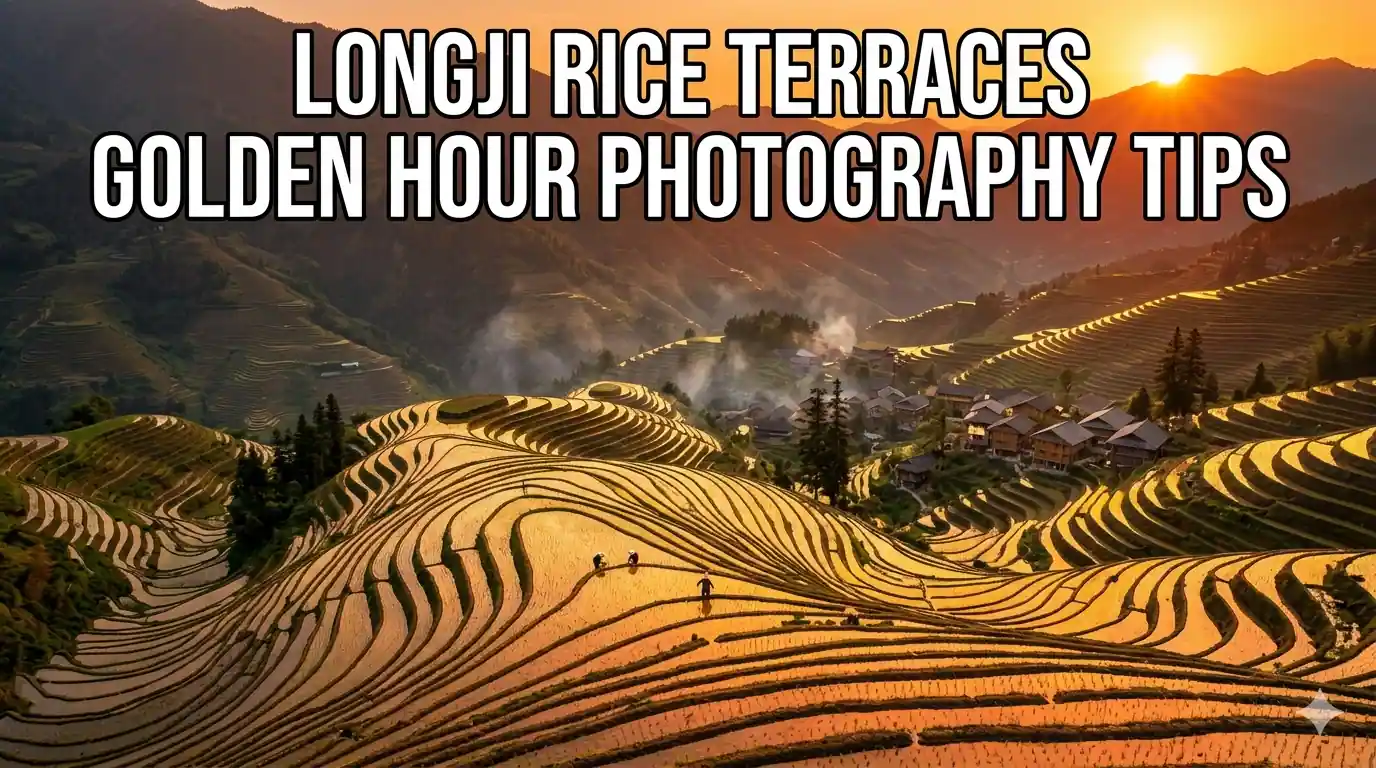
The Longji Rice Terraces, also known as Dragon's Backbone Rice Terraces, represent one of China's most spectacular photographic subjects. Located in Longsheng County, Guangxi Province, these magnificent terraces have been carved into the mountainsides over six hundred years ago by the Zhuang and Yao ethnic minorities, creating sweeping curves and geometric patterns that cascade down mountainsides from elevations of three hundred to one thousand one hundred meters.
Golden hour photography at Longji offers unparalleled opportunities to capture the interplay of light, water, and ancient agricultural engineering. The warm, directional light during sunrise and sunset transforms the water-filled terraces into mirrors reflecting brilliant oranges, pinks, and golds, while the curved patterns create leading lines that draw viewers through the composition.
Understanding the unique characteristics of this location, from seasonal water levels to optimal viewpoints and technical camera settings, proves essential for capturing images that do justice to this UNESCO-recognized cultural landscape. The terraces change dramatically throughout the year, with spring offering water-filled mirrors, summer displaying lush green rice plants, autumn showcasing golden harvest colors, and winter presenting stark, sculptural forms.
This comprehensive guide examines everything photographers need to know about capturing the Longji Rice Terraces during golden hour, including optimal timing, technical settings, composition strategies, location scouting, and practical considerations for working in this remote mountainous region.
Understanding Golden Hour at Longji

Golden hour photography requires precise timing and understanding of how light interacts with the terraced landscape. The quality, direction, and color temperature of light during these periods creates the magical atmosphere that makes Longji images so compelling.
Timing and Seasonal Variations
Golden hour duration and timing vary significantly throughout the year at Longji's latitude (approximately twenty-five degrees north). During spring and autumn equinoxes, golden hour typically begins forty-five to sixty minutes before sunset and after sunrise, providing optimal shooting windows.
Summer months (June through August) feature earlier sunrises around five thirty AM and later sunsets near seven thirty PM, though the region experiences frequent afternoon cloud cover and rain that can both hinder and enhance photography opportunities.
Winter golden hour (November through February) occurs later in the morning around seven AM and earlier in the evening near six PM, with shorter duration but often clearer atmospheric conditions and dramatic mist formations in the valleys.
Water-filling season from late April through May provides the most spectacular reflection opportunities as farmers flood the terraces before planting. The mirror-like surfaces multiply the golden hour light, creating stunning visual impact.
Light Quality and Direction
East-facing terraces receive direct illumination during sunrise golden hour, with light raking across the curved surfaces to emphasize texture and three-dimensional form. The low angle creates long shadows that add depth and drama to compositions.
West-facing terraces come alive during sunset golden hour, with warm light illuminating water-filled paddies and creating brilliant reflections. The direction of light determines which sections of the vast terrace system photograph best at different times.
Overcast conditions during golden hour can actually enhance photography by creating soft, even illumination that reduces harsh contrasts while maintaining warm color temperatures. Cloud cover can also add dramatic elements to compositions.
Atmospheric conditions including mist, fog, and haze common in the mountainous terrain add layers and depth to images, creating the ethereal quality that characterizes iconic Longji photographs. These conditions occur most frequently in early morning and after rain.
Color Temperature Considerations
Golden hour light at Longji typically ranges from three thousand to four thousand Kelvin, creating warm tones that complement the natural greens of rice plants and browns of earthen terrace walls. Understanding color temperature helps photographers make informed decisions about white balance settings.
Shooting in RAW format allows post-processing flexibility to adjust white balance and enhance the golden hour warmth while maintaining natural color relationships. Auto white balance often works well but manual settings provide more consistency across a series of images.
The reflection of warm golden hour light in water-filled terraces creates color temperatures that can exceed the actual sunlight, with reflections appearing more saturated and intense than the light source itself.
Essential Camera Equipment

Successfully photographing the Longji Rice Terraces requires careful equipment selection balancing portability for mountain hiking with image quality and versatility for varied shooting situations.
Camera Bodies
Full-frame cameras provide superior image quality and low-light performance advantageous during golden hour's diminishing light levels. The larger sensors capture greater dynamic range essential for handling the high contrast between bright sky reflections and shadowed terrace walls.
APS-C crop sensor cameras offer advantages including lighter weight for hiking, increased effective focal length for telephoto work, and often superior battery life. Modern crop sensors deliver excellent image quality suitable for professional work.
Weather sealing proves important given Longji's humid climate and frequent rain, particularly during growing season. Protecting equipment from moisture and dust ensures reliability during critical shooting moments.
Dual card slot cameras provide backup security for once-in-a-lifetime shots, allowing simultaneous recording to two memory cards. The remote location makes equipment failure particularly problematic, making redundancy valuable.
Lens Selection
Wide-angle lenses (fourteen to twenty-four millimeter on full-frame, ten to twenty millimeter on crop sensors) capture the sweeping scope of terrace systems, emphasizing the vast scale and intricate patterns. These lenses excel at foreground-to-background compositions showing multiple terrace levels.
Standard zoom lenses (twenty-four to seventy millimeter or twenty-four to one hundred five millimeter) provide versatility for varied compositions from wide landscape views to tighter detail shots. These lenses often deliver superior optical quality compared to super-zooms.
Telephoto lenses (seventy to two hundred millimeter or one hundred to four hundred millimeter) isolate specific terrace sections, compress perspective to emphasize patterns, and reach distant viewpoints inaccessible to hikers. Telephotos prove essential for capturing intimate landscape details and abstract patterns.
Prime lenses (twenty millimeter, thirty-five millimeter, fifty millimeter) offer superior sharpness and wider apertures for low-light situations, though they sacrifice the framing flexibility of zoom lenses. Consider primes for dedicated golden hour sessions when weight permits.
Support and Stability Equipment
Sturdy tripods prove essential for golden hour photography when light levels require longer exposures for optimal image quality. Carbon fiber tripods balance stability with reduced weight for mountain hiking.
Ball heads with independent panning locks allow precise composition adjustments while maintaining stability. Quick-release plates facilitate rapid camera mounting and removal when conditions change quickly.
Cable releases or intervalometers enable shutter triggering without camera contact, eliminating vibration that can soften images during longer exposures. Wireless or smartphone-controlled releases provide convenience without additional cables.
Neutral density filters (three-stop, six-stop, ten-stop) extend exposure times for creative motion blur effects in moving water or clouds, though golden hour's already-dim light often provides sufficiently slow shutter speeds without filters.
Additional Equipment Considerations
Polarizing filters reduce reflections on water surfaces when desired, enhance sky contrast, and saturate colors. Variable polarizers provide adjustment flexibility though fixed polarizers often deliver superior optical quality.
Graduated neutral density filters balance exposure between bright sky and darker foreground, though modern cameras' dynamic range and post-processing techniques often make these less necessary than in film photography.
Multiple batteries prove essential as cold mountain mornings and extended shooting drain power quickly. Keep batteries warm in interior pockets when not in use to maximize performance.
Ample memory card capacity (sixty-four gigabyte or larger) accommodates RAW file shooting without frequent card changes. Carry backup cards in case of failure or full capacity during extended sessions.
Technical Camera Settings

Optimal camera settings for Longji Rice Terrace photography balance image quality, creative control, and the technical challenges of golden hour lighting conditions.
Aperture Selection
Aperture priority mode (A or Av) with apertures between f/8 and f/16 provides sufficient depth of field to keep foreground terraces and distant mountains sharp while maintaining optimal lens sharpness. Most lenses achieve peak sharpness around f/8 to f/11.
Smaller apertures (f/16 to f/22) increase depth of field for scenes requiring sharpness from immediate foreground to distant peaks, though diffraction reduces overall sharpness. Use smallest apertures only when depth of field demands outweigh sharpness losses.
Wider apertures (f/2.8 to f/5.6) isolate specific terrace details, create selective focus effects, and allow faster shutter speeds in dim light. These apertures work well for intimate landscape details and abstract compositions.
Focus stacking techniques combining multiple exposures at different focus points overcome depth of field limitations, particularly for close foreground elements with distant backgrounds. This technique requires tripod stability and post-processing work.
Shutter Speed Considerations
Shutter speeds during golden hour typically range from one sixtieth second to several seconds depending on light levels and creative intent. Use tripod for any shutter speed slower than one over focal length to ensure sharpness.
Longer exposures (one second to thirty seconds) smooth water surfaces in terraces, blur moving clouds for dramatic skies, and capture maximum light in dim conditions. Use remote release or self-timer to prevent camera shake.
Faster shutter speeds (one two hundred fiftieth second or faster) freeze water movement in irrigation flows, capture farmers working in terraces, and allow handheld shooting when tripods prove impractical.
Bulb mode enables exposures longer than camera's maximum shutter speed, useful for extremely low light conditions or creative long-exposure effects. Requires cable release and careful exposure calculation.
ISO Management
Base ISO (typically one hundred or two hundred) delivers optimal image quality with minimal noise and maximum dynamic range. Use base ISO whenever light levels and creative requirements permit.
ISO four hundred to eight hundred provides flexibility for handheld shooting or faster shutter speeds while maintaining excellent image quality on modern cameras. This range handles most golden hour situations effectively.
ISO sixteen hundred to thirty-two hundred becomes necessary in very low light or when fast shutter speeds freeze action. Modern cameras handle these ISOs well though noise increases noticeably.
Auto ISO with maximum limit set to acceptable noise threshold (often ISO three thousand two hundred) allows camera to adjust sensitivity while maintaining shutter speed and aperture priorities. This setting proves useful for changing light conditions.
Focus and Metering Strategies
Manual focus with live view magnification provides precise control for critical landscape work, particularly in low light where autofocus struggles. Focus on hyperfocal distance or one third into the scene for maximum depth of field.
Single-point autofocus on high-contrast edges works well when autofocus proves necessary. Avoid focusing on uniform surfaces like water or sky that confuse autofocus systems.
Evaluative or matrix metering modes work well for most golden hour scenes, though exposure compensation of minus one third to minus two thirds stop often necessary to prevent blown highlights in bright reflections.
Spot metering on mid-tone areas (green rice plants, earthen walls) provides consistent exposure readings. Meter off the terraces themselves rather than bright sky reflections for balanced exposures.
File Format and Quality
RAW format capture preserves maximum image data for post-processing flexibility, essential for handling golden hour's high contrast and adjusting white balance. RAW files allow recovery of highlight and shadow detail impossible with JPEG.
RAW plus JPEG recording provides immediate JPEG previews for quick review while retaining RAW files for serious processing. This dual format uses more card space but offers workflow flexibility.
Maximum resolution and quality settings ensure images retain detail for large prints and cropping flexibility. Storage costs being low, there is little reason to compromise on file quality.
Composition Techniques for Rice Terraces

The Longji Rice Terraces offer unique compositional opportunities with their sweeping curves, geometric patterns, and layered landscapes. Mastering composition transforms good photographs into compelling visual stories.
Leading Lines and Curves
The terraces' natural curves create powerful leading lines that guide viewers through compositions. Position yourself to maximize these curves, using them to draw attention from foreground to background or toward focal points like villages or distinctive trees.
S-curves formed by terrace contours create dynamic, flowing compositions more interesting than straight lines. Seek viewpoints that reveal these S-curves in their full elegance, often requiring elevated positions.
Multiple parallel terrace lines create rhythm and repetition that adds visual interest. Vary the spacing and emphasis of these lines to create compositions that engage viewers without becoming monotonous.
Converging lines created by terraces receding into distance add depth and three-dimensionality. Use wide-angle lenses close to terrace edges to exaggerate this convergence for dramatic effect.
Foreground Interest and Depth
Strong foreground elements anchor compositions and add depth to scenes. Position water-filled terrace sections, distinctive rocks, or vegetation in the immediate foreground to create entry points for viewers.
Layering multiple terrace levels from foreground through midground to background creates dimensional depth. Use varying light, color, or focus to differentiate these layers and prevent flat-looking images.
Including human elements like farmers working in terraces adds scale, narrative interest, and cultural context. Position these elements according to the rule of thirds rather than centering for more dynamic compositions.
Traditional wooden stilt houses of Zhuang and Yao villages provide architectural interest and cultural context. Include these structures to add human scale and cultural significance to landscape images.
Reflections and Symmetry
Water-filled terraces during planting season create mirror-like reflections that double the visual impact of golden hour skies. Position yourself to capture these reflections symmetrically for maximum effect.
Partial reflections with terrace walls breaking the water surface add texture and interest compared to perfect mirror reflections. Experiment with different angles to find the most compelling balance.
Asymmetric compositions using reflections in only part of the frame create visual tension and interest. Use the rule of thirds to position reflection boundaries for balanced but dynamic compositions.
Multiple terrace levels reflecting sky create repeating patterns that add complexity and visual rhythm. Seek viewpoints that reveal these repeating reflections in their full scope.
Framing and Perspective
Natural framing elements like overhanging branches, traditional architecture, or rock formations add depth and context while directing attention to main subjects. Use these frames sparingly to avoid cluttering compositions.
Elevated viewpoints from village guesthouses or hiking trails reveal the full scope of terrace systems. Higher perspectives show patterns and relationships invisible from ground level.
Low angles close to terrace walls emphasize texture, scale, and the engineering feat of terrace construction. Get close to terrace edges (carefully) to create intimate perspectives.
Aerial perspectives from drones (where permitted) reveal patterns and scope impossible from ground level. Check local regulations as drone use may be restricted in certain areas.
Optimal Viewpoints and Locations

Longji Rice Terraces encompass multiple scenic areas, each offering distinct photographic opportunities. Understanding these locations helps photographers plan efficient golden hour sessions.
Jinkeng Terraces (Red Yao Area)
Jinkeng represents the most photographed section with three main viewing platforms offering varied perspectives. The area's name derives from the Red Yao ethnic minority who maintain these terraces.
Platform One (Dajie) provides panoramic views of multiple terrace levels cascading down the mountainside. This viewpoint works exceptionally well for sunrise when east-facing terraces catch first light.
Platform Two (Qianceng Tianti or Thousand Layer Terraces) offers the most spectacular sunset views with west-facing terraces reflecting golden hour light. This is the most popular viewpoint requiring early arrival for good positions.
Platform Three (Jinfoding) sits at highest elevation providing bird's-eye perspectives of the entire terrace system. This viewpoint requires significant hiking but rewards with comprehensive views ideal for wide-angle compositions.
Ping'an Terraces (Zhuang Area)
Ping'an represents the most accessible and developed terrace area with well-maintained trails and viewing platforms. The Zhuang ethnic minority maintains these terraces with traditional methods.
Seven Stars with Moon platform offers classic views of terraces arranged in patterns resembling celestial bodies. This viewpoint works well for both sunrise and sunset with varied orientations.
Dragon's Backbone viewpoint provides the iconic sweeping curve that gives the terraces their alternative name. This composition requires telephoto lenses to isolate the distinctive curve from surrounding terraces.
The village itself offers photographic opportunities with traditional wooden architecture, local culture, and terraces integrated into daily life. Golden hour light illuminates village structures beautifully.
Lesser-Known Locations
Huangluo Yao Village features the famous Long Hair Village where Red Yao women maintain hair sometimes exceeding one meter in length. Cultural photography opportunities exist alongside terrace views.
Tian Tou Zhai village offers authentic village life with fewer tourists than main viewing areas. The terraces here photograph beautifully with traditional architecture integrated into compositions.
Hiking between villages reveals hidden terrace sections and perspectives unavailable from main viewpoints. Allow time for exploration beyond popular platforms to discover unique compositions.
Seasonal Considerations

Longji Rice Terraces transform dramatically throughout the year, with each season offering distinct photographic opportunities and challenges.
Spring Water-Filling Season (April-May)
Spring provides the most spectacular reflection opportunities as farmers flood terraces before rice planting. The mirror-like water surfaces multiply golden hour light creating stunning visual impact.
Water levels vary as farmers manage irrigation, with some terraces full while others remain dry. This variation adds visual interest but requires flexibility in composition.
Mist and fog occur frequently in spring mornings adding atmospheric depth and ethereal quality to images. Early mornings prove particularly productive for misty conditions.
Rain showers common in spring can both hinder and enhance photography. Rain creates dramatic skies and clears atmospheric haze, though it requires weather protection for equipment.
Summer Growing Season (June-August)
Summer displays lush green rice plants creating vibrant compositions with rich color. The green terraces contrast beautifully with golden hour's warm light.
Dense vegetation reduces reflection opportunities but adds texture and color variety. The living rice plants create different visual character compared to water-filled spring terraces.
Afternoon thunderstorms common in summer can create dramatic lighting with breaks in clouds illuminating specific terrace sections. Storm chasing can yield spectacular results though requires patience.
Higher humidity and frequent rain require diligent equipment protection. Silica gel packets in camera bags and rain covers prove essential during summer photography.
Autumn Harvest Season (September-October)
Autumn showcases golden rice plants ready for harvest creating warm color palettes complementing golden hour light. The terraces display brilliant yellows and golds.
Harvest activities provide cultural photography opportunities with farmers cutting rice using traditional methods. Include human elements to document this important agricultural process.
Clearer atmospheric conditions in autumn provide excellent visibility for distant mountain views. The stable weather makes planning golden hour sessions more predictable.
Varying harvest times across different terrace elevations create patchwork patterns of golden and green sections adding visual complexity to compositions.
Winter Dormant Season (November-March)
Winter reveals the terraces' sculptural forms without vegetation or water, emphasizing the engineering and geometry of the terrace construction. The bare earth creates abstract patterns.
Snow occasionally dusts the terraces creating rare and spectacular photographic opportunities. Snow-covered terraces photograph beautifully though such conditions prove unpredictable.
Mist and fog occur frequently in winter mornings creating ethereal atmospheres. The cold air holds moisture creating dramatic atmospheric effects.
Fewer tourists during winter provide unobstructed access to viewpoints and more intimate photography experiences. The quiet atmosphere enhances the meditative quality of golden hour sessions.
Practical Field Tips

Successful golden hour photography at Longji requires practical preparation beyond technical camera knowledge. These field tips address real-world challenges of working in this remote mountainous location.
Timing and Logistics
Arrive at viewpoints at least forty-five minutes before sunrise or two hours before sunset to secure good positions and scout compositions. Popular viewpoints fill quickly during peak seasons.
Stay overnight in terrace villages to maximize golden hour opportunities without lengthy hikes in darkness. Village guesthouses provide basic accommodation with terrace views.
Check weather forecasts but remain flexible as mountain weather changes rapidly. Cloud cover can both ruin and enhance golden hour photography requiring adaptability.
Allow extra time for hiking between viewpoints as mountain trails prove more challenging than distance suggests. Fitness level affects how quickly you can reach sunrise viewpoints.
Equipment Protection
Protect equipment from humidity and rain with weather-sealed bags, silica gel packets, and rain covers. The humid mountain environment threatens camera electronics and lenses.
Clean lenses and sensors regularly as dust and moisture accumulate quickly in terrace environments. Carry lens cleaning supplies and use them frequently.
Use lens hoods to protect front elements from rain, condensation, and accidental bumps. Hoods also reduce flare when shooting toward the sun during golden hour.
Keep backup batteries warm in interior pockets as cold mountain mornings drain power quickly. Rotate batteries to maintain power availability throughout extended sessions.
Safety Considerations
Exercise extreme caution on terrace edges especially when wet or when carrying heavy camera equipment. The earthen walls can be slippery and falls can cause serious injury.
Respect farmers working in terraces by staying on designated paths and not trampling rice plants. These terraces represent livelihoods, not just photographic subjects.
Carry headlamps or flashlights for pre-dawn hikes to sunrise viewpoints and post-sunset returns. Mountain trails prove dangerous in complete darkness.
Stay hydrated and carry snacks as golden hour sessions combined with hiking prove physically demanding. The elevation and physical exertion require adequate nutrition and hydration.
Cultural Sensitivity
Ask permission before photographing local residents, particularly elderly people and women in traditional dress. Many residents welcome photography but appreciate being asked first.
Learn basic Mandarin phrases or carry translation cards to communicate with local residents. English is not widely spoken in terrace villages.
Respect private property and agricultural areas. Some terraces are actively farmed and trampling crops damages livelihoods.
Support local economy by staying in village guesthouses, eating at local restaurants, and purchasing crafts directly from artisans. Responsible tourism benefits terrace communities.
Post-Processing Strategies

Post-processing enhances golden hour images while maintaining the natural beauty and authenticity of the Longji Rice Terraces. These strategies address common challenges specific to this location.
Exposure and Contrast Management
Recover highlight detail in bright water reflections using highlight recovery sliders while maintaining natural contrast. Over-recovery creates flat, unnatural-looking images.
Lift shadow detail in terrace walls and vegetation to reveal texture while maintaining depth. Avoid crushing shadows completely as this loses important detail.
Use graduated filters or radial filters to balance exposure between bright sky and darker foreground terraces. Subtle adjustments maintain natural appearance while improving overall balance.
Apply clarity and texture adjustments selectively to enhance terrace wall definition without creating halos or unnatural edge effects. Moderate adjustments usually prove most effective.
Color Correction and Enhancement
Adjust white balance to enhance golden hour warmth while maintaining natural color relationships. Avoid over-saturating yellows and oranges which can appear artificial.
Enhance the natural greens of rice plants or golds of harvest season using HSL (Hue, Saturation, Luminance) controls. Target specific color ranges rather than global saturation increases.
Reduce blue cast in shadows common in golden hour images using split toning or color grading tools. Warm shadows complement golden hour light naturally.
Maintain color consistency across a series of images shot during the same golden hour session. Use synchronized settings or presets to ensure cohesive look.
Sharpening and Noise Reduction
Apply capture sharpening appropriate to ISO and subject matter. Higher ISO images require more noise reduction which affects sharpening strategy.
Use masking in sharpening tools to protect smooth areas like water reflections while sharpening textured terrace walls. This selective approach maintains natural appearance.
Apply noise reduction judiciously to high ISO images while preserving important detail. Modern AI-based noise reduction tools work well but can create plastic-looking results if over-applied.
Consider output sharpening based on intended use (web, print, etc.) as different outputs require different sharpening approaches.
Creative Enhancements
Dodge and burn selectively to emphasize the three-dimensional form of terraces and guide viewer attention through compositions. Subtle adjustments enhance natural light without appearing manipulated.
Use graduated or radial filters to enhance sky drama or emphasize specific terrace sections. These tools direct viewer attention while maintaining overall balance.
Consider black and white conversion for images where form and texture prove more important than color. The terraces' geometric patterns often work beautifully in monochrome.
Create panoramas from multiple exposures to capture the full scope of terrace systems. Overlap exposures by thirty percent and maintain consistent settings across frames.
Conclusion: Mastering Longji's Golden Light

Photographing the Longji Rice Terraces during golden hour represents one of landscape photography's most rewarding challenges. The combination of ancient agricultural engineering, dramatic mountain scenery, and ephemeral golden light creates opportunities for images that transcend simple documentation to become artistic expressions of place and time.
Success requires technical mastery of camera settings, understanding of light and composition, knowledge of optimal locations and timing, and respect for the cultural and agricultural significance of these terraces. The photographer who invests time in preparation, remains adaptable to changing conditions, and approaches the subject with patience and reverence will be rewarded with images that capture the magic of this extraordinary place.
Remember that the best photographs emerge not just from technical excellence but from genuine connection with the landscape and its people. Take time beyond camera operation to observe, appreciate, and understand the centuries of human effort that created these terraces. This deeper understanding inevitably translates into more meaningful and compelling photographs.
The Longji Rice Terraces have inspired photographers for generations, and each visit offers new perspectives, new light, and new opportunities for creative expression. Whether you capture the mirror-like reflections of spring, the lush greens of summer, the golden harvest of autumn, or the sculptural forms of winter, approach each session with curiosity, respect, and technical preparation. The terraces will reward your efforts with images that celebrate both natural beauty and human ingenuity.
May your golden hour sessions at Longji yield not just stunning photographs but also deeper appreciation for the harmony between human culture and natural landscape that makes this place truly extraordinary.
0 Comments