.webp)
.webp)
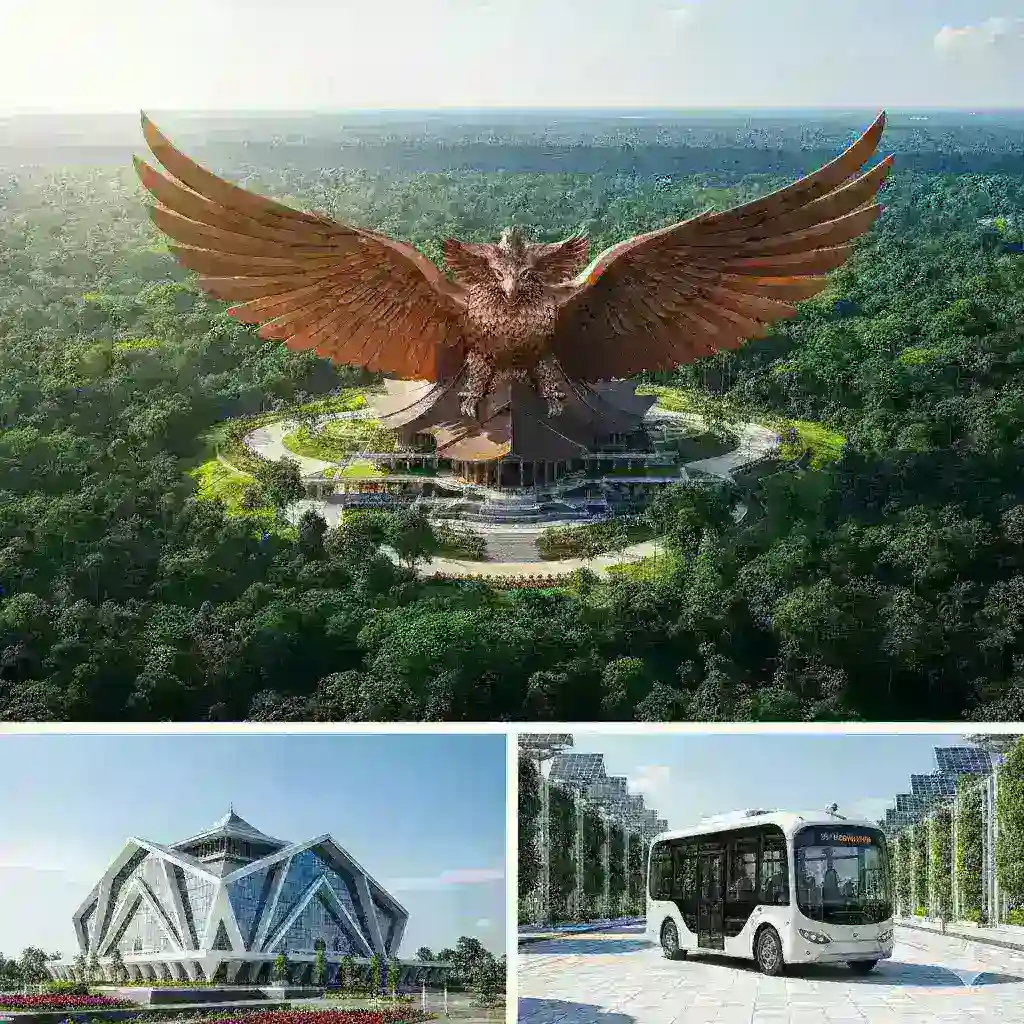
Nusantara 2026: Understanding Indonesia's Ambitious New Forest Capital
In one of the most ambitious urban development projects of the 21st century, Indonesia is building a brand-new capital city from the ground up. Named Nusantara—a Sanskrit-derived term meaning "archipelago"—this emerging metropolis in East Kalimantan on the island of Borneo represents a bold reimagining of what a capital city can be: a sustainable, smart, forest-integrated urban center designed to serve as the administrative heart of the world's fourth-most populous nation while preserving the precious rainforest ecosystem that surrounds it.
As we enter 2026, Nusantara is transitioning from concept and construction to early operation. Government ministries are beginning their relocation from the sinking, congested megacity of Jakarta, infrastructure is taking shape, and the first residents—civil servants, their families, and pioneering businesses—are settling into this experimental city. For travelers, urban planners, environmentalists, and anyone fascinated by the future of sustainable development, Nusantara offers a front-row seat to one of the most significant urban experiments in human history.
This comprehensive guide provides your first look at Nusantara in 2026. We'll explore the vision behind this forest capital, examine its innovative design principles, assess current progress and challenges, and offer practical information for those curious about visiting or engaging with this emerging city. Whether you're planning a professional visit, researching sustainable urbanism, or simply intrigued by Indonesia's bold bet on a new future, this guide will help you understand what Nusantara is, why it matters, and what to expect as it continues to evolve.
Why Move the Capital? Understanding the Rationale

To appreciate Nusantara's significance, it's essential to understand why Indonesia decided to leave Jakarta, a city that has served as the nation's capital for centuries.
Jakarta's Existential Challenges
Jakarta, home to over 10 million people in the city proper and more than 30 million in the greater metropolitan area, faces multiple crises that threaten its viability as a capital:
- Sinking Land: Jakarta is sinking at an alarming rate—up to 25 centimeters per year in some areas—due to excessive groundwater extraction. Nearly half the city is now below sea level, making it increasingly vulnerable to flooding and sea-level rise.
- Traffic Congestion: Jakarta consistently ranks among the world's most congested cities, with commuters spending hours daily in gridlock. The economic cost of lost productivity is estimated in the billions of dollars annually.
- Air and Water Pollution: Industrial emissions, vehicle exhaust, and inadequate waste management have created serious environmental and public health challenges.
- Overpopulation and Inequality: Rapid urbanization has strained infrastructure, housing, and public services, exacerbating social inequality.
- Geographic Imbalance: As the capital of an archipelago of over 17,000 islands, Jakarta's location on Java has long been criticized for concentrating political and economic power in one region while neglecting others, particularly eastern Indonesia.
- 👉 Ultimate 14-Day Gobi Desert Itinerary: Dunes, Fossils & Camels 2026
- 👉 Bali Entry 2026: Navigating the New Visa Rules and the Mandatory Tourist Levy
- 👉 Syria 12-Day Grand Loop Itinerary Homs Hama Complete Guide 2026
The Vision for Nusantara
Announced by President Joko Widodo in 2019 and formally established by law in 2022, Nusantara represents a strategic response to these challenges. The new capital is designed to:
- Redistribute Development: Shift Indonesia's economic and political center of gravity eastward, promoting more balanced national development.
- Embrace Sustainability: Build a city from scratch using the latest green technologies, renewable energy, and nature-based solutions.
- Integrate with Nature: Preserve and enhance the surrounding rainforest rather than replacing it, creating a "forest city" where urban and natural environments coexist.
- Leverage Smart Technology: Implement cutting-edge digital infrastructure for efficient governance, transportation, and public services.
- Symbolize National Unity: Create a capital that reflects Indonesia's diverse cultures and aspirations for the future.
- 👉 Ultimate 14-Day Gobi Desert Itinerary: Dunes, Fossils & Camels 2026
- 👉 Bali Entry 2026: Navigating the New Visa Rules and the Mandatory Tourist Levy
- 👉 Syria 12-Day Grand Loop Itinerary Homs Hama Complete Guide 2026
The Master Plan: Designing a Forest City

Nusantara's design is guided by several innovative principles that distinguish it from traditional capital cities.
Location and Scale
Nusantara is situated in East Kalimantan province on the island of Borneo, approximately 2,000 kilometers northeast of Jakarta. The capital area covers approximately 256,000 hectares (about 2,560 square kilometers), with the core government district occupying a smaller portion of this total area.
Key Geographic Features:
- Located between the Balikpapan and Samarinda urban areas, leveraging existing infrastructure
- Proximity to the Makassar Strait for maritime access
- Surrounded by tropical rainforest, part of one of the world's most biodiverse regions
- Relatively low population density compared to Java, allowing for planned development
- 👉 Ultimate 14-Day Gobi Desert Itinerary: Dunes, Fossils & Camels 2026
- 👉 Bali Entry 2026: Navigating the New Visa Rules and the Mandatory Tourist Levy
- 👉 Syria 12-Day Grand Loop Itinerary Homs Hama Complete Guide 2026
Core Design Principles
1. Forest City Concept: At least 75% of the Nusantara area is designated as green space, including protected forest, urban parks, and green corridors. Buildings are designed to integrate with vegetation through green roofs, vertical gardens, and permeable surfaces.
2. Sustainable Transportation: The city prioritizes walking, cycling, and electric public transit. Private car use is discouraged through limited parking, congestion pricing, and excellent alternative transit options. An autonomous electric bus network and bike-sharing system form the backbone of urban mobility.
3. Renewable Energy: Nusantara aims to be powered entirely by renewable energy, primarily solar and hydropower, with energy-efficient building design reducing overall demand.
4. Water Management: Advanced systems for rainwater harvesting, wastewater recycling, and flood prevention are integrated throughout the city, recognizing the region's tropical climate and rainfall patterns.
5. Smart City Infrastructure: Digital technologies enable efficient service delivery, from traffic management to public safety to citizen engagement. Data-driven governance aims to improve responsiveness and transparency.
6. Cultural Integration: Architectural design incorporates traditional Indonesian elements from across the archipelago, celebrating national diversity while creating a distinct identity for the new capital.
District Structure
Nusantara is organized into several functional districts:
- Core Government Area: Houses presidential palace, ministries, parliament, and key administrative buildings. Designed with security, efficiency, and symbolic grandeur in mind.
- Civic and Cultural District: Includes museums, performance venues, libraries, and public spaces for cultural expression and community gathering.
- Business and Innovation Hub: Attracts private sector investment, startups, and research institutions focused on sustainability and technology.
- Residential Communities: Mixed-income housing designed to avoid segregation, with access to green space, schools, and local services.
- Educational and Research Zone: Universities, training centers, and research facilities focused on sustainability, tropical ecology, and urban innovation.
- Green Belt and Conservation Areas: Protected forest and ecological corridors that preserve biodiversity and provide recreational opportunities.
- 👉 Ultimate 14-Day Gobi Desert Itinerary: Dunes, Fossils & Camels 2026
- 👉 Bali Entry 2026: Navigating the New Visa Rules and the Mandatory Tourist Levy
- 👉 Syria 12-Day Grand Loop Itinerary Homs Hama Complete Guide 2026
Progress Update: Where Nusantara Stands in 2026

As of 2026, Nusantara is in a transitional phase—no longer just a rendering or construction site, but not yet a fully functioning capital. Here's what has been accomplished and what remains underway.
Completed Infrastructure
- Government Complex: The presidential palace, several ministry buildings, and the parliament complex have been completed and are operational. These structures showcase sustainable design with solar panels, rainwater collection, and natural ventilation.
- Transportation Networks: Key roads connecting Nusantara to Balikpapan and Samarinda have been upgraded. An electric bus rapid transit system serves the core district, and bike lanes connect residential and commercial areas.
- Utilities: Renewable energy installations, including solar farms and small-scale hydropower, provide a significant portion of the city's power. Advanced water treatment and waste management systems are operational.
- Digital Infrastructure: High-speed fiber optic networks and 5G coverage enable smart city applications throughout the developed areas.
- Housing: Several residential communities have been completed, accommodating early-arriving civil servants and their families. These range from apartment complexes to single-family homes, all built to green building standards.
- 👉 Ultimate 14-Day Gobi Desert Itinerary: Dunes, Fossils & Camels 2026
- 👉 Bali Entry 2026: Navigating the New Visa Rules and the Mandatory Tourist Levy
- 👉 Syria 12-Day Grand Loop Itinerary Homs Hama Complete Guide 2026
Ongoing Construction
- Additional Government Buildings: Not all ministries have relocated yet; construction continues on facilities for remaining departments.
- Cultural and Educational Facilities: Museums, universities, and research centers are in various stages of development.
- Commercial Development: Retail, hospitality, and business services are expanding to support the growing population.
- Green Infrastructure: Reforestation projects, park development, and ecological restoration continue throughout the capital area.
- 👉 Ultimate 14-Day Gobi Desert Itinerary: Dunes, Fossils & Camels 2026
- 👉 Bali Entry 2026: Navigating the New Visa Rules and the Mandatory Tourist Levy
- 👉 Syria 12-Day Grand Loop Itinerary Homs Hama Complete Guide 2026
Population and Governance
As of early 2026, Nusantara's permanent population is estimated at 50,000-100,000 residents, primarily civil servants and their families, construction workers, and service providers. This is a small fraction of the projected long-term population of 1.9 million by 2045.
Governance is managed by the Nusantara Capital City Authority (OIKN), a special administrative body reporting directly to the president. This structure is intended to streamline decision-making and avoid the bureaucratic complexities that have hampered development in other Indonesian cities.
Sustainability in Practice: Environmental Considerations

Nusantara's claim to be a "forest city" raises important questions about environmental impact, particularly given its location in Borneo, a region of extraordinary biodiversity and ongoing deforestation pressures.
Conservation Commitments
The Nusantara master plan includes several environmental safeguards:
- Protected Areas: Significant portions of the capital region are designated as protected forest, with legal restrictions on development.
- Biodiversity Corridors: Green corridors connect fragmented habitats, allowing wildlife movement and maintaining ecological connectivity.
- Native Species Planting: Landscaping prioritizes native Bornean plants, supporting local ecosystems and reducing water needs.
- Zero-Deforestation Policy: New development is restricted to previously degraded or cleared land, avoiding primary forest.
- 👉 Ultimate 14-Day Gobi Desert Itinerary: Dunes, Fossils & Camels 2026
- 👉 Bali Entry 2026: Navigating the New Visa Rules and the Mandatory Tourist Levy
- 👉 Syria 12-Day Grand Loop Itinerary Homs Hama Complete Guide 2026
Climate Resilience
Recognizing the realities of climate change, Nusantara incorporates adaptive design features:
- Flood Management: Permeable surfaces, retention ponds, and elevated construction reduce flood risk in a region with heavy rainfall.
- Heat Mitigation: Extensive green cover, reflective materials, and building orientation help manage tropical temperatures without excessive air conditioning.
- Sea-Level Rise Preparedness: While inland, the capital's design considers broader climate impacts on infrastructure and supply chains.
- 👉 Ultimate 14-Day Gobi Desert Itinerary: Dunes, Fossils & Camels 2026
- 👉 Bali Entry 2026: Navigating the New Visa Rules and the Mandatory Tourist Levy
- 👉 Syria 12-Day Grand Loop Itinerary Homs Hama Complete Guide 2026
Criticisms and Challenges
Despite these commitments, Nusantara faces environmental scrutiny:
- Habitat Fragmentation: Even with conservation areas, urban development inevitably fragments ecosystems and affects wildlife.
- Resource Demands: Construction and operation of a new city require significant materials, energy, and water, with associated environmental footprints.
- Indigenous Rights: The capital area is home to indigenous communities whose land rights and traditional livelihoods must be respected—a complex challenge in rapid development contexts.
- Greenwashing Concerns: Some environmental groups question whether the "forest city" branding matches on-the-ground realities, particularly regarding deforestation in surrounding areas driven by demand for construction materials and agricultural expansion.
- 👉 Ultimate 14-Day Gobi Desert Itinerary: Dunes, Fossils & Camels 2026
- 👉 Bali Entry 2026: Navigating the New Visa Rules and the Mandatory Tourist Levy
- 👉 Syria 12-Day Grand Loop Itinerary Homs Hama Complete Guide 2026
Experiencing Nusantara: What Visitors Can Expect in 2026

For travelers, researchers, or business visitors, Nusantara in 2026 offers a unique but still-developing experience. Here's what to know if you're planning a visit.
Getting There
By Air: The nearest major airport is Sultan Aji Muhammad Sulaiman Airport in Balikpapan (BPN), approximately 1.5-2 hours by road from Nusantara. Balikpapan offers domestic flights from Jakarta, Surabaya, and other Indonesian cities, as well as limited international connections.
By Road: Improved highways connect Balikpapan and Samarinda to Nusantara. Private cars, taxis, and ride-hailing services operate on these routes. Travel time varies with traffic and road conditions.
Future Connectivity: Plans for a dedicated airport in Nusantara and high-speed rail connections are in development but not yet operational in 2026.
Accommodation
Lodging options in and near Nusantara are still limited in 2026:
- Government Guesthouses: Some facilities serve official visitors but may not be available to independent travelers.
- Emerging Hotels: A small number of hotels and serviced apartments have opened to serve early business travelers and consultants.
- Nearby Cities: Most visitors stay in Balikpapan or Samarinda, which offer a wider range of accommodation, dining, and services, then commute to Nusantara for daytime activities.
- 👉 Ultimate 14-Day Gobi Desert Itinerary: Dunes, Fossils & Camels 2026
- 👉 Bali Entry 2026: Navigating the New Visa Rules and the Mandatory Tourist Levy
- 👉 Syria 12-Day Grand Loop Itinerary Homs Hama Complete Guide 2026
What to See and Do
While Nusantara is not yet a traditional tourist destination, several experiences are available for interested visitors:
- Government District Tours: Guided tours of completed government buildings showcase sustainable architecture and urban planning concepts. Advance arrangements may be required.
- Green Infrastructure Visits: Tours of renewable energy installations, water management systems, and urban forests highlight the city's sustainability features.
- Cultural Centers: Early-opened museums and cultural venues offer insights into Indonesian heritage and the vision for Nusantara.
- Nature Exploration: The surrounding rainforest offers opportunities for eco-tourism, birdwatching, and learning about Borneo's unique biodiversity.
- Urban Planning Observation: For professionals, Nusantara serves as a living laboratory for sustainable urban development, with opportunities to observe innovative design and technology in practice.
- 👉 Ultimate 14-Day Gobi Desert Itinerary: Dunes, Fossils & Camels 2026
- 👉 Bali Entry 2026: Navigating the New Visa Rules and the Mandatory Tourist Levy
- 👉 Syria 12-Day Grand Loop Itinerary Homs Hama Complete Guide 2026
Practical Considerations
- Permits: Some areas of Nusantara, particularly government facilities, may require advance permission or escorted access. Check with official sources before visiting.
- Language: Indonesian (Bahasa Indonesia) is the primary language. English is spoken in professional and tourism contexts but less widely than in Jakarta or Bali.
- Climate: Tropical rainforest climate with high humidity and frequent rainfall. Pack accordingly and be prepared for sudden weather changes.
- Connectivity: Mobile coverage and internet access are good in developed areas but may be limited in surrounding forest regions.
- Health and Safety: Standard travel precautions apply. Malaria risk is low in urban areas but present in rural forest regions; consult a travel health professional before visiting.
- 👉 Ultimate 14-Day Gobi Desert Itinerary: Dunes, Fossils & Camels 2026
- 👉 Bali Entry 2026: Navigating the New Visa Rules and the Mandatory Tourist Levy
- 👉 Syria 12-Day Grand Loop Itinerary Homs Hama Complete Guide 2026
Economic and Social Implications

Nusantara's development carries significant economic and social dimensions that extend beyond urban planning.
Economic Opportunities
- Construction and Infrastructure: The multi-decade build-out creates substantial opportunities for contractors, engineers, and suppliers.
- Green Technology: Demand for sustainable building materials, renewable energy systems, and smart city solutions attracts investment and innovation.
- Services and Hospitality: As the population grows, demand for retail, dining, education, healthcare, and entertainment will expand.
- Research and Development: Universities and research centers focused on sustainability, tropical ecology, and urban innovation position Nusantara as a knowledge hub.
- 👉 Ultimate 14-Day Gobi Desert Itinerary: Dunes, Fossils & Camels 2026
- 👉 Bali Entry 2026: Navigating the New Visa Rules and the Mandatory Tourist Levy
- 👉 Syria 12-Day Grand Loop Itinerary Homs Hama Complete Guide 2026
Social Considerations
- Indigenous Communities: The capital area is home to indigenous groups including the Paser, Kutai, and others. Ensuring their rights, livelihoods, and cultural preservation amid rapid development is a critical challenge.
- Migration and Demographics: The relocation of civil servants and attraction of new residents will reshape local demographics, with implications for housing, services, and social cohesion.
- Equity and Inclusion: Designing a city that serves diverse income levels and avoids the segregation common in many urban developments requires intentional policy and planning.
- 👉 Ultimate 14-Day Gobi Desert Itinerary: Dunes, Fossils & Camels 2026
- 👉 Bali Entry 2026: Navigating the New Visa Rules and the Mandatory Tourist Levy
- 👉 Syria 12-Day Grand Loop Itinerary Homs Hama Complete Guide 2026
Challenges Ahead: Realities of Building a Capital from Scratch

Despite ambitious vision and significant progress, Nusantara faces substantial challenges as it moves forward.
Financial Sustainability
Estimated total costs for Nusantara range from $30-40 billion USD. While the Indonesian government has committed significant funding, attracting private investment and ensuring long-term fiscal sustainability remain critical questions.
Bureaucratic and Political Complexity
Coordinating relocation of government functions, managing multiple stakeholders, and maintaining political support across electoral cycles require sustained leadership and institutional capacity.
Environmental Balance
Achieving genuine sustainability—beyond marketing claims—requires ongoing commitment to conservation, resource efficiency, and climate resilience amid development pressures.
Social Integration
Building a cohesive community from diverse migrants and existing residents, while respecting indigenous rights and promoting equity, demands thoughtful social policy and community engagement.
Functional Transition
Moving Indonesia's administrative heart from Jakarta to Nusantara is a massive logistical undertaking. Ensuring continuity of governance during the transition requires careful planning and execution.
The Bigger Picture: What Nusantara Means for Urban Development

Beyond Indonesia, Nusantara offers lessons for cities worldwide grappling with climate change, inequality, and sustainable growth.
A Laboratory for Innovation
As a greenfield project, Nusantara can test approaches that are difficult to implement in established cities: integrated renewable energy systems, car-light urban design, nature-based infrastructure, and data-driven governance.
Rethinking the Capital City
Nusantara challenges conventional assumptions about what a capital should be—prioritizing sustainability over monumentality, integration with nature over domination of landscape, and long-term resilience over short-term symbolism.
Global Relevance
With urbanization accelerating globally and climate impacts intensifying, the successes and failures of Nusantara will inform urban planning far beyond Indonesia's borders.
Conclusion: Watching a Capital Take Shape

Nusantara in 2026 represents a work in progress—a bold experiment in sustainable urbanism that is still finding its form. For visitors, researchers, and observers, this transitional moment offers a unique opportunity to witness the birth of a capital city, to engage with innovative ideas about how humans can build thriving communities in harmony with nature, and to contribute insights that may shape Nusantara's evolution.
Whether Nusantara ultimately fulfills its ambitious vision remains to be seen. The challenges are substantial, the timeline is long, and the stakes are high—for Indonesia's development, for Borneo's ecosystems, and for the global conversation about sustainable cities. But the very act of attempting something this ambitious, of trying to build a capital that prioritizes forest over concrete and resilience over convention, is itself significant.
For those with the opportunity to visit Nusantara in 2026, approach with curiosity and humility. Observe the interplay of vision and reality, of innovation and tradition, of ambition and constraint. Ask questions, listen to diverse perspectives, and recognize that building a better future is a collective, iterative process.
Nusantara is more than a new address for Indonesia's government. It is a statement of aspiration—a bet that a different kind of city is possible, and that the capital of the world's fourth-largest country can lead by example in the urgent work of creating sustainable, equitable, and resilient human settlements.
As the forest capital continues to emerge from the rainforests of Borneo, the world is watching. What we learn from Nusantara may help shape not just Indonesia's future, but the future of cities everywhere.
Terima kasih telah membaca. Semoga Nusantara menjadi contoh bagi pembangunan berkelanjutan di seluruh dunia. (Thank you for reading. May Nusantara serve as an example for sustainable development worldwide.)
Official Resources:
- Nusantara Capital City Authority: https://oikn.go.id
- Indonesian Ministry of National Development Planning: https://www.bappenas.go.id
- East Kalimantan Provincial Government: https://kaltimprov.go.id
- 👉 Ultimate 14-Day Gobi Desert Itinerary: Dunes, Fossils & Camels 2026
- 👉 Bali Entry 2026: Navigating the New Visa Rules and the Mandatory Tourist Levy
- 👉 Syria 12-Day Grand Loop Itinerary Homs Hama Complete Guide 2026
Disclaimer: Information about Nusantara is rapidly evolving as the city develops. Always verify current details through official channels before planning visits or making decisions based on this guide. This article is for informational purposes only and does not constitute professional advice.
0 Comments