.webp)
.webp)
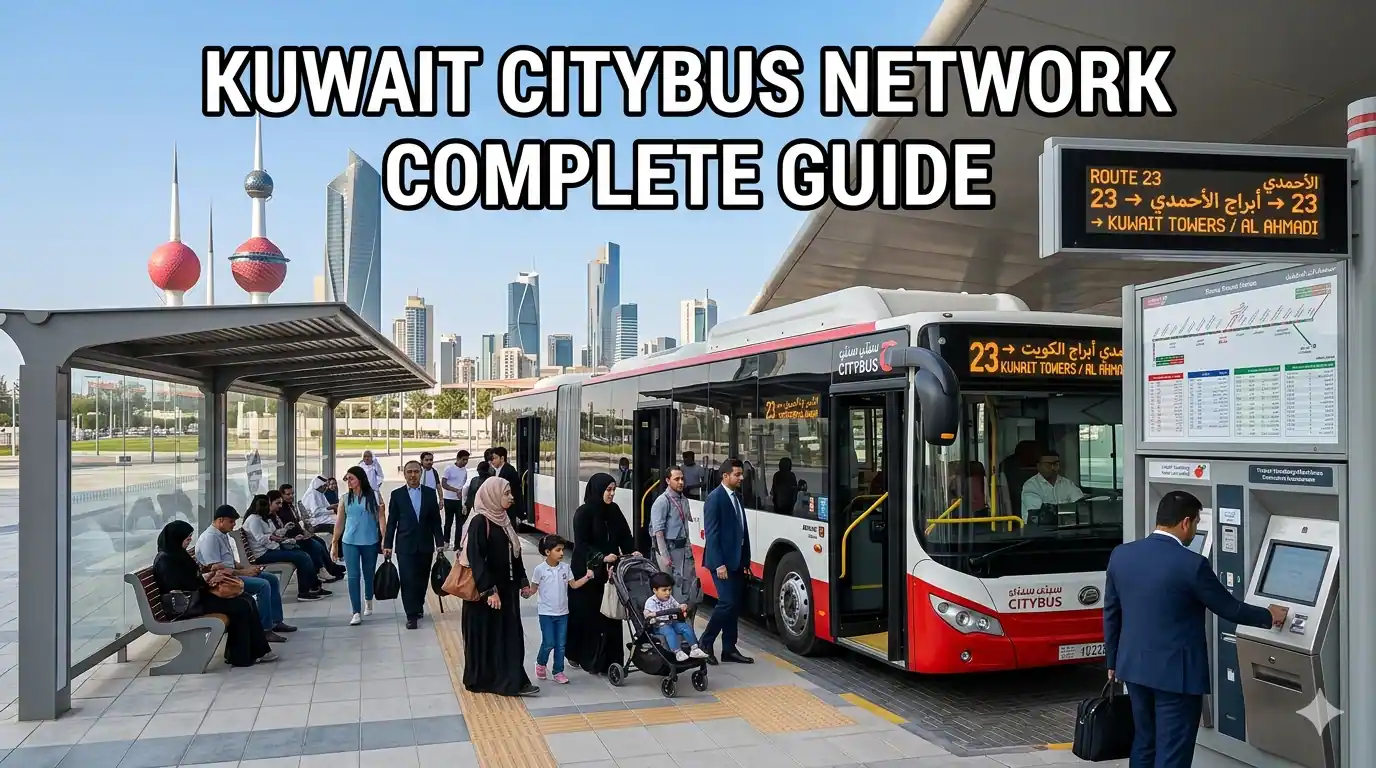
Understanding Kuwait CityBus Network
Kuwait's CityBus network represents the backbone of public transportation in the country, offering an affordable and increasingly modern way to navigate Kuwait City and its surrounding areas. This comprehensive bus system connects residential neighborhoods, commercial districts, shopping malls, government offices, and key landmarks throughout the governorates.
The Kuwait Public Transport Company operates the CityBus service, managing a fleet of modern air-conditioned buses that provide comfortable transportation even during Kuwait's intense summer heat. The network has undergone significant improvements in recent years with new buses, digital payment systems, and real-time tracking capabilities.
For modern travelers including expatriates, tourists, and daily commuters, understanding the CityBus network proves essential for efficient and economical transportation. The system offers substantial cost savings compared to taxis and ride-sharing services while providing reliable connectivity across major urban areas.
The bus network operates on fixed routes with designated stops and schedules, making it predictable for regular commuters. Routes are numbered and color-coded to facilitate easy identification, with major corridors receiving more frequent service during peak hours.
This guide provides everything modern travelers need to know about navigating Kuwait's CityBus network including route planning, payment methods, schedules, etiquette, and tips for maximizing convenience and comfort during your journeys.
CityBus Network Coverage and Routes

Kuwait's CityBus network spans across all governorates with varying levels of service density depending on population concentration and demand patterns.
Major Route Categories
Trunk routes serve as the backbone of the network connecting major hubs including Kuwait City center, Salmiya, Hawalli, Farwaniya, and Jahra. These high-frequency routes operate with buses arriving every fifteen to thirty minutes during peak periods.
Feeder routes connect residential neighborhoods to main trunk lines and major destinations like shopping malls, hospitals, and government complexes. These routes typically operate with thirty to forty-five minute frequencies.
Express routes provide faster service between major destinations with limited stops. These routes are ideal for longer distance travel and commuting between governorates during rush hours.
Night routes operate on reduced schedules after regular service hours providing essential connectivity for late-shift workers and evening travelers. Coverage is more limited compared to daytime service.
Key Destinations Served
Kuwait City center including Souq Al-Mubarakiya, Seif Palace, Grand Mosque, and government ministries receives comprehensive bus coverage from multiple routes converging at central terminals.
Salmiya and Hawalli areas as major commercial and residential districts feature extensive bus networks with frequent service connecting to shopping areas, restaurants, and residential neighborhoods.
Shopping destinations including The Avenues, 360 Mall, Marina Mall, and Al Kout Mall are accessible via dedicated bus routes making car-free shopping trips feasible.
Educational institutions including Kuwait University campuses, colleges, and major schools receive bus service particularly during academic year with schedules aligned to class times.
Healthcare facilities including major hospitals like Ibn Sina, Al-Amiri, and Mubarak Al-Kabeer are served by multiple routes ensuring accessibility for patients and visitors.
Route Numbering System
Routes are numbered systematically with lower numbers typically indicating trunk routes and higher numbers representing feeder or local services. Understanding this system helps identify service levels.
Route numbers in the one to ninety-nine range generally indicate major routes with higher frequency. Numbers one hundred and above typically represent feeder or neighborhood routes.
Some routes include letter suffixes indicating variations or branches of main routes. For example route five A and five B might serve similar corridors with different terminal points.
Color coding on buses and signage corresponds to route categories making visual identification easier particularly for those less familiar with route numbers.
Fares and Payment Methods

Kuwait's CityBus system offers affordable fares with multiple payment options designed for convenience and efficiency.
Fare Structure
Standard single journey fares typically range from two hundred fifty to five hundred fils depending on route distance and service type. Short local routes cost less while longer inter-governorate routes cost more.
Monthly unlimited ride passes are available for regular commuters offering significant savings for daily travelers. These passes typically cost between ten and twenty Kuwaiti dinars depending on coverage zones.
Student discounts are available with valid student identification cards providing reduced fares for those enrolled in educational institutions. This makes public transportation particularly affordable for students.
Senior citizen and disability discounts may be available though specific programs vary. Check with Kuwait Public Transport Company for current concessionary fare programs.
Payment Options
Cash payment remains accepted on most buses though exact change is preferred as drivers may not have change for larger denominations. Keep small coins and notes readily accessible.
Prepaid smart cards called Bayan Card or similar systems provide convenient cashless payment. These cards can be loaded with credit at designated kiosks, online, or at customer service centers.
Mobile payment apps are increasingly integrated with the bus system allowing fare payment through smartphones. Download official apps and link payment methods for seamless transactions.
Contactless credit and debit card payment is being rolled out on newer buses providing another cashless option. Look for card reader symbols on buses to confirm acceptance.
Where to Purchase Tickets and Cards
Bus drivers sell single journey tickets though this is the least efficient method. Having exact change speeds boarding and reduces delays for all passengers.
Designated ticket kiosks at major bus terminals and stations sell smart cards and provide top-up services. These locations often have shorter queues than boarding buses to purchase.
Online platforms and mobile apps allow card registration, balance checking, and credit loading from anywhere. This digital approach provides maximum convenience for tech-savvy travelers.
Convenience stores and partner retail locations in some areas sell and reload smart cards providing additional access points throughout the city.
Schedules and Operating Hours

Understanding CityBus schedules and operating patterns helps plan efficient journeys and avoid unnecessary waiting.
Regular Operating Hours
Most routes begin service between five and six in the morning on weekdays providing early transportation for workers and students. First bus times vary by route and location.
Evening service typically continues until ten or eleven at night on most routes though some high-demand corridors may operate later particularly on weekends.
Friday service follows modified schedules as Friday is the weekend day in Kuwait. Reduced frequency and later start times are common on this day.
Public holidays operate on Sunday or Friday schedules depending on the holiday. Check specific holiday schedules in advance to avoid surprises.
Peak and Off-Peak Frequencies
Peak hours during morning seven to nine and evening four to seven see increased frequency on commuter routes. Buses may arrive every ten to fifteen minutes on busy corridors.
Mid-day and late evening off-peak periods feature reduced frequency with buses arriving every twenty to forty minutes depending on the route.
Weekend service generally operates at off-peak frequencies throughout the day though popular shopping and entertainment routes may maintain higher frequency.
Seasonal variations affect schedules with reduced service during summer months when demand decreases and during Ramadan when operating hours shift.
Real-Time Information
Digital displays at major bus stops show real-time arrival information helping passengers plan their time efficiently. These displays update automatically based on GPS tracking.
Mobile apps provide real-time bus tracking allowing passengers to see exactly where their bus is and when it will arrive. This feature reduces uncertainty and waiting time.
SMS services may be available for those without smartphones allowing text message queries about bus arrival times using route numbers and stop codes.
Website journey planners help map routes and provide schedule information though real-time accuracy varies. Use as planning tool rather than relying on exact times.
Planning Your Journey

Effective journey planning maximizes efficiency and minimizes travel time when using CityBus network.
Route Planning Tools
Official Kuwait Public Transport Company website provides route maps, schedules, and journey planning tools. Familiarize yourself with these resources before traveling.
Mobile apps like Kuwait Bus or similar third-party applications offer interactive maps with route search functionality. Download these apps for on-the-go planning.
Google Maps increasingly includes Kuwait public transportation data though coverage and accuracy continue improving. Cross-reference with official sources for critical journeys.
Printed route maps available at major terminals provide backup planning option particularly useful when digital devices fail or battery dies.
Transfer Strategies
Major bus terminals serve as transfer hubs where multiple routes converge. Plan connections through these hubs for maximum route options and frequency.
Allow adequate transfer time between buses particularly during peak hours when delays are more common. Fifteen to twenty minute buffer reduces stress from missed connections.
Some routes offer coordinated transfers where buses wait for connecting services. Check schedules for these synchronized connections on longer journeys.
Consider walking portions of longer journeys if transfers are inconvenient. Sometimes walking ten minutes to an alternative stop provides better overall journey time.
Alternative Route Options
Identify backup routes for important journeys in case of service disruptions or unexpected delays. Having alternatives prevents being stranded.
Express routes may provide faster service than local routes even with longer walking distances to stops. Calculate total journey time including walking when comparing options.
Combining bus with other transportation modes like taxis for first or last mile can optimize journeys particularly when carrying luggage or during extreme weather.
Peak hour alternatives may include different routes that avoid congested corridors. Flexibility in routing can significantly reduce travel time during busy periods.
Bus Stops and Stations

Understanding bus stop infrastructure and amenities improves the overall travel experience.
Stop Identification
Bus stops feature standardized signage displaying route numbers serving that stop, destination names, and sometimes schedule information. Learn to read these signs efficiently.
Stop codes or numbers uniquely identify each stop and are used in digital systems for tracking and information queries. Note these codes for app-based journey planning.
Sheltered stops provide protection from sun and occasional rain with seating and sometimes digital displays. These are more comfortable waiting environments particularly in summer.
Simple pole stops with minimal signage are common in residential areas. These require more familiarity with routes as information may be limited.
Major Terminals and Hubs
Kuwait City central bus terminal serves as the main hub with connections to most routes throughout the country. This facility offers ticketing, information desks, and waiting areas.
Regional terminals in Salmiya, Farwaniya, Jahra, and Ahmadi provide secondary hubs with extensive route connections and passenger facilities.
Shopping mall terminals at major centers like The Avenues provide convenient access points combining transportation with retail and dining options.
Airport connections link Kuwait International Airport to the bus network though service frequency may be limited compared to urban routes. Check schedules carefully for airport trips.
Stop Amenities
Seating availability varies significantly with newer stops featuring benches while older stops may have no seating. Standing may be necessary at many locations.
Shade structures are critical in Kuwait's climate with covered stops providing essential relief from sun exposure. Prioritize shaded stops when waiting during daytime.
Lighting at stops enables evening and early morning travel with well-lit stops feeling safer and making schedule reading easier.
Information displays showing real-time arrivals are increasingly common at busy stops though not universal. These greatly enhance the waiting experience.
Onboard Experience and Etiquette

Understanding what to expect on Kuwait CityBus and proper etiquette ensures comfortable journeys for all passengers.
Bus Features and Comfort
Modern air-conditioned buses provide relief from Kuwait's extreme heat with climate control maintaining comfortable interior temperatures year-round.
Seating arrangements typically feature rows of two or three seats with priority seating near the front reserved for elderly, disabled, and pregnant passengers.
Standing room is available during peak hours with handrails and poles for stability. Buses can become crowded during rush hours particularly on popular routes.
Luggage space is limited with small bags acceptable but large suitcases generally not accommodated. Plan accordingly when traveling with baggage.
Boarding and Alighting
Signal the driver by raising your hand as the bus approaches to indicate you wish to board. Buses may not stop if no one appears to be waiting.
Board through the front door and alight through rear doors when available. This flow management speeds the boarding process and reduces congestion.
Press the stop button well before your intended stop to alert the driver. One or two stops advance notice is appropriate depending on bus speed.
Allow passengers to alight before boarding to maintain smooth passenger flow. Patience during this process benefits everyone.
Passenger Etiquette
Offer priority seats to elderly, disabled, pregnant passengers, or those with young children. This courtesy is expected and culturally important.
Keep noise levels reasonable with phone conversations quiet and music listened to through headphones at low volume. Respect fellow passengers need for peaceful travel.
Maintain personal space when buses are not overcrowded. Avoid spreading belongings across multiple seats when others are standing.
Keep the bus clean by not littering and taking trash with you when alighting. Dispose of waste properly at stops or destinations.
Special Considerations for Travelers

Certain situations require additional planning and awareness when using CityBus network.
Traveling with Children
Children under certain age typically travel free though specific age limits vary. Check current policy and have identification available if children appear older than free travel age.
Stroller accessibility varies with newer low-floor buses accommodating strollers more easily than older high-floor models. Plan for potential challenges during peak hours.
Keep children close and supervised particularly at busy stops and when boarding or alighting. Bus doors and moving vehicles present safety risks.
Bring entertainment and snacks for longer journeys as children may become restless. Preparation prevents disruption to other passengers.
Traveling with Luggage
Small carry-on bags are acceptable though large suitcases are generally not permitted on regular CityBus routes. Consider alternative transportation for airport transfers with heavy luggage.
Keep bags on your lap or under your seat to avoid blocking aisles. Large bags in aisles create safety hazards and inconvenience other passengers.
Secure belongings at all times keeping bags in sight and zipped. While crime is rare, maintaining awareness of belongings is prudent.
Shopping trips are feasible with moderate purchases though very large shopping loads may prove cumbersome. Consider timing shopping trips during off-peak hours for more space.
Accessibility Needs
Low-floor buses with wheelchair ramps are increasingly common though not universal on all routes. Check accessibility of specific routes if wheelchair access is required.
Priority seating must be yielded to passengers with disabilities. This is both legal requirement and social expectation in Kuwait.
Visual and auditory announcements of stops are being implemented on newer buses though not yet universal. Those with sensory impairments should plan accordingly.
Service animals are generally permitted though specific policies may vary. Check regulations if traveling with assistance animals.
Safety and Security

Kuwait's CityBus system maintains good safety standards though basic precautions enhance security.
Personal Safety
Bus travel in Kuwait is generally safe with low crime rates. Normal urban precautions suffice for most travelers.
Avoid displaying valuable items like expensive jewelry, large amounts of cash, or high-end electronics unnecessarily. Discretion prevents attracting unwanted attention.
Sit near the driver or in well-populated areas particularly when traveling alone late at night. Visibility and proximity to others enhances security.
Trust your instincts if a situation feels uncomfortable. Move to different seats or alight at next stop if necessary though such situations are rare.
Emergency Procedures
Emergency exits are marked on buses with instructions posted. Familiarize yourself with exit locations when boarding particularly on longer journeys.
Emergency communication with driver is possible through intercom systems on newer buses or by simply alerting the driver directly.
In case of accident or emergency follow driver instructions and evacuate calmly if instructed. Panic helps no one in emergency situations.
Emergency contact numbers for Kuwait Public Transport Company should be saved in your phone for reporting lost items, safety concerns, or service issues.
Health Considerations
Air conditioning provides comfort but temperature variations between outside heat and interior cooling can be significant. Dress in layers to adjust comfortably.
Hydration remains important even when traveling in air-conditioned buses. Carry water particularly for longer journeys.
During illness outbreaks or pandemics follow health guidelines including mask wearing if required and maintaining distance when possible.
Hand sanitizer use after touching handrails and surfaces before eating is prudent hygiene practice particularly during flu season.
Digital Tools and Technology

Modern technology enhances the CityBus experience making travel more convenient and predictable.
Essential Mobile Apps
Official Kuwait Public Transport apps provide schedules, route maps, and sometimes real-time tracking. Download the official app for most reliable information.
Third-party transit apps may aggregate bus data with additional features like journey planning and service alerts. Read reviews to identify reliable options.
Payment apps enable mobile fare payment and card balance management eliminating need for physical cards or cash in many situations.
Translation apps help non-Arabic speakers navigate Arabic-language signage and announcements though major stops increasingly feature English text.
Online Resources
Kuwait Public Transport Company website provides comprehensive information about routes, fares, schedules, and service updates. Bookmark for easy reference.
Social media accounts provide real-time service alerts, announcements about route changes, and customer service responses. Follow for timely updates.
Online forums and expat communities share practical tips and experiences about using CityBus. These peer resources provide insights beyond official information.
Digital journey planners allow trip planning from any device with internet access. Use these tools to optimize routes before traveling.
Smart Card Management
Online account management for smart cards enables balance checking, transaction history review, and credit loading from anywhere with internet access.
Auto-reload features can be configured to automatically add credit when balance falls below threshold preventing service interruption.
Card registration protects balance if card is lost or stolen allowing balance transfer to replacement card. Register cards promptly after purchase.
Mobile wallet integration allows smart card functionality through smartphones eliminating need for physical cards. Check if this option is available.
Cost Comparison and Budget Planning

Understanding CityBus costs relative to alternatives helps budget effectively for transportation.
Daily and Monthly Costs
Daily commuting by bus typically costs one to two Kuwaiti dinars for round trips depending on distance making it extremely economical compared to alternatives.
Monthly unlimited passes at ten to twenty dinars provide excellent value for regular commuters taking twenty or more trips monthly.
Occasional travelers paying per ride still save significantly compared to taxi or ride-sharing services which can cost ten to twenty dinars for similar journeys.
Annual savings for regular commuters can reach hundreds or thousands of dinars compared to private vehicle ownership when factoring fuel, parking, and maintenance.
Comparison with Alternatives
Taxis cost ten to twenty times more than bus fares for comparable journeys making bus travel dramatically more economical for budget-conscious travelers.
Ride-sharing services like Uber and Careem offer convenience at premium prices typically five to fifteen times bus fares depending on demand and distance.
Private vehicle ownership involves fuel, insurance, maintenance, and parking costs that far exceed public transportation expenses particularly for urban dwellers.
Time versus cost trade-offs favor buses for non-urgent travel while taxis make sense for time-sensitive journeys or when carrying heavy items.
Budget Optimization
Monthly passes pay for themselves after approximately twenty to thirty single journeys making them worthwhile for regular commuters.
Combining bus travel with walking for short segments reduces total transportation costs while providing health benefits through increased physical activity.
Off-peak travel sometimes offers discounted fares though Kuwait's system currently uses flat pricing regardless of time. Monitor for future pricing innovations.
Group travel may make taxis more economical per person when splitting fares among three or four passengers traveling together to same destination.
Common Challenges and Solutions

Anticipating potential issues and knowing solutions improves the CityBus experience.
Language Barriers
Arabic dominates signage and announcements though English is increasingly present on newer buses and major stops. Learning basic Arabic route numbers and destination names helps.
Translation apps can decode Arabic text through camera function providing real-time translation of signs and schedules.
Asking fellow passengers for assistance often yields helpful responses as Kuwaitis and expats are generally willing to help lost travelers.
Driver assistance is available though language capabilities vary. Many drivers understand basic English particularly on routes serving expat communities.
Navigation Difficulties
Missing stops is common for new users. Pay attention to announcements and watch for landmarks. When in doubt ask driver or fellow passengers.
Wrong bus boarding happens occasionally. Most buses display route numbers and destinations clearly. Verify before boarding and ask driver if uncertain.
Transfer confusion at large terminals can be overwhelming. Study terminal maps in advance and allow extra time for finding correct platforms.
Getting lost after alighting is possible in unfamiliar areas. Use map apps to orient yourself and identify walking routes to final destination.
Service Disruptions
Route changes or temporary suspensions occur for roadwork or special events. Check service alerts before important journeys.
Delays are common during peak hours and adverse weather. Build buffer time into journey planning particularly for time-sensitive trips.
Bus breakdowns occasionally strand passengers. In such cases wait for next bus or seek alternative routes. Drivers typically arrange assistance.
System-wide issues like extreme heat or sandstorms may reduce service. Monitor news and social media for service advisories during such events.
Future Developments and Improvements

Kuwait's public transportation system continues evolving with planned enhancements.
Infrastructure Expansion
New routes are periodically added as residential areas develop and demand patterns shift. Stay informed about new services that may improve your travel options.
Bus rapid transit BRT systems are under consideration for major corridors which would provide faster more reliable service with dedicated lanes.
Enhanced bus shelters with better amenities including seating, shade, and real-time information displays are being rolled out across the network.
Intermodal terminals connecting buses with other transportation modes like future metro or rail systems are in planning stages.
Technology Upgrades
Real-time tracking expansion will cover more routes providing accurate arrival information throughout the network.
Contactless payment expansion will enable credit and debit card payments on all buses eliminating cash handling entirely.
Mobile app enhancements will provide more sophisticated journey planning, service alerts, and personalized travel information.
Electric and hybrid buses are being introduced reducing environmental impact and operating costs while improving air quality.
Service Improvements
Increased frequency on popular routes reduces waiting times and crowding making bus travel more attractive.
Extended operating hours on key routes provides better service for evening travelers and night shift workers.
Improved accessibility features including more low-floor buses and better stop infrastructure enhances service for passengers with mobility challenges.
Customer service enhancements including better complaint resolution and information provision improve overall passenger satisfaction.
Conclusion Embracing Public Transportation

Kuwait's CityBus network offers modern travelers an economical, increasingly convenient, and environmentally responsible transportation option. While the system continues evolving and improving, it already provides viable mobility for residents and visitors willing to invest time in learning routes and schedules.
The combination of affordable fares, expanding coverage, improving technology, and growing reliability makes CityBus an attractive alternative to private vehicles and expensive taxi services. For budget-conscious travelers, daily commuters, and those seeking to reduce their environmental footprint, the bus network delivers substantial value.
Success with CityBus requires patience during the learning curve, flexibility when service disruptions occur, and willingness to adapt travel habits to public transportation schedules. Those who embrace these realities discover a transportation system that, while not perfect, serves Kuwait's mobility needs effectively and affordably.
As Kuwait continues investing in public transportation infrastructure and technology, the CityBus experience will only improve. Modern travelers who master this system now position themselves to benefit from ongoing enhancements while contributing to reduced traffic congestion and environmental sustainability.
Whether you are a new resident learning to navigate Kuwait, a visitor seeking authentic local experiences, or a long-term resident looking to reduce transportation costs, the CityBus network deserves consideration as a primary mobility option. With proper planning, realistic expectations, and the knowledge provided in this guide, you can confidently use Kuwait's CityBus system for efficient, economical, and increasingly comfortable urban transportation.
0 Comments