.webp)
.webp)
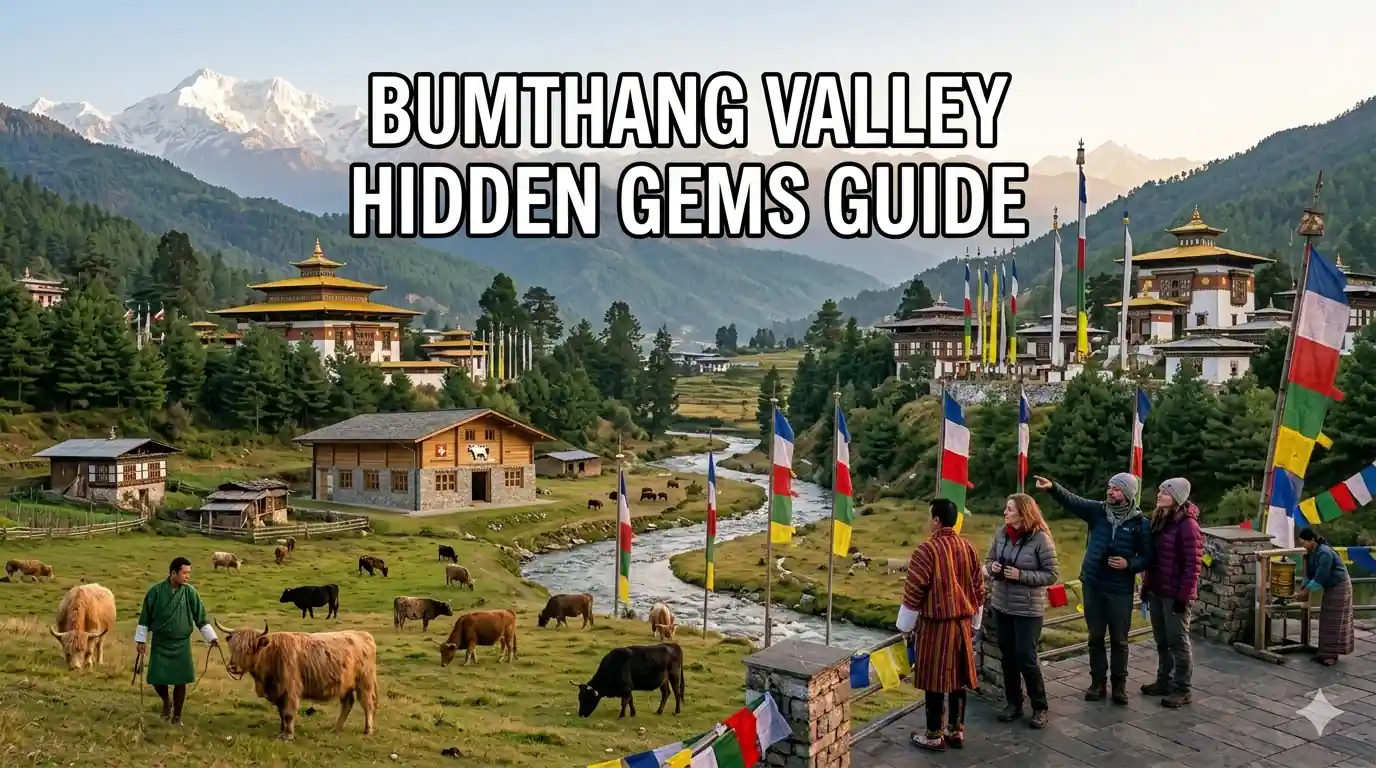
Discovering Bumthang Valley: Bhutan's Spiritual Heartland
Bumthang Valley, often called the spiritual heartland of Bhutan, represents one of the country's most culturally rich and historically significant regions. Located in central Bhutan at elevations ranging from two thousand six hundred to four thousand meters, this picturesque valley complex comprises four main valleys: Chokhor, Tang, Ura, and Chumey, each offering unique cultural treasures and natural beauty.
Unlike the more touristy destinations of Paro and Thimphu, Bumthang maintains an authentic, unhurried atmosphere where ancient traditions continue to thrive alongside surprising modern influences. The valley is home to some of Bhutan's oldest and most sacred temples, dating back to the seventh century, making it a pilgrimage destination for Buddhists from across the Himalayas.
What makes Bumthang truly unique is the fascinating juxtaposition of ancient spiritual heritage with unexpected Swiss influences. The region is famous for its Swiss-style cheese factories, a legacy of development cooperation between Bhutan and Switzerland that began in the nineteen sixties. This unlikely combination of ancient Buddhist temples and Alpine cheese-making creates a cultural tapestry found nowhere else in the world.
The valley's name "Bumthang" translates to "beautiful field" or "female deer's field" in the local language, reflecting the area's gentle landscape of rolling hills, pine forests, and meandering rivers. The Chamkhar Chu river flows through the valley, creating fertile land for buckwheat, dairy farming, and apple orchards that characterize the agricultural landscape.
This comprehensive guide explores Bumthang's hidden gems, from seventh-century temples housing sacred relics to Swiss-style cheese factories producing award-winning varieties, traditional weaving villages preserving ancient techniques, and pristine natural landscapes that have remained largely unchanged for centuries.
The Ancient Temples of Bumthang Valley

Bumthang Valley contains the highest concentration of ancient religious sites in Bhutan, with temples and monasteries dating from the seventh to seventeenth centuries. These sacred sites are not merely tourist attractions but living centers of worship and pilgrimage that continue to serve local communities.
Jambay Lhakhang: The Seventh Century Temple
Jambay Lhakhang stands as one of the oldest and most sacred temples in Bhutan, built in the seventh century by King Songtsen Gampo, the Tibetan king who introduced Buddhism to the region. According to legend, the king built one hundred eight temples across the Himalayas to subdue a demoness blocking the spread of Buddhism, with Jambay Lhakhang pinning down her left leg.
The temple's architecture reflects classic early Bhutanese design with whitewashed walls, golden roof ornaments, and intricate woodwork. Inside, visitors find ancient murals and statues including a future Buddha statue that is said to have been created from a single block of sandalwood.
Jambay Lhakhang hosts the famous Jambay Lhakhang Drup festival annually in October or November, featuring the naked dance (Mewang) and the fire dance (Mewang), which are among Bhutan's most spectacular and sacred religious performances. During this festival, the temple courtyard fills with masked dancers performing rituals that have continued unchanged for centuries.
The temple remains an active place of worship where visitors can observe monks in prayer and locals making offerings. Photography inside the temple is strictly prohibited to maintain the sanctity of the space, though the exterior architecture and surrounding grounds offer excellent photographic opportunities.
Kurjey Lhakhang: The Sacred Cave Temple
Kurjey Lhakhang, meaning "body imprint temple," derives its name from a sacred cave where Guru Rinpoche (Padmasambhava) meditated in the eighth century. According to legend, the guru's body imprint remains visible on the cave wall, making this one of Bhutan's most revered pilgrimage sites.
The temple complex actually consists of three distinct temples built at different times. The oldest temple, built in nineteen hundred, encloses the sacred cave. The middle temple was constructed in nineteen eighty-four by the third Queen Mother, and the newest temple was completed in two thousand fourteen.
The main temple houses the sacred cave where Guru Rinpoche meditated for three months, subduing a local demon and leaving his body imprint on the rock. Pilgrims circumambulate the temple complex, spinning prayer wheels and offering butter lamps in devotion.
Kurjey Lhakhang sits in a picturesque setting surrounded by pine forests with views of snow-capped peaks. The temple courtyard features colorful prayer flags and chortens, creating a peaceful atmosphere ideal for meditation and reflection. Early morning visits offer the best lighting for photography and the most peaceful atmosphere before tour groups arrive.
Tamzhing Monastery: The Center of Nyingma Tradition
Tamzhing Monastery, founded in fifteen hundred one by Pema Lingpa, Bhutan's greatest treasure revealer and saint, serves as the main seat of the Nyingma tradition in Bhutan. Pema Lingpa discovered numerous religious treasures (termas) in Bhutan, many of which are still preserved at Tamzhing.
The monastery's main temple houses original murals painted by Pema Lingpa himself, making them over five hundred years old. These murals depict various Buddhist deities and scenes from Guru Rinpoche's life in vibrant colors that have remarkably survived centuries. The temple also contains statues and religious artifacts revealed by Pema Lingpa during his treasure discoveries.
Tamzhing is famous for its traditional mask dances performed during the Tamzhing Phala Chopa festival held in the ninth month of the Bhutanese calendar (usually September or October). These dances, performed by monks wearing masks representing various deities, tell stories of good triumphing over evil and are believed to bless viewers who attend.
The monastery sits on a hillside overlooking the Chamkhar Chu river, providing stunning views of the surrounding valley. The approach to the monastery passes through traditional villages and farmland, offering glimpses of rural Bhutanese life. Visitors should dress modestly and remove shoes before entering temple buildings.
Mebar Tsho: The Burning Lake
Mebar Tsho, or the Burning Lake, is not a temple but one of Bhutan's most sacred pilgrimage sites located in the Tang Valley near Bumthang. This site commemorates where Pema Lingpa discovered religious treasures in the fifteenth century.
According to legend, Pema Lingpa received a vision revealing hidden treasures at the bottom of this deep pool. When locals doubted his claims, he jumped into the icy water holding a lit butter lamp, emerging with treasures while the lamp remained burning, thus proving his authenticity as a treasure revealer.
The site features a small temple and numerous prayer flags surrounding the sacred pool. Pilgrims throw offerings into the water and circumambulate the site while reciting prayers. The pool itself is fed by a waterfall and remains cold year-round, surrounded by dramatic cliffs and forest.
Visiting Mebar Tsho requires a short hike from the main road, passing through traditional villages and farmland. The site's spiritual atmosphere is palpable, with prayer flags fluttering in the wind and the sound of water creating a meditative environment. Early morning or late afternoon visits provide the best lighting and fewer crowds.
The Swiss Cheese Factories of Bumthang

One of Bumthang's most surprising attractions is its Swiss-style cheese production, an unexpected industry that has become integral to the valley's identity and economy. This unique cultural fusion represents one of the world's most unlikely development success stories.
History of Swiss Cheese Making in Bhutan
The story begins in nineteen sixty-one when Swiss dairy farmers and development workers arrived in Bumthang as part of Switzerland's development cooperation program with Bhutan. The Swiss introduced modern dairy farming techniques and cheese-making methods to help diversify Bhutan's agricultural economy beyond subsistence farming.
The project initially faced skepticism from locals accustomed to traditional yak herding and butter production. However, the Swiss persistence and adaptation of techniques to local conditions gradually won over the community. Swiss breeds of cattle were crossbred with local yaks to create animals suited to Bhutan's high-altitude conditions while producing quality milk for cheese making.
Over six decades, cheese making has become an integral part of Bumthang's economy and culture. The Bumthang Dairy Development Program now produces several varieties of Swiss-style cheese that have won international awards and are served in hotels and restaurants throughout Bhutan.
Swiss Cheese Factory Visits
The Bumthang Swiss Cheese Factory, located near Jakar, welcomes visitors interested in learning about this unique industry. The factory produces several varieties including Emmental, Gouda, Edam, and cheddar using traditional Swiss methods adapted to local conditions.
Visitors can tour the production facility to observe the cheese-making process from milk reception through pressing, aging, and packaging. Guides explain how Swiss techniques have been adapted to Bhutan's high-altitude environment and local milk characteristics. The aging rooms maintain specific temperatures and humidity levels crucial for developing proper flavor and texture.
The factory shop sells fresh cheese, aged varieties, and other dairy products including yogurt and butter. Prices are reasonable by international standards, and the cheese quality rivals European production. Many visitors purchase cheese as souvenirs, though it's worth noting that transporting cheese internationally may face customs restrictions.
Best visiting hours are weekday mornings when production is most active and staff have time to answer questions. The factory is closed on weekends and Bhutanese public holidays. Photography is generally permitted in production areas though flash photography may be restricted in aging rooms.
Alpine Dairy Farms
Beyond the main factory, Bumthang features numerous small-scale dairy farms producing cheese using traditional methods. These family operations often welcome visitors interested in learning about traditional dairy practices and purchasing fresh products directly.
Many farms offer farm stays where visitors can experience rural Bhutanese life, participate in milking, and learn traditional cheese-making techniques passed down through generations. These experiences provide authentic cultural immersion while supporting local farming communities.
The farms typically produce fresh cheese, chhurpi (hardened cheese used as a snack), and butter. Some also make yogurt and other dairy products. Products are generally fresher than factory production though shelf life is shorter without preservatives.
Visiting dairy farms requires advance arrangement through tour operators or local guesthouses. Farms are scattered throughout the valley requiring vehicle access. Respectful behavior and appropriate dress are essential when visiting working farms and rural communities.
Traditional Weaving Villages of Chumey

The Chumey valley, part of greater Bumthang, is renowned throughout Bhutan for its traditional weaving, particularly the production of yathra, a distinctive woolen fabric unique to this region.
Yathra Weaving Tradition
Yathra is a handwoven woolen fabric characterized by vibrant geometric patterns and bold colors. Traditionally made from sheep's wool, yathra is used for clothing, blankets, bags, and other household items. The weaving technique has been passed down through generations, primarily among women in Chumey villages.
The weaving process begins with shearing sheep, followed by washing, carding, spinning, and dyeing the wool using natural dyes from plants, minerals, and lichens. Modern weavers sometimes use synthetic dyes for brighter colors and consistency, though traditional natural dyes remain valued for their subtle tones and cultural significance.
Weaving occurs on traditional backstrap looms, a technique requiring significant skill and patience. A single yathra jacket can take several weeks to complete, with complex patterns requiring even longer. The backstrap loom allows weavers to create intricate patterns through a complex system of warp and weft manipulation.
Chumey's yathra has gained recognition beyond Bhutan, with products sold in boutiques throughout the country and exported internationally. The industry provides important income for rural women while preserving traditional skills that might otherwise be lost to modernization.
Weaving Centers and Workshops
Several weaving centers in Chumey welcome visitors interested in observing the weaving process and purchasing authentic yathra products. These centers employ local weavers who demonstrate their techniques and explain the cultural significance of different patterns and colors.
The Chumey Weaving Center, established to support local weavers and preserve traditional techniques, offers demonstrations, workshops, and a shop selling yathra products. Visitors can observe weavers at work, ask questions about techniques and patterns, and purchase directly from producers ensuring fair compensation.
Some centers offer weaving workshops where visitors can learn basic techniques and create small items like coasters or bookmarks. These hands-on experiences provide deeper appreciation for the skill and patience required for traditional weaving.
Prices for yathra products vary based on complexity, size, and materials. Simple items like scarves start around twenty to thirty USD while elaborate jackets can cost several hundred dollars. Purchasing directly from weavers ensures they receive fair compensation for their labor-intensive work.
Natural Beauty and Outdoor Activities

Beyond cultural attractions, Bumthang Valley offers stunning natural landscapes and outdoor activities for nature enthusiasts and adventure seekers.
Thrumshingla National Park
Thrumshingla National Park, established in nineteen ninety-eight, covers over seven hundred sixty-eight square kilometers of pristine forest and alpine terrain. The park connects Bumthang to central Bhutan and protects critical habitat for endangered species including the Bengal tiger, red panda, and musk deer.
The park features dramatic elevation changes from two thousand eight hundred to over four thousand meters, creating diverse ecosystems from temperate broadleaf forests to alpine meadows. This biodiversity supports over three hundred bird species making the park a paradise for birdwatchers.
Hiking trails through the park range from easy nature walks to challenging multi-day treks. The Thrumshingla Pass, at three thousand eight hundred meters, offers spectacular views of snow-capped peaks and is a popular spot for photography and birdwatching. The pass is crossed by the main road connecting Bumthang to central Bhutan.
Guided nature walks are available through licensed tour operators and provide opportunities to spot wildlife and learn about the park's ecology and conservation efforts. Park entry requires permits obtainable through tour operators or at park entry points.
Ura Valley
Ura Valley, one of Bumthang's four main valleys, sits at over three thousand meters elevation and is known for its traditional architecture, buckwheat farming, and the annual Ura Tshechu festival.
The valley's compact village features traditional Bhutanese houses with distinctive rammed earth construction and intricate woodwork. The village layout follows traditional planning principles with houses clustered around a central courtyard used for festivals and community gatherings.
Ura is famous for its buckwheat production, with fields creating patchwork patterns across the valley floor. Buckwheat is a staple food in Bumthang, used to make noodles, pancakes, and alcoholic beverages. Visitors can observe buckwheat processing and taste traditional buckwheat dishes at local eateries.
The Ura Tshechu festival, held annually in May or June, features masked dances and religious ceremonies that attract pilgrims from across Bhutan. The festival's highlight is the display of a large thangka (religious tapestry) depicting Guru Rinpoche, which is believed to bless all who view it.
Hiking and Trekking Opportunities
Bumthang serves as a starting point for several excellent day hikes and multi-day treks suitable for various fitness levels. The Rodang La trek, crossing a high pass at over four thousand meters, offers spectacular mountain views and can be completed in two to three days.
Shorter day hikes include walks to remote temples, traditional villages, and scenic viewpoints. These hikes typically range from two to six hours and provide opportunities to observe rural life, wildlife, and natural beauty while getting exercise at moderate altitude.
Guided hikes are recommended for unfamiliar visitors as trails can be poorly marked and weather conditions change rapidly. Licensed guides provide valuable knowledge about local ecology, culture, and safety while supporting the local economy.
Culinary Specialties of Bumthang

Bumthang's cuisine reflects the valley's agricultural products and cultural influences, offering unique flavors distinct from other regions of Bhutan.
Buckwheat Specialties
Buckwheat grows abundantly in Bumthang's cool climate and forms the basis of many local dishes. Puta, buckwheat noodles, is a Bumthang specialty served in various preparations from simple soup to stir-fried with vegetables and cheese.
Khuley, buckwheat pancakes, are a popular breakfast item often served with cheese, butter, or egg. These hearty pancakes provide energy for the high-altitude climate and are a staple food for local farmers.
Buckwheat is also used to make ara, a traditional alcoholic beverage distilled from fermented buckwheat. This clear spirit is similar to whiskey and is consumed during festivals and social gatherings. Visitors can observe traditional distillation methods at local distilleries and sample different varieties.
Dairy Products
Bumthang's dairy industry produces fresh cheese, chhurpi, butter, and yogurt that feature prominently in local cuisine. Bumthang cheese is served in restaurants throughout Bhutan and has gained a reputation for quality.
Chhurpi, a hardened cheese, is consumed as a snack or used in cooking. Soft chhurpi is eaten fresh while hard chhurpi is dried and chewed like gum. Both varieties are rich in protein and calcium, important nutrients for high-altitude living.
Butter tea, made with yak butter and salt, is a traditional beverage that helps combat the cold climate and high altitude. While an acquired taste for visitors, butter tea provides essential calories and hydration at altitude.
Farm-to-Table Experiences
Several guesthouses and restaurants in Bumthang offer farm-to-table dining experiences featuring locally produced ingredients. These establishments source vegetables, dairy, and meat from nearby farms, ensuring freshness while supporting local agriculture.
Cooking classes are available at some guesthouses where visitors can learn to prepare traditional Bhutanese dishes including Bumthang specialties. These classes typically include market visits to select ingredients followed by hands-on cooking instruction.
Organic farming is increasingly common in Bumthang with many farmers avoiding chemical pesticides and fertilizers. This commitment to organic production ensures high-quality ingredients and environmental sustainability.
Practical Travel Information

Planning a visit to Bumthang Valley requires understanding logistics, regulations, and practical considerations specific to this remote region.
Getting to Bumthang
Bumthang is accessible by road from Thimphu (approximately two hundred kilometers, eight to nine hours drive) or from Gelephu on the Indian border (approximately two hundred fifty kilometers). The journey from Thimphu crosses the Thrumshingla Pass at three thousand eight hundred meters, offering spectacular scenery but requiring careful driving.
Domestic flights connect Paro to Bathpalathang Airport in Bumthang though service is limited and weather-dependent. The flight takes approximately forty-five minutes and offers stunning aerial views of the Himalayas, though schedules are unreliable especially during monsoon season.
Private vehicle hire through licensed tour operators is the most reliable transportation option, providing flexibility and comfort. Self-driving is not permitted for tourists in Bhutan; all visitors must travel with licensed guides and drivers.
Accommodation Options
Bumthang offers a range of accommodation from basic guesthouses to luxury hotels though options are more limited than in Paro or Thimphu. Advance booking is recommended especially during festival seasons and peak tourist periods (March-May and September-November).
Traditional farm stays provide authentic cultural experiences and opportunities to observe rural life while supporting local communities. These accommodations are typically basic but clean and offer home-cooked meals featuring local ingredients.
Mid-range hotels in Jakar, Bumthang's administrative center, provide comfortable rooms with modern amenities including hot water and heating. These hotels serve as convenient bases for exploring the valley's attractions.
Permits and Regulations
All tourists visiting Bhutan must pay the Sustainable Development Fee (SDF) of one hundred USD per person per day (as of 2026). This fee funds Bhutan's free healthcare, education, and infrastructure development.
Visitors must book through licensed Bhutanese tour operators who arrange visas, accommodations, transportation, and guides. Independent travel is not permitted in Bhutan.
Certain areas including Thrumshingla National Park require additional permits obtainable through tour operators. These permits are typically included in tour packages.
Best Time to Visit
Spring (March-May) and autumn (September-November) offer the best weather for visiting Bumthang with clear skies, comfortable temperatures, and minimal rainfall. These seasons also coincide with major festivals providing cultural highlights.
Summer (June-August) brings monsoon rains that can make roads slippery and obscure mountain views. However, the landscape is lush and green, and tourist crowds are smaller.
Winter (December-February) brings cold temperatures and occasional snow, particularly at higher elevations. Some high passes may close temporarily, though the valley itself remains accessible. Winter offers clear skies and fewer tourists.
Health and Safety Considerations
Bumthang's elevation ranges from two thousand six hundred to over four thousand meters. Most visitors experience no serious altitude issues though mild symptoms like headache or shortness of breath are common. Ascending gradually and staying hydrated helps prevent altitude sickness.
Medical facilities in Bumthang are basic with the main hospital in Jakar handling routine issues. Serious medical problems require evacuation to Thimphu or India. Travel insurance covering medical evacuation is essential.
Weather can change rapidly in the mountains requiring preparation for various conditions. Layered clothing, rain gear, and sun protection are essential regardless of season.
Cultural Etiquette and Responsible Tourism

Respecting local customs and practicing responsible tourism ensures positive interactions and sustainable development in Bumthang Valley.
Temple and Monastery Etiquette
When visiting temples and monasteries, dress modestly with shoulders and knees covered. Remove shoes and hats before entering temple buildings. Photography inside temples is typically prohibited; always ask permission before photographing.
Circumambulate temples and chortens clockwise following Buddhist tradition. Do not point your feet at Buddha statues, monks, or religious objects as this is considered disrespectful.
Make offerings respectfully if you wish to contribute. Small cash donations are appreciated and support temple maintenance and monastic communities.
Photography Guidelines
Always ask permission before photographing people, particularly monks, elders, and people at work. Some individuals may decline; respect their wishes without taking offense.
Photography of religious ceremonies and festivals is generally permitted though flash photography may be restricted. Some sacred rituals may prohibit photography entirely; follow guide instructions.
Avoid photographing military installations, government buildings, or infrastructure as this may cause legal problems.
Supporting Local Communities
Purchase handicrafts and products directly from local artisans and weavers when possible. This ensures fair compensation and supports traditional crafts.
Choose locally-owned guesthouses and restaurants over international chains to ensure tourism revenue benefits the local economy.
Respect local customs and traditions even when they differ from your own. Bhutanese culture values modesty, respect for elders, and community harmony.
Conclusion: The Enduring Magic of Bumthang
Bumthang Valley represents Bhutan at its most authentic and enchanting. The combination of ancient temples housing sacred relics, Swiss-style cheese factories producing award-winning varieties, traditional weaving villages preserving ancient techniques, and pristine natural landscapes creates a destination unlike any other in the Himalayas.
For first-time visitors, Bumthang offers a gentler introduction to Bhutan than the more touristy western regions while providing equally rich cultural experiences. The valley's spiritual significance, evident in its numerous sacred sites and active monastic communities, provides opportunities for reflection and cultural understanding that extend far beyond typical sightseeing.
The unexpected presence of Swiss cheese production alongside seventh-century temples exemplifies Bhutan's unique approach to development—one that embraces beneficial modern influences while fiercely protecting cultural heritage and environmental integrity. This balance between tradition and progress defines Bumthang and makes it a model for sustainable tourism development.
Whether you come to pray at ancient temples, taste award-winning cheese, observe master weavers at work, trek through pristine forests, or simply absorb the peaceful atmosphere of this beautiful valley, Bumthang rewards visitors with experiences that linger long after departure. The valley's magic lies not in dramatic landscapes alone but in the harmonious integration of spiritual devotion, cultural preservation, and sustainable development that characterizes every aspect of life in this remarkable corner of Bhutan.
Plan your visit with respect for local customs, openness to new experiences, and appreciation for the delicate balance that makes Bumthang special, and you will discover why this valley has captured hearts for over a millennium and continues to inspire all who are fortunate enough to visit.
0 Comments