.webp)
.webp)
Introduction to Yemeni Currency for Travelers
Understanding the Yemeni Rial YER is essential for any traveler planning to visit Yemen.
Cash remains the dominant payment method throughout Yemen with limited card acceptance.
This comprehensive guide prepares first-time visitors for navigating Yemen's cash-based economy.
Learning currency basics, exchange procedures, and money safety ensures smooth financial experiences.
Proper preparation prevents common money-related challenges that can disrupt your Yemen journey.
Understanding the Yemeni Rial Currency

The Yemeni Rial designated as YER serves as Yemen's official currency since unification in 1990.
Currency experienced significant devaluation due to ongoing conflict and economic challenges.
Exchange rates fluctuate considerably between official and parallel market rates.
Understanding current rates and where to exchange money proves crucial for travelers.
Cash economy dominates with credit cards rarely accepted outside major hotels in Sanaa or Aden.
YER Denominations and Banknotes
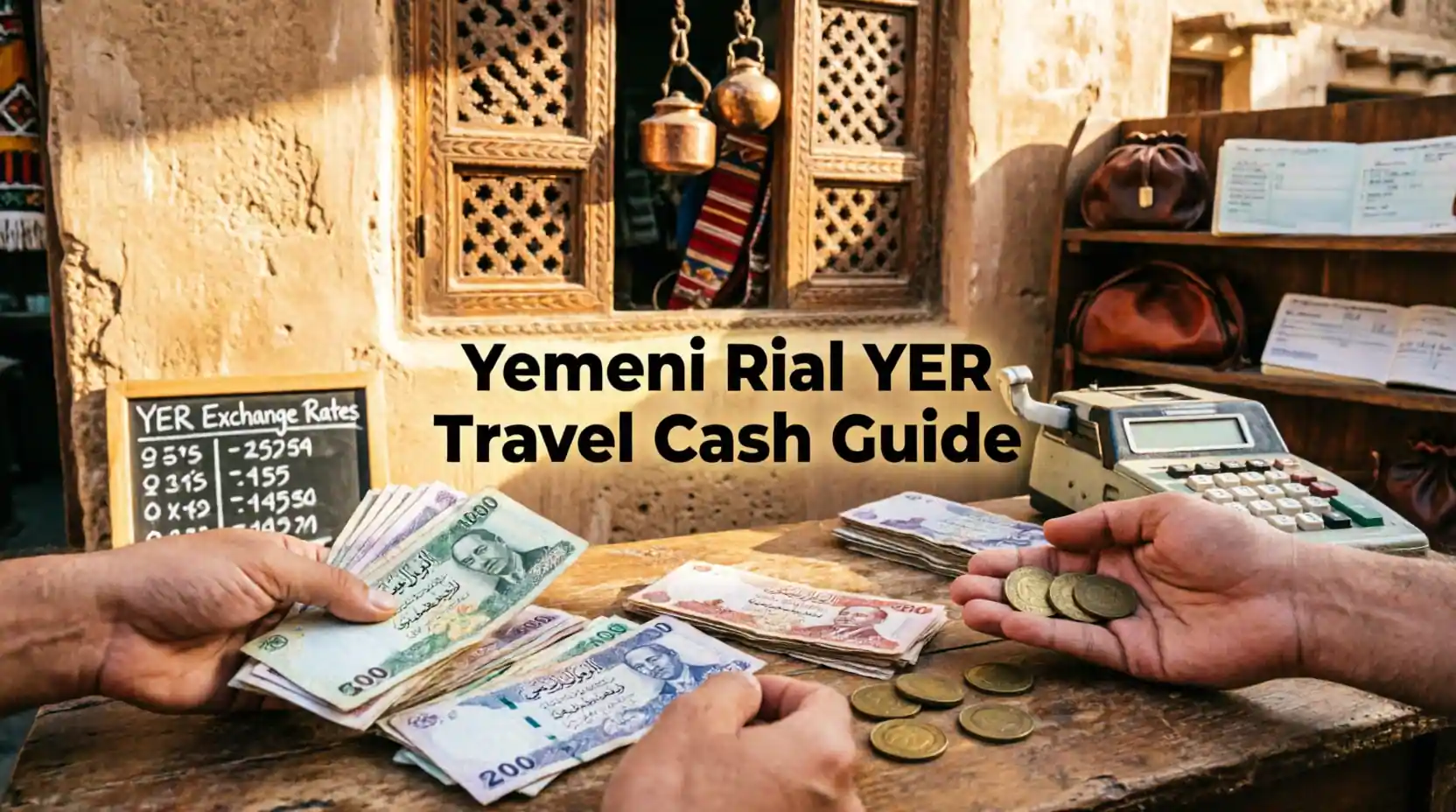
Yemeni Rial banknotes come in denominations of fifty, one hundred, two hundred, five hundred, and one thousand riyals.
Coins exist in smaller denominations though inflation reduced their practical use significantly.
Banknotes feature Arabic numerals and script with images of Yemeni landmarks and historical figures.
Older note series may still circulate alongside newer designs creating variety in appearance.
Familiarize yourself with note appearances before travel to avoid confusion during transactions.
Current Exchange Rate Context
Exchange rates vary dramatically between official bank rates and street market rates.
As of recent years, parallel market rates often differ substantially from official rates.
One US Dollar typically exchanges for several hundred Yemeni Rials though rates fluctuate daily.
Monitor rates through local contacts or money exchange offices before making large exchanges.
Small daily fluctuations normal though major shifts can occur based on political and economic developments.
Bringing Money into Yemen

Planning how to bring money into Yemen requires understanding regulations and practical realities.
International sanctions and banking restrictions limit conventional money transfer options.
Cash remains most reliable method though requires careful security considerations.
Alternative methods exist though each carries different risks and reliability levels.
Proper planning ensures adequate funds while minimizing security risks during transport.
Currency Declaration Requirements
Yemen requires declaration of cash amounts exceeding ten thousand US Dollars or equivalent upon entry.
Customs forms available at entry points requiring accurate completion and submission.
Failure to declare large amounts may result in confiscation or legal complications.
Keep declaration forms safe as they may be requested upon departure from Yemen.
Carry documentation proving legitimate source of funds for large amounts if questioned.
Recommended Currencies to Bring
US Dollars in crisp, unmarked bills accepted most widely for exchange throughout Yemen.
Euros and Saudi Riyals also exchangeable though rates may be less favorable than USD.
Bring newer series bills as older or damaged notes may be rejected or exchanged at lower rates.
Mix of denominations provides flexibility with larger bills for exchange and smaller for immediate needs.
Avoid bringing Yemeni Rials from abroad as better rates available within Yemen itself.
Exchanging Money in Yemen

Money exchange requires knowledge of where to go, what rates to expect, and safety precautions.
Multiple exchange options exist each with different advantages and considerations for travelers.
Understanding exchange procedures prevents unfavorable rates and potential security issues.
Building relationships with trusted exchange providers proves valuable for extended stays.
These strategies help you access fair rates while maintaining personal security.
Official Exchange Locations
Banks in major cities like Sanaa and Aden offer official exchange services though limited hours.
Official bank rates typically less favorable than parallel market rates available through money changers.
Bank exchanges provide receipts and documentation useful for official purposes or large transactions.
Banking hours usually eight AM to twelve PM Saturday through Thursday with Friday closures.
Expect longer processing times and more documentation requirements compared to informal exchanges.
Money Changers and Exchange Offices
Money exchange offices in souqs and commercial areas offer competitive parallel market rates.
Reputable changers display rates prominently and conduct transactions transparently in open settings.
Ask hotel staff or local contacts for recommendations to trusted exchange providers.
Count money carefully before leaving exchange counter verifying amounts and note authenticity.
Avoid exchanging money on street from unknown individuals due to counterfeit and security risks.
Exchange Rate Negotiation
Rates often negotiable especially for larger amounts exceeding five hundred US Dollars.
Check rates at multiple locations before exchanging establishing understanding of current market.
Larger bills typically receive better rates than smaller denominations due to changer preferences.
Build relationship with one trusted changer for consistent rates and reliable service during stay.
Avoid exchanging entire amount at once maintaining flexibility if rates improve.
ATM and Banking Access

ATM availability in Yemen extremely limited and unreliable for international travelers.
International sanctions restrict banking connections making card withdrawals generally impossible.
Do not rely on ATMs as primary source of funds when traveling in Yemen.
Understanding banking limitations prevents dangerous cash shortages during your visit.
Alternative arrangements essential for accessing additional funds if needed during stay.
ATM Reality for Travelers
Few ATMs accept international cards with most machines restricted to local Yemeni bank cards.
Even when machines appear functional, international transactions typically declined due to sanctions.
Major hotels in Sanaa or Aden may have ATMs though success rates for foreign cards remain very low.
Never depend on ATM access for emergency funds as alternatives extremely limited in Yemen.
Bring sufficient cash for entire trip plus emergency reserve to cover unexpected extensions.
Alternative Money Access Methods
Hawala informal money transfer system operates widely though requires trusted contacts in Yemen.
Western Union and similar services severely limited or unavailable due to international restrictions.
Hotel arrangements sometimes possible for receiving money transfers through their business accounts.
Cryptocurrency emerging as option though requires technical knowledge and willing local partners.
Establish money access plan before arrival with backup options for emergency situations.
Daily Cash Usage and Budgeting

Yemen operates almost entirely on cash with minimal card acceptance even in urban areas.
Daily budgeting requires understanding typical costs and carrying appropriate cash amounts.
Security considerations influence how much cash to carry versus store safely.
Planning for different expense categories ensures adequate funds for all needs.
These budgeting strategies help manage money effectively while maintaining security.
Daily Expense Estimates
Budget travelers can manage on ten to twenty US Dollars daily equivalent in YER for basic needs.
Mid-range travelers should budget thirty to fifty US Dollars daily for comfortable accommodations and meals.
Luxury travel costs vary significantly though fifty to one hundred plus US Dollars daily typical.
Accommodation ranges from five to fifty US Dollars nightly depending on location and quality.
Meals cost two to ten US Dollars for local restaurants or fifteen to thirty for hotel dining.
Carrying Cash Safely
Divide cash into multiple locations including money belt, hotel safe, and daily wallet.
Carry only daily spending needs keeping reserve funds secured at accommodation.
Use hotel safes when available though verify security and consider backup storage options.
Avoid displaying large amounts of cash in public during transactions or counting money.
Keep small denominations accessible for daily purchases avoiding need to break large notes frequently.
Payment Methods and Local Customs

Understanding payment customs and expectations facilitates smooth transactions throughout Yemen.
Cash dominates all transactions from hotels to markets to transportation services.
Cultural norms around payment, tipping, and negotiation differ from Western expectations.
Building positive payment relationships enhances travel experience and local interactions.
These customs knowledge helps travelers navigate financial interactions respectfully and effectively.
Cash Payment Expectations
Expect to pay cash for virtually all services including hotels, restaurants, and transportation.
Some upscale hotels in major cities may accept credit cards though often with surcharges.
Always confirm payment method before receiving services avoiding misunderstandings at payment time.
Carry sufficient small bills for tips, taxi fares, and small purchases throughout day.
Receipts not always provided automatically though you can request them for larger purchases.
Tipping Customs and Expectations
Tipping appreciated though not mandatory with five to ten percent standard for good service.
Restaurant servers, hotel staff, and guides all appreciate tips for quality service.
Round up taxi fares rather than calculating exact change showing appreciation for service.
Tips in Yemeni Rials preferred though US Dollars acceptable especially for tour guides.
Discreet tipping maintains dignity avoiding public display of money exchange.
Negotiation Practices
Negotiation expected in souqs and markets though less common in restaurants and hotels with fixed prices.
Start negotiations at approximately sixty percent of asking price meeting around seventy to eighty percent.
Maintain friendly respectful demeanor during negotiation viewing it as social interaction not confrontation.
Know when to walk away if price exceeds fair value though often triggers better final offer.
Avoid aggressive haggling over small amounts remembering economic context and relative values.
Regional Variations in Currency Acceptance

Different regions of Yemen present varying conditions for currency exchange and usage.
Urban centers offer more exchange options while rural areas require advance cash preparation.
Security situations affect money access and exchange availability across different governorates.
Understanding regional differences prevents cash shortages when traveling between areas.
These regional considerations help plan money strategy for multi-destination Yemen itineraries.
Major Cities Sanaa and Aden
Sanaa and Aden offer most money exchange options with multiple changers and some banking services.
Competitive rates available in major cities due to higher volume and competition among changers.
Hotels in these cities more likely to accept credit cards though with significant surcharges.
ATMs exist though international card acceptance remains extremely limited even in major cities.
Carry backup cash when traveling between cities as exchange opportunities limited en route.
Rural and Remote Areas
Rural areas have minimal to no money exchange facilities requiring cash brought from cities.
Carry sufficient Yemeni Rials for entire rural stay plus emergency reserve for unexpected delays.
Small denominations essential in rural areas where making change for large notes difficult.
US Dollars may be accepted in some tourist areas though rates typically unfavorable.
Plan rural travel carefully ensuring adequate cash before leaving urban exchange centers.
Security Considerations for Money

Money security requires constant awareness and proactive precautions throughout Yemen travel.
Theft risks exist though proper precautions significantly reduce vulnerability to money loss.
Emergency planning ensures backup options if primary cash sources lost or stolen.
Balancing security with accessibility prevents both theft and dangerous cash shortages.
These security practices protect your financial resources while traveling in Yemen.
Money Storage Strategies
Use money belt or hidden pouch worn under clothing for bulk cash and important documents.
Keep daily spending money in wallet or pocket separate from reserve funds.
Divide backup cash storing in multiple locations luggage, hotel safe, and concealed carry.
Avoid keeping all cash in single location preventing total loss from theft or misplacement.
Use hotel safes when available though verify security and maintain independent backup storage.
Avoiding Theft and Scams
Never count money or display large amounts in public spaces or markets.
Be wary of distractions while handling money as teams may work together for theft.
Use reputable exchange offices avoiding individuals offering rates on street.
Verify note authenticity when receiving large amounts checking for counterfeits.
Trust instincts about people and situations removing yourself from uncomfortable money transactions.
Emergency Money Backup Plans
Keep emergency US Dollars separate from Yemeni Rials accessible if local currency depleted.
Establish contact with trusted person who can send emergency funds through Hawala if needed.
Know location of your embassy or consulate for emergency assistance though financial help limited.
Carry contact information for money transfer services though availability severely restricted in Yemen.
Have plan for extending stay financially if travel delayed by security or logistical issues.
Practical Money Management Tips

Effective money management enhances travel experience while preventing financial complications.
Small daily practices accumulate into significant security and convenience benefits.
Preparation and organization prevent stressful money situations during your Yemen journey.
Local knowledge and relationships improve money access and exchange opportunities.
These practical tips streamline financial aspects allowing focus on cultural experiences.
Record Keeping and Tracking
Maintain simple spending log tracking daily expenses against budget preventing overspending.
Keep exchange receipts documenting rates and amounts for reference and potential official needs.
Photograph important documents including passport, visa, and emergency contacts storing separately.
Note serial numbers of large denomination bills providing documentation if theft occurs.
Track remaining cash daily ensuring adequate funds for planned activities and departure.
Building Local Money Relationships
Establish relationship with trusted hotel staff who can advise on exchange rates and locations.
Connect with reliable local guide who understands money logistics and can assist with exchanges.
Network with other travelers sharing information about current rates and reliable changers.
Respectful relationships with shopkeepers and service providers sometimes yield better prices and assistance.
Cultural sensitivity in money matters builds trust facilitating smoother transactions and helpful advice.
Planning for Departure
Exchange remaining Yemeni Rials before departure as currency difficult to exchange outside Yemen.
Keep small amount of YER for airport expenses though most airport vendors accept USD.
Verify you have sufficient funds for departure taxes, tips, and unexpected airport costs.
Organize cash for easy access during departure avoiding fumbling with money at security checkpoints.
Confirm transportation payment arranged in advance preventing last-minute money stress during departure.
Conclusion and Essential Reminders
Traveling in Yemen requires cash-based financial planning with limited banking and card options.
Bringing sufficient US Dollars and exchanging strategically ensures adequate funds throughout journey.
Security precautions and money management practices protect resources while enabling positive experiences.
Understanding local customs and building trusted relationships facilitates smooth financial interactions.
Proper preparation transforms money management from challenge into manageable aspect of Yemen travel.
0 Comments