.webp)
.webp)
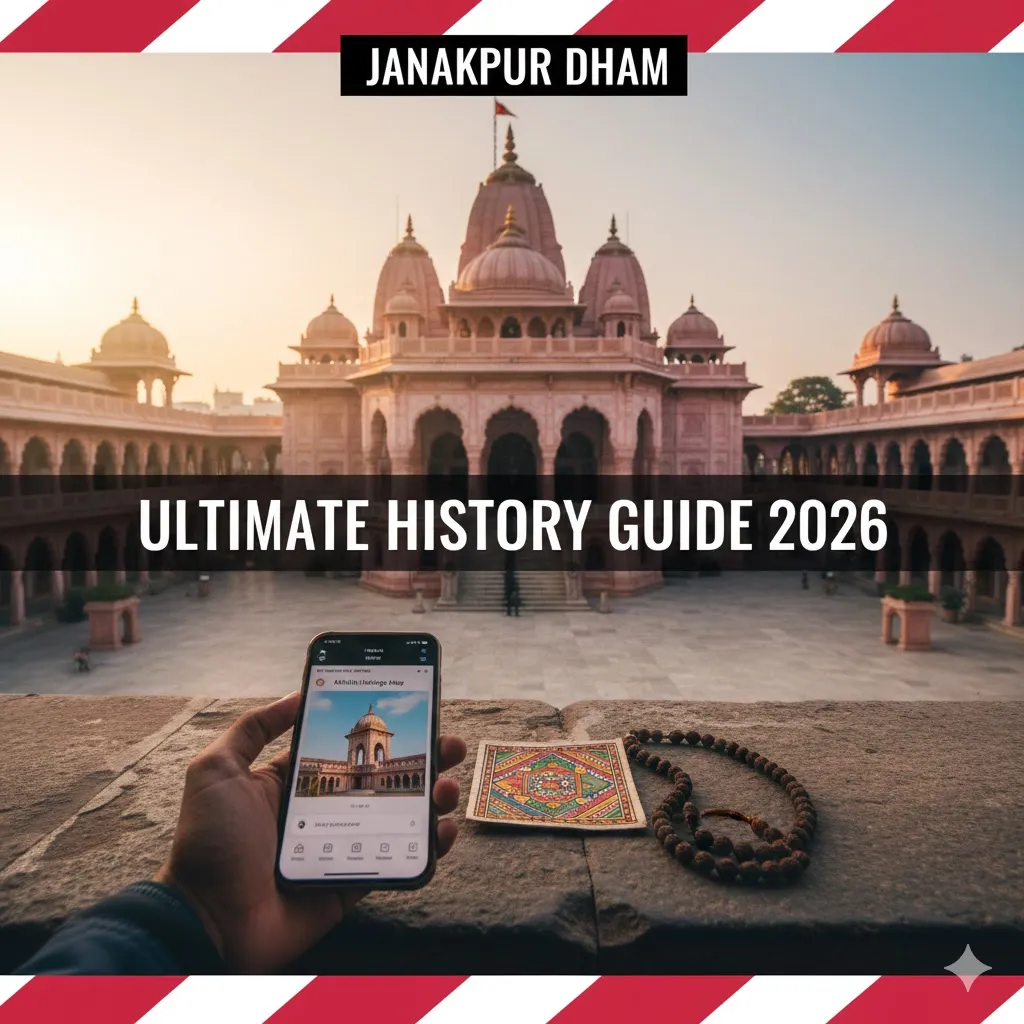
Discovering Nepal's Ancient Mithila Capital: A Journey Through Time
Nestled in the fertile plains of Nepal's Terai region, Janakpur Dham stands as a living testament to over 3,000 years of continuous civilization, making it one of South Asia's most significant yet underappreciated cultural destinations. While millions of tourists flock to Kathmandu's Durbar Squares and Pokhara's lakeside beauty, history enthusiasts and cultural pilgrims are increasingly discovering that Janakpur Dham offers something far more profound: an authentic connection to the ancient Mithila Kingdom, the legendary birthplace of Goddess Sita, and an unbroken thread of cultural heritage that stretches back to the Vedic period.
For history buffs, Janakpur Dham represents far more than a religious pilgrimage site—it's a treasure trove of archaeological wonders, architectural marvels, artistic traditions, and living cultural practices that provide invaluable insights into ancient Indian civilization, the evolution of Hindu philosophy, and the rich tapestry of Mithila culture. From the magnificent Janaki Mandir, often called the "Queen of Temples," to ancient manuscripts preserved in centuries-old libraries, from intricate Mithila paintings that tell epic stories to archaeological sites that whisper tales of ancient kingdoms, Janakpur Dham offers layers of historical discovery that rival any cultural destination in South Asia.
This comprehensive guide explores why Janakpur Dham deserves recognition as the ultimate cultural destination for history enthusiasts, examining its mythological significance, architectural heritage, artistic traditions, archaeological treasures, and living cultural practices. Whether you're a scholar of ancient civilizations, an architecture enthusiast, an art historian, or simply a curious traveler with a passion for history, Janakpur Dham promises an immersive journey through time that will deepen your understanding of South Asian civilization and leave you with a profound appreciation for this remarkable cultural sanctuary.
The Mythological Foundation: Janakpur in the Ramayana

To understand Janakpur Dham's significance for history buffs, one must first appreciate its foundational role in Hindu mythology and the Ramayana epic. According to ancient texts, Janakpur was the capital of the Mithila Kingdom, ruled by King Janaka, a philosopher-king renowned for his wisdom, spiritual knowledge, and just governance.
The Birthplace of Goddess Sita
Janakpur's most celebrated claim to historical and mythological significance is as the birthplace of Goddess Sita, consort of Lord Rama and central figure in the Ramayana. According to legend, King Janaka discovered the infant Sita while plowing a field during a royal ritual, emerging from a furrow in the earth. This divine origin story has made Janakpur a sacred site for millions of Hindus and a focal point for Ramayana scholarship and pilgrimage.
For historians, the Sita narrative provides fascinating insights into ancient agricultural practices, royal rituals, and the integration of divine mythology with earthly governance in ancient Mithila. The story reflects the civilization's deep connection to agriculture, its reverence for the earth as a life-giving force, and its philosophical traditions that valued spiritual wisdom alongside political power.
King Janaka's Philosophical Legacy
King Janaka himself occupies a unique place in Hindu philosophical history as a "Rajarshi"—a sage-king who achieved spiritual enlightenment while fulfilling his royal duties. His dialogues with sages like Yajnavalkya, recorded in the Upanishads and Brihadaranyaka Upanishad specifically, represent some of the earliest philosophical discussions on the nature of reality, consciousness, and liberation (moksha).
For students of philosophy and intellectual history, Janakpur represents the birthplace of important Vedantic concepts and the demonstration that spiritual realization and worldly responsibility are not mutually exclusive. King Janaka's court attracted scholars, sages, and philosophers from across ancient India, making Mithila a center of learning and intellectual discourse that influenced Hindu philosophy for millennia.
The Ram-Sita Vivah (Wedding)
Janakpur is also celebrated as the site of the divine wedding of Lord Rama and Goddess Sita, one of the most significant events in Hindu mythology. According to the Ramayana, King Janaka organized a grand swayamvara (ceremony where a princess chooses her husband) in which suitors had to lift and string the divine bow of Lord Shiva—a task accomplished only by Prince Rama of Ayodhya.
This event has profound historical and cultural significance, representing:
- Ancient marriage customs: Insights into royal marriage ceremonies and swayamvara traditions
- Political alliances: The strategic importance of royal marriages in ancient India
- Cultural exchange: The connection between the kingdoms of Mithila and Kosala (Ayodhya)
- Religious synthesis: The integration of Shaivism (worship of Shiva) and Vaishnavism (worship of Vishnu/Rama)
- 👉 Is Kuwait the Next Dubai? Why luxury travelers are shifting focus in 2026.
- 👉 The Ultimate Cambodia Travel Guide: Discovering the Kingdom of Wonder
- 👉 Karachi Street Crime & Phone Snatching: 2026 Safety Guide
Archaeological Evidence and Historical Dating
While the Ramayana is traditionally dated to the Treta Yuga (thousands of years ago), historians and archaeologists have worked to establish the historical timeline of ancient Mithila. Archaeological excavations in and around Janakpur have revealed:
- Ancient settlement patterns: Evidence of continuous habitation dating back over 2,500 years
- Pottery and artifacts: Material culture consistent with the late Vedic and early historic periods
- Urban planning: Remnants of ancient city planning and fortification systems
- Religious structures: Evidence of early temple construction and worship practices
- 👉 Is Kuwait the Next Dubai? Why luxury travelers are shifting focus in 2026.
- 👉 The Ultimate Cambodia Travel Guide: Discovering the Kingdom of Wonder
- 👉 Karachi Street Crime & Phone Snatching: 2026 Safety Guide
For history buffs, the intersection of mythology, textual evidence, and archaeological findings makes Janakpur a fascinating case study in how ancient civilizations preserved their history through oral and written traditions while leaving material evidence for modern discovery.
Architectural Heritage: Temples as Historical Documents

Janakpur Dham's architectural legacy represents centuries of artistic evolution, religious devotion, and cultural synthesis. The city's temples are not merely places of worship but historical documents that tell the story of Mithila's political, religious, and artistic development.
Janaki Mandir: The Crown Jewel
The Janaki Mandir (also known as Janaki Mandir or Sita Mandir) is undoubtedly Janakpur's most iconic architectural monument and one of the finest examples of Rajput architecture in Nepal. Built in 1910-1911 by Queen Vrinda Sundari Devi of Tikamgarh, this magnificent temple stands as a testament to the enduring devotion to Goddess Sita and the architectural sophistication of the early 20th century.
Architectural Features:
- Style: Kishori Raman Temple style combining Rajput and Mughal influences
- Structure: Three-story white marble and stone construction
- Domes: 52 small domes and one large central dome
- Minarets: Four corner minarets showing Islamic architectural influence
- Carvings: Intricate stone carvings depicting scenes from the Ramayana
- Paintings: Traditional Mithila paintings adorning interior walls
- Materials: White marble, sandstone, and local materials
- 👉 Is Kuwait the Next Dubai? Why luxury travelers are shifting focus in 2026.
- 👉 The Ultimate Cambodia Travel Guide: Discovering the Kingdom of Wonder
- 👉 Karachi Street Crime & Phone Snatching: 2026 Safety Guide
Historical Significance:
- Construction period: Early 20th century (1910-1911)
- Patronage: Royal patronage from Tikamgarh (now in Madhya Pradesh, India)
- Cultural synthesis: Blending of Hindu temple architecture with Mughal elements
- Artistic collaboration: Craftsmen from various regions of India and Nepal
- 👉 Is Kuwait the Next Dubai? Why luxury travelers are shifting focus in 2026.
- 👉 The Ultimate Cambodia Travel Guide: Discovering the Kingdom of Wonder
- 👉 Karachi Street Crime & Phone Snatching: 2026 Safety Guide
For architecture historians, the Janaki Mandir represents a fascinating period of cross-cultural exchange and the continuation of temple-building traditions even as Nepal transitioned into the modern era. The temple's preservation and ongoing maintenance also provide insights into traditional conservation practices and the role of religious institutions in heritage preservation.
Ram Mandir: The Complementary Shrine
Built in 1946, the Ram Mandir stands adjacent to the Janaki Mandir and is dedicated to Lord Rama. This temple, while more modern than the Janaki Mandir, holds significant historical and religious importance as it completes the divine couple's worship in Janakpur.
Architectural Elements:
- Style: Traditional North Indian Nagara style
- Shikhara: Characteristic curvilinear spire
- Mandapa: Pillared halls for congregation
- Sculptures: Stone carvings depicting Ramayana episodes
- 👉 Is Kuwait the Next Dubai? Why luxury travelers are shifting focus in 2026.
- 👉 The Ultimate Cambodia Travel Guide: Discovering the Kingdom of Wonder
- 👉 Karachi Street Crime & Phone Snatching: 2026 Safety Guide
Ancient Temples and Historical Layers
Beyond the major temples, Janakpur Dham contains numerous smaller shrines and temples that represent different historical periods and architectural styles:
Vivah Mandap: The wedding pavilion where the divine marriage of Ram and Sita is believed to have taken place. This structure, though reconstructed over centuries, marks one of the most significant sites in Hindu mythology.
Dhanush Sagar: An ancient sacred pond associated with Lord Shiva's bow. The pond and its surrounding temples represent ancient water management systems and the integration of natural features into religious practice.
Ganga Sagar: Another sacred pond with historical temples, demonstrating the importance of water bodies in ancient urban planning and religious life.
Other Notable Temples:
- Lakshman Mandir: Dedicated to Lord Lakshman
- Hanuman Mandir: Dedicated to Lord Hanuman
- Shiva temples: Various ancient Shiva shrines throughout the city
- 👉 Is Kuwait the Next Dubai? Why luxury travelers are shifting focus in 2026.
- 👉 The Ultimate Cambodia Travel Guide: Discovering the Kingdom of Wonder
- 👉 Karachi Street Crime & Phone Snatching: 2026 Safety Guide
Architectural Evolution and Historical Context
For architectural historians, Janakpur Dham offers a living museum of temple architecture spanning different periods:
- Ancient period: Remnants and references to early temple structures
- Medieval period: Traditional Mithila architectural styles
- Colonial period: Rajput and Mughal influences (Janaki Mandir)
- Modern period: Contemporary temple construction and renovation
- 👉 Is Kuwait the Next Dubai? Why luxury travelers are shifting focus in 2026.
- 👉 The Ultimate Cambodia Travel Guide: Discovering the Kingdom of Wonder
- 👉 Karachi Street Crime & Phone Snatching: 2026 Safety Guide
The evolution of temple architecture in Janakpur reflects broader historical trends including:
- Political changes and royal patronage patterns
- Cultural exchange between Nepal and India
- Technological advancements in construction
- Religious movements and devotional practices
- Economic prosperity and resource availability
- 👉 Is Kuwait the Next Dubai? Why luxury travelers are shifting focus in 2026.
- 👉 The Ultimate Cambodia Travel Guide: Discovering the Kingdom of Wonder
- 👉 Karachi Street Crime & Phone Snatching: 2026 Safety Guide
Mithila Art and Culture: A Living Historical Tradition

For art historians and cultural enthusiasts, Janakpur Dham offers an unparalleled opportunity to study Mithila art (also known as Madhubani painting), one of the world's oldest continuous artistic traditions. This ancient art form, traditionally practiced by women of the Mithila region, provides invaluable insights into the region's history, mythology, social structure, and aesthetic values.
Origins and Historical Development
Mithila art's origins are shrouded in antiquity, but historical evidence suggests it has been practiced for over 2,500 years. According to legend, the art form began when King Janaka ordered the walls of his palace to be painted for the wedding of Lord Rama and Goddess Sita. While this mythological origin cannot be historically verified, archaeological findings and textual references support the art form's ancient lineage.
Historical Periods:
- Ancient period: Wall paintings in homes and temples
- Medieval period: Development of distinct styles and motifs
- 1960s: Transition from wall paintings to paper due to drought relief programs
- Contemporary period: Global recognition and commercial adaptation
- 👉 Is Kuwait the Next Dubai? Why luxury travelers are shifting focus in 2026.
- 👉 The Ultimate Cambodia Travel Guide: Discovering the Kingdom of Wonder
- 👉 Karachi Street Crime & Phone Snatching: 2026 Safety Guide
Distinctive Styles and Historical Significance
Mithila art encompasses several distinct styles, each with its own historical and cultural significance:
Bharni Style:
- Characteristics: Bright colors, filled shapes, religious themes
- Historical context: Traditionally practiced by Brahmin women
- Themes: Deities, religious ceremonies, mythological scenes
- 👉 Is Kuwait the Next Dubai? Why luxury travelers are shifting focus in 2026.
- 👉 The Ultimate Cambodia Travel Guide: Discovering the Kingdom of Wonder
- 👉 Karachi Street Crime & Phone Snatching: 2026 Safety Guide
Kachni Style:
- Characteristics: Fine line work, monochromatic or limited colors
- Historical context: Traditionally practiced by Kayastha women
- Themes: Nature, animals, geometric patterns
- 👉 Is Kuwait the Next Dubai? Why luxury travelers are shifting focus in 2026.
- 👉 The Ultimate Cambodia Travel Guide: Discovering the Kingdom of Wonder
- 👉 Karachi Street Crime & Phone Snatching: 2026 Safety Guide
Tantrik Style:
- Characteristics: Geometric designs, symbolic representations
- Historical context: Connected to tantric practices and rituals
- Themes: Yantras, deities in specific postures, cosmic diagrams
- 👉 Is Kuwait the Next Dubai? Why luxury travelers are shifting focus in 2026.
- 👉 The Ultimate Cambodia Travel Guide: Discovering the Kingdom of Wonder
- 👉 Karachi Street Crime & Phone Snatching: 2026 Safety Guide
Godna Style:
- Characteristics: Tattoo-inspired designs, bold lines
- Historical context: Influenced by traditional tattooing practices
- Themes: Social customs, daily life, nature
- 👉 Is Kuwait the Next Dubai? Why luxury travelers are shifting focus in 2026.
- 👉 The Ultimate Cambodia Travel Guide: Discovering the Kingdom of Wonder
- 👉 Karachi Street Crime & Phone Snatching: 2026 Safety Guide
Motifs as Historical Documents
The motifs and symbols used in Mithila art provide historians with valuable information about ancient Mithila society:
- Religious symbols: Insights into religious practices and beliefs
- Nature motifs: Information about local flora and fauna
- Social scenes: Depictions of weddings, festivals, daily life
- Geometric patterns: Mathematical knowledge and aesthetic principles
- Mythological scenes: Preservation of oral traditions and epics
- 👉 Is Kuwait the Next Dubai? Why luxury travelers are shifting focus in 2026.
- 👉 The Ultimate Cambodia Travel Guide: Discovering the Kingdom of Wonder
- 👉 Karachi Street Crime & Phone Snatching: 2026 Safety Guide
Preservation and Contemporary Practice
For history buffs interested in cultural preservation, Janakpur Dham offers numerous opportunities to observe and learn about Mithila art:
Janakpur Dham Women's Development Center: Established to preserve and promote Mithila art, this center provides training to local women and showcases traditional and contemporary works.
Local Workshops: Many artists offer workshops where visitors can learn painting techniques and understand the cultural significance of various motifs.
Museums and Galleries: Several institutions in Janakpur display historical and contemporary Mithila paintings, providing context and chronological development of the art form.
Living Tradition: Unlike museum artifacts, Mithila art remains a living tradition practiced in homes, temples, and community spaces throughout Janakpur, offering historians a rare opportunity to study an ancient art form in its contemporary context.
Archaeological Sites and Historical Research

For serious history enthusiasts and archaeology buffs, Janakpur Dham and its surrounding areas offer several archaeological sites that provide tangible connections to the region's ancient past.
Excavation Sites and Findings
While large-scale archaeological excavations in Janakpur have been limited compared to other ancient Indian cities, several sites have yielded important historical evidence:
Ancient Settlement Remains:
- Location: Various sites within and around modern Janakpur
- Period: Late Vedic to early historic period (1000 BCE - 300 CE)
- Findings: Pottery shards, terracotta figurines, coins, tools
- Significance: Evidence of continuous habitation and urban development
- 👉 Is Kuwait the Next Dubai? Why luxury travelers are shifting focus in 2026.
- 👉 The Ultimate Cambodia Travel Guide: Discovering the Kingdom of Wonder
- 👉 Karachi Street Crime & Phone Snatching: 2026 Safety Guide
Temple Foundation Remains:
- Location: Beneath and around current temple structures
- Period: Various periods from ancient to medieval
- Findings: Foundation stones, sculptural fragments, inscriptions
- Significance: Evidence of temple construction and reconstruction over centuries
- 👉 Is Kuwait the Next Dubai? Why luxury travelers are shifting focus in 2026.
- 👉 The Ultimate Cambodia Travel Guide: Discovering the Kingdom of Wonder
- 👉 Karachi Street Crime & Phone Snatching: 2026 Safety Guide
Inscriptions and Epigraphic Evidence
Inscriptions found in and around Janakpur provide crucial historical data:
Temple Inscriptions:
- Janaki Mandir: Inscriptions detailing construction, patronage, and donations
- Other temples: Records of renovations, land grants, and religious endowments
- Languages: Sanskrit, Maithili, and Nepali
- Period: Primarily 18th-20th centuries
- 👉 Is Kuwait the Next Dubai? Why luxury travelers are shifting focus in 2026.
- 👉 The Ultimate Cambodia Travel Guide: Discovering the Kingdom of Wonder
- 👉 Karachi Street Crime & Phone Snatching: 2026 Safety Guide
Copper Plate Grants:
- Content: Land grants, tax exemptions, royal decrees
- Period: Medieval to early modern period
- Historical value: Information about political administration, economy, and social structure
- 👉 Is Kuwait the Next Dubai? Why luxury travelers are shifting focus in 2026.
- 👉 The Ultimate Cambodia Travel Guide: Discovering the Kingdom of Wonder
- 👉 Karachi Street Crime & Phone Snatching: 2026 Safety Guide
Numismatic Evidence
Coin discoveries in the Janakpur region provide insights into:
- Trade networks: Connections with other regions of India and beyond
- Economic systems: Currency, trade, and commerce in ancient Mithila
- Political history: Ruling dynasties and their chronology
- Cultural exchange: Artistic and cultural influences from other regions
- 👉 Is Kuwait the Next Dubai? Why luxury travelers are shifting focus in 2026.
- 👉 The Ultimate Cambodia Travel Guide: Discovering the Kingdom of Wonder
- 👉 Karachi Street Crime & Phone Snatching: 2026 Safety Guide
Ongoing Research and Future Discoveries
For history buffs interested in contributing to historical knowledge, Janakpur offers opportunities for:
- Academic research: Collaboration with universities and research institutions
- Documentation projects: Recording oral histories, architectural details, and cultural practices
- Conservation efforts: Participating in or supporting heritage preservation initiatives
- Archaeological tourism: Visiting excavation sites and museums with expert guides
- 👉 Is Kuwait the Next Dubai? Why luxury travelers are shifting focus in 2026.
- 👉 The Ultimate Cambodia Travel Guide: Discovering the Kingdom of Wonder
- 👉 Karachi Street Crime & Phone Snatching: 2026 Safety Guide
Living Cultural Traditions: History in Practice

What makes Janakpur Dham particularly valuable for history enthusiasts is that it's not merely a repository of historical artifacts—it's a living cultural landscape where ancient traditions continue to thrive. This provides historians and cultural enthusiasts with a unique opportunity to observe how ancient practices have evolved and persisted over millennia.
Festivals as Historical Windows
Janakpur's festival calendar offers historians insights into ancient religious practices, social structures, and cultural values:
Vivah Panchami:
- Significance: Celebrates the divine wedding of Ram and Sita
- Historical value: Preservation of ancient wedding customs and rituals
- Observances: Reenactments, processions, religious ceremonies
- Timing: November-December (Hindu month of Margashirsha)
- 👉 Is Kuwait the Next Dubai? Why luxury travelers are shifting focus in 2026.
- 👉 The Ultimate Cambodia Travel Guide: Discovering the Kingdom of Wonder
- 👉 Karachi Street Crime & Phone Snatching: 2026 Safety Guide
Chhath Puja:
- Significance: Ancient sun worship festival particularly important in Mithila
- Historical value: Insights into ancient nature worship and solar cults
- Observances: Ritual bathing, fasting, offerings at sacred ponds
- Timing: October-November (sixth day of Kartik month)
- 👉 Is Kuwait the Next Dubai? Why luxury travelers are shifting focus in 2026.
- 👉 The Ultimate Cambodia Travel Guide: Discovering the Kingdom of Wonder
- 👉 Karachi Street Crime & Phone Snatching: 2026 Safety Guide
Ram Navami:
- Significance: Birth of Lord Rama
- Historical value: Preservation of Vaishnavite traditions and devotional practices
- Observances: Temple ceremonies, Ramayana recitations, processions
- Timing: March-April (Hindu month of Chaitra)
- 👉 Is Kuwait the Next Dubai? Why luxury travelers are shifting focus in 2026.
- 👉 The Ultimate Cambodia Travel Guide: Discovering the Kingdom of Wonder
- 👉 Karachi Street Crime & Phone Snatching: 2026 Safety Guide
Ritual Practices and Daily Life
Observing daily religious and cultural practices in Janakpur provides historians with insights into:
- Temple rituals: Ancient puja methods, offerings, and ceremonial practices
- Domestic worship: Home-based religious practices passed down through generations
- Life cycle ceremonies: Birth, marriage, and death rituals preserving ancient customs
- Oral traditions: Storytelling, folk songs, and religious narratives
- 👉 Is Kuwait the Next Dubai? Why luxury travelers are shifting focus in 2026.
- 👉 The Ultimate Cambodia Travel Guide: Discovering the Kingdom of Wonder
- 👉 Karachi Street Crime & Phone Snatching: 2026 Safety Guide
Language and Literature
For linguistic historians and literature enthusiasts, Janakpur offers rich resources:
Maithili Language:
- Historical significance: One of the oldest languages of the Indian subcontinent
- Literary tradition: Rich corpus of poetry, prose, and religious texts
- Contemporary use: Still widely spoken in Janakpur and surrounding regions
- Research opportunities: Study of linguistic evolution and preservation efforts
- 👉 Is Kuwait the Next Dubai? Why luxury travelers are shifting focus in 2026.
- 👉 The Ultimate Cambodia Travel Guide: Discovering the Kingdom of Wonder
- 👉 Karachi Street Crime & Phone Snatching: 2026 Safety Guide
Religious Texts and Manuscripts:
- Libraries: Ancient libraries preserving manuscripts and texts
- Content: Ramayana commentaries, philosophical treatises, religious poetry
- Preservation: Traditional manuscript preservation techniques
- Access: Opportunities for scholarly research and study
- 👉 Is Kuwait the Next Dubai? Why luxury travelers are shifting focus in 2026.
- 👉 The Ultimate Cambodia Travel Guide: Discovering the Kingdom of Wonder
- 👉 Karachi Street Crime & Phone Snatching: 2026 Safety Guide
Museums and Cultural Institutions

For history buffs seeking structured learning experiences, Janakpur Dham houses several museums and cultural institutions that provide context, curation, and expert interpretation of the region's rich heritage.
Janakpur Dham Museum
This museum serves as the primary repository for artifacts, artworks, and historical documents related to Janakpur and the Mithila region:
Collections:
- Archaeological artifacts: Pottery, tools, sculptures from various periods
- Religious objects: Ancient idols, ritual implements, temple furnishings
- Manuscripts: Historical texts, religious scriptures, literary works
- Mithila paintings: Historical and contemporary examples of the art form
- Photographs: Historical images documenting the city's development
- 👉 Is Kuwait the Next Dubai? Why luxury travelers are shifting focus in 2026.
- 👉 The Ultimate Cambodia Travel Guide: Discovering the Kingdom of Wonder
- 👉 Karachi Street Crime & Phone Snatching: 2026 Safety Guide
Educational Programs:
- Guided tours with expert historians and archaeologists
- Lectures and seminars on Mithila history and culture
- Workshops on traditional arts and crafts
- Research facilities for scholars and students
- 👉 Is Kuwait the Next Dubai? Why luxury travelers are shifting focus in 2026.
- 👉 The Ultimate Cambodia Travel Guide: Discovering the Kingdom of Wonder
- 👉 Karachi Street Crime & Phone Snatching: 2026 Safety Guide
Cultural Centers and Libraries
Maithili Academy: Dedicated to the preservation and promotion of Maithili language and literature, offering resources for linguistic and literary research.
Mithila Research Institute: Focuses on scholarly research into all aspects of Mithila culture, history, and society, providing resources for serious researchers.
Community Libraries: Several libraries throughout Janakpur house collections of religious texts, historical documents, and local literature.
Practical Information for History Enthusiasts

Planning a historical and cultural exploration of Janakpur Dham requires some preparation to maximize your experience.
Best Time to Visit
For Festival Experiences:
- Vivah Panchami: November-December (witness the grand celebration of Ram-Sita wedding)
- Chhath Puja: October-November (experience ancient sun worship rituals)
- Ram Navami: March-April (celebrate Lord Rama's birth)
- 👉 Is Kuwait the Next Dubai? Why luxury travelers are shifting focus in 2026.
- 👉 The Ultimate Cambodia Travel Guide: Discovering the Kingdom of Wonder
- 👉 Karachi Street Crime & Phone Snatching: 2026 Safety Guide
For Comfortable Weather and Research:
- October to March: Pleasant temperatures (15-25°C / 59-77°F), ideal for site visits and outdoor exploration
- Avoid: April-June (very hot, 35-45°C / 95-113°F) and July-September (monsoon season with heavy rainfall)
- 👉 Is Kuwait the Next Dubai? Why luxury travelers are shifting focus in 2026.
- 👉 The Ultimate Cambodia Travel Guide: Discovering the Kingdom of Wonder
- 👉 Karachi Street Crime & Phone Snatching: 2026 Safety Guide
Duration of Stay
Minimum: 3-4 days to visit major temples and museums
Recommended: 7-10 days for comprehensive exploration including:
- Major temples and religious sites
- Museums and cultural institutions
- Art workshops and cultural centers
- Nearby archaeological sites
- Festival participation (if timing aligns)
- Time for research and documentation
- 👉 Is Kuwait the Next Dubai? Why luxury travelers are shifting focus in 2026.
- 👉 The Ultimate Cambodia Travel Guide: Discovering the Kingdom of Wonder
- 👉 Karachi Street Crime & Phone Snatching: 2026 Safety Guide
Extended Stay: 2-4 weeks for serious researchers, scholars, or those wanting deep cultural immersion
Getting There
By Air:
- Janakpur Airport: Domestic flights from Kathmandu (35-40 minutes)
- Airlines: Buddha Air, Yeti Airlines, and others operate regular flights
- Cost: $80-150 USD one way
- Note: Flights can be delayed or canceled due to weather
- 👉 Is Kuwait the Next Dubai? Why luxury travelers are shifting focus in 2026.
- 👉 The Ultimate Cambodia Travel Guide: Discovering the Kingdom of Wonder
- 👉 Karachi Street Crime & Phone Snatching: 2026 Safety Guide
By Road:
- From Kathmandu: 225 km, 8-10 hours by bus or private vehicle
- From Indian Border: 20 km from Jayanagar (India), 1-2 hours
- Bus services: Regular buses from Kathmandu, Pokhara, and other major cities
- Cost: $10-20 USD by bus; $80-120 USD by private vehicle
- 👉 Is Kuwait the Next Dubai? Why luxury travelers are shifting focus in 2026.
- 👉 The Ultimate Cambodia Travel Guide: Discovering the Kingdom of Wonder
- 👉 Karachi Street Crime & Phone Snatching: 2026 Safety Guide
Accommodation
Budget: $10-25 USD per night
- Basic guesthouses and lodges
- Clean rooms with shared or private bathrooms
- Limited amenities but convenient locations
- 👉 Is Kuwait the Next Dubai? Why luxury travelers are shifting focus in 2026.
- 👉 The Ultimate Cambodia Travel Guide: Discovering the Kingdom of Wonder
- 👉 Karachi Street Crime & Phone Snatching: 2026 Safety Guide
Mid-Range: $25-60 USD per night
- Comfortable hotels with modern amenities
- Air conditioning, hot water, WiFi
- Often near major temples and cultural sites
- 👉 Is Kuwait the Next Dubai? Why luxury travelers are shifting focus in 2026.
- 👉 The Ultimate Cambodia Travel Guide: Discovering the Kingdom of Wonder
- 👉 Karachi Street Crime & Phone Snatching: 2026 Safety Guide
Heritage/Heritage-Style: $60-150+ USD per night
- Traditional architecture with modern comforts
- Cultural ambiance and personalized service
- Ideal for history enthusiasts wanting authentic experience
- 👉 Is Kuwait the Next Dubai? Why luxury travelers are shifting focus in 2026.
- 👉 The Ultimate Cambodia Travel Guide: Discovering the Kingdom of Wonder
- 👉 Karachi Street Crime & Phone Snatching: 2026 Safety Guide
Guides and Experts
For serious history buffs, hiring knowledgeable guides can significantly enhance your experience:
Types of Guides:
- Temple guides: Specialize in religious architecture and mythology
- Cultural guides: Experts in Mithila art, festivals, and traditions
- Historical guides: Focus on archaeological sites and historical context
- Academic guides: University professors or researchers (arrange in advance)
- 👉 Is Kuwait the Next Dubai? Why luxury travelers are shifting focus in 2026.
- 👉 The Ultimate Cambodia Travel Guide: Discovering the Kingdom of Wonder
- 👉 Karachi Street Crime & Phone Snatching: 2026 Safety Guide
Cost: $20-50 USD per day depending on expertise level
Booking: Through hotels, tour operators, or cultural institutions
Research Permissions
If you're conducting academic research or planning extensive documentation:
- Museum access: May require special permission for photography or research
- Manuscript libraries: Advance permission often required
- Archaeological sites: Check with Department of Archaeology for permissions
- Temple interiors: Some restrictions on photography and access
- 👉 Is Kuwait the Next Dubai? Why luxury travelers are shifting focus in 2026.
- 👉 The Ultimate Cambodia Travel Guide: Discovering the Kingdom of Wonder
- 👉 Karachi Street Crime & Phone Snatching: 2026 Safety Guide
Conclusion: A Living Museum of Ancient Civilization
Janakpur Dham stands as far more than a religious pilgrimage site—it is a living museum where history breathes through every temple stone, every Mithila painting, every festival celebration, and every spoken word of the ancient Maithili language. For history buffs, this remarkable city offers an unparalleled opportunity to engage with over three millennia of continuous civilization, to witness how ancient traditions have evolved and persisted, and to participate in cultural practices that connect directly to the Vedic period.
From the mythological significance of being Goddess Sita's birthplace to the architectural splendor of the Janaki Mandir, from the ancient artistry of Mithila paintings to the living traditions of festivals and rituals, Janakpur Dham provides layers of historical discovery that reward careful study and respectful observation. The city's museums preserve tangible artifacts, while its streets and temples preserve intangible heritage—oral traditions, performing arts, religious practices, and social customs that have been passed down through countless generations.
For the serious history enthusiast, Janakpur Dham offers not just passive observation but active engagement. You can learn to paint in the Mithila style from master artists, participate in ancient festivals, study manuscripts in traditional libraries, discuss philosophy with local scholars, and contribute to ongoing documentation and preservation efforts. The city welcomes those who come with genuine curiosity and respect, offering knowledge and insights that cannot be found in any textbook or museum display case.
In an era when many ancient cities have become mere tourist attractions, Janakpur Dham remains authentic—a living, breathing cultural landscape where history is not just remembered but actively lived. For history buffs seeking the ultimate cultural destination, a place where the past illuminates the present and where ancient wisdom continues to guide contemporary life, Janakpur Dham offers an experience that is both intellectually enriching and spiritually profound.
Your journey to Janakpur Dham is more than a trip—it's a pilgrimage through time, an opportunity to walk in the footsteps of kings and sages, to learn from artists who preserve ancient techniques, and to witness a civilization that has thrived for millennia. For history buffs, there is no greater destination, no richer experience, and no more profound connection to the ancient past than what awaits in the sacred city of Janakpur Dham.
0 Comments