.webp)
.webp)
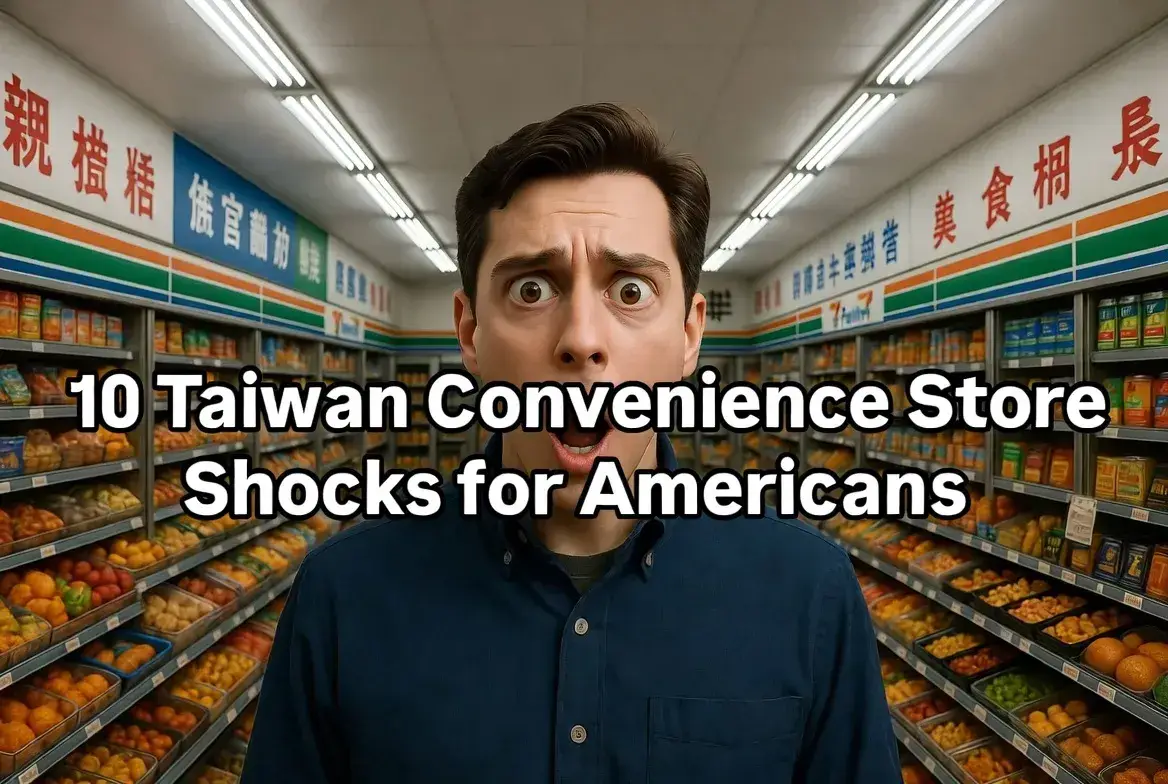
Introduction: Taiwan's Convenience Store Phenomenon
For Americans visiting Taiwan in 2026, few aspects of daily life prove as simultaneously delightful and disorienting as the island's extraordinary convenience store culture. What begins as a simple quest for a bottle of water or a snack quickly transforms into a journey through a retail ecosystem so comprehensive, so deeply integrated into daily life, and so far removed from American convenience store norms that it fundamentally challenges assumptions about what these establishments can be.
Taiwan boasts one of the world's highest densities of convenience stores, with approximately one store for every 2,000-2,500 people. In major cities like Taipei, Kaohsiung, and Taichung, you're rarely more than a few minutes' walk from a 7-Eleven, FamilyMart, Hi-Life, or OK Mart. But it's not just the sheer number that shocks Americans—it's what happens inside these stores that creates genuine culture shock.
Unlike American convenience stores, which primarily focus on fuel, snacks, and basic necessities, Taiwan's convenience stores function as multi-service community hubs offering everything from fresh gourmet meals and barista-quality coffee to bill payment services, package shipping, ticket purchases, ATM access, and even acting as informal community centers. They're open 24/7, impeccably clean, technologically advanced, and staffed by friendly employees who seem to know every regular customer by name.
This comprehensive guide explores the ten most shocking aspects of Taiwan's convenience store culture from an American perspective. Whether you're planning your first visit or simply curious about this fascinating aspect of Taiwanese life, understanding these realities will help you appreciate one of the island's most distinctive cultural features and perhaps reconsider what convenience stores can accomplish.
1. The Mind-Boggling Density: A Store on Every Corner

For Americans accustomed to driving several minutes between gas station convenience stores or seeing the occasional 7-Eleven in urban areas, Taiwan's convenience store density is genuinely staggering. In Taipei alone, there are over 2,500 convenience stores serving a population of approximately 2.6 million people. This translates to roughly one store per 1,000 residents in the capital—among the highest ratios in the world.
Walking through any Taiwanese city, you'll notice a peculiar pattern: you'll pass a 7-Eleven, walk for two or three minutes, and encounter a FamilyMart. Continue for another block, and there's another 7-Eleven, followed by a Hi-Life or OK Mart. These stores cluster together in ways that would seem like suicidal competition in America, yet they all appear to thrive.
The density serves practical purposes that Americans quickly come to appreciate. Need to use the restroom? There's a clean, accessible one nearby. Running low on phone credit? Top up at the nearest store. Forgot to buy breakfast? Grab a fresh meal at any hour. The ubiquity creates a safety net that makes urban life remarkably convenient and reduces anxiety about basic needs.
What's particularly shocking is how these stores maintain viability despite such close proximity. The answer lies in Taiwan's population density, high foot traffic, and the extensive range of services that drive frequent visits. Unlike American convenience stores that might see customers primarily for fuel or occasional snacks, Taiwanese convenience stores serve as daily touchpoints for millions of residents who visit multiple times per day for various purposes.
For Americans, this density initially seems wasteful or excessive. But after spending time in Taiwan, many come to appreciate the convenience and security that comes from knowing help, food, or basic supplies are never more than a few minutes away.
2. Beyond Snacks: The Astonishing Range of Services

Perhaps the most profound culture shock for Americans is discovering that Taiwan's convenience stores offer services that would be completely unexpected in their American counterparts. While a typical American 7-Eleven might sell lottery tickets and offer money orders, Taiwan's convenience stores function as comprehensive service centers handling an astonishing array of transactions.
Bill Payment Services: Taiwanese convenience stores accept payments for virtually every type of bill—utilities (electricity, water, gas), telecommunications, insurance premiums, credit card payments, parking fines, and even taxes. The process is simple: bring your bill to any store, hand it to the cashier, pay in cash or by card, and receive an official receipt. This service alone saves millions of Taiwanese residents countless hours of standing in line at government offices or utility companies.
Ticket Sales: Need concert tickets, movie tickets, train tickets, or event admission? Taiwan's convenience stores sell them all through integrated kiosk systems. The ibon (7-Eleven) and FamiPort (FamilyMart) terminals allow customers to browse events, select seats, print tickets, and pay—all within the store. This system has largely replaced the need for separate ticket outlets.
Shipping and Logistics: Taiwan's convenience stores serve as pickup and drop-off points for major courier services. You can ship packages domestically or internationally, receive online shopping deliveries, and even try on clothing ordered online before accepting delivery. The "convenience store pickup" option is so popular that many Taiwanese prefer it to home delivery.
Government Services: Some stores offer government document printing, application form distribution, and even serve as voting locations during elections. The integration of public services into private retail spaces demonstrates the trust placed in these establishments.
For Americans accustomed to visiting multiple locations for different services—post office for shipping, bank for bill payments, box office for tickets, government office for documents—the Taiwanese model seems almost impossibly efficient. The convenience store becomes a one-stop solution for countless daily tasks.
3. Gourmet Food Quality That Defies Convenience Store Expectations

Americans visiting Taiwan's convenience stores for the first time often experience genuine disbelief when they encounter the food quality. In the United States, convenience store food carries certain expectations: processed snacks, questionable hot dogs, day-old pastries, and coffee that's been sitting on a warmer since dawn. Taiwan shatters these expectations completely.
Fresh Meal Programs: Taiwan's major convenience store chains employ teams of chefs and nutritionists to develop fresh, high-quality meal programs. You'll find bento boxes with grilled fish, braised pork, and seasonal vegetables. There are fresh sandwiches made daily, pasta dishes, salads, and hot meals that wouldn't look out of place in a casual restaurant. The food is prepared in central kitchens and delivered to stores multiple times daily to ensure freshness.
Premium Coffee Culture: Taiwan's convenience stores have embraced specialty coffee in ways that surprise even coffee-obsessed Americans. City Café (7-Eleven) and Let's Café (FamilyMart) offer barista-quality espresso drinks, pour-over coffee, and seasonal specialties at a fraction of café prices. Many stores feature automated espresso machines that produce surprisingly good lattes and cappuccinos. Some locations even have trained baristas crafting manual pour-overs.
Fresh Bakery Items: Rather than pre-packaged muffins and day-old donuts, Taiwan's convenience stores feature fresh-baked bread, pastries, and desserts. Many stores have on-site baking equipment or receive multiple daily deliveries from partner bakeries. You'll find Taiwanese pineapple cakes, Japanese-style milk bread, croissants, and seasonal specialties.
Healthy Options: Recognizing health-conscious consumers, stores offer extensive selections of fresh fruit, yogurt, salads, low-calorie meals, and dietary-specific options (vegetarian, low-sodium, diabetic-friendly). Nutritional information is clearly displayed, and many items feature health certifications.
Local and Seasonal Specialties: Convenience stores embrace Taiwanese food culture by offering seasonal items like mooncakes during Mid-Autumn Festival, zongzi (sticky rice dumplings) during Dragon Boat Festival, and special New Year's treats. They also feature regional specialties and collaborate with local producers.
For Americans, the realization that you can get a fresh, nutritious, delicious meal at a convenience store at 2 AM is genuinely transformative. It challenges the entire concept of what "convenience food" means and raises expectations that make American convenience store fare seem almost embarrassing by comparison.
4. 24/7 Culture: Always Open, Always Ready

While many American convenience stores advertise 24-hour service, the reality often differs—some close late at night in certain areas, reduce services overnight, or feel unsafe during late hours. Taiwan's convenience stores deliver on the 24/7 promise in ways that genuinely support round-the-clock life.
True 24-Hour Operation: The vast majority of Taiwan's convenience stores operate 24 hours a day, 365 days a year, including major holidays. Even at 3 AM on Lunar New Year's Day, you'll find stores fully staffed, well-lit, and offering complete services. This reliability creates a sense of security and convenience that Americans find remarkable.
Full Services at All Hours: Unlike American stores that might lock doors, limit staff, or disable certain services overnight, Taiwan's convenience stores maintain full operations 24/7. You can pay bills, ship packages, print documents, withdraw cash, and access fresh food at any hour. The ibon and FamiPort kiosks never sleep.
Night Economy Support: Taiwan's vibrant night culture—night markets, late-night dining, entertainment districts—is supported by the convenience store network. Party-goers, night shift workers, students pulling all-nighters, and early morning commuters all rely on these stores. The stores serve as safe havens, meeting points, and service centers regardless of the hour.
Safety and Cleanliness: Perhaps most importantly, Taiwan's 24-hour convenience stores maintain the same standards of cleanliness, safety, and customer service at 4 AM as they do at 4 PM. The stores are well-lit, staffed by alert employees, and feel safe for all customers. This consistency builds tremendous trust.
For Americans accustomed to planning errands around business hours or worrying about late-night store safety, Taiwan's reliable 24/7 convenience store culture represents a fundamental shift in how daily life can be organized. The freedom to handle tasks whenever convenient, rather than when stores are open, proves liberating.
5. Package Pickup and E-Commerce Integration

Americans used to waiting at home for package deliveries or trekking to post offices and shipping centers experience genuine shock when they discover how seamlessly Taiwan's convenience stores integrate with e-commerce and logistics.
Convenience Store Pickup: When shopping online in Taiwan, "convenience store pickup" is often the default or preferred delivery option. Shoppers select their preferred store location during checkout, and the package arrives within 1-3 days. You receive a notification, visit the store at your convenience, show the pickup code, and collect your package. No waiting at home, no missed deliveries, no porch piracy concerns.
Return and Exchange Services: Many stores facilitate returns and exchanges for online purchases. Simply bring the item to any store, and staff process the return through the integrated system. This eliminates the hassle of printing return labels, repackaging, and visiting shipping centers.
International Shipping: Taiwan's convenience stores partner with major international carriers (DHL, FedEx, UPS) to offer shipping services. You can send packages worldwide by completing forms at the store's kiosk, paying at the counter, and leaving the package with staff. The stores handle documentation, customs forms, and tracking.
Cold Chain Delivery: For temperature-sensitive items like frozen foods, fresh seafood, or ice cream, convenience stores feature refrigerated and frozen storage. Online retailers can ship perishable items to stores, where they're kept at proper temperatures until pickup. This capability has revolutionized food e-commerce in Taiwan.
Try-Before-You-Buy: Some fashion retailers allow customers to order multiple sizes or colors for convenience store pickup, try them on in the store's fitting area (yes, some stores have these), and only pay for what they keep. Returns of unwanted items are immediate.
For Americans frustrated by the complexities of home delivery, missed packages, and inconvenient return processes, Taiwan's convenience store logistics system seems almost utopian. The integration of retail, e-commerce, and physical pickup points creates a seamless experience that American retailers are only beginning to explore.
6. ATM and Financial Services Galore

Americans accustomed to visiting banks for basic financial transactions or hunting for ATMs experience surprise at the comprehensive financial services available at Taiwan's convenience stores.
In-Store ATMs: Virtually every Taiwan convenience store features at least one ATM, often multiple machines from different banks. These ATMs accept international cards (Visa, Mastercard, UnionPay) and offer English language interfaces. Withdrawal limits are reasonable, and fees are transparent.
Bill Payment and Money Transfer: Beyond simply withdrawing cash, you can use convenience stores to pay credit card bills, transfer money between accounts, remit funds domestically, and even make international remittances through partnered services. The process involves using the in-store kiosk to generate a payment slip, then completing the transaction at the counter.
Prepaid Cards and Mobile Top-Ups: Purchase prepaid phone cards, top up mobile phone credit, buy transit cards (EasyCard, iPass), and load value onto stored-value cards—all at the convenience store counter. The stores serve as financial access points for people who may not have traditional bank accounts.
Donation Services: Taiwan's convenience stores facilitate charitable giving by allowing customers to make donations to registered nonprofits. You can round up purchases for charity, make specific donations through the kiosk system, or purchase charity products with proceeds going to causes.
Currency Exchange: Some larger stores, particularly in tourist areas, offer basic currency exchange services or can direct you to nearby exchange facilities.
For Americans, the realization that you can handle most basic financial transactions without ever visiting a bank branch proves both convenient and liberating. The stores democratize financial access and reduce the friction of money management.
7. Seating Areas and Social Spaces

Perhaps one of the most culturally shocking aspects for Americans is discovering that Taiwan's convenience stores function as social spaces where people gather, eat, work, and socialize—concepts completely foreign to American convenience store culture.
In-Store Dining Areas: Many Taiwan convenience stores feature small seating areas with tables and chairs where customers can eat their purchased food and drinks. It's completely normal to buy a bento box and coffee, then sit for 20-30 minutes enjoying your meal. You'll see students studying, business people catching up on emails, friends chatting, and elderly residents reading newspapers.
Community Gathering Spaces: In residential neighborhoods, convenience stores serve as informal community centers. Neighbors meet there, exchange news, and maintain social connections. Store staff often know regular customers personally, creating a neighborhood hub atmosphere that Americans might associate with small-town diners rather than convenience stores.
Restroom Access: Taiwan's convenience stores maintain clean, accessible public restrooms that serve both customers and the general public. Unlike American stores where restrooms are often locked or customer-only, Taiwan's stores generally welcome anyone needing facilities. This public service role reinforces their community function.
Shelter and Rest: During Taiwan's frequent rain showers or intense summer heat, convenience stores provide air-conditioned shelter. You'll see people taking refuge from weather, resting during long days, or simply enjoying the climate-controlled environment. The stores serve as urban oases.
Free Services: Many stores offer free Wi-Fi, phone charging stations, and drinking water. Some provide microwaves for heating food, ice for coolers, and even basic first aid supplies. These amenities reinforce the stores' role as public resources rather than purely commercial spaces.
For Americans accustomed to transactional relationships with convenience stores—enter, purchase, leave—the Taiwanese model of convenience stores as social infrastructure proves genuinely surprising. The stores blur the line between commercial enterprise and public good in ways that challenge American assumptions about retail spaces.
8. Technology Integration and Innovation

Taiwan's convenience stores embrace technology in ways that make American stores seem almost primitive. The level of digital integration shocks Americans accustomed to cash-only transactions or basic card readers.
Multi-Function Kiosks: The ibon (7-Eleven) and FamiPort (FamilyMart) terminals represent some of the most sophisticated retail kiosks in the world. These touch-screen systems allow customers to: print documents from USB drives or cloud storage, purchase tickets, pay bills, ship packages, make donations, access government services, print photos, and even play games. The kiosks interface directly with store systems and external service providers.
Mobile App Integration: Major chains offer comprehensive mobile apps that integrate with in-store services. You can: scan products for information and reviews, accumulate and redeem loyalty points, receive personalized promotions, order ahead for pickup, access digital coupons, and even use your phone as a payment method. The apps create seamless online-to-offline experiences.
Cashless Payment Options: While cash remains popular, Taiwan's convenience stores accept virtually every form of digital payment: credit/debit cards, mobile wallets (Apple Pay, Google Pay, Samsung Pay), QR code payments (LINE Pay, JKOPAY, Taiwan Pay), and store-specific payment systems. The checkout process is fast and flexible.
Self-Checkout Systems: Many stores feature self-checkout kiosks that accept cash, cards, and mobile payments. These systems include barcode scanners, bagging areas, and intuitive interfaces. Some even feature AI-powered product recognition for items without barcodes.
Smart Inventory Management: Behind the scenes, Taiwan's convenience stores employ sophisticated inventory systems that track sales in real-time, predict demand, optimize deliveries, and minimize waste. This technology enables the fresh food programs and extensive product ranges while maintaining profitability.
For Americans, the technological sophistication of Taiwan's convenience stores demonstrates how retail can leverage digital tools to enhance rather than replace human service. The technology serves customers without creating the sterile, impersonal experiences that sometimes characterize American retail automation.
9. Impeccable Cleanliness and Organization

Americans accustomed to convenience stores that range from merely adequate to genuinely grimy experience genuine shock at the cleanliness and organization of Taiwan's convenience stores.
Spotless Facilities: Taiwan's convenience stores maintain exceptional cleanliness standards. Floors are swept and mopped multiple times daily, shelves are dusted and organized, glass surfaces sparkle, and restrooms rival those of upscale restaurants. Staff continuously tidy throughout their shifts, and deep cleaning occurs during overnight hours.
Product Organization: Products are meticulously organized with clear signage, logical categorization, and strategic placement. Fresh foods are prominently displayed and regularly rotated. Expired items are removed promptly. The stores employ visual merchandising techniques that would impress high-end retailers.
Temperature Control: Refrigerated and frozen sections maintain proper temperatures, with regular monitoring and documentation. Fresh foods are stored appropriately, and quality control is rigorous. You'll never find warm milk or melted ice cream.
Staff Appearance and Training: Employees wear clean, pressed uniforms and maintain professional appearance. They receive extensive training in customer service, food safety, and store operations. The professionalism contrasts sharply with the often minimal training provided at American convenience stores.
Waste Management: Stores maintain rigorous waste separation and recycling programs. Trash areas are clean and odor-free. The commitment to cleanliness extends to the store's exterior and surrounding areas.
For Americans, the cleanliness of Taiwan's convenience stores signals respect for customers and pride in the workplace. It transforms the convenience store experience from something merely functional to something genuinely pleasant.
10. Cultural Role as Community Infrastructure

Perhaps the most profound shock for Americans is realizing that Taiwan's convenience stores serve functions far beyond retail—they're integral pieces of social infrastructure that support community life in ways that would be unimaginable in America.
Emergency Services: During natural disasters, power outages, or emergencies, convenience stores serve as distribution points for supplies, information centers, and sometimes temporary shelters. The stores' extensive networks and 24/7 operations make them critical infrastructure.
Tourist Support: Convenience stores serve as de facto tourist information centers. Staff help visitors with directions, translations, recommendations, and problem-solving. Many stores provide free maps, brochures, and assistance with transportation tickets.
Elderly Care Support: In Taiwan's aging society, convenience stores serve important roles for elderly residents. Staff check on regular elderly customers, help them with technology, deliver essentials to homebound seniors, and provide social interaction for isolated individuals.
Lost and Found Services: Stores maintain lost-and-found services and help reunite people with lost items. The trust placed in these stores means people regularly turn in wallets, phones, and valuables they find on the street.
Cultural Preservation: Convenience stores promote Taiwanese culture by featuring local products, seasonal traditional foods, and collaborations with local artisans. They serve as platforms for small producers to reach consumers.
Employment and Training: The convenience store sector provides hundreds of thousands of jobs, including opportunities for young people, students, and those re-entering the workforce. The chains offer training and advancement opportunities.
For Americans, understanding that convenience stores can serve as genuine community infrastructure—supporting public safety, social welfare, cultural preservation, and emergency response—challenges fundamental assumptions about the role of private enterprise in society. Taiwan's model demonstrates that profit and public good aren't mutually exclusive.
Conclusion: Rethinking What Convenience Stores Can Be

Taiwan's convenience store culture offers Americans far more than interesting observations—it presents a fundamentally different vision of what retail spaces can accomplish and how they can serve communities. The shock Americans experience isn't merely about different products or services; it's about confronting assumptions they didn't even realize they held about the relationship between commerce and community, convenience and quality, profit and public good.
After experiencing Taiwan's convenience stores, many Americans find themselves reconsidering what they've accepted as normal back home. Why should convenience mean low quality? Why can't retail spaces serve as community hubs? Why must financial services, shipping, and bill payments require separate trips to different locations? Why should stores close at night or feel unsafe after dark?
Taiwan's convenience store model demonstrates that high density doesn't require cutthroat competition—that stores can cluster together and all thrive by serving different needs and building customer loyalty through service quality. It shows that technology can enhance rather than replace human interaction. It proves that 24/7 operations can be safe, clean, and welcoming. It reveals that convenience stores can be engines of social infrastructure rather than merely commercial enterprises.
For visitors to Taiwan in 2026, the convenience store experience becomes more than a series of transactions—it's a window into a society that values accessibility, efficiency, cleanliness, and community. The stores reflect Taiwanese cultural priorities: respect for others (maintaining clean public restrooms), commitment to service (24/7 availability), embrace of innovation (technology integration), and belief in collective good (community infrastructure role).
As Americans navigate Taiwan's convenience store landscape—grabbing fresh coffee at 7 AM, paying bills at noon, picking up online orders at 6 PM, and finding shelter from rain at midnight—they don't just experience convenience. They witness a different way of organizing urban life, one that prioritizes accessibility, quality, and community. And many find themselves wishing, perhaps a little wistfully, that home could be just a little more like Taiwan.
The shock eventually gives way to appreciation, and appreciation to a new understanding of what's possible. Taiwan's convenience stores don't just sell products—they sell a vision of urban life that's more convenient, more connected, and more humane. And for Americans willing to embrace the shock, that vision proves genuinely transformative.
0 Comments