.webp)
.webp)
Arabian Leopard Conservation and Wildlife Tracking in Sharaan Nature Reserve 2026
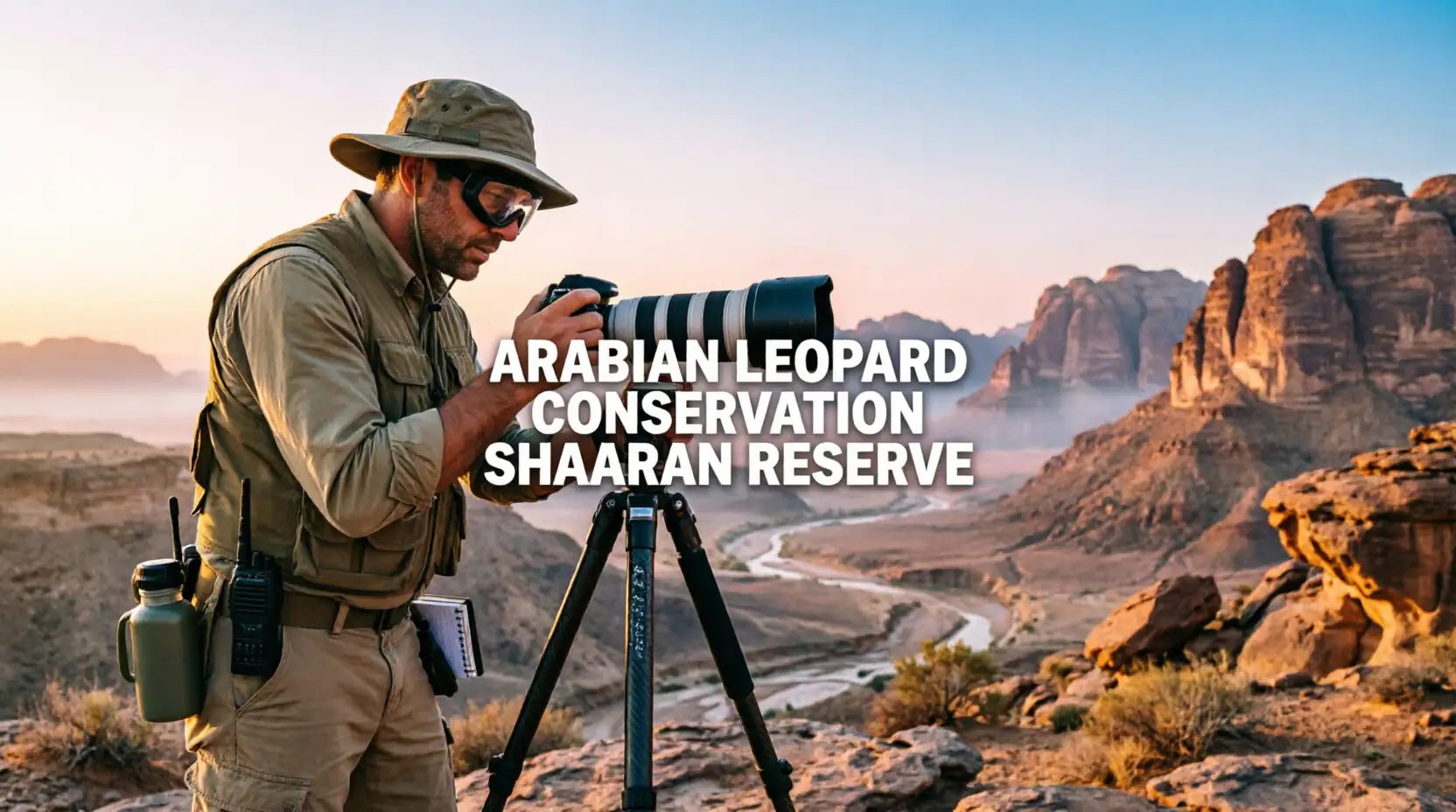
Arabian Leopard Conservation and Wildlife Tracking in Sharaan Nature Reserve 2026
The Arabian leopard ranks among the world's most critically endangered big cats with fewer than 200 individuals estimated to remain in the wild. Sharaan Nature Reserve in northwestern Saudi Arabia represents one of the last strongholds for this magnificent subspecies.
Tracking Arabian leopards requires understanding that these elusive predators actively avoid human contact. Successful observation depends on patience, expertise, and respect for conservation protocols designed to protect remaining populations.
Sharaan Nature Reserve, part of Saudi Arabia's ambitious conservation initiatives under Vision 2030, provides protected habitat where Arabian leopards can thrive with minimal human disturbance. The reserve's dramatic escarpment landscape offers ideal terrain for these adaptable predators.
This comprehensive 2026 guide addresses the reality of Arabian leopard conservation in Sharaan. You will learn about conservation efforts, responsible wildlife observation practices, reserve access, and how visitors can support protection of this critically endangered species.
Understanding the Arabian Leopard Conservation Crisis

The Arabian leopard faces extinction due to habitat fragmentation, prey depletion, human-wildlife conflict, and illegal hunting. Conservation efforts in Saudi Arabia represent critical interventions to prevent total loss of this subspecies.
Historical range once extended across the Arabian Peninsula's mountainous regions. Today, fragmented populations survive in isolated pockets across Saudi Arabia, Yemen, Oman, and potentially UAE with Saudi populations among the most viable.
Sharaan Nature Reserve's protection of leopard habitat connects to broader regional conservation strategies. Corridor creation and prey base restoration form essential components of long-term survival plans.
Understanding the severity of the conservation crisis contextualizes why leopard tracking operates under strict protocols prioritizing animal welfare over visitor experience. Conservation must come first.
Population Status and Distribution
Current estimates suggest fewer than 200 Arabian leopards remain in the wild with some studies indicating numbers may be even lower. This critically low population faces significant extinction risk.
Saudi Arabia hosts important populations in mountain ranges including the Hijaz, Asir, and areas within Sharaan Nature Reserve. These populations benefit from active conservation management and legal protection.
Camera trap studies provide most reliable population data though detection rates remain extremely low. Individual identification through spot patterns helps researchers estimate numbers and monitor population trends.
Genetic studies reveal concerning levels of inbreeding in isolated populations. Conservation strategies must address genetic diversity through habitat connectivity and potentially managed breeding programs.
Threats to Survival
Habitat loss from development, agriculture, and infrastructure fragments leopard territory and isolates populations. Sharaan's protected status helps counter this threat but landscape-level conservation requires broader cooperation.
Prey depletion from overhunting and habitat degradation reduces food availability forcing leopards into conflict with livestock. Conservation programs address prey base restoration alongside predator protection.
Human-wildlife conflict occurs when leopards prey on domestic animals leading to retaliatory killing. Compensation programs and livestock protection measures aim to reduce conflict while maintaining community support for conservation.
Illegal hunting and poaching though reduced through enforcement remain threats. Strong legal protection and community engagement prove essential for eliminating this pressure on remaining populations.
Sharaan Nature Reserve Overview

Sharaan Nature Reserve encompasses approximately 1,700 square kilometers of dramatic escarpment terrain in northwestern Saudi Arabia near AlUla. The reserve protects diverse habitats supporting Arabian leopard and other wildlife.
The landscape features towering sandstone cliffs, deep wadis, plateaus, and valleys creating varied ecosystems. This topographic diversity supports the prey species Arabian leopards require while providing shelter and hunting terrain.
Sharaan forms part of Saudi Arabia's expanding protected area network managed by the Royal Commission for AlUla in partnership with conservation organizations. The reserve balances protection with sustainable tourism and research.
Conservation programs at Sharaan include habitat restoration, prey species reintroduction, anti-poaching patrols, and scientific monitoring. These efforts create conditions where Arabian leopards can recover population numbers.
Habitat Characteristics
Sharaan's escarpment rises dramatically from surrounding desert creating microclimates and habitat diversity. Elevation gradients support different vegetation communities from desert scrub to woodland patches.
Rocky outcrops and cliff faces provide denning sites and vantage points for leopards. These features also support ibex and other prey species that navigate rugged terrain effectively.
Wadis, or dry river valleys, concentrate vegetation and wildlife particularly after rare rainfall events. These corridors prove important for leopard movement and hunting activities.
Water sources though scarce exist as springs and seasonal pools. Access to water influences both prey distribution and leopard territorial patterns within the reserve.
Conservation Management Approach
Sharaan employs science-based management utilizing camera traps, GPS collaring, and population monitoring to inform conservation decisions. Research partnerships with international institutions enhance technical capacity.
Anti-poaching patrols maintain continuous presence throughout the reserve deterring illegal activities and monitoring wildlife. Rangers receive specialized training in conservation law enforcement and wildlife protection.
Community engagement programs involve local residents in conservation efforts creating economic incentives for protecting wildlife. Employment opportunities and benefit-sharing build support for leopard conservation.
Habitat restoration addresses degradation from historical overgrazing and resource extraction. Vegetation recovery supports prey base expansion essential for sustaining leopard populations.
The Reality of Arabian Leopard Sightings

Visitors must understand that seeing an Arabian leopard in the wild remains exceptionally rare even within protected reserves. These cats are nocturnal, elusive, and exist at extremely low densities.
Camera trap studies may capture images after thousands of trap-nights demonstrating how rarely leopards pass before cameras. This rarity reflects both low population numbers and behavioral avoidance of human activity.
Expecting leopard sightings during typical reserve visits sets unrealistic expectations. Conservation-focused tourism emphasizes habitat appreciation, learning about conservation efforts, and supporting protection rather than guaranteed wildlife encounters.
Those fortunate enough to observe Arabian leopards should consider themselves exceptionally privileged. Such sightings typically occur during specialized research activities or through extraordinary luck during extended stays.
Factors Affecting Detection Probability
Arabian leopards maintain large home ranges with low population density meaning individuals occupy vast territories. Even in suitable habitat, leopards may be kilometers away from any given location.
Nocturnal activity patterns mean leopards rest during daylight hours in concealed locations. Daytime wildlife drives have minimal chance of encountering active leopards though other wildlife may be observed.
Elusive behavior and exceptional camouflage allow leopards to remain undetected even when relatively nearby. Their survival depends on avoiding detection by both prey and potential threats including humans.
Seasonal variations in activity and distribution affect detection probability. Mating seasons, prey movements, and water availability influence where and when leopards move through their territories.
Camera Trap Technology and Monitoring
Camera traps represent primary tool for monitoring Arabian leopard populations in Sharaan and throughout their range. These devices capture images when motion and heat sensors detect animal presence.
Strategic camera placement along game trails, water sources, and territorial boundaries maximizes detection probability. However, even optimally placed cameras may operate for months without capturing leopard images.
Individual identification through unique spot patterns allows researchers to estimate population size, track movements, and monitor survival. This non-invasive technique provides critical data without disturbing animals.
Visitors may view camera trap images at visitor centers or during educational programs. These photographs demonstrate leopard presence while respecting need for minimal disturbance to wild individuals.
Responsible Wildlife Observation Practices

When wildlife observation opportunities arise, strict protocols protect animal welfare and visitor safety. Arabian leopards remain wild predators requiring respectful distance and professional guidance.
Never attempt to approach, call, or attract leopards. Such behavior stresses animals, creates dangerous situations, and may result in habituation increasing human-wildlife conflict risk.
Follow all instructions from trained guides and rangers without exception. These professionals prioritize both visitor safety and animal welfare based on extensive knowledge of leopard behavior and reserve protocols.
Photography must never compromise animal welfare or violate reserve regulations. Telephoto lenses allow documentation from safe distances without causing disturbance.
Guided Wildlife Experiences
Sharaan Nature Reserve offers guided wildlife experiences led by trained naturalists and rangers. These programs focus on habitat interpretation, conservation education, and observation of more commonly seen species.
Guides possess knowledge of leopard ecology, sign identification, and conservation challenges. Educational components provide deeper understanding even when leopards themselves remain unseen.
Small group sizes minimize disturbance while maximizing educational value. Intimate groups allow personalized interpretation and questions enhancing learning outcomes.
Patience and realistic expectations characterize successful wildlife experiences. Appreciating the entire ecosystem rather than fixating on single species creates more rewarding and sustainable tourism.
Signs of Leopard Presence
Trained guides can identify signs of leopard presence including tracks, scat, scrapes, and kill sites. Learning to recognize these indicators enhances understanding of leopard ecology and reserve dynamics.
Tracks in soft substrate reveal size, direction of travel, and approximate age of passage. Interpretation requires expertise to distinguish from other species and account for substrate conditions.
Scat analysis provides information about diet, health, and individual identity. Researchers collect samples for genetic analysis contributing to population monitoring efforts.
Scrape marks on trees and ground indicate territorial marking behavior. These signposts communicate between individuals about territory boundaries and reproductive status.
Best Areas for Wildlife Observation in Sharaan

While leopard sightings remain rare, Sharaan Nature Reserve offers exceptional opportunities to observe other wildlife and appreciate the habitat supporting Arabian leopards. Understanding where and when to look enhances overall wildlife experiences.
Certain areas within the reserve support higher wildlife densities due to water availability, prey concentrations, or habitat quality. Guides focus observations in these productive areas while respecting wildlife needs.
Timing significantly affects wildlife observation success. Dawn and dusk periods when many species are most active provide best opportunities though leopards themselves typically remain nocturnal.
Seasonal variations influence wildlife distribution and visibility. Cooler months from October through April offer comfortable conditions and increased wildlife activity compared to extreme summer heat.
Wadi Systems and Riparian Areas
Wadis, or dry river valleys, concentrate wildlife particularly after rainfall events. These corridors support denser vegetation and more reliable water attracting diverse species including leopard prey.
Wadi observation points provide comfortable vantage locations for wildlife viewing. Guides position groups strategically to observe without causing disturbance to animals using these corridors.
Riparian vegetation along wadis supports bird diversity and smaller mammals. While searching for leopards, visitors encounter rich biodiversity contributing to ecosystem understanding.
Seasonal water flow creates dynamic habitats supporting different species throughout the year. Understanding these cycles enhances appreciation for desert ecosystem complexity.
Escarpment Vantage Points
Sharaan's dramatic escarpment provides elevated vantage points for observing expansive landscapes. These locations offer opportunities to scan for wildlife movement across broad areas.
Raptors including eagles and vultures frequent escarpment areas utilizing updrafts for soaring flight. Bird observation complements mammal watching adding diversity to wildlife experiences.
Geological features visible from escarpment viewpoints tell stories of landscape evolution and habitat formation. Interpretive programs connect geology, ecology, and conservation in comprehensive understanding.
Sunset and sunrise from escarpment locations provide spectacular photography opportunities beyond wildlife observation. Landscape appreciation forms important component of reserve experiences.
Plateau and Grassland Areas
Plateau areas support different habitat types including grasslands and shrublands. These areas attract grazing species that comprise leopard prey base.
Nubian ibex, a primary leopard prey species, navigates rocky terrain with remarkable agility. Observing ibex behavior provides insights into predator-prey dynamics shaping ecosystem function.
Arabian oryx reintroduction programs have established populations in protected areas. These magnificent animals represent conservation success stories complementing ongoing leopard protection efforts.
Smaller carnivores including Arabian wolf, red fox, and striped hyena occupy the reserve. While less charismatic than leopards, these species play important ecological roles.
Conservation Tourism and Visitor Impact

Tourism in Sharaan Nature Reserve must balance access with protection ensuring visitor activities support rather than undermine conservation objectives. Responsible tourism generates revenue for protection while minimizing ecological disturbance.
Carrying capacity limits prevent overcrowding that could stress wildlife or degrade habitat. Reservation systems manage visitor numbers maintaining quality experiences while protecting resources.
Revenue from tourism directly funds conservation activities including anti-poaching patrols, research programs, and habitat restoration. Visitor fees demonstrate tangible commitment to wildlife protection.
Education programs transform visitors into conservation advocates extending protection impact beyond reserve boundaries. Informed guests become ambassadors for Arabian leopard conservation.
Sustainable Tourism Practices
Low-impact infrastructure minimizes habitat disturbance while providing necessary visitor facilities. Thoughtful design integrates structures into landscape maintaining natural character.
Waste management systems prevent pollution and protect water quality. Leave-no-trace principles guide all visitor activities within the reserve.
Renewable energy powers facilities reducing carbon footprint and demonstrating environmental commitment. Solar energy proves particularly suitable for desert environments with abundant sunshine.
Water conservation measures address scarcity in arid environment. Efficient systems minimize extraction from limited sources protecting ecosystem function.
Community Benefits and Engagement
Local community employment in reserve operations creates economic incentives for conservation. Jobs as guides, rangers, and support staff provide alternatives to activities harmful to wildlife.
Revenue sharing programs return portion of tourism income to local communities funding development projects. Visible benefits build support for protected area existence and expansion.
Cultural interpretation programs share traditional knowledge and heritage connecting conservation to local identity. Respectful engagement with communities ensures tourism supports rather than disrupts traditional lifeways.
Local business opportunities from tourism including handicrafts, services, and hospitality diversify economic benefits. Broad-based participation strengthens community commitment to conservation.
Research and Monitoring Programs

Scientific research forms foundation for effective conservation management in Sharaan Nature Reserve. Ongoing monitoring tracks population trends, habitat conditions, and threats informing adaptive management strategies.
Research partnerships with universities and conservation organizations bring expertise and resources enhancing local capacity. International collaboration accelerates knowledge generation and conservation innovation.
Long-term datasets reveal trends invisible in short-term observations. Commitment to sustained monitoring despite challenges demonstrates serious conservation commitment.
Research findings inform management decisions ensuring actions rest on evidence rather than assumption. Science-based conservation proves more effective and efficient than guesswork.
Population Monitoring Techniques
Camera trap networks provide primary data on leopard presence, distribution, and abundance. Systematic placement and regular maintenance ensure comprehensive coverage of reserve terrain.
Genetic analysis from scat and hair samples reveals individual identity, relatedness, and population structure. Non-invasive sampling avoids capture stress while generating detailed information.
Spatial capture-recapture models analyze detection data estimating population size and density. Sophisticated statistics extract maximum information from limited detections characteristic of rare species.
GPS collaring of select individuals provides detailed movement data though capture and handling requires careful justification and veterinary oversight. Collar data reveals habitat use, territorial behavior, and survival.
Habitat Assessment and Management
Vegetation monitoring tracks habitat condition and recovery from degradation. Remote sensing and field surveys provide complementary data on landscape-scale patterns.
Prey population surveys assess food base availability for leopards. Ibex, gazelle, and other prey species require monitoring to ensure adequate carrying capacity for predator recovery.
Water source monitoring ensures availability for wildlife particularly during drought periods. Management interventions may maintain critical resources during extreme conditions.
Threat assessments identify and prioritize conservation challenges including illegal activities, invasive species, and climate change impacts. Proactive threat management prevents problems before they become crises.
Visitor Guidelines and Regulations

Sharaan Nature Reserve maintains clear regulations protecting wildlife while enabling visitor access. Understanding and following these rules proves essential for responsible tourism and conservation success.
Permit requirements control access ensuring visitor numbers remain within carrying capacity. Advance reservations guarantee spots while preventing overcrowding that could harm wildlife or degrade experiences.
Designated trails and viewing areas concentrate human activity minimizing widespread disturbance. Staying on marked paths protects habitat and reduces wildlife encounter risks.
Quiet observation and minimal disturbance characterize appropriate behavior. Loud noises, rapid movements, and aggressive approaches stress wildlife and violate reserve ethics.
Photography Ethics
Photography must prioritize animal welfare over image capture. Never compromise wildlife safety or behavior for photographic opportunity.
Telephoto lenses enable close-appearing images from respectful distances. Approaching wildlife for better photos violates ethical standards and potentially regulations.
Flash photography typically prohibited as it can startle and stress animals particularly nocturnal species. Natural light photography proves both ethical and aesthetically superior.
Sharing images responsibly includes context about conservation status and protection needs. Photography becomes conservation tool when it educates and inspires rather than merely documents.
Safety Considerations
Arabian leopards though rarely encountered remain wild predators capable of inflicting serious injury. Maintain safe distances and follow all guide instructions regarding wildlife.
Desert environment presents hazards including extreme temperatures, limited water, and rugged terrain. Proper preparation including adequate water, sun protection, and appropriate footwear proves essential.
Emergency protocols address medical incidents, vehicle breakdowns, and other contingencies. Communication systems and evacuation plans ensure visitor safety in remote locations.
Travel insurance covering medical evacuation recommended for all visitors. Remote locations require specialized response capabilities in case of serious incidents.
Supporting Arabian Leopard Conservation

Visitors to Sharaan Nature Reserve can contribute to Arabian leopard conservation beyond paying entrance fees. Active support amplifies individual impact supporting long-term species survival.
Education and advocacy extend conservation influence beyond reserve boundaries. Sharing knowledge about Arabian leopard plight raises awareness building support for protection measures.
Financial contributions to conservation organizations supplement government funding accelerating protection efforts. Donations support research, anti-poaching, and community programs essential for leopard survival.
Responsible consumption choices reduce pressures on wildlife habitat. Sustainable products and practices demonstrate commitment to conservation values beyond tourism contexts.
Conservation Organizations
Royal Commission for AlUla manages Sharaan Nature Reserve with commitment to world-class conservation standards. Support through visitation and advocacy strengthens institutional capacity.
International conservation organizations including Panthera, IUCN Cat Specialist Group, and others support Arabian leopard conservation through research, funding, and technical expertise. Contributions to these organizations amplify impact.
Local Saudi conservation groups engage communities and implement on-ground protection. Supporting indigenous conservation capacity ensures sustainable long-term protection.
Research institutions conducting Arabian leopard studies require funding and political support. Advocacy for science-based conservation strengthens protection effectiveness.
Advocacy and Awareness
Sharing experiences and knowledge about Arabian leopard conservation raises awareness among broader audiences. Social media, presentations, and conversations multiply conservation messaging.
Supporting policies protecting wildlife habitat and addressing climate change creates enabling environment for leopard recovery. Political engagement proves essential for large-scale conservation success.
Countering misinformation about predators builds public support for coexistence. Leopards face persecution from fear and misunderstanding that education can address.
Inspiring next generation of conservationists ensures long-term commitment to species protection. Youth engagement creates future advocates and professionals dedicated to wildlife conservation.
Future of Arabian Leopard Conservation

Arabian leopard survival remains uncertain but not hopeless. Conservation efforts in Sharaan and throughout the species range offer realistic pathway to recovery if adequately supported and sustained.
Saudi Arabia's commitment to conservation under Vision 2030 creates unprecedented opportunity for species protection. Political will combined with financial resources enables ambitious conservation programs.
Technological advances in monitoring, genetics, and habitat management enhance conservation effectiveness. Innovation accelerates progress toward recovery goals.
International cooperation addresses transboundary conservation needs. Leopards do not recognize political boundaries requiring coordinated protection across range countries.
Recovery Goals and Timelines
Population recovery targets aim to increase numbers to levels reducing extinction risk. Specific goals guide management and measure progress toward long-term viability.
Habitat restoration and corridor creation require decades to achieve full effectiveness. Patience and sustained commitment prove essential for conservation success.
Prey base recovery must precede or accompany predator population growth. Ecosystem-based conservation addresses all components not just focal species.
Monitoring programs track progress toward recovery goals enabling adaptive management. Regular assessment ensures strategies remain effective and resources well-utilized.
Climate Change Considerations
Climate change poses additional challenges to Arabian leopard conservation through habitat alteration and prey impacts. Adaptation strategies must address these emerging threats.
Water scarcity may intensify requiring management interventions to maintain critical resources. Climate-resilient conservation planning anticipates future conditions.
Range shifts may force leopards into new areas requiring corridor protection and conflict mitigation. Flexible, forward-looking strategies accommodate changing distributions.
Carbon sequestration through habitat restoration provides co-benefits addressing both species conservation and climate mitigation. Integrated approaches maximize conservation value.
Final Thoughts on Arabian Leopard Conservation in Sharaan

Arabian leopard conservation in Sharaan Nature Reserve represents both urgent crisis and inspiring opportunity. These magnificent cats face extinction yet dedicated conservation efforts offer realistic hope for recovery.
Visitors to Sharaan should approach wildlife observation with humility, patience, and commitment to conservation priorities. The privilege of potentially seeing an Arabian leopard carries responsibility to protect remaining individuals.
Conservation success requires sustained support from government, communities, visitors, and international partners. Every contribution whether financial, advocacy, or behavioral change supports leopard survival.
Sharaan Nature Reserve demonstrates Saudi Arabia's commitment to protecting natural heritage for future generations. Supporting this mission through responsible tourism and active conservation engagement helps ensure Arabian leopards continue roaming these dramatic landscapes for centuries to come.
0 Comments