.webp)
.webp)
Can Americans Visit North Korea in 2026? The Latest Travel Rules
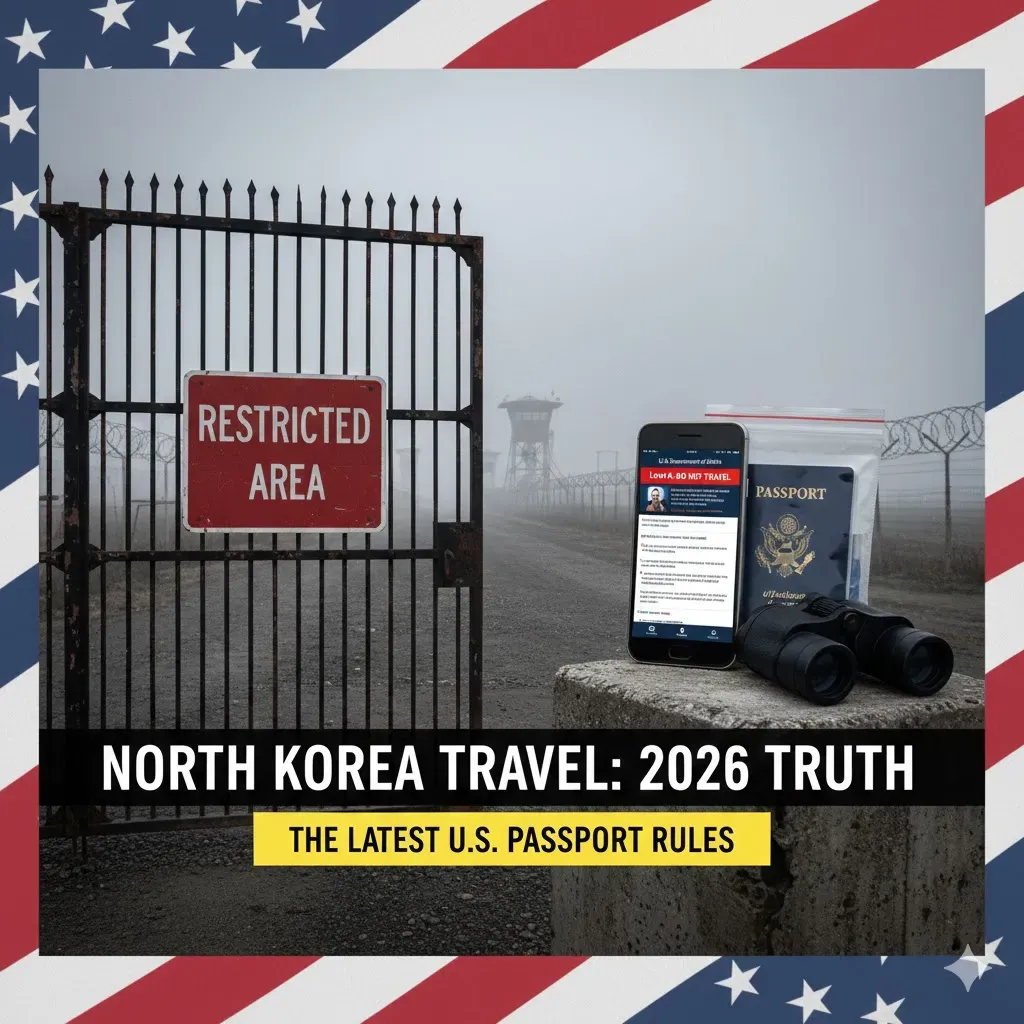
Executive Summary: The Current State of US Travel to North Korea
As of 2026, American citizens face severe restrictions when it comes to traveling to the Democratic People's Republic of Korea (DPRK), commonly known as North Korea. The United States Department of State maintains a comprehensive travel ban that effectively prohibits US passport holders from visiting North Korea as tourists. This restriction, initially implemented in September 2017 following the tragic death of American student Otto Warmbier, has been repeatedly extended and remains firmly in place.
The travel ban represents one of the most stringent restrictions the US government has placed on its citizens' freedom of movement. Under current regulations, US passports are invalid for travel to, in, or through North Korea unless travelers obtain a special validation from the State Department—a process reserved for extremely limited circumstances such as journalistic work, humanitarian missions, or official government business.
Despite North Korea's gradual reopening to international tourism following the COVID-19 pandemic, with tourists from China, Russia, and select other countries beginning to visit Pyongyang and other areas in 2024-2025, the United States has maintained its firm stance against American travel to the country. The State Department continues to cite serious risks including arbitrary arrest, long-term detention, and the inability of US consular officials to provide assistance to Americans in North Korea.
This comprehensive guide examines the current travel restrictions, the limited exceptions available, the risks involved, and what Americans need to know about the possibility of visiting North Korea in 2026.
The History of US Travel Restrictions to North Korea

To understand the current situation, it's essential to examine how we arrived at this point. The relationship between the United States and North Korea has been fraught with tension since the Korean War (1950-1953), which ended in an armistice rather than a peace treaty, meaning the two countries remain technically at war.
For decades, American tourism to North Korea was technically legal but highly discouraged. The State Department maintained a Level 4 "Do Not Travel" advisory—the highest warning level—but did not impose an outright ban. Adventure tour companies like Koryo Tours and Young Pioneer Tours facilitated visits for curious Americans, typically routing through Beijing, China.
The turning point came in June 2017 when Otto Warmbier, a 22-year-old American university student, died shortly after being released by North Korean authorities. Warmbier had been arrested in January 2016 for allegedly stealing a propaganda poster from his hotel in Pyongyang. He was sentenced to 15 years of hard labor but was returned to the United States in a coma after 17 months of detention. He died days after his return, with medical examinations revealing severe brain damage.
Warmbier's death sparked outrage in the United States and prompted immediate government action. In July 2017, the State Department announced a geographical travel restriction under 22 CFR 51.64, which became effective on September 1, 2017. This regulation made US passports invalid for travel to, in, or through North Korea.
Initially, the restriction was set to expire after one year, but the State Department has repeatedly extended it, citing ongoing serious risks to US citizens. Each extension has been published in the Federal Register, and as of 2026, the ban remains in full effect with no indication of imminent removal.
Understanding the Travel Ban: Legal Framework and Implementation

The North Korea travel ban operates under specific legal authority. The regulation, codified at 22 CFR 51.64, states that passports are invalid for travel to, in, or through the Democratic People's Republic of Korea unless specially validated for such travel.
What the Ban Means in Practice:
When the State Department declares passports invalid for travel to a specific country, it means that US citizens cannot legally use their passports to enter that country. Attempting to do so could result in:
- Passport revocation: The State Department may revoke your passport if you attempt to travel to North Korea in violation of the restriction.
- Legal consequences: While individual tourists are rarely prosecuted, violating the travel restriction could theoretically result in fines or other penalties.
- Future travel complications: Violating the restriction could make it difficult to renew your passport or travel internationally in the future.
- No consular protection: Even if you somehow entered North Korea, the US government would be unable to provide consular assistance if you were arrested or detained.
- 👉 Katara Cultural Village Amphitheaters and Galleries Guide
- 👉 The 2026 Turkmenistan e-Visa Revolution: How to apply online without a physical embassy visit.
- 👉 Traveling with Professional Photography Gear to Afghanistan Customs and Security Advice
The Ban's Scope:
The restriction applies to all travel to North Korea, including:
- Tourism and sightseeing
- Transit through North Korean territory or airspace
- Travel to the Korean Demilitarized Zone (DMZ) on the North Korean side
- Participation in events or conferences in North Korea
- 👉 Katara Cultural Village Amphitheaters and Galleries Guide
- 👉 The 2026 Turkmenistan e-Visa Revolution: How to apply online without a physical embassy visit.
- 👉 Traveling with Professional Photography Gear to Afghanistan Customs and Security Advice
It's important to note that the ban applies only to US passport holders. Dual citizens holding passports from other countries may technically be able to travel using their non-US passport, though this raises complex legal and ethical questions, and the State Department strongly discourages such attempts.
Special Validation: The Limited Exceptions

While the travel ban is comprehensive, it's not absolute. The State Department can grant "special validations" that allow US passport holders to travel to North Korea under specific circumstances. However, these validations are extremely difficult to obtain and are reserved for narrow categories of travel.
Categories Eligible for Special Validation:
According to State Department regulations, special validations may be granted for:
- Journalistic Activity: Professional journalists, reporters, and documentary filmmakers traveling to North Korea for news gathering or documentary production may apply for validation. Applicants must provide evidence of professional affiliation, a detailed itinerary, and the purpose of their travel.
- Humanitarian Purposes: Individuals traveling to North Korea for humanitarian work, including representatives of international humanitarian organizations, may qualify. This typically includes workers from organizations like the Red Cross or UN agencies providing humanitarian assistance.
- Official Government Business: US government employees or contractors traveling to North Korea on official business may receive validation. This includes diplomatic personnel, intelligence officers, and military personnel on official duties.
- Compelling National Interest: In rare cases, travel that serves a compelling national interest may be validated. This is a catch-all category that is interpreted very narrowly.
The Application Process:
Obtaining a special validation is not simple. The process involves:
- Submitting a detailed application to the State Department's Office of Adjudication
- Providing extensive documentation supporting your eligibility
- Demonstrating why your travel is necessary and cannot be accomplished by non-US citizens
- Paying applicable fees
- Waiting for review, which can take several weeks or months
- 👉 Katara Cultural Village Amphitheaters and Galleries Guide
- 👉 The 2026 Turkmenistan e-Visa Revolution: How to apply online without a physical embassy visit.
- 👉 Traveling with Professional Photography Gear to Afghanistan Customs and Security Advice
The State Department reviews each application on a case-by-case basis, and approval is far from guaranteed. Tourist travel, academic research, cultural exchange, and personal visits do not qualify for special validation.
Statistics on Validations:
The State Department does not publish detailed statistics on special validations, but available information suggests that only a small number are granted annually—typically fewer than 100 per year, primarily for journalists and humanitarian workers. Ordinary American citizens seeking to visit North Korea for tourism or personal reasons are almost never granted validation.
North Korea's Current Tourism Situation in 2026

Understanding North Korea's own tourism policies provides important context for American travelers. After closing its borders completely in January 2020 due to the COVID-19 pandemic, North Korea began a cautious reopening to international tourism in 2024.
Who Can Visit North Korea in 2026:
As of 2026, North Korea has resumed accepting tourists from select countries, including:
- China: The largest source of tourists, with group tours operating from Beijing, Dandong, and other Chinese cities
- Russia: Russian tourists have been visiting, particularly from Vladivostok
- Selected European countries: Limited numbers of tourists from countries like Germany, France, and the UK have been permitted
- Southeast Asian nations: Some tourists from countries like Malaysia and Indonesia
- 👉 Katara Cultural Village Amphitheaters and Galleries Guide
- 👉 The 2026 Turkmenistan e-Visa Revolution: How to apply online without a physical embassy visit.
- 👉 Traveling with Professional Photography Gear to Afghanistan Customs and Security Advice
Tourism Infrastructure:
North Korea's tourism industry operates under strict government control. All visitors must:
- Travel with approved tour operators
- Be accompanied by government minders/guides at all times
- Follow strict itineraries with no independent movement
- Stay in designated hotels (typically the Yanggakdo or Koryo Hotel in Pyongyang)
- Obtain visas in advance through tour operators
- 👉 Katara Cultural Village Amphitheaters and Galleries Guide
- 👉 The 2026 Turkmenistan e-Visa Revolution: How to apply online without a physical embassy visit.
- 👉 Traveling with Professional Photography Gear to Afghanistan Customs and Security Advice
Tourist activities typically include visits to:
- Kim Il-sung Square and the Juche Tower in Pyongyang
- The DMZ Panmunjom area (North Korean side)
- Mount Kumgang scenic area
- The city of Kaesong with its historical sites
- Mass games and cultural performances (when available)
- 👉 Katara Cultural Village Amphitheaters and Galleries Guide
- 👉 The 2026 Turkmenistan e-Visa Revolution: How to apply online without a physical embassy visit.
- 👉 Traveling with Professional Photography Gear to Afghanistan Customs and Security Advice
Important Note for Americans:
Even though North Korea is accepting some international tourists in 2026, this does not mean American citizens can visit. The primary barrier is not North Korean policy but US law. Even if North Korea were to explicitly welcome American tourists (which it has not done), the US travel ban would still prevent Americans from legally traveling there.
Risks and Dangers: Why the Ban Exists

The State Department's travel ban is not arbitrary. It reflects genuine and serious risks to American citizens in North Korea. Understanding these risks is crucial for anyone considering attempting to travel despite the restrictions.
Arbitrary Arrest and Detention:
North Korea has a documented history of arresting and detaining foreign nationals, including Americans, often on questionable charges. The cases of Otto Warmbier, Kenneth Bae, Matthew Todd Miller, and others demonstrate that Americans face heightened risk.
North Korea's legal system lacks basic due process protections. Detainees may be:
- Held for extended periods without trial
- Subjected to forced confessions
- Denied access to legal counsel
- Given lengthy prison sentences for minor infractions
- 👉 Katara Cultural Village Amphitheaters and Galleries Guide
- 👉 The 2026 Turkmenistan e-Visa Revolution: How to apply online without a physical embassy visit.
- 👉 Traveling with Professional Photography Gear to Afghanistan Customs and Security Advice
No Consular Access:
Perhaps most critically, the United States has no diplomatic or consular relations with North Korea. Sweden serves as the protecting power for the US in North Korea, but even Swedish officials face severe limitations in providing consular services.
If an American is arrested in North Korea:
- US officials cannot visit you
- US officials cannot provide legal assistance
- US officials cannot arrange for your release
- Your family may receive limited information about your situation
- 👉 Katara Cultural Village Amphitheaters and Galleries Guide
- 👉 The 2026 Turkmenistan e-Visa Revolution: How to apply online without a physical embassy visit.
- 👉 Traveling with Professional Photography Gear to Afghanistan Customs and Security Advice
Other Serious Risks:
- Wrongful Detention: North Korea has used detained Americans as political leverage in negotiations with the United States.
- Harsh Prison Conditions: Reports from released detainees describe brutal conditions including torture, forced labor, and inadequate food and medical care.
- Surveillance: All visitors are constantly monitored. Private conversations are not private.
- Unpredictable Enforcement: Actions that seem innocent (photographing certain buildings, possessing religious materials, showing disrespect to leaders) can result in arrest.
- Medical Emergencies: North Korea's healthcare system is inadequate, and Americans cannot rely on US government assistance in medical emergencies.
- Exit Bans: North Korea can prevent you from leaving the country at any time, for any reason.
- 👉 Katara Cultural Village Amphitheaters and Galleries Guide
- 👉 The 2026 Turkmenistan e-Visa Revolution: How to apply online without a physical embassy visit.
- 👉 Traveling with Professional Photography Gear to Afghanistan Customs and Security Advice
The State Department's Warning:
The State Department maintains North Korea at Level 4: Do Not Travel, the highest warning level. The advisory explicitly states: "The U.S. government has no diplomatic or consular relations with the DPRK and, therefore, cannot provide emergency services to U.S. citizens there. The U.S. government has been unable to secure the release of U.S. citizens from detention in the DPRK through diplomatic channels."
Alternative Ways to Learn About North Korea

For Americans interested in learning about North Korea, several legal and safe alternatives exist:
Visit the DMZ from the South Korean Side:
The Korean Demilitarized Zone can be visited from the South Korean side, and this is a popular tourist activity. Tours from Seoul include:
- Panmunjom (Joint Security Area)
- The Third Infiltration Tunnel
- Dora Observatory (where you can view North Korea)
- Dorasan Station
- 👉 Katara Cultural Village Amphitheaters and Galleries Guide
- 👉 The 2026 Turkmenistan e-Visa Revolution: How to apply online without a physical embassy visit.
- 👉 Traveling with Professional Photography Gear to Afghanistan Customs and Security Advice
These tours are safe, legal, and provide fascinating insights into the division of the Korean Peninsula.
Museums and Exhibitions:
Several museums offer exhibits on North Korea:
- The Korean War Memorial in Seoul
- Various museums in the United States with Korean War exhibits
- Traveling exhibitions about North Korean life and culture
- 👉 Katara Cultural Village Amphitheaters and Galleries Guide
- 👉 The 2026 Turkmenistan e-Visa Revolution: How to apply online without a physical embassy visit.
- 👉 Traveling with Professional Photography Gear to Afghanistan Customs and Security Advice
Academic Study:
Many universities offer courses on North Korean history, politics, and society. Online courses and lecture series are also available.
Documentaries and Books:
Numerous documentaries and books provide insights into North Korea, including works by journalists who have visited the country and defectors who have escaped.
Interviews with Defectors:
North Korean defectors now living in South Korea and other countries share their experiences through speaking engagements, books, and media appearances.
What If the Ban is Lifted? Future Possibilities

While the travel ban remains firmly in place as of 2026, it's worth considering what might happen if restrictions were ever lifted.
Potential Scenarios for Lifting the Ban:
- Diplomatic Breakthrough: Significant progress in US-DPRK relations, such as a peace treaty ending the Korean War or denuclearization agreements, could lead to normalized relations and removal of travel restrictions.
- Improved Consular Access: If North Korea agreed to allow US consular access to detained Americans, this might reduce concerns enough to lift the ban.
- Political Change: Changes in either US or North Korean leadership could shift policies.
- 👉 Katara Cultural Village Amphitheaters and Galleries Guide
- 👉 The 2026 Turkmenistan e-Visa Revolution: How to apply online without a physical embassy visit.
- 👉 Traveling with Professional Photography Gear to Afghanistan Customs and Security Advice
What Would Travel Look Like if Permitted:
Even if the ban were lifted, travel to North Korea would likely remain highly regulated:
- Tourists would need to travel with approved tour operators
- Independent travel would almost certainly be prohibited
- Visitors would be constantly monitored
- Certain areas would remain off-limits
- The State Department would likely maintain a Level 3 or 4 travel advisory
- 👉 Katara Cultural Village Amphitheaters and Galleries Guide
- 👉 The 2026 Turkmenistan e-Visa Revolution: How to apply online without a physical embassy visit.
- 👉 Traveling with Professional Photography Gear to Afghanistan Customs and Security Advice
Timeline Uncertainty:
There is no clear timeline for when—or if—the travel ban might be lifted. Given current geopolitical tensions and North Korea's continued development of nuclear weapons and ballistic missiles, the ban is likely to remain in place for the foreseeable future.
Legal Consequences of Violating the Travel Ban

Americans who attempt to travel to North Korea in violation of the ban face serious consequences:
Passport Revocation:
The State Department can revoke your passport if you travel to North Korea in violation of the restriction. This can leave you stranded internationally and unable to return to the United States.
Criminal Prosecution:
While rare, it is theoretically possible to face criminal charges for violating the travel restriction. Penalties could include fines and, in extreme cases, imprisonment.
Future Travel Restrictions:
Violating the ban could result in:
- Difficulty obtaining a new passport
- Increased scrutiny for future international travel
- Potential inclusion on watchlists
- 👉 Katara Cultural Village Amphitheaters and Galleries Guide
- 👉 The 2026 Turkmenistan e-Visa Revolution: How to apply online without a physical embassy visit.
- 👉 Traveling with Professional Photography Gear to Afghanistan Customs and Security Advice
No Government Assistance:
Most importantly, if you travel to North Korea illegally and are detained, the US government's ability to help you is severely limited. You would be on your own in a country with no respect for due process.
Frequently Asked Questions

Q: Can I travel to North Korea if I have a passport from another country?
A: Dual citizens face complex legal and ethical issues. The State Department strongly discourages using a second passport to circumvent the travel ban. Additionally, North Korea may not recognize dual citizenship, and you could still face serious risks.
Q: Can I visit the North Korean side of the DMZ?
A: No. The travel ban applies to all North Korean territory, including the DMZ. You can only visit the DMZ from the South Korean side.
Q: What if I'm already in South Korea and want to cross into North Korea?
A: This is impossible for Americans. The border is heavily fortified, and crossing would be illegal and extremely dangerous.
Q: Are there any Americans currently in North Korea?
A: As of 2026, there are no known American tourists in North Korea. Any Americans present would be there under special validation (journalists, humanitarian workers) or would be wrongfully detained.
Q: Will the ban be lifted in 2026?
A: There is no indication that the ban will be lifted in 2026. The State Department has consistently extended the restriction, and current geopolitical conditions do not suggest an imminent change.
Conclusion: The Reality of American Travel to North Korea in 2026

The answer to whether Americans can visit North Korea in 2026 is clear: No, with extremely limited exceptions. The US government's travel ban remains in full effect, prohibiting American citizens from traveling to, in, or through North Korea using US passports.
This restriction is not temporary or likely to change soon. It reflects genuine and serious risks to American citizens, including arbitrary arrest, long-term detention, and the complete inability of the US government to provide consular assistance.
For the vast majority of Americans—tourists, students, researchers, and casual visitors—North Korea remains off-limits. Special validations are available only for journalists, humanitarian workers, and government officials, and even these are granted sparingly.
While North Korea has begun reopening to international tourism from select countries in 2024-2026, this does not change the reality for American citizens. The primary barrier is US law, not North Korean policy.
Americans interested in learning about North Korea should explore legal alternatives: visiting the DMZ from the South Korean side, studying North Korean history and politics, watching documentaries, reading books by defectors and journalists, and engaging with North Korean refugees.
The desire to visit one of the world's most封闭 and mysterious countries is understandable. However, the risks are real and severe. Until there is a fundamental change in US-DPRK relations and the travel ban is officially lifted, Americans must respect the restriction and find other ways to satisfy their curiosity about the Hermit Kingdom.
For now, and for the foreseeable future, North Korea remains closed to American tourists. The travel ban is not a suggestion or a warning—it is the law, and violating it carries serious consequences. Stay informed, stay safe, and respect the restrictions designed to protect American citizens from genuine danger.
0 Comments