.webp)
.webp)
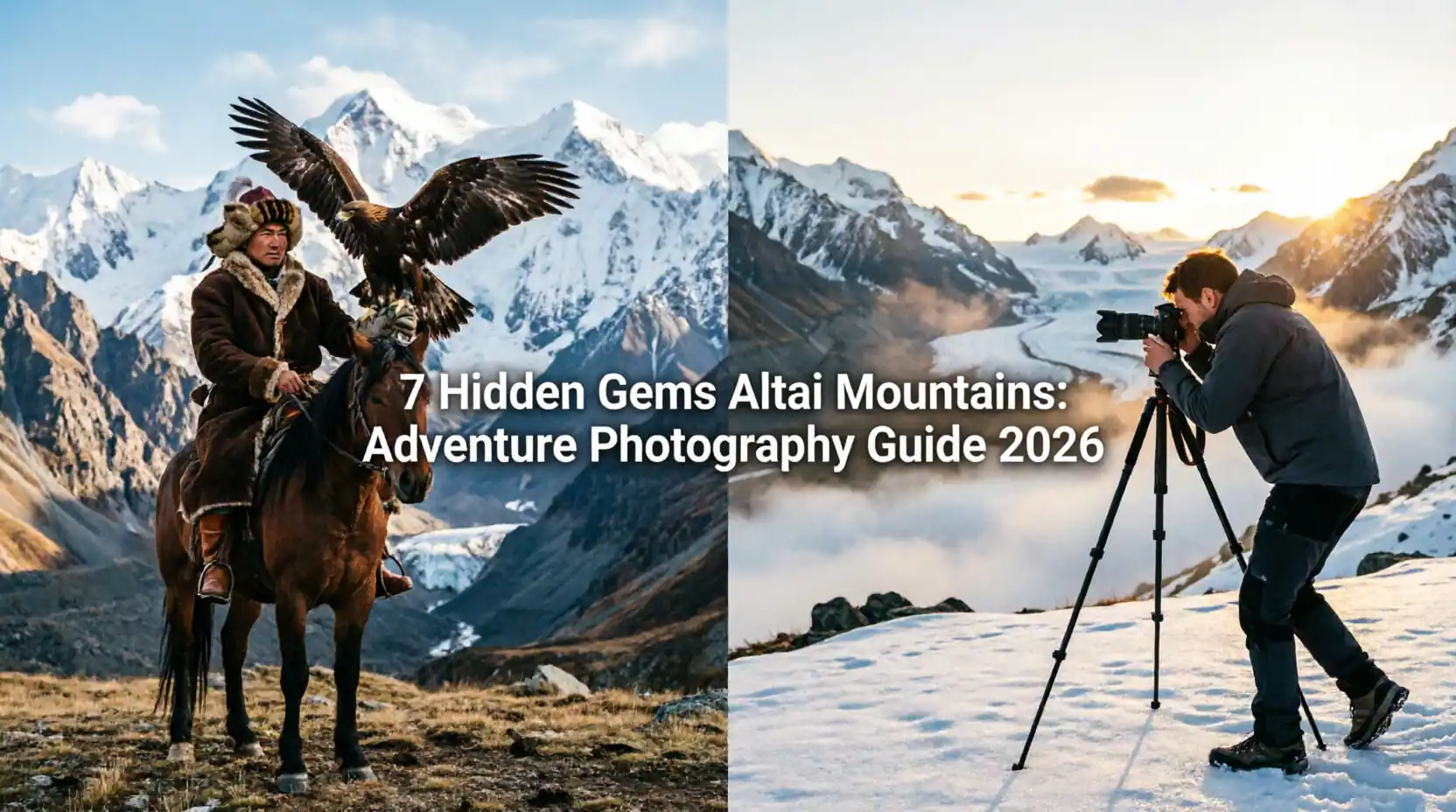
7 Hidden Gems in the Altai Mountains Every Adventure Photographer Needs to See
The Altai Mountains, spanning across Mongolia, Russia, China, and Kazakhstan, represent one of the world's last great wilderness frontiers and a paradise for adventure photographers. This vast mountain range offers an extraordinary combination of snow-capped peaks exceeding 4,000 meters, pristine glacial valleys, ancient petroglyph sites, nomadic eagle hunter culture, and wildlife found nowhere else on Earth. For photographers seeking uncrowded locations, dramatic landscapes, and authentic cultural encounters, the Mongolian Altai delivers experiences that rival any mountain range on the planet—without the crowds or inflated prices of more famous destinations.
While the Altai Mountains remain relatively unknown to mainstream tourism, this remote region rewards adventurous photographers with unparalleled opportunities: capturing golden eagles hunting against snow-covered peaks at sunrise, photographing ancient petroglyphs dating back 11,000 years, documenting nomadic families maintaining traditions unchanged for centuries, and shooting dramatic landscapes where four countries meet. From the sacred peaks of Tavan Bogd to the remote valleys inhabited by Kazakh eagle hunters, every corner of the Altai offers compelling photographic subjects.
This comprehensive guide reveals seven hidden gems in the Altai Mountains that every adventure photographer should prioritize, complete with location details, best times to visit, photography tips, access information, and cultural considerations. Updated for 2026 with current logistics, permit requirements, and practical tips from recent photographers, this resource provides everything you need to plan a successful photographic expedition to one of Asia's most spectacular and least-photographed mountain ranges.
Why photograph the Altai Mountains?
The Altai Mountains offer adventure photographers a rare combination of dramatic landscapes, unique wildlife, ancient culture, and minimal tourism. Unlike crowded mountain ranges in Europe or North America, the Altai remains largely untouched, providing uncrowded shooting locations, authentic cultural encounters, and pristine wilderness. The region features Mongolia's highest peaks, active glaciers, eagle hunter traditions, ancient petroglyphs, and diverse wildlife including argali sheep, ibex, and golden eagles. For photographers seeking original work and unique perspectives, the Altai delivers experiences and images impossible to capture anywhere else.
1. Tavan Bogd (Five Saints) – Mongolia's Highest Peaks

Location: Western Mongolia, bordering China and Russia
Best Time: June-September for accessibility; May and October for dramatic weather
Difficulty: Moderate to challenging
Photography Focus: High-altitude landscapes, glaciers, sunrise/sunset, mountaineering
Why It's Special:
Tavan Bogd (Five Saints) is Mongolia's highest mountain massif, featuring five peaks exceeding 4,000 meters, including Khüiten Peak at 4,374 meters—the country's highest point. This sacred mountain range offers adventure photographers extraordinary high-altitude landscapes, active glaciers, and the unique opportunity to photograph where Mongolia, Russia, and China meet. The region's dramatic elevation changes, from alpine meadows to permanent ice fields, create diverse photographic opportunities within a single location.
Key Photography Locations:
• Potamnin Glacier: One of Mongolia's largest glaciers
- Best light: Early morning for blue ice tones
- Photography tips: Use polarizing filter to reduce glare
- Access: 2-3 hour hike from base camp
- Best season: June-August when accessible
• Khüiten Peak Base Camp:
- Elevation: 3,200 meters
- Sunrise photography: Peaks glow pink and gold
- Composition: Frame peaks with foreground wildflowers (July)
- Weather: Unpredictable; prepare for rapid changes
• Border Tripoint:
- Where Mongolia, Russia, and China meet
- Symbolic marker at 4,000+ meters
- Photography: Dramatic landscape with geopolitical significance
- Permit required: Arrange through tour operator
• Alpine Lakes:
- Multiple glacial lakes at various elevations
- Reflection photography: Calm mornings ideal
- Wildflowers: July-August for colorful foregrounds
- Wildlife: Argali sheep, ibex often visit lakes
Photography Tips:
• Equipment:
- Wide-angle lens (14-24mm) for vast landscapes
- Telephoto lens (100-400mm) for wildlife and peak details
- Sturdy tripod essential for low-light and long exposures
- ND filters for waterfall/ice movement
- Extra batteries (cold drains batteries quickly)
• Best Light:
- Sunrise: 5:30-7:30 AM (June-August)
- Sunset: 8:30-10:00 PM (June-August)
- Golden hour extended at high altitude
- Blue hour exceptional for glacier photography
• Weather Considerations:
- Afternoon storms common; shoot early
- Rapid weather changes; always prepared
- Winter photography possible but extreme (-40°C)
- Summer offers most accessible conditions
• Safety:
- Altitude sickness risk above 3,000m
- Acclimatize 2-3 days before ascending
- Hire local guide for glacier travel
- Carry emergency communication device
Access and Logistics:
• Getting There:
- Fly to Ölgii from Ulaanbaatar (2 hours)
- 4WD vehicle to base camp (6-8 hours from Ölgii)
- Trek to higher camps (2-4 days)
- Best accessed through organized tour
• Permits:
- Altai Tavan Bogd National Park permit required
- Cost: $10-20 USD
- Arrange through tour operator or park office
• Accommodation:
- Ger camps at base: $30-60/night
- High-altitude camping: Bring own gear
- Limited facilities; self-sufficient required
• Best Time: June-September for accessibility; May and October for dramatic weather but challenging conditions
What equipment do I need for Tavan Bogd photography?
Essential equipment includes: wide-angle lens (14-24mm) for vast landscapes, telephoto lens (100-400mm) for wildlife and peak details, sturdy tripod for low-light conditions, ND filters for ice/water movement, extra batteries (cold drains them quickly), weather-sealed camera body, and emergency communication device. Bring layered clothing for extreme temperature swings (-10°C to 25°C even in summer). A local guide is essential for glacier travel and high-altitude safety. Rent equipment in Ulaanbaatar if needed to reduce travel weight.
2. Tsambagarav Mountain – The Sacred Peak

Location: Altai Mountains, western Mongolia
Best Time: June-September
Difficulty: Moderate
Photography Focus: Sacred mountain culture, alpine landscapes, wildlife
Why It's Special:
Tsambagarav (4,231 meters) is one of Mongolia's most sacred mountains, revered by local Kazakh and Tuvan communities. Unlike the more accessible Tavan Bogd, Tsambagarav receives fewer visitors, offering adventure photographers a more intimate experience with dramatic peaks, pristine alpine meadows, and opportunities to photograph traditional mountain worship ceremonies. The mountain's distinctive pyramid shape and surrounding valleys provide exceptional landscape photography opportunities with minimal crowds.
Key Photography Locations:
• Sacred Ovoo (Cairn):
- Traditional stone cairn at mountain base
- Cultural photography: Locals performing rituals
- Best time: Early morning for ceremonies
- Respect: Ask permission before photographing rituals
• Alpine Meadows:
- Wildflower displays: July-August
- Composition: Flowers with mountain backdrop
- Wildlife: Marmots, pikas, occasional snow leopards
- Light: Side lighting enhances texture
• Glacial Valleys:
- Multiple valleys radiating from peak
- Ice formations: Blue ice, crevasses
- Photography: Long exposures for ice movement
- Safety: Stay on established paths
• Nomadic Encampments:
- Summer pastures around mountain
- Cultural photography: Traditional lifestyle
- Best approach: Visit with local guide
- Etiquette: Bring small gifts, ask permission
Photography Tips:
• Cultural Sensitivity:
- Always ask permission before photographing people
- Respect sacred sites; don't climb on ovoo
- Learn basic Kazakh/Tuvan greetings
- Offer to share photos with subjects
• Landscape Techniques:
- Use foreground interest (flowers, rocks)
- Polarizing filter for sky contrast
- Graduated ND for balanced exposures
- Bracket exposures for HDR if needed
• Wildlife Photography:
- Telephoto lens essential (300mm+)
- Early morning/late evening most active
- Patience required; wildlife shy
- Don't disturb animals for photos
• Weather:
- Afternoon thunderstorms common
- Morning light clearest
- Rapid weather changes; be prepared
- Summer offers most stable conditions
Access and Logistics:
• Getting There:
- From Ölgii: 4WD vehicle (4-5 hours)
- Road conditions: Rough, unpaved
- Best accessed June-September
- Winter access extremely difficult
• Accommodation:
- Ger camps near mountain: $25-50/night
- Camping: Bring own equipment
- Limited facilities in area
• Guides:
- Local guides recommended
- Cultural knowledge essential
- Cost: $50-100/day
- Arrange through Ölgii tour operators
How do I photograph eagle hunters in the Altai?
To photograph golden eagle hunters in the Altai: visit during autumn (September-October) when hunting season begins, or attend the Golden Eagle Festival (first weekend of October). Hire a local Kazakh guide who can arrange visits to eagle hunter families. Always ask permission before photographing; bring small gifts (tea, sugar, school supplies). Use telephoto lens (300mm+) for hunting shots, wide-angle for environmental portraits. Best light is early morning and late afternoon. Respect the hunters' traditions and don't disturb the eagles. Build relationships; don't treat subjects as photo opportunities.
3. Golden Eagle Hunter Communities – Living Tradition

Location: Bayan-Ölgii Province, western Mongolia
Best Time: September-October (hunting season); year-round for cultural photography
Difficulty: Easy to moderate
Photography Focus: Cultural documentary, wildlife, portraits
Why It's Special:
The Kazakh eagle hunters of western Mongolia represent one of the world's last living traditions of hunting with golden eagles—a practice passed down through generations for over 2,000 years. For adventure photographers, this offers an extraordinary opportunity to document a unique cultural heritage while capturing dramatic images of hunters on horseback with their powerful eagles against the stunning Altai Mountain backdrop. Unlike staged performances, authentic eagle hunting experiences provide genuine cultural immersion and compelling photographic narratives.
Key Photography Opportunities:
• Eagle Hunter Families:
- Visit families in their summer/winter camps
- Documentary photography: Daily life with eagles
- Portrait opportunities: Hunters with their eagles
- Best approach: Through local guide who knows families
- Etiquette: Bring gifts, spend time building trust
• Golden Eagle Festival:
- Location: Near Ölgii (first weekend of October)
- Event: Traditional eagle hunting competition
- Photography: Hunters on horseback, eagle demonstrations
- Crowds: Growing but still manageable
- Best shots: Action sequences, cultural ceremonies
• Hunting Season (September-October):
- Authentic hunting expeditions
- Action photography: Eagles hunting foxes
- Requires: Patience, telephoto lens, local guide
- Access: Arrange through specialized tour operators
- Ethics: Support sustainable hunting practices
• Eagle Training:
- Summer training sessions
- Behind-the-scenes documentation
- Bond between hunter and eagle
- Intimate portraits and interactions
- Less crowded than festival
Photography Tips:
• Equipment:
- Telephoto lens (300-600mm) for hunting action
- Wide-angle (14-24mm) for environmental portraits
- Fast shutter speeds (1/1000+) for eagles in flight
- Continuous autofocus for action
- Monopod for stability with heavy lenses
• Cultural Photography:
- Build relationships before photographing
- Learn basic Kazakh phrases
- Ask permission; respect refusals
- Share photos with subjects when possible
- Avoid treating people as props
• Lighting:
- Golden hour best for portraits
- Overcast days good for eagle detail
- Backlighting dramatic for eagles in flight
- Avoid harsh midday sun
• Ethical Considerations:
- Support legitimate eagle hunter families
- Avoid operators that exploit culture
- Pay fair prices for visits
- Don't disturb eagles for photos
- Respect hunting traditions
Access and Logistics:
• Getting There:
- Fly to Ölgii from Ulaanbaatar
- 4WD to eagle hunter areas (2-4 hours)
- Best accessed through specialized tour
- Independent travel possible but challenging
• Best Time:
- Golden Eagle Festival: First weekend October
- Hunting season: September-October
- Training season: June-August
- Winter: Extreme cold but dramatic images
• Costs:
- Eagle hunter visit: $50-150 per family
- Festival attendance: Free (donations appreciated)
- Hunting expedition: $500-1,500 (multi-day)
- Guide essential: $50-100/day
• Accommodation:
- Ger camps: $30-60/night
- Stay with eagle hunter families: $20-40/night
- Ölgii hotels: $40-100/night
When is the best time to photograph the Altai Mountains?
The best time depends on your photography goals: June-August offers accessible high-altitude locations, wildflowers, and stable weather (15-25°C days); September-October provides golden autumn colors, eagle hunting season, and dramatic light but colder temperatures (0-15°C); May and late October offer dramatic weather and fewer visitors but challenging conditions with snow and cold (-10 to 10°C). For Tavan Bogd high-altitude photography, June-September is most accessible. For eagle hunters, September-October is ideal. For solitude and dramatic landscapes, May or late October offer unique opportunities for prepared photographers.
4. Khorgo Volcano and Terkhiin Tsagaan Lake

Location: Khangai Mountains (western extension of Altai system)
Best Time: June-September
Difficulty: Easy to moderate
Photography Focus: Volcanic landscapes, alpine lakes, unique geology
Why It's Special:
Khorgo is an extinct volcano featuring a dramatic crater and surrounding lava fields, adjacent to the pristine Terkhiin Tsagaan Lake (White Lake). This unique geological formation offers adventure photographers a rare combination of volcanic landscapes, crystal-clear alpine waters, and diverse wildlife. The contrast between black volcanic rock, white limestone formations, and turquoise lake waters creates exceptional photographic opportunities rarely found in Mongolia's predominantly grassland and mountain landscapes.
Key Photography Locations:
• Khorgo Crater:
- Hike to crater rim (30-45 minutes)
- Panoramic views of surrounding landscape
- Volcanic rock formations
- Best light: Sunrise/sunset for dramatic shadows
- Composition: Crater with wildflower foreground
• Lava Fields:
- Black volcanic rock formations
- Abstract photography opportunities
- Texture and pattern studies
- Contrast with green meadows
- Best light: Side lighting enhances texture
• Terkhiin Tsagaan Lake:
- Pristine alpine lake (20 km long)
- Reflection photography: Calm mornings
- White limestone cliffs contrast with blue water
- Wildlife: Fish, waterfowl, occasional marmots
- Best spots: Northern shore for sunrise
• Suvraga Khairkhan Mountain:
- Sacred mountain overlooking lake
- Alpine meadows and wildflowers
- Composition: Mountain with lake foreground
- Wildlife: Argali sheep, ibex
Photography Tips:
• Volcanic Landscapes:
- Use polarizing filter for rock detail
- Wide-angle for vast lava fields
- Macro lens for volcanic rock textures
- Golden hour best for texture
• Lake Photography:
- Early morning for calm reflections
- ND filter for long exposure water
- Telephoto compress mountain/lake
- Stormy weather dramatic
• Wildlife:
- Marmots abundant; easy subjects
- Telephoto for shy animals
- Early morning most active
- Don't feed wildlife
• Seasonal Variations:
- July: Peak wildflowers
- August: Green meadows, stable weather
- September: Autumn colors begin
- October: Dramatic weather, fewer visitors
Access and Logistics:
• Getting There:
- From Ulaanbaatar: 4WD (8-10 hours)
- From Tsetserleg: 4WD (3-4 hours)
- Road conditions: Rough but passable
- Best accessed June-September
• Accommodation:
- Ger camps near lake: $25-50/night
- Camping: Bring own equipment
- Basic facilities available
• Entrance Fee:
- Khorgo-Terkhiin Tsagaan Nuur National Park
- Cost: $5-10 USD
- Pay at park entrance
What wildlife can I photograph in the Altai Mountains?
The Altai Mountains offer exceptional wildlife photography opportunities: argali sheep (world's largest wild sheep), ibex (mountain goats), golden eagles (hunting with hunters or wild), marmots (abundant and approachable), pikas (small mammals), wolves (rare but present), snow leopards (extremely rare, requires patience and luck), red deer, and diverse bird species including lammergeiers and golden eagles. Best wildlife viewing is early morning and late evening. Telephoto lens (300mm+) essential. Hire local guides who know animal locations and behavior. Practice ethical wildlife photography; don't disturb animals for photos.
5. Ulaanbaatar Area Mountains – Accessible Adventure

Location: Surrounding Ulaanbaatar
Best Time: Year-round (each season offers unique photography)
Difficulty: Easy to moderate
Photography Focus: Urban-mountain interface, seasonal landscapes, accessibility
Why It's Special:
While not as remote as western Altai locations, the mountains surrounding Ulaanbaatar offer adventure photographers accessible high-altitude photography without the commitment of multi-day expeditions. These peaks provide dramatic city-mountain landscapes, seasonal diversity, and opportunities to photograph Mongolia's capital against a stunning mountain backdrop. For photographers with limited time or those acclimatizing before high-altitude expeditions, these mountains offer excellent photographic opportunities with minimal logistical complexity.
Key Photography Locations:
• Bogd Khan Mountain:
- UNESCO World Heritage Site
- Sacred mountain south of Ulaanbaatar
- Hiking trails with city views
- Best light: Sunrise/sunset over city
- Composition: City with mountain foreground
• Zaisan Memorial:
- Hilltop monument with panoramic views
- City and mountain vistas
- Best for: Sunset photography
- Access: Easy drive or hike
- Popular with locals and tourists
• Gorkhi-Terelj National Park:
- 70 km from Ulaanbaatar
- Dramatic rock formations
- Turtle Rock (Melkhi Khad)
- Alpine meadows and wildflowers
- Best time: June-September
• Chinggis Khaan Statue Complex:
- 54 km from Ulaanbaatar
- World's largest equestrian statue
- Panoramic views from observation deck
- Best light: Golden hour
- Cultural and landscape photography
Photography Tips:
• Urban-Mountain Interface:
- Telephoto compresses city and mountains
- Wide-angle for vast landscapes
- Blue hour best for city lights
- Avoid haze: Early morning clearest
• Seasonal Photography:
- Spring: Wildflowers, green meadows
- Summer: Lush landscapes, stable weather
- Autumn: Golden colors, dramatic light
- Winter: Snow-covered peaks, stark beauty
• Accessibility:
- Day trips from Ulaanbaatar
- No special equipment needed
- Good for acclimatization
- Backup plan if weather bad in Altai
• Cultural Elements:
- Include ger camps in compositions
- Livestock (horses, cattle, sheep)
- Traditional and modern Mongolia
- Nomadic lifestyle documentation
Access and Logistics:
• Getting There:
- All locations accessible from Ulaanbaatar
- Day trips possible
- Taxi or rental car
- Public transport to some areas
• Best For:
- Photographers with limited time
- Acclimatization before high-altitude trips
- Urban landscape photography
- Backup locations if weather poor
How do I get to the Altai Mountains from Ulaanbaatar?
From Ulaanbaatar, you can reach the Altai Mountains by: domestic flight to Ölgii (2 hours, $200-400 round-trip) then 4WD to specific locations; overland 4WD journey (2-3 days each way, $800-1,500 including vehicle, driver, fuel); or join organized tour from Ulaanbaatar (5-10 day tours, $1,000-3,000). Flying to Ölgii is fastest and most practical for most photographers. Overland travel offers scenic route through diverse landscapes but requires significant time. Most photographers fly to Ölgii then hire local 4WD with driver/guide for specific locations.
6. Remote Petroglyph Sites – Ancient Rock Art

Location: Various locations in Altai Mountains
Best Time: May-September
Difficulty: Moderate to challenging
Photography Focus: Archaeological photography, cultural heritage, ancient art
Why It's Special:
The Altai Mountains contain one of the world's most extensive collections of ancient petroglyphs (rock carvings), with some sites dating back 11,000 years. These UNESCO World Heritage sites offer adventure photographers a unique opportunity to document ancient human expression against dramatic mountain backdrops. The petroglyphs depict hunting scenes, animals, rituals, and daily life of ancient nomadic peoples, providing compelling subjects for both documentary and artistic photography. Many sites remain relatively unknown and uncrowded, offering intimate photographic experiences.
Key Photography Locations:
• Tsagaan Salaa/Baga Oigor:
- UNESCO World Heritage Site
- Over 10,000 petroglyphs
- Dates: 11,000-6,000 years old
- Subjects: Mammoths, rhinos, hunters
- Access: 4WD required, remote location
• Tsagaan Salaa Valley:
- Extensive petroglyph complexes
- Dramatic valley setting
- Best light: Early morning/late afternoon
- Composition: Petroglyphs with mountain backdrop
• Upper Tsagaan Gol:
- Multiple petroglyph sites
- Bronze Age carvings
- Wildlife depictions: Argali, ibex, deer
- Ritual and ceremonial scenes
• Lesser-Known Sites:
- Numerous undocumented locations
- Requires local guide knowledge
- More intimate photography experience
- Support local guides who know sites
Photography Tips:
• Rock Art Photography:
- Side lighting enhances carved details
- Avoid midday sun (harsh shadows)
- Use polarizing filter to reduce glare
- Macro lens for detail shots
- Wide-angle for context
• Documentation:
- Photograph petroglyphs respectfully
- Don't touch or damage carvings
- Include scale reference if documenting
- Note GPS coordinates for research
- Share images with archaeological organizations
• Creative Approaches:
- Silhouettes at sunrise/sunset
- Petroglyphs with landscape context
- Detail studies of carving techniques
- Seasonal variations (snow, wildflowers)
• Equipment:
- Wide-angle (14-24mm) for context
- Macro lens for detail
- Tripod for low light
- Polarizing filter essential
- Extra batteries
Access and Logistics:
• Getting There:
- From Ölgii: 4WD (3-6 hours)
- Road conditions: Rough, unpaved
- Local guide essential
- Some sites require hiking
• Permits:
- Some sites require permission
- Arrange through tour operator
- Respect site regulations
• Best Time:
- May-September accessible
- Early morning/late afternoon best light
- Avoid winter (snow covers petroglyphs)
Are there restrictions on photographing petroglyphs in the Altai?
Photography of petroglyphs is generally permitted, but with important restrictions: don't touch or damage the carvings (oils from hands damage ancient rock); some UNESCO sites may require permits; commercial photography may need special permission; always respect site regulations; don't use flash photography if prohibited; some sacred sites may restrict photography entirely. Always work with local guides who know the rules and can facilitate respectful access. Support conservation efforts by following all guidelines and reporting any damage or vandalism.
7. High-Altitude Alpine Lakes – Reflection Paradise

Location: Various locations throughout Altai Mountains
Best Time: June-September
Difficulty: Moderate to challenging
Photography Focus: Reflection photography, alpine landscapes, pristine wilderness
Why It's Special:
The Altai Mountains contain countless pristine alpine lakes at various elevations, each offering unique photographic opportunities. From turquoise glacial lakes to mirror-like reflections of snow-capped peaks, these high-altitude waters provide adventure photographers exceptional opportunities for landscape photography in untouched wilderness. Many lakes remain unnamed and unvisited, offering original compositions and the satisfaction of discovering hidden gems. The combination of crystal-clear waters, dramatic mountain backdrops, and minimal human impact creates photographic conditions rarely found in more accessible mountain ranges.
Key Photography Locations:
• Khoton and Khurgan Lakes:
- Twin lakes in Altai Tavan Bogd National Park
- Connected by river
- Turquoise glacial waters
- Mountain reflections
- Access: 4WD + trekking
• Tolbo Lake:
- Large freshwater lake
- Fishing and bird watching
- Sunset reflections
- Accessible from main road
• Glacial Tarns:
- Numerous small lakes at high altitude
- Fed by melting glaciers
- Intimate mountain reflections
- Require hiking to access
- Often unnamed and unmapped
• Hidden Valley Lakes:
- Remote locations
- Require local guide knowledge
- Pristine and uncrowded
- Best for original compositions
Photography Tips:
• Reflection Photography:
- Early morning calmest water
- Use polarizing filter carefully (can eliminate reflections)
- ND filter for long exposure
- Tripod essential
- Wait for wind to die down
• Composition:
- Include foreground interest
- Symmetrical reflections
- Leading lines to mountains
- Wildflowers as foreground
- Golden hour best light
• Technical Considerations:
- Focus stacking for sharpness
- Bracket exposures for dynamic range
- Use cable release or timer
- Check histogram for exposure
- Shoot in RAW for flexibility
• Seasonal Variations:
- June: Ice melting, dramatic
- July-August: Wildflowers, stable
- September: Autumn colors, clear
- October: Ice forming, stark beauty
Access and Logistics:
• Getting There:
- Most require 4WD + hiking
- Local guide recommended
- Some accessible by horseback
- Multi-day treks to remote lakes
• Equipment:
- Lightweight camping gear
- Water filtration
- Warm clothing (cold at altitude)
- Emergency communication
• Safety:
- Weather changes rapidly
- Altitude considerations
- Inform others of plans
- Carry emergency supplies
What is the best camera equipment for Altai Mountains photography?
Essential equipment includes: wide-angle lens (14-24mm) for vast landscapes, telephoto lens (100-400mm or 300-600mm) for wildlife and peak details, sturdy tripod for low-light and long exposures, polarizing filter for sky/water contrast, ND filters for water/ice movement, weather-sealed camera body (dust and cold), extra batteries (cold drains them quickly), and emergency communication device. Bring layered clothing for extreme temperature swings. For high-altitude locations, keep equipment lightweight. Rent specialized gear in Ulaanbaatar if needed. A local guide is essential for safety and accessing remote locations.
Practical Photography Expedition Planning

Best Time to Visit:
• June-August (Peak Season):
- Warmest weather: 15-25°C days, cool nights
- All locations accessible
- Wildflowers in bloom
- Long daylight hours
- Drawbacks: More visitors, higher prices
• September-October (Shoulder Season):
- Golden autumn colors
- Eagle hunting season begins
- Dramatic light and weather
- Fewer visitors
- Drawbacks: Colder, some locations close
• May (Early Season):
- Spring wildflowers
- Dramatic weather
- Very few visitors
- Drawbacks: Unpredictable, some areas inaccessible
• Recommendation: June-September for accessibility; September-October for eagle hunters and autumn colors
Getting to the Altai Mountains:
• From Ulaanbaatar:
- Domestic flight to Ölgii: 2 hours, $200-400 round-trip
- Overland 4WD: 2-3 days each way
- Best option: Fly to Ölgii, hire local 4WD
• Within Altai Region:
- 4WD vehicle essential
- Hire local driver/guide: $100-150/day
- Road conditions: Rough, unpaved
- Fuel: Carry extra; stations sparse
Accommodation Options:
• Ger Camps:
- Traditional Mongolian gers
- Basic to comfortable amenities
- Cost: $25-60/night including meals
- Best for: Authentic experience
• Camping:
- Bring own equipment
- Wild camping permitted
- Cost: Minimal
- Best for: Remote locations, flexibility
• Hotels in Ölgii:
- Limited options
- Cost: $40-100/night
- Best for: Base between expeditions
Permits and Regulations:
• National Park Permits:
- Altai Tavan Bogd National Park: $10-20
- Khorgo-Terkhiin Tsagaan Nuur: $5-10
- Arrange through tour operator or park office
• Border Permits:
- Required for areas near Russian/Chinese border
- Arrange through tour operator
- Allow extra time for processing
• Photography Permits:
- Generally not required for personal use
- Commercial photography may need permission
- Always ask permission for people
Essential Photography Gear:
• Camera Bodies:
- Weather-sealed DSLR or mirrorless
- Backup body recommended
- High resolution for landscapes
- Fast autofocus for wildlife
• Lenses:
- Wide-angle: 14-24mm or 16-35mm
- Standard zoom: 24-70mm or 24-105mm
- Telephoto: 100-400mm or 300-600mm
- Macro: For detail work
• Accessories:
- Sturdy tripod
- Polarizing filter
- ND filters (3-stop, 6-stop, 10-stop)
- Extra batteries (cold drains quickly)
- Memory cards (plenty of storage)
- Lens cleaning kit (dust)
- Rain/dust protection
- Headlamp for early/late shoots
• Camping Gear (if applicable):
- 4-season tent
- Cold-weather sleeping bag
- Portable stove
- Water filtration
- Emergency communication device
Safety Considerations:
• Altitude:
- Many locations above 3,000m
- Acclimatize 2-3 days before ascending
- Watch for altitude sickness symptoms
- Descend if symptoms worsen
• Weather:
- Rapid changes common
- Afternoon thunderstorms
- Extreme cold possible year-round
- Always prepared for worst conditions
• Wildlife:
- Generally not dangerous
- Maintain safe distance
- Store food properly
- Don't approach predators
• Remote Locations:
- Limited cell coverage
- Satellite communicator recommended
- Inform others of plans
- Carry emergency supplies
- Local guide essential
How much does a photography expedition to the Altai Mountains cost?
A 10-14 day photography expedition to the Altai Mountains costs $2,500-5,000 for budget travelers, $5,000-10,000 for mid-range, and $10,000-20,000+ for luxury. Major costs include: flights Ulaanbaatar-Ölgii ($200-400), 4WD with driver/guide ($100-150/day), accommodation ($25-100/night), permits ($20-50), and meals ($15-40/day). Photography-specific costs include equipment rental if needed ($200-500) and specialized guides for wildlife/eagle hunters ($150-300/day). Budget travelers can manage on $150-250/day; mid-range $300-600/day; luxury $800-1,500/day.
Final Thoughts: Why the Altai Mountains Deserve Your Lens

The Altai Mountains represent one of the world's last great frontiers for adventure photography—a place where dramatic landscapes, ancient cultures, and pristine wilderness converge to create images that tell powerful stories. Unlike overcrowded mountain ranges in Europe or North America, the Altai offers original compositions, authentic cultural encounters, and uncrowded shooting locations that allow photographers to create truly unique work.
These seven hidden gems—from the sacred peaks of Tavan Bogd to the remote petroglyph sites, from eagle hunter communities to pristine alpine lakes—provide a framework for an unforgettable photographic expedition. Each location offers distinct opportunities: high-altitude landscapes, cultural documentary, wildlife photography, ancient heritage, and reflection photography in untouched wilderness.
For photographers seeking more than postcard shots, the Altai Mountains deliver the raw, authentic experiences that create compelling visual narratives. The region's minimal tourism infrastructure means you'll often have locations to yourself, allowing for intimate photography and genuine cultural connections. The combination of accessibility (via Ölgii) and remoteness creates the perfect balance for adventure photographers.
As you plan your Altai photography expedition, remember that respect for local culture, environmental stewardship, and ethical photography practices are as important as technical skills. Build relationships with local guides and communities, leave no trace in pristine environments, and use your images to tell stories that honor the Altai's people and landscapes.
The Altai Mountains await photographers willing to venture off the beaten path. Your lens can capture not just stunning landscapes, but the living culture, ancient heritage, and wild spirit of one of Asia's last great wilderness frontiers.
Bayarlalaa (thank you in Mongolian) and may your Altai photography expedition be extraordinary!
0 Comments