.webp)
.webp)
Understanding Pakistan's Complex Security Landscape in 2026
Pakistan's security environment in 2026 remains one of the most complex and regionally varied in South Asia, presenting significant challenges for travelers, expatriates, and international businesses operating within the country. The nation continues to grapple with multiple overlapping security threats including terrorist activities, sectarian violence, border tensions, civil unrest, and organized crime, though the intensity and nature of these threats vary dramatically across different provinces and territories. Understanding this nuanced security landscape is essential for anyone considering travel to or work in Pakistan, as blanket statements about safety fail to capture the reality that some areas remain extremely dangerous while others maintain relative stability and normalcy.
The security situation has evolved considerably since the early 2020s, with some improvements in certain regions counterbalanced by deteriorating conditions in others. The resurgence of the Tehrik-i-Taliban Pakistan (TTP) has created renewed challenges, particularly in Khyber Pakhtunkhwa (KPK) province and tribal districts bordering Afghanistan. Simultaneously, Balochistan province continues to experience separatist insurgency, targeted attacks on security forces, and sectarian violence that make it one of the most dangerous regions in the country. Meanwhile, major urban centers like Islamabad, Lahore, and Karachi maintain varying degrees of stability, though they remain vulnerable to sporadic terrorist attacks and face significant challenges from crime and civil unrest.
International travel advisories from countries including the United States, United Kingdom, Canada, and Australia consistently rank Pakistan among higher-risk destinations, with many maintaining "Do Not Travel" or "Reconsider Travel" warnings for significant portions of the country. These advisories reflect genuine security concerns but also vary considerably in their assessments of different regions. For instance, while most governments strongly advise against all travel to Balochistan and KPK's tribal districts, they may only recommend increased caution for Islamabad and certain parts of Punjab. This regional variation in risk levels requires travelers to develop sophisticated understanding of Pakistan's security geography rather than relying on simplistic safe/unsafe dichotomies.
The security challenges facing Pakistan in 2026 are deeply rooted in complex historical, political, and geopolitical factors. The country's strategic location bordering Afghanistan, Iran, India, and China places it at the intersection of multiple regional conflicts and power struggles. The Taliban's return to power in Afghanistan in 2021 has had profound spillover effects on Pakistan's security, particularly in border regions where militant groups have found safe haven and recruitment opportunities. Additionally, internal challenges including political instability, economic crisis, ethnic tensions, and sectarian divisions create conditions that security threats can exploit. Understanding these underlying dynamics is crucial for assessing both current risks and potential future developments.
Regional Security Assessment: Province-by-Province Analysis

Pakistan's security situation cannot be understood without examining the dramatic variations between its four provinces and two territories, each facing distinct security challenges shaped by geography, demographics, politics, and history. This province-by-province analysis provides the granular understanding necessary for informed risk assessment and travel planning.
Balochistan: The Most Dangerous Province
Balochistan, Pakistan's largest province by area but least populated, consistently ranks as the country's most dangerous region and one of the most volatile areas in South Asia. The province faces a deadly combination of separatist insurgency, sectarian violence, terrorist activity, and military operations that create an extremely hazardous environment for civilians, particularly foreigners. Multiple Baloch separatist groups including the Baloch Liberation Army (BLA), Baloch Liberation Front (BLF), and others have waged insurgency campaigns seeking independence or greater autonomy, regularly targeting security forces, government installations, infrastructure projects, and perceived outsiders including Chinese workers on China-Pakistan Economic Corridor (CPEC) projects.
Sectarian violence adds another layer of danger, with militant groups targeting Shia Muslims, particularly the Hazara community in Quetta, who face systematic persecution and deadly attacks. The Islamic State Khorasan Province (IS-K) and Lashkar-e-Jhangvi have claimed numerous attacks against Shias, creating an environment where religious identity can be a death sentence. Additionally, the TTP and other jihadist groups maintain presence in northern Balochistan, conducting attacks against security forces and civilians. The provincial capital Quetta, while relatively more secure than rural areas, has experienced devastating terrorist attacks including the 2016 hospital bombing that killed over 90 people and subsequent attacks targeting the Hazara community.
Most foreign governments advise against all travel to Balochistan, with exceptions only for essential travel to Quetta with stringent security measures. The province's vast territory, limited government control in rural areas, presence of multiple armed groups, history of kidnappings targeting foreigners, and extreme anti-foreigner sentiment in some areas make it unsuitable for tourism or non-essential travel. Even Pakistani citizens from other provinces face significant risks when traveling in Balochistan, particularly if they belong to certain ethnic or religious groups.
Khyber Pakhtunkhwa and Former Tribal Areas: Resurgent Militancy
Khyber Pakhtunkhwa (KPK) province and the former Federally Administered Tribal Areas (FATA), now merged with KPK, face severe security challenges primarily driven by the resurgence of the Tehrik-i-Taliban Pakistan (TTP) following the Taliban's victory in Afghanistan. The TTP has dramatically increased attacks since 2021, launching sophisticated operations against security forces, police stations, military convoys, and civilian targets across KPK. The group has demonstrated capability to conduct complex attacks including suicide bombings, ambushes, and targeted assassinations, creating an environment of chronic insecurity particularly in districts bordering Afghanistan.
Districts including North Waziristan, South Waziristan, Khyber, Bajaur, Mohmand, and Kurram in the former tribal areas remain extremely dangerous, with frequent clashes between security forces and militants, IED attacks on roads, and targeted killings. While major military operations have degraded some militant capabilities, the TTP has proven resilient, exploiting the porous Afghanistan-Pakistan border to regroup, recruit, and launch attacks. The provincial capital Peshawar has experienced devastating attacks including the 2023 mosque bombing that killed over 100 people, demonstrating that even major urban centers are not immune to violence.
Southern KPK districts including Dera Ismail Khan and Tank face particularly severe threats, with regular attacks on security forces and civilians. The region's proximity to Afghanistan's Kunar and Nangarhar provinces, strongholds of both TTP and IS-K, creates constant security challenges. Most governments advise against all travel to former tribal areas and districts bordering Afghanistan, while recommending reconsideration of travel to other parts of KPK. Travel within the province requires careful planning, security awareness, and acceptance of significant risk, particularly for foreigners who may be specifically targeted by militant groups.
Sindh: Urban Violence and Rural Instability
Sindh province presents a mixed security picture, with the megacity of Karachi facing different challenges than rural interior Sindh. Karachi, Pakistan's largest city and economic hub with over 20 million residents, has seen improved security compared to the severe violence of the 2010s but continues to face significant challenges from crime, targeted killings, sectarian violence, and potential terrorist attacks. The city's complex ethnic and political dynamics, presence of various militant and criminal groups, and status as Pakistan's economic center make it both a target and a relatively secure area depending on specific locations and circumstances.
Karachi experiences high levels of street crime including armed robbery, kidnapping for ransom, carjacking, and burglary, particularly in certain areas and after dark. Political violence, while reduced from previous decades, still occurs during periods of tension. Sectarian groups maintain presence and occasionally conduct attacks. The city's law enforcement has improved capabilities but remains overwhelmed by the scale of security challenges. Foreigners and wealthy Pakistanis can be targets for kidnapping, requiring enhanced security measures including secure accommodation, armored vehicles, and close protection for high-profile individuals.
Rural Sindh, particularly areas bordering Balochistan and India, faces different security challenges including banditry, tribal violence, and limited government authority in some regions. The province also experiences occasional terrorist attacks, though less frequently than KPK or Balochistan. Most governments advise exercising increased caution in Sindh, with higher warnings for rural areas and specific high-risk zones. Karachi can be visited with proper precautions, but travelers must maintain high situational awareness and follow security best practices.
Punjab: Relative Stability with Persistent Threats
Punjab, Pakistan's most populous province and home to major cities including Lahore, Faisalabad, Rawalpindi, and Multan, generally enjoys better security than KPK, Balochistan, or interior Sindh, but remains vulnerable to terrorist attacks and faces challenges from crime and civil unrest. Lahore, the provincial capital and cultural heart of Pakistan, has invested heavily in security infrastructure and maintains visible security presence, particularly around government buildings, tourist sites, and commercial areas. However, the city has experienced devastating terrorist attacks including the 2016 Easter bombing that killed over 70 people, demonstrating that relative stability can be shattered quickly.
Southern Punjab districts bordering Sindh and KPK face higher security risks, with occasional militant activity and sectarian violence. The province also experiences political violence during periods of tension, and crime rates in urban areas require vigilance. Punjab's security situation is generally manageable with proper precautions, and most governments advise exercising normal precautions or increased caution rather than advising against travel. However, the threat of terrorism remains real, and travelers must maintain awareness of their surroundings and follow security guidance.
Islamabad Capital Territory and Gilgit-Baltistan: The Safest Regions
Islamabad, Pakistan's purpose-built capital, consistently ranks as the country's safest major city, benefiting from extensive security measures, lower population density than Karachi or Lahore, and concentration of government and diplomatic facilities. The city maintains heavy security presence, particularly in diplomatic enclaves, government zones, and areas frequented by foreigners. While Islamabad has experienced terrorist attacks including the 2008 Marriott bombing and 2016 attack near the parliament, such incidents have become less frequent. The city is generally considered safe for residents and visitors who follow basic security precautions, though the underlying threat of terrorism persists.
Gilgit-Baltistan, the mountainous northern territory bordering China, India, and Afghanistan, presents a different security profile focused more on natural hazards and border tensions than terrorism. The region has remained relatively insulated from the militant violence affecting other parts of Pakistan, though not completely immune. The primary security concerns include the volatile India-Pakistan border situation, particularly near the Line of Control in Kashmir, and the challenges of travel in extreme mountain terrain. Most governments consider Gilgit-Baltistan safer than much of Pakistan, though they advise caution regarding border areas and the need for special permits to visit certain regions.
Terrorism and Militant Threats: Understanding the Actors

Pakistan faces threats from multiple terrorist and militant organizations with varying ideologies, capabilities, and target preferences. Understanding these groups, their motivations, and their methods is essential for assessing risk and implementing appropriate security measures.
Tehrik-i-Taliban Pakistan (TTP): The Primary Threat
The Tehrik-i-Taliban Pakistan, also known as the Pakistani Taliban, represents the most significant terrorist threat to Pakistan in 2026. The umbrella organization of various Islamist militant groups emerged in 2007 and has waged an insurgency against the Pakistani state, targeting security forces, government officials, religious minorities, and civilians. The TTP's capabilities and attack frequency increased dramatically following the Taliban's return to power in Afghanistan in 2021, as the group gained access to safe havens, weapons, and recruitment opportunities across the border.
The TTP employs diverse tactics including suicide bombings, improvised explosive devices (IEDs), ambushes, targeted assassinations, and complex attacks on security installations. The group has demonstrated ability to strike in urban areas including Peshawar, Lahore, and Islamabad, though most attacks occur in KPK and former tribal areas. TTP's ideology combines extremist interpretation of Islam with anti-state sentiment, opposition to Pakistan's alliance with the United States, and enforcement of their version of Sharia law. The group has claimed responsibility for hundreds of attacks killing thousands of civilians and security personnel.
Travelers in KPK, particularly near the Afghan border, face significant risk from TTP attacks. The group has targeted foreigners in the past, though most attacks focus on Pakistani security forces and government targets. However, foreigners can become casualties in indiscriminate attacks or be specifically targeted for kidnapping or propaganda value. Understanding TTP's areas of operation, attack patterns, and current threat levels is essential for anyone traveling in affected regions.
Islamic State Khorasan Province (IS-K): Sectarian Violence
Islamic State Khorasan Province, the Afghan-Pakistan affiliate of ISIS, represents a particularly dangerous threat due to its extreme ideology, willingness to conduct mass casualty attacks, and focus on sectarian violence. IS-K has conducted devastating attacks against Shia Muslims, particularly the Hazara community, in Quetta, Karachi, and other cities. The group also targets Sufi Muslims, religious minorities including Christians and Hindus, and security forces.
IS-K's tactics include suicide bombings, often using vests or vehicles, attacks on mosques and religious gatherings, and targeted killings. The group has demonstrated capability to strike in heavily secured areas and has claimed some of Pakistan's deadliest attacks including the 2022 Peshawar mosque bombing that killed over 60 people. IS-K's presence is strongest in Balochistan and KPK, but the group has cells and operational capability in major cities including Karachi and Lahore.
The sectarian nature of IS-K's violence means that religious identity significantly affects risk levels. Shia Muslims, particularly Hazaras, face extreme danger in Balochistan and should avoid travel to high-risk areas. All travelers should avoid religious gatherings, mosques, and shrines that could be targets, and maintain awareness of sectarian tensions in areas they visit.
Baloch Separatist Groups: Targeting Infrastructure and Outsiders
Multiple Baloch separatist militant groups including the Baloch Liberation Army (BLA), Baloch Liberation Front (BLF), and Baloch Republican Army (BRA) wage insurgency campaigns seeking independence or greater autonomy for Balochistan. These groups primarily target security forces, government installations, and infrastructure projects, particularly those associated with the China-Pakistan Economic Corridor (CPEC). However, they have also conducted attacks targeting civilians, particularly Punjabi settlers and foreign workers.
The BLA's Majeed Brigade has specialized in suicide attacks and has claimed several high-profile operations including attacks on Chinese nationals, the Pakistani Stock Exchange in Karachi, and luxury hotels. These groups view outsiders, including Pakistanis from other provinces and foreign workers, as exploiters of Balochistan's resources and legitimate targets. Kidnapping for ransom and political leverage is also a tactic employed by Baloch militant groups.
Foreigners, particularly those associated with Chinese projects or perceived as supporting Pakistani government efforts in Balochistan, face elevated risk from separatist groups. The BLA has specifically targeted Chinese workers and interests, making association with CPEC projects particularly dangerous. Travel to Balochistan as a foreigner carries extreme risk from separatist violence in addition to other security threats.
Sectarian Militant Groups: Persistent Threat to Minorities
Beyond IS-K, Pakistan faces threats from domestic sectarian militant groups including Lashkar-e-Jhangvi (LeJ), Sipah-e-Sahaba Pakistan (SSP), and others that target Shia Muslims, religious minorities, and those they deem insufficiently orthodox. These groups have conducted numerous attacks on Shia mosques, processions, and communities, particularly in Karachi, Quetta, and Punjab. While some groups have been degraded by security operations, others have merged with TTP or IS-K, perpetuating the threat.
Sectarian violence creates particular danger for Shia Muslims, Ahmadis, Christians, Hindus, and other religious minorities. Members of these communities face risk not only from organized militant groups but also from individual extremists and mob violence. Blasphemy allegations can trigger deadly violence, and religious minorities often face discrimination and persecution that state authorities fail to prevent.
Crime, Kidnapping, and Civil Unrest: Non-Terrorism Security Risks

Beyond terrorism, Pakistan faces significant security challenges from crime, kidnapping, and civil unrest that affect both locals and foreigners. These threats vary by location but require attention in security planning.
Crime in Urban Areas
Pakistan's major cities, particularly Karachi, experience high levels of street crime including armed robbery, snatch theft, carjacking, burglary, and assault. Criminal gangs operate in many urban areas, and poverty combined with weak law enforcement creates conditions for crime to flourish. Foreigners and wealthy Pakistanis can be targets for robbery and kidnapping, particularly if they display wealth or follow predictable routines.
Karachi has the highest crime rates among major Pakistani cities, with certain areas particularly dangerous after dark. Street crime including mobile phone snatching from vehicles is common, and armed robbery occurs with concerning frequency. Lahore and Islamabad have lower crime rates but still experience incidents requiring vigilance. Travelers should avoid displaying valuables, use secure transportation, vary routines, and maintain awareness of surroundings.
Kidnapping for Ransom
Kidnapping for ransom represents a serious threat in Pakistan, particularly in Karachi, Balochistan, and KPK. Criminal gangs, militant groups, and opportunistic criminals all engage in kidnapping for financial or political purposes. Foreigners, wealthy Pakistanis, business people, and aid workers face elevated risk. Kidnappings can occur on roads, in homes, or through deception, and victims may be held for days, weeks, or months.
Karachi has experienced numerous kidnappings of business people and professionals, with ransoms ranging from thousands to millions of dollars. Balochistan and KPK see kidnappings by militant groups for both ransom and political leverage. Security measures including secure accommodation, armored vehicles, close protection, and careful movement planning are essential for high-risk individuals. Families of kidnapping victims often face difficult decisions about paying ransoms, which can fund further criminal and militant activity.
Civil Unrest and Political Violence
Pakistan experiences frequent protests, demonstrations, and civil unrest driven by political disputes, economic grievances, and social issues. These events can turn violent, with clashes between protesters and security forces, property damage, and casualties. Political parties regularly hold rallies and protests that can disrupt traffic and create security risks. Foreigners can become caught in unrest unexpectedly and should avoid all protests and large gatherings.
Political violence, while reduced from historical peaks, still occurs particularly during election periods or times of political crisis. Targeted killings of political activists, attacks on political rallies, and inter-party violence create risks in some areas. Travelers should monitor political developments, avoid political gatherings, and have contingency plans for sudden unrest.
Practical Security Measures and Risk Mitigation Strategies

For those who must travel to or work in Pakistan despite security challenges, implementing comprehensive security measures is essential for risk mitigation. These practical strategies can significantly reduce vulnerability to security threats.
Pre-Travel Planning and Preparation
Thorough pre-travel planning forms the foundation of security in Pakistan. Research current security conditions in specific areas you plan to visit, as conditions can change rapidly. Register with your embassy or consulate through programs like the US State Department's Smart Traveler Enrollment Program (STEP) to receive security updates and facilitate assistance in emergencies. Obtain comprehensive travel insurance that covers medical evacuation, though many policies exclude high-risk areas of Pakistan.
Develop detailed itineraries and share them with trusted contacts, establishing regular check-in procedures. Research safe accommodation options, preferably hotels with good security measures including guarded entrances, perimeter security, and secure parking. Arrange secure transportation in advance rather than relying on taxis or public transport. Learn basic Urdu phrases and cultural norms to avoid drawing attention or causing offense.
Movement and Transportation Security
Transportation represents one of the highest-risk activities in Pakistan, with threats from terrorism, crime, and accidents. Use secure, pre-arranged transportation rather than hailing taxis on the street. Consider hiring professional drivers familiar with local conditions and security risks. Vary routes and times of travel to avoid predictable patterns that could be exploited. Avoid night travel when possible, as risks increase after dark.
Maintain situational awareness while traveling, watching for surveillance, suspicious vehicles, or unusual activity. Keep vehicle doors locked and windows up, particularly in urban areas and at intersections where snatch theft and carjacking can occur. Have contingency plans for checkpoints, roadblocks, or unrest that may block planned routes. Carry copies of identification and visa documents, but keep originals secure.
Accommodation Security
Choose accommodation carefully, prioritizing properties with demonstrated security measures including guarded entrances, perimeter walls, vehicle screening, and secure parking. Upper floors are generally safer than ground level. Request rooms away from street level and main entrances. Use room safes for valuables and passports. Be cautious about sharing room numbers or travel plans with strangers.
Develop relationships with hotel security staff who can provide local security information and assistance. Know emergency exits and procedures. Consider the security of the surrounding neighborhood, not just the hotel itself. In high-risk areas, properties catering to international guests typically have better security than local hotels.
Personal Security Awareness
Maintain low profile to avoid drawing attention as a foreigner or person of means. Dress modestly and appropriately for local customs to avoid standing out. Avoid displaying expensive jewelry, cameras, phones, or other valuables. Be cautious about discussing travel plans, accommodation, or personal details with strangers. Trust instincts about people and situations that feel unsafe.
Develop cultural awareness to avoid behaviors that might provoke hostility or draw unwanted attention. Understand local sensitivities around religion, politics, and social issues. Respect Islamic customs particularly during Ramadan. Avoid photography of government buildings, military installations, or security forces which is often prohibited and can result in detention.
Communication and Emergency Planning
Establish reliable communication methods including local SIM cards, satellite phones for high-risk areas, and backup communication plans. Internet and cellular service can be disrupted during security incidents or by government order, so have multiple communication options. Identify trusted local contacts who can provide assistance and information.
Develop emergency plans for various scenarios including terrorist attacks, kidnapping, civil unrest, medical emergencies, and natural disasters. Know locations of hospitals, embassies, and safe havens. Have contingency funds accessible for emergencies. Establish protocols for family or colleagues to follow if you cannot be reached.
Government Travel Advisories and International Guidance

Foreign governments provide travel advisories for Pakistan that offer valuable security information and recommendations. These advisories vary by country but generally reflect similar security assessments.
United States State Department Advisory
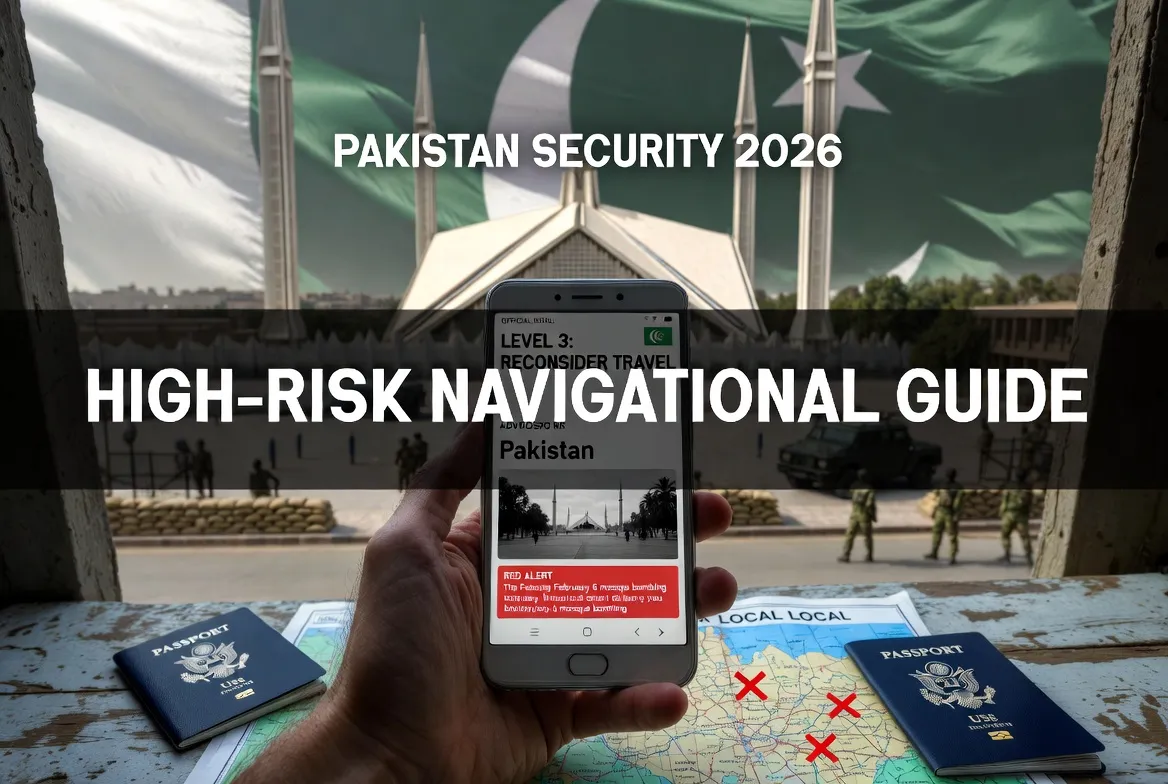
The US State Department maintains a Level 3 "Reconsider Travel" advisory for Pakistan overall, with Level 4 "Do Not Travel" warnings for Balochistan province, Khyber Pakhtunkhwa province, and the former Federally Administered Tribal Areas. The advisory cites terrorism, sectarian violence, kidnapping, and civil unrest as primary concerns. The US government's ability to provide emergency services to US citizens is limited, particularly outside Islamabad. The advisory specifically warns that US government personnel require special authorization to travel to many areas of Pakistan, restrictions that reflect genuine security concerns.
United Kingdom Foreign Office Guidance
The UK Foreign, Commonwealth & Development Office advises against all travel to most of Balochistan, all of the former FATA, and districts of KPK bordering Afghanistan. It advises against all but essential travel to much of the rest of KPK, parts of Sindh including rural areas, and parts of Punjab. The FCDO notes that terrorist attacks are "very likely" and could be indiscriminate. The guidance emphasizes that consular assistance is severely limited in many areas.
Other International Advisories
Canada, Australia, and other Western nations maintain similar advisories warning against travel to high-risk areas and exercising caution throughout Pakistan. These consistent warnings across multiple governments reflect genuine security concerns rather than excessive caution. Travelers should carefully review their own government's advisory and understand that traveling against government advice may void travel insurance and limit consular assistance.
Conclusion: Making Informed Decisions About Pakistan Travel

Navigating Pakistan's security landscape in 2026 requires sophisticated understanding of regional variations, threat actors, and risk mitigation strategies. The country cannot be simplistically categorized as safe or unsafe; rather, risk levels vary dramatically by province, city, and even neighborhood. Balochistan and KPK's tribal areas present extreme dangers that make them unsuitable for all but essential travel with professional security support. Major cities like Karachi, Lahore, and even Islamabad carry real terrorism and crime risks that require vigilance and security precautions but can be managed with proper planning.
For those considering travel to Pakistan, honest self-assessment of risk tolerance, security awareness, and necessity of travel is essential. Tourism in Pakistan has grown in recent years with adventurous travelers drawn to the country's stunning mountain scenery, rich history, and renowned hospitality. However, these attractions must be weighed against genuine security risks that have claimed lives of both Pakistanis and foreigners. Those who do choose to travel must commit to thorough preparation, cultural sensitivity, security awareness, and acceptance of risks that would be unacceptable in most other destinations.
For business travelers, aid workers, journalists, and others whose travel to Pakistan is professionally necessary, comprehensive security planning is not optional but essential. This includes professional security training, reliable local contacts, secure accommodation and transportation, communication systems, emergency plans, and coordination with embassies and security professionals. The risks are real and significant, but with proper precautions, many people live and work in Pakistan safely.
Pakistan's security situation remains fluid and can change rapidly due to political developments, terrorist attacks, or regional tensions. Travelers must commit to ongoing monitoring of security conditions, flexibility to change plans when conditions deteriorate, and humility to recognize that no amount of preparation can eliminate all risks. For those who approach Pakistan with eyes open to the challenges, respect for the dangers, and commitment to security best practices, the country offers experiences and insights unavailable in safer but more conventional destinations. However, the decision to travel to Pakistan's high-risk areas should never be taken lightly, and for many travelers, the risks will understandably outweigh the rewards.
0 Comments