.webp)
.webp)
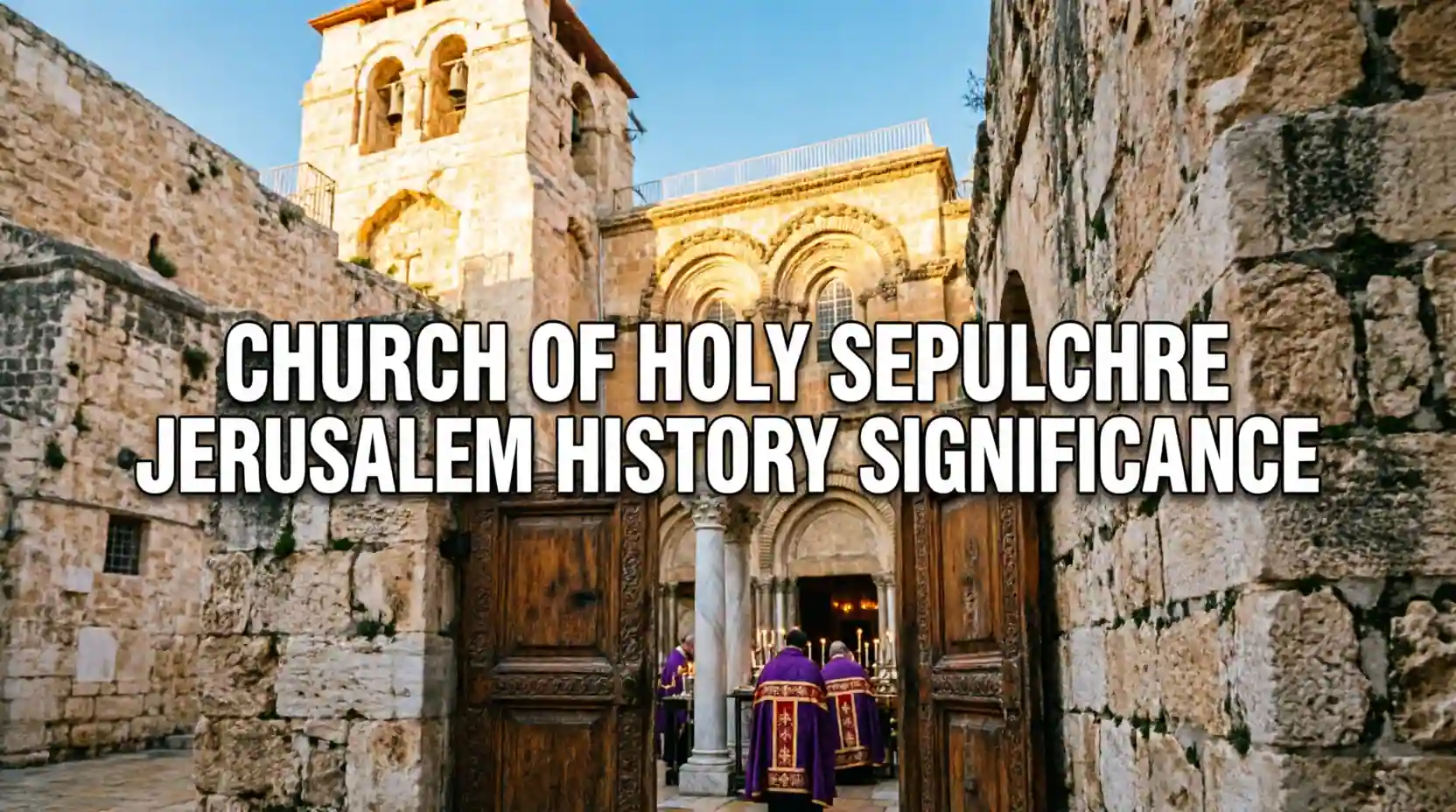
The Church of the Holy Sepulchre: History and Significance
In the heart of Jerusalem's Old City, where ancient stones bear witness to millennia of human faith, hope, and longing, stands one of Christianity's most sacred structures: the Church of the Holy Sepulchre. This extraordinary building, revered by Christians worldwide as the site of Jesus Christ's crucifixion, burial, and resurrection, is far more than an architectural monument—it is a living testament to two thousand years of pilgrimage, prayer, and profound spiritual encounter. For travelers exploring Jerusalem in 2026, visiting the Church of the Holy Sepulchre offers a unique opportunity to stand at the geographical and theological center of Christian faith, to witness the convergence of multiple ancient Christian traditions, and to experience a sacred space where history, devotion, and mystery intertwine in ways that transcend time and tradition.
The Church of the Holy Sepulchre is not merely a destination; it is a threshold. Within its walls, pilgrims have walked for centuries seeking connection with the foundational events of Christianity: the place where Jesus was crucified (Golgotha/Calvary), the stone where his body was anointed for burial (the Stone of Anointing), and the tomb where he was laid and from which Christians believe he rose on the third day (the Edicule). The church's very stones seem to hold the accumulated prayers of generations—the whispered supplications of crusaders, the tears of penitents, the songs of pilgrims, and the silent contemplation of countless souls seeking meaning, healing, and hope. To enter this church is to step into a continuum of faith that has sustained Christian communities through persecution, schism, war, and renewal.
This comprehensive guide explores everything you need to know about the Church of the Holy Sepulchre: understanding its profound historical development from the 4th century to the present, appreciating its complex architectural layers and artistic treasures, navigating the unique denominational arrangements that govern this shared sacred space, experiencing the spiritual practices and pilgrimage traditions that animate this holy site, and approaching this extraordinary place with the preparation, humility, and openness it deserves. Whether you're a Christian pilgrim fulfilling a lifelong spiritual goal, a traveler seeking to understand Christian faith and history, a student of religion and architecture, or simply someone curious about one of humanity's most meaningful sacred spaces, this guide provides the insights you need to experience the Church of the Holy Sepulchre in all its historical depth and spiritual significance.
Historical Development: From Roman Execution Site to Christian Shrine

The Biblical and Early Historical Context
To appreciate the Church of the Holy Sepulchre fully, understanding its historical context is essential:
- Gospel accounts: All four Gospels describe Jesus' crucifixion outside Jerusalem's walls at a place called Golgotha (Aramaic for "Place of the Skull"), his burial in a nearby rock-cut tomb belonging to Joseph of Arimathea, and the discovery of the empty tomb on the third day
- Historical location: In the 1st century CE, the site was outside the city walls, in a former quarry that had become a cemetery; Roman practice placed executions outside city boundaries
- Hadrian's transformation (135 CE): After suppressing the Bar Kokhba revolt, Emperor Hadrian rebuilt Jerusalem as Aelia Capitolina; tradition holds he built a temple to Venus/Aphrodite over the Christian holy sites, inadvertently preserving their location by covering them
- Early Christian memory: Despite persecution, local Christians maintained knowledge of the sites' significance; pilgrimage traditions began developing in 2nd-3rd centuries
- 👉 Best Stargazing Spots Ehden Forest Zero Light Pollution
- 👉 Budget Travel Hacks for Cheap Flights London Warsaw to Yerevan
- 👉 7 Hidden Myeik Archipelago Dive Sites for Adventure Divers
Constantine and the First Church (4th Century)
The church's founding represents a pivotal moment in Christian history:
- Empress Helena's pilgrimage (326-328 CE): Mother of Emperor Constantine visited Jerusalem; tradition credits her with identifying the true cross and holy sites
- Archaeological investigation: Excavations reportedly uncovered three crosses and the tomb; the site was cleared of Hadrianic structures
- Construction (326-335 CE): Constantine commissioned a magnificent complex: the Anastasis (Resurrection) rotunda over the tomb, the Martyrion basilica for worship, and surrounding courtyards and chapels
- Dedication (335 CE): Church consecrated with great ceremony; became primary pilgrimage destination for Christians worldwide
- Architectural innovation: Combined basilica and rotunda forms; set precedent for Christian church architecture
- 👉 Best Stargazing Spots Ehden Forest Zero Light Pollution
- 👉 Budget Travel Hacks for Cheap Flights London Warsaw to Yerevan
- 👉 7 Hidden Myeik Archipelago Dive Sites for Adventure Divers
Centuries of Destruction and Rebuilding
The church's history reflects Jerusalem's turbulent story:
- Persian sack (614 CE): Church damaged during Persian invasion; rebuilt by Patriarch Modestus with support from Emperor Heraclius
- Islamic conquest (638 CE): Generally tolerant policies allowed Christian access; church maintained as sacred site
- Fatimid destruction (1009 CE): Caliph al-Hakim ordered church's near-total demolition; one of Christianity's most traumatic losses
- Byzantine restoration (1048 CE): Emperor Constantine IX Monomachos funded rebuilding; smaller than Constantinian complex but preserved sacred sites
- Crusader transformation (12th century): Crusaders captured Jerusalem (1099); extensively renovated and unified the complex into single structure; added Romanesque elements; consecrated 1149
- Later medieval period: Various repairs and modifications under Ayyubid and Mamluk rule
- 👉 Best Stargazing Spots Ehden Forest Zero Light Pollution
- 👉 Budget Travel Hacks for Cheap Flights London Warsaw to Yerevan
- 👉 7 Hidden Myeik Archipelago Dive Sites for Adventure Divers
Ottoman Era to Modern Period
- Ottoman administration (1517-1917): Church maintained under Islamic rule; complex denominational arrangements began formalizing
- Status Quo (1757/1852): Ottoman decrees established precise arrangements for sharing sacred spaces among denominations; still governs church today
- 19th-century renovations: Various repairs; photographic documentation begins; pilgrimage increases with improved travel
- British Mandate (1917-1948): Preservation efforts; archaeological studies; continued pilgrimage
- Jordanian period (1948-1967): Church accessible to Christian pilgrims despite political tensions
- Israeli administration (1967-present): Church remains under Status Quo arrangements; major restoration projects including Edicule conservation (2016-2017)
- Contemporary significance: Remains primary pilgrimage destination for Christians worldwide; symbol of both Christian unity and division
- 👉 Best Stargazing Spots Ehden Forest Zero Light Pollution
- 👉 Budget Travel Hacks for Cheap Flights London Warsaw to Yerevan
- 👉 7 Hidden Myeik Archipelago Dive Sites for Adventure Divers
Architectural Splendor: Understanding the Complex

Overall Layout and Spatial Organization
The church's current form reflects centuries of construction and adaptation:
- Entrance facade: Modest stone facade with twin bell towers (right tower completed 12th century, left unfinished); narrow entrance through wooden doors
- Central nave: Large open space leading to Stone of Anointing; processional route for pilgrims
- Calvary/Golgotha chapels: Elevated chapels to right of entrance; traditional site of crucifixion
- Rotunda (Anastasis): Circular space housing the Edicule (tomb chapel); crowned by dome; heart of the church
- Edicule: Small chapel within rotunda enclosing traditional tomb of Christ; marble facade with columns
- Peripheral chapels: Numerous side chapels maintained by different Christian denominations: Greek Orthodox, Catholic, Armenian, Coptic, Syriac, Ethiopian
- Upper levels: Additional chapels, monastic cells, and administrative spaces
- 👉 Best Stargazing Spots Ehden Forest Zero Light Pollution
- 👉 Budget Travel Hacks for Cheap Flights London Warsaw to Yerevan
- 👉 7 Hidden Myeik Archipelago Dive Sites for Adventure Divers
Key Sacred Sites Within the Church
Stone of Anointing (Stone of Unction):
- Location: Just inside entrance, on right
- Traditional significance: Where Jesus' body was laid and anointed with spices by Joseph of Arimathea and Nicodemus before burial (John 19:39-40)
- Current features: Red stone slab (13th century replacement); pilgrims often kneel, touch, or place rosaries and other items on stone
- Devotional practice: Many pilgrims begin their visit here; place for prayer, anointing with oil, and reflection on Christ's burial
- Visitor guidance: Often crowded; be patient; maintain reverence; respect those praying
- 👉 Best Stargazing Spots Ehden Forest Zero Light Pollution
- 👉 Budget Travel Hacks for Cheap Flights London Warsaw to Yerevan
- 👉 7 Hidden Myeik Archipelago Dive Sites for Adventure Divers
Calvary/Golgotha Chapels:
- Location: Elevated chapels to right of entrance, reached by stairs
- Traditional significance: Site of Jesus' crucifixion; rock of Golgotha visible through glass beneath altar
- Denominational division: Lower chapel (Chapel of Adam) maintained by Greek Orthodox; upper chapels shared by Greek Orthodox and Catholic
- Key features: Altar of the Crucifixion; hole in rock beneath altar where cross traditionally stood; Chapel of Adam beneath Calvary
- Devotional practice: Pilgrims kneel at altar, touch rock of Golgotha through opening, pray at Chapel of Adam
- Visitor guidance: Steep stairs; modest dress required; photography often restricted; maintain profound reverence
- 👉 Best Stargazing Spots Ehden Forest Zero Light Pollution
- 👉 Budget Travel Hacks for Cheap Flights London Warsaw to Yerevan
- 👉 7 Hidden Myeik Archipelago Dive Sites for Adventure Divers
The Edicule (Tomb of Christ):
- Location: Center of Rotunda (Anastasis)
- Traditional significance: Encloses the rock-cut tomb where Jesus was buried and from which Christians believe he rose
- Historical development: Original rock-cut tomb modified over centuries; current marble structure dates to 1810 restoration after fire; major conservation completed 2017
- Architectural features: Small chapel with columns, dome, and marble facade; interior contains burial chamber with stone bench where body traditionally laid
- 2016-2017 restoration: Unprecedented conservation project; tomb opened for first time in centuries; confirmed presence of original rock-cut tomb beneath later additions
- Devotional practice: Pilgrims queue to enter Edicule; kneel at tomb stone; pray in burial chamber; experience profound spiritual moment
- Visitor guidance: Expect long queues (especially mornings); entry limited to small groups; photography prohibited inside; allow 30-60 minutes wait time
- 👉 Best Stargazing Spots Ehden Forest Zero Light Pollution
- 👉 Budget Travel Hacks for Cheap Flights London Warsaw to Yerevan
- 👉 7 Hidden Myeik Archipelago Dive Sites for Adventure Divers
Rotunda (Anastasis):
- Location: Circular space surrounding Edicule
- Historical significance: Built over original Constantinian rotunda; symbolizes resurrection and eternal life
- Architectural features: Dome supported by columns; galleries on upper level; light filtering through windows creates atmospheric effect
- Devotional practice: Pilgrims circumambulate Edicule; pray in rotunda; experience sense of sacred space
- Visitor guidance: Allow time for quiet reflection; notice interplay of light and architecture; respect worshippers
- 👉 Best Stargazing Spots Ehden Forest Zero Light Pollution
- 👉 Budget Travel Hacks for Cheap Flights London Warsaw to Yerevan
- 👉 7 Hidden Myeik Archipelago Dive Sites for Adventure Divers
Artistic and Decorative Elements
- Mosaic and marble work: Floors and walls feature intricate patterns; some elements date to Crusader period
- Iconography: Icons, paintings, and sculptures depict biblical scenes and saints; vary by denominational tradition
- Lamps and candles: Hundreds of oil lamps and candles create atmospheric lighting; maintained by different communities
- Liturgical furnishings: Altars, iconostases, and ceremonial objects reflect diverse Christian artistic traditions
- Conservation challenges: Humidity, candle smoke, and heavy visitor traffic affect delicate surfaces; ongoing preservation efforts
- 👉 Best Stargazing Spots Ehden Forest Zero Light Pollution
- 👉 Budget Travel Hacks for Cheap Flights London Warsaw to Yerevan
- 👉 7 Hidden Myeik Archipelago Dive Sites for Adventure Divers
The Status Quo: Understanding Denominational Arrangements

Historical Development of Shared Custody
The church's unique governance reflects centuries of Christian diversity:
- Early centuries: Single Christian community; divisions emerged after schisms (East-West 1054, Oriental Orthodox separations earlier)
- Crusader period: Latin (Catholic) control; other communities maintained presence
- Ottoman era: Formalization of arrangements to manage competing claims; firmans (imperial decrees) established precise rights
- Status Quo decrees (1757/1852): Ottoman rulings froze denominational rights and responsibilities; still govern church today
- Contemporary application: Complex but generally functional system for sharing sacred space
- 👉 Best Stargazing Spots Ehden Forest Zero Light Pollution
- 👉 Budget Travel Hacks for Cheap Flights London Warsaw to Yerevan
- 👉 7 Hidden Myeik Archipelago Dive Sites for Adventure Divers
Primary Denominational Communities
Six Christian communities share responsibility for the church:
- Greek Orthodox: Largest community; custodians of Calvary chapels, much of Rotunda, and many liturgical functions
- Catholic (Franciscan): Custodians of Chapel of the Apparition, parts of Calvary, and significant liturgical roles
- Armenian Apostolic: Custodians of Chapel of St. Helena and Chapel of the Finding of the Cross; significant historical presence
- Coptic Orthodox: Small but ancient community; maintain chapel behind Edicule
- Syriac Orthodox: Small community; maintain chapel near entrance
- Ethiopian Orthodox: Maintain chapel on roof; historical connection through Coptic tradition
- 👉 Best Stargazing Spots Ehden Forest Zero Light Pollution
- 👉 Budget Travel Hacks for Cheap Flights London Warsaw to Yerevan
- 👉 7 Hidden Myeik Archipelago Dive Sites for Adventure Divers
Practical Implications of the Status Quo
- Fixed responsibilities: Each community has designated areas, liturgical times, and maintenance duties that cannot be changed without unanimous consent
- Shared spaces: Some areas (like entrance, certain processional routes) require coordination; ladder on facade (the "Immovable Ladder") symbolizes Status Quo
- Liturgical scheduling: Different communities celebrate services at designated times; visitors may witness diverse worship traditions
- Maintenance and restoration: Projects require agreement among communities; can slow decision-making but ensures broad consensus
- Visitor experience: Multiple traditions visible in one space; opportunity to appreciate Christian diversity
- 👉 Best Stargazing Spots Ehden Forest Zero Light Pollution
- 👉 Budget Travel Hacks for Cheap Flights London Warsaw to Yerevan
- 👉 7 Hidden Myeik Archipelago Dive Sites for Adventure Divers
The "Immovable Ladder": Symbol of the Status Quo
- Location: Ladder rests on window ledge above entrance facade
- Historical origin: Placed there in 18th century; Status Quo decrees froze its position
- Symbolic meaning: Represents the delicate balance of denominational rights; moving it would require unanimous agreement
- Contemporary significance: Visible reminder of both the challenges and the commitment to shared stewardship
- 👉 Best Stargazing Spots Ehden Forest Zero Light Pollution
- 👉 Budget Travel Hacks for Cheap Flights London Warsaw to Yerevan
- 👉 7 Hidden Myeik Archipelago Dive Sites for Adventure Divers
Spiritual Significance: The Heart of Christian Faith

Theological Meaning of the Sites
For Christians, the church's sacred geography embodies core beliefs:
- Crucifixion (Golgotha/Calvary): Site of Jesus' sacrificial death; central to Christian understanding of atonement, love, and redemption
- Burial (Stone of Anointing and Tomb): Affirms Jesus' true humanity and death; prepares for resurrection hope
- Resurrection (Empty Tomb): Foundation of Christian faith; promise of new life, victory over death, and hope for believers
- Integrated narrative: Church allows pilgrims to walk the passion-resurrection story in physical space; embodiment of faith
- 👉 Best Stargazing Spots Ehden Forest Zero Light Pollution
- 👉 Budget Travel Hacks for Cheap Flights London Warsaw to Yerevan
- 👉 7 Hidden Myeik Archipelago Dive Sites for Adventure Divers
Pilgrimage Traditions and Practices
Visiting the church involves specific devotional practices:
- Circumambulation: Many pilgrims walk around Edicule or through church in prayerful procession
- Touching sacred stones: Pilgrims often touch Stone of Anointing, rock of Golgotha, or tomb stone as tangible connection to sacred events
- Prayer and meditation: Personal supplications, liturgical prayers, or silent contemplation at sacred sites
- Votive offerings: Candles, icons, rosaries, or written prayers left at sacred sites
- Sacramental participation: Many pilgrims receive communion at church altars; baptisms sometimes performed at traditional sites
- 👉 Best Stargazing Spots Ehden Forest Zero Light Pollution
- 👉 Budget Travel Hacks for Cheap Flights London Warsaw to Yerevan
- 👉 7 Hidden Myeik Archipelago Dive Sites for Adventure Divers
The Church in Contemporary Christian Life
- Pilgrimage destination: Remains primary goal for Christian pilgrims worldwide; bucket-list destination for many believers
- Ecumenical significance: Shared space can model Christian unity; also highlights ongoing divisions
- Global Christian identity: Church connects believers across denominations, cultures, and generations
- Contemporary witness: Christian communities maintaining presence in Jerusalem despite challenges; testimony to faith and resilience
- Interfaith context: Church exists alongside Jewish and Muslim sacred sites; potential for dialogue and mutual understanding
- 👉 Best Stargazing Spots Ehden Forest Zero Light Pollution
- 👉 Budget Travel Hacks for Cheap Flights London Warsaw to Yerevan
- 👉 7 Hidden Myeik Archipelago Dive Sites for Adventure Divers
Visiting the Church of the Holy Sepulchre: Practical Guidance

Location and Access
The church is centrally located in Jerusalem's Old City:
- Address: Christian Quarter, Old City, Jerusalem
- Entrances: Main entrance via Courtyard of the Holy Sepulchre; additional access from adjacent streets
- Security screening: All visitors pass through metal detectors and bag checks; allow extra time, especially during peak hours and holidays
- Public transportation: Light rail to City Hall stop; buses serve Old City entrances; taxis and ride-hailing available
- Walking access: Old City best explored on foot; wear comfortable shoes for cobblestone streets and hills
- 👉 Best Stargazing Spots Ehden Forest Zero Light Pollution
- 👉 Budget Travel Hacks for Cheap Flights London Warsaw to Yerevan
- 👉 7 Hidden Myeik Archipelago Dive Sites for Adventure Divers
Opening Hours and Best Times to Visit
Timing significantly affects the experience:
- General hours: Typically 4:00 AM to 7:00 PM (April-September); 4:00 AM to 6:00 PM (October-March); hours may vary for different chapels
- Less crowded times: Early morning (4:00-7:00 AM), late afternoon (after 4:00 PM), weekdays rather than weekends
- Peak times: Mornings (8:00 AM-12:00 PM), especially during pilgrimage seasons (Easter, Christmas), weekends
- Special services: Liturgical services may restrict visitor access; check schedule if visiting during major Christian holidays
- Edicule access: Queue times vary; mornings typically longest; allow 30-90 minutes wait depending on season
- 👉 Best Stargazing Spots Ehden Forest Zero Light Pollution
- 👉 Budget Travel Hacks for Cheap Flights London Warsaw to Yerevan
- 👉 7 Hidden Myeik Archipelago Dive Sites for Adventure Divers
Dress Code and Modesty Requirements
Respectful attire is required at this sacred site:
- General guideline: Modest dress for all visitors: shoulders and knees covered
- Women: Head covering recommended but not always required; carry scarf for chapels
- Men: Remove hats in chapels; modest dress
- Practical tip: Wear layers for temperature changes; comfortable shoes for standing in queues and walking on stone floors
- Respectful approach: Dress code reflects reverence for sacred space; compliance shows respect for Christian tradition and fellow worshippers
- 👉 Best Stargazing Spots Ehden Forest Zero Light Pollution
- 👉 Budget Travel Hacks for Cheap Flights London Warsaw to Yerevan
- 👉 7 Hidden Myeik Archipelago Dive Sites for Adventure Divers
Navigating the Church Interior
- Entrance sequence: Enter through courtyard; pass security; Stone of Anointing immediately on right
- Logical route: Many pilgrims follow: Stone of Anointing → Calvary chapels → Rotunda/Edicule → peripheral chapels
- Signage: Limited signage; consider guidebook, app, or guided tour for orientation
- Denominational chapels: Explore side chapels to appreciate diverse Christian traditions; respect liturgical activities
- Upper levels: Stairs to Calvary and galleries; may be crowded; take care on steps
- 👉 Best Stargazing Spots Ehden Forest Zero Light Pollution
- 👉 Budget Travel Hacks for Cheap Flights London Warsaw to Yerevan
- 👉 7 Hidden Myeik Archipelago Dive Sites for Adventure Divers
Experiencing the Church: A Visitor's Journey

Approaching the Sacred Space
Your first encounter with this extraordinary place:
- Entering the courtyard: Pass through narrow entrance; sense transition from bustling Old City to sacred space
- First impressions: Notice the dim light, scent of incense and candle wax, sound of prayers in multiple languages, visual richness of icons and decorations
- Preparing mentally: Take moment for quiet reflection before engaging with sacred sites
- Orientation: Locate key sites (Stone of Anointing, stairs to Calvary, entrance to Rotunda) before crowds intensify
- 👉 Best Stargazing Spots Ehden Forest Zero Light Pollution
- 👉 Budget Travel Hacks for Cheap Flights London Warsaw to Yerevan
- 👉 7 Hidden Myeik Archipelago Dive Sites for Adventure Divers
At the Sacred Sites: Prayer and Reflection
Engaging with the church's holy places:
- Stone of Anointing: Many pilgrims begin here; kneel, touch stone, place rosary or prayer; reflect on Christ's burial and compassion for grief
- Calvary/Golgotha: Ascend stairs; kneel at altar; touch rock of Golgotha through opening; pray at Chapel of Adam beneath; meditate on crucifixion's meaning
- Edicule/Tomb: Queue patiently; enter burial chamber; kneel at tomb stone; pray in space of resurrection hope; allow emotional response
- Rotunda: Circumambulate Edicule; notice dome and light; pray in circular space symbolizing eternity
- Peripheral chapels: Explore chapels of different traditions; appreciate diverse expressions of Christian faith
- 👉 Best Stargazing Spots Ehden Forest Zero Light Pollution
- 👉 Budget Travel Hacks for Cheap Flights London Warsaw to Yerevan
- 👉 7 Hidden Myeik Archipelago Dive Sites for Adventure Divers
Photography Guidelines
- General policy: Photography often permitted in main areas for personal use; restrictions apply in chapels and during services
- Edicule interior: Photography typically prohibited inside tomb chamber; respect this rule
- Worshippers: Always ask permission before photographing individuals praying; many consider prayer deeply personal
- Flash and tripods: Avoid flash photography; tripods usually require special permission
- Respectful practice: Prioritize prayer and reflection over photography; some moments are best experienced without camera
- Ethical sharing: When sharing images online, provide context about site's sacred nature; avoid exploitative framing
- 👉 Best Stargazing Spots Ehden Forest Zero Light Pollution
- 👉 Budget Travel Hacks for Cheap Flights London Warsaw to Yerevan
- 👉 7 Hidden Myeik Archipelago Dive Sites for Adventure Divers
Cultural Etiquette and Respectful Engagement

Understanding Christian Worship
Basic knowledge enhances respectful engagement:
- Liturgical services: Church hosts daily services in multiple traditions; if you encounter worship, observe quietly from back or return later
- Prayer practices: Different traditions have distinct prayer styles (standing, kneeling, prostrating, chanting); observe respectfully
- Sacred objects: Do not touch icons, altars, or liturgical items unless explicitly invited
- Religious items: Treat prayer books, crosses, and other objects with respect
- Language: Services may be in Greek, Arabic, Armenian, Latin, or other languages; silence allows appreciation regardless of language
- 👉 Best Stargazing Spots Ehden Forest Zero Light Pollution
- 👉 Budget Travel Hacks for Cheap Flights London Warsaw to Yerevan
- 👉 7 Hidden Myeik Archipelago Dive Sites for Adventure Divers
Behavioral Guidelines for All Visitors
- Quiet reverence: Maintain low voice; avoid loud conversation, laughter, or disruptive behavior
- Respect prayer space: Do not walk in front of someone who is praying; allow space for worshippers
- Physical boundaries: Do not climb on structures or touch areas marked as restricted
- Personal items: Keep bags and belongings close; do not leave items unattended
- Children: Supervise children closely; explain appropriate behavior in sacred space
- Food and drink: Consume outside church; maintain cleanliness of sacred area
- 👉 Best Stargazing Spots Ehden Forest Zero Light Pollution
- 👉 Budget Travel Hacks for Cheap Flights London Warsaw to Yerevan
- 👉 7 Hidden Myeik Archipelago Dive Sites for Adventure Divers
Engaging with Pilgrims and Clergy
- Observation vs. interaction: Many visitors come to pray, not to be observed; respect privacy and focus of worshippers
- Questions: If you have questions about Christian practice, ask respectfully and at appropriate moments; many pilgrims and clergy are happy to share
- Participation: You may be invited to join prayers; participate respectfully if comfortable, or decline politely
- Learning opportunity: For non-Christian visitors, the church offers chance to learn about Christian faith; approach with curiosity and humility
- Gratitude: Thank those who share knowledge or welcome you; small gestures of appreciation foster mutual respect
- 👉 Best Stargazing Spots Ehden Forest Zero Light Pollution
- 👉 Budget Travel Hacks for Cheap Flights London Warsaw to Yerevan
- 👉 7 Hidden Myeik Archipelago Dive Sites for Adventure Divers
Special Considerations for Non-Christian Visitors

Approaching with Respect and Curiosity
- Understanding significance: Recognize this is Christianity's holiest site; approach with same reverence you would expect for your own sacred spaces
- Observation vs. participation: You may observe prayers and rituals; participation is welcome if done respectfully and with understanding
- Personal reflection: Even without Christian faith, themes of suffering, compassion, hope, and resurrection are universally human; allow space for personal reflection
- Respectful presence: Maintain quiet demeanor; avoid disruptive behavior; recognize this is sacred space for billions
- Learning opportunity: Conversations with pilgrims or clergy can deepen understanding of Christian faith and practice
- 👉 Best Stargazing Spots Ehden Forest Zero Light Pollution
- 👉 Budget Travel Hacks for Cheap Flights London Warsaw to Yerevan
- 👉 7 Hidden Myeik Archipelago Dive Sites for Adventure Divers
Navigating Theological Complexity
- Avoid comparisons: Refrain from ranking or comparing religions; each tradition has profound meaning for its adherents
- Listen and learn: Approach conversations with humility; ask questions respectfully; listen more than you speak
- Political awareness: Jerusalem's status is sensitive; focus on cultural and religious understanding rather than political debate
- Language sensitivity: Different communities may use different terms; be aware of these nuances
- Respect boundaries: Some areas may be restricted to specific traditions; respect these boundaries without question
- 👉 Best Stargazing Spots Ehden Forest Zero Light Pollution
- 👉 Budget Travel Hacks for Cheap Flights London Warsaw to Yerevan
- 👉 7 Hidden Myeik Archipelago Dive Sites for Adventure Divers
Combining with Other Jerusalem Sacred Sites

Via Dolorosa and Christian Quarter
- Natural connection: Via Dolorosa ends at Church of Holy Sepulchre; walk passion narrative from condemnation to resurrection
- Christian Quarter exploration: Visit other Christian sites: Lutheran Church of Redeemer, Muristan area, Armenian Quarter
- Integrated itinerary: Plan walking route connecting sites; allow time for reflection at each sacred space
- Cultural context: Understand how Christian sacred geography relates to Jewish and Muslim sites in Old City
- 👉 Best Stargazing Spots Ehden Forest Zero Light Pollution
- 👉 Budget Travel Hacks for Cheap Flights London Warsaw to Yerevan
- 👉 7 Hidden Myeik Archipelago Dive Sites for Adventure Divers
Western Wall and Temple Mount/Haram al-Sharif
- Interfaith awareness: Church of Holy Sepulchre, Western Wall, and Haram al-Sharif are all within short walking distance; each sacred to different faiths
- Respectful navigation: Approach each site with appropriate reverence; understand different religious practices and expectations
- Historical layering: Recognize how these sites reflect Jerusalem's complex, multi-faith history
- Practical planning: Visit sites on same day if desired; allow time for security procedures and cultural adjustment between sites
- 👉 Best Stargazing Spots Ehden Forest Zero Light Pollution
- 👉 Budget Travel Hacks for Cheap Flights London Warsaw to Yerevan
- 👉 7 Hidden Myeik Archipelago Dive Sites for Adventure Divers
Broader Jerusalem Context
- Mount of Olives: Sites associated with Jesus' ministry (Gethsemane, Pater Noster Church); connect with passion narrative
- Israel Museum: See artifacts from Jerusalem's history; contextualize church within broader historical narrative
- Yad Vashem: Holocaust memorial; understand modern Jewish experience in relation to Christian-Jewish relations
- Integrated understanding: Allow Jerusalem's complexity to challenge and deepen your understanding of faith, history, and human diversity
- 👉 Best Stargazing Spots Ehden Forest Zero Light Pollution
- 👉 Budget Travel Hacks for Cheap Flights London Warsaw to Yerevan
- 👉 7 Hidden Myeik Archipelago Dive Sites for Adventure Divers
Sample Visit Itineraries

Half-Day Focused Pilgrimage (3-4 Hours)
- Early arrival: Enter church at opening (4:00-5:00 AM) for quieter experience
- First hour: Stone of Anointing → Calvary chapels; allow time for prayer at each
- Second hour: Rotunda and Edicule; queue for tomb entry; allow 30-60 minutes
- Third hour: Explore peripheral chapels; appreciate diverse Christian traditions
- Final time: Return to Rotunda for farewell prayer; depart with reflection
- 👉 Best Stargazing Spots Ehden Forest Zero Light Pollution
- 👉 Budget Travel Hacks for Cheap Flights London Warsaw to Yerevan
- 👉 7 Hidden Myeik Archipelago Dive Sites for Adventure Divers
Full-Day Jerusalem Sacred Sites (6-8 Hours)
- Morning: Via Dolorosa pilgrimage; walk Stations of the Cross to Church of Holy Sepulchre
- Lunch: Traditional meal in Christian Quarter; experience local cuisine
- Early afternoon: Church of Holy Sepulchre comprehensive visit; allow ample time for Edicule
- Late afternoon: Western Wall or other Old City sites; compare sacred geographies
- Evening: Return to Church of Holy Sepulchre for evening prayers; experience different atmosphere
- 👉 Best Stargazing Spots Ehden Forest Zero Light Pollution
- 👉 Budget Travel Hacks for Cheap Flights London Warsaw to Yerevan
- 👉 7 Hidden Myeik Archipelago Dive Sites for Adventure Divers
Multi-Day Pilgrimage Focus
- Day 1: Church of Holy Sepulchre morning; afternoon reflection and journaling; evening prayer at church
- Day 2: Via Dolorosa and Mount of Olives sites; connect passion narrative locations
- Day 3: Bethlehem (Church of Nativity); extend incarnation-resurrection narrative
- Integration: Allow time between site visits for reflection, prayer, and processing
- 👉 Best Stargazing Spots Ehden Forest Zero Light Pollution
- 👉 Budget Travel Hacks for Cheap Flights London Warsaw to Yerevan
- 👉 7 Hidden Myeik Archipelago Dive Sites for Adventure Divers
Frequently Asked Questions

Is the Church of the Holy Sepulchre the actual site of Jesus' crucifixion and tomb?
Archaeological evidence cannot definitively prove the exact locations, but strong historical tradition supports the site's authenticity. Early Christian memory, 4th-century investigations under Constantine, and continuous veneration for 1,700 years lend credibility. For pilgrims, the church's significance lies in its function as sacred space for encountering the passion-resurrection narrative, regardless of archaeological certainty.
Do I need to be Christian to visit the Church of the Holy Sepulchre?
No, the church is open to visitors of all faiths and backgrounds. Many non-Christians find the site historically fascinating and spiritually meaningful. Approach with respect for Christian tradition; maintain quiet reverence in sacred spaces; feel free to reflect on universal themes of suffering, compassion, and hope that resonate across human experience.
How long should I plan to spend at the church?
Allow 1.5-3 hours minimum for meaningful visit. If you plan to enter the Edicule (tomb), add 30-90 minutes for queue time. Those seeking deep prayer or exploration may spend half a day. There is no rush; this is pilgrimage, not sightseeing. Follow your spiritual leading rather than a schedule.
What is the Status Quo and how does it affect my visit?
The Status Quo is a complex set of agreements governing how six Christian denominations share the church. For visitors, this means: multiple liturgical traditions visible; some areas may have restricted access during services; maintenance decisions require consensus. Embrace the diversity as opportunity to appreciate Christian breadth; respect each community's practices.
Can I take photographs inside the Church of the Holy Sepulchre?
Photography policies vary by area and time. Generally permitted in main areas for personal use, but often restricted in chapels, during services, and inside the Edicule. Always ask permission before photographing worshippers. When in doubt, err on the side of caution; prioritize prayer and reflection over photography.
Is the church accessible for visitors with mobility challenges?
The church presents accessibility challenges: steps to Calvary, uneven floors, narrow passages, and crowds. The Edicule has steps and limited space. Contact church authorities in advance to inquire about specific accommodations. Consider focusing on accessible areas if mobility is limited; the spiritual experience is not dependent on accessing every site.
Conservation and Responsible Pilgrimage

Protecting Sacred Heritage
- Physical preservation: Ancient stones, mosaics, and artwork require care; avoid touching surfaces unnecessarily
- Environmental factors: Candle smoke, humidity, and visitor traffic affect delicate materials; conservation efforts ongoing
- 2016-2017 Edicule restoration: Unprecedented conservation project; demonstrated commitment to preserving sacred fabric for future generations
- Visitor impact: Millions of annual visitors require careful management to protect site while enabling access
- 👉 Best Stargazing Spots Ehden Forest Zero Light Pollution
- 👉 Budget Travel Hacks for Cheap Flights London Warsaw to Yerevan
- 👉 7 Hidden Myeik Archipelago Dive Sites for Adventure Divers
How Visitors Can Support Conservation
- Follow guidelines: Respect all rules regarding behavior, photography, and interaction with sacred objects
- Respectful engagement: Handle votive items (candles, rosaries) with care; do not remove others' offerings
- Support responsible tourism: Choose guides and services committed to cultural respect and heritage preservation
- Share knowledge: When discussing your visit, emphasize site's sacred nature and importance of respectful engagement
- Consider donations: Contributions to church communities or conservation organizations support ongoing preservation
- 👉 Best Stargazing Spots Ehden Forest Zero Light Pollution
- 👉 Budget Travel Hacks for Cheap Flights London Warsaw to Yerevan
- 👉 7 Hidden Myeik Archipelago Dive Sites for Adventure Divers
The Church in Contemporary Christian Life

Global Pilgrimage Destination
- Universal significance: Remains primary pilgrimage goal for Catholics, Orthodox, Protestants, and other Christians worldwide
- Life-cycle events: Baptisms, confirmations, weddings, and memorial services sometimes held at church
- Ecumenical potential: Shared space can model Christian unity; joint services occasionally held
- Contemporary witness: Christian communities maintaining presence in Jerusalem despite challenges; testimony to faith and resilience
- 👉 Best Stargazing Spots Ehden Forest Zero Light Pollution
- 👉 Budget Travel Hacks for Cheap Flights London Warsaw to Yerevan
- 👉 7 Hidden Myeik Archipelago Dive Sites for Adventure Divers
Personal and Communal Transformation
- Spiritual impact: Many pilgrims report deepened faith, emotional healing, or renewed purpose after visiting
- Carrying the experience: Lessons of love, sacrifice, and hope can inform life beyond Jerusalem
- Community connection: Sharing pilgrimage experience can strengthen faith communities and interfaith understanding
- Ongoing practice: Church visit can enrich home prayer life and spiritual practice
- 👉 Best Stargazing Spots Ehden Forest Zero Light Pollution
- 👉 Budget Travel Hacks for Cheap Flights London Warsaw to Yerevan
- 👉 7 Hidden Myeik Archipelago Dive Sites for Adventure Divers
Conclusion: Standing at the Center of Christian Faith

The Church of the Holy Sepulchre is more than ancient stones and sacred geography; it is a threshold between the historical and the eternal, between individual devotion and communal faith, between the tragedy of crucifixion and the triumph of resurrection. To stand within its walls is to stand at the intersection of two millennia of Christian hope—a place where the foundational story of Christianity becomes tangible, where prayers ascend in countless languages, and where the promise of new life continues to resonate through ancient stone.
For pilgrims in 2026, the Church of the Holy Sepulchre offers a rare opportunity to participate in this continuum of faith. Whether you come as a believer fulfilling a lifelong pilgrimage, as a seeker of spiritual meaning, as a student of history, or simply as a curious human being, the church invites you to slow down, to listen, to reflect. It asks not that you believe as others believe, but that you respect the beliefs of others. It offers not easy answers, but the profound invitation to encounter mystery, to wrestle with suffering, and to hope beyond present circumstances.
As you plan your visit to the Church of the Holy Sepulchre, approach it with preparation and openness. Learn about its history and significance. Dress respectfully. Silence your phone. Allow yourself to be moved. And when you kneel at the tomb, remember that you stand where countless souls have stood before you—seeking, hoping, praying, and finding that even in the darkest places, light can break through.
The Church of the Holy Sepulchre awaits—not as a monument to be photographed, but as a living presence to be encountered. May your visit deepen your understanding of faith, history, and the enduring human search for meaning. May you carry home not just memories of stone and candlelight, but the resonance of prayers that have ascended from this place, and the hope that continues to rise from the hearts of those who stand here, as you do now, at the center of the Christian story.
Welcome to the Church of the Holy Sepulchre. Welcome to the heart of Christian faith. Welcome to a place where death is not the end, and where love has the final word.
0 Comments