.webp)
.webp)
Preparing for High Altitude Tibet Road Trip Adventures
A road trip across the Tibetan Plateau represents one of the world's most spectacular and challenging overland journeys. Traversing elevations averaging four thousand to five thousand meters with mountain passes exceeding five thousand five hundred meters demands meticulous preparation and specialized gear.
The unique combination of extreme altitude, remote terrain, unpredictable weather, and limited services requires travelers to be completely self-sufficient. Unlike typical road trips, a Tibet journey demands preparation for altitude sickness, sub-zero temperatures even in summer, intense UV radiation, and potential mechanical issues hundreds of kilometers from assistance.
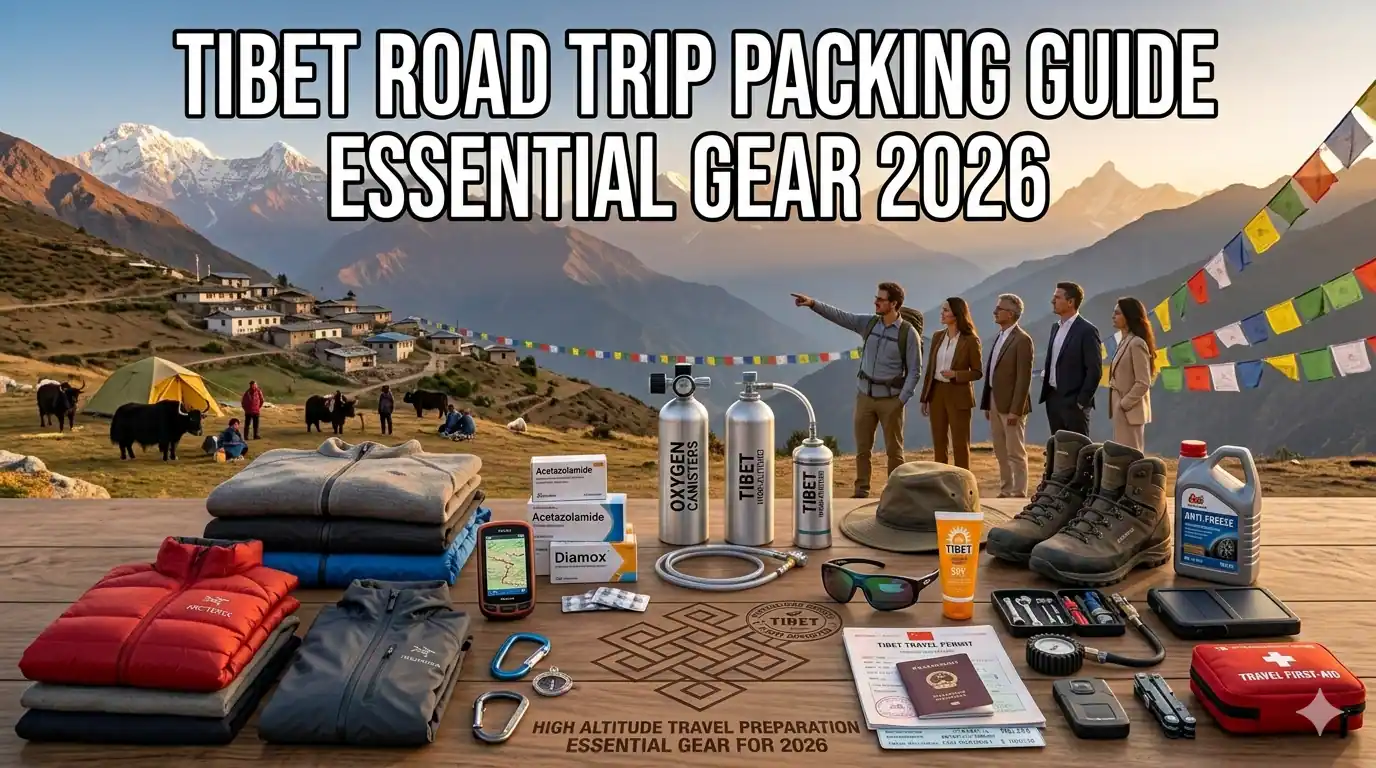
This comprehensive packing guide addresses every category of essential gear for 2026 Tibet road trips, from altitude sickness prevention and extreme weather clothing to vehicle emergency supplies and communication equipment. Proper preparation ensures not only comfort but safety in one of Earth's most demanding environments.
Whether traveling independently or with a guided tour, understanding what to pack proves critical for success. The remote nature of Tibet's interior means forgotten items cannot simply be purchased at the next town, making thorough preparation essential.
Understanding Tibet's Extreme Environment

Grasping the environmental challenges of the Tibetan Plateau informs every packing decision and helps prioritize gear that addresses real risks rather than perceived needs.
Altitude Considerations
The Tibetan Plateau averages four thousand five hundred meters elevation with many destinations exceeding five thousand meters. At these altitudes, oxygen levels drop to sixty percent of sea level concentrations, creating physiological challenges that affect every traveler.
Altitude sickness affects seventy-five percent of travelers above three thousand meters, with symptoms ranging from mild headache to life-threatening pulmonary or cerebral edema. Prevention requires gradual ascent, proper hydration, and medical preparation including prescription medications.
Physical exertion becomes significantly more difficult at altitude, with even simple tasks requiring more energy. This affects packing decisions regarding gear weight and the need for adequate rest between driving segments.
Sleep quality deteriorates at altitude, making quality sleeping systems essential for recovery. The combination of cold temperatures and reduced oxygen creates challenging conditions requiring specialized equipment.
Weather Extremes
Tibet experiences dramatic temperature swings with daytime highs reaching twenty degrees Celsius dropping to minus ten degrees Celsius at night even during summer months. This thirty-degree daily variation demands versatile layering systems.
Winter temperatures regularly drop below minus twenty degrees Celsius with wind chill making conditions feel even colder. Summer brings intense solar radiation with UV index exceeding fifteen, requiring serious sun protection despite cold air temperatures.
Weather changes rapidly with clear skies turning to snowstorms within hours regardless of season. This unpredictability requires preparation for all conditions simultaneously rather than seasonal packing.
Wind speeds frequently exceed fifty kilometers per hour on high passes, creating dangerous wind chill and requiring windproof outer layers even when temperatures seem moderate.
Remote Terrain Challenges
Large sections of Tibet road trips traverse areas with no services for two hundred to four hundred kilometers. This isolation requires complete self-sufficiency including fuel, food, water, and emergency supplies.
Road conditions vary from paved highways to rough gravel tracks with potential for vehicle damage. Emergency repair equipment and recovery gear prove essential when assistance remains days away.
Communication coverage proves spotty outside major towns, requiring satellite communication devices for emergencies. The remoteness means self-rescue capabilities may be necessary in serious situations.
Essential Clothing and Layering Systems

Proper clothing represents the most critical category for Tibet travel, with the layering system approach proving essential for managing extreme temperature variations and weather changes.
Base Layer Fundamentals
Merino wool or synthetic base layers provide moisture-wicking properties essential for managing perspiration during activity while maintaining warmth when stationary. Cotton proves dangerous as it retains moisture and accelerates heat loss.
Pack three to four complete base layer sets including tops and bottoms. The ability to change into dry base layers after sweating prevents rapid cooling and maintains comfort during rest periods.
Weight selection depends on season with lightweight (one hundred fifty grams per square meter) suitable for summer activity and midweight (two hundred to two hundred fifty grams) better for winter or static warmth.
Zip-neck tops provide ventilation options during activity while maintaining coverage. Full-zip designs allow rapid cooling without removing layers completely.
Insulating Mid Layers
Fleece jackets or pullovers provide breathable insulation that maintains warmth even when damp. Pack both lightweight fleece for active use and heavier fleece for camp or vehicle use.
Down or synthetic insulated jackets serve as primary warmth layers during cold conditions. Down provides superior warmth-to-weight ratio but loses insulation value when wet, making synthetic fill preferable for wet conditions.
Pack a heavyweight down jacket rated to minus fifteen to minus twenty degrees Celsius for extreme cold and high passes. This jacket proves essential for early morning starts, evening camps, and unexpected weather.
Vest options provide core warmth without restricting arm movement during driving or activity. Insulated vests layer efficiently under outer shells.
Weather Protection Outer Layers
Waterproof and windproof hardshell jackets with breathable membranes (Gore-Tex or equivalent) protect against rain, snow, and wind while allowing moisture escape. Quality shells last for years and prove worth the investment.
Waterproof pants with full side zips allow donning over boots and other layers without removal. These prove essential for wet weather, snow, and wind protection on exposed passes.
Softshell jackets provide wind resistance and light water protection with greater breathability than hardshells, suitable for active use in dry cold conditions.
Ensure all outer layers feature helmet-compatible hoods, pit zips for ventilation, and multiple pockets for gear access. Quality construction prevents failure in critical conditions.
Extremity Protection
Insulated gloves rated to minus fifteen degrees Celsius protect hands during cold mornings and high passes. Pack both lightweight gloves for driving and heavy insulated mittens for extreme cold.
Wool or synthetic hats covering ears prevent significant heat loss. Balaclavas provide face protection in extreme wind and cold conditions.
Neck gaiters or buffs offer versatile protection for neck, face, and head. Pack multiple for rotation and different conditions.
Wool or synthetic socks in multiple weights allow adjustment for conditions and activity. Pack at least six pairs with some heavyweight options for extreme cold.
Footwear Systems
Insulated waterproof hiking boots rated for cold weather and high altitude provide ankle support and protection. Boots should accommodate thick socks without restricting circulation.
Camp shoes or sandals provide foot relief after long days in boots and serve as backup footwear. Lightweight options minimize pack weight while providing comfort.
Gaiters protect lower legs from snow, water, and debris during wet conditions or snow travel. Knee-high gaiters provide maximum protection.
Health and Altitude Sickness Prevention

Medical preparation proves critical for Tibet travel with altitude sickness representing the primary health risk requiring specific prevention and treatment strategies.
Prescription Medications
Acetazolamide (Diamox) proves essential for altitude sickness prevention and treatment. Consult physicians before travel for prescription and dosing instructions, typically one hundred twenty-five to two hundred fifty milligrams twice daily starting one day before ascent.
Dexamethasone serves as emergency treatment for severe altitude sickness and high altitude cerebral edema. This prescription medication requires medical supervision but can prove life-saving in remote areas.
Nifedipine treats high altitude pulmonary edema and should be carried for emergency use. Medical consultation proves essential before carrying and using this medication.
Personal prescription medications require adequate supply plus thirty percent extra for trip extensions. Carry medications in original containers with prescriptions to avoid customs issues.
Over-the-Counter Medical Supplies
Ibuprofen or acetaminophen treats altitude headache and general pain. Pack sufficient supply for the entire trip plus extras.
Anti-diarrheal medication (loperamide) addresses gastrointestinal issues common when traveling. Dehydration from diarrhea compounds altitude problems.
Antihistamines treat allergic reactions and can help with altitude-related sleep disturbances. Non-drowsy formulas suit daytime use.
Throat lozenges and cough suppressants address respiratory irritation from dry air and dust. The arid environment frequently causes throat discomfort.
Comprehensive First Aid Kit
Wound care supplies including adhesive bandages in multiple sizes, sterile gauze pads, adhesive tape, antiseptic wipes, and antibiotic ointment address minor injuries.
Blister treatment supplies including moleskin, blister bandages, and antiseptic prove essential as foot problems can immobilize travelers in remote areas.
Medical tools including digital thermometer, tweezers, safety pins, scissors, and disposable gloves enable basic medical care.
Emergency medications including epinephrine auto-injectors for those with severe allergies, asthma inhalers for respiratory conditions, and personal emergency medications.
Hydration and Nutrition Support
Electrolyte replacement tablets or powders maintain mineral balance and encourage hydration. The dry climate and altitude increase fluid requirements significantly.
Vitamin supplements support immune function during travel stress. Vitamin C, D, and B-complex prove particularly useful at altitude.
High-energy snacks including nuts, energy bars, and dried fruit provide quick calories during long drives and high altitude exertion.
Vehicle and Camping Equipment

Self-sufficiency requires comprehensive vehicle and camping gear as services prove sparse and conditions demanding across Tibet's vast interior.
Vehicle Emergency Supplies
Spare tires including at least two full-size spares with proper inflation. Remote areas mean tire damage cannot be quickly repaired, making spares essential.
Tire repair kits including plugs, patches, and portable air compressor enable field repairs. CO2 cartridges provide rapid inflation for tubeless tires.
Recovery equipment including tow straps rated for vehicle weight, shovel, traction boards, and high-lift jack enable self-recovery from soft terrain or snow.
Basic tool kit including wrenches, screwdrivers, pliers, duct tape, zip ties, and electrical tape addresses common mechanical issues. Vehicle-specific tools for your make and model prove useful.
Vehicle Comfort and Safety
Extra fuel containers extend range between fuel stops. Calculate fuel consumption carefully and carry sufficient reserve for remote sections.
Engine oil, coolant, and transmission fluid for top-offs during long journeys. Monitor fluid levels daily in demanding conditions.
Windshield washer fluid prevents visibility issues from dust and bugs. Pack concentrate to mix with water as needed.
Emergency blankets and sleeping bags in vehicle provide warmth if stranded. Sub-zero temperatures make vehicle breakdowns life-threatening without adequate insulation.
Camping Sleep Systems
Sleeping bags rated to minus fifteen to minus twenty degrees Celsius ensure warmth during cold nights. Down bags provide best warmth-to-weight but synthetic performs better if moisture becomes an issue.
Sleeping pads with R-value of four or higher insulate from cold ground. Air pads provide comfort while foam pads provide backup and insulation.
Pillows or stuff sacks filled with clothes provide head support for quality sleep. Rest proves critical for altitude adaptation.
Shelter and Camp Setup
Four-season tents withstand high winds and snow loading common at altitude. Three-season tents may fail in Tibet's extreme conditions.
Tent footprint or ground cloth protects tent floor from abrasion and moisture. The rocky, abrasive ground damages tent floors quickly.
Camp chairs provide comfortable seating for meals and rest. After long drives, comfortable seating proves valuable for recovery.
Headlamps with extra batteries enable hands-free camp setup and nighttime navigation. LED headlamps provide long battery life and bright illumination.
Navigation and Communication Technology

Reliable navigation and communication prove essential in Tibet's remote areas where getting lost or unable to call for help creates serious danger.
Navigation Equipment
GPS devices with preloaded Tibet maps provide reliable navigation independent of cell coverage. Garmin or similar devices with topographic maps prove most useful.
Physical maps including detailed road maps and topographic maps serve as backup when electronics fail. Paper maps cannot run out of battery.
Compass and navigation skills enable route-finding when GPS proves unavailable. Practice navigation skills before departure.
Downloaded offline maps on smartphone provide backup navigation. Apps like Maps.me or Gaia GPS work without cell coverage.
Communication Devices
Satellite messenger or personal locator beacon (PLB) enables emergency communication and location tracking where cell coverage does not exist. Devices like Garmin inReach or SPOT prove essential for solo or small group travel.
Satellite phone provides voice communication for groups or extended expeditions. Rental or purchase depends on trip length and budget.
Two-way radios (walkie-talkies) enable communication between vehicles in convoy. Range of five to ten kilometers suits most convoy situations.
Power banks and solar chargers keep devices powered during extended periods without electricity. High-capacity power banks (twenty thousand milliamp-hours or more) prove essential.
Documentation and Permits
Tibet Travel Permit (TTP) required for all foreign travelers must be carried at all times. Travel without permits results in fines and deportation.
Aliens Travel Permit (ATP) required for travel outside Lhasa to restricted areas. Obtain before departure from Lhasa.
Passport with Chinese visa valid for at least six months beyond travel dates. Carry photocopies separate from originals.
Driver's license and International Driving Permit if driving independently. Chinese driving regulations apply.
Food, Water, and Cooking Equipment

Self-sufficiency in food and water proves essential as restaurants prove sparse and water quality unreliable across much of Tibet.
Water Systems
Water storage capacity of at least twenty liters per person per day enables extended travel between reliable water sources. Collapsible water containers save space when empty.
Water purification including filter systems, chemical treatment (iodine or chlorine dioxide), or UV purification ensures safe drinking water from natural sources.
Insulated water bottles prevent freezing in cold conditions. Wide-mouth bottles allow adding snow for melting when liquid water unavailable.
Cooking Equipment
Stove systems including reliable liquid fuel or canister stoves rated for high altitude and cold temperatures. White gas stoves perform best in extreme cold.
Fuel supply calculated at two hundred to three hundred grams per person per day for cooking and boiling water. Carry extra fuel for emergencies.
Cookware including lightweight pots, pans, utensils, and plates suitable for group size. Titanium or aluminum minimizes weight.
Food supply including non-perishable items like rice, pasta, canned goods, dried meats, and freeze-dried meals. Plan for at least one week of food beyond planned itinerary.
Food Storage
Coolers or insulated bags preserve perishables during travel. Ice or frozen water bottles extend cooling capacity.
Bear-proof or rodent-proof food storage protects supplies from wildlife. Hang food or use bear canisters in backcountry areas.
Personal Items and Comfort Gear

Personal comfort items improve quality of life during challenging conditions and long days on the road.
Sun and Eye Protection
Sunglasses with UV400 protection and side shields prevent snow blindness and eye damage from intense UV radiation. Category three or four lenses essential for high altitude.
Sunscreen SPF 50+ protects skin from intense UV radiation. Reapply every two hours during outdoor exposure.
Lip balm with SPF prevents painful cracked lips from dry air and sun exposure. Apply frequently throughout the day.
Personal Hygiene
Biodegradable soap and shampoo minimize environmental impact when washing in natural water sources.
Quick-dry towels dry quickly and resist mildew in humid conditions. Microfiber towels pack small and dry rapidly.
Toiletries including toothbrush, toothpaste, deodorant, and personal hygiene items. Biodegradable options preferred for environmental protection.
Comfort and Entertainment
Books, music, or games provide entertainment during long drives and rest days. Downloaded content works without internet.
Journal and pen document the journey and experiences. Writing helps process the altitude and travel challenges.
Seasonal and Special Considerations

Specific gear requirements vary by season and planned activities requiring adjustment to the core packing list.
Summer Travel (May to September)
Rain gear including waterproof jacket and pants proves essential during monsoon season from June to August. Afternoon thunderstorms occur frequently.
Insect repellent protects against mosquitoes and other biting insects active during warm months. DEET-based repellents prove most effective.
Lighter sleeping bags rated to zero to five degrees Celsius suit summer conditions though warm layers remain necessary for high camps.
Winter Travel (October to April)
Extreme cold weather gear including expedition-weight down jackets rated to minus thirty degrees Celsius or lower. Winter travel requires serious cold weather preparation.
Insulated boots rated to minus twenty degrees Celsius or lower prevent frostbite during cold weather activities.
Hand and foot warmers provide emergency warmth during extreme cold. Chemical warmers activate when needed.
High Altitude Mountaineering
Technical climbing gear including crampons, ice axes, helmets, and ropes if planning glacier travel or peak climbing. Hire local guides for technical objectives.
Mountaineering boots compatible with crampons provide support and warmth for technical terrain.
Packing Strategy and Weight Management

Effective packing balances comprehensive preparation with weight constraints and vehicle space limitations.
Prioritization Principles
Safety gear including altitude medication, emergency communication, and survival equipment takes priority over comfort items. Never compromise on safety essentials.
Multi-use items reduce total gear weight. Items serving multiple functions prove more valuable than single-purpose gear.
Quality over quantity applies to critical gear. Reliable equipment prevents failures in remote areas where replacement proves impossible.
Weight Distribution
Heavy items positioned low and centered in vehicle maintains stability on rough roads. Proper weight distribution prevents handling issues.
Frequently needed items remain easily accessible without unpacking entire vehicle. Organization saves time and frustration.
Emergency gear including first aid, communication devices, and survival equipment remains accessible from driver's position.
Pre-Departure Checklist
Test all equipment before departure including stoves, electronics, and camping gear. Identifying failures at home prevents problems in Tibet.
Practice using navigation devices, communication equipment, and emergency gear before departure. Familiarity prevents confusion during emergencies.
Create packing lists organized by category and verify all items before departure. Systematic checking prevents forgotten essentials.
Conclusion: Preparation Enables Adventure

A Tibet road trip ranks among the world's most rewarding and challenging overland adventures. The combination of spectacular scenery, unique culture, and extreme environment creates experiences that transform travelers.
Success depends not on luck but on thorough preparation and appropriate gear. The investment in quality equipment, medical preparation, and comprehensive planning pays dividends in safety, comfort, and enjoyment.
Remember that gear alone does not guarantee success. Physical fitness, mental preparation, respect for the environment, and flexibility when conditions change prove equally important.
The Tibetan Plateau demands respect but rewards preparation with unforgettable experiences. Pack thoroughly, travel responsibly, and embrace the adventure that awaits on the roof of the world.
Your Tibet road trip in 2026 will test your limits, expand your perspective, and create memories lasting a lifetime. Proper preparation ensures you return home safely with stories to inspire future adventures.
0 Comments