.webp)
.webp)
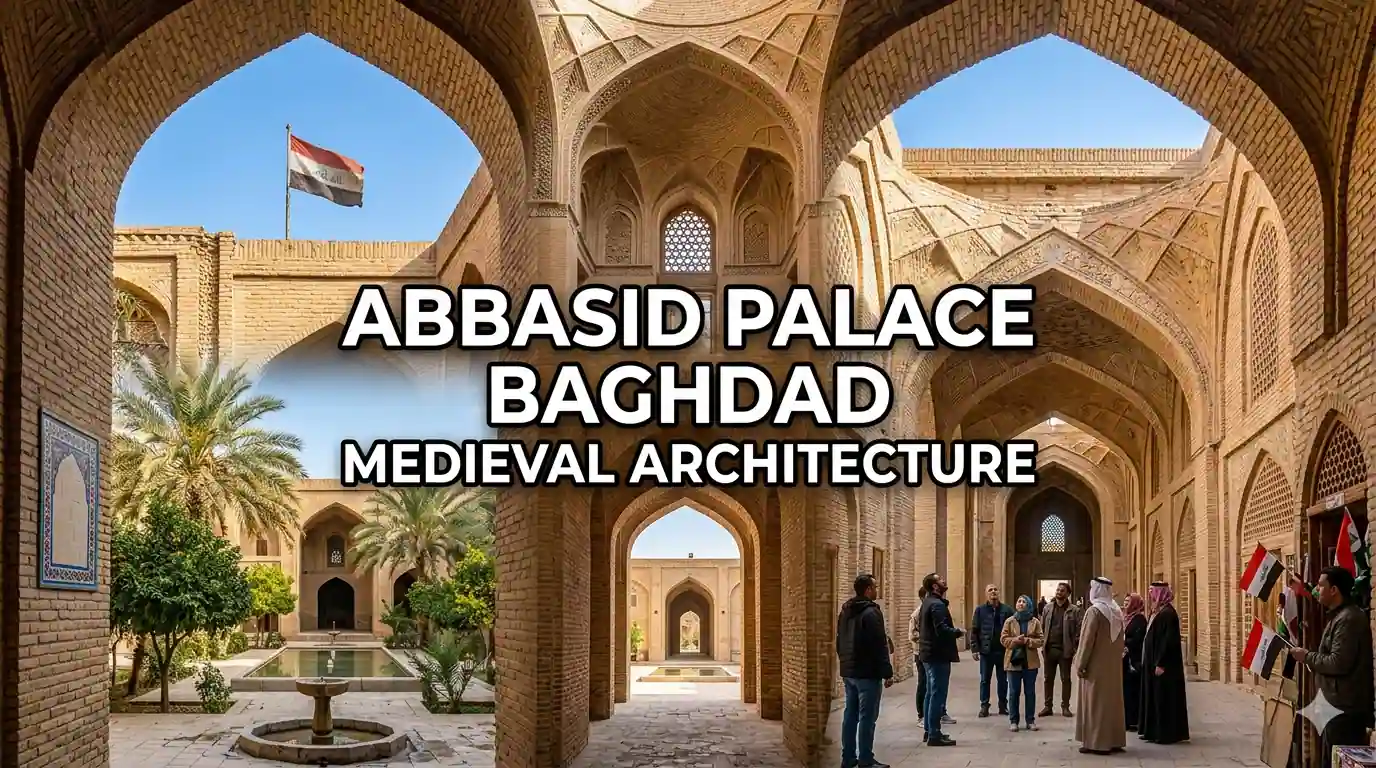
The Abbasid Palace: A Gem of Medieval Architecture
In the heart of Baghdad, along the eastern bank of the Tigris River, stands a remarkable testament to the architectural sophistication of the Islamic Golden Age: the Abbasid Palace. Often called the "Abbasid Palace" or "Qasr al-Khuld" (Palace of Eternity), this medieval structure represents one of the finest surviving examples of Abbasid architecture—a style that flourished during one of history's most intellectually vibrant periods. For travelers exploring Baghdad in 2026, the Abbasid Palace offers a rare opportunity to step into the architectural world of the 12th-13th centuries, to appreciate the ingenuity of medieval Islamic builders, and to connect with a legacy of artistic achievement that influenced architectural traditions across continents.
While much of Abbasid Baghdad was lost to centuries of conflict, conquest, and urban transformation, the Abbasid Palace endures—a resilient monument that has witnessed the rise and fall of empires, the flow of the Tigris through changing seasons, and the enduring human impulse to create beauty that transcends time. Its soaring vaulted chambers, intricate brickwork, delicate stucco decorations, and harmonious proportions reflect not merely technical skill but a profound aesthetic philosophy that integrated spiritual values, mathematical precision, and artistic expression.
This comprehensive guide explores everything you need to know about the Abbasid Palace: understanding its historical context within the Abbasid Caliphate and medieval Baghdad, appreciating the architectural techniques and artistic elements that make it extraordinary, navigating practical considerations for visiting this precious heritage site, understanding ongoing conservation efforts, and engaging respectfully with this irreplaceable cultural treasure. Whether you're an architecture enthusiast, a history scholar, a cultural traveler, or simply someone curious about humanity's architectural heritage, this guide provides the insights you need to appreciate the Abbasid Palace in all its medieval splendor.
Historical Context: The Palace in Abbasid Baghdad

The Abbasid Caliphate: Patron of Architecture and Learning
To appreciate the Abbasid Palace fully, understanding its historical context is essential:
- Abbasid era (750-1258 CE): Period of extraordinary cultural, scientific, and artistic flourishing; Baghdad established as capital in 762 CE
- Architectural patronage: Abbasid caliphs commissioned mosques, palaces, libraries, and public buildings that expressed imperial power and cultural sophistication
- Urban planning: Baghdad's original circular design reflected cosmological concepts; palaces positioned strategically along the Tigris
- Intellectual climate: House of Wisdom attracted scholars worldwide; architecture reflected values of knowledge, order, and beauty
- Regional influence: Abbasid architectural styles influenced building traditions from Spain to Central Asia
- 👉 North Korea for Digital Nomad Families Navigating Secure Housing and Schooling
- 👉 Syria LGBTQ Travel Guide 2026 Safety and Social Overview
- 👉 The Western Wall (Kotel): Spiritual Heart of Jerusalem
The Palace's Origins and Attribution
Scholarly understanding of the palace's history continues to evolve:
- Construction period: Most scholars date the structure to the late Abbasid period, approximately 12th-early 13th century CE
- Possible patrons: Attributed variously to Caliph al-Nasir (r. 1180-1225) or other late Abbasid rulers; exact patronage remains subject to scholarly discussion
- Original function: Likely served as royal residence, administrative center, or ceremonial space; precise use debated by historians
- Architectural significance: Represents mature Abbasid architectural style; incorporates innovations in vaulting, decoration, and spatial organization
- Historical continuity: Building survived Mongol conquest (1258), Ottoman period, and modern conflicts—a testament to resilient construction
- 👉 North Korea for Digital Nomad Families Navigating Secure Housing and Schooling
- 👉 Syria LGBTQ Travel Guide 2026 Safety and Social Overview
- 👉 The Western Wall (Kotel): Spiritual Heart of Jerusalem
Survival Through Centuries of Change
The palace's endurance is remarkable:
- Mongol conquest (1258): While much of Baghdad was devastated, the palace structure survived, though likely damaged
- Ottoman era: Building adapted for various uses; continued occupation helped preserve structure
- 20th century: Recognized as important heritage site; initial conservation efforts began
- Contemporary challenges: Recent conflicts threatened heritage sites; palace survived with varying degrees of damage
- Restoration commitment: Ongoing efforts by Iraqi authorities and international partners to conserve and interpret the site
- 👉 North Korea for Digital Nomad Families Navigating Secure Housing and Schooling
- 👉 Syria LGBTQ Travel Guide 2026 Safety and Social Overview
- 👉 The Western Wall (Kotel): Spiritual Heart of Jerusalem
Architectural Splendor: Techniques and Artistic Elements

Structural Innovation: Vaulting and Spatial Design
The palace showcases sophisticated medieval engineering:
- Vaulted chambers: Series of interconnected barrel vaults and cross vaults create dramatic interior spaces; demonstrates advanced understanding of load distribution
- Brick construction: Primary building material; bricks laid in intricate patterns that serve both structural and decorative functions
- Spatial organization: Rooms arranged around central courtyards; reflects traditional Islamic architectural principles of privacy, light, and ventilation
- Climate adaptation: Thick walls, strategic window placement, and courtyard design provide natural cooling in Baghdad's hot climate
- Acoustic considerations: Vaulted spaces may have been designed to enhance sound for ceremonial or musical purposes
- 👉 North Korea for Digital Nomad Families Navigating Secure Housing and Schooling
- 👉 Syria LGBTQ Travel Guide 2026 Safety and Social Overview
- 👉 The Western Wall (Kotel): Spiritual Heart of Jerusalem
Decorative Arts: Stucco, Brickwork, and Inscriptions
Surface decoration reveals Abbasid artistic mastery:
Stucco Decoration:
- Technique: Carved and molded plaster applied to walls and arches; allowed for intricate detail not possible in brick alone
- Designs: Geometric patterns, vegetal motifs (arabesques), and occasional figural elements reflecting artistic conventions of period
- Preservation: Surviving stucco fragments demonstrate original richness; conservation efforts aim to protect these delicate surfaces
- Artistic significance: Represents high point of Abbasid decorative arts; influenced later Islamic architectural decoration
- 👉 North Korea for Digital Nomad Families Navigating Secure Housing and Schooling
- 👉 Syria LGBTQ Travel Guide 2026 Safety and Social Overview
- 👉 The Western Wall (Kotel): Spiritual Heart of Jerusalem
Brickwork Patterns:
- Structural aesthetics: Bricks laid in decorative patterns (herringbone, diagonal, interlocking) that enhance visual interest while maintaining structural integrity
- Color variation: Use of bricks with slightly different tones creates subtle visual texture
- Technical skill: Precision of brick laying demonstrates high level of craftsmanship and mathematical understanding
- Regional style: Brickwork patterns characteristic of Iraqi/Iranian Abbasid architecture; distinct from Syrian or Egyptian traditions
- 👉 North Korea for Digital Nomad Families Navigating Secure Housing and Schooling
- 👉 Syria LGBTQ Travel Guide 2026 Safety and Social Overview
- 👉 The Western Wall (Kotel): Spiritual Heart of Jerusalem
Calligraphic Inscriptions:
- Content: Quranic verses, poetic phrases, or foundation inscriptions (if preserved)
- Script styles: Kufic or early cursive scripts typical of Abbasid period
- Integration: Inscriptions incorporated into architectural composition rather than applied as afterthought
- Cultural meaning: Calligraphy as sacred art; inscriptions reinforced spiritual and political messages of building
- 👉 North Korea for Digital Nomad Families Navigating Secure Housing and Schooling
- 👉 Syria LGBTQ Travel Guide 2026 Safety and Social Overview
- 👉 The Western Wall (Kotel): Spiritual Heart of Jerusalem
Light, Space, and Spiritual Atmosphere
Abbasid architecture created meaningful sensory experiences:
- Natural lighting: Windows and openings strategically placed to create dramatic light patterns; interplay of light and shadow enhances architectural forms
- Spatial progression: Movement from public to private spaces; courtyards as transitional zones between exterior and interior
- Acoustic qualities: Vaulted spaces may have been designed to enhance recitation, music, or ceremonial sound
- Spiritual dimension: Architectural harmony reflected Islamic values of order, beauty, and contemplation
- Visitor experience: Modern visitors can still sense the intended atmosphere of dignity, tranquility, and aesthetic refinement
- 👉 North Korea for Digital Nomad Families Navigating Secure Housing and Schooling
- 👉 Syria LGBTQ Travel Guide 2026 Safety and Social Overview
- 👉 The Western Wall (Kotel): Spiritual Heart of Jerusalem
Conservation and Preservation: Protecting a Medieval Treasure

Challenges to Preservation
The palace faces ongoing conservation challenges:
- Environmental factors: Temperature fluctuations, humidity, and air pollution affect brick and stucco materials
- Structural stability: Age, past damage, and material degradation require ongoing monitoring and intervention
- Urban pressures: Modern development around the site requires careful management to protect setting and views
- Resource limitations: Conservation requires specialized expertise, materials, and funding that may be limited
- Security considerations: Protecting heritage sites in contexts of political instability requires thoughtful planning
- 👉 North Korea for Digital Nomad Families Navigating Secure Housing and Schooling
- 👉 Syria LGBTQ Travel Guide 2026 Safety and Social Overview
- 👉 The Western Wall (Kotel): Spiritual Heart of Jerusalem
Conservation Approaches and Techniques
Modern conservation balances preservation with accessibility:
- Traditional materials: Use of historically appropriate bricks, mortars, and plasters to maintain authenticity
- Scientific analysis: Material testing, structural monitoring, and environmental assessment inform conservation decisions
- Minimal intervention: Philosophy of stabilizing rather than reconstructing; preserving historical fabric and evidence
- Documentation: Detailed recording of current condition, interventions, and historical research for future reference
- Community engagement: Involving local communities in conservation builds support and ensures cultural relevance
- 👉 North Korea for Digital Nomad Families Navigating Secure Housing and Schooling
- 👉 Syria LGBTQ Travel Guide 2026 Safety and Social Overview
- 👉 The Western Wall (Kotel): Spiritual Heart of Jerusalem
International Collaboration
- Expert partnerships: Collaboration with international conservation organizations brings specialized knowledge and resources
- Training programs: Conservation projects often include training for Iraqi professionals in heritage management
- Knowledge sharing: Documentation and research contribute to global understanding of Abbasid architecture
- Sustainable tourism: Developing visitor access that supports conservation rather than threatens it
- 👉 North Korea for Digital Nomad Families Navigating Secure Housing and Schooling
- 👉 Syria LGBTQ Travel Guide 2026 Safety and Social Overview
- 👉 The Western Wall (Kotel): Spiritual Heart of Jerusalem
Visiting the Abbasid Palace: Practical Guidance

Location and Access
The palace is situated in central Baghdad:
- Address: Eastern bank of Tigris River, near Al-Mustansiriya Madrasa and historic Baghdad core
- Transportation: Accessible by taxi or ride-hailing; request "Qasr al-Abbasi" or "Abbasid Palace"; arrange return transport in advance
- Guided visits: Highly recommended; local guides provide historical context and facilitate access arrangements
- Security considerations: Verify current access protocols; some heritage sites require advance permission or escort
- Combined visits: Often visited with nearby Al-Mustansiriya Madrasa and Iraq Museum for comprehensive historical experience
- 👉 North Korea for Digital Nomad Families Navigating Secure Housing and Schooling
- 👉 Syria LGBTQ Travel Guide 2026 Safety and Social Overview
- 👉 The Western Wall (Kotel): Spiritual Heart of Jerusalem
Opening Hours and Admission
Access arrangements may vary; plan accordingly:
- Opening schedule: Typically Saturday-Thursday; hours may vary based on conservation work or security considerations; verify current schedule before visiting
- Admission process: May require advance arrangement through tourism authorities, cultural institutions, or local guides
- Admission fees: If applicable, modest fees for foreign visitors; proceeds often support conservation efforts
- Group visits: Individual visitors may join scheduled groups; private tours can often be arranged
- Photography policy: Generally permitted for personal use; flash may be restricted to protect delicate surfaces; commercial photography requires permission
- 👉 North Korea for Digital Nomad Families Navigating Secure Housing and Schooling
- 👉 Syria LGBTQ Travel Guide 2026 Safety and Social Overview
- 👉 The Western Wall (Kotel): Spiritual Heart of Jerusalem
Visitor Guidelines and Etiquette
Respectful engagement protects this precious heritage:
- Dress code: Modest clothing required; women should wear headscarf and loose-fitting clothing covering arms and legs; men should avoid shorts
- Physical access: Historic structure may have uneven surfaces, steps, or limited accessibility; wear sturdy footwear
- Behavior expectations: Maintain quiet, respectful demeanor; do not touch decorative surfaces or lean on historic walls
- Photography: Follow posted guidelines; avoid flash in sensitive areas; ask staff if uncertain about restrictions
- Environmental care: Do not leave trash; help preserve the site for future visitors
- 👉 North Korea for Digital Nomad Families Navigating Secure Housing and Schooling
- 👉 Syria LGBTQ Travel Guide 2026 Safety and Social Overview
- 👉 The Western Wall (Kotel): Spiritual Heart of Jerusalem
Appreciating the Architecture: A Visitor's Guide

Exterior Appreciation
Begin your visit by observing the palace from outside:
- Massing and form: Notice how the building's volume relates to its surroundings; Abbasid architecture often emphasized horizontal emphasis and integration with landscape
- Brick patterns: Observe decorative brickwork on exterior walls; look for geometric patterns, inscriptions, or structural articulation
- Window and door openings: Note placement and design of openings; consider how they control light, ventilation, and views
- Relationship to Tigris: Consider how the palace's riverside location influenced its design and function
- Photography tips: Exterior shots benefit from morning or late afternoon light; include contextual elements to show scale
- 👉 North Korea for Digital Nomad Families Navigating Secure Housing and Schooling
- 👉 Syria LGBTQ Travel Guide 2026 Safety and Social Overview
- 👉 The Western Wall (Kotel): Spiritual Heart of Jerusalem
Interior Exploration
Inside the palace, focus on key architectural elements:
Vaulted Spaces:
- Structural appreciation: Observe how brick vaults span spaces without modern reinforcement; consider the engineering knowledge required
- Acoustic experience: Notice how sound behaves in vaulted chambers; imagine ceremonial or musical use
- Light effects: Watch how natural light enters through windows and openings; creates patterns on brick and stucco surfaces
- 👉 North Korea for Digital Nomad Families Navigating Secure Housing and Schooling
- 👉 Syria LGBTQ Travel Guide 2026 Safety and Social Overview
- 👉 The Western Wall (Kotel): Spiritual Heart of Jerusalem
Decorative Details:
- Stucco fragments: Examine surviving carved plaster; appreciate the precision of geometric and vegetal motifs
- Brickwork artistry: Look closely at brick patterns; notice how structural and decorative functions merge
- Inscriptions: If calligraphic elements survive, observe script style and integration with architectural composition
- Material textures: Feel (without touching) the contrast between smooth stucco, rough brick, and worn stone
- 👉 North Korea for Digital Nomad Families Navigating Secure Housing and Schooling
- 👉 Syria LGBTQ Travel Guide 2026 Safety and Social Overview
- 👉 The Western Wall (Kotel): Spiritual Heart of Jerusalem
Spatial Experience:
- Room sequences: Move through interconnected spaces; notice how architecture guides movement and experience
- Courtyard relationships: If courtyards are accessible, observe how they mediate between interior and exterior
- Scale and proportion: Consider how room dimensions, ceiling heights, and opening sizes create specific atmospheres
- Historical imagination: Imagine the palace in its original context: furnished, inhabited, and serving its intended functions
- 👉 North Korea for Digital Nomad Families Navigating Secure Housing and Schooling
- 👉 Syria LGBTQ Travel Guide 2026 Safety and Social Overview
- 👉 The Western Wall (Kotel): Spiritual Heart of Jerusalem
Photography Guidance
- Lighting considerations: Interior spaces can be dim; use available light rather than flash; higher ISO settings may help
- Composition: Frame architectural details to highlight craftsmanship; include human figures for scale when appropriate
- Respect restrictions: Always follow posted photography guidelines; when in doubt, ask staff
- Ethical sharing: When sharing images online, provide historical context and acknowledge conservation efforts
- Memory beyond photos: Sometimes the most meaningful experiences are those we carry in memory rather than on memory cards
- 👉 North Korea for Digital Nomad Families Navigating Secure Housing and Schooling
- 👉 Syria LGBTQ Travel Guide 2026 Safety and Social Overview
- 👉 The Western Wall (Kotel): Spiritual Heart of Jerusalem
Cultural Significance: Beyond Architectural Beauty

The Palace in Islamic Architectural History
The Abbasid Palace represents important developments in architectural tradition:
- Technical innovation: Advanced vaulting techniques influenced later Islamic architecture across regions
- Aesthetic principles: Integration of structure and decoration, emphasis on geometric harmony, and spiritual atmosphere became hallmarks of Islamic architecture
- Regional identity: Iraqi/Iranian Abbasid style distinct from Syrian, Egyptian, or Andalusian traditions; contributed to diverse Islamic architectural heritage
- Knowledge transmission: Architectural knowledge developed in Abbasid Baghdad influenced building traditions from Spain to India
- 👉 North Korea for Digital Nomad Families Navigating Secure Housing and Schooling
- 👉 Syria LGBTQ Travel Guide 2026 Safety and Social Overview
- 👉 The Western Wall (Kotel): Spiritual Heart of Jerusalem
Symbolism and Meaning
Abbasid architecture communicated cultural and spiritual values:
- Divine order: Geometric patterns and mathematical proportions reflected Islamic concepts of cosmic harmony
- Imperial authority: Palatial architecture expressed caliphal power and legitimacy
- Cultural sophistication: Artistic refinement demonstrated Abbasid commitment to learning and aesthetic achievement
- Continuity and adaptation: Architectural elements drew on pre-Islamic traditions while expressing Islamic values
- 👉 North Korea for Digital Nomad Families Navigating Secure Housing and Schooling
- 👉 Syria LGBTQ Travel Guide 2026 Safety and Social Overview
- 👉 The Western Wall (Kotel): Spiritual Heart of Jerusalem
The Palace in Contemporary Iraqi Culture
- National heritage: Palace recognized as important symbol of Iraq's rich cultural history
- Educational resource: Site used for teaching architecture, history, and conservation to Iraqi students
- Cultural pride: Preservation efforts reflect Iraqi commitment to protecting heritage despite challenges
- Tourism potential: Responsible visitation can support conservation and community development
- 👉 North Korea for Digital Nomad Families Navigating Secure Housing and Schooling
- 👉 Syria LGBTQ Travel Guide 2026 Safety and Social Overview
- 👉 The Western Wall (Kotel): Spiritual Heart of Jerusalem
Combining with Other Baghdad Heritage Sites

Al-Mustansiriya Madrasa
- Proximity: Short walk from Abbasid Palace; both represent Abbasid architectural heritage
- Complementary experience: Madrasa (educational institution) and palace (royal/residential) show different aspects of Abbasid architecture
- Architectural comparison: Compare vaulting techniques, decorative approaches, and spatial organization between the two buildings
- Historical context: Both sites illuminate different facets of Abbasid cultural and intellectual life
- 👉 North Korea for Digital Nomad Families Navigating Secure Housing and Schooling
- 👉 Syria LGBTQ Travel Guide 2026 Safety and Social Overview
- 👉 The Western Wall (Kotel): Spiritual Heart of Jerusalem
The Iraq Museum
- Thematic connection: Museum artifacts provide broader historical context for architectural heritage
- Chronological framing: Museum exhibits help situate Abbasid period within Iraq's long historical narrative
- Practical planning: Visit museum in morning, architectural sites in afternoon; or vice versa based on opening hours
- Deeper understanding: Museum knowledge enhances appreciation of architectural sites
- 👉 North Korea for Digital Nomad Families Navigating Secure Housing and Schooling
- 👉 Syria LGBTQ Travel Guide 2026 Safety and Social Overview
- 👉 The Western Wall (Kotel): Spiritual Heart of Jerusalem
Al-Mutanabbi Street and Historic Baghdad
- Cultural circuit: Combine architectural heritage with literary culture and traditional markets
- Urban context: Understanding historic Baghdad's layout enhances appreciation of individual monuments
- Walking routes: Plan pedestrian-friendly routes connecting sites; allow time for spontaneous discoveries
- Local guidance: Guides can provide insights into connections between sites that independent visitors might miss
- 👉 North Korea for Digital Nomad Families Navigating Secure Housing and Schooling
- 👉 Syria LGBTQ Travel Guide 2026 Safety and Social Overview
- 👉 The Western Wall (Kotel): Spiritual Heart of Jerusalem
Sample Visit Itineraries

Half-Day Architectural Focus (3-4 Hours)
- Start: Arrive at Abbasid Palace with local guide; complete any required entry procedures
- First hour: Exterior appreciation and historical orientation; photograph architectural details
- Second hour: Interior exploration focusing on vaulting, decoration, and spatial experience
- Third hour: Walk to nearby Al-Mustansiriya Madrasa; compare architectural approaches
- Final time: Reflective discussion with guide; plan next cultural experiences
- 👉 North Korea for Digital Nomad Families Navigating Secure Housing and Schooling
- 👉 Syria LGBTQ Travel Guide 2026 Safety and Social Overview
- 👉 The Western Wall (Kotel): Spiritual Heart of Jerusalem
Full-Day Heritage Immersion (6-8 Hours)
- Morning: Iraq Museum for historical context and artifact appreciation
- Lunch: Traditional Iraqi meal at reputable restaurant near historic sites
- Early afternoon: Abbasid Palace comprehensive visit with architectural focus
- Late afternoon: Al-Mustansiriya Madrasa and Al-Mutanabbi Street for literary-cultural experience
- Evening: Tigris riverside walk; reflection on day's discoveries
- 👉 North Korea for Digital Nomad Families Navigating Secure Housing and Schooling
- 👉 Syria LGBTQ Travel Guide 2026 Safety and Social Overview
- 👉 The Western Wall (Kotel): Spiritual Heart of Jerusalem
Photography-Focused Architectural Tour
- Golden hour planning: Schedule visits to maximize natural lighting for architectural photography
- Detail focus: Allocate time for close-up photography of brickwork, stucco, and inscriptions
- Spatial documentation: Capture sequences of spaces to convey architectural experience
- Contextual shots: Include human figures and surrounding environment to show scale and setting
- Respectful practice: Balance photography with appreciation; avoid disrupting conservation work or other visitors
- 👉 North Korea for Digital Nomad Families Navigating Secure Housing and Schooling
- 👉 Syria LGBTQ Travel Guide 2026 Safety and Social Overview
- 👉 The Western Wall (Kotel): Spiritual Heart of Jerusalem
Frequently Asked Questions

Is the Abbasid Palace open to visitors?
Access to the Abbasid Palace can vary based on conservation work, security considerations, and administrative arrangements. Many visitors access the site through organized tours, cultural institutions, or with advance permission from Iraqi heritage authorities. Always verify current access protocols through reputable local guides, tourism offices, or cultural institutions before planning your visit.
How much time should I allocate for visiting the palace?
For a thoughtful visit focusing on architectural appreciation, allocate 1-2 hours at the palace itself. This allows time to observe exterior and interior features, appreciate decorative details, and absorb the historical atmosphere. Combine with nearby sites for a fuller heritage experience.
Can I photograph inside the Abbasid Palace?
Photography policies can change based on conservation needs and security considerations. Generally, personal photography without flash is often permitted, but always verify current rules with site staff upon arrival. Respect any restrictions, particularly regarding delicate stucco surfaces or areas under conservation work.
Is the palace accessible for visitors with mobility challenges?
As a medieval structure, the Abbasid Palace has uneven surfaces, steps, and architectural features that may present accessibility challenges. Contact site management or your guide in advance to discuss specific needs and possible accommodations. Some areas may be more accessible than others.
What should I wear when visiting the Abbasid Palace?
Dress modestly according to Iraqi cultural expectations: women should wear headscarf and loose-fitting clothing covering arms and legs; men should avoid shorts. Wear comfortable, sturdy footwear for walking on historic surfaces. Bring sun protection for exterior areas.
How does the Abbasid Palace compare to other medieval Islamic architecture?
The Abbasid Palace represents Iraqi/Iranian Abbasid architectural traditions, characterized by distinctive brickwork patterns, sophisticated vaulting techniques, and integrated decorative programs. Compared to contemporary architecture in Syria, Egypt, or Al-Andalus, it shows regional variations while sharing core Islamic architectural principles of geometric harmony, spiritual atmosphere, and integration of structure and ornament.
Conservation Ethics and Responsible Tourism

Why Preservation Matters
- Irreplaceable heritage: Medieval architecture cannot be recreated; each loss diminishes human cultural heritage
- Historical knowledge: Buildings are primary sources for understanding medieval society, technology, and aesthetics
- Cultural identity: Heritage sites help communities maintain connection to their history and traditions
- Educational value: Architectural monuments teach about engineering, art, and cultural values across time
- Inspiration for future: Understanding past achievements informs contemporary architectural and conservation practice
- 👉 North Korea for Digital Nomad Families Navigating Secure Housing and Schooling
- 👉 Syria LGBTQ Travel Guide 2026 Safety and Social Overview
- 👉 The Western Wall (Kotel): Spiritual Heart of Jerusalem
How Visitors Can Support Conservation
- Follow guidelines: Respect all site rules regarding behavior, photography, and movement
- Support responsible operators: Choose guides and tour companies committed to heritage preservation
- Contribute financially: If donation options exist, consider supporting conservation efforts
- Share knowledge: When discussing your visit, emphasize the importance of heritage preservation
- Advocate respectfully: Support policies and practices that protect cultural heritage in Iraq and globally
- 👉 North Korea for Digital Nomad Families Navigating Secure Housing and Schooling
- 👉 Syria LGBTQ Travel Guide 2026 Safety and Social Overview
- 👉 The Western Wall (Kotel): Spiritual Heart of Jerusalem
Balancing Access and Preservation
- Controlled visitation: Limiting visitor numbers and managing flow protects fragile structures
- Interpretive materials: Signage, guides, and digital resources enhance understanding without physical intervention
- Virtual access: Digital documentation and virtual tours can supplement physical visits while reducing wear
- Community involvement: Engaging local communities in conservation builds long-term support for preservation
- 👉 North Korea for Digital Nomad Families Navigating Secure Housing and Schooling
- 👉 Syria LGBTQ Travel Guide 2026 Safety and Social Overview
- 👉 The Western Wall (Kotel): Spiritual Heart of Jerusalem
The Abbasid Palace in Global Architectural Heritage
Comparative Perspectives
Understanding the palace within broader architectural history:
- Abbasid architectural network: Compare with other Abbasid sites: Samarra palaces, Raqqa structures, regional mosques
- Medieval Islamic architecture: Place within context of contemporary developments in Cairo, Damascus, Cordoba
- Global heritage: Recognize connections to architectural traditions beyond Islamic world; exchange of ideas across cultures
- Conservation approaches: Learn from international best practices in preserving medieval architecture
- 👉 North Korea for Digital Nomad Families Navigating Secure Housing and Schooling
- 👉 Syria LGBTQ Travel Guide 2026 Safety and Social Overview
- 👉 The Western Wall (Kotel): Spiritual Heart of Jerusalem
Lessons for Contemporary Architecture
- Sustainable design: Abbasid climate-responsive strategies offer insights for contemporary sustainable architecture
- Material honesty: Integration of structure and decoration reflects values relevant to contemporary design
- Cultural continuity: Architectural traditions that evolve while maintaining core principles offer models for contemporary practice
- Community-centered design: Abbasid urban planning emphasized social and spiritual needs alongside aesthetic values
- 👉 North Korea for Digital Nomad Families Navigating Secure Housing and Schooling
- 👉 Syria LGBTQ Travel Guide 2026 Safety and Social Overview
- 👉 The Western Wall (Kotel): Spiritual Heart of Jerusalem
Conclusion: Preserving a Medieval Masterpiece for Future Generations
The Abbasid Palace stands as more than a collection of bricks and mortar; it is a testament to human creativity, engineering ingenuity, and artistic vision. In its vaulted chambers, we hear echoes of medieval scholars debating philosophy; in its intricate brickwork, we see the hands of craftsmen who understood that beauty and function could be one; in its enduring presence, we witness the resilience of cultural heritage through centuries of change.
For visitors in 2026, the palace offers a rare opportunity to connect with the architectural achievements of the Islamic Golden Age. But this opportunity carries responsibility. Every visitor who approaches the Abbasid Palace with respect, curiosity, and care contributes to its preservation. Every photograph taken thoughtfully, every question asked respectfully, every moment of quiet appreciation helps ensure that this medieval gem continues to inspire future generations.
As you plan your encounter with the Abbasid Palace, remember that you are not merely observing a historical artifact—you are engaging with a living heritage. The palace has survived conquest, neglect, and conflict; its continued existence depends on the choices we make today. By visiting responsibly, supporting conservation efforts, and sharing knowledge with others, you become part of the palace's ongoing story.
The Abbasid Palace invites us to appreciate not only the beauty of medieval Islamic architecture but also the enduring human impulse to create spaces that elevate the spirit, express cultural values, and connect us to something greater than ourselves. In an age of rapid change and global challenges, this medieval masterpiece reminds us of the power of art, knowledge, and community to endure.
Step into the Abbasid Palace. Appreciate its architectural genius. Honor its historical significance. And carry forward the responsibility of preserving this gem of medieval architecture for all who will follow.
Welcome to the Abbasid Palace. Welcome to a masterpiece of human achievement.
0 Comments