.webp)
.webp)
Republic of the Congo Entry Requirements: A Complete Checklist for US Residents and Green Card Holders 2026
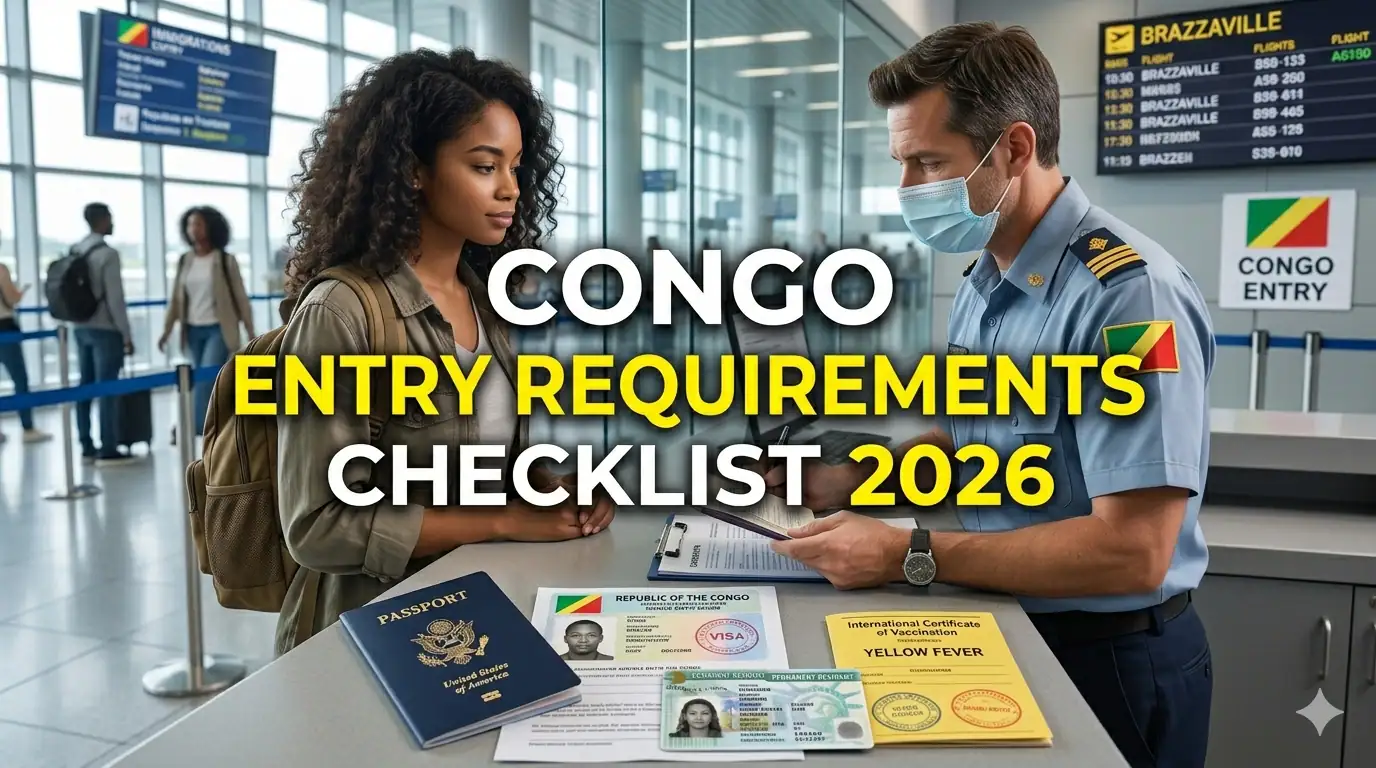
Understanding Republic of the Congo Entry Requirements for US Travelers
Traveling to the Republic of the Congo (Congo-Brazzaville) from the United States requires careful preparation and understanding of specific entry requirements that apply to US citizens, US residents, and Green Card holders. The Republic of the Congo, located in Central Africa with its capital in Brazzaville, maintains distinct immigration policies that differ from those of its neighbor, the Democratic Republic of the Congo (DRC), making it essential for travelers to verify they are preparing documentation for the correct country . For US residents planning visits to Congo for tourism, business, cultural exchange, or family visits, compliance with entry requirements including valid passports, appropriate visas, yellow fever vaccination certificates, and supporting documentation is mandatory for successful entry through ports like Maya-Maya International Airport in Brazzaville or Pointe-Noire Airport.
US citizens and permanent residents face specific requirements when entering the Republic of the Congo, with visa requirements varying based on citizenship rather than US residency status . While holding a US Green Card provides certain travel benefits, it does not exempt travelers from Republic of the Congo visa requirements if their country of citizenship requires visas. Understanding this distinction proves crucial for Green Card holders who may mistakenly assume their US permanent residency status grants visa-free access to the Republic of the Congo . This comprehensive checklist guides US residents and Green Card holders through all necessary documentation, application procedures, health requirements, and entry protocols to ensure smooth arrival and avoid complications at Congolese immigration checkpoints.
The entry process for the Republic of the Congo involves multiple steps beginning weeks or months before travel, including passport validity verification, visa application submission, yellow fever vaccination acquisition, and preparation of supporting documents like invitation letters, hotel reservations, and proof of sufficient funds . Travelers must also consider exit requirements, customs regulations, and potential health screenings upon arrival. For Bangladeshi nationals residing in the United States, additional considerations include maintaining valid US immigration status while abroad and ensuring re-entry documentation remains current . This guide provides detailed, actionable information to help US residents navigate the Republic of the Congo's entry requirements successfully in 2026.
Passport Requirements and Validity for Republic of the Congo Entry

Valid passport documentation represents the foundation of international travel to the Republic of the Congo, with specific requirements that all travelers must meet regardless of citizenship or residency status . US citizens must possess a passport valid for at least six months beyond their intended date of departure from the Republic of the Congo, though some sources indicate three months validity may suffice . This six-month validity rule serves as a buffer to prevent travelers from becoming stranded due to passport expiration during extended stays or unexpected delays, making it essential to verify passport expiration dates well before booking travel or submitting visa applications.
Passports must contain at least two to three blank visa pages for entry and exit stamps, with amendment pages at the back of US passports not counting toward this requirement . Travelers should request additional passport pages or passport renewal if their current document lacks sufficient blank pages, as airlines may deny boarding and Congolese immigration may refuse entry to travelers without adequate passport pages [[35]. The passport must be in good condition without significant damage, water damage, torn pages, or altered information, as damaged passports may be deemed invalid for international travel .
Passport Requirements for Green Card Holders
Green Card holders traveling to the Republic of the Congo must present the passport from their country of citizenship, not any US travel documents, as the primary identification document . The passport validity requirements apply equally to Green Card holders as to US citizens, with the six-month validity rule typically enforced at entry . Additionally, Green Card holders must carry their valid Permanent Resident Card (Form I-551) when traveling internationally, as this document proves their legal right to re-enter the United States after visiting the Republic of the Congo .
Green Card holders should verify that their Permanent Resident Card remains valid for the entire duration of international travel, as expired Green Cards may prevent re-entry to the United States even with valid passports and Congolese visas [[35]. If a Green Card expires while abroad, re-entry to the United States becomes complicated and may require obtaining a boarding foil or transportation letter from a US embassy or consulate, creating significant travel disruptions [[28]. Travelers with Green Cards expiring within six months of planned travel should renew their cards before departing the United States to avoid complications.
Special Passport Considerations
Travelers with dual citizenship must carefully consider which passport to use when entering and exiting the Republic of the Congo . US citizens who also hold citizenship in another country should enter and exit the Republic of the Congo using the same passport, and must enter and exit the United States using their US passport as required by US law . Using different passports for different countries can create confusion in immigration records and may result in questions about travel history or immigration status .
Children traveling to the Republic of the Congo require their own passports regardless of age, as US passports no longer allow children to be included on parent's passports [[35]. Both parents should provide consent for minor children's international travel, and carrying documentation proving parental relationship and consent may be requested by immigration authorities [[42]. In cases of single parent travel or travel with non-parent adults, notarized consent letters from absent parent(s) may be required to prevent child abduction concerns .
Visa Requirements and Application Process for US Residents

The Republic of the Congo requires visas for citizens of most countries including the United States, with visa requirements based on citizenship rather than country of residence . This means that US Green Card holders who are citizens of countries requiring Congo visas must obtain visas regardless of their US permanent residency status, while US citizens must also obtain visas before travel . The Republic of the Congo does not currently offer visa-free entry or visa-on-arrival for US passport holders, making advance visa procurement essential for all US residents planning travel to Congo .
Visa types for the Republic of the Congo include tourist visas for leisure travel and visiting friends or family, business visas for commercial activities and meetings, transit visas for travelers passing through Congo to other destinations, and work visas for employment purposes [[42]. Tourist visas typically allow stays of 30 to 90 days depending on the visa issued and may be single-entry or multiple-entry, while business visas may offer longer validity periods for travelers with ongoing commercial interests in Congo [[35]. Selecting the correct visa type based on travel purpose prevents immigration complications and potential denial of entry.
Visa Application Documentation Requirements
Applying for a Republic of the Congo visa requires assembling comprehensive documentation that demonstrates travel purpose, financial capability, and intent to depart after authorized stay [[28]. Required documents typically include a completed visa application form available from the Embassy of the Republic of the Congo or consular services, valid passport with at least six months validity and blank visa pages, passport-sized photographs meeting specific requirements (typically 2x2 inches with white background), proof of yellow fever vaccination through International Certificate of Vaccination, and round-trip flight itineraries showing entry and exit dates .
Additional supporting documents may include hotel reservations or invitation letters from hosts in the Republic of the Congo, proof of sufficient funds through bank statements or employer letters, travel insurance documentation though not always mandatory, and for business visas, letters from employers and inviting companies in Congo detailing the purpose and duration of business activities [[35]. Green Card holders should include copies of their Permanent Resident Cards to demonstrate legal US residence and intent to return, though this does not substitute for required visa documentation based on citizenship .
Visa Application Process and Processing Times
US residents can apply for Republic of the Congo visas through the Embassy of the Republic of the Congo in Washington DC, consular services, or authorized visa processing agencies that facilitate application submission [[42]. The application process typically involves completing forms accurately, gathering all required documentation, paying visa fees which vary by visa type and processing speed, and submitting applications by mail or in-person depending on the processing method chosen [[35]. Some travelers may qualify for expedited processing for additional fees, though standard processing typically takes 5 to 15 business days depending on embassy workload and application completeness .
Visa fees for the Republic of the Congo vary based on visa type, number of entries, and processing speed, with single-entry tourist visas typically costing between 100 to 200 USD and multiple-entry or business visas costing more [[45]. Payment methods may include money orders, cashier's checks, or credit cards depending on the submission method, and fees are generally non-refundable even if visas are denied [[35]. Travelers should budget for visa costs in addition to other travel expenses and apply early enough to receive visas before planned departure dates, avoiding last-minute applications that risk travel disruptions.
Visa Validity and Entry Conditions
Republic of the Congo visas specify validity periods during which travelers must enter the country, duration of authorized stay once entered, and number of permitted entries [[28]. A visa valid for 90 days with a 30-day duration of stay means travelers must enter Congo within 90 days of visa issuance and may remain for up to 30 days from the date of entry [[35]. Overstaying authorized periods results in fines, potential deportation, and difficulties obtaining future visas, making it essential to track entry dates and departure deadlines carefully .
Visas may be issued as single-entry, allowing one entry and exit, or multiple-entry, permitting multiple entries during the visa validity period [[45]. Travelers planning to visit neighboring countries and return to Congo during their trip should request multiple-entry visas to avoid being denied re-entry [[28]. Visa extensions may be possible through immigration authorities in Brazzaville for travelers needing to extend stays due to legitimate reasons, though extension approval is not guaranteed and should not be relied upon for travel planning .
Yellow Fever Vaccination and Health Documentation Requirements

Yellow fever vaccination represents a mandatory health requirement for all travelers entering the Republic of the Congo aged nine months and older, with strict enforcement at ports of entry including Maya-Maya International Airport . The Republic of the Congo lies within the yellow fever endemic zone in Central Africa, and the government requires proof of vaccination through an International Certificate of Vaccination or Prophylaxis (ICVP), commonly called the "yellow card," issued at least ten days before arrival to allow immunity development . Travelers unable to present valid yellow fever vaccination certificates risk denied entry, vaccination at the airport under potentially unsterile conditions, or quarantine measures.
The yellow fever vaccine provides lifelong immunity for most recipients according to International Health Regulations adopted in 2016, meaning travelers who received the vaccine years ago likely remain protected and possess valid certificates . However, the certificate must be the official ICVP form with proper stamps, signatures, and vaccine information including manufacturer and batch number [[45]. Travelers should verify their yellow fever certificates contain all required information and match their passport names exactly, as discrepancies can cause entry complications [[28].
Obtaining Yellow Fever Vaccination in the United States
US residents can obtain yellow fever vaccination at authorized travel clinics, international health centers, and some public health departments designated as yellow fever vaccination centers [[35]. The Centers for Disease Control and Prevention (CDC) maintains a searchable database of authorized yellow fever vaccination providers on their website, allowing travelers to locate convenient clinics [[28]). Vaccination appointments should be scheduled at least four to six weeks before travel to allow time for immunity development and certificate issuance, though the minimum requirement is ten days before entry .
The yellow fever vaccine costs typically range from 100 to 200 USD including administration fees and certificate issuance, with some travel insurance plans potentially covering vaccination costs [[35]. During vaccination visits, healthcare providers assess medical history to ensure vaccine safety, administer the vaccine via subcutaneous injection, complete the ICVP certificate with official stamps, and provide information about potential side effects [[28]. Common side effects include mild fever, headache, or muscle aches resolving within days, while serious reactions remain extremely rare [[12]).
Medical Exemptions and Waivers
Certain individuals may have medical contraindications to yellow fever vaccination including severe egg allergies, immunosuppression from disease or medications, thymus disorders, or age under six months [[35]. Travelers with legitimate medical contraindications should obtain medical waiver letters from physicians on official letterhead explaining the contraindication and stating the vaccine cannot be administered safely [[28]). However, medical waivers do not guarantee entry to the Republic of the Congo, as immigration authorities retain discretion to deny entry to unvaccinated travelers regardless of medical status [[45].
Travelers with medical waivers should carry additional documentation including physician letters, medical records supporting contraindications, and may need to demonstrate alternative protective measures like mosquito bite prevention [[12]. Some countries require travelers with waivers to obtain official exemption stamps from their embassies before travel [[28]. Given the uncertainty surrounding medical waiver acceptance, travelers with contraindications should consult the Embassy of the Republic of the Congo before travel to understand current policies and potential entry restrictions [[35].
Additional Health Documentation and Recommendations
While yellow fever vaccination remains the only mandatory health requirement for Republic of the Congo entry, additional health preparations protect travelers from other tropical diseases prevalent in Central Africa [[45]. Malaria prophylaxis though not required for entry is strongly recommended given year-round malaria transmission throughout Congo, with travelers advised to consult travel medicine specialists about appropriate antimalarial medications [[28]. Carrying proof of malaria prophylaxis prescription may demonstrate health preparedness to immigration officials though not formally required [[35].
Travel health insurance documentation though not mandatory for entry proves essential for accessing medical care in the Republic of the Congo, where healthcare facilities may be limited and medical evacuation expensive [[42]. Travelers should carry insurance cards, policy numbers, and emergency contact information with travel documents [[28]. COVID-19 vaccination or testing requirements may change based on current epidemiological conditions, so travelers should verify current COVID-19 entry requirements closer to departure dates through official government sources [[35].
Supporting Documentation and Proof of Travel Intent

Beyond passports, visas, and yellow fever certificates, Republic of the Congo immigration officials may request additional documentation demonstrating travel purpose, financial means, and intent to depart after authorized stays [[45]. While not always systematically requested, having these documents readily available prevents delays and demonstrates preparedness for legitimate travel [[28]. US residents should organize supporting documentation in easily accessible formats, keeping originals secure while carrying copies for presentation to immigration authorities.
Proof of onward or return travel typically includes round-trip flight itineraries showing entry to and exit from the Republic of the Congo within authorized visa periods [[35]. Immigration officials want assurance travelers will not overstay visas or attempt unauthorized residence, making confirmed return or onward tickets important evidence of travel intent [[42]. While some travelers purchase refundable tickets or hold reservations to satisfy entry requirements, presenting fraudulent or fake tickets risks denied entry and future travel bans, making legitimate travel arrangements essential [[28].
Accommodation Documentation and Invitation Letters
Proof of accommodation in the Republic of the Congo demonstrates travelers have arranged places to stay and may include hotel reservations, rental agreements, or invitation letters from hosts [[35]. Hotel reservations should cover the entire planned stay or at least the initial period of travel, with confirmation numbers and contact information visible [[28]. For travelers staying with friends, family, or business associates, invitation letters from hosts provide evidence of accommodation arrangements and local contacts.
Invitation letters for the Republic of the Congo should include host's full name, address, and contact information, traveler's name and passport details, purpose and duration of visit, relationship between host and traveler, and statement accepting responsibility for the traveler during their stay [[42]. For business visits, invitation letters from Congolese companies should be on company letterhead, detail business purposes, specify visit duration, and provide company registration information [[35]. Some visa applications require invitation letters to be notarized or legalized by Congolese authorities, so verifying specific requirements before travel prevents complications [[28].
Proof of Sufficient Financial Means
Immigration officials may request evidence that travelers possess adequate financial resources to support themselves during their stay in the Republic of the Congo without becoming public charges or seeking unauthorized employment [[45]. Proof of funds may include recent bank statements showing sufficient balances, credit cards with available credit, traveler's checks, or cash in acceptable currencies [[35]. While no specific minimum amount is universally enforced, travelers should demonstrate access to funds reasonably calculated to cover accommodation, meals, transportation, and activities for the planned duration [[28].
Bank statements should be recent (typically within 30 days of travel), show the account holder's name matching the traveler's passport, and display consistent balances suggesting legitimate funds rather than temporary deposits [[42]. For business travelers, employer letters stating the company will cover expenses or per diem allowances may supplement or substitute for personal financial documentation [[35]. Green Card holders should be prepared to show ties to the United States including employment, property, or family that demonstrate intent to return, reducing concerns about potential immigration violations [[28].
Travel Itinerary and Purpose Documentation
Detailed travel itineraries help immigration officials understand travel purposes and planned activities, particularly for visitors engaging in tourism, business, or family visits [[45]. Itineraries may include planned destinations within Congo, tour bookings, business meeting schedules, conference registrations, or family event invitations [[35]. While not always requested, organized itineraries demonstrate legitimate travel purposes and thorough preparation, potentially facilitating smoother immigration processing [[28].
For business travelers, documentation may include conference registrations, meeting schedules, business contracts, or correspondence with Congolese partners [[42]. Tourists might carry tour confirmations, safari bookings, or letters explaining tourism interests [[35]. Family visitors could bring wedding invitations, birth certificates of children being visited, or letters from family members [[28]. The key involves matching documentation to stated visa purposes, as discrepancies between visa type and actual activities may constitute visa violations [[45].
Entry Procedures and Immigration Processing at Congolese Ports of Entry

Understanding entry procedures at Republic of the Congo ports of entry helps travelers navigate immigration efficiently and reduces anxiety about the arrival process [[42]. Most US residents enter through Maya-Maya International Airport in Brazzaville or Pointe-Noire Airport, where immigration officials examine travel documents, verify visa validity, check yellow fever certificates, and may ask questions about travel purposes [[28]. The entry process typically involves queuing at immigration counters, presenting documents to officials, answering questions if asked, receiving entry stamps in passports, and proceeding to baggage claim and customs [[35].
Immigration officials have broad discretion to admit or deny travelers, and may ask questions about travel purpose, duration of stay, accommodation arrangements, financial means, and return plans [[45]. Travelers should answer questions honestly and confidently, presenting supporting documentation when requested [[28]. Language barriers may exist as French serves as the official language, though some immigration officials may speak English, particularly at major airports serving international travelers [[35]. Carrying translated copies of important documents or traveling with French-speaking companions can facilitate communication if needed [[42].
Entry Stamp Verification and Duration Tracking
Upon admission, immigration officials stamp passports with entry stamps showing date of entry and sometimes authorized duration of stay [[28]. Travelers should immediately verify that entry stamps are legible, contain correct dates, and match visa authorizations [[35]. Any errors should be corrected before leaving the immigration area, as correcting stamps after departure from the airport proves difficult or impossible [[42]. Travelers should note their entry dates and calculate authorized departure dates based on visa duration, setting reminders to avoid accidental overstays [[45].
Overstaying authorized periods in the Republic of the Congo results in fines calculated per day of overstay, potential detention, deportation at traveler's expense, and difficulties obtaining future visas [[28]. If circumstances require extending stays beyond authorized periods, travelers must apply for extensions through immigration authorities in Brazzaville before current authorizations expire [[35]. Extension approval is not guaranteed, and travelers should not assume extensions will be granted, making it essential to plan trips within authorized visa durations [[42].
Customs Declarations and Restricted Items
After clearing immigration, travelers proceed to customs where they may need to declare certain items including currency over specified thresholds, commercial goods, restricted items, or large quantities of alcohol and tobacco [[45]. The Republic of the Congo maintains customs regulations prohibiting or restricting items like narcotics, weapons, certain medications without prescriptions, protected wildlife products, and excessive currency [[28]. Travelers should familiarize themselves with customs regulations before packing to avoid confiscations or penalties [[35].
Currency declaration requirements typically mandate declaring cash or monetary instruments exceeding 10,000 USD or equivalent, though specific thresholds should be verified before travel [[42]. Failure to declare currency over thresholds may result in confiscation and legal consequences [[28]. Prescription medications should be carried in original containers with copies of prescriptions, and travelers should verify that medications legal in the United States are not controlled substances in the Republic of the Congo [[35].
Special Considerations for Green Card Holders and Dual Citizens

Green Card holders traveling to the Republic of the Congo face unique considerations beyond standard entry requirements, particularly regarding maintaining US permanent residency status while abroad [[28]. Extended absences from the United States exceeding 180 days may raise questions about abandonment of permanent residency upon re-entry, while absences over one year without re-entry permits may result in Green Card abandonment [[35]. Green Card holders planning extended stays in the Republic of the Congo should consult immigration attorneys about obtaining re-entry permits (Form I-131) before departure to protect residency status [[42].
Green Card holders must present both their national passports and valid Permanent Resident Cards when departing and re-entering the United States [[28]. Airlines verify Green Card validity before boarding passengers to the United States, and expired or abandoned Green Cards result in denied boarding [[35]. Green Card holders should verify their cards remain valid for the entire duration of international travel and initiate renewal processes well before expiration if needed [[42].
Dual Citizenship Documentation Strategies
Travelers holding dual citizenship including US citizenship must use their US passports to enter and exit the United States as required by US law [[45]. However, they may use their other citizenship's passport to enter the Republic of the Congo if that passport offers visa advantages like visa-free entry or easier visa procurement [[28]. The key involves consistency: entering and exiting the Republic of the Congo with the same passport, and entering and exiting the United States with the US passport [[35].
Dual citizens should carefully consider visa requirements for both passports when planning Republic of the Congo travel [[42]. If one passport requires visas while the other qualifies for visa-free entry or visa-on-arrival, using the more advantageous passport may simplify travel [[28]. However, travelers must still comply with Republic of the Congo requirements based on the passport presented, including yellow fever vaccination and other documentation [[35].
Re-entry to the United States After Congo Travel
Green Card holders must present valid Permanent Resident Cards for re-entry to the United States, with Customs and Border Protection officers potentially questioning travelers about extended absences or ties to the United States [[28]. Travelers should be prepared to demonstrate ongoing US residence through employment letters, property ownership, tax returns, family ties, or other evidence of intent to maintain permanent residency [[35]. Officers may also verify that travelers have not engaged in activities making them inadmissible, such as certain criminal convictions or immigration violations [[42].
US citizens face no re-entry restrictions regardless of trip duration, though they must present valid US passports [[45]. Citizens with passports expiring during international travel should renew before departure or contact the nearest US embassy or consulate for emergency passport services [[28]. Dual citizens should remember that the United States recognizes only US citizenship for US citizens, meaning consular protection from other countries of citizenship may not be available while in the United States [[35].
Conclusion: Comprehensive Preparation for Smooth Republic of the Congo Entry

Successfully entering the Republic of the Congo as a US resident or Green Card holder requires methodical preparation beginning weeks or months before travel, with attention to passport validity, visa procurement, yellow fever vaccination, and supporting documentation [[45]. By following this comprehensive checklist, travelers can avoid common pitfalls like passport expiration issues, visa application delays, missing yellow fever certificates, or inadequate proof of travel intent [[28]. The investment in thorough preparation pays dividends through smooth immigration processing, avoided travel disruptions, and peace of mind knowing all requirements are satisfied [[35].
US residents should remember that entry requirements may change, making it essential to verify current requirements through the Embassy of the Republic of the Congo or official government sources closer to travel dates [[42]. Building buffer time into travel plans allows for unexpected delays in visa processing, vaccination appointments, or document procurement [[28]. For Green Card holders, protecting US permanent residency status while enjoying international travel requires additional planning but remains entirely manageable with proper preparation [[35].
The Republic of the Congo offers rich cultural experiences, remarkable wildlife encounters, and warm hospitality to prepared travelers who respect entry requirements and local laws [[45]. By approaching travel preparation systematically, maintaining organized documentation, and verifying requirements through official channels, US residents and Green Card holders can focus on enjoying their Congolese adventures rather than worrying about immigration complications [[28]. Safe travels and wonderful experiences await in the heart of Central Africa.
0 Comments