.webp)
.webp)
Macadamia Agrotourism Moramanga: Madagascar's Eco-Tourism Pilot
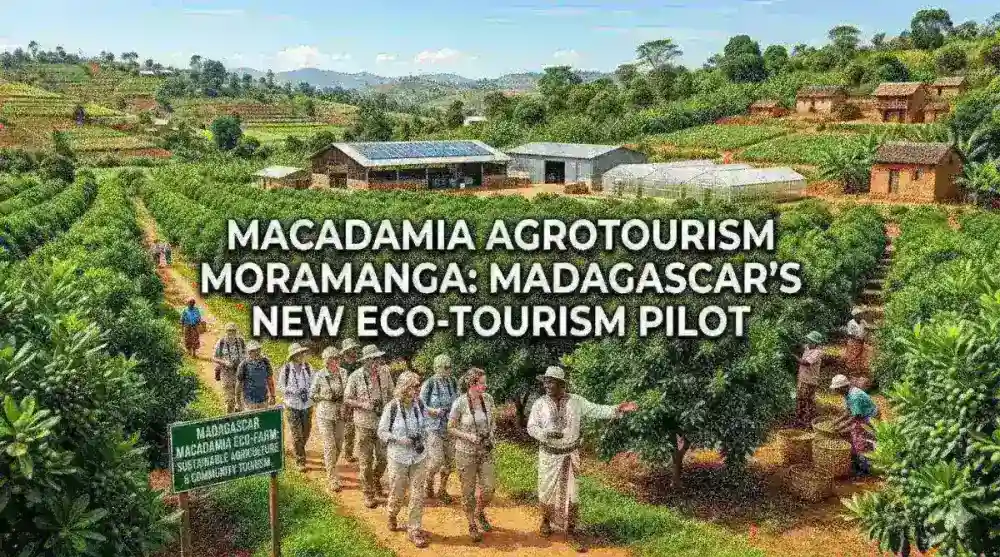
Introduction: A New Chapter in Madagascar's Tourism Evolution
Madagascar is pioneering an innovative approach to sustainable tourism with the launch of its groundbreaking Macadamia Agrotourism project in Moramanga, a pilot initiative that promises to transform how visitors experience the Great Island's agricultural heritage while creating new economic opportunities for local communities. This ambitious project, officially launched in late 2025 through a strategic partnership between Madagascar's Ministry of Tourism and Crafts and South Korea's Jeju Boromwat company, represents more than just a new tourist attraction—it's a model for how agriculture, conservation, and tourism can work together to create sustainable development.
Located in the Alaotra-Mangoro region, Moramanga is emerging as an unexpected frontier for eco-tourism innovation. The city, situated approximately 110 kilometers east of Antananarivo, is home to the MAMAC (Madagascar Macadamia) Farm, which is being transformed into an immersive agrotourism destination where visitors can discover the complete journey of macadamia cultivation—from tree to table—while experiencing authentic Malagasy culture and contributing to local economic development.
This comprehensive guide explores Madagascar's newest eco-tourism pilot, examining the partnership that made it possible, the visitor experiences being developed, the broader context of Madagascar's tourism strategy, and what this innovative project means for the future of sustainable travel in Africa's island nation. As Madagascar works toward its ambitious goal of welcoming 1 million visitors by 2028, the Moramanga Macadamia Agrotourism project offers a compelling glimpse into the future of responsible, community-centered tourism.
The Partnership: South Korea Meets Madagascar

The Macadamia Agrotourism project in Moramanga emerged from a significant international partnership that brings together Malagasy agricultural expertise with South Korean tourism innovation. In late November 2025, Madagascar's Ministry of Tourism and Crafts, represented by Minister Lily Rafaralahy, signed a Memorandum of Understanding (MOU) with Jeju Boromwat, a South Korean company led by President and CEO Mr. LEE Jong-In, at the Boromwat Farm in Moramanga .
This collaboration builds upon an existing relationship between Madagascar and Good People International, a South Korean community development organization that has been working in Madagascar since 2010 . The partnership leverages Jeju Boromwat's remarkable success in agritourism—their farm on Jeju Island in South Korea attracts approximately 400,000 visitors annually, demonstrating the immense potential of agricultural tourism when done right .
Strategic Objectives of the Partnership
The cooperation agreement pursues multiple interconnected goals that extend far beyond simply opening a farm to tourists:
Enhanced International Visibility: The partnership aims to strengthen Madagascar's visibility among the 400,000 annual visitors to the Boromwat Farm in Jeju Island, effectively using the South Korean location as a showcase for Malagasy tourism and products . A dedicated space will be established at the Jeju facility to present Madagascar's tourist sites and emblematic products including vanilla, cocoa, and various artisanal crafts .
Knowledge Transfer: The partnership facilitates the exchange of expertise between South Korea and Madagascar. During his visit, CEO Lee Jong-In shared the models and strategies that enabled Jeju Island's remarkable tourism development, including a conference held on December 2, 2025, at Madagascar's Ministry of Tourism that generated significant interest among ministry staff .
Market Access: The agreement includes plans to open a Madagascar tourism promotion office in South Korea, strategically positioned to increase the island nation's visibility in the Asian market and attract more Korean visitors to Madagascar .
Beyond Macadamia: Comprehensive Product Promotion
While macadamia agrotourism serves as the pilot project, the partnership encompasses a broader vision for promoting Madagascar's agricultural wealth. The agreement includes "the development of programs to promote Malagasy cocoa, coffee and craft products, with an emphasis on local processing and moving up the value chain, for their integration into high value-added tourism offerings," according to the ministry's statement .
This holistic approach recognizes that Madagascar's agricultural sector offers numerous opportunities for agrotourism development, from the world-renowned vanilla production in the northeast to coffee cultivation in the highlands, each offering unique visitor experiences while supporting local communities and adding value to raw products.
Moramanga: An Emerging Tourism Destination

Moramanga's selection as the site for Madagascar's pioneering macadamia agrotourism project is strategic, reflecting both the region's agricultural potential and its position within Madagascar's evolving tourism landscape.
Geographic and Economic Context
Located in the Alaotra-Mangoro region, Moramanga is a city of approximately 57,000 people situated along the critical transportation corridor linking Antananarivo to Madagascar's eastern coast . The city serves as an important commercial and agricultural hub, with the surrounding district known for diverse agricultural production including the macadamia nuts that form the foundation of this agrotourism initiative.
The region's location makes it accessible to both domestic and international tourists, positioned along routes that connect the capital to natural attractions while offering a distinct experience from Madagascar's more traditional wildlife-focused tourism destinations.
Agricultural Heritage
Moramanga's agricultural landscape provides an ideal setting for agrotourism development. The area's climate and soil conditions support macadamia cultivation, part of Madagascar's growing position in the global macadamia market. By transforming working farms into tourist destinations, the project creates new revenue streams for agricultural producers while educating visitors about sustainable farming practices and the value chain of one of Madagascar's emerging export crops.
The MAMAC Macadamia Farm: Visitor Experience

At the heart of the Moramanga agrotourism pilot lies the MAMAC (Madagascar Macadamia) Farm, which is being developed into an immersive educational and cultural destination that showcases the complete macadamia production process while providing authentic experiences that connect visitors to Malagasy agriculture and culture.
Immersive Agricultural Tourism
The partnership is developing "an immersive tourism offering allowing visitors to discover macadamia cultivation and processing" at the MAMAC Macadamia Farm in Moramanga . This experiential approach goes beyond simple farm tours, creating opportunities for visitors to engage deeply with the agricultural process and understand the skill, labor, and innovation involved in macadamia production.
Visitors will be able to explore the cultivation and transformation of macadamia through guided experiences that demonstrate the journey from tree to finished product . These tours are designed to educate visitors about sustainable agricultural practices, the economic importance of macadamia cultivation for local communities, and the nutritional and culinary value of this premium nut.
International Best Practices
The Moramanga project draws inspiration from successful macadamia agritourism operations around the world. The ministry notes that "internationally, several countries have already adopted this model of tourism enhancement around macadamia, including Bundaberg in Australia, Hawaii, South Africa, and Kenya, where farms welcome the public for guided tours, 'tasting experiences,' and even culinary workshops featuring macadamia-based products and chocolates" .
By studying these international examples, the Moramanga project can adapt proven concepts to Madagascar's unique cultural and environmental context, creating experiences that meet international standards while celebrating Malagasy identity and agricultural traditions.
Expected Visitor Experiences
While the full range of offerings is still being developed, the Moramanga Macadamia Farm is likely to feature:
Educational Farm Tours: Guided walks through macadamia orchards where visitors learn about tree cultivation, sustainable farming practices, pest management, and harvesting techniques. These tours provide insight into the agricultural science and traditional knowledge that underpin successful macadamia production.
Processing Demonstrations: Live demonstrations showing how macadamia nuts are harvested, dried, cracked, sorted, and prepared for market. Visitors gain appreciation for the labor-intensive process that transforms raw nuts into the premium product found in international markets.
Tasting Experiences: Opportunities to sample macadamia nuts in various forms—from raw and roasted to incorporated into chocolates, cookies, and other value-added products. These tastings help visitors understand the versatility and culinary appeal of macadamia.
Culinary Workshops: Hands-on cooking classes where visitors learn to prepare dishes featuring macadamia, potentially including both traditional Malagasy recipes and international cuisine that showcases the nut's versatility.
Cultural Integration: Experiences that connect macadamia agriculture to broader Malagasy culture, potentially including traditional music, crafts, and storytelling that provide context for the agricultural practices being demonstrated.
Retail Opportunities: Farm shops where visitors can purchase fresh macadamia nuts, value-added products, and artisanal crafts, providing direct economic benefits to the farming operation and local artisans.
Agrotourism and Ecotourism: A Sustainable Model

The Moramanga Macadamia Farm project represents a sophisticated approach to tourism development that integrates agricultural production, environmental conservation, and community development into a cohesive model for sustainable tourism.
Defining Agrotourism
Agrotourism, also known as agritourism, merges agriculture and tourism, creating opportunities for people to experience the charm of rural life, interact with nature, and engage in authentic agricultural activities . This form of tourism provides multiple benefits:
- Economic Diversification: Farmers gain additional income streams beyond crop sales, improving financial resilience and rural livelihoods
- Education: Visitors learn about food production, sustainable agriculture, and the challenges facing modern farmers
- Cultural Preservation: Traditional farming practices and rural ways of life are maintained and celebrated
- Community Development: Tourism revenue supports local infrastructure, services, and employment
- 👉 KOREK! Super App Guide 2026: Tourist Digital Services Mauritius
- 👉 Agro-Ecology Tourism Nkhata Bay 2026: Learning Farms Guide
- 👉 Benin eVisa 2026: Complete Digital Application & 3-Day Approval Guide
Ecotourism Principles
The project also embodies core ecotourism principles that have become central to Madagascar's tourism strategy. Madagascar's approach to ecotourism is rooted in the conservation of its unique biodiversity and the promotion of sustainable livelihoods for its people . Key ecotourism principles include:
- Environmental Conservation: Tourism activities support rather than degrade natural resources
- Community Benefit: Local populations receive meaningful economic and social benefits from tourism
- Education and Awareness: Visitors gain understanding of environmental and cultural issues
- Sustainable Practices: Operations minimize environmental impact and maximize long-term viability
- 👉 KOREK! Super App Guide 2026: Tourist Digital Services Mauritius
- 👉 Agro-Ecology Tourism Nkhata Bay 2026: Learning Farms Guide
- 👉 Benin eVisa 2026: Complete Digital Application & 3-Day Approval Guide
The Macadamia Advantage
Macadamia cultivation offers particular advantages for sustainable agrotourism:
Environmental Benefits: Macadamia trees are perennial crops that provide year-round canopy cover, helping prevent soil erosion, sequester carbon, and support biodiversity. Unlike annual crops that require frequent soil disturbance, macadamia orchards can maintain healthy ecosystems while producing valuable harvests.
Economic Value: Macadamia nuts command premium prices in international markets, making them an economically viable crop for smallholder farmers. Agrotourism adds another revenue layer, allowing farmers to capture more value from their operations.
Educational Appeal: The macadamia production process—from flowering to harvest to processing—offers fascinating insights for visitors interested in agriculture, food systems, and sustainable production.
Strategic Context: Madagascar's Tourism Ambitions

The Moramanga Macadamia Agrotourism project doesn't exist in isolation—it's a key component of Madagascar's broader strategy to transform its tourism sector and achieve ambitious growth targets.
The 1 Million Visitors Goal
Madagascar has set an ambitious target of welcoming 1 million international visitors by 2028 . This goal represents significant growth from current levels and requires diversification of tourism offerings beyond traditional wildlife and beach tourism. Agrotourism initiatives like the Moramanga project contribute to this strategy by:
- Extending Tourist Stays: Diverse attractions encourage visitors to spend more time in Madagascar, exploring different regions and experiences
- Geographic Dispersion: Agrotourism sites outside traditional tourist circuits help distribute tourism benefits more widely across the country
- Year-Round Appeal: Agricultural experiences can be offered throughout the year, helping address seasonality challenges
- Market Differentiation: Unique agrotourism offerings distinguish Madagascar from competing destinations
- 👉 KOREK! Super App Guide 2026: Tourist Digital Services Mauritius
- 👉 Agro-Ecology Tourism Nkhata Bay 2026: Learning Farms Guide
- 👉 Benin eVisa 2026: Complete Digital Application & 3-Day Approval Guide
Priority Development Areas
The Ministry of Tourism and Crafts has identified several priority areas for tourism development that align with the Moramanga project :
Skills Development: Upgrading artisans' skills and building capacity in tourism services ensures high-quality visitor experiences while creating employment opportunities for Malagasy people.
Value Chain Modernization: Modernizing production chains for agricultural products like macadamia, cocoa, and coffee enhances quality, increases value capture, and creates more sophisticated tourism offerings.
Site Enhancement: Improving natural and cultural sites with high tourism potential makes them more accessible and attractive to visitors while maintaining sustainability.
Community-Based Circuits: Developing community-managed tourism circuits ensures that local populations receive sustainable income from tourism while maintaining control over their cultural and natural resources.
International Cooperation Strategy
Madagascar is actively strengthening international collaborations to increase tourism competitiveness . The partnership with Jeju Boromwat exemplifies this approach, bringing international expertise and market access to Madagascar's tourism development. Other international partnerships and promotional efforts include participation in major tourism fairs like ITB Berlin and engagement with tourism markets in Europe, Asia, and beyond.
Community Impact and Local Development

The Moramanga Macadamia Agrotourism project is designed to generate meaningful benefits for local communities, aligning with Madagascar's commitment to community-centered tourism development.
Employment Opportunities
Agrotourism operations create diverse employment opportunities for local residents:
- Direct Employment: Farm tours, visitor centers, restaurants, and retail operations require guides, hospitality staff, cooks, and customer service personnel
- Agricultural Jobs: Expanding macadamia cultivation and processing to meet tourism demand creates additional farming and processing employment
- Artisan Opportunities: Craft producers can sell products to visitors, creating markets for traditional skills and cultural expressions
- Support Services: Transportation, maintenance, security, and administrative roles support overall operations
- 👉 KOREK! Super App Guide 2026: Tourist Digital Services Mauritius
- 👉 Agro-Ecology Tourism Nkhata Bay 2026: Learning Farms Guide
- 👉 Benin eVisa 2026: Complete Digital Application & 3-Day Approval Guide
Skills Development
The partnership with Good People International emphasizes local training and community support . Skills development initiatives likely include:
- Tourism hospitality training
- Language skills (particularly English and potentially Korean)
- Guide certification and interpretation skills
- Food service and culinary training
- Craft production and quality improvement
- Business management and entrepreneurship
- 👉 KOREK! Super App Guide 2026: Tourist Digital Services Mauritius
- 👉 Agro-Ecology Tourism Nkhata Bay 2026: Learning Farms Guide
- 👉 Benin eVisa 2026: Complete Digital Application & 3-Day Approval Guide
Infrastructure Development
Tourism development often catalyzes broader infrastructure improvements that benefit entire communities:
- Road improvements for tourist access also serve local residents
- Enhanced water and sanitation systems
- Telecommunications infrastructure
- Electricity grid improvements
- Public space enhancement
- 👉 KOREK! Super App Guide 2026: Tourist Digital Services Mauritius
- 👉 Agro-Ecology Tourism Nkhata Bay 2026: Learning Farms Guide
- 👉 Benin eVisa 2026: Complete Digital Application & 3-Day Approval Guide
Cultural Pride and Preservation
Agrotourism provides platforms for celebrating and preserving Malagasy cultural heritage. By sharing agricultural traditions, culinary practices, and cultural knowledge with visitors, communities reinforce pride in their heritage while creating economic value from cultural assets.
Visitor Information and Practical Details

For travelers interested in experiencing the Moramanga Macadamia Agrotourism project, here's essential information to help plan your visit.
Location and Access
Getting There: Moramanga is located approximately 110 kilometers east of Antananarivo along Route Nationale 2 (RN2), the main highway connecting the capital to the eastern port city of Toamasina (Tamatave). The journey typically takes 2-3 hours by car, depending on road conditions and traffic.
Transportation Options:
- Private Vehicle: Renting a car with driver offers flexibility and comfort for the journey
- Taxi-Brousse: Local bush taxis provide budget transportation but with less comfort and flexibility
- Tour Packages: Some tour operators may include Moramanga in broader itineraries
- 👉 KOREK! Super App Guide 2026: Tourist Digital Services Mauritius
- 👉 Agro-Ecology Tourism Nkhata Bay 2026: Learning Farms Guide
- 👉 Benin eVisa 2026: Complete Digital Application & 3-Day Approval Guide
Best Time to Visit
Madagascar's climate varies by region, but generally:
- Dry Season (April-November): Ideal for travel with pleasant weather and accessible roads
- Harvest Season: Macadamia harvesting typically occurs during specific months—check with the farm for optimal timing to see harvesting and processing activities
- Weekdays: Visiting on weekdays may offer more personalized experiences and fewer crowds
- 👉 KOREK! Super App Guide 2026: Tourist Digital Services Mauritius
- 👉 Agro-Ecology Tourism Nkhata Bay 2026: Learning Farms Guide
- 👉 Benin eVisa 2026: Complete Digital Application & 3-Day Approval Guide
What to Expect
Tour Duration: Plan for at least half a day to fully experience the farm, though full-day visits may be possible as the facility develops.
Activities: Expect guided farm tours, processing demonstrations, tasting sessions, and opportunities to purchase products. As the project develops, additional activities like culinary workshops may become available.
Language: Guides likely speak Malagasy and French; English language services may be available but confirm in advance.
Facilities: As a developing agrotourism site, facilities may be basic initially. Bring water, sun protection, and comfortable walking shoes.
Booking and Information
As the project is in its pilot phase, advance booking and confirmation are recommended. Contact information:
- Ministry of Tourism and Crafts: The ministry can provide current information about the project and visiting arrangements
- Local Tour Operators: Madagascar tour operators may offer visits as part of broader itineraries
- Direct Contact: As the facility develops, direct booking channels will likely be established
- 👉 KOREK! Super App Guide 2026: Tourist Digital Services Mauritius
- 👉 Agro-Ecology Tourism Nkhata Bay 2026: Learning Farms Guide
- 👉 Benin eVisa 2026: Complete Digital Application & 3-Day Approval Guide
Combining with Other Destinations
Moramanga's location makes it suitable for combination with other attractions:
- Périnet/Andasibe: Famous for indri lemur viewing, located further east
- Antananarivo: The capital's cultural and historical sites
- Eastern Beaches: Continue to Toamasina and coastal destinations
- 👉 KOREK! Super App Guide 2026: Tourist Digital Services Mauritius
- 👉 Agro-Ecology Tourism Nkhata Bay 2026: Learning Farms Guide
- 👉 Benin eVisa 2026: Complete Digital Application & 3-Day Approval Guide
Challenges and Opportunities

Like any innovative tourism development, the Moramanga Macadamia Agrotourism project faces both challenges and opportunities as it moves from concept to operation.
Key Challenges
Infrastructure Development: Creating visitor facilities that meet international standards while maintaining authenticity and sustainability requires significant investment and careful planning.
Skills and Capacity: Developing local capacity in tourism hospitality, interpretation, and visitor management takes time and sustained training efforts.
Market Development: Building awareness and demand for agrotourism experiences requires marketing investment and relationship-building with tour operators and travel platforms.
Quality Consistency: Maintaining consistent quality in visitor experiences, products, and services is essential for building reputation and repeat visitation.
Balancing Agriculture and Tourism: Ensuring that tourism activities support rather than disrupt agricultural operations requires careful management and clear boundaries.
Significant Opportunities
First-Mover Advantage: As Madagascar's pioneering macadamia agrotourism project, Moramanga has the opportunity to establish best practices and build strong brand recognition.
Replication Potential: Success in Moramanga could inspire similar projects throughout Madagascar, creating a network of agrotourism destinations featuring different crops and regions.
International Partnerships: The South Korean partnership provides access to expertise, markets, and potential visitors that can accelerate development.
Diversification: Agrotourism diversifies Madagascar's tourism offerings beyond wildlife and beaches, attracting different market segments and extending visitor stays.
Value Addition: By connecting visitors directly to production, the project helps capture more value from macadamia cultivation, benefiting farmers and local communities.
The Future of Agrotourism in Madagascar

The Moramanga Macadamia Agrotourism project represents just the beginning of what could be a transformative movement in Madagascar's tourism sector.
Scaling the Model
If successful, the Moramanga pilot could be replicated and adapted across Madagascar:
- Other Crops: Vanilla, cocoa, coffee, cloves, and other Malagasy agricultural products offer similar agrotourism potential
- Geographic Expansion: Different regions could develop agrotourism based on their distinctive agricultural products and cultural heritage
- Community Ownership: The model could be adapted for community-based management, ensuring broad local participation and benefit
- 👉 KOREK! Super App Guide 2026: Tourist Digital Services Mauritius
- 👉 Agro-Ecology Tourism Nkhata Bay 2026: Learning Farms Guide
- 👉 Benin eVisa 2026: Complete Digital Application & 3-Day Approval Guide
Integration with Broader Tourism Strategy
Agrotourism can complement Madagascar's existing tourism strengths:
- Circuit Development: Agrotourism sites can be integrated into broader tourism circuits that include national parks, cultural sites, and coastal destinations
- Extended Stays: Agricultural experiences encourage visitors to spend more time in rural areas, distributing tourism benefits more widely
- Year-Round Tourism: Agricultural activities and processing can attract visitors throughout the year, helping address seasonality
- 👉 KOREK! Super App Guide 2026: Tourist Digital Services Mauritius
- 👉 Agro-Ecology Tourism Nkhata Bay 2026: Learning Farms Guide
- 👉 Benin eVisa 2026: Complete Digital Application & 3-Day Approval Guide
Contribution to Sustainable Development Goals
Agrotourism aligns with multiple sustainable development objectives:
- Poverty Reduction: Creating income opportunities for rural populations
- Food Security: Supporting agricultural production and value addition
- Gender Equality: Providing employment and entrepreneurship opportunities for women
- Environmental Sustainability: Promoting sustainable agricultural practices and conservation
- Cultural Preservation: Maintaining traditional knowledge and practices
- 👉 KOREK! Super App Guide 2026: Tourist Digital Services Mauritius
- 👉 Agro-Ecology Tourism Nkhata Bay 2026: Learning Farms Guide
- 👉 Benin eVisa 2026: Complete Digital Application & 3-Day Approval Guide
Conclusion: A Seed Planted for Sustainable Tourism
The Macadamia Agrotourism project in Moramanga represents far more than a new tourist attraction—it's a bold experiment in sustainable development that could reshape Madagascar's tourism landscape while creating meaningful economic opportunities for rural communities. By bringing together South Korean tourism expertise, Malagasy agricultural heritage, and international best practices, this pilot project demonstrates Madagascar's commitment to innovative, community-centered tourism development.
As Madagascar works toward its ambitious goal of welcoming 1 million visitors by 2028, initiatives like the Moramanga Macadamia Farm prove that the country is thinking creatively about how to achieve sustainable growth. Rather than simply building more hotels or marketing traditional attractions, Madagascar is developing unique experiences that showcase the island's agricultural wealth, cultural richness, and commitment to sustainability.
For visitors, the Moramanga project offers a glimpse into a different side of Madagascar—one where agriculture and tourism intersect to create authentic, educational, and enjoyable experiences. For local communities, it represents new opportunities for employment, skills development, and economic diversification. For Madagascar as a whole, it's a demonstration of how tourism can be a force for rural development, environmental conservation, and cultural preservation.
As the project develops throughout 2026 and beyond, it will serve as a test case for agrotourism's potential in Madagascar. Success in Moramanga could inspire similar initiatives across the island, creating a network of agricultural tourism destinations that showcase Madagascar's diverse crops, landscapes, and cultures while generating sustainable income for rural communities.
The macadamia trees of Moramanga are more than just a crop—they're a symbol of Madagascar's vision for a tourism future that honors agricultural heritage, empowers local communities, and offers visitors meaningful connections to the land and its people. As this pioneering project takes root, it plants seeds for a more diverse, sustainable, and inclusive tourism sector that can benefit Madagascar for generations to come.
For travelers seeking authentic experiences that go beyond conventional tourism, for communities looking for sustainable economic opportunities, and for a nation working to balance development with conservation, the Moramanga Macadamia Agrotourism project offers hope, innovation, and a model for what responsible tourism can achieve.
0 Comments