.webp)
.webp)
Mauritania Iron Ore Train: Ultimate 10-Day Desert to Coast Itinerary
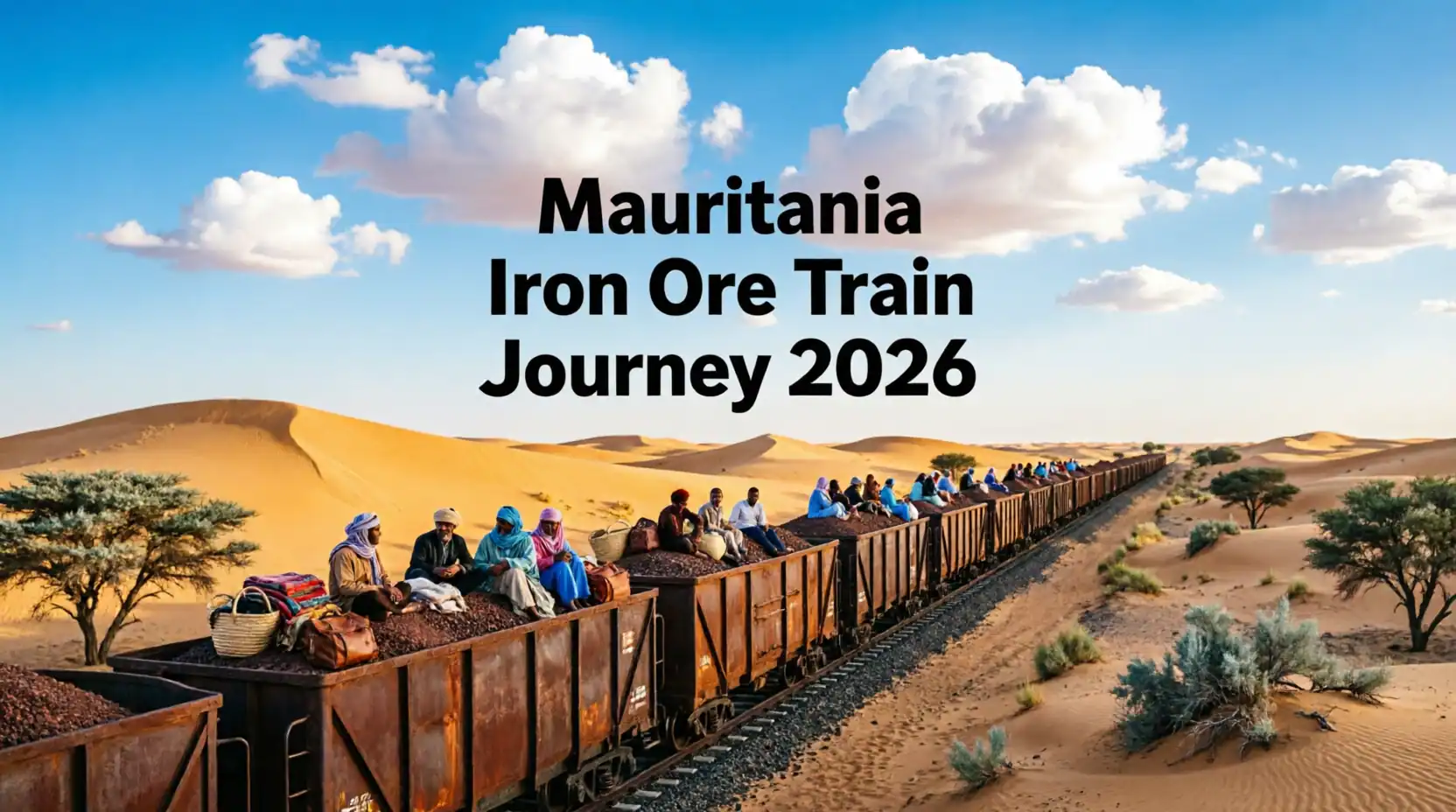
The Ultimate 10-Day Mauritania Iron Ore Train Itinerary: Desert to Coast
Embarking on the legendary iron ore train journey through Mauritania represents one of the world's last great rail adventures—a raw, authentic experience that takes you from the remote desert mining town of Zouérat across 700 kilometers of Sahara to the Atlantic coast at Nouadhibou. This isn't a tourist train with comfortable seats and dining cars; it's a working freight train carrying millions of tons of iron ore, with passengers riding in modified ore cars or on top of the ore itself, exposed to the elements and the vast, unforgiving beauty of the Sahara Desert.
For adventurous travelers seeking experiences far off the beaten path, this journey offers unparalleled access to one of Earth's most remote and dramatic landscapes. Combined with visits to ancient Saharan towns, desert oases, and coastal cities, a 10-day Mauritania itinerary centered around the iron ore train creates an unforgettable expedition through time and terrain.
This comprehensive guide provides everything you need to know: detailed day-by-day itinerary, practical preparation tips, safety considerations, what to pack, booking procedures, costs, and realistic expectations for one of the world's most challenging and rewarding train journeys. Whether you're a seasoned overlander or a first-time visitor to West Africa, this guide prepares you for an adventure that will test your limits while rewarding you with experiences few travelers ever encounter.
What is the Mauritania iron ore train?
The Mauritania iron ore train is one of the world's longest and heaviest trains, running 700 kilometers from Zouérat mining town to Nouadhibou port on the Atlantic coast. Operating since 1963, it transports iron ore from inland mines to the coast for export. The train also carries passengers in modified ore cars or on top of the ore itself. The journey takes 12-16 hours through the Sahara Desert, offering a raw, authentic travel experience. It's not a tourist service but a working freight train that happens to carry passengers.
Day 1: Arrival in Nouakchott – Capital Introduction

Morning: Arrival and Acclimatization
• Arrive at Nouakchott-Oumtounsy International Airport (NKC)
• Complete immigration and customs procedures
• Arrange airport transfer to accommodation (pre-book recommended)
• Check into hotel and freshen up
• Accommodation Options:
- Budget: Hotel El-Mourabitoune, Hotel Al-Baraka ($30-50/night)
- Mid-range: Hotel Azawad, Hotel Paris-Nouakchott ($60-100/night)
- Higher-end: Hotel Sabia, Caisse Nationale de Sécurité Sociale ($100-150/night)
• Note: Nouakchott has limited luxury options; manage expectations accordingly
Afternoon: Capital Orientation
• Visit Nouakchott Fish Market (one of West Africa's largest)
- Witness traditional fishing culture
- Observe fish auction and processing
- Photography opportunities (ask permission)
• Explore Nouakchott Grand Market (Marché Capitale)
- Local crafts, textiles, and goods
- Practice bargaining skills
- Purchase supplies for train journey
• Walk along the Atlantic coast
- See fishing boats and coastal life
- Sunset views over the ocean
- Relax after travel day
Evening: Cultural Introduction
• Dinner at local restaurant
- Recommendations: Restaurant du Port, Le Walo, Chez N'Deye
- Try traditional Mauritanian dishes: thieboudienne (fish and rice), camel meat
• Evening walk in safer neighborhoods (Tevragh-Zeina district)
• Early rest to prepare for next day's travel
• Preparation: Confirm train schedule and arrangements for Day 3
Day 1 Practical Tips:
• Currency: Exchange money at airport or banks (Mauritanian Ouguiya - MRU)
• Connectivity: Purchase local SIM card (Mauritel or Mattel) for emergency communication
• Water: Drink only bottled water; avoid tap water
• Safety: Nouakchott generally safe but exercise normal precautions
• Language: Arabic and French widely spoken; English limited
What should I pack for the iron ore train journey?
Essential items: dust mask or scarf (train is extremely dusty), sleeping bag or thick blanket (nights are cold), warm layers (desert temperature swings), headlamp or flashlight, water (minimum 3 liters per person), non-perishable food/snacks, sunscreen and sunglasses, camera with dust protection, toilet paper and hand sanitizer, basic first aid kit, cash (no ATMs on route), portable phone charger, and sturdy luggage that can handle rough conditions. Pack light but prepare for extreme conditions.
Day 2: Nouakchott to Atar – Gateway to the Desert

Morning: Departure to Atar
• Early breakfast at hotel
• Arrange transport to Atar (4-5 hour drive, 250 km)
- Options:
- Private taxi: $150-250 USD (can share with other travelers)
- Bus: $20-30 USD (less comfortable, longer)
- Organized tour transfer: $100-150 USD
- Departure: Leave by 7-8 AM to arrive afternoon
• Scenic drive through desert landscape
- Stop at Akjoujt (midway point) for refreshments
- Observe changing desert scenery
- Photography opportunities
Afternoon: Arrival in Atar
• Check into accommodation in Atar
- Options: Hotel Atlas, Hotel Al-Waha, local guesthouses
- Budget: $20-40/night; Mid-range: $40-80/night
• Rest and acclimatize to desert environment
• Visit Atar town center
- Small but charming desert town
- Local market and shops
- Stock up on supplies for train journey
Late Afternoon: Chinguetti Day Trip (Optional)
• If time permits, visit nearby Chinguetti (150 km round trip)
- Ancient library town and UNESCO World Heritage Site
- Visit historic libraries with ancient manuscripts
- Explore old quarter and Friday Mosque
- Return to Atar for evening
• Alternative: Rest in Atar and prepare for train journey
Evening: Final Train Preparation
• Confirm train schedule with local contacts
- Train doesn't run daily; verify departure day
- Typical departure: Late evening or early morning
- Journey time: 12-16 hours
• Purchase final supplies:
- Extra water (critical)
- Food (sandwiches, fruit, nuts, canned goods)
- Dust protection (scarves, masks)
- Warm clothing for night
• Early dinner and rest
• Prepare backpack for train journey
Day 2 Practical Tips:
• Road conditions: Paved highway to Akjoujt, then rougher desert road
• Heat: Can be extreme; travel early morning when possible
• Communication: Limited cell coverage outside Atar
• Flexibility: Train schedules unreliable; build buffer days
• Cash: Bring sufficient cash; no ATMs in Atar
How do I get from Nouakchott to the iron ore train?
Travel from Nouakchott to Atar (250 km, 4-5 hours by road) via private taxi ($150-250), bus ($20-30), or organized tour. From Atar, arrange transport to Choum (70 km) where you board the iron ore train. The train runs from Zouérat to Nouadhibou, stopping at Choum. You can also travel directly to Zouérat to start the full journey, but Choum is the most common boarding point for travelers. Confirm train schedule in advance as it doesn't run daily.
Day 3: The Legendary Iron Ore Train Journey

Morning/Afternoon: Boarding at Choum
• Travel from Atar to Choum (70 km, 1-2 hours)
- Arrange taxi or shared transport
- Cost: $30-50 USD
- Depart early to ensure arrival before train
• Arrive at Choum station/village
- Small desert settlement
- Basic facilities only
- Wait for train arrival (schedule variable)
• Locate the train and choose your spot:
- Option 1: Passenger car (if available)
- Modified ore car with basic seating
- More comfortable but still very basic
- Limited availability
- Option 2: Top of ore cars
- Most common choice for travelers
- Sit on top of iron ore
- Exposed to elements
- Bring thick blanket or mat
- Option 3: Empty ore car
- Lie in empty car
- Protected from wind but very dusty
- Can be colder at night
The Journey: Choum to Nouadhibou
• Departure: Typically late afternoon or evening
- Train may be delayed; be patient
- Journey time: 12-16 hours
- Distance: Approximately 700 km
• What to Expect:
- Speed: Very slow (20-40 km/h average)
- Comfort: Minimal; this is not a tourist train
- Dust: Extremely dusty; iron ore dust everywhere
- Noise: Very loud; train is massive and noisy
- Temperature: Hot during day, cold at night
- Facilities: None; no toilets, no food service
- Stops: Occasional brief stops
• During the Journey:
- Watch spectacular desert sunset
- Stargazing at night (if clear)
- Meet other travelers and locals
- Experience raw, authentic Saharan travel
- Endure discomfort as part of the adventure
• Safety Considerations:
- Hold on tightly during movement
- Don't fall asleep near edges
- Keep belongings secure
- Stay hydrated
- Protect eyes and lungs from dust
- Be careful when train starts/stops suddenly
Night on the Train
• Temperatures drop significantly after sunset
• Use sleeping bag and warm layers
• Find stable position to rest
• Keep valuables secure and close
• Expect little sleep; journey is uncomfortable
• Train continues through the night
Day 3 Practical Tips:
• Water: Bring minimum 3 liters per person
• Food: Pack non-perishable snacks and meals
• Dust protection: Scarf, mask, goggles essential
• Warmth: Desert nights are cold; bring layers
• Patience: Train operates on "African time"
• Flexibility: Schedule can change; build buffer days
• Camera: Protect from dust; use plastic bags
• Toilet: None on train; plan accordingly
How long is the iron ore train journey?
The iron ore train journey from Zouérat to Nouadhibou covers approximately 700 kilometers and takes 12-16 hours, though delays are common. Most travelers board at Choum (70 km from Atar), making the journey 10-14 hours to Nouadhibou. The train travels very slowly (20-40 km/h average) and may stop unexpectedly. Departure times vary and the train doesn't run daily, so confirm schedule locally and build flexibility into your itinerary.
Day 4: Arrival in Nouadhibou – Atlantic Coast
Early Morning: Train Arrival
• Train arrives in Nouadhibou (time varies; often early morning)
• Disembark carefully; train may still be moving slowly
• Collect belongings (likely covered in iron ore dust)
• Shake off excess dust before leaving station area
• Arrange transport to accommodation
- Taxi from station: $5-10 USD
- Walk if accommodation is nearby
• Check into hotel (early check-in may not be available)
- Accommodation Options:
- Budget: Hotel Al-Amal, Hotel El-Waha ($20-40/night)
- Mid-range: Hotel Atlantic, Hotel Cansado ($40-80/night)
- Higher-end: Hotel Riad, Hotel Nouadhibou ($80-120/night)
Late Morning: Recovery and Cleanup
• Much-needed shower and cleanup
- Iron ore dust is pervasive and difficult to remove
- Wash clothes if possible
- Rest and recover from journey
• Breakfast/brunch at hotel or local café
• Rest and nap if needed
• The journey is exhausting; allow recovery time
Afternoon: Nouadhibou Exploration
• Explore Nouadhibou, Mauritania's second city
- Ship Graveyard: Visit famous ship cemetery
- Dozens of rusting ships abandoned on beach
- Iconic photography location
- Walk among the wrecks
- Best visited late afternoon for light
- Fish Market and Port:
- Observe industrial fishing operations
- One of Africa's largest fishing ports
- Watch fish processing and auctions
- City Center:
- Walk along main streets
- Local markets and shops
- Observe daily life in coastal city
Evening: Coastal Dinner
• Dinner at seafood restaurant
- Recommendations: Restaurant du Port, local fish grills
- Fresh fish at reasonable prices
- Try grilled fish with rice
• Sunset walk along the coast
- Atlantic Ocean views
- Fishing boats returning
- Reflect on train journey experience
• Early rest after exhausting days
Day 4 Practical Tips:
• Dust: Iron ore dust stains; protect camera and electronics
• Laundry: Wash clothes to remove dust
• Hydration: Rehydrate after desert journey
• Rest: Don't over-schedule; recovery important
• Safety: Nouadhibou generally safe but exercise caution
• Money: ATMs available in Nouadhibou
Is the Mauritania iron ore train safe?
The iron ore train is safe in terms of security (low crime risk) but presents significant physical challenges and risks. The train is extremely dusty, noisy, and uncomfortable with no facilities. Passengers ride on top of ore cars or in modified cars exposed to elements. Risks include falls, dust inhalation, extreme temperatures, dehydration, and exhaustion. It's not recommended for those with health conditions, mobility issues, or low fitness. Travel at your own risk; it's an adventure for experienced, prepared travelers only. Travel insurance may not cover this activity.
Day 5: Nouadhibou to Banc d'Arguin National Park
Morning: Preparation and Departure
• Breakfast at hotel
• Arrange transport to Banc d'Arguin National Park
- Distance: Approximately 100 km south
- Transport options:
- 4WD vehicle with driver: $150-250/day
- Organized tour: $100-200/person
- Public transport: Very limited; not recommended
- Depart by 8-9 AM
• Journey south along Atlantic coast
- Scenic coastal drive
- Desert meets ocean landscape
- Stop at fishing villages en route
Midday: Arrival at Banc d'Arguin
• Enter Banc d'Arguin National Park (UNESCO World Heritage Site)
- Pay park entrance fee: ~$20-30 USD
- Register with park authorities
• Check into accommodation
- Options:
- Iwik village guesthouses: Basic but authentic
- Campement du Banc d'Arguin: Eco-lodge
- Camping: Arrange with guides
- Budget: $20-60/night
• Lunch at park or packed lunch
Afternoon: Park Exploration
• Guided tour of Banc d'Arguin
- Highlights:
- Migratory bird watching (2 million+ birds)
- Flamingos, pelicans, herons, shorebirds
- Best birding: November-March
- Imraguen villages
- Meet indigenous Imraguen people
- Learn about traditional fishing methods
- Observe unique culture adapted to desert-coast environment
- Coastal landscapes
- Sand dunes meeting Atlantic Ocean
- Tidal flats and lagoons
- Dramatic desert-meets-sea scenery
• Boat excursion (if available)
- Explore lagoons and islands
- Dolphin watching (bottlenose dolphins common)
- Fishing with Imraguen using traditional methods
Evening: Desert Coast Sunset
• Sunset over the Atlantic
- Spectacular colors over ocean and dunes
- Photography opportunities
• Dinner at accommodation
- Fresh fish prepared by Imraguen
- Traditional Mauritanian cuisine
• Stargazing
- Minimal light pollution
- Incredible night sky
• Early rest
Day 5 Practical Tips:
• Park fees: Budget for entrance and guide fees
• Guides: Local guides essential; hire at park entrance
• Birds: Bring binoculars for bird watching
• Respect: Imraguen culture is traditional; be respectful
• Facilities: Very basic; manage expectations
• Cash: Bring cash; no ATMs in park
Can you visit Banc d'Arguin National Park independently?
Yes, but it's challenging. You need your own 4WD vehicle to reach the park (100 km from Nouadhibou on rough tracks). Once there, you must hire local Imraguen guides to navigate the park and access villages. Independent travel is possible but difficult without local knowledge. Most travelers join organized tours or hire a driver/guide from Nouadhibou. The park is remote with minimal infrastructure, so preparation and local support are essential.
Day 6: Banc d'Arguin to Atar – Return to the Desert
Morning: Final Park Exploration
• Early morning bird watching
- Best time for bird activity
- Sunrise over the lagoons
• Visit Imraguen fishing village
- Observe traditional fishing techniques
- Learn about sustainable fishing practices
- Purchase local crafts if available
• Breakfast at accommodation
• Pack and prepare for departure
Late Morning: Departure to Atar
• Depart Banc d'Arguin
- Journey back north toward Atar
- Distance: Approximately 200 km
- Travel time: 4-5 hours
• Scenic drive through desert landscape
- Stop at viewpoints for photography
- Observe changing terrain from coast to interior
• Arrive in Atar afternoon
Afternoon: Atar Rest and Recovery
• Check back into Atar accommodation
• Rest and recover
• Laundry and cleanup
• Resupply if needed for next leg
• Relax after busy days
Evening: Atar Exploration
• If energy permits, explore Atar further
- Local market
- Town center
- Meet other travelers
• Dinner at local restaurant
• Recommendations: Hotel Atlas restaurant, local grills
• Prepare for next day's journey to Chinguetti
Day 6 Practical Tips:
• Rest: Don't over-schedule; recovery important
• Supplies: Stock up in Atar; limited services elsewhere
• Cash: Withdraw cash in Atar if needed
• Communication: Charge phones; limited connectivity ahead
• Flexibility: Build buffer days for unexpected delays
How do I get from Banc d'Arguin to Atar?
You need a 4WD vehicle with driver to travel from Banc d'Arguin to Atar (approximately 200 km, 4-5 hours). The route crosses desert terrain with no public transport. Options include: hiring a 4WD with driver from Nouadhibou or Atar ($150-250/day), joining an organized tour that includes this transfer, or arranging transport through your accommodation. The journey crosses remote desert with minimal services, so proper vehicle, fuel, water, and navigation are essential.
Day 7: Atar to Chinguetti – Ancient Library Town
Morning: Departure to Chinguetti
• Early breakfast in Atar
• Arrange transport to Chinguetti
- Distance: 150 km
- Travel time: 2-3 hours
- Options:
- Shared taxi: $20-30/person
- Private taxi: $80-120
- Organized tour transfer
- Depart by 8-9 AM
• Journey through desert landscape
- Dramatic scenery
- Ancient caravan route
- Photography stops
Late Morning: Arrival in Chinguetti
• Arrive in Chinguetti, one of Mauritania's four ancient imperial cities
- UNESCO World Heritage Site
- Founded in 11th century
- Once major center of Islamic scholarship
• Check into accommodation
- Options:
- Auberge de Chinguetti: Budget-friendly
- Hotel Tichitt: Mid-range
- Local guesthouses: Authentic experience
- Budget: $15-40/night
• Rest and freshen up
Afternoon: Exploring Chinguetti
• Visit Chinguetti Friday Mosque
- One of oldest mosques in West Africa
- Built in 13th century
- Non-Muslims cannot enter but can view exterior
- Impressive minaret
• Walk through old town
- Ancient stone and mud-brick architecture
- Narrow winding streets
- Desert town atmosphere
- Photography opportunities
• Visit local market
- Small but authentic
- Traditional crafts
- Meet local residents
Late Afternoon: The Famous Libraries
• Visit Chinguetti's ancient manuscript libraries
- Significance: Chinguetti houses some of world's oldest Quranic manuscripts
- Libraries to visit:
- Bibliothèque Al-Imam Al-Wangari
- Bibliothèque Habott
- Bibliothèque Ould Bounamou
- Bibliothèque Alawi
- What to expect:
- Private family libraries
- Manuscripts dating from 11th-19th centuries
- Topics: Quranic studies, astronomy, mathematics, law, poetry
- Fragile ancient texts
- Access requires permission and often guide assistance
- Visiting protocol:
- Hire local guide to arrange access
- Pay library fees ($5-20 per library)
- Handle manuscripts with extreme care (if permitted)
- No flash photography
- Respect custodians and their collections
- Preservation crisis: Many libraries deteriorating due to climate change, humidity, and lack of resources; your visit fees help support preservation
Evening: Desert Sunset
• Climb dunes overlooking Chinguetti
- Spectacular sunset views
- Panoramic views of ancient town
- Photography golden hour
• Dinner at accommodation
- Traditional Mauritanian meal
- Meet other travelers
• Evening in desert town
- Stargazing
- Quiet desert atmosphere
• Early rest
Day 7 Practical Tips:
• Libraries: Hire guide to arrange access; don't just show up
• Photography: Ask permission before photographing people
• Respect: Libraries are sacred; follow all rules
• Cash: Bring small bills for library fees and tips
• Dust: Protect camera equipment
• Water: Stay hydrated in desert heat
How do I visit the libraries in Chinguetti?
To visit Chinguetti's libraries, hire a local guide who can arrange access with library custodians. The libraries are private family collections, not public museums. Expect to pay $5-20 USD per library visit. Guides cost $30-60/day. Contact libraries in advance if possible, though this is difficult without local connections. Handle manuscripts with extreme care (or don't handle them at all). No flash photography. Your fees support preservation efforts. Libraries are deteriorating due to climate change and need support.
Day 8: Chinguetti to Ouadane – Second Ancient City
Morning: Departure to Ouadane
• Breakfast in Chinguetti
• Arrange transport to Ouadane
- Distance: 100 km
- Travel time: 2 hours
- Options:
- Shared taxi: $15-25/person
- Private taxi: $60-100
- Depart by 9 AM
• Journey through desert
- Rocky desert landscape
- Ancient caravan route
- Scenic drive
Late Morning: Arrival in Ouadane
• Arrive in Ouadane
- Another of Mauritania's four ancient imperial cities
- UNESCO World Heritage Site
- Founded in 12th century
- Once important trading center
• Check into accommodation
- Options:
- Auberge de Ouadane
- Hotel Wadan
- Local guesthouses
- Budget: $15-40/night
• Rest and freshen up
Afternoon: Exploring Ouadane
• Visit old town (ksar)
- Ruins of ancient stone city
- Narrow alleyways
- Traditional Saharan architecture
- Impressive ruins
- Photography opportunities
• Visit Friday Mosque
- Historic mosque
- Non-Muslims view exterior only
- Architectural interest
• Walk through new town
- Contrast old and new
- Local life
- Small market
Late Afternoon: Palm Oasis
• Visit Ouadane palm grove
- Desert oasis
- Date palm cultivation
- Traditional irrigation systems
- Peaceful setting
- Learn about oasis agriculture
• Relax in oasis setting
- Shade under palms
- Escape desert heat
- Photography
Evening: Desert Night
• Sunset views from town
- Desert landscape
- Ancient city backdrop
• Dinner at accommodation
- Local cuisine
- Meet other travelers
• Stargazing
- Minimal light pollution
- Incredible night sky
• Rest
Day 8 Practical Tips:
• Ouadane is smaller than Chinguetti; half day sufficient
• Ruins can be explored independently
• Hire guide for historical context if desired
• Bring water for afternoon exploration
• Respect local customs
• Photography: Ask permission
Is Ouadane worth visiting?
Ouadane is worth visiting if you have time and interest in ancient Saharan cities, though it's smaller and less famous than Chinguetti. The ruins are impressive and the town has authentic character. If you're already in Chinguetti, the 2-hour journey to Ouadane is manageable. However, if time is limited, prioritize Chinguetti for its more famous libraries and better-preserved old town. Ouadane is best for travelers with extra time who want to explore multiple ancient cities.
Day 9: Ouadane to Atar to Nouakchott – Return to Capital
Morning: Departure to Atar
• Early breakfast in Ouadane
• Travel back to Atar
- Distance: 100 km
- Travel time: 2 hours
- Arrange taxi or shared transport
• Brief stop in Atar if needed
- Collect any left luggage
- Final supplies
Late Morning: Atar to Nouakchott
• Depart Atar for Nouakchott
- Distance: 250 km
- Travel time: 4-5 hours
- Options:
- Private taxi: $150-250
- Bus: $20-30 (less comfortable)
- Organized tour transfer
- Depart by 11 AM-12 PM
• Journey back to capital
- Desert landscape
- Stop in Akjoujt for lunch
- Arrive Nouakchott late afternoon
Late Afternoon: Arrival in Nouakchott
• Check into Nouakchott accommodation
- Options:
- Budget: Hotel El-Mourabitoune ($30-50)
- Mid-range: Hotel Azawad ($60-100)
- Higher-end: Hotel Sabia ($100-150)
• Freshen up and rest
• Reflect on journey
Evening: Farewell Dinner
• Farewell dinner in Nouakchott
- Recommendations:
- Restaurant du Port (seafood)
- Le Walo (local cuisine)
- Chez N'Deye (traditional)
- Celebrate completion of journey
- Share experiences with fellow travelers
• Evening walk if energy permits
- Coastal area
- City center
• Pack for departure
Day 9 Practical Tips:
• Long travel day; prepare accordingly
• Bring water and snacks for journey
• Confirm accommodation booking in advance
• Allow time for unexpected delays
• Rest well before departure day
• Confirm flight details for next day
How do I get back to Nouakchott from the desert?
From Atar, take a private taxi ($150-250) or bus ($20-30) for the 250 km journey back to Nouakchott (4-5 hours). From Chinguetti or Ouadane, first travel to Atar (2-3 hours), then continue to Nouakchott. Private taxis are most comfortable and flexible but expensive. Buses are cheaper but less comfortable and less reliable. Organized tours often include return transport. Book return transport in advance when possible, especially during peak season.
Day 10: Nouakchott Departure
Morning: Final Exploration
• Breakfast at hotel
• If time permits before flight:
- Visit Nouakchott Fish Market (if not seen on Day 1)
- Final souvenir shopping at Grand Market
- Coastal walk
- Last Mauritanian coffee or tea
• Check out of hotel
• Arrange airport transfer
- Pre-book taxi or hotel transfer
- Allow 30-45 minutes to airport
- Cost: $15-25 USD
Midday: Departure
• Travel to Nouakchott-Oumtounsy International Airport
• Complete departure formalities
• Duty-free shopping if desired
• Depart Nouakchott
• Reflect on incredible 10-day journey
Alternative: Extended Stay
• If you have extra days, consider:
- Additional time in Chinguetti
- Visit to Terjit Oasis (near Atar)
- More time in Banc d'Arguin
- Explore Nouakchott more thoroughly
- Day trip to Rosso or other towns
• Mauritania rewards slow travel; don't rush
What if I have more than 10 days?
With extra time, consider: spending more time in Chinguetti exploring libraries in depth, visiting Terjit Oasis (stunning desert oasis near Atar), extending time in Banc d'Arguin for more bird watching and cultural immersion, exploring additional ancient towns like Tichitt or Oualata, spending more time in Nouakchott experiencing capital city life, or adding buffer days for the inevitable delays in Mauritania. The country rewards slow, flexible travel. Rushing through defeats the purpose of experiencing this unique destination.
Practical Information and Preparation
Visa Requirements:
• US citizens: Visa required
- Apply at Mauritanian embassy before travel
- Processing time: 1-2 weeks
- Cost: ~$150-200 USD
- Requirements: Passport (6+ months validity), photos, application form
• Other nationalities: Check requirements for your country
• Visa on arrival: Available but not recommended; apply in advance
Best Time to Visit:
• Optimal: November to February
- Cooler temperatures (20-30°C / 68-86°F)
- Comfortable for desert travel
- Peak season; book in advance
• Shoulder: March-April, October
- Warmer but manageable
- Fewer tourists
• Avoid: May to September
- Extreme heat (40-50°C / 104-122°F)
- Sandstorms common
- Very uncomfortable and potentially dangerous
Budget Estimates:
• Accommodation: $15-150/night depending on standard
• Food: $10-30/day
• Transport:
- Nouakchott-Atar taxi: $150-250
- Atar-Chinguetti taxi: $80-120
- Iron ore train: Free (but tips expected)
- Local taxis: $5-30 per trip
• Activities:
- Library visits: $20-60 total
- Guides: $30-60/day
- Park fees: $20-30
• Total 10-day budget: $800-2,000 USD depending on style
Health and Safety:
• Vaccinations:
- Hepatitis A and B
- Typhoid
- Yellow fever (if transiting endemic country)
- Routine vaccines
• Malaria: Prophylaxis recommended
• Water: Drink only bottled water
• Food: Eat well-cooked food; avoid raw items
• Travel insurance: Essential; must include medical evacuation
• Safety: Generally safe but exercise caution; avoid eastern border regions
Packing List:
• Clothing:
- Lightweight, loose, light-colored clothing
- Long sleeves and pants for sun protection
- Warm layers for cold desert nights
- Headscarf (women; culturally appropriate)
- Sturdy walking shoes
- Sandals
• Train Journey:
- Dust mask or scarf
- Sleeping bag or thick blanket
- Warm layers
- Water (3+ liters)
- Food/snacks
- Headlamp
- Dust protection for camera
• General:
- Sunscreen (high SPF)
- Sunglasses
- Toiletries
- First aid kit
- Medications
- Camera and protection
- Power bank
- Copies of documents
- Cash (USD and euros)
Money and Banking:
• Currency: Mauritanian Ouguiya (MRU)
• Exchange rate: ~35-40 MRU = 1 USD
• ATMs: Available in Nouakchott and Nouadhibou; limited elsewhere
• Credit cards: Rarely accepted outside major hotels
• Cash: Bring sufficient USD or euros to exchange
• Budget: Bring more than you think you need
Communication:
• Mobile coverage: Good in cities; limited in desert
• SIM cards: Purchase Mauritel or Mattel SIM in Nouakchott
• Internet: Slow and unreliable outside cities
• Language: Arabic (Hassaniya) and French; English limited
• Learn basic Arabic/French phrases
How much does a 10-day Mauritania trip cost?
A 10-day Mauritania itinerary costs $800-2,000 USD depending on travel style. Budget travelers can manage on $800-1,200 using buses, budget accommodation ($15-30/night), and local food. Mid-range travelers should budget $1,500-2,500 for private taxis, mid-range hotels ($50-100/night), guides, and activities. The iron ore train itself is free but requires getting to/from it. Major expenses are transport between cities, accommodation, and guides. Bring extra cash for unexpected costs and delays.
Final Thoughts: The Journey of a Lifetime
The 10-day Mauritania iron ore train itinerary is not for everyone. It demands flexibility, patience, physical endurance, and cultural sensitivity. You'll face discomfort, uncertainty, and challenges that test your limits. But for those who embrace the adventure, Mauritania offers rewards few destinations can match: riding atop one of the world's last great freight trains across endless Sahara, exploring ancient libraries holding千年-old manuscripts, witnessing the meeting of desert and ocean at Banc d'Arguin, experiencing genuine hospitality in remote desert towns, and traveling through landscapes of raw, unspoiled beauty.
This journey requires thorough preparation, realistic expectations, and respect for local culture and conditions. It's not a typical tourist experience but an authentic adventure into one of Africa's least-visited and most fascinating countries. The iron ore train itself is just one element of a broader exploration of Mauritania's desert heart, ancient heritage, and coastal beauty.
If you're ready for challenge, uncertainty, and authentic adventure, Mauritania awaits. Prepare well, travel responsibly, respect local culture, and embrace the journey. The memories you create will last a lifetime.
Safar sa'id (safe travels) on your Mauritanian adventure!
0 Comments