.webp)
.webp)
Tripoli National Museum 2026: Why the Reopening After 14 Years Is the Year's Top Cultural Event
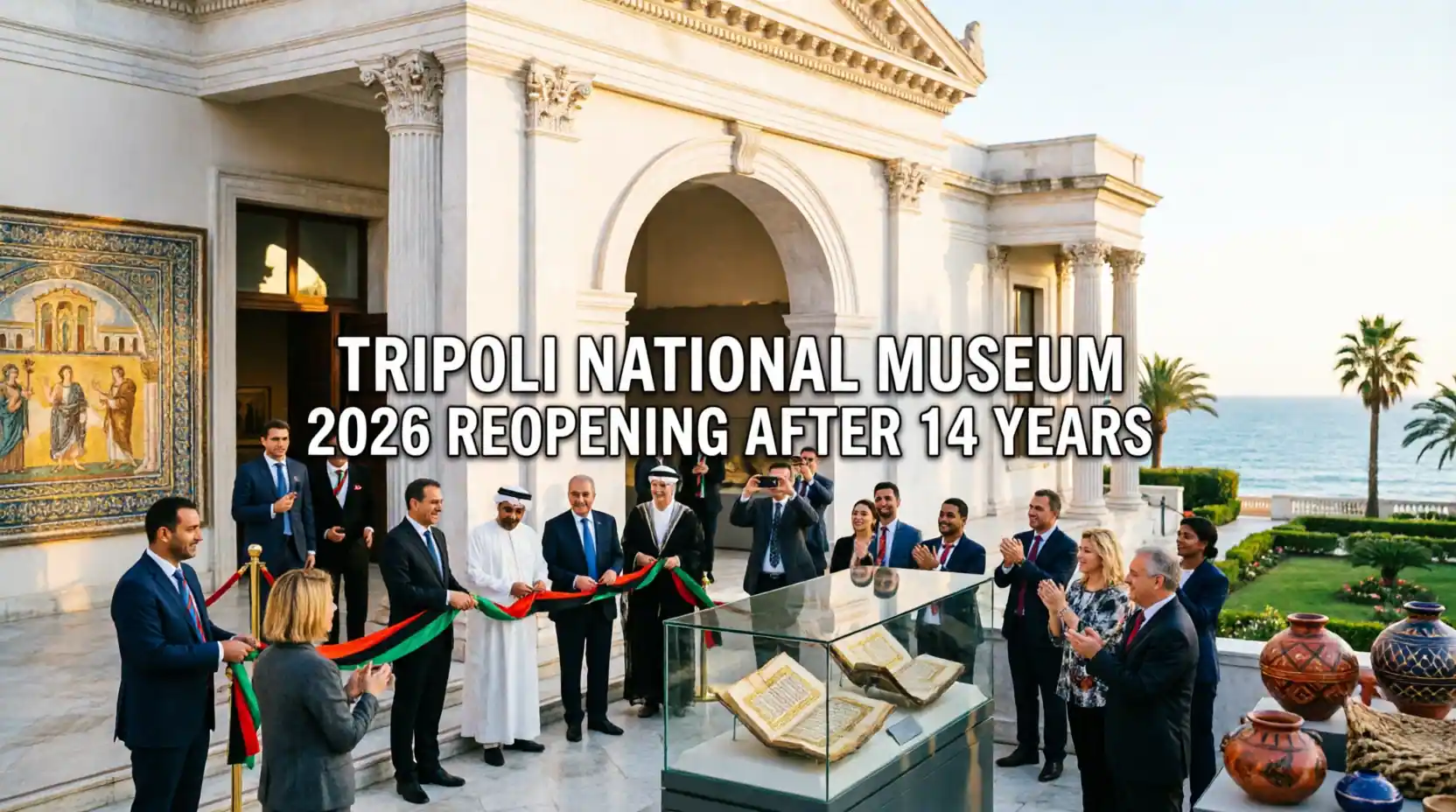
Tripoli National Museum 2026: Why the Reopening After 14 Years Is the Year's Top Cultural Event
After 14 long years of closure, silence, and uncertainty, the Tripoli National Museum is finally reopening its doors in 2026, marking one of the most significant cultural milestones not just for Libya, but for the entire Mediterranean region and the global heritage community. This momentous reopening represents far more than the resumption of museum operations—it symbolizes Libya's cultural resilience, the preservation of irreplaceable human heritage through conflict and instability, and the nation's determined journey toward healing, reconciliation, and reconnection with its extraordinary past. For archaeologists, historians, cultural tourists, and all who believe in the power of heritage to unite and inspire, the Tripoli National Museum's return is nothing short of a celebration of human civilization itself.
Closed since 2011 during the tumultuous period of the Libyan Civil War, the museum has endured over a decade of uncertainty, during which its world-class collection of artifacts spanning millennia—from Phoenician, Greek, Roman, Byzantine, Islamic, and Ottoman periods—faced unprecedented threats. The museum's closure was a necessary measure to protect its invaluable treasures during a period of profound instability, but it also represented a profound loss: the silencing of Libya's cultural voice, the interruption of scholarly research, and the denial of public access to one of North Africa's most important cultural institutions. Now, in 2026, as the museum reopens with enhanced security, improved conservation facilities, and renewed commitment to cultural preservation, it emerges not just restored but reimagined—ready to serve as a beacon of Libya's rich heritage and a bridge between its glorious past and hopeful future.
This comprehensive guide explores everything you need to know about the Tripoli National Museum's historic 2026 reopening: understanding the museum's extraordinary collection and historical significance, examining the challenges of preserving cultural heritage through conflict, analyzing the conservation and restoration efforts that made reopening possible, exploring the museum's role in Libya's cultural and economic recovery, providing practical visitor information for this landmark cultural destination, and evaluating what this reopening means for heritage preservation, cultural tourism, and Libya's reintegration into the global cultural community. Whether you're a cultural traveler, a heritage professional, a student of history, or simply someone who believes in the transformative power of museums, this guide provides the insights you need to understand why the Tripoli National Museum's reopening is truly 2026's top cultural event.
Historical Significance: The Museum's Legacy and Collection

Origins and Establishment
The Tripoli National Museum's history reflects Libya's own journey:
- Foundation: Established in the mid-20th century during Libya's post-independence cultural development, housed in a historic Ottoman-era building in the heart of Tripoli's Old City (Medina)
- Architectural heritage: The museum building itself is a cultural treasure, featuring traditional Libyan architecture with Ottoman influences, courtyards, and traditional decorative elements
- Collection development: Decades of archaeological excavations across Libya's extraordinary sites—Leptis Magna, Sabratha, Cyrene, Ghadames, and countless others—enriched the collection with world-class artifacts
- Cultural mission: Serve as guardian of Libya's multi-layered heritage, from prehistoric times through Phoenician, Greek, Roman, Byzantine, Islamic, and Ottoman periods
- Educational role: Provide Libyans and international visitors access to understanding their shared human heritage
- 👉 MGallery Plein Ciel Djibouti: A first look at Accor’s 2026 heritage hotel conversion in the CBD.
- 👉 Sudan for History Buffs 1956 Independence Movement Legacy Guide
- 👉 Gaborone Cable Car 2026: Full guide to the new Kgale Hill ride and panoramic city views.
The Extraordinary Collection
The museum houses one of North Africa's most significant archaeological and cultural collections:
Prehistoric and Ancient Libyan Artifacts:
- Stone tools, rock art reproductions, and artifacts from Libya's prehistoric Sahara period
- Garamantian civilization artifacts showcasing ancient Libyan kingdoms
- Berber cultural objects demonstrating indigenous North African heritage
- 👉 MGallery Plein Ciel Djibouti: A first look at Accor’s 2026 heritage hotel conversion in the CBD.
- 👉 Sudan for History Buffs 1956 Independence Movement Legacy Guide
- 👉 Gaborone Cable Car 2026: Full guide to the new Kgale Hill ride and panoramic city views.
Classical Antiquity (Phoenician, Greek, Roman):
- Leptis Magna treasures: Sculptures, inscriptions, and architectural elements from one of Rome's most spectacular North African cities
- Sabratha artifacts: Theater reliefs, mosaics, and sculptures from this important Phoenician-Roman trading center
- Roman mosaics: Exceptional floor mosaics depicting mythological scenes, daily life, and geometric patterns—among the finest in the Mediterranean
- Sculptures and statuary: Marble and bronze statues of emperors, deities, and citizens from Libya's Roman period
- Inscriptions and epigraphy: Latin and Greek inscriptions providing insights into ancient administration, religion, and society
- 👉 MGallery Plein Ciel Djibouti: A first look at Accor’s 2026 heritage hotel conversion in the CBD.
- 👉 Sudan for History Buffs 1956 Independence Movement Legacy Guide
- 👉 Gaborone Cable Car 2026: Full guide to the new Kgale Hill ride and panoramic city views.
Byzantine and Early Christian Period:
- Early Christian artifacts, church decorations, and religious objects
- Byzantine mosaics and architectural elements
- Evidence of Libya's important role in early Christianity
- 👉 MGallery Plein Ciel Djibouti: A first look at Accor’s 2026 heritage hotel conversion in the CBD.
- 👉 Sudan for History Buffs 1956 Independence Movement Legacy Guide
- 👉 Gaborone Cable Car 2026: Full guide to the new Kgale Hill ride and panoramic city views.
Islamic Heritage:
- Quranic manuscripts: Rare and beautifully illuminated Quranic texts from various periods
- Islamic calligraphy: Decorative arts showcasing the Islamic artistic tradition
- Ceramics and metalwork: Islamic period pottery, brass work, and decorative objects
- Architectural elements: Decorative stonework, woodwork, and tiles from historic mosques and buildings
- 👉 MGallery Plein Ciel Djibouti: A first look at Accor’s 2026 heritage hotel conversion in the CBD.
- 👉 Sudan for History Buffs 1956 Independence Movement Legacy Guide
- 👉 Gaborone Cable Car 2026: Full guide to the new Kgale Hill ride and panoramic city views.
Ottoman Period:
- Ottoman-era weapons, textiles, and decorative arts
- Documents and manuscripts from Ottoman administration
- Traditional Libyan crafts and cultural objects from the Ottoman period
- 👉 MGallery Plein Ciel Djibouti: A first look at Accor’s 2026 heritage hotel conversion in the CBD.
- 👉 Sudan for History Buffs 1956 Independence Movement Legacy Guide
- 👉 Gaborone Cable Car 2026: Full guide to the new Kgale Hill ride and panoramic city views.
Ethnographic Collections:
- Traditional Libyan costumes, jewelry, and textiles
- Berber cultural artifacts and traditional crafts
- Traditional musical instruments and cultural objects
- Photographs and documents documenting Libyan social history
- 👉 MGallery Plein Ciel Djibouti: A first look at Accor’s 2026 heritage hotel conversion in the CBD.
- 👉 Sudan for History Buffs 1956 Independence Movement Legacy Guide
- 👉 Gaborone Cable Car 2026: Full guide to the new Kgale Hill ride and panoramic city views.
Global Significance
The collection's importance extends far beyond Libya:
- UNESCO recognition: Many artifacts originate from UNESCO World Heritage Sites (Leptis Magna, Sabratha, Cyrene, Ghadames)
- Scholarly value: Collection provides crucial insights into Mediterranean civilization, trade routes, cultural exchange, and imperial administration
- Artistic excellence: Roman mosaics and sculptures rank among the finest examples of classical art
- Cultural continuity: Collection demonstrates Libya's role as a crossroads of civilizations—African, Mediterranean, Middle Eastern
- Research potential: Collection offers ongoing opportunities for archaeological, historical, and conservation research
- 👉 MGallery Plein Ciel Djibouti: A first look at Accor’s 2026 heritage hotel conversion in the CBD.
- 👉 Sudan for History Buffs 1956 Independence Movement Legacy Guide
- 👉 Gaborone Cable Car 2026: Full guide to the new Kgale Hill ride and panoramic city views.
14 Years of Closure: Challenges and Preservation

The 2011 Closure Context
Understanding why the museum closed:
- Libyan Civil War (2011): The uprising against Muammar Gaddafi's regime created unprecedented security challenges across Libya, including in Tripoli
- Cultural heritage at risk: Museums, archaeological sites, and cultural institutions faced threats from looting, vandalism, and conflict damage
- Preventive closure: Museum authorities made the difficult decision to close and secure the collection to protect artifacts from potential damage or theft
- Collection protection: Artifacts were carefully packed, secured, and in some cases moved to more secure locations
- Staff challenges: Museum professionals worked under extremely difficult conditions to protect Libya's heritage
- 👉 MGallery Plein Ciel Djibouti: A first look at Accor’s 2026 heritage hotel conversion in the CBD.
- 👉 Sudan for History Buffs 1956 Independence Movement Legacy Guide
- 👉 Gaborone Cable Car 2026: Full guide to the new Kgale Hill ride and panoramic city views.
Preservation During Closure
How the collection survived 14 years:
- Security measures: Enhanced physical security, monitoring systems, and protective measures for the building and collection
- Environmental control: Efforts to maintain stable temperature and humidity levels despite infrastructure challenges
- Conservation work: Ongoing conservation efforts by dedicated Libyan museum professionals, often with international support
- Documentation: Comprehensive cataloging and documentation of the collection to ensure nothing was lost or damaged
- International partnerships: Collaboration with UNESCO, ICOM (International Council of Museums), and international museums to provide expertise and support
- Staff dedication: Libyan museum professionals who remained committed to protecting their nation's heritage despite personal risks and challenges
- 👉 MGallery Plein Ciel Djibouti: A first look at Accor’s 2026 heritage hotel conversion in the CBD.
- 👉 Sudan for History Buffs 1956 Independence Movement Legacy Guide
- 👉 Gaborone Cable Car 2026: Full guide to the new Kgale Hill ride and panoramic city views.
Challenges Faced
The closure period presented significant obstacles:
- Infrastructure deterioration: Building maintenance challenges due to limited resources and ongoing instability
- Climate control: Difficulties maintaining optimal conservation conditions for sensitive artifacts
- Security concerns: Ongoing threats to cultural heritage requiring constant vigilance
- Resource limitations: Limited funding, equipment, and conservation materials
- International isolation: Reduced access to international expertise, training, and collaboration
- Staff safety: Museum professionals working in challenging and sometimes dangerous conditions
- 👉 MGallery Plein Ciel Djibouti: A first look at Accor’s 2026 heritage hotel conversion in the CBD.
- 👉 Sudan for History Buffs 1956 Independence Movement Legacy Guide
- 👉 Gaborone Cable Car 2026: Full guide to the new Kgale Hill ride and panoramic city views.
The Road to Reopening: Restoration and Preparation

Conservation and Restoration Efforts
Extensive work prepared the museum for reopening:
- Building restoration: Comprehensive rehabilitation of the historic museum building, addressing structural issues, water damage, and deterioration
- Climate control systems: Installation of modern HVAC systems to maintain optimal temperature and humidity for artifact preservation
- Security upgrades: State-of-the-art security systems including surveillance, access control, and fire protection
- Conservation laboratory: Establishment or enhancement of on-site conservation facilities for ongoing artifact care
- Storage improvements: Upgraded storage facilities with proper environmental controls for artifacts not on display
- Display case renovation: Modern, climate-controlled display cases with UV protection and security features
- 👉 MGallery Plein Ciel Djibouti: A first look at Accor’s 2026 heritage hotel conversion in the CBD.
- 👉 Sudan for History Buffs 1956 Independence Movement Legacy Guide
- 👉 Gaborone Cable Car 2026: Full guide to the new Kgale Hill ride and panoramic city views.
Collection Preparation
Preparing artifacts for public display:
- Condition assessment: Comprehensive evaluation of each artifact's condition after 14 years
- Conservation treatment: Necessary conservation work to stabilize and restore artifacts for display
- Cleaning and stabilization: Professional cleaning and stabilization of sculptures, mosaics, manuscripts, and other objects
- Documentation update: Updated cataloging, photography, and documentation of the entire collection
- Exhibition planning: Curatorial work to create meaningful, educational, and engaging exhibitions
- Interpretive materials: Development of labels, panels, and digital content in multiple languages
- 👉 MGallery Plein Ciel Djibouti: A first look at Accor’s 2026 heritage hotel conversion in the CBD.
- 👉 Sudan for History Buffs 1956 Independence Movement Legacy Guide
- 👉 Gaborone Cable Car 2026: Full guide to the new Kgale Hill ride and panoramic city views.
Infrastructure and Facilities
- Visitor facilities: Modern visitor amenities including ticketing, information desks, restrooms, and accessibility features
- Educational spaces: Dedicated areas for educational programs, workshops, and lectures
- Research facilities: Library, archives, and research spaces for scholars
- Digital infrastructure: WiFi, digital guides, and interactive displays enhancing the visitor experience
- Accessibility improvements: Ramps, elevators, and other features ensuring the museum is accessible to all visitors
- 👉 MGallery Plein Ciel Djibouti: A first look at Accor’s 2026 heritage hotel conversion in the CBD.
- 👉 Sudan for History Buffs 1956 Independence Movement Legacy Guide
- 👉 Gaborone Cable Car 2026: Full guide to the new Kgale Hill ride and panoramic city views.
Staff Training and Capacity Building
- Professional development: Training programs for museum staff in conservation, curation, education, and visitor services
- International partnerships: Collaboration with international museums and cultural institutions for knowledge exchange
- Security training: Specialized training for security personnel in cultural heritage protection
- Visitor services: Training in customer service, tour guiding, and educational programming
- Emergency preparedness: Training in disaster response and emergency procedures for cultural heritage
- 👉 MGallery Plein Ciel Djibouti: A first look at Accor’s 2026 heritage hotel conversion in the CBD.
- 👉 Sudan for History Buffs 1956 Independence Movement Legacy Guide
- 👉 Gaborone Cable Car 2026: Full guide to the new Kgale Hill ride and panoramic city views.
Why This Reopening Matters: Cultural, Social, and Economic Significance

Cultural Significance
The reopening represents far more than a museum opening:
- Heritage reclamation: Reclaiming Libya's cultural narrative and reconnecting Libyans with their extraordinary heritage
- Cultural continuity: Restoring the link between past and present, demonstrating that Libya's rich history survives and thrives
- Identity and pride: Providing Libyans, especially younger generations, access to their cultural heritage and fostering national pride
- Educational resource: Serving as an educational resource for schools, universities, and lifelong learners
- Scholarly access: Restoring access for researchers and scholars to study Libya's remarkable archaeological and cultural heritage
- Cultural diplomacy: Positioning Libya as a custodian of world heritage and a partner in global cultural exchange
- 👉 MGallery Plein Ciel Djibouti: A first look at Accor’s 2026 heritage hotel conversion in the CBD.
- 👉 Sudan for History Buffs 1956 Independence Movement Legacy Guide
- 👉 Gaborone Cable Car 2026: Full guide to the new Kgale Hill ride and panoramic city views.
Social Significance
- Healing and reconciliation: Museums can serve as spaces for healing, dialogue, and reconciliation after conflict
- Community gathering: Providing a safe, educational, and inspiring space for community gathering and cultural engagement
- Youth engagement: Offering young Libyans positive engagement with their heritage and alternatives to conflict
- Cultural tourism: Creating opportunities for cultural exchange and understanding between Libyans and international visitors
- Civic pride: Demonstrating Libya's commitment to cultural preservation and public service
- 👉 MGallery Plein Ciel Djibouti: A first look at Accor’s 2026 heritage hotel conversion in the CBD.
- 👉 Sudan for History Buffs 1956 Independence Movement Legacy Guide
- 👉 Gaborone Cable Car 2026: Full guide to the new Kgale Hill ride and panoramic city views.
Economic Significance
- Tourism development: The museum serves as an anchor attraction for cultural tourism, one of Libya's most promising economic sectors
- Job creation: Museum operations create direct employment and stimulate related sectors (hospitality, transportation, guides, crafts)
- Skills development: Museum employment provides training and professional development in conservation, education, and cultural management
- Local economy: Museum visitors support local businesses: restaurants, hotels, shops, and services
- International investment: Successful cultural institutions signal stability and attract broader investment
- Cultural industries: Museum stimulates related cultural industries: publishing, crafts, performing arts, and creative sectors
- 👉 MGallery Plein Ciel Djibouti: A first look at Accor’s 2026 heritage hotel conversion in the CBD.
- 👉 Sudan for History Buffs 1956 Independence Movement Legacy Guide
- 👉 Gaborone Cable Car 2026: Full guide to the new Kgale Hill ride and panoramic city views.
The 2026 Reopening: Events and Programming

Opening Ceremony and Celebrations
The reopening is marked by significant events:
- Official opening ceremony: Formal ceremony with government officials, cultural leaders, international representatives, and community members
- Cultural performances: Traditional Libyan music, dance, and cultural performances celebrating the reopening
- Exhibition launches: Special exhibitions highlighting different aspects of Libya's heritage
- International participation: Representatives from UNESCO, ICOM, and international museums showing solidarity and support
- Community events: Free admission days, educational programs, and community celebrations ensuring broad public access
- 👉 MGallery Plein Ciel Djibouti: A first look at Accor’s 2026 heritage hotel conversion in the CBD.
- 👉 Sudan for History Buffs 1956 Independence Movement Legacy Guide
- 👉 Gaborone Cable Car 2026: Full guide to the new Kgale Hill ride and panoramic city views.
Special Exhibitions
The reopening features curated exhibitions:
- Masterpieces of Libya: Highlighting the museum's most significant and beautiful artifacts
- Leptis Magna Treasures: Special exhibition focusing on artifacts from this UNESCO World Heritage Site
- Islamic Heritage: Showcasing Libya's rich Islamic artistic and cultural heritage
- Conservation Success Stories: Exhibiting artifacts that were conserved and restored during the closure period
- Libya Through Time: Chronological journey through Libya's multi-layered history
- Contemporary Libyan Art: Connecting ancient heritage with contemporary Libyan artistic expression
- 👉 MGallery Plein Ciel Djibouti: A first look at Accor’s 2026 heritage hotel conversion in the CBD.
- 👉 Sudan for History Buffs 1956 Independence Movement Legacy Guide
- 👉 Gaborone Cable Car 2026: Full guide to the new Kgale Hill ride and panoramic city views.
Educational and Public Programs
- School programs: Educational visits and curriculum-aligned programs for students of all ages
- Workshops: Hands-on workshops in traditional crafts, archaeology, and conservation
- Lectures and symposia: Scholarly presentations on Libyan history, archaeology, and heritage
- Guided tours: Tours in multiple languages for different audiences
- Digital engagement: Virtual tours, online collections, and digital educational resources
- Community outreach: Programs bringing museum resources to communities across Libya
- 👉 MGallery Plein Ciel Djibouti: A first look at Accor’s 2026 heritage hotel conversion in the CBD.
- 👉 Sudan for History Buffs 1956 Independence Movement Legacy Guide
- 👉 Gaborone Cable Car 2026: Full guide to the new Kgale Hill ride and panoramic city views.
Visitor Information: Planning Your Visit

Practical Details
Essential information for visitors:
- Location: Tripoli Old City (Medina), central Tripoli, Libya
- Opening hours: Typically Saturday-Thursday, 9:00 AM - 5:00 PM (verify current hours before visiting)
- Closed: Fridays (weekly day of rest) and major Islamic holidays
- Admission fees: Reasonable fees for international visitors; reduced or free admission for Libyan citizens, students, and children (verify current rates)
- Guided tours: Available in Arabic and English; advance booking recommended for groups
- Photography: Policies vary; photography may be permitted without flash in some areas; check current policies
- 👉 MGallery Plein Ciel Djibouti: A first look at Accor’s 2026 heritage hotel conversion in the CBD.
- 👉 Sudan for History Buffs 1956 Independence Movement Legacy Guide
- 👉 Gaborone Cable Car 2026: Full guide to the new Kgale Hill ride and panoramic city views.
Getting There
- By air: Mitiga International Airport (MJI) or Tripoli International Airport (TIP); both serve Tripoli with varying international connections
- From airport: Taxis and private transfers available; arrange transportation in advance
- Within Tripoli: Taxis are the primary mode of transportation; negotiate fare before journey or use meter if available
- Old City access: Museum located in Tripoli's historic Old City; pedestrian-friendly area
- 👉 MGallery Plein Ciel Djibouti: A first look at Accor’s 2026 heritage hotel conversion in the CBD.
- 👉 Sudan for History Buffs 1956 Independence Movement Legacy Guide
- 👉 Gaborone Cable Car 2026: Full guide to the new Kgale Hill ride and panoramic city views.
Visiting Tips
- Advance planning: Check current opening hours and any special requirements before visiting
- Guided tours: Consider hiring a knowledgeable guide to enhance understanding of the collection
- Time allocation: Allow 2-3 hours minimum to appreciate the collection; half day ideal for thorough visit
- Comfortable footwear: Museum involves walking on historic floors; wear comfortable shoes
- Respectful behavior: This is a cultural and educational institution; maintain respectful demeanor
- Combine visits: Pair museum visit with exploration of Tripoli's Old City, a UNESCO World Heritage Site
- 👉 MGallery Plein Ciel Djibouti: A first look at Accor’s 2026 heritage hotel conversion in the CBD.
- 👉 Sudan for History Buffs 1956 Independence Movement Legacy Guide
- 👉 Gaborone Cable Car 2026: Full guide to the new Kgale Hill ride and panoramic city views.
Safety and Security Considerations
- Current situation: Check current travel advisories and security situation before planning visit
- Local guidance: Follow advice of local authorities and museum staff
- Travel insurance: Ensure comprehensive travel insurance covering Libya travel
- Local contacts: Maintain contact with local guides, hotels, or cultural institutions
- Cultural sensitivity: Dress modestly and respect local customs and traditions
- 👉 MGallery Plein Ciel Djibouti: A first look at Accor’s 2026 heritage hotel conversion in the CBD.
- 👉 Sudan for History Buffs 1956 Independence Movement Legacy Guide
- 👉 Gaborone Cable Car 2026: Full guide to the new Kgale Hill ride and panoramic city views.
The Collection Highlights: Must-See Artifacts

Roman Masterpieces
- Leptis Magna sculptures: Magnificent marble statues and reliefs from one of Rome's most important North African cities
- Roman mosaics: Exceptional floor mosaics depicting mythological scenes, gladiatorial contests, and daily life—among the finest in the Mediterranean
- Imperial portraits: Marble busts of Roman emperors and important figures
- Sabratha theater reliefs: Decorative reliefs from the famous Roman theater at Sabratha
- 👉 MGallery Plein Ciel Djibouti: A first look at Accor’s 2026 heritage hotel conversion in the CBD.
- 👉 Sudan for History Buffs 1956 Independence Movement Legacy Guide
- 👉 Gaborone Cable Car 2026: Full guide to the new Kgale Hill ride and panoramic city views.
Islamic Heritage
- Quranic manuscripts: Beautifully illuminated Quranic texts from various periods
- Islamic calligraphy: Decorative arts showcasing the Islamic artistic tradition
- Ceramics and metalwork: Islamic period pottery, brass work, and decorative objects
- Architectural elements: Decorative stonework and tiles from historic mosques
- 👉 MGallery Plein Ciel Djibouti: A first look at Accor’s 2026 heritage hotel conversion in the CBD.
- 👉 Sudan for History Buffs 1956 Independence Movement Legacy Guide
- 👉 Gaborone Cable Car 2026: Full guide to the new Kgale Hill ride and panoramic city views.
Prehistoric and Ancient Libyan
- Garamantian artifacts: Objects from the ancient Garamantian civilization that flourished in the Sahara
- Berber cultural objects: Traditional artifacts demonstrating indigenous North African heritage
- Prehistoric tools: Stone tools and artifacts from Libya's ancient past
- 👉 MGallery Plein Ciel Djibouti: A first look at Accor’s 2026 heritage hotel conversion in the CBD.
- 👉 Sudan for History Buffs 1956 Independence Movement Legacy Guide
- 👉 Gaborone Cable Car 2026: Full guide to the new Kgale Hill ride and panoramic city views.
Ethnographic Collections
- Traditional costumes: Libyan traditional dress and textiles
- Jewelry: Traditional Libyan jewelry and decorative arts
- Musical instruments: Traditional Libyan musical instruments
- Cultural objects: Everyday objects demonstrating traditional Libyan life
- 👉 MGallery Plein Ciel Djibouti: A first look at Accor’s 2026 heritage hotel conversion in the CBD.
- 👉 Sudan for History Buffs 1956 Independence Movement Legacy Guide
- 👉 Gaborone Cable Car 2026: Full guide to the new Kgale Hill ride and panoramic city views.
Broader Implications: Heritage, Tourism, and Libya's Future

Cultural Heritage Preservation
The reopening sets important precedents:
- Heritage protection: Demonstrates Libya's commitment to protecting and preserving its cultural heritage
- International standards: Museum reopening with modern conservation facilities demonstrates adherence to international museum standards
- Capacity building: Investment in museum infrastructure and staff training builds long-term cultural sector capacity
- Community engagement: Museum serves as model for community-based heritage preservation
- Knowledge sharing: Reopening facilitates international collaboration and knowledge exchange
- 👉 MGallery Plein Ciel Djibouti: A first look at Accor’s 2026 heritage hotel conversion in the CBD.
- 👉 Sudan for History Buffs 1956 Independence Movement Legacy Guide
- 👉 Gaborone Cable Car 2026: Full guide to the new Kgale Hill ride and panoramic city views.
Tourism Development
- Cultural tourism anchor: Museum serves as anchor attraction for broader cultural tourism development
- UNESCO sites: Museum provides context and preparation for visiting Libya's UNESCO World Heritage Sites
- Tourism infrastructure: Museum reopening stimulates development of related tourism infrastructure and services
- Destination marketing: Successful museum enhances Libya's image as a cultural tourism destination
- Economic diversification: Cultural tourism provides economic diversification beyond oil dependence
- 👉 MGallery Plein Ciel Djibouti: A first look at Accor’s 2026 heritage hotel conversion in the CBD.
- 👉 Sudan for History Buffs 1956 Independence Movement Legacy Guide
- 👉 Gaborone Cable Car 2026: Full guide to the new Kgale Hill ride and panoramic city views.
National Identity and Reconciliation
- Shared heritage: Museum demonstrates Libya's rich, multi-layered heritage that belongs to all Libyans
- Cultural pride: Access to heritage fosters national pride and cultural confidence
- Educational resource: Museum serves as educational resource for understanding Libya's past and building its future
- Healing space: Cultural institutions can serve as spaces for dialogue, understanding, and reconciliation
- Youth engagement: Museum provides positive engagement for young Libyans with their heritage
- 👉 MGallery Plein Ciel Djibouti: A first look at Accor’s 2026 heritage hotel conversion in the CBD.
- 👉 Sudan for History Buffs 1956 Independence Movement Legacy Guide
- 👉 Gaborone Cable Car 2026: Full guide to the new Kgale Hill ride and panoramic city views.
Challenges and Opportunities Ahead

Ongoing Challenges
The museum faces continued challenges:
- Sustainability: Ensuring long-term financial and operational sustainability
- Security: Maintaining security for the collection and visitors in Libya's complex security environment
- Conservation: Ongoing conservation needs for the extensive collection
- Capacity: Continued need for professional development and capacity building
- Infrastructure: Maintaining and upgrading facilities and systems
- Accessibility: Ensuring broad public access while maintaining security and conservation standards
- 👉 MGallery Plein Ciel Djibouti: A first look at Accor’s 2026 heritage hotel conversion in the CBD.
- 👉 Sudan for History Buffs 1956 Independence Movement Legacy Guide
- 👉 Gaborone Cable Car 2026: Full guide to the new Kgale Hill ride and panoramic city views.
Future Opportunities
- Digital innovation: Developing digital collections, virtual tours, and online educational resources
- International partnerships: Expanding collaboration with international museums and cultural institutions
- Research center: Developing the museum as a research center for Libyan and North African studies
- Cultural hub: Expanding role as cultural hub with performances, lectures, and community programs
- Regional leadership: Positioning the museum as a leader in North African cultural heritage preservation
- Youth programs: Expanding educational and engagement programs for young Libyans
- 👉 MGallery Plein Ciel Djibouti: A first look at Accor’s 2026 heritage hotel conversion in the CBD.
- 👉 Sudan for History Buffs 1956 Independence Movement Legacy Guide
- 👉 Gaborone Cable Car 2026: Full guide to the new Kgale Hill ride and panoramic city views.
Expert Perspectives: What Professionals Are Saying

Museum and Heritage Professionals
- Conservation success: "The successful preservation of this collection through 14 years of closure is a testament to the dedication of Libyan museum professionals and international partners"
- Cultural significance: "This reopening represents not just a museum opening, but the reclamation of Libya's cultural voice and its place in the global cultural community"
- Future potential: "With proper support and investment, the Tripoli National Museum can become one of the Mediterranean's premier cultural institutions"
- 👉 MGallery Plein Ciel Djibouti: A first look at Accor’s 2026 heritage hotel conversion in the CBD.
- 👉 Sudan for History Buffs 1956 Independence Movement Legacy Guide
- 👉 Gaborone Cable Car 2026: Full guide to the new Kgale Hill ride and panoramic city views.
Tourism and Development Experts
- Economic catalyst: "The museum reopening is a catalyst for broader tourism development and economic diversification in Libya"
- Destination positioning: "This reopening signals Libya's readiness to welcome cultural tourists and positions the country as a serious cultural tourism destination"
- Community impact: "The museum creates jobs, stimulates local economy, and provides educational resources that benefit the entire community"
- 👉 MGallery Plein Ciel Djibouti: A first look at Accor’s 2026 heritage hotel conversion in the CBD.
- 👉 Sudan for History Buffs 1956 Independence Movement Legacy Guide
- 👉 Gaborone Cable Car 2026: Full guide to the new Kgale Hill ride and panoramic city views.
Frequently Asked Questions
Why was the Tripoli National Museum closed for 14 years?
The museum closed in 2011 during the Libyan Civil War to protect its invaluable collection from potential damage, looting, or destruction during the conflict and subsequent instability. The closure was a preventive measure to safeguard Libya's cultural heritage during a period of profound uncertainty.
Is the Tripoli National Museum safe to visit in 2026?
The museum has implemented comprehensive security measures and conservation standards for its reopening. However, visitors should always check current travel advisories from their government, maintain awareness of the local security situation, and follow guidance from local authorities and museum staff. Travel insurance covering Libya is essential.
What makes the Tripoli National Museum collection special?
The collection is exceptional for its quality, diversity, and historical significance. It includes world-class Roman mosaics and sculptures from Leptis Magna and Sabratha (UNESCO World Heritage Sites), rare Islamic manuscripts and decorative arts, prehistoric artifacts, and ethnographic collections demonstrating Libya's multi-layered heritage spanning thousands of years and multiple civilizations.
How can I support the Tripoli National Museum?
Visitors can support the museum by: visiting and paying admission fees, purchasing from the museum shop, donating to museum conservation efforts (if such programs exist), spreading awareness about the museum's importance, and engaging respectfully with Libya's cultural heritage. International cultural organizations can support through partnerships, expertise sharing, and advocacy.
What other cultural sites can I visit in Tripoli?
Tripoli's Old City (Medina) is itself a UNESCO World Heritage Site with historic architecture, traditional souks, and cultural sites. Other attractions include the Red Castle Museum (Assaraya Al-Hamra), historic mosques, traditional markets, and Ottoman-era architecture. The museum provides excellent context for understanding these sites.
Conclusion: A Beacon of Hope and Heritage
The Tripoli National Museum's reopening in 2026 after 14 years of closure is far more than a cultural event—it is a statement of resilience, a celebration of heritage, and a beacon of hope for Libya's future. It demonstrates that even through conflict, uncertainty, and challenge, culture endures. It shows that heritage can survive, be protected, and emerge stronger. And it proves that museums are not just repositories of the past, but active agents in building the future.
For Libyans, the reopening reclaims their cultural narrative and reconnects them with an extraordinary heritage that spans millennia. For the international community, it signals Libya's reemergence as a custodian of world heritage and a partner in global cultural exchange. For cultural travelers, it offers access to one of the Mediterranean's most remarkable collections. And for all who believe in the power of culture to unite, educate, and inspire, it offers hope that even after the darkest periods, light can return.
The museum's collection—those magnificent Roman mosaics, those beautiful Islamic manuscripts, those ancient sculptures and artifacts—speaks to us across time. It tells us that civilizations rise and fall, that empires come and go, but that human creativity, ingenuity, and beauty endure. It reminds us that we are part of a continuum, inheritors of a legacy that we must protect and pass on.
As the Tripoli National Museum reopens its doors in 2026, it invites us all—not just to view artifacts, but to engage with heritage; not just to learn about the past, but to build a better future; not just to visit a museum, but to participate in the ongoing story of human civilization.
This is why the Tripoli National Museum's reopening is 2026's top cultural event. Not because of the artifacts alone, though they are extraordinary. Not because of the building alone, though it is historic. But because of what it represents: resilience over destruction, hope over despair, culture over conflict, and the enduring belief that heritage matters, that beauty matters, and that the stories of our shared human past can guide us toward a better future.
Welcome back, Tripoli National Museum. Welcome home, Libya's heritage. Welcome to a new chapter in the story of human culture.
The museum is open. The collection awaits. The future is bright.
0 Comments