.webp)
.webp)
2026: The Year of Sustainable Safaris - Eco-Lodges Leading
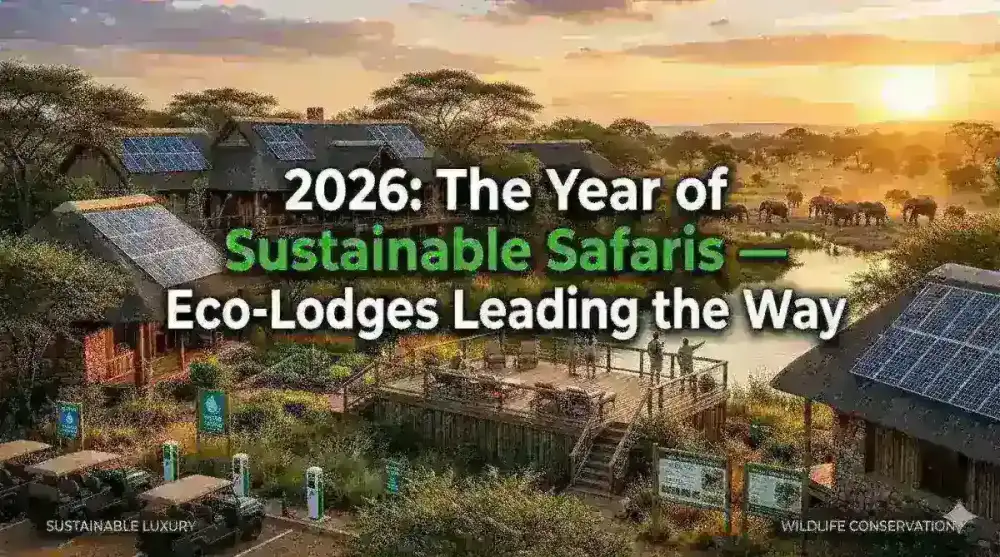
Introduction: A New Era for African Safari Tourism
2026 marks a transformative moment in African safari tourism, as the industry embraces sustainability not as a niche trend but as a fundamental imperative. The rise of eco-friendly lodges across the continent represents more than environmental consciousness—it signals a profound shift in how we experience wildlife, support local communities, and preserve Africa's extraordinary natural heritage for future generations. This is the Year of Sustainable Safaris, and the eco-lodges leading this movement are setting new standards for responsible luxury travel.
The global travel industry has reached a critical inflection point. Climate change, biodiversity loss, and growing awareness of tourism's environmental footprint have converged to create unprecedented demand for sustainable travel options. In Africa, where wildlife tourism generates billions in revenue and supports millions of livelihoods, the stakes are particularly high. Safari lodges are no longer just places to stay—they are active participants in conservation, community development, and environmental stewardship.
This comprehensive guide explores why 2026 has become the watershed year for sustainable safaris. We'll examine the innovative eco-lodges pioneering this movement, the technologies and practices making them truly sustainable, their measurable conservation impact, and how conscious travelers can choose accommodations that align with their values. From solar-powered luxury camps in the Serengeti to community-owned lodges in Botswana, from water conservation pioneers in Namibia to carbon-negative properties in South Africa, the African safari landscape is being reimagined for a sustainable future.
The Sustainability Imperative: Why 2026 Matters

Understanding why 2026 represents a pivotal year requires examining the converging forces reshaping African safari tourism.
Climate Change and Tourism's Carbon Footprint
The tourism industry accounts for approximately 8% of global carbon emissions, with transportation and accommodation being primary contributors. Safari tourism, while generating crucial conservation funding, has historically carried a significant carbon footprint through international flights, diesel generators, and resource-intensive operations. In 2026, leading lodges are confronting this reality head-on, implementing comprehensive carbon reduction strategies and investing in renewable energy, carbon offsetting, and regenerative practices.
Biodiversity Crisis and Conservation Funding
Africa faces an accelerating biodiversity crisis. Poaching, habitat loss, climate change, and human-wildlife conflict threaten iconic species from elephants and rhinos to lions and wild dogs. Safari tourism provides critical funding for conservation—approximately $14 billion annually across Africa—but only if operations are truly sustainable. Eco-lodges in 2026 are going beyond minimal impact to become active conservation partners, directly funding anti-poaching units, habitat restoration, and wildlife research.
Community Expectations and Benefit Sharing
Local communities living alongside wildlife reserves increasingly demand meaningful benefits from tourism. The old model of excluding communities or providing minimal employment is no longer acceptable—or sustainable. Leading eco-lodges in 2026 are pioneering community ownership models, ensuring revenue sharing, creating extensive local employment, and supporting education, healthcare, and infrastructure development. This shift recognizes that conservation cannot succeed without community support.
Traveler Demand for Authentic Sustainability
Modern travelers, particularly millennials and Gen Z, increasingly prioritize sustainability in travel decisions. A 2025 Booking.com survey found that 83% of global travelers consider sustainable travel vital, with 61% wanting to travel more sustainably. However, greenwashing—superficial environmental claims without substantive action—has eroded trust. In response, 2026 sees the emergence of rigorous certification standards, transparent impact reporting, and verifiable sustainability credentials that allow travelers to make informed choices.
What Makes a Safari Lodge Truly Eco-Friendly?

Not all lodges claiming sustainability credentials deliver meaningful environmental and social benefits. Understanding what distinguishes genuinely eco-friendly properties from greenwashing requires examining multiple dimensions of operations.
Renewable Energy Systems
True eco-lodges in 2026 have eliminated or drastically reduced dependence on diesel generators through comprehensive renewable energy systems:
- Solar Power: Photovoltaic systems sized to meet 100% of energy needs, with battery storage for 24-hour reliability. Leading properties generate surplus energy fed back to local grids or community facilities.
- Solar Water Heating: Solar thermal systems providing hot water for guest rooms, kitchens, and laundries, eliminating electric or gas water heating.
- Energy Efficiency: LED lighting throughout, energy-efficient appliances, passive cooling design, and smart energy management systems minimizing consumption.
- Electric Vehicles: Transition from diesel safari vehicles to electric or hybrid alternatives where infrastructure permits, reducing emissions and noise pollution.
- 👉 Top-Rated Kayaking Tours Lake Mutanda First-Time Travelers Guide Uganda
- 👉 10 Things That Shock Americans About Cabo Verde's No Stress Lifestyle
- 👉 Ntumbachushi Falls Zambia Hidden Waterfall Travel Guide 2026
Water Conservation and Management
Water scarcity affects many African regions, making conservation essential:
- Rainwater Harvesting: Extensive catchment systems collecting and storing rainwater from roofs and surfaces, often providing 60-80% of water needs.
- Greywater Recycling: Treatment and reuse of water from sinks, showers, and laundries for irrigation and toilet flushing.
- Wastewater Treatment: On-site biological treatment systems ensuring zero pollution of natural water sources.
- Water-Efficient Fixtures: Low-flow showers, dual-flush toilets, and sensor taps reducing consumption by 40-50%.
- Natural Swimming Pools: Chemical-free pools using biological filtration and native plants instead of chlorine.
- 👉 Top-Rated Kayaking Tours Lake Mutanda First-Time Travelers Guide Uganda
- 👉 10 Things That Shock Americans About Cabo Verde's No Stress Lifestyle
- 👉 Ntumbachushi Falls Zambia Hidden Waterfall Travel Guide 2026
Waste Reduction and Management
Leading eco-lodges implement comprehensive waste strategies:
- Zero Single-Use Plastics: Elimination of plastic bottles, straws, bags, and toiletry containers in favor of reusable, biodegradable, or refillable alternatives.
- Composting: Organic waste composted on-site for gardens and landscaping, diverting 60-70% of waste from landfills.
- Recycling Programs: Comprehensive sorting and recycling of glass, metal, paper, and electronics, often in partnership with local recycling initiatives.
- Food Waste Reduction: Careful menu planning, portion control, and donation of surplus food to local communities.
- Local Sourcing: Procurement of food, materials, and supplies from local producers reducing transportation emissions and supporting local economies.
- 👉 Top-Rated Kayaking Tours Lake Mutanda First-Time Travelers Guide Uganda
- 👉 10 Things That Shock Americans About Cabo Verde's No Stress Lifestyle
- 👉 Ntumbachushi Falls Zambia Hidden Waterfall Travel Guide 2026
Sustainable Building Design and Materials
Eco-lodge architecture in 2026 emphasizes minimal environmental impact:
- Local Materials: Use of indigenous stone, timber, thatch, and earth reducing transportation emissions and supporting local industries.
- Passive Design: Orientation, ventilation, and shading minimizing need for air conditioning and artificial lighting.
- Low-Impact Construction: Elevated structures on minimal footprints preserving natural drainage and vegetation.
- Green Roofs and Living Walls: Vegetated roofs and walls providing insulation, managing stormwater, and creating habitat.
- Adaptive Reuse: Renovation of existing structures rather than new construction where possible.
- 👉 Top-Rated Kayaking Tours Lake Mutanda First-Time Travelers Guide Uganda
- 👉 10 Things That Shock Americans About Cabo Verde's No Stress Lifestyle
- 👉 Ntumbachushi Falls Zambia Hidden Waterfall Travel Guide 2026
Conservation and Wildlife Protection
True eco-lodges actively contribute to conservation:
- Direct Funding: Significant portion of revenue (typically 5-15%) dedicated to conservation projects, anti-poaching, and wildlife research.
- Habitat Protection: Land acquisition or leasing creating wildlife corridors and protecting critical habitat.
- Wildlife Monitoring: Support for camera traps, GPS collaring, and population surveys providing data for conservation management.
- Anti-Poaching Support: Funding and logistical support for ranger patrols, K9 units, and intelligence operations.
- Human-Wildlife Conflict Mitigation: Investment in fencing, early warning systems, and compensation schemes reducing conflict with local communities.
- 👉 Top-Rated Kayaking Tours Lake Mutanda First-Time Travelers Guide Uganda
- 👉 10 Things That Shock Americans About Cabo Verde's No Stress Lifestyle
- 👉 Ntumbachushi Falls Zambia Hidden Waterfall Travel Guide 2026
Community Engagement and Benefit Sharing
Sustainable lodges ensure local communities benefit meaningfully:
- Local Employment: 80-95% of staff hired from surrounding communities, with fair wages and benefits exceeding local standards.
- Skills Development: Training programs in hospitality, guiding, conservation, and management creating career pathways.
- Community Ownership: Equity stakes or full ownership by local communities ensuring long-term benefit sharing.
- Local Procurement: Sourcing food, crafts, and services from local suppliers injecting revenue into community economies.
- Social Investment: Support for schools, clinics, clean water projects, and infrastructure improving quality of life.
- Cultural Preservation: Respectful integration of local culture, traditions, and knowledge into guest experiences.
- 👉 Top-Rated Kayaking Tours Lake Mutanda First-Time Travelers Guide Uganda
- 👉 10 Things That Shock Americans About Cabo Verde's No Stress Lifestyle
- 👉 Ntumbachushi Falls Zambia Hidden Waterfall Travel Guide 2026
Leading Eco-Lodges Pioneering Sustainable Safaris in 2026

These exceptional properties exemplify the highest standards of sustainable safari tourism, demonstrating that luxury and environmental responsibility are not mutually exclusive.
1. &Beyond Sossusvlei Desert Lodge (Namibia)
Location: Namib-Naukluft National Park, Namibia
Sustainability Highlights: 100% solar powered, zero single-use plastics, extensive water conservation in one of world's driest regions
&Beyond Sossusvlei Desert Lodge stands as a beacon of desert conservation, operating entirely on solar power with battery storage ensuring 24-hour reliability. The lodge's innovative water management system harvests fog and dew, recycles all greywater, and uses drought-resistant indigenous landscaping. Each guest stay directly funds the &Beyond Wildlife Conservation Trust, supporting rhino protection, cheetah research, and community development programs. The lodge employs 95% local staff and sources 80% of supplies from Namibian producers.
Conservation Impact: Since 2020, the lodge has contributed $2.3 million to conservation, supported protection of 45,000 hectares of habitat, and funded education for 1,200 local children.
2. Singita Grumeti (Tanzania)
Location: Serengeti Ecosystem, Tanzania
Sustainability Highlights: Carbon neutral operations, comprehensive anti-poaching program, community ownership model
Singita Grumeti represents one of Africa's most ambitious conservation and sustainability initiatives. The 350,000-acre reserve operates multiple luxury lodges powered entirely by solar energy, with electric safari vehicles eliminating diesel emissions. Singita's integrated conservation program has reduced poaching by 98% since 2002, increased wildlife populations by 300%, and created 1,800 local jobs. The operation is carbon neutral through renewable energy, energy efficiency, and verified carbon offset projects.
Conservation Impact: Singita Grumeti has protected 350,000 acres of critical Serengeti habitat, increased lion populations from 35 to over 200, and invested $45 million in conservation and community development since 2002.
3. Wilderness Safaris Mombo Camp (Botswana)
Location: Okavango Delta, Botswana
Sustainability Highlights: Carbon negative operations, plastic-free, extensive community benefit sharing
Mombo Camp, frequently called "the predator capital of Africa," demonstrates that high-impact wildlife viewing and environmental responsibility can coexist. The camp operates on 100% solar power, has eliminated all single-use plastics, and treats all wastewater to irrigation standards. Wilderness Safaris' "Children in the Wilderness" program, funded by guest stays, has educated over 100,000 rural children about conservation. The camp's carbon-negative status results from renewable energy, reforestation projects, and protection of 2.5 million acres of habitat.
Conservation Impact: Mombo Camp contributes $1.8 million annually to conservation, supports 450 full-time jobs in local communities, and has helped increase elephant populations in the region by 25% since 2015.
4. Giraffe Manor (Kenya)
Location: Nairobi, Kenya
Sustainability Highlights: Endemic species conservation, organic farming, plastic-free operations
While famous for its resident Rothschild giraffes, Giraffe Manor has emerged as a leader in urban conservation and sustainable hospitality. The property operates the Giraffe Centre, which has bred and released over 300 endangered Rothschild giraffes into protected areas. The manor sources 90% of food from its organic gardens and local farmers, has eliminated all single-use plastics, and treats all wastewater for garden irrigation. Revenue from guest stays funds the African Fund for Endangered Wildlife, supporting giraffe conservation across East Africa.
Conservation Impact: Giraffe Manor and the Giraffe Centre have bred and released 300+ Rothschild giraffes, educated 500,000 Kenyan schoolchildren about conservation, and protected 140 acres of indigenous forest in Nairobi.
5. &Tintswalo Atlantic (South Africa)
Location: Table Mountain National Park, South Africa
Sustainability Highlights: Carbon negative, plastic-free, marine conservation focus
Perched on the edge of the Atlantic Ocean within Table Mountain National Park, &Tintswalo Atlantic demonstrates coastal conservation excellence. The lodge operates on 100% renewable energy (solar and wind), has achieved carbon-negative status through reforestation and ocean conservation projects, and has eliminated all single-use plastics. The property supports the Two Oceans Aquarium's conservation programs and employs 100% staff from historically disadvantaged communities. &Tintswalo's marine conservation initiatives include kelp forest restoration and seabird protection.
Conservation Impact: The lodge has planted 50,000 indigenous trees, restored 5 hectares of kelp forest, and contributed $850,000 to marine conservation since 2018.
6. Chobe Under Canvas (Botswana)
Location: Chobe National Park, Botswana
Sustainability Highlights: Mobile low-impact design, zero permanent footprint, community employment
Chobe Under Canvas exemplifies sustainable safari design through its mobile, low-impact approach. The camp relocates seasonally following wildlife migrations, preventing environmental degradation from permanent structures. Solar power provides all energy needs, composting toilets eliminate water waste, and all waste is removed for proper disposal or recycling. The camp employs 90% local staff and sources food from nearby communities. Its temporary footprint allows vegetation to recover fully between stays.
Conservation Impact: The mobile model has protected 15,000 acres from permanent development, employed 180 local residents, and contributed $400,000 annually to Chobe conservation programs.
7. Mahali Mzuri (Kenya)
Location: Maasai Mara, Kenya
Sustainability Highlights: Community ownership, renewable energy, wildlife corridor protection
Owned by Sir Richard Branson's Virgin Limited Edition, Mahali Mzuri (Swahili for "beautiful place") demonstrates how luxury tourism can support community conservation. The camp is 50% owned by the local Maasai community through a land lease arrangement ensuring long-term benefit sharing. Solar power provides 100% of energy, water is sourced from a borehole with solar pumping and treated for reuse, and all waste is composted or recycled. The property protects 35,000 acres of critical wildlife corridor between the Maasai Mara and greater ecosystem.
Conservation Impact: Mahali Mzuri has secured 35,000 acres of wildlife corridor, provided $2.1 million in community lease payments since 2012, and supported protection of migrating wildebeest and zebra populations.
Measuring Impact: Sustainability Certifications and Standards

As greenwashing concerns grow, credible third-party certifications have become essential for distinguishing genuinely sustainable lodges. In 2026, several rigorous certification programs provide verification:
Global Sustainable Tourism Council (GSTC)
The GSTC Criteria represent the global baseline for sustainability in travel and tourism. Lodges achieving GSTC recognition demonstrate compliance with standards covering sustainable management, socioeconomic impacts, cultural heritage, and environmental conservation. The certification requires third-party auditing and regular renewal.
EarthCheck
EarthCheck provides scientific benchmarking, certification, and advisory services for sustainable tourism. Properties undergo annual performance reviews measuring energy consumption, water use, waste generation, greenhouse gas emissions, and community engagement. EarthCheck's rigorous methodology allows meaningful comparison between properties.
Travelife
Travelife certification assesses sustainability performance across environmental, social, and governance dimensions. The program requires continuous improvement, stakeholder engagement, and transparent reporting. Travelife-certified lodges demonstrate commitment to exceeding minimum standards.
Green Key
Green Key is a leading certification for eco-friendly tourism facilities, requiring compliance with strict environmental standards and regular inspections. The program emphasizes water conservation, energy efficiency, waste reduction, and environmental education.
Fair Trade Tourism
Particularly relevant in Southern Africa, Fair Trade Tourism certification ensures fair wages and working conditions, equitable benefit sharing, respect for human rights, and environmental sustainability. The certification emphasizes community empowerment and ethical business practices.
How to Choose a Truly Sustainable Safari Lodge

With sustainability claims proliferating, conscious travelers need frameworks for evaluating authenticity. Use these criteria when selecting accommodations:
Ask Specific Questions
Don't accept vague claims like "eco-friendly" or "green." Request specific information about:
- Energy sources and percentage from renewables
- Water conservation measures and sources
- Waste management and recycling rates
- Percentage of local staff and management
- Community benefit programs and financial contributions
- Conservation projects supported and measurable outcomes
- Third-party certifications and audit results
- 👉 Top-Rated Kayaking Tours Lake Mutanda First-Time Travelers Guide Uganda
- 👉 10 Things That Shock Americans About Cabo Verde's No Stress Lifestyle
- 👉 Ntumbachushi Falls Zambia Hidden Waterfall Travel Guide 2026
Look for Transparency
Genuinely sustainable lodges publish detailed sustainability reports with measurable data, not just aspirational statements. Look for:
- Annual sustainability reports with specific metrics
- Third-party audit results and certifications
- Clear conservation impact data (hectares protected, species supported, funds contributed)
- Community benefit statistics (jobs created, wages paid, projects funded)
- Honest acknowledgment of challenges and areas for improvement
- 👉 Top-Rated Kayaking Tours Lake Mutanda First-Time Travelers Guide Uganda
- 👉 10 Things That Shock Americans About Cabo Verde's No Stress Lifestyle
- 👉 Ntumbachushi Falls Zambia Hidden Waterfall Travel Guide 2026
Verify Certifications
Check that claimed certifications are current and from reputable organizations. Visit certification body websites to verify lodge status. Be skeptical of self-created "eco-labels" without independent verification.
Evaluate Holistically
True sustainability encompasses environmental, social, and economic dimensions. A lodge might excel at renewable energy but employ few local staff or contribute minimally to conservation. Look for balanced performance across all sustainability dimensions.
Consider the Full Journey
Remember that safari travel inherently carries carbon emissions from international flights. Choose lodges offering carbon offset programs, support properties with strong conservation impact to maximize positive contribution, and consider longer stays to reduce per-day emissions and increase community benefit.
The Future of Sustainable Safaris: Trends Beyond 2026

The sustainable safari movement continues evolving, with emerging trends shaping the future of responsible wildlife tourism:
Regenerative Tourism
Beyond minimizing harm, leading lodges are adopting regenerative approaches that actively improve ecosystems and communities. This includes rewilding degraded lands, restoring wildlife populations, regenerating soil health, and building community resilience. Regenerative tourism measures success not by reduced impact but by positive outcomes achieved.
Technology and Innovation
Emerging technologies are enabling new levels of sustainability: AI-powered energy management optimizing consumption, blockchain ensuring transparent supply chains and fair payments to communities, electric and hydrogen-powered safari vehicles eliminating emissions, and drone monitoring reducing need for vehicle-based wildlife surveys.
Climate Positive Operations
The next frontier beyond carbon neutrality is climate positive operations—lodges that remove more carbon from the atmosphere than they emit through reforestation, soil carbon sequestration, and renewable energy generation exceeding operational needs.
Indigenous Leadership
Increasingly, indigenous communities are taking ownership and leadership of safari operations, ensuring tourism respects traditional knowledge, protects cultural heritage, and delivers meaningful benefits. This shift from community consultation to community ownership represents a fundamental evolution in sustainable tourism.
Biodiversity Net Gain
Forward-thinking lodges are committing to biodiversity net gain—leaving natural habitats in measurably better condition than before development. This requires baseline ecological surveys, habitat enhancement programs, and long-term monitoring to verify positive outcomes.
Conclusion: Your Role in the Sustainable Safari Revolution

2026's emergence as the Year of Sustainable Safaris represents more than industry trend—it's a necessary evolution ensuring Africa's extraordinary wildlife and wild places survive and thrive for generations to come. The eco-lodges leading this movement demonstrate that luxury travel and environmental responsibility are not just compatible but mutually reinforcing. When done right, safari tourism provides the economic justification for protecting wildlife habitat, creates alternatives to poaching and destructive land uses, and generates resources for conservation and communities.
But this transformation requires partnership between lodges, travelers, and local communities. As a traveler, your choices matter. By selecting genuinely sustainable lodges, you vote with your wallet for conservation and community benefit. You support rangers protecting wildlife, children receiving education, families gaining clean water, and habitats remaining wild. Your safari becomes more than a vacation—it becomes an investment in Africa's future.
The sustainable safari lodges profiled here—and many others across the continent—prove that extraordinary wildlife experiences and environmental stewardship go hand in hand. They offer comfort without compromise, adventure without exploitation, and luxury that gives back. In 2026 and beyond, these properties are writing a new chapter for African safari tourism—one where every guest contributes to conservation, every stay supports communities, and every journey helps ensure Africa's magnificent wildlife endures.
The question is no longer whether to choose sustainable safari options, but how quickly we can make them the standard. The lodges are ready. The innovations are proven. The impact is measurable. All that remains is for conscious travelers to choose wisely, travel responsibly, and join the sustainable safari revolution transforming Africa's tourism landscape.
Your safari adventure awaits—one that protects what you've come to see while creating lasting benefits for wildlife, wild places, and the people who call them home. This is the promise of sustainable safaris in 2026 and beyond.
0 Comments