.webp)
.webp)
Uzbekistan Festivals 2026 Sharq Taronalari to Boysun Spring
Introduction to Uzbekistan Festival Calendar 2026
Uzbekistan stands as Central Asia's cultural heartland with an extraordinary festival calendar throughout 2026. The country celebrates its rich Silk Road heritage through vibrant events showcasing traditional music, dance, crafts, and cuisine.
From the internationally acclaimed Sharq Taronalari music festival in Samarkand to the enchanting Boysun Spring Festival, these events offer travelers authentic glimpses into Uzbek culture. Each festival presents unique opportunities to experience centuries-old traditions.
The year 2026 promises exceptional celebrations as Uzbekistan continues opening to international tourism. Modern infrastructure combines with ancient customs to create unforgettable experiences for visitors from around the world.
Navruz, the Persian New Year, kicks off the festival season each March. This ancient celebration marks spring's arrival with traditional games, feasts, and community gatherings across every region of Uzbekistan.
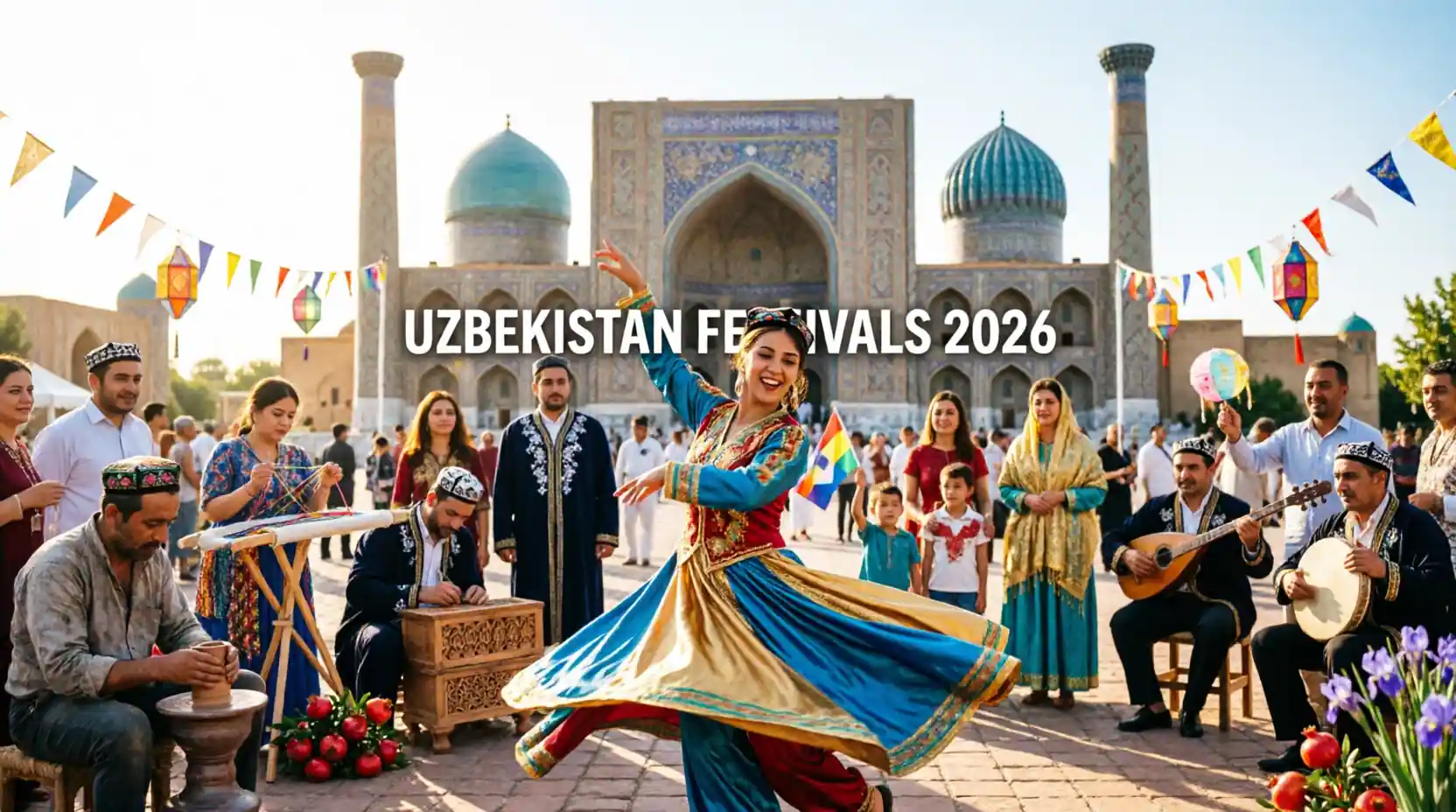
Summer brings the spectacular Sharq Taronalari to Samarkand's historic Registan Square. This biennial world music festival draws performers and audiences from over 50 countries to celebrate Oriental musical traditions.
Why Uzbekistan Festivals Offer Unique Cultural Experiences

Uzbekistan's festivals preserve traditions that have survived along the Silk Road for over two millennia. These celebrations maintain authentic practices largely untouched by commercialization found in more touristy destinations.
The country's position at the crossroads of East and West created a distinctive cultural fusion. Persian, Turkic, Mongol, and Arab influences blend seamlessly in festival performances, cuisine, and crafts.
Local communities actively participate in festival preparations and celebrations. Visitors witness genuine cultural expressions rather than staged performances designed solely for tourists.
UNESCO recognition of several Uzbek festivals ensures their preservation and authenticity. The Boysun Spring Festival and Navruz celebrations hold special cultural heritage status.
Festival attendance provides intimate access to Uzbek hospitality. Families welcome guests into their homes, sharing traditional foods and personal stories that create lasting connections.
What Makes Sharq Taronalari Special?
Sharq Taronalari ranks among the world's most prestigious world music festivals. The event transforms Samarkand's ancient squares into stages for musical excellence and cultural exchange.
Performers from Asia, Africa, Europe, and the Americas converge in Uzbekistan. This diversity creates unique collaborations and exposes audiences to musical traditions they might never otherwise encounter.
The festival's setting among 14th-century Islamic architecture creates an atmosphere unmatched anywhere else. Imagine listening to traditional music beneath the stars with the Registan's illuminated madrasas as your backdrop.
Beyond concerts, the festival features master classes, craft exhibitions, and culinary demonstrations. These educational components deepen understanding of the cultures represented.
Boysun Spring Festival Cultural Significance
Boysun Bahori celebrates the ancient traditions of southern Uzbekistan's mountainous Surkhandarya region. This festival preserves customs that have survived in relative isolation for centuries.
The event showcases unique crafts including traditional pottery, weaving, and woodcarving. Master artisans demonstrate techniques passed down through countless generations.
Folk performances feature distinctive music and dance styles specific to the Boysun region. These artistic expressions differ significantly from urban Uzbek traditions.
Ancient Zoroastrian and shamanistic rituals blend with Islamic practices. This syncretism reveals the complex spiritual history of Central Asia.
Complete 2026 Festival Calendar and Dates

Planning your Uzbekistan visit around festivals requires understanding the annual calendar. Many events follow the lunar calendar, so exact dates shift slightly each year.
Navruz Spring Festival March 2026
Navruz celebrates the Persian New Year and spring equinox on March 21, 2026. Festivities actually extend for several days before and after this date throughout Uzbekistan.
Every city and village participates in Navruz celebrations. Tashkent hosts the largest official ceremonies while smaller communities offer more intimate traditional experiences.
Traditional sumalak preparation begins weeks before Navruz. This sweet wheat pudding requires 24 hours of continuous stirring accompanied by songs and storytelling.
Navruz features traditional games including kupkari horse polo, wrestling matches, and egg tapping competitions. These activities date back thousands of years.
Boysun Spring Festival May 2026
The Boysun Bahori Festival typically occurs in early to mid-May 2026. Exact dates are usually announced in March by the Ministry of Culture.
The three-day festival transforms the small mountain town of Boysun into a cultural showcase. Expect approximately 10,000 to 15,000 attendees including both locals and international visitors.
Activities begin early morning and continue until late evening. Plan to spend at least two full days to experience the festival comprehensively.
The festival coincides with perfect spring weather in southern Uzbekistan. Temperatures range from 20 to 28 degrees Celsius with clear blue skies.
Sharq Taronalari August September 2026
Sharq Taronalari occurs biennially, and 2026 marks a festival year. The event typically runs for 5 to 7 days in late August or early September.
Expected dates for 2026 are August 28 through September 2. However, official confirmation usually comes in spring 2026.
The festival features over 100 musical groups from 50 plus countries. Concerts run simultaneously on multiple stages throughout Samarkand.
Opening and closing ceremonies take place at Registan Square. These spectacular events feature thousands of performers and attract 50,000 plus attendees.
Other Major 2026 Festivals
The Silk and Spices Festival in Bukhara occurs in late May or early June. This event celebrates the city's historic role in Silk Road trade.
Khiva's Yashnar Festival happens in September, showcasing traditional carpet weaving and equestrian sports.
Tashkent's International Film Festival takes place in October, featuring Central Asian and world cinema.
The Apple Festival in Ferghana Valley occurs in autumn, celebrating the region's famous fruit harvest.
How to Reach Uzbekistan Festival Destinations

Uzbekistan's major festival cities are well-connected by air, rail, and road. Understanding transportation options helps optimize your festival itinerary.
International Flights to Uzbekistan
Tashkent International Airport serves as the main gateway to Uzbekistan. Direct flights operate from Moscow, Istanbul, Dubai, Seoul, Bangkok, and major European cities.
Turkish Airlines offers excellent connections through Istanbul with competitive prices. Flight times from Europe range from 4 to 6 hours plus layover.
Uzbekistan Airways operates direct flights from New York and London with stops in Tashkent. These routes provide convenient access from North America and Western Europe.
Samarkand and Bukhara have smaller international airports with limited direct flights. Most international travelers enter through Tashkent then connect domestically.
Domestic Transportation Between Festival Cities
High-speed Afrosiyob trains connect Tashkent, Samarkand, and Bukhara efficiently. The Tashkent to Samarkand journey takes just 2 hours at speeds up to 250 km/h.
Train tickets cost $15 to $35 depending on class and route. Book at least one week in advance during festival periods as trains fill quickly.
Domestic flights between major cities cost $50 to $100 one way. Uzbekistan Airways and private carriers operate multiple daily flights.
Shared taxis and minibuses provide budget alternatives. These options cost $10 to $20 between cities but take longer and offer less comfort.
Reaching Boysun for Spring Festival
Boysun lies 240 kilometers south of Samarkand in Surkhandarya region. The journey requires planning as public transportation involves multiple connections.
Most visitors reach Boysun via Termez, the regional capital. Fly or take the train from Tashkent to Termez, then hire a private car for the 120 kilometer mountain drive to Boysun.
Private car rental with driver from Samarkand to Boysun costs $80 to $120 for the day. This option provides flexibility and comfort for the scenic mountain route.
Organized festival tours include round-trip transportation from Samarkand or Termez. These packages typically cost $100 to $150 per person including guide services.
Public buses operate from Termez to Boysun but run infrequently. The journey takes 3 to 4 hours with basic comfort levels.
Visa Requirements for Uzbekistan 2026

Uzbekistan has dramatically simplified visa procedures in recent years. Most nationalities now enjoy visa-free or e-visa access making festival travel straightforward.
Visa-Free Entry Countries
Citizens of over 85 countries can enter Uzbekistan visa-free for tourism. This includes European Union nations, United Kingdom, Canada, Australia, Japan, South Korea, and Singapore.
Visa-free stays typically allow 30 days which suffices for most festival itineraries. Some nationalities receive 15 or 60 days depending on bilateral agreements.
Ensure your passport remains valid for at least 3 months beyond your intended departure date. Immigration officers check this requirement strictly.
Visa-free entry requires proof of onward travel and accommodation. Keep printed copies of flight tickets and hotel reservations readily available.
E-Visa Application Process
Citizens of countries not eligible for visa-free entry can apply for e-visas online. The process takes 2 to 3 business days and costs $20 for single entry.
Visit the official e-visa portal at e-visa.gov.uz to submit your application. You will need a passport scan, photograph, and travel itinerary.
E-visas allow 30-day stays for tourism purposes. Multiple entry e-visas cost $35 and permit entering and exiting Uzbekistan multiple times.
Print your e-visa approval and carry it with your passport. Border officials require physical copies even though the visa exists electronically.
Registration Requirements
All foreign visitors must register with Uzbek authorities if staying longer than 3 days. Hotels handle this registration automatically upon check-in.
Private accommodations require you to register at local OVIR offices. Your host should assist with this process which takes about 30 minutes.
Keep all registration slips until departure. Immigration may request to see them when you exit the country.
Failure to register can result in fines and complications. Take this requirement seriously even though enforcement varies.
Complete Cost Breakdown for Uzbekistan Festivals 2026

Uzbekistan remains one of the most affordable destinations for cultural tourism. Your festival experience costs depend on travel style and festival choices.
Festival Entrance Fees
Navruz celebrations are completely free and open to everyone. Public squares throughout cities host performances, games, and food stalls at no cost.
Boysun Spring Festival charges no entrance fee. Some individual workshops or special events may request small donations of $2 to $5.
Sharq Taronalari offers free access to most outdoor concerts in public squares. Premium seating areas and indoor venue concerts cost $10 to $50 per event.
Festival passes for Sharq Taronalari range from $30 for basic access to $150 for VIP packages. These passes guarantee seating at popular performances.
Accommodation Costs During Festivals
Expect accommodation prices to increase 30 to 50 percent during major festivals. Book at least 2 to 3 months in advance to secure reasonable rates.
Budget hotels and hostels cost $15 to $30 per night in most cities. During Sharq Taronalari, these same rooms may cost $25 to $45.
Mid-range hotels with private bathrooms charge $40 to $80 nightly. Festival periods push these rates to $60 to $120.
Boutique hotels in restored traditional houses cost $80 to $200 per night. These properties offer authentic atmosphere and personalized service.
Homestays and guesthouses provide cultural immersion at $20 to $40 per night including meals. This option works especially well in Boysun and smaller towns.
Food and Dining Expenses
Street food and local eateries charge $3 to $8 per meal. Plov, lagman, and shashlik portions are generous and filling.
Mid-range restaurants cost $10 to $20 per person for dinner. These establishments serve traditional Uzbek cuisine in comfortable settings.
Upscale restaurants in Tashkent and Samarkand charge $25 to $50 per person. Fine dining features fusion cuisine and international standards.
Festival food stalls offer traditional dishes at fair prices. Expect to pay $5 to $10 for complete meals during celebrations.
Transportation Budget
Local taxis within cities cost $2 to $5 for typical journeys. Use Yandex Go app for fair pricing and cashless payment.
Public buses and metro charge $0.30 to $0.50 per ride. Tashkent's metro system is efficient, clean, and architecturally stunning.
Intercity train travel costs $15 to $35 depending on distance and class. High-speed Afrosiyob trains offer excellent value.
Private car with driver for day trips costs $60 to $100 daily. This option provides flexibility for reaching festival sites and rural areas.
Sample Festival Itinerary for Uzbekistan 2026

Designing an optimal festival itinerary requires balancing event dates, travel time, and cultural experiences. This sample plan maximizes your Uzbekistan festival exposure.
March Navruz Celebration Itinerary
Arrive in Tashkent on March 19, 2026 to acclimate before Navruz. Spend two days exploring the capital's museums and markets.
Experience Navruz on March 21 in Tashkent's main squares. Watch traditional games, taste sumalak, and enjoy folk performances throughout the day.
Travel to Samarkand on March 23 by high-speed train. Continue Navruz celebrations in this historic city with its unique local traditions.
Visit Bukhara from March 25 to 27. The ancient city offers intimate Navruz experiences with fewer tourists than Tashkent or Samarkand.
Depart Uzbekistan on March 28 or continue traveling to other regions. This 10-day itinerary provides comprehensive Navruz exposure.
May Boysun Festival Itinerary
Fly into Tashkent on May 8 and immediately connect to Samarkand. Spend two days exploring the city's UNESCO World Heritage sites.
Travel to Termez on May 10 by train or domestic flight. This southern city serves as the gateway to Boysun.
Arrive in Boysun on May 11 for the festival's opening day. Check into your guesthouse and explore the town's traditional architecture.
Immerse yourself in Boysun Bahori on May 12 and 13. Attend craft demonstrations, folk performances, and traditional ceremonies.
Return to Samarkand on May 14 for additional sightseeing. Depart Uzbekistan on May 16 or continue to other destinations.
August Sharq Taronalari Itinerary
Arrive in Tashkent on August 26, 2026. Spend two days acclimating and exploring the capital before heading to Samarkand.
Travel to Samarkand on August 28 for the festival opening. Book accommodation well in advance as the city fills during this event.
Attend Sharq Taronalari concerts from August 28 through September 2. Balance festival attendance with visits to Registan, Shah-i-Zinda, and other historic sites.
Use September 3 for rest and souvenir shopping. The festival's intensity requires recovery time before departure.
Depart from Samarkand or return to Tashkent for your flight home on September 4 or 5.
Safety Tips for Festival Travel in Uzbekistan

Uzbekistan ranks as one of Central Asia's safest countries for travelers. Simple precautions ensure your festival experience remains trouble-free.
Personal Security
Pickpocketing occurs occasionally in crowded festival areas. Keep valuables secure and maintain awareness in large crowds.
Use hotel safes for passports and excess cash. Carry photocopies of important documents instead of originals when possible.
Avoid displaying expensive cameras or jewelry conspicuously. Respectful discretion prevents unwanted attention.
Travel insurance covering medical emergencies and trip cancellation is essential. Verify coverage includes adventure activities if you plan hiking or horseback riding.
Health Considerations
Drink only bottled or filtered water throughout Uzbekistan. Tap water is not safe for consumption even in major cities.
Summer festival attendance requires heat precautions. Temperatures in August reach 35 to 40 degrees Celsius in some regions.
Stay hydrated and wear sun protection during outdoor events. Hats, sunglasses, and sunscreen prevent heat-related illness.
Bring basic medications for common ailments. Pharmacies exist in cities but may lack familiar brands.
Cultural Sensitivity
Dress modestly especially when visiting religious sites during festivals. Shoulders and knees should remain covered out of respect.
Ask permission before photographing people particularly in rural areas. Many Uzbeks appreciate being asked and may pose willingly.
Respect prayer times and religious observances. Friday afternoons see reduced activity as Muslims attend mosque services.
Learn basic Uzbek or Russian greetings. Simple efforts at communication earn warm responses from locals.
Photography Tips for Uzbekistan Festivals

Uzbekistan's festivals provide extraordinary photographic opportunities. Proper preparation and technique capture these vibrant celebrations effectively.
Best Photography Locations
Samarkand's Registan Square offers stunning backdrops for Sharq Taronalari performances. The illuminated madrasas create magical evening atmosphere.
Boysun's narrow streets and traditional houses provide authentic settings. Early morning light enhances the town's earth-toned architecture.
Tashkent's Chorsu Bazaar during Navruz bursts with color and activity. The contrast between traditional market and modern city creates compelling images.
Bukhara's ancient ark fortress hosts festival events with historic ambiance. The setting sun casts golden light on centuries-old walls.
Technical Recommendations
Bring versatile zoom lenses covering 24-200mm range. Festival photography requires both wide environmental shots and tight portraits.
Fast lenses with f/2.8 or wider aperture help in low light. Evening performances and indoor venues demand maximum light gathering.
Use high ISO settings confidently with modern cameras. ISO 1600 to 3200 produces acceptable results for festival documentation.
Carry multiple memory cards and batteries. Festival days involve extensive shooting with limited recharging opportunities.
Cultural Photography Etiquette
Always ask permission before photographing individuals. A smile and gesture toward your camera usually receives positive responses.
Respect restrictions at religious ceremonies. Some rituals prohibit photography entirely while others allow it discreetly.
Offer to share photos with subjects when possible. This gesture builds goodwill and creates memorable interactions.
Avoid photographing military personnel or installations. Security concerns make this inappropriate and potentially dangerous.
Accommodation Guide for Festival Periods

Securing appropriate accommodation during Uzbekistan's major festivals requires advance planning and strategic choices.
Booking Strategies
Reserve accommodation at least 2 to 3 months before major festivals. Sharq Taronalari and Boysun Spring Festival fill hotels quickly.
Use multiple booking platforms including local Uzbek sites. Some properties list exclusively on domestic platforms with better rates.
Consider staying slightly outside city centers for better availability. Reasonable transportation costs offset lower accommodation prices.
Book refundable rates when possible. Festival dates sometimes shift and flexibility prevents financial loss.
Accommodation Types
Traditional guesthouses in restored houses offer authentic experiences. These properties feature central courtyards and personalized service.
Modern hotels provide familiar comforts and reliable amenities. International chains operate in Tashkent while local brands dominate other cities.
Homestays in rural areas like Boysun provide cultural immersion. Families welcome guests and share traditional meals and customs.
Yurt camps operate near some festival sites during peak season. These unique accommodations offer memorable nights under the stars.
Festival-Specific Recommendations
For Sharq Taronalari, stay in Samarkand's historic center. Walking distance to Registan Square eliminates transportation hassles.
Boysun has limited accommodation so book early. Simple guesthouses cost $20 to $40 and include hearty home-cooked meals.
Navruz in Tashkent offers abundant options. The capital's extensive hotel inventory handles increased demand relatively well.
Consider multi-city passes if attending multiple festivals. Some tour operators package accommodation across different locations.
Traditional Foods to Try at Uzbek Festivals

Uzbek cuisine represents one of Central Asia's culinary treasures. Festival attendance provides perfect opportunities to sample authentic dishes.
Essential Festival Foods
Plov stands as Uzbekistan's national dish featuring rice, carrots, onions, and meat. Every region prepares plov differently making comparison enjoyable.
Sumalak, the Navruz specialty, requires 24 hours of preparation. This sweet wheat pudding symbolizes spring's abundance and community cooperation.
Shashlik skewers of marinated meat grilled over charcoal appear everywhere. Lamb, beef, and chicken varieties satisfy every preference.
Lagman hand-pulled noodles with vegetables and meat make hearty festival fare. Uyghur influence shows in this popular dish.
Manty steamed dumplings filled with meat and pumpkin delight taste buds. These bite-sized parcels pack intense flavors.
Sweets and Beverages
Navat rock sugar crystals accompany green tea throughout Uzbekistan. This simple combination refreshes during long festival days.
Halva sesame-based confection comes in countless varieties. Sample different types at festival markets to find your favorite.
Non traditional flatbread serves as both utensil and accompaniment. Breaking bread together symbolizes friendship and hospitality.
Ayran yogurt drink provides cooling relief in summer heat. This probiotic beverage aids digestion after rich festival meals.
Where to Eat
Festival food stalls offer convenient affordable options. Quality varies so observe where locals queue for best results.
Choykhana tea houses serve traditional meals in atmospheric settings. These establishments provide rest and cultural immersion.
Local markets feature fresh produce and prepared foods. Morning visits reveal the best selection and energy.
Family-run restaurants offer home-style cooking. Ask your accommodation for recommendations to find authentic neighborhood spots.
Conclusion and Final Recommendations

Uzbekistan's festival calendar for 2026 offers extraordinary opportunities to experience Central Asian culture at its most vibrant. From Navruz's spring celebrations to Sharq Taronalari's musical splendor, each event reveals different facets of Uzbek heritage.
Plan your visit around festivals that interest you most while allowing flexibility for spontaneous discoveries. The country's compact size and efficient transportation make multi-festival itineraries feasible.
Book accommodation and transportation well in advance especially for Sharq Taronalari and Boysun Spring Festival. These popular events fill quickly and prices rise as dates approach.
Embrace the warmth of Uzbek hospitality by accepting invitations and engaging with locals. These personal connections often become trip highlights creating memories beyond any scheduled event.
Respect cultural traditions and dress modestly particularly at religious sites and rural festivals. Thoughtful behavior ensures positive interactions and enriches your experience.
Bring comfortable walking shoes, sun protection, and an open mind. Festival days involve extensive walking and exposure to new experiences that challenge and expand your perspective.
Uzbekistan in 2026 awaits with open arms and celebration. The festivals along the ancient Silk Road promise adventures that will inspire and transform you long after your return home.
0 Comments