.webp)
.webp)
Introduction: Discovering Oman's Diverse Landscapes and Rich Heritage
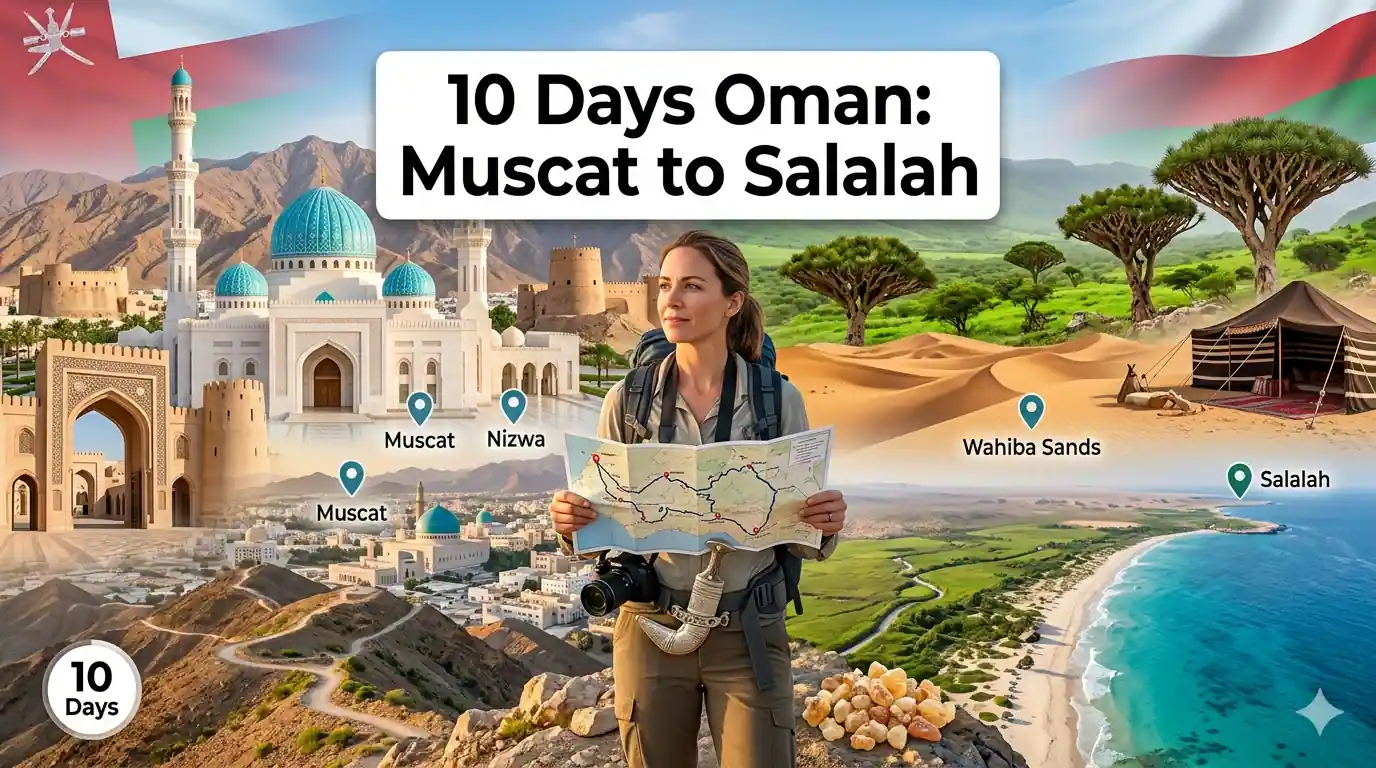
Oman, the Arabian Peninsula's best-kept secret, offers travelers an extraordinary journey through dramatic mountain ranges, golden desert dunes, pristine coastlines, and ancient trading cities—all within a compact and accessible destination. This 10-day itinerary is designed to showcase the Sultanate's greatest treasures: from the architectural splendor of Muscat's Sultan Qaboos Grand Mosque to the frankincense-scented air of Salalah, from the golden dunes of Wahiba Sands to the turquoise pools of Wadi Shab, and from the ancient forts of Nizwa to the monsoon-kissed mountains of Dhofar.
For first-time visitors to the Arabian Peninsula or seasoned Middle East travelers seeking an authentic experience, Oman delivers exceptional value, genuine hospitality, and cultural richness without the crowds that characterize more visited Gulf destinations. The country's compact size and excellent road infrastructure mean you can experience diverse landscapes and cultural highlights without spending excessive time in transit. From hiking dramatic mountain wadis and camping under desert stars to exploring ancient souqs and relaxing on pristine beaches, this itinerary balances active adventure with cultural immersion and moments of relaxation.
Whether you are drawn to Oman for its Islamic architecture, its Bedouin heritage, its dramatic natural beauty, or simply the opportunity to discover one of the Arab world's most welcoming nations, this 10-day guide provides the roadmap for a transformative journey. You will walk through 5,000-year-old archaeological sites, hike trails that offer panoramic views of untouched wilderness, taste traditional Omani cuisine in family-run restaurants, and connect with local communities that preserve traditions passed down through millennia.
Day 1: Arrival in Muscat - Gateway to Arabia

Your Oman adventure begins with arrival at Muscat International Airport (MCT), the country's main international gateway and one of the region's most modern and efficient airports. After clearing immigration and collecting your luggage, arrange transportation to your accommodation in Muscat. Taxis are readily available outside the terminal; agree on a fare in advance or use ride-hailing apps if available. The journey to central Muscat takes approximately 30-45 minutes depending on your hotel location.
Check into your accommodation, choosing from luxury hotels along the Corniche, boutique properties in Old Muscat, or modern business hotels in the city center. Take time to settle in, freshen up, and acclimate to Oman's warm climate and relaxed pace.
In the late afternoon, begin your Muscat introduction with a gentle walk along the Muscat Corniche, the city's scenic waterfront promenade. This beautifully maintained walkway offers stunning views of the Gulf of Oman, traditional dhows bobbing in the harbor, and the distinctive white architecture that defines Muscat's skyline. The Corniche provides a perfect introduction to the city's blend of traditional Omani character and modern development.
As evening approaches, head to Mutrah Souq, one of the oldest and most atmospheric markets in the Arabian Peninsula. This labyrinthine marketplace has been a trading hub for over 200 years, where the scent of frankincense and oud mingles with the sounds of bargaining and the call to prayer. Wander through narrow alleyways lined with shops selling traditional Omani khanjars (daggers), silver jewelry, frankincense, perfumes, textiles, and handcrafted souvenirs. The souq comes alive in the evening when the heat subsides and locals and visitors alike come to shop and socialize.
Conclude your first day with dinner at a traditional Omani restaurant in Mutrah or along the Corniche. Sample local specialties like shuwa (slow-cooked marinated lamb), mashuai (grilled kingfish), or harees (wheat and meat porridge), accompanied by Arabic coffee and dates. End the evening with a stroll along the waterfront, watching the lights reflect on the water and the traditional dhows silhouetted against the night sky.
Day 2: Muscat's Architectural and Cultural Treasures

Dedicate your second day to exploring Muscat's rich cultural heritage and architectural splendors, beginning with the city's crown jewel.
Start your morning at the Sultan Qaboos Grand Mosque, Oman's most iconic landmark and one of the world's most beautiful mosques. Arrive early (the mosque opens at 8 AM for non-Muslim visitors) to avoid crowds and the midday heat. This architectural masterpiece took six years to build and can accommodate 20,000 worshippers. The main prayer hall features the world's second-largest hand-loomed carpet, weighing 21 tons and measuring 4,343 square meters, and a Swarovski crystal chandelier weighing 8.5 tons that hangs 14 meters high.
Spend time admiring the mosque's intricate Islamic architecture, from the 90-meter-high main minaret to the beautiful Persian-style gardens surrounding the complex. The mosque's white marble facade gleams in the morning sun, and the interior features stunning geometric patterns, calligraphy, and ornate decorations that showcase Omani craftsmanship. Remember to dress modestly (women must cover their hair, arms, and legs; men should wear long pants) and remove shoes before entering.
After visiting the mosque, head to the Royal Opera House Muscat, another architectural gem that showcases Oman's commitment to arts and culture. Even if you don't attend a performance, the building's exterior and surrounding gardens are worth exploring. The opera house blends traditional Omani and Islamic architecture with modern design, featuring intricate wood carvings, marble floors, and beautiful landscaping.
In the afternoon, explore Old Muscat, the historic heart of the city. Visit the Al Alam Palace, the ceremonial palace of Sultan Qaboos, flanked by the 16th-century Portuguese forts of Al Jalali and Al Mirani. While you cannot enter the palace, the exterior and surrounding area offer excellent photo opportunities and insights into Oman's royal heritage. The nearby National Museum of Oman provides comprehensive exhibits on the country's history, from prehistoric times to the modern era, with impressive displays of archaeology, ethnography, and Islamic art.
Conclude your day with a sunset dhow cruise from Mutrah Harbor. These traditional wooden sailing vessels offer a unique perspective of Muscat's coastline, passing by palaces, forts, and the city's distinctive white architecture illuminated by evening lights. Many cruises include dinner featuring Omani and international cuisine, creating a memorable end to your Muscat exploration.
Day 3: Nizwa - Ancient Capital and Fort Heritage

Travel from Muscat to Nizwa, approximately 140 kilometers southwest, for a journey into Oman's ancient past. The drive takes about 2 hours through dramatic mountain scenery as you ascend into the Hajar Mountains. Depart early to maximize your time in this historic city, which served as Oman's capital during the 6th and 7th centuries and remains the country's cultural heart.
Upon arrival, begin your Nizwa exploration at the city's most iconic landmark: Nizwa Fort. This massive 17th-century structure, built by Imam Sultan bin Saif Al Ya'rubi, features a distinctive cylindrical tower that rises 30 meters high and 36 meters in diameter. The fort's ingenious design includes hidden traps, narrow passages, and defensive positions that protected the city from invaders. Climb to the top of the tower for panoramic views of Nizwa, the surrounding date palm plantations, and the Hajar Mountains.
Explore the fort's interior, which houses a museum displaying traditional weapons, jewelry, coins, and artifacts that tell the story of Nizwa's golden age. The fort's architecture showcases Omani military engineering, with thick walls, strategic positioning, and clever defensive features that made it one of the most formidable fortifications in Arabia.
Adjacent to the fort lies Nizwa Souq, one of Oman's most authentic and vibrant traditional markets. Unlike the more touristy souqs in Muscat, Nizwa Souq maintains its traditional character as a working market where locals shop for daily needs. The souq is particularly famous for its silver jewelry, traditional khanjars, pottery, and fresh produce. Friday mornings are especially lively when the livestock market takes place, with locals trading goats, sheep, and cattle in a tradition that continues unchanged for centuries.
For lunch, sample traditional Omani cuisine at a local restaurant in Nizwa. Try dishes like Omani shuwa (marinated lamb slow-cooked in an underground oven for up to two days), Omani halwa (a sweet gelatinous confection made from rose water, sugar, and eggs), and fresh dates, for which Nizwa is famous.
In the afternoon, visit the nearby Bahla Fort, a UNESCO World Heritage Site located about 20 kilometers from Nizwa. This massive 12th-century fortification, with its 12-kilometer-long walls and 132 watchtowers, is one of the largest and most impressive forts in Oman. The fort's mud-brick construction and strategic location on a rocky outcrop demonstrate the architectural and engineering skills of medieval Oman. While much of the fort is in ruins, ongoing restoration work reveals the scale and sophistication of this remarkable structure.
Return to Nizwa for the evening, where you can explore more of the souq, visit the Nizwa Heritage Center to learn about traditional crafts and daily life, or simply relax at your accommodation. Consider staying in a traditional Omani guesthouse or a boutique hotel that reflects the region's architectural heritage.
Day 4: Jebel Akhdar - The Green Mountain

Embark on an unforgettable journey to Jebel Akhdar, the "Green Mountain," one of Oman's most spectacular natural destinations. Rising to over 3,000 meters in the Hajar Mountains, Jebel Akhdar offers dramatic landscapes, terraced gardens, cool mountain air, and breathtaking views that contrast sharply with the desert heat below.
The drive from Nizwa to Jebel Akhdar takes approximately 1.5 hours, but the final ascent requires a 4WD vehicle due to the steep, winding mountain road. If you don't have a 4WD, you can hire a local driver or join a guided tour. The mountain road itself is an adventure, climbing through dramatic gorges and past traditional stone villages clinging to the mountainside.
Upon reaching the summit, you'll understand why this mountain is called "green." Despite being surrounded by arid desert, Jebel Akhdar's higher elevation captures moisture from monsoon clouds, supporting terraced gardens of roses, pomegranates, apricots, and walnuts. The mountain is particularly famous for its Damask roses, harvested in April and May to produce rose water, a valuable product used in perfumes and traditional medicine.
Spend your day exploring the mountain's villages and trails. Visit traditional villages like Al Ayn, Saiq, and Bilad Sayt, where ancient stone houses and terraced gardens demonstrate centuries of agricultural ingenuity. The terraces, carved into steep mountainsides and irrigated by ancient aflaj (water channels), showcase the sophisticated water management systems developed by Omani farmers over millennia.
Hike one of the mountain's many trails, ranging from easy village walks to challenging mountain treks. The Snake Gorge (Wadi Bani Habib) offers a moderate hike through a dramatic canyon with pools of emerald water, while the summit trail to Jabal Shams, Oman's highest peak at 3,009 meters, rewards hikers with panoramic views of the entire mountain range. Even shorter walks between villages offer stunning scenery and opportunities to interact with local farmers and learn about mountain life.
For lunch, enjoy a meal at one of the mountain's hotels or restaurants, many of which feature terraces with spectacular views. Sample local specialties like fresh pomegranate juice, mountain honey, and traditional Omani dishes prepared with locally-grown ingredients.
In the afternoon, visit a rose water distillery if visiting during the harvest season (April-May), or explore the mountain's ancient aflaj irrigation system, a UNESCO World Heritage Site that demonstrates traditional Omani water management. These underground channels, some over 1,000 years old, continue to supply water to villages and gardens using gravity alone.
As evening approaches, find a viewpoint to watch the sunset over the mountains. The play of light on the rugged peaks, the changing colors of the sky, and the cool mountain air create a magical atmosphere. Stay overnight on the mountain to experience the tranquility, stargazing opportunities, and cool nights that make Jebel Akhdar a perfect retreat from the desert heat.
Day 5: Wahiba Sands - Desert Adventure

Descend from the cool heights of Jebel Akhdar to the golden dunes of Wahiba Sands (also known as Sharqiya Sands), one of Oman's most iconic desert landscapes. This vast expanse of rolling dunes, stretching 180 kilometers from north to south and 80 kilometers from east to west, offers an authentic Arabian desert experience.
The journey from Jebel Akhdar to Wahiba Sands takes approximately 3-4 hours, descending from the mountains through dramatic wadis and traditional villages before reaching the desert's edge. Stop at the town of Bidiyah, where you can visit the oldest mosque in Oman, dating back to the 15th century, and stock up on supplies before entering the desert.
Upon reaching Wahiba Sands, you'll need a 4WD vehicle to navigate the soft sand dunes. If you don't have one, arrange for a local Bedouin guide who can either drive your vehicle or provide transportation in their own 4WD. These experienced desert drivers know the sands intimately and can take you to the best camping spots while ensuring your safety.
Spend your afternoon exploring the dunes, feeling the sand shift beneath your feet, and experiencing the profound silence and vastness of the desert. Climb one of the higher dunes for panoramic views of endless golden sands stretching to the horizon. The dunes change color throughout the day, from pale gold in the morning to deep orange at sunset, creating ever-changing photographic opportunities.
Visit a Bedouin camp to learn about traditional desert life. The Bedouin people have inhabited these sands for centuries, developing remarkable adaptations to desert life including traditional tent-making, camel herding, and sophisticated navigation skills. Many camps offer cultural experiences where you can learn about Bedouin hospitality, try traditional foods, and hear stories of desert life around a campfire.
As the afternoon progresses, find your campsite for the night. Many travelers choose to stay in a traditional Bedouin-style camp, ranging from basic setups with simple tents and shared facilities to luxury desert camps with private tents, en-suite bathrooms, and gourmet dining. Alternatively, if you're properly equipped and experienced, you can wild camp under the stars.
Watch the sunset from the top of a dune, one of the most spectacular experiences in Oman. As the sun dips below the horizon, the dunes transform through shades of gold, orange, pink, and purple, creating a breathtaking display of natural beauty. The silence of the desert, broken only by the whisper of wind across the sand, creates a meditative atmosphere that stays with you long after you leave.
Enjoy a traditional Omani dinner at your camp, featuring dishes like grilled meats, rice, flatbread, and fresh salads, often cooked over an open fire. After dinner, lie back and gaze at the stars. The desert's complete absence of light pollution reveals the Milky Way in stunning clarity, creating one of the most memorable stargazing experiences imaginable.
Spend the night in your desert camp, listening to the sounds of the desert and waking to a spectacular sunrise over the dunes. The early morning light on the sands, the cool air, and the sense of being in one of the world's most pristine environments make this an unforgettable experience.
Day 6: Wadi Shab - Turquoise Paradise

After your desert adventure, travel north to one of Oman's most spectacular natural attractions: Wadi Shab. This stunning gorge, carved through limestone mountains by seasonal floods, features a series of emerald and turquoise pools that create one of the most beautiful and refreshing experiences in Oman.
The journey from Wahiba Sands to Wadi Shab takes approximately 2.5-3 hours, heading north through coastal plains and small fishing villages. Stop at the coastal town of Sur, famous for its traditional dhow shipbuilding industry, where you can visit a dhow yard to see craftsmen building wooden ships using techniques unchanged for centuries. Sur's location on the Indian Ocean made it an important trading port, and its maritime heritage remains visible in the traditional boats and waterfront architecture.
Upon reaching Wadi Shab, park at the designated parking area and take a short 5-minute boat ride across the wadi to reach the trailhead. The hike into the gorge takes approximately 45 minutes to 1 hour each way, following a well-marked path through dramatic canyon walls. The trail involves some scrambling over rocks and crossing shallow streams, so wear sturdy shoes with good grip and bring plenty of water.
As you hike deeper into the wadi, the canyon walls rise higher and the pools become more spectacular. The water, filtered through limestone, creates stunning shades of turquoise and emerald that seem almost unreal. Stop at various pools along the way to swim and cool off in the refreshing water. The pools range from shallow, easy wading areas to deeper spots suitable for swimming and even cliff jumping for the adventurous.
About 1 hour into the hike, you'll reach the wadi's highlight: a hidden cave behind a waterfall. To reach it, you'll need to swim through a narrow opening in the rock face. Inside the cave, you'll find a small grotto with a freshwater spring and a beam of sunlight filtering through an opening in the ceiling, creating a magical atmosphere. This hidden gem is one of Oman's most photographed natural features and rewards those willing to make the effort to reach it.
Spend several hours exploring the wadi, swimming in the pools, hiking to different sections, and simply relaxing in this natural paradise. The combination of dramatic canyon walls, crystal-clear water, and the sounds of flowing water creates a sensory experience that contrasts beautifully with the desert landscape you experienced the previous day.
For lunch, either bring a picnic to enjoy by the pools or eat at one of the simple restaurants near the parking area before or after your hike. Fresh fruit, sandwiches, and plenty of water are essential for the hike.
In the late afternoon, return to your vehicle and drive to your accommodation in the nearby town of Tiwi or continue to Muscat for the evening. If time permits, stop at one of the coastal villages along the way to watch the sunset over the Arabian Sea and enjoy fresh seafood at a local restaurant.
Day 7: Muscat to Salalah - Journey to the South

Today marks a significant transition in your Oman journey as you travel from the northern regions to Salalah in the southern Dhofar region. This journey can be completed by a short domestic flight or a scenic overland drive, each offering different experiences.
Option 1: Flight (Recommended for time efficiency)
Take a morning flight from Muscat International Airport to Salalah Airport. The flight takes approximately 1 hour and 15 minutes and is operated by Oman Air or Salam Air several times daily. This option saves time and energy, allowing you to maximize your time exploring Salalah. Upon arrival, collect your luggage and transfer to your accommodation in Salalah.
Option 2: Overland Drive (For the adventurous)
If you prefer an overland adventure and have sufficient time, you can drive from Muscat to Salalah, a journey of approximately 1,000 kilometers taking 10-12 hours. This route takes you through diverse landscapes including coastal plains, desert, and mountains. However, this is a long drive that requires an early start and is best split over two days with an overnight stop. For this itinerary, we recommend flying to maximize your time in Salalah.
Upon arrival in Salalah, check into your accommodation. Salalah offers a range of options from luxury beachfront resorts to boutique hotels and traditional guesthouses. The city has a distinctly different character from Muscat, with stronger South Arabian influences, lush vegetation during the khareef (monsoon) season, and a more relaxed pace.
Spend your afternoon exploring Salalah's waterfront and the Al Husn Souq, the city's main traditional market. Unlike the more touristy souqs in Muscat, Al Husn Souq maintains an authentic local character where you can find frankincense, traditional Omani silver jewelry, pottery, and local crafts. Salalah is famous for its high-quality frankincense, and this is an excellent place to purchase this precious resin that has been traded from Dhofar for over 5,000 years.
In the evening, enjoy dinner at a local restaurant featuring Dhofari cuisine, which differs from northern Omani food with its stronger Yemeni and East African influences. Try specialties like mandi (spiced rice and meat cooked in an underground oven), shuwa, and fresh seafood from the Arabian Sea.
If visiting during the khareef season (late June to September), you'll experience Salalah's famous monsoon, when the mountains turn lush green and waterfalls flow through the wadis. This is a unique phenomenon in the Arabian Peninsula and attracts visitors from across the Gulf region seeking relief from the summer heat.
Day 8: Salalah's Frankincense Heritage and Natural Wonders

Dedicate your second day in Salalah to exploring the region's rich frankincense heritage and stunning natural attractions, beginning with one of Oman's most important archaeological sites.
Start your morning at Al Baleed Archaeological Park, a UNESCO World Heritage Site that was once an important port city in the frankincense trade. The park features the ruins of a medieval Islamic city, including mosques, houses, and port facilities that date back to the 9th century. The site museum provides excellent context about the frankincense trade and the region's history. The park is beautifully landscaped with palm trees and offers a peaceful introduction to Salalah's ancient past.
Continue to the nearby Frankincense Land Museum, a modern facility that tells the story of frankincense from ancient times to the present. The museum's exhibits explain how frankincense was harvested, traded along ancient routes to Egypt, Rome, and beyond, and used in religious ceremonies, medicine, and perfumes. The museum's architecture itself is worth appreciating, blending modern design with traditional Omani elements.
In the afternoon, visit Wadi Darbat, one of Salalah's most beautiful natural attractions. This lush valley, fed by natural springs and seasonal rains, features waterfalls, turquoise pools, and abundant vegetation including banana trees, coconut palms, and wildflowers. During the khareef season, the wadi transforms into a verdant paradise with flowing waterfalls and mist-shrouded mountains. Even outside monsoon season, the wadi's natural springs create a green oasis in the otherwise arid landscape.
Take a boat ride on the wadi's lake, where you can observe water buffalo grazing in the shallows, a unique sight in Arabia. These animals were brought to Dhofar centuries ago and have adapted to the local environment. Hike along the wadi's trails to discover hidden waterfalls, natural pools perfect for swimming, and viewpoints offering panoramic views of the valley and surrounding mountains.
For lunch, enjoy a picnic by the wadi or eat at one of the local restaurants in the area. Fresh fruit, particularly bananas and coconuts grown in the wadi, makes a refreshing snack.
In the late afternoon, visit the nearby Ain Razat springs, another beautiful natural site where freshwater springs emerge from the mountainside, creating pools surrounded by lush vegetation. The springs are a popular spot for families and offer a peaceful setting to relax and enjoy nature.
As evening approaches, head to Salalah's corniche, the city's waterfront promenade, for a sunset walk along the Arabian Sea. The corniche offers beautiful views of the ocean, traditional fishing boats, and the city's distinctive architecture. Stop at one of the seaside cafes for Arabic coffee and dates while watching the sun set over the water.
Conclude your day with dinner at a restaurant featuring fresh seafood from the Arabian Sea. Salalah's coastal location provides excellent fish, lobster, and other seafood, often grilled simply with spices and lemon to highlight the fresh flavors.
Day 9: Ancient Sumhuram and Mughsayl Beach

On your penultimate day in Oman, explore the ancient frankincense port of Sumhuram and the dramatic coastal scenery of Mughsayl Beach, experiencing both the region's ancient heritage and its stunning natural beauty.
Begin your morning with a visit to Sumhuram, another UNESCO World Heritage Site located about 40 kilometers east of Salalah. This ancient port city, dating back to the 4th century BC, was one of the most important frankincense trading ports in the ancient world. The ruins include city walls, gates, a temple, and residential areas that reveal the sophistication of this ancient civilization.
Walk through the archaeological site with a guide who can explain the significance of different structures and the role Sumhuram played in the frankincense trade. The site's location on a hill overlooking the sea and a natural lagoon demonstrates the strategic thinking of ancient planners. The lagoon, which still exists today, provided a natural harbor for ships carrying frankincense to markets across the ancient world.
After exploring Sumhuram, continue to the nearby Khor Rori area, where you can see the natural lagoon that served as the ancient port. The area is now a nature reserve where you can observe migratory birds, particularly during winter months when thousands of birds stop here during their migration between Europe and Africa.
For lunch, stop at one of the local restaurants in the area or return toward Salalah for more dining options.
In the afternoon, head west to Mughsayl Beach, one of Oman's most spectacular coastal destinations. This dramatic beach, backed by towering limestone cliffs, features golden sand, turquoise water, and the famous "blowholes" where seawater shoots through holes in the rocks during high tide, creating spectacular geysers that can reach several meters high.
Walk along the beach, swim in the clear water, or simply relax and enjoy the stunning scenery. The beach is less developed than those in Muscat, maintaining a natural, unspoiled character. The cliffs behind the beach contain caves that were once inhabited, and you can explore some of these if you're feeling adventurous.
Visit the nearby Al Mughsayl blowholes at high tide to see the spectacular water jets. The timing of the tides affects the intensity of the blowholes, so check tide tables and plan your visit accordingly. The sound of water being forced through the rock and shooting into the air is impressive, and the spray creates rainbow effects in the sunlight.
As evening approaches, find a spot on the beach or at one of the clifftop viewpoints to watch the sunset. The combination of the setting sun, the dramatic cliffs, the golden beach, and the Arabian Sea creates one of Oman's most memorable sunset experiences.
For your final dinner in Oman, choose a special restaurant in Salalah, perhaps one with ocean views or traditional ambiance. Reflect on your 10-day journey through Oman's diverse landscapes and rich culture, from the mountains of the north to the deserts, wadis, and southern plains of Dhofar.
Day 10: Departure - Farewell to Oman

On your final day, enjoy a leisurely morning in Salalah before departing for home or your next destination.
If time permits before your flight, visit one last attraction or simply enjoy a final Omani breakfast at your hotel. Many hotels in Salalah offer excellent breakfast buffets featuring both international and local specialties, providing one last taste of Omani hospitality.
Do some last-minute shopping at Al Husn Souq for frankincense, Omani silver, dates, or other souvenirs to bring home. Frankincense makes an excellent gift and a personal reminder of your journey through the land where this precious resin has been harvested for millennia.
Transfer to Salalah Airport for your departure flight. If you're flying back to Muscat for an international connection, the flight takes just over an hour. Alternatively, some international flights depart directly from Salalah to destinations in the Gulf, India, and beyond.
As you leave Oman, reflect on the incredible diversity you've experienced: the architectural splendor of Muscat's mosques, the ancient forts of Nizwa, the cool mountain air of Jebel Akhdar, the golden dunes of Wahiba Sands, the turquoise pools of Wadi Shab, and the frankincense-scented air of Salalah. Oman has revealed itself as a country of contrasts—ancient and modern, desert and mountain, tradition and innovation—all unified by warm hospitality and a deep respect for heritage.
Take home not just souvenirs but memories of genuine encounters with Omani culture, breathtaking landscapes, and the kindness of a people who welcome visitors with open arms. Oman's position as one of the most authentic and welcoming destinations in the Arabian Peninsula makes it a place you'll want to return to again and again.
Practical Travel Information for Your Oman Journey

Successful travel in Oman requires understanding practical logistics, cultural norms, and seasonal considerations. This information ensures you are well-prepared for a smooth and enriching experience.
Best Time to Visit Oman
Oman's climate varies significantly by region and season. The optimal time for this itinerary is from October to April, when temperatures are pleasant throughout the country. During these months, daytime temperatures in Muscat and the north range from 25-30°C (77-86°F), while evenings are cooler and comfortable.
Summer months (May-September) bring extreme heat to northern Oman, with temperatures regularly exceeding 40°C (104°F) and high humidity along the coast. However, this is when Salalah experiences its famous khareef (monsoon) season, transforming the region into a lush green paradise with temperatures around 25°C (77°F). If you're particularly interested in experiencing Salalah's monsoon, plan your visit for July-August, but be prepared for very hot conditions in the north.
Winter months (December-February) are ideal for desert camping and outdoor activities, with comfortable daytime temperatures and cool nights. This is peak tourist season, so book accommodations in advance.
Transportation Options
Oman's road infrastructure is excellent, with well-maintained highways connecting major cities and tourist destinations. Renting a car provides maximum flexibility for exploring at your own pace, particularly for reaching remote wadis, mountain villages, and desert camps. Major international rental companies operate at Muscat and Salalah airports, and driving standards are generally good, though rural roads may be narrow and mountainous.
For the Wahiba Sands portion of this itinerary, a 4WD vehicle is essential for navigating the soft sand dunes. If you're renting a standard 2WD vehicle for the rest of your trip, you can hire a local Bedouin guide with a 4WD specifically for the desert portion.
Public buses connect major cities but are infrequent and don't serve remote tourist destinations. Private transfers and guided tours offer convenience and local knowledge, particularly for specific sites like Wadi Shab or desert camps.
Domestic flights between Muscat and Salalah are frequent, affordable, and save significant time compared to the long overland drive.
Accommodation Recommendations
Oman offers accommodation for all budgets and preferences. In Muscat and Salalah, international hotel chains, boutique properties, and traditional guesthouses provide diverse options. In Nizwa and other historic towns, traditional Omani guesthouses offer authentic atmosphere and local hospitality. In Wahiba Sands, desert camps range from basic Bedouin-style setups to luxury glamping experiences. In Jebel Akhdar, mountain lodges and resorts offer stunning views and cool retreats.
Book accommodation in advance during peak season (October-April) and particularly during holidays and festivals to secure preferred options. Read recent reviews to verify current conditions, cleanliness, and service quality. Consider location carefully: waterfront properties in Muscat, mountain views in Jebel Akhdar, desert camps in Wahiba Sands, and central locations in cities enhance the experience.
Budget Considerations
Oman offers good value for travelers, though it's more expensive than Southeast Asia and similar to mid-range European destinations. Daily costs excluding accommodation typically range $40-$80 per person for meals, local transport, and activities. Accommodation ranges from $40-80 per night for budget guesthouses to $150-400+ for luxury hotels and desert camps.
Entrance fees for archaeological sites, museums, and natural attractions are modest, typically $2-$10 per person. Guided tours and specialized activities like desert safaris cost more but provide valuable local knowledge and access to unique experiences.
Overall, a mid-range 10-day Oman itinerary typically costs $1,500-$3,000 per person excluding international flights, making it excellent value for the quality of experiences, infrastructure, and hospitality provided.
Cultural Etiquette and Responsible Travel
Oman is a conservative Islamic country with strong cultural traditions. Respect local customs by dressing modestly in public areas—shoulders and knees should be covered, particularly when visiting religious sites, souqs, and rural areas. Women should carry a scarf to cover their hair when visiting mosques.
Public displays of affection are frowned upon. Alcohol is available in licensed hotels and restaurants but should be consumed responsibly and never in public places. During Ramadan, eating, drinking, or smoking in public during daylight hours is prohibited and disrespectful.
Photography of government buildings, military installations, and local people (particularly women) requires permission. Always ask before photographing individuals, and respect their wishes if they decline.
Support sustainable tourism by choosing locally-owned accommodations, eating at local restaurants, and purchasing crafts directly from artisans. Respect natural environments by staying on trails, packing out trash, and following park regulations. Your thoughtful travel choices contribute to preserving Oman's heritage and supporting local communities.
Learn basic Arabic greetings like "As-salamu alaykum" (peace be upon you) and "Shukran" (thank you) to facilitate positive interactions. Omanis appreciate visitors who show respect for their culture and language.
Conclusion: Oman's Enduring Appeal

Ten days in Oman provides a remarkable introduction to this diverse and captivating country, balancing ancient heritage, natural beauty, cultural immersion, and authentic hospitality. From the architectural splendor of Muscat's Grand Mosque to the golden dunes of Wahiba Sands, from the turquoise pools of Wadi Shab to the frankincense trails of Salalah, this itinerary showcases Oman's highlights while allowing flexibility for personal discoveries and spontaneous connections.
Oman rewards travelers with authentic experiences, reasonable costs, warm hospitality, and landscapes that inspire awe and reflection. As you plan your journey, remember that travel is as much about the people you meet and the moments you experience as the places you visit. Engage respectfully with local communities, support sustainable tourism initiatives, and remain open to unexpected opportunities.
Whether this 10-day itinerary serves as your complete Oman experience or the beginning of a longer Arabian adventure, the memories you create will endure. Oman's charm lies not just in its sights but in its spirit—a nation that has preserved its heritage while embracing modernity, that welcomes visitors with genuine warmth, and that offers a glimpse of Arabia as it truly is: diverse, beautiful, and profoundly hospitable.
Safe travels, and may your Omani journey be filled with discovery, connection, and wonder.
0 Comments