.webp)
.webp)
USA Travel Guide Best Cities Itinerary Cost and Tips for 2026
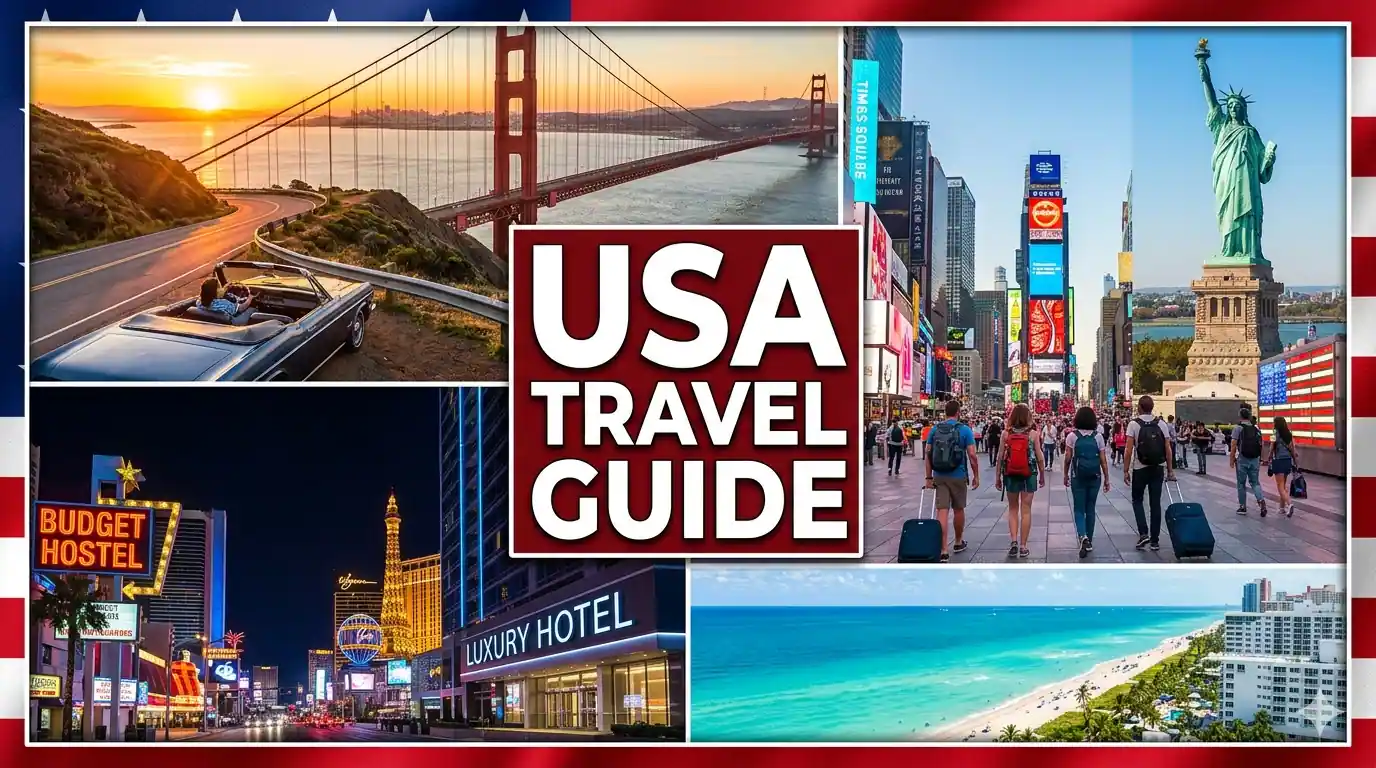
Complete USA Travel Guide for 2026
The United States offers incredible diversity for travelers with iconic cities, stunning natural landscapes, and world-class attractions.
From the skyscrapers of New York City to the beaches of Miami, the entertainment of Las Vegas to the innovation of San Francisco, America delivers unforgettable experiences.
This comprehensive guide covers essential information for visiting the USA in 2026 including visa requirements, costs, transportation, itineraries, and expert travel tips.
Whether you are a domestic traveler exploring your own country or an international visitor planning your first American adventure, this resource provides practical and verified guidance.
Why Visit the United States in 2026
The USA combines cultural diversity, natural beauty, and modern infrastructure that appeals to every travel style.
You can experience multiple climates, cuisines, and landscapes within a single trip across this vast nation.
Excellent domestic transportation networks make traveling between regions efficient and accessible.
America offers world-renowned attractions from national parks to theme parks to historic landmarks.
The country caters to all budgets from backpacker hostels to luxury resorts and everything in between.
English is the primary language making navigation straightforward for most international visitors.
Visa Requirements for Visiting the USA
Understanding entry requirements is essential before planning your American journey.
The United States maintains specific visa policies based on your country of citizenship and travel purpose.
What is the Visa Waiver Program and who qualifies
Citizens from 41 participating countries may travel to the USA for tourism or business without a visa under the Visa Waiver Program.
Eligible travelers must obtain authorization through the Electronic System for Travel Authorization known as ESTA before departure.
ESTA applications are submitted online through the official U.S. Customs and Border Protection website.
Approval is typically granted within minutes but applicants should apply at least 72 hours before travel.
The ESTA authorization remains valid for two years or until passport expiration whichever comes first.
Travel under the Visa Waiver Program permits stays up to 90 days for tourism or business purposes only.
Employment, study, or long-term stays require appropriate visa categories obtained through U.S. embassies or consulates.
How to apply for a US tourist visa
Travelers from non-VWP countries must apply for a B-2 tourist visa through official U.S. government channels.
Applications begin with completing the DS-160 online form available on the U.S. Department of State website.
Applicants pay a non-refundable visa application fee and schedule an interview at a U.S. embassy or consulate.
Required documents include a valid passport, photograph meeting specific requirements, and proof of travel plans.
Interviews assess the purpose of travel, ties to home country, and intent to return after the visit.
Processing times vary by location so apply several weeks before intended travel dates.
Always use official government websites like travel.state.gov to avoid third-party scam services.
Major Cities Covered in This Guide
This guide focuses on five iconic American destinations that represent diverse travel experiences.
New York City offers unparalleled culture, dining, shopping, and landmarks like the Statue of Liberty and Central Park.
Los Angeles provides entertainment industry access, beautiful beaches, and diverse neighborhoods from Hollywood to Santa Monica.
Las Vegas delivers world-class entertainment, gaming, dining, and easy access to natural wonders like the Grand Canyon.
San Francisco features historic charm, innovative culture, iconic bridges, and proximity to wine country and redwood forests.
Miami combines tropical beaches, vibrant Latin culture, art deco architecture, and exciting nightlife.
Transportation Systems in the United States
The USA offers multiple transportation options each with advantages depending on your itinerary and budget.
How do domestic flights work in the USA
Major airlines including Delta, American, United, Southwest, and JetBlue operate extensive domestic networks.
Booking flights 4 to 8 weeks in advance typically secures the best fares for domestic routes.
Consider budget carriers like Southwest for included checked bags and flexible change policies.
Always arrive at airports at least 90 minutes before domestic flights for security screening.
TSA PreCheck or CLEAR memberships can significantly reduce security wait times at major airports.
Baggage fees vary by airline so review policies before booking to avoid unexpected costs.
What are Uber and Lyft and how do they work
Uber and Lyft are ride-hailing apps available in most major U.S. cities and many smaller towns.
Download the app, create an account, and link a payment method before your trip for seamless use.
Enter your destination to see fare estimates and choose from vehicle options ranging from economy to luxury.
Drivers arrive within minutes in urban areas with real-time tracking and cashless payment.
Tip drivers through the app at 15 to 20 percent of the fare as standard practice.
Both services offer airport pickup options with designated ride-share zones at most terminals.
How does public transportation work in major US cities
New York City operates the nation's most extensive subway system running 24 hours with unlimited ride passes available.
San Francisco's Muni and BART systems connect the city to surrounding Bay Area destinations efficiently.
Chicago, Boston, Washington DC, and Philadelphia also offer reliable subway or light rail networks.
Most systems accept contactless payment via credit cards or mobile wallets for convenient fare payment.
Download city-specific transit apps for real-time schedules, route planning, and service alerts.
Public transportation is significantly cheaper than ride-hailing for frequent urban travel.
Is renting a car in the USA worth it
Car rental provides flexibility for exploring regions with limited public transport like national parks or rural areas.
Major rental companies include Enterprise, Hertz, Avis, Budget, and National with airport and city locations.
Requirements include a valid driver's license, credit card in the renter's name, and minimum age of 21 to 25.
International visitors should carry an International Driving Permit alongside their home country license.
Insurance options vary so check your credit card benefits and personal auto policy before purchasing additional coverage.
Consider fuel costs, parking fees, and tolls when budgeting for car rental expenses.
Driving rules and safety tips for USA roads
Drive on the right side of the road and obey posted speed limits which are strictly enforced.
All passengers must wear seat belts and children require appropriate car seats by law.
Using handheld mobile devices while driving is prohibited in most states use hands-free options instead.
Never drive under the influence of alcohol or drugs with legal blood alcohol limits at 0.08 percent nationwide.
Yield to pedestrians at crosswalks and school zones where fines are significantly increased.
Keep your license, registration, and proof of insurance accessible during all drives.
Popular USA Road Trip Routes
Road trips embody the American travel spirit with iconic routes showcasing diverse landscapes.
The Pacific Coast Highway from San Francisco to Los Angeles offers breathtaking ocean views and coastal towns.
Route 66 from Chicago to Santa Monica provides historic Americana and nostalgic roadside attractions.
The Blue Ridge Parkway through Virginia and North Carolina features mountain scenery and fall foliage.
Utah's Mighty Five national parks circuit delivers otherworldly desert landscapes and hiking adventures.
Florida's Overseas Highway connects Miami to Key West with stunning ocean bridges and tropical vibes.
Plan fuel stops in remote areas and download offline maps for regions with limited cell service.
USA Travel Cost Breakdown in USD
Understanding realistic costs helps you budget effectively for your American adventure.
All prices below are presented in United States Dollars for clarity and planning.
Budget Traveler Costs per Day
Budget travelers can explore the USA on 80 to 120 USD per day with strategic planning.
Hostel dorm beds or budget motels cost 30 to 60 USD per night depending on location and season.
Fast food, food trucks, and grocery meals keep daily food costs around 20 to 35 USD.
Public transportation, budget buses, or shared ride-hailing cost 15 to 30 USD daily for transport.
Free attractions like public parks, beaches, and walking tours minimize entertainment expenses.
Cities like Austin, Portland, and New Orleans offer better value than New York or San Francisco.
Mid-Range Traveler Costs per Day
Mid-range travelers spending 180 to 300 USD daily enjoy greater comfort and flexibility.
Standard hotel rooms or vacation rentals cost 100 to 200 USD per night in most destinations.
Restaurant meals including one sit-down dinner range from 40 to 70 USD daily for food.
Domestic flights, ride-hailing, and occasional car rental cost 30 to 60 USD daily for transport.
Museum entries, guided tours, and paid attractions budget 20 to 40 USD daily.
This level allows mixing free experiences with select premium activities and dining.
Luxury Traveler Costs per Day
Luxury travelers spending 400 USD and above daily experience America in style.
Four and five-star hotels range from 250 to 600 plus USD per night in major cities.
Fine dining, chef experiences, and premium beverages cost 100 to 250 USD daily for food.
First-class flights, private transfers, and luxury car rental cost 100 to 300 USD daily.
Private guided tours, VIP attraction access, and exclusive experiences budget 100 to 400 USD daily.
Luxury travel in the USA offers exceptional service standards and memorable premium experiences.
City-Specific Cost Comparison
New York City ranks among the most expensive U.S. destinations with high accommodation and dining costs.
San Francisco commands premium prices for hotels and transportation due to high demand and limited supply.
Las Vegas offers exceptional value for accommodations with many affordable luxury options on the Strip.
Los Angeles varies widely with budget options in outlying areas and premium pricing near beaches and Hollywood.
Miami provides moderate costs with seasonal fluctuations peaking during winter and spring break periods.
Recommended USA Itineraries
Well-structured itineraries maximize your time and minimize travel fatigue across this vast country.
Five Day East Coast Highlights Itinerary
Start in New York City spending three days exploring Manhattan landmarks, museums, and neighborhoods.
Take a short flight or train to Washington DC for two days visiting monuments and Smithsonian museums.
This route combines urban energy with historic significance and efficient transportation connections.
Book Statue of Liberty and popular museum tickets in advance to avoid long entry lines.
Use city subway systems to minimize transportation costs within each destination.
Seven Day West Coast Adventure Itinerary
Begin in San Francisco with three days exploring the Golden Gate Bridge, Alcatraz, and diverse neighborhoods.
Rent a car and drive the Pacific Coast Highway to Los Angeles with an overnight stop in Monterey or Santa Barbara.
Spend three days in Los Angeles visiting Hollywood, beaches, and cultural attractions.
This itinerary showcases California's diversity from urban innovation to coastal beauty.
Allow extra time for scenic stops and traffic delays along the coastal drive.
Ten Day Classic USA Highlights Itinerary
Start in New York City with three days for iconic sights and cultural experiences.
Fly to Las Vegas for two days enjoying entertainment and using it as a base for Grand Canyon day trips.
Continue to Los Angeles for three days exploring entertainment culture and coastal attractions.
End with two days in San Francisco experiencing historic charm and bay area beauty.
This route covers four major destinations with efficient flight connections between regions.
Consider purchasing a domestic flight pass if booking multiple segments for potential savings.
Understanding Tipping Culture in the USA
Tipping is an expected part of service industry compensation in the United States.
Understanding customary amounts helps you navigate social expectations respectfully.
How much to tip at restaurants in the USA
Tip 15 to 20 percent of the pre-tax bill at sit-down restaurants for standard service.
Increase to 20 to 25 percent for exceptional service or large groups.
Buffets and counter-service establishments typically do not require tips though tip jars may be present.
Always review your bill as some restaurants automatically add gratuity for parties of six or more.
Cash tips ensure servers receive gratuity immediately while card tips process with your payment.
Tipping guidelines for hotels and transportation
Tip hotel bellhops 2 to 5 USD per bag for assistance with luggage.
Leave 2 to 5 USD per night for housekeeping staff placed in an envelope marked for housekeeping.
Tip taxi and ride-hailing drivers 15 to 20 percent of the fare rounded up for convenience.
Airport shuttle drivers appreciate 1 to 2 USD per bag for luggage assistance.
Concierge services that secure reservations or tickets warrant 5 to 20 USD depending on effort.
When is tipping not expected in the USA
Retail shopping, grocery stores, and most fast-food establishments do not expect tips.
Medical services, government employees, and professional services typically do not accept tips.
Some businesses now include service charges in pricing so review bills before adding additional gratuity.
When in doubt observe local practices or politely ask about tipping customs.
Important Travel Rules and Laws in the USA
Understanding basic regulations helps ensure a smooth and lawful visit to the United States.
What identification do I need while traveling in the USA
Carry a government-issued photo ID such as a passport or driver's license at all times.
Domestic air travel requires REAL ID-compliant identification or a valid passport starting May 2025.
International visitors must carry their passport and visa or ESTA documentation throughout their stay.
Keep digital copies of important documents stored securely separate from physical originals.
Some establishments may request ID for age verification when purchasing alcohol or entering venues.
Public behavior laws and cultural norms
Smoking is prohibited in most indoor public spaces including restaurants, bars, and hotels nationwide.
Designated outdoor smoking areas are common but always check signage before lighting up.
Public consumption of alcohol is illegal in most cities except designated areas like certain festival zones.
Respect personal space norms by maintaining approximately an arm's length distance in conversations.
Queue politely in lines and avoid cutting as this is considered rude in American culture.
Alcohol and substance regulations
The legal drinking age is 21 nationwide with strict enforcement at bars, restaurants, and retail locations.
Establishments may request ID from anyone appearing under 40 so carry identification when purchasing alcohol.
Cannabis laws vary significantly by state with some permitting recreational use while others prohibit it entirely.
Transporting cannabis across state lines remains illegal under federal law regardless of state policies.
When in doubt research specific state regulations before traveling with any controlled substances.
Safety Tips for Traveling in the USA
The United States is generally safe for travelers but standard precautions enhance security.
General safety guidelines for all destinations
Keep valuables secure and avoid displaying expensive jewelry or electronics in crowded areas.
Use hotel safes for passports, extra cash, and important documents when not needed.
Stay aware of your surroundings especially at night or in unfamiliar neighborhoods.
Trust your instincts and leave situations that feel uncomfortable or unsafe.
Save emergency contact numbers including local police and your country's embassy or consulate.
City-specific safety awareness
New York City is generally safe but exercise caution in less touristy areas after dark.
Los Angeles requires vigilance with vehicle security and avoiding leaving valuables visible in parked cars.
Las Vegas Strip is heavily monitored but remain alert for pickpockets in crowded entertainment venues.
San Francisco has notable property crime so secure belongings and avoid leaving items in vehicles.
Miami beach areas are tourist-friendly but research neighborhood safety before exploring after dark.
Best Time to Visit the United States
Timing your trip significantly impacts weather, crowds, and overall experience across this diverse nation.
Summer travel June to August
Summer offers warm weather and long days ideal for outdoor activities and national park visits.
This is peak tourist season with higher prices, larger crowds, and booked accommodations in popular destinations.
Coastal areas and mountain regions provide relief from heat in southern and inland locations.
Book flights, hotels, and major attractions months in advance for summer travel planning.
Consider lesser-known destinations like the Pacific Northwest or New England for fewer crowds.
Winter travel December to February
Winter brings cold temperatures and potential snow in northern and mountain regions.
Southern destinations like Miami, Los Angeles, and Las Vegas offer mild pleasant weather.
Prices for flights and accommodations drop significantly in many regions outside holiday periods.
Ski resorts in Colorado, Utah, and California provide world-class winter sports experiences.
Pack layers and waterproof footwear for variable winter conditions across different regions.
Shoulder seasons April to May and September to October
Shoulder seasons offer the best balance of pleasant weather, manageable crowds, and reasonable prices.
Spring brings blooming flowers, mild temperatures, and renewed energy to cities and natural areas.
Autumn features harvest festivals, colorful foliage especially in New England, and comfortable sightseeing weather.
These periods are ideal for photography, walking tours, and outdoor dining without peak season pressures.
Book accommodations two to four weeks in advance for optimal selection during shoulder seasons.
Final Recommendations for USA Travel
The United States rewards thoughtful planning with diverse experiences and lasting memories.
Start with a focused itinerary covering two to three regions for a first visit to manage travel time effectively.
Prioritize experiences over checklist tourism allowing time for spontaneous discoveries and local interactions.
Embrace regional differences in cuisine, culture, and customs as part of the American travel experience.
Use domestic flight networks strategically to cover long distances while saving time for exploration.
Balance iconic landmarks with hidden gems and local recommendations for a well-rounded perspective.
America's scale, diversity, and hospitality make it a destination that invites return visits and deeper exploration.
Begin planning your American adventure today and discover why this nation captivates travelers from around the world.
0 Comments