.webp)
.webp)
Toronto: Canada's Financial Hub and the Most Multicultural City in the World
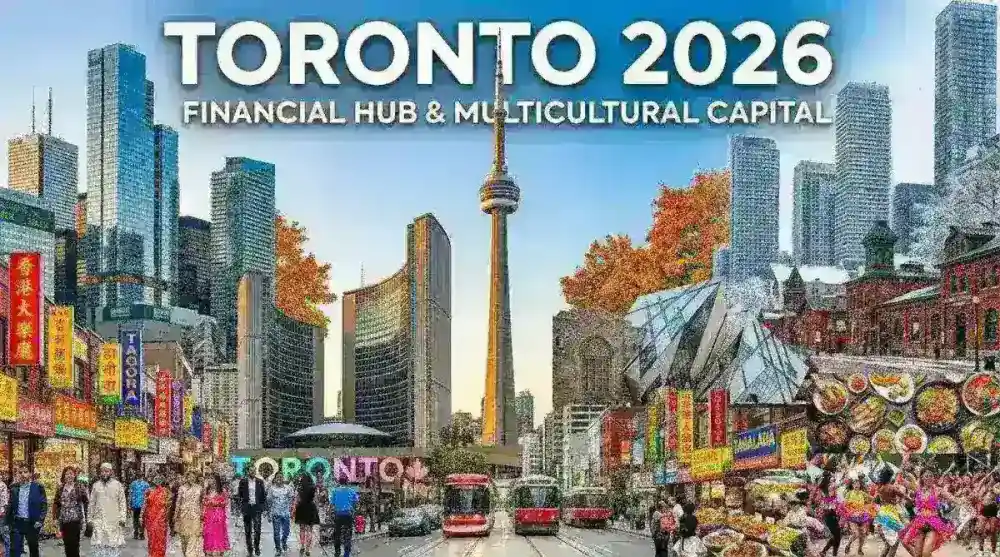
Introduction: Where Global Finance Meets Extraordinary Diversity
Toronto stands as a remarkable paradox in the modern urban landscape: a city where the sleek glass towers of Bay Street – Canada's answer to Wall Street – rise just blocks away from vibrant ethnic enclaves where over 200 distinct ethnic groups call home. As Canada's largest city and economic engine, Toronto serves as the nation's financial heartbeat, hosting the headquarters of Canada's five largest banks, the Toronto Stock Exchange (the third-largest in North America by market capitalization), and countless multinational corporations. Yet simultaneously, Toronto holds the distinguished title of being the most multicultural city in the world, with over half its population born outside Canada and more than 140 languages spoken on its streets daily.
This unique convergence of global finance and extraordinary cultural diversity defines Toronto's character in ways that few other cities can match. The same skyline that signals economic power – dominated by the iconic CN Tower and a forest of contemporary skyscrapers – also frames neighborhoods where the aromas of Caribbean jerk chicken, Vietnamese pho, Portuguese peri-peri chicken, and Italian espresso blend into a uniquely Torontonian sensory experience. The city's financial district, with its polished marble lobbies and high-powered trading floors, exists in dynamic tension and harmony with bustling markets where vendors speak Cantonese, Punjabi, Spanish, and Arabic in the same city block.
For business travelers, Toronto offers world-class infrastructure, a highly educated workforce, and seamless connectivity to global markets. For cultural explorers, the city presents an unparalleled opportunity to experience the world without leaving city limits – from the lantern-lit streets of Chinatown to the lively rhythms of Little Jamaica, from the historic cobblestones of the Distillery District to the contemporary art galleries of Queen West. For photographers, urban planners, food enthusiasts, and anyone fascinated by how diverse communities thrive together, Toronto serves as a living laboratory of 21st-century urban life.
This comprehensive guide explores Toronto's dual identity as Canada's financial powerhouse and the world's most multicultural metropolis. We'll examine the economic forces that drive the city's global significance, delve into the neighborhoods that showcase its extraordinary diversity, highlight the cultural institutions and festivals that celebrate this diversity, and provide practical information for experiencing Toronto's unique character. Whether you're visiting for business, pleasure, or both, you'll discover why Toronto represents one of the world's most compelling models of how economic prosperity and cultural diversity can not only coexist but mutually reinforce one another.
Toronto as Canada's Financial Hub: The Engine of Economic Power

To understand Toronto's significance on the global stage, one must first appreciate its role as Canada's undisputed financial center. The city's financial district, concentrated along Bay Street between Front and King Streets, represents the nerve center of Canadian capitalism and a significant node in global financial networks.
Bay Street: Canada's Wall Street
Bay Street is more than just a thoroughfare; it is a symbol of Canadian economic power and ambition. This corridor hosts:
- Canada's Big Five Banks: Royal Bank of Canada (RBC), Toronto-Dominion Bank (TD), Bank of Nova Scotia (Scotiabank), Bank of Montreal (BMO), and Canadian Imperial Bank of Commerce (CIBC) all maintain their headquarters or major operations along Bay Street
- Toronto Stock Exchange (TSX): Operating since 1861, the TSX is the third-largest stock exchange in North America by market capitalization, listing over 1,500 companies with a combined market cap exceeding $3 trillion CAD
- Investment Firms and Asset Managers: Major global and Canadian investment firms, pension funds (including the massive Ontario Teachers' Pension Plan and CPP Investments), and wealth management companies
- Professional Services: Leading law firms, accounting firms, and consulting companies that support the financial sector
- Insurance Giants: Headquarters of major Canadian insurers like Manulife and Sun Life Financial
- 👉 Montreal Travel Guide 2026: Second Largest French-Speaking City
- 👉 A Guide to Traditional Garifuna Drumming and Dance Workshops: Experiencing Afro-Caribbean Culture in Central America
- 👉 Puerto Cortés Pier 6 Expansion 2026: Traveler's Guide to $100M Port Investment
Economic Impact and Global Rankings
Toronto's financial sector drives significant economic value:
- GDP Contribution: The financial services sector contributes approximately 10% to Toronto's GDP and employs over 300,000 people in the Greater Toronto Area
- Global Rankings: Toronto consistently ranks among the top 15 global financial centers in the Global Financial Centres Index, competing with cities like Singapore, Zurich, and Chicago
- Foreign Investment: The city attracts significant foreign direct investment, with multinational corporations establishing North American or Canadian headquarters in Toronto
- Talent Pool: Toronto's highly educated workforce, with strong programs at the University of Toronto, York University, and Ryerson University, provides a steady pipeline of finance, technology, and business talent
- 👉 Montreal Travel Guide 2026: Second Largest French-Speaking City
- 👉 A Guide to Traditional Garifuna Drumming and Dance Workshops: Experiencing Afro-Caribbean Culture in Central America
- 👉 Puerto Cortés Pier 6 Expansion 2026: Traveler's Guide to $100M Port Investment
Architecture of Power: The Financial District Skyline
Toronto's financial district showcases architectural evolution from the mid-20th century to today:
Mid-Century Modernism:
- Toronto-Dominion Centre (1967): Designed by Ludwig Mies van der Rohe, this complex of black glass and steel towers established the international style in Toronto and remains an architectural landmark
- First Canadian Place (1975): Once Canada's tallest building, this white marble-clad tower exemplifies corporate modernism
- 👉 Montreal Travel Guide 2026: Second Largest French-Speaking City
- 👉 A Guide to Traditional Garifuna Drumming and Dance Workshops: Experiencing Afro-Caribbean Culture in Central America
- 👉 Puerto Cortés Pier 6 Expansion 2026: Traveler's Guide to $100M Port Investment
Contemporary Skyscrapers:
- Brookfield Place (2016): The latest addition to the financial district, featuring the stunning Allen Lambert Galleria – a crystalline, light-filled atrium that has become an architectural destination in its own right
- Scotia Plaza (1988): A distinctive pink granite tower that anchors the southern end of Bay Street
- New Developments: Ongoing construction of residential and mixed-use towers continues to reshape the skyline while adding density and vibrancy to the financial core
- 👉 Montreal Travel Guide 2026: Second Largest French-Speaking City
- 👉 A Guide to Traditional Garifuna Drumming and Dance Workshops: Experiencing Afro-Caribbean Culture in Central America
- 👉 Puerto Cortés Pier 6 Expansion 2026: Traveler's Guide to $100M Port Investment
Photography Opportunities in the Financial District
For photographers, the financial district offers compelling subjects:
- Architectural Details: Capture the interplay of glass, steel, and stone; geometric patterns of curtain walls; and the human scale against monumental towers
- Street-Level Energy: Document the rhythm of business life: commuters in suits, lunchtime crowds, and the contrast between corporate formality and urban vitality
- Golden Hour Magic: Sunset light reflecting off glass towers creates dramatic compositions; the CN Tower often frames these shots perfectly
- Blue Hour and Night: Illuminated skyscrapers against twilight skies; the financial district transforms into a landscape of light
- Seasonal Variations: Winter snow on glass towers; spring blossoms in Berczy Park; fall foliage framing urban scenes
- 👉 Montreal Travel Guide 2026: Second Largest French-Speaking City
- 👉 A Guide to Traditional Garifuna Drumming and Dance Workshops: Experiencing Afro-Caribbean Culture in Central America
- 👉 Puerto Cortés Pier 6 Expansion 2026: Traveler's Guide to $100M Port Investment
The Most Multicultural City in the World: A Demographic Marvel
If Toronto's financial district represents its economic power, its extraordinary diversity represents its soul. By virtually every measure, Toronto stands as the world's most multicultural major city – a distinction that shapes every aspect of urban life.
By the Numbers: Toronto's Diversity
The statistics tell a remarkable story:
- Foreign-Born Population: Over 51% of Toronto residents were born outside Canada – the highest proportion of any major city in the world
- Ethnic Diversity: More than 200 distinct ethnic origins are represented in the city
- Linguistic Diversity: Over 140 languages are spoken in Toronto homes; nearly half of residents speak a language other than English or French at home
- Visible Minorities: Approximately 57% of Toronto's population identifies as a visible minority, including South Asian, Chinese, Black, Filipino, Latin American, Arab, and Southeast Asian communities
- Religious Diversity: Christians, Muslims, Hindus, Sikhs, Buddhists, Jews, and those with no religious affiliation all find communities and places of worship throughout the city
- 👉 Montreal Travel Guide 2026: Second Largest French-Speaking City
- 👉 A Guide to Traditional Garifuna Drumming and Dance Workshops: Experiencing Afro-Caribbean Culture in Central America
- 👉 Puerto Cortés Pier 6 Expansion 2026: Traveler's Guide to $100M Port Investment
Historical Roots of Multiculturalism
Toronto's diversity is not accidental but the result of deliberate policy and historical circumstance:
- Post-WWII Immigration: Following World War II, Canada opened its doors to immigrants from Europe, laying the foundation for diversity
- Points-Based Immigration System (1967): Canada's merit-based immigration system, pioneered in Toronto, prioritized skills and education over country of origin, attracting talent from around the world
- Official Multiculturalism Policy (1971): Canada became the first country to adopt multiculturalism as official policy, with Toronto as its primary beneficiary
- Refugee Resettlement: Toronto has welcomed refugees from conflicts worldwide, from Vietnam to Syria, adding to its cultural tapestry
- Economic Migration: Toronto's economic opportunities continue to attract skilled workers, entrepreneurs, and students from every continent
- 👉 Montreal Travel Guide 2026: Second Largest French-Speaking City
- 👉 A Guide to Traditional Garifuna Drumming and Dance Workshops: Experiencing Afro-Caribbean Culture in Central America
- 👉 Puerto Cortés Pier 6 Expansion 2026: Traveler's Guide to $100M Port Investment
The Social Fabric: How Diversity Works
What makes Toronto's multiculturalism distinctive is not just the presence of diverse communities but how they interact:
- Integration Without Assimilation: Toronto's model encourages newcomers to maintain cultural traditions while participating fully in civic and economic life
- Neighborhood Identity: Distinct ethnic enclaves provide cultural anchors while remaining connected to the broader city
- Cross-Cultural Exchange: Daily interactions in workplaces, schools, and public spaces foster mutual understanding and innovation
- Policy Support: Municipal programs support settlement services, language training, and anti-discrimination efforts
- 👉 Montreal Travel Guide 2026: Second Largest French-Speaking City
- 👉 A Guide to Traditional Garifuna Drumming and Dance Workshops: Experiencing Afro-Caribbean Culture in Central America
- 👉 Puerto Cortés Pier 6 Expansion 2026: Traveler's Guide to $100M Port Investment
Neighborhoods of Diversity: A Tour Through Toronto's Cultural Mosaic
Toronto's diversity is best experienced at the neighborhood level, where distinct cultural communities have created vibrant, authentic enclaves. Here are the essential neighborhoods for experiencing Toronto's multicultural character:
Chinatown (Spadina-Dundas)
Character: One of North America's largest and most vibrant Chinatowns, featuring traditional Chinese architecture, bustling markets, and authentic regional cuisines.
Highlights:
- Markets: Fresh produce, herbs, and specialty ingredients at shops along Spadina Avenue
- Cuisine: Dim sum palaces, Sichuan hot pot, hand-pulled noodles, and regional specialties from across China
- Cultural Sites: Traditional temples, community centers, and the annual Chinatown Festival
- Photography: Colorful signage in Chinese characters, bustling street scenes, and the contrast between traditional and modern elements
- 👉 Montreal Travel Guide 2026: Second Largest French-Speaking City
- 👉 A Guide to Traditional Garifuna Drumming and Dance Workshops: Experiencing Afro-Caribbean Culture in Central America
- 👉 Puerto Cortés Pier 6 Expansion 2026: Traveler's Guide to $100M Port Investment
Little Italy (College Street)
Character: A historic Italian enclave that has evolved while maintaining its culinary and cultural heritage.
Highlights:
- Dining: Traditional trattorias, modern Italian fusion, and the famous College Street café culture
- Festivals: The annual Taste of Little Italy festival celebrates Italian-Canadian culture
- Architecture: Mix of Victorian homes and Italian-inspired storefronts
- Evolution: Observe how the neighborhood has adapted while preserving its roots
- 👉 Montreal Travel Guide 2026: Second Largest French-Speaking City
- 👉 A Guide to Traditional Garifuna Drumming and Dance Workshops: Experiencing Afro-Caribbean Culture in Central America
- 👉 Puerto Cortés Pier 6 Expansion 2026: Traveler's Guide to $100M Port Investment
Greektown (The Danforth)
Character: A lively stretch of Danforth Avenue featuring Greek restaurants, cafes, and shops.
Highlights:
- Dining: Authentic Greek tavernas serving souvlaki, moussaka, and fresh seafood
- Festivals: The annual Taste of the Danforth festival is one of North America's largest street festivals
- Community: Greek Orthodox churches, cultural organizations, and community events
- Atmosphere: Lively sidewalk patios and a strong sense of neighborhood identity
- 👉 Montreal Travel Guide 2026: Second Largest French-Speaking City
- 👉 A Guide to Traditional Garifuna Drumming and Dance Workshops: Experiencing Afro-Caribbean Culture in Central America
- 👉 Puerto Cortés Pier 6 Expansion 2026: Traveler's Guide to $100M Port Investment
Little India (Gerrard Street East)
Character: A vibrant South Asian enclave featuring colorful shops, restaurants, and cultural institutions.
Highlights:
- Shopping: Sari shops, jewelry stores, and markets selling spices, textiles, and South Asian goods
- Cuisine: Authentic Indian, Pakistani, Sri Lankan, and Bangladeshi restaurants
- Cultural Events: Diwali celebrations, Bollywood film screenings, and cultural performances
- Visual Appeal: Vibrant colors, intricate decorations, and lively street scenes
- 👉 Montreal Travel Guide 2026: Second Largest French-Speaking City
- 👉 A Guide to Traditional Garifuna Drumming and Dance Workshops: Experiencing Afro-Caribbean Culture in Central America
- 👉 Puerto Cortés Pier 6 Expansion 2026: Traveler's Guide to $100M Port Investment
Kensington Market
Character: A bohemian, eclectic neighborhood that has welcomed successive waves of immigrants – Jewish, Portuguese, Caribbean, Latin American, and more – creating a uniquely Toronto blend.
Highlights:
- Food: Incredible diversity: Jamaican patties, Portuguese bakeries, vintage cafes, and innovative fusion cuisine
- Shopping: Vintage clothing, record stores, artisanal goods, and independent retailers
- Street Art: Vibrant murals and graffiti that reflect the neighborhood's creative spirit
- Car-Free Sundays: Monthly pedestrian-only events that transform the neighborhood into a street party
- Photography: Perhaps Toronto's most photogenic neighborhood, with colorful storefronts, street art, and diverse crowds
- 👉 Montreal Travel Guide 2026: Second Largest French-Speaking City
- 👉 A Guide to Traditional Garifuna Drumming and Dance Workshops: Experiencing Afro-Caribbean Culture in Central America
- 👉 Puerto Cortés Pier 6 Expansion 2026: Traveler's Guide to $100M Port Investment
Little Jamaica (Eglinton Avenue West)
Character: A vibrant Caribbean community celebrating Jamaican and wider Caribbean culture.
Highlights:
- Music: Reggae record stores, sound systems, and live music venues
- Cuisine: Authentic jerk chicken, curry goat, patties, and Caribbean specialties
- Culture: Caribbean festivals, community events, and cultural institutions
- Atmosphere: Lively street life and strong community identity
- 👉 Montreal Travel Guide 2026: Second Largest French-Speaking City
- 👉 A Guide to Traditional Garifuna Drumming and Dance Workshops: Experiencing Afro-Caribbean Culture in Central America
- 👉 Puerto Cortés Pier 6 Expansion 2026: Traveler's Guide to $100M Port Investment
Corso Italia (St. Clair Avenue West)
Character: A charming Italian-Canadian neighborhood with a strong sense of tradition and community.
Highlights:
- Dining: Family-run restaurants, bakeries, and cafes serving traditional Italian fare
- Festivals: The annual Corsa Italia festival celebrates Italian-Canadian heritage
- Community: Strong intergenerational presence and neighborhood pride
- 👉 Montreal Travel Guide 2026: Second Largest French-Speaking City
- 👉 A Guide to Traditional Garifuna Drumming and Dance Workshops: Experiencing Afro-Caribbean Culture in Central America
- 👉 Puerto Cortés Pier 6 Expansion 2026: Traveler's Guide to $100M Port Investment
Additional Notable Enclaves:
- Portugal Village: Along Dundas Street West, featuring Portuguese restaurants and cultural institutions
- Roncesvalles Village: A Polish-Canadian enclave with authentic cuisine and cultural events
- East Chinatown: A growing Chinese community east of the downtown core
- Thorncliffe Park: A diverse, high-density neighborhood with strong South Asian and Middle Eastern communities
- 👉 Montreal Travel Guide 2026: Second Largest French-Speaking City
- 👉 A Guide to Traditional Garifuna Drumming and Dance Workshops: Experiencing Afro-Caribbean Culture in Central America
- 👉 Puerto Cortés Pier 6 Expansion 2026: Traveler's Guide to $100M Port Investment
Cultural Institutions and Festivals: Celebrating Diversity
Toronto's multicultural character is celebrated through world-class cultural institutions and a year-round calendar of festivals that showcase the city's diversity.
Major Cultural Institutions
Royal Ontario Museum (ROM):
- Global Collections: Extensive collections representing cultures from around the world, from ancient Egypt to contemporary Asia
- Architecture: The striking "Crystal" addition by Daniel Libeskind symbolizes Toronto's embrace of global perspectives
- Programming: Exhibitions and events that explore cultural diversity and global connections
- 👉 Montreal Travel Guide 2026: Second Largest French-Speaking City
- 👉 A Guide to Traditional Garifuna Drumming and Dance Workshops: Experiencing Afro-Caribbean Culture in Central America
- 👉 Puerto Cortés Pier 6 Expansion 2026: Traveler's Guide to $100M Port Investment
Art Gallery of Ontario (AGO):
- Diverse Collections: Canadian, European, African, and Oceanic art, with growing focus on contemporary global artists
- Architecture: Frank Gehry's renovation added dynamic contemporary spaces while honoring the building's history
- Community Engagement: Programs that connect diverse communities with art and culture
- 👉 Montreal Travel Guide 2026: Second Largest French-Speaking City
- 👉 A Guide to Traditional Garifuna Drumming and Dance Workshops: Experiencing Afro-Caribbean Culture in Central America
- 👉 Puerto Cortés Pier 6 Expansion 2026: Traveler's Guide to $100M Port Investment
Aga Khan Museum:
- Unique Focus: Dedicated to Islamic art, Iranian (Persian) culture, and the contributions of Muslim civilizations
- Architecture: Stunning contemporary design by Fumihiko Maki and Charles Correa
- Cultural Bridge: Serves as a bridge between cultures, promoting understanding of Islamic artistic and intellectual traditions
- 👉 Montreal Travel Guide 2026: Second Largest French-Speaking City
- 👉 A Guide to Traditional Garifuna Drumming and Dance Workshops: Experiencing Afro-Caribbean Culture in Central America
- 👉 Puerto Cortés Pier 6 Expansion 2026: Traveler's Guide to $100M Port Investment
TIFF Bell Lightbox:
- Global Cinema: Year-round programming of international films that reflect Toronto's diversity
- Toronto International Film Festival: One of the world's most influential film festivals, showcasing global cinema and attracting international talent
- 👉 Montreal Travel Guide 2026: Second Largest French-Speaking City
- 👉 A Guide to Traditional Garifuna Drumming and Dance Workshops: Experiencing Afro-Caribbean Culture in Central America
- 👉 Puerto Cortés Pier 6 Expansion 2026: Traveler's Guide to $100M Port Investment
Major Cultural Festivals
Toronto's festival calendar reflects its diversity:
Caribana (Toronto Caribbean Carnival):
- Scale: North America's largest Caribbean festival, attracting over 1 million participants
- Highlights: Vibrant parade with elaborate costumes, calypso and soca music, Caribbean food, and cultural performances
- Timing: Late July to early August
- 👉 Montreal Travel Guide 2026: Second Largest French-Speaking City
- 👉 A Guide to Traditional Garifuna Drumming and Dance Workshops: Experiencing Afro-Caribbean Culture in Central America
- 👉 Puerto Cortés Pier 6 Expansion 2026: Traveler's Guide to $100M Port Investment
Taste of the Danforth:
- Focus: Celebrates Greek-Canadian culture and cuisine
- Experience: Street festival with food vendors, live music, and cultural performances
- Timing: August
- 👉 Montreal Travel Guide 2026: Second Largest French-Speaking City
- 👉 A Guide to Traditional Garifuna Drumming and Dance Workshops: Experiencing Afro-Caribbean Culture in Central America
- 👉 Puerto Cortés Pier 6 Expansion 2026: Traveler's Guide to $100M Port Investment
Toronto International Film Festival (TIFF):
- Global Reach: Showcases films from over 80 countries, reflecting Toronto's international character
- Impact: Attracts global media attention and celebrates diverse storytelling
- Timing: September
- 👉 Montreal Travel Guide 2026: Second Largest French-Speaking City
- 👉 A Guide to Traditional Garifuna Drumming and Dance Workshops: Experiencing Afro-Caribbean Culture in Central America
- 👉 Puerto Cortés Pier 6 Expansion 2026: Traveler's Guide to $100M Port Investment
Diwali Celebrations:
- Community: Celebrated by Toronto's large South Asian community with events across the city
- Highlights: Lighting ceremonies, cultural performances, and traditional food
- Timing: October/November (varies by lunar calendar)
- 👉 Montreal Travel Guide 2026: Second Largest French-Speaking City
- 👉 A Guide to Traditional Garifuna Drumming and Dance Workshops: Experiencing Afro-Caribbean Culture in Central America
- 👉 Puerto Cortés Pier 6 Expansion 2026: Traveler's Guide to $100M Port Investment
Nuit Blanche:
- Concept: All-night contemporary art event that transforms the city into an open-air gallery
- Diversity: Features artists from around the world and engages diverse neighborhoods
- Timing: Early October
- 👉 Montreal Travel Guide 2026: Second Largest French-Speaking City
- 👉 A Guide to Traditional Garifuna Drumming and Dance Workshops: Experiencing Afro-Caribbean Culture in Central America
- 👉 Puerto Cortés Pier 6 Expansion 2026: Traveler's Guide to $100M Port Investment
Pride Toronto:
- Significance: One of the world's largest LGBTQ+ pride celebrations, reflecting Toronto's commitment to inclusion
- Scale: Month-long festival culminating in a massive parade
- Timing: June
- 👉 Montreal Travel Guide 2026: Second Largest French-Speaking City
- 👉 A Guide to Traditional Garifuna Drumming and Dance Workshops: Experiencing Afro-Caribbean Culture in Central America
- 👉 Puerto Cortés Pier 6 Expansion 2026: Traveler's Guide to $100M Port Investment
The Intersection of Finance and Diversity: Toronto's Unique Advantage
What makes Toronto truly distinctive is not just that it is both a financial hub and a multicultural city, but that these two identities reinforce and enrich each other.
Economic Benefits of Diversity
Toronto's diversity is not just a social asset but an economic advantage:
- Global Connections: Diverse communities maintain connections to countries of origin, facilitating international business, trade, and investment
- Multilingual Talent: A workforce fluent in multiple languages is invaluable for global business operations
- Cultural Intelligence: Experience navigating diverse perspectives fosters innovation and problem-solving
- Entrepreneurship: Immigrant entrepreneurs drive innovation and job creation across sectors
- Global Talent Attraction: Toronto's reputation for diversity and inclusion helps attract skilled workers from around the world
- 👉 Montreal Travel Guide 2026: Second Largest French-Speaking City
- 👉 A Guide to Traditional Garifuna Drumming and Dance Workshops: Experiencing Afro-Caribbean Culture in Central America
- 👉 Puerto Cortés Pier 6 Expansion 2026: Traveler's Guide to $100M Port Investment
Financial Sector Diversity
Toronto's financial sector increasingly reflects the city's diversity:
- Workforce: Major banks and financial institutions actively recruit diverse talent and implement inclusion initiatives
- Products and Services: Financial products increasingly serve diverse communities, including remittance services, halal financing, and culturally specific financial advice
- Global Markets: Diverse teams better understand and serve global markets and clients
- 👉 Montreal Travel Guide 2026: Second Largest French-Speaking City
- 👉 A Guide to Traditional Garifuna Drumming and Dance Workshops: Experiencing Afro-Caribbean Culture in Central America
- 👉 Puerto Cortés Pier 6 Expansion 2026: Traveler's Guide to $100M Port Investment
Cultural Institutions and Economic Development
Toronto's cultural diversity supports economic development:
- Tourism: Cultural diversity is a major draw for international visitors
- Creative Industries: Diverse perspectives fuel Toronto's thriving film, media, design, and technology sectors
- Food and Hospitality: The city's diverse culinary scene is a major economic driver and tourist attraction
- 👉 Montreal Travel Guide 2026: Second Largest French-Speaking City
- 👉 A Guide to Traditional Garifuna Drumming and Dance Workshops: Experiencing Afro-Caribbean Culture in Central America
- 👉 Puerto Cortés Pier 6 Expansion 2026: Traveler's Guide to $100M Port Investment
Practical Guide: Experiencing Toronto's Dual Identity
Making the most of Toronto requires understanding how to navigate both its financial and cultural landscapes.
Best Time to Visit
Seasonal Considerations:
Fall (September-October):
- Advantages: Pleasant temperatures, beautiful fall foliage, major festivals (TIFF, Nuit Blanche)
- Considerations: Popular season; book accommodations early
- Best For: Photography, cultural festivals, outdoor exploration
- 👉 Montreal Travel Guide 2026: Second Largest French-Speaking City
- 👉 A Guide to Traditional Garifuna Drumming and Dance Workshops: Experiencing Afro-Caribbean Culture in Central America
- 👉 Puerto Cortés Pier 6 Expansion 2026: Traveler's Guide to $100M Port Investment
Summer (June-August):
- Advantages: Warm weather, outdoor festivals, patios and outdoor dining, long daylight hours
- Considerations: Can be hot and humid; peak tourist season
- Best For: Outdoor activities, festivals, neighborhood exploration
- 👉 Montreal Travel Guide 2026: Second Largest French-Speaking City
- 👉 A Guide to Traditional Garifuna Drumming and Dance Workshops: Experiencing Afro-Caribbean Culture in Central America
- 👉 Puerto Cortés Pier 6 Expansion 2026: Traveler's Guide to $100M Port Investment
Winter (December-February):
- Advantages: Winter festivals, indoor cultural attractions, fewer crowds, potential for snow photography
- Considerations: Cold temperatures; some outdoor activities limited
- Best For: Indoor cultural institutions, winter photography, holiday events
- 👉 Montreal Travel Guide 2026: Second Largest French-Speaking City
- 👉 A Guide to Traditional Garifuna Drumming and Dance Workshops: Experiencing Afro-Caribbean Culture in Central America
- 👉 Puerto Cortés Pier 6 Expansion 2026: Traveler's Guide to $100M Port Investment
Spring (March-May):
- Advantages: Blooming flowers, moderate temperatures, fewer crowds than summer
- Considerations: Unpredictable weather; some attractions may have limited hours
- Best For: Photography, neighborhood walks, cultural institutions
- 👉 Montreal Travel Guide 2026: Second Largest French-Speaking City
- 👉 A Guide to Traditional Garifuna Drumming and Dance Workshops: Experiencing Afro-Caribbean Culture in Central America
- 👉 Puerto Cortés Pier 6 Expansion 2026: Traveler's Guide to $100M Port Investment
Getting Around Toronto
Public Transit:
- TTC (Toronto Transit Commission): Extensive subway, streetcar, and bus network; day passes and Presto cards offer convenient payment
- UP Express: Fast train connection between Pearson Airport and downtown (25 minutes)
- GO Transit: Regional rail and bus service for exploring the Greater Toronto Area
- 👉 Montreal Travel Guide 2026: Second Largest French-Speaking City
- 👉 A Guide to Traditional Garifuna Drumming and Dance Workshops: Experiencing Afro-Caribbean Culture in Central America
- 👉 Puerto Cortés Pier 6 Expansion 2026: Traveler's Guide to $100M Port Investment
Ride-Hailing and Taxis:
- Uber, Lyft, and traditional taxis readily available
- Useful for late-night travel or reaching areas with limited transit
- 👉 Montreal Travel Guide 2026: Second Largest French-Speaking City
- 👉 A Guide to Traditional Garifuna Drumming and Dance Workshops: Experiencing Afro-Caribbean Culture in Central America
- 👉 Puerto Cortés Pier 6 Expansion 2026: Traveler's Guide to $100M Port Investment
Walking and Cycling:
- Downtown Toronto is very walkable; many neighborhoods best explored on foot
- Bike Share Toronto offers convenient short-term bike rentals
- Waterfront Trail and ravine paths offer scenic cycling routes
- 👉 Montreal Travel Guide 2026: Second Largest French-Speaking City
- 👉 A Guide to Traditional Garifuna Drumming and Dance Workshops: Experiencing Afro-Caribbean Culture in Central America
- 👉 Puerto Cortés Pier 6 Expansion 2026: Traveler's Guide to $100M Port Investment
Where to Stay
Financial District/Downtown Core:
- Advantages: Walking distance to Bay Street, CN Tower, major attractions; excellent transit connections
- Considerations: Higher prices; can be quiet on weekends
- Best For: Business travelers, first-time visitors, those prioritizing convenience
- 👉 Montreal Travel Guide 2026: Second Largest French-Speaking City
- 👉 A Guide to Traditional Garifuna Drumming and Dance Workshops: Experiencing Afro-Caribbean Culture in Central America
- 👉 Puerto Cortés Pier 6 Expansion 2026: Traveler's Guide to $100M Port Investment
Entertainment District:
- Advantages: Vibrant nightlife, restaurants, and entertainment; close to financial district
- Considerations: Can be noisy; higher prices
- Best For: Visitors seeking nightlife and dining options
- 👉 Montreal Travel Guide 2026: Second Largest French-Speaking City
- 👉 A Guide to Traditional Garifuna Drumming and Dance Workshops: Experiencing Afro-Caribbean Culture in Central America
- 👉 Puerto Cortés Pier 6 Expansion 2026: Traveler's Guide to $100M Port Investment
Neighborhood Options:
- Queen West: Trendy, artistic neighborhood with boutiques, galleries, and restaurants
- The Annex: Near University of Toronto; bohemian atmosphere, diverse dining
- Distillery District: Historic pedestrian village with galleries, shops, and restaurants
- Harbourfront: Waterfront location with cultural institutions and scenic views
- 👉 Montreal Travel Guide 2026: Second Largest French-Speaking City
- 👉 A Guide to Traditional Garifuna Drumming and Dance Workshops: Experiencing Afro-Caribbean Culture in Central America
- 👉 Puerto Cortés Pier 6 Expansion 2026: Traveler's Guide to $100M Port Investment
Essential Experiences
For Business Travelers:
- Visit the Toronto Stock Exchange (tours available by arrangement)
- Explore the PATH underground pedestrian network – the world's largest, connecting 75+ buildings
- Experience a business lunch at a Bay Street institution
- Attend a networking event or conference at the Metro Toronto Convention Centre
- 👉 Montreal Travel Guide 2026: Second Largest French-Speaking City
- 👉 A Guide to Traditional Garifuna Drumming and Dance Workshops: Experiencing Afro-Caribbean Culture in Central America
- 👉 Puerto Cortés Pier 6 Expansion 2026: Traveler's Guide to $100M Port Investment
For Cultural Explorers:
- Take a guided walking tour of multicultural neighborhoods
- Visit at least three ethnic enclaves to experience diverse cuisines and cultures
- Attend a cultural festival if timing aligns with your visit
- Explore museums that showcase global cultures (ROM, Aga Khan Museum)
- 👉 Montreal Travel Guide 2026: Second Largest French-Speaking City
- 👉 A Guide to Traditional Garifuna Drumming and Dance Workshops: Experiencing Afro-Caribbean Culture in Central America
- 👉 Puerto Cortés Pier 6 Expansion 2026: Traveler's Guide to $100M Port Investment
For Photographers:
- Capture the financial district at golden hour and blue hour
- Document street life in diverse neighborhoods (with respect for privacy)
- Photograph architectural contrasts: historic Victorian homes against modern skyscrapers
- Capture seasonal beauty: fall foliage, winter snow, spring blossoms
- 👉 Montreal Travel Guide 2026: Second Largest French-Speaking City
- 👉 A Guide to Traditional Garifuna Drumming and Dance Workshops: Experiencing Afro-Caribbean Culture in Central America
- 👉 Puerto Cortés Pier 6 Expansion 2026: Traveler's Guide to $100M Port Investment
Photography Guide: Capturing Toronto's Dual Character
Toronto offers extraordinary photographic opportunities that reflect both its financial power and cultural diversity.
Essential Equipment
Camera and Lenses:
- Wide-Angle Lens (16-35mm): Essential for capturing skyscrapers, streetscapes, and architectural details
- Standard Zoom (24-70mm): Versatile for street photography, portraits, and environmental context
- Telephoto Zoom (70-200mm): Ideal for isolating architectural details, compressing cityscapes, and candid street photography
- Prime Lens (35mm or 50mm): Excellent for low-light situations and intimate street scenes
- 👉 Montreal Travel Guide 2026: Second Largest French-Speaking City
- 👉 A Guide to Traditional Garifuna Drumming and Dance Workshops: Experiencing Afro-Caribbean Culture in Central America
- 👉 Puerto Cortés Pier 6 Expansion 2026: Traveler's Guide to $100M Port Investment
Accessories:
- Tripod: Essential for blue hour, night photography, and long exposures
- Polarizing Filter: Reduces reflections on glass buildings; enhances sky contrast
- Extra Batteries: Cold weather drains batteries quickly in winter
- Weather Protection: Rain cover for camera in unpredictable Toronto weather
- 👉 Montreal Travel Guide 2026: Second Largest French-Speaking City
- 👉 A Guide to Traditional Garifuna Drumming and Dance Workshops: Experiencing Afro-Caribbean Culture in Central America
- 👉 Puerto Cortés Pier 6 Expansion 2026: Traveler's Guide to $100M Port Investment
Key Photography Locations
Financial District:
- Bay Street Corridor: Capture the rhythm of business life and architectural grandeur
- Berczy Park: Iconic dog fountain with financial district backdrop
- Brookfield Place Galleria: Stunning interior architecture with dramatic light
- CN Tower Views: Capture the tower from multiple angles; consider visiting the observation deck for panoramic city views
- 👉 Montreal Travel Guide 2026: Second Largest French-Speaking City
- 👉 A Guide to Traditional Garifuna Drumming and Dance Workshops: Experiencing Afro-Caribbean Culture in Central America
- 👉 Puerto Cortés Pier 6 Expansion 2026: Traveler's Guide to $100M Port Investment
Multicultural Neighborhoods:
- Chinatown: Colorful signage, bustling markets, and vibrant street life
- Kensington Market: Eclectic storefronts, street art, and diverse crowds
- Little India: Vibrant colors, traditional dress, and cultural celebrations
- Distillery District: Victorian industrial architecture with contemporary cultural programming
- 👉 Montreal Travel Guide 2026: Second Largest French-Speaking City
- 👉 A Guide to Traditional Garifuna Drumming and Dance Workshops: Experiencing Afro-Caribbean Culture in Central America
- 👉 Puerto Cortés Pier 6 Expansion 2026: Traveler's Guide to $100M Port Investment
Waterfront and Parks:
- Harbourfront: Lake Ontario views with city skyline backdrop
- High Park: Natural beauty with urban backdrop; spectacular cherry blossoms in spring
- Toronto Islands: Unique perspectives of the skyline from across the harbor
- 👉 Montreal Travel Guide 2026: Second Largest French-Speaking City
- 👉 A Guide to Traditional Garifuna Drumming and Dance Workshops: Experiencing Afro-Caribbean Culture in Central America
- 👉 Puerto Cortés Pier 6 Expansion 2026: Traveler's Guide to $100M Port Investment
Technical Considerations
Lighting:
- Golden Hour: Warm light enhances both architectural textures and street scenes
- Blue Hour: Twilight creates magical contrast between illuminated buildings and deep blue sky
- Overcast Days: Soft, even light ideal for street photography and capturing colors without harsh shadows
- 👉 Montreal Travel Guide 2026: Second Largest French-Speaking City
- 👉 A Guide to Traditional Garifuna Drumming and Dance Workshops: Experiencing Afro-Caribbean Culture in Central America
- 👉 Puerto Cortés Pier 6 Expansion 2026: Traveler's Guide to $100M Port Investment
Composition Strategies:
- Contrast: Juxtapose modern skyscrapers with historic buildings or diverse street life
- Leading Lines: Use streets, streetcar tracks, and architectural elements to guide the eye
- Human Element: Include people to add scale, life, and cultural context to architectural shots
- Reflections: Use glass buildings, puddles, and windows to create layered compositions
- 👉 Montreal Travel Guide 2026: Second Largest French-Speaking City
- 👉 A Guide to Traditional Garifuna Drumming and Dance Workshops: Experiencing Afro-Caribbean Culture in Central America
- 👉 Puerto Cortés Pier 6 Expansion 2026: Traveler's Guide to $100M Port Investment
Ethical Photography Practices
- Respect Privacy: Be mindful when photographing people, especially in residential neighborhoods
- Cultural Sensitivity: Ask permission before photographing religious ceremonies or cultural events
- Commercial Use: Obtain proper permissions for commercial photography
- Share Responsibly: When sharing images, provide accurate context and respect cultural sensitivities
- 👉 Montreal Travel Guide 2026: Second Largest French-Speaking City
- 👉 A Guide to Traditional Garifuna Drumming and Dance Workshops: Experiencing Afro-Caribbean Culture in Central America
- 👉 Puerto Cortés Pier 6 Expansion 2026: Traveler's Guide to $100M Port Investment
Conclusion: Toronto's Model for the 21st-Century City
Toronto stands as a compelling model for how cities can thrive in an increasingly interconnected and diverse world. Its success as Canada's financial hub is not despite its extraordinary multiculturalism but in many ways because of it. The same qualities that make Toronto attractive to global business – openness, adaptability, multilingual talent, and cultural intelligence – are the qualities that have enabled diverse communities to flourish side by side.
For visitors, Toronto offers a rare opportunity to experience both the polished efficiency of a global financial center and the vibrant authenticity of the world's most diverse urban communities. You can attend a high-powered business meeting in a Bay Street boardroom in the morning and share a meal with a family who recently arrived from Syria in the evening. You can admire the architectural grandeur of 21st-century skyscrapers and wander the cobblestone streets of a 19th-century industrial district transformed into a cultural hub. You can experience the formal elegance of a symphony performance and the infectious energy of a Caribbean carnival parade – all within the same city, often on the same day.
This duality is not a contradiction but a strength. Toronto demonstrates that economic prosperity and cultural diversity are not competing values but complementary forces. The city's financial sector benefits from the global connections, linguistic skills, and innovative perspectives that diverse communities bring. Meanwhile, Toronto's diverse communities benefit from the economic opportunities, social services, and inclusive policies that a prosperous, well-governed city can provide.
As cities worldwide grapple with challenges of inequality, polarization, and cultural tension, Toronto offers valuable lessons. Its model is not perfect – like any major city, Toronto faces challenges related to affordability, infrastructure, and social equity. But its fundamental commitment to both economic opportunity and cultural inclusion provides a framework that other cities can learn from.
For photographers, urban planners, business leaders, cultural enthusiasts, and curious travelers, Toronto invites exploration and reflection. Its skyline tells a story of economic ambition; its neighborhoods tell a story of human resilience and cultural richness. Together, they tell the story of a city that has embraced complexity and turned it into strength.
Whether you're visiting Toronto for business, pleasure, or both, take time to experience both sides of this remarkable city. Walk the polished corridors of Bay Street and the vibrant markets of Kensington. Admire the architectural grandeur of financial towers and the intimate charm of ethnic enclaves. Taste the flavors of global cuisines and observe the rhythms of global finance. In doing so, you'll gain not just a deeper appreciation for Toronto but also insights into how diverse, dynamic cities can thrive in the 21st century.
Toronto awaits – a city where the world comes to do business and to belong. Discover its financial power, celebrate its cultural richness, and experience the unique energy that emerges when global ambition meets extraordinary diversity.
0 Comments