.webp)
.webp)
Navigating Customs and Immigration: What You Can and Can't Bring Back to the Mainland - Complete 2026 Traveler's Guide
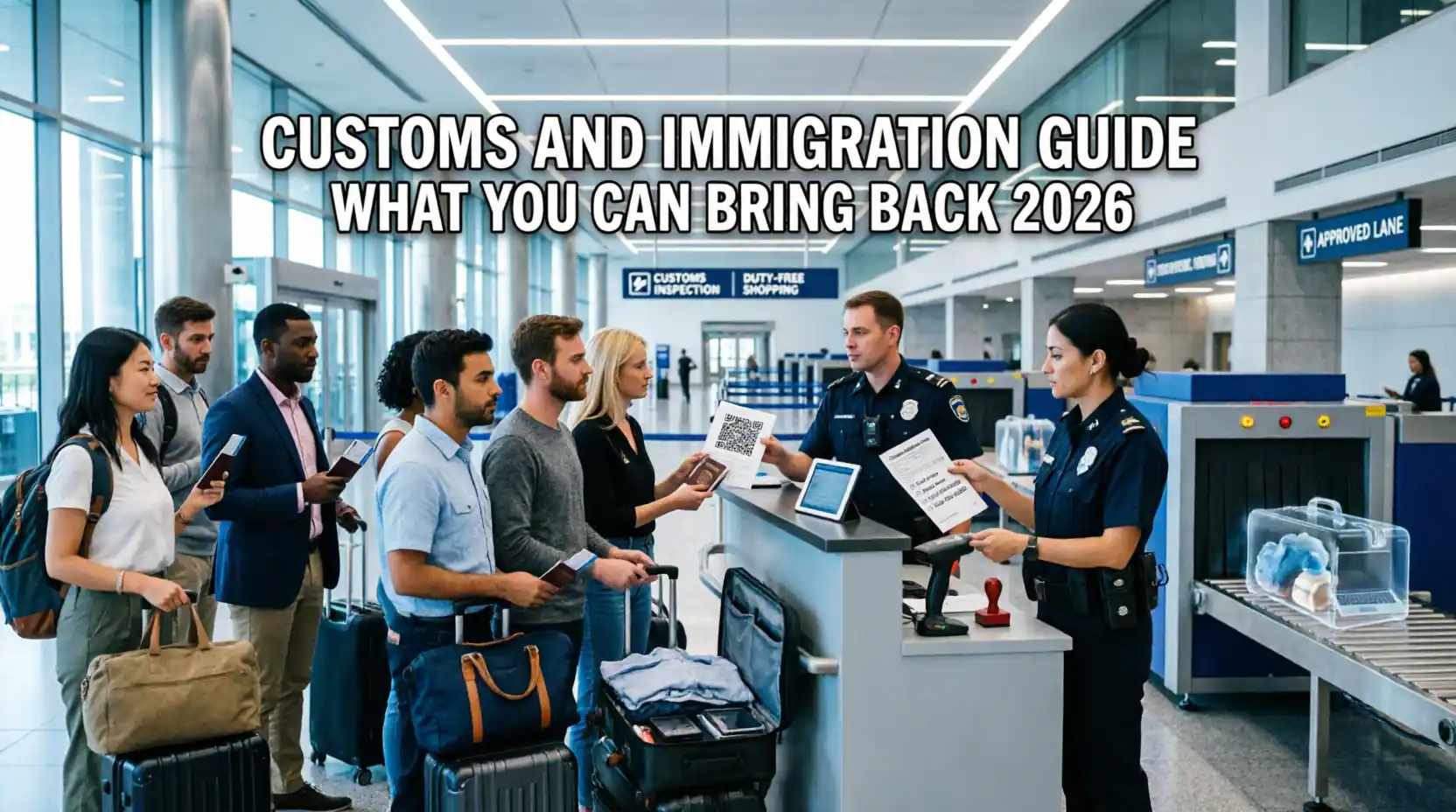
Understanding Customs and Immigration: Essential Knowledge for International Travelers
Returning to the mainland from international travel involves navigating complex customs and immigration regulations that determine what items you can legally bring back, what must be declared, what is prohibited entirely, and what duties or taxes you may owe. Whether you are a US citizen returning from vacation abroad, an international visitor entering the United States, or a traveler bringing back souvenirs, gifts, or purchases from your journey, understanding these regulations is crucial for avoiding fines, confiscation of items, or even criminal penalties.
Customs and Border Protection (CBP) officers at ports of entry have broad authority to inspect luggage, question travelers about their purchases and activities abroad, assess duties on imported goods, and seize prohibited items. While most travelers pass through customs without incident, lack of knowledge about regulations can lead to costly mistakes. Items that seem innocent—certain foods, plants, animal products, or cultural artifacts—may be strictly prohibited or require special permits and documentation.
This comprehensive guide explores US customs and immigration regulations for 2026, covering duty-free allowances, prohibited and restricted items, declaration requirements, currency reporting, agricultural products, medications, cultural artifacts, and practical strategies for smooth customs processing. Whether you are bringing back a few souvenirs or significant purchases, understanding these rules helps you comply with the law while maximizing your duty-free allowances and avoiding unnecessary delays or penalties.
Duty-Free Allowances: What You Can Bring Back Without Paying Taxes

US customs regulations provide generous duty-free allowances for returning travelers, allowing you to bring back a certain value of goods without paying import duties. Understanding these allowances helps you plan purchases abroad and avoid unexpected taxes upon return.
For US citizens and permanent residents returning from most international destinations, the standard personal exemption is $800 worth of merchandise per person if you have been abroad for at least 48 hours and have not used this exemption within the previous 30 days. This exemption applies to items for personal or household use, including clothing, electronics, jewelry, and souvenirs. The $800 allowance is per person, so a family of four could theoretically bring back $3,200 worth of goods duty-free if each person claims their individual exemption.
Special Allowances for Alcohol and Tobacco
Within your $800 personal exemption, you may include limited quantities of alcohol and tobacco products. Travelers who are at least 21 years old may import one liter of alcoholic beverages duty-free. Additional liters beyond the first are subject to duty and federal excise taxes, though some states have stricter limits on alcohol importation that must also be observed.
For tobacco products, the duty-free allowance includes 200 cigarettes (one carton), 100 cigars (non-Cuban), or a proportional combination of tobacco products. However, tobacco products originating from Cuba are prohibited regardless of quantity due to ongoing trade restrictions. Travelers should note that some states have additional restrictions on tobacco importation beyond federal limits.
Returning from US Territories and Caribbean Nations
Travelers returning from US Virgin Islands, American Samoa, or Guam receive a higher duty-free exemption of $1,600 per person. However, only $800 of this amount may be from other countries; the remainder must be from the US territory itself. This higher exemption recognizes the unique status of these territories and encourages tourism and commerce.
For travelers returning from certain Caribbean Basin Initiative (CBI) countries or Andean countries, special provisions may apply that allow duty-free treatment for certain items even beyond the standard $800 exemption. These provisions are designed to support economic development in these regions through preferential trade treatment.
Exceeding Duty-Free Allowances
If the total value of your purchases exceeds your duty-free exemption, you will owe duty on the excess amount. The duty rate varies depending on the type of goods, country of origin, and applicable trade agreements. Generally, duty rates range from 0% to 37%, with an average rate around 5-6% for most consumer goods.
CBP uses a flat rate of 3% duty on the next $1,000 worth of goods beyond your exemption for items purchased in most countries. For example, if you bring back $1,500 worth of goods and qualify for the $800 exemption, you would pay duty on $700 at the applicable rate. CBP officers can provide specific duty rate information for your purchases, or you can research rates in advance through the Harmonized Tariff Schedule.
Prohibited Items: What You Cannot Bring Back Under Any Circumstances

Certain items are strictly prohibited from entry into the United States, regardless of quantity, value, or intended use. Attempting to bring these items through customs can result in confiscation, substantial fines, and potentially criminal charges. Understanding what is prohibited prevents serious legal troubles.
Illegal narcotics and controlled substances top the list of prohibited items. This includes not only obviously illegal drugs but also certain medications that are legal in other countries but controlled in the United States. Cannabis products, including marijuana, CBD oil, and edibles, remain prohibited under federal law even if purchased legally in Canada or other countries where they are legal. This applies regardless of state laws that may permit cannabis in certain US jurisdictions.
Counterfeit and Pirated Goods
Counterfeit merchandise that infringes on trademarks or copyrights is prohibited from importation. This includes fake designer handbags, watches, clothing, electronics, software, movies, and music. CBP actively searches for and seizes counterfeit goods, and travelers attempting to import such items may face civil penalties up to the value of genuine merchandise or criminal charges for willful infringement.
The prohibition extends beyond obvious counterfeits to include "gray market" goods—authentic products not intended for the US market. While enforcement typically focuses on commercial quantities, even single items can be seized if they violate trademark or copyright laws.
Protected Wildlife and Animal Products
The Convention on International Trade in Endangered Species (CITES) and US laws like the Endangered Species Act prohibit or restrict importation of products made from protected wildlife. This includes ivory, tortoiseshell, coral, certain furs, feathers from protected birds, sea turtle products, and items made from endangered plants or animals.
Antique items containing prohibited materials may qualify for exceptions if they meet specific age requirements (typically over 100 years old) and proper documentation is provided. However, proving age and origin can be difficult, and CBP may seize items if documentation is insufficient. When in doubt, do not purchase wildlife products abroad.
Cultural Artifacts and Antiquities
Importing cultural artifacts, archaeological materials, and antiquities removed from their country of origin in violation of that country's laws is prohibited. Many countries have strict laws protecting cultural heritage, and removing such items without proper export permits is illegal both in the source country and the United States.
CBP works with foreign governments to identify and seize illegally imported cultural property. Penalties can include forfeiture of the items, civil fines, and criminal prosecution. Travelers interested in purchasing art or antiques abroad should request documentation proving legal export and consult with customs attorneys for high-value items.
Restricted Items: What Requires Declaration, Permits, or Special Handling

Beyond prohibited items, many goods are restricted and may be imported only with proper documentation, permits, or payment of duties. These items are not automatically banned but require compliance with specific regulations.
Food products represent one of the most common categories of restricted items. While some foods may enter the United States, many are prohibited or require inspection and permits to prevent introduction of plant pests, animal diseases, or foodborne illnesses. All food products must be declared to CBP, and failure to declare can result in penalties even if the food itself would have been permitted.
Agricultural Products and Plants
Fresh fruits and vegetables are generally prohibited from entry due to risks of introducing plant pests and diseases. There are limited exceptions for certain commercially packaged and inspected products from approved countries, but travelers should assume fresh produce cannot be brought back.
Plants, seeds, and cuttings require permits from the US Department of Agriculture (USDA) and inspection at ports of entry. Some plants are prohibited entirely, while others may enter with proper phytosanitary certificates from the country of origin. Soil is generally prohibited as it can harbor pests and diseases.
Meat and meat products are heavily restricted due to concerns about animal diseases like foot-and-mouth disease and African swine fever. Most fresh, dried, or canned meats and meat products are prohibited. Some exceptions exist for fully cooked, shelf-stable products in hermetically sealed containers from approved countries, but declaration and inspection are required.
Medications and Medical Devices
Travelers may import medications for personal use, but certain restrictions apply. Prescription medications should be in original containers with pharmacy labels showing your name and prescribing physician. Carrying a copy of your prescription or a letter from your doctor explaining the medical necessity is advisable, particularly for controlled substances.
Medications that are illegal in the United States cannot be imported even with a foreign prescription. This includes certain drugs that may be legal in other countries but are controlled substances under US law. The FDA allows personal importation of some unapproved medications under specific circumstances, but this is evaluated case-by-case.
Medical devices and equipment may require FDA approval or permits. While personal-use quantities of most devices are generally allowed, commercial quantities or certain restricted devices may require additional documentation.
Currency and Monetary Instruments
There is no limit to how much currency or monetary instruments you can bring into or take out of the United States. However, if you are transporting more than $10,000 in currency or monetary instruments (including foreign currency, traveler's checks, money orders, and negotiable securities), you must file a Report of International Transportation of Currency or Monetary Instruments (FinCEN Form 105) with CBP.
Failure to report currency over $10,000 can result in civil penalties and seizure of the currency. The reporting requirement applies per person or family traveling together, and structuring transactions to avoid reporting (such as having multiple family members each carry just under $10,000) is illegal and can result in criminal charges.
Commercial Merchandise and Samples
Items imported for commercial use, resale, or as business samples are subject to different regulations than personal effects. Commercial imports generally require formal entry procedures, may be subject to higher duties, and must comply with various agency regulations (FDA, EPA, CPSC, etc.).
Travelers bringing back items for business purposes should be prepared to demonstrate that quantities are reasonable for personal use if claiming personal exemption. Large quantities of identical items, items with price tags still attached, or merchandise in original packaging may be deemed commercial imports subject to formal entry requirements.
Food and Agricultural Products: Detailed Restrictions and Exceptions

Food and agricultural products receive special scrutiny at customs due to their potential to introduce devastating plant and animal diseases. Understanding specific restrictions helps travelers avoid confiscation and penalties while identifying what is actually permitted.
Baked goods, candies, chocolate, and fully cooked, shelf-stable foods are generally admissible. This includes bread, cookies, crackers, cakes, granola bars, cereal, and similar items. Cheese is generally permitted if it is solid (not liquid or spreadable) and does not contain meat. Butter and cream cheese are typically allowed.
Meat and Poultry Restrictions
Most meat and poultry products are prohibited, including fresh, dried, frozen, and canned varieties. This includes beef, pork, lamb, goat, chicken, turkey, and products containing these meats. The prohibition extends to soups, bouillon, and processed foods containing meat ingredients.
Limited exceptions exist for fully cooked, shelf-stable canned meats from approved countries, but these must be declared and inspected. Even when technically permitted, such products are often not worth the hassle and risk of confiscation if documentation is inadequate.
Fish and Seafood
Fresh or frozen fish and seafood are generally permitted for personal use quantities, though they must be declared and inspected. Some species may be restricted under CITES or other wildlife protection laws. Processed fish products like canned tuna or salmon are typically admissible.
Travelers should verify that fish products do not contain prohibited ingredients and that species are not protected. When in doubt, declaration allows CBP to make the determination rather than risking penalties for non-declaration.
Dairy Products
Most dairy products are permitted if they are for personal use and do not contain meat. This includes cheese, butter, yogurt, and milk. However, dairy products from countries affected by foot-and-mouth disease may be restricted. Declaration and inspection are required.
Fruits, Vegetables, and Plants
Fresh fruits and vegetables are generally prohibited regardless of origin, with very limited exceptions. This is one of the most common violations, as travelers often assume commercially grown produce is safe to bring back. The risk of introducing invasive pests or plant diseases makes these restrictions necessary.
Dried fruits and vegetables may be permitted if they are free from pests and properly processed. Spices, herbs, and tea are generally allowed if they are dried and processed. Declaration is essential for all plant products.
Alcohol and Tobacco: Limits, Taxes, and State Restrictions

While federal regulations allow limited quantities of alcohol and tobacco duty-free, additional considerations include federal excise taxes, state restrictions, and age requirements that travelers must navigate.
The one-liter duty-free allowance for alcohol applies to travelers 21 years or older. Additional liters may be imported but are subject to duty and federal excise taxes. Some states have "monopoly" systems for alcohol sales and restrict or prohibit personal importation of alcoholic beverages. Travelers should check their destination state's laws before attempting to bring alcohol across state lines.
Tobacco Product Restrictions
The duty-free allowance includes 200 cigarettes (one carton), 100 cigars (non-Cuban), or a proportional combination. Cuban cigars and tobacco products remain prohibited under the Cuban Assets Control Regulations, regardless of where purchased. This prohibition is strictly enforced.
Additional tobacco products beyond the duty-free allowance are subject to duty and federal excise taxes. Some states have additional restrictions on tobacco importation or require state tax payments on tobacco brought in from abroad. Age requirements (21 years minimum) must be met for all tobacco products.
Declaration and Tax Payment
All alcohol and tobacco products must be declared to CBP, even if within duty-free limits. CBP officers will verify age through identification and ensure quantities comply with federal and state regulations. Travelers exceeding duty-free limits will be directed to pay applicable duties and taxes before release of goods.
Currency, Gifts, and Mailed Items: Additional Import Considerations

Beyond items carried in luggage, travelers must understand regulations regarding currency reporting, gifts sent separately, and items shipped or mailed to the United States.
Currency reporting requirements apply to currency and monetary instruments totaling more than $10,000. This includes US and foreign currency, traveler's checks, money orders, investment securities in bearer form, and negotiable instruments. The requirement applies to the total amount per person or family group traveling together.
Gifts and Mailed Items
Gifts mailed from abroad to the United States may qualify for duty-free entry if they meet specific criteria: the gift must be sent from one individual to another, the value must not exceed $100, the items must be for personal or household use, and alcohol or tobacco cannot be included. Multiple packages from the same sender on the same day are aggregated for the $100 limit.
Gifts exceeding $100 in value are subject to duty on the full value, not just the excess. Gifts containing alcohol or tobacco are subject to duty regardless of value. Proper documentation on customs forms is essential to claim gift treatment.
Unaccompanied Baggage and Shipped Items
Items shipped separately from your travel (unaccompanied baggage) may be included in your personal exemption if they arrive within a reasonable time before or after your return. You must declare these items on your customs form and may need to file additional documentation when the items arrive.
Commercial shipments, even if purchased for personal use, generally require formal entry procedures and cannot be claimed under personal exemption. Using international shipping services for purchases made while traveling abroad may result in unexpected duties, taxes, and brokerage fees.
Penalties for Violations: Consequences of Non-Compliance

Violating customs regulations can result in serious consequences ranging from simple confiscation of prohibited items to substantial fines and criminal prosecution. Understanding potential penalties emphasizes the importance of compliance.
Failure to declare items that should be declared can result in seizure of the items and monetary penalties. For currency violations (failing to report over $10,000), civil penalties can equal the amount not reported, and criminal penalties may include fines up to $500,000 and imprisonment. CBP takes currency reporting violations seriously as they relate to money laundering and other financial crimes.
Agricultural Violations
Failure to declare agricultural products can result in civil penalties starting at $300 for a first violation and increasing for subsequent violations. If the violation is deemed willful or negligent, penalties can reach thousands of dollars. Additionally, prohibited items will be confiscated and destroyed.
CBP has increased enforcement of agricultural restrictions in recent years, using x-ray technology, detector dogs, and targeted inspections to identify undeclared food and plant products. The ease of detection makes attempting to smuggle prohibited agricultural products particularly risky.
Intellectual Property Violations
Importing counterfeit goods can result in seizure of the items and civil penalties up to the value of genuine merchandise. For willful trademark counterfeiting, criminal penalties may include fines up to $2 million for individuals and imprisonment. While enforcement typically focuses on commercial quantities, even single items can be seized.
Criminal Prosecution
Serious violations, particularly those involving drugs, large-scale counterfeiting, currency structuring, or smuggling of prohibited items, may result in criminal prosecution. Criminal penalties can include substantial fines and imprisonment. CBP works closely with other law enforcement agencies to investigate and prosecute serious customs violations.
Practical Tips for Smooth Customs Processing

Preparing for customs inspection and understanding the process can significantly reduce stress and delays when returning to the United States. These practical tips help ensure smooth passage through customs.
Complete your customs declaration form accurately and completely before reaching the CBP officer. The form asks about items purchased abroad, total value of goods, agricultural products, currency over $10,000, and other relevant information. Honesty is essential; misrepresentation can result in penalties even if the underlying items would have been permitted if declared properly.
Organize Purchases and Documentation
Keep receipts for significant purchases and organize them for easy reference if questioned by CBP. Having documentation of purchase prices helps establish value for duty assessment. For high-value items like jewelry, electronics, or art, consider carrying proof of ownership from before your trip (such as photographs or registration documents) to avoid being charged duty on items you already owned.
Keep purchased items accessible in your luggage rather than buried at the bottom. CBP officers may ask to inspect purchases, and having them readily available speeds the process. Do not remove tags or packaging until after clearing customs if items might need inspection.
When in Doubt, Declare
The golden rule of customs is: when in doubt, declare. Declaring an item that turns out to be permitted causes no penalty. Failing to declare an item that should have been declared can result in seizure and fines, even if the item itself was admissible. CBP officers would rather answer questions about borderline items than discover undeclared prohibited goods.
If you are uncertain whether an item is permitted, ask the CBP officer. Officers can provide guidance on specific items and may allow inspection to determine admissibility. Demonstrating good faith through declaration and cooperation typically results in more favorable treatment.
Use Trusted Traveler Programs
Frequent international travelers should consider enrolling in Trusted Traveler Programs like Global Entry, which provides expedited customs processing through automated kiosks. Members still must declare items and comply with all regulations, but the process is typically faster and more convenient. Other programs like NEXUS (for US-Canada travel) and SENTRI (for US-Mexico travel) offer similar benefits for specific border crossings.
Know Your Rights and Responsibilities
Travelers have the right to be treated with respect and professionalism by CBP officers. However, CBP has broad authority to search persons and belongings at the border without warrants or probable cause. Refusing a search can result in detention, seizure of items, or denial of entry.
If you believe your rights have been violated, you can file a complaint with CBP after clearing customs. However, arguing with officers during inspection is counterproductive and may escalate the situation. Remain calm, answer questions truthfully, and request to speak with a supervisor if necessary.
Special Considerations for 2026: Recent Regulatory Changes

Customs regulations evolve in response to emerging threats, trade agreements, and policy changes. Travelers in 2026 should be aware of several recent developments affecting import regulations.
Enhanced screening for agricultural products has increased following several plant pest and animal disease outbreaks globally. CBP has expanded use of advanced imaging technology and detector dogs at ports of entry. Travelers should expect increased scrutiny of food and plant products and stricter enforcement of agricultural restrictions.
Digital Services and Mobile Apps
CBP has expanded digital services including mobile apps for declaration and Global Entry processing. The CBP Mobile Passport Control app allows eligible travelers to submit declaration information electronically, reducing wait times. Familiarize yourself with these tools before travel to expedite your return.
Electronic systems for duty payment and entry processing have also expanded, making compliance easier for travelers with items subject to duty. However, these systems still require accurate declaration of all items.
E-Commerce and Cross-Border Shopping
The rise of international e-commerce has led to increased scrutiny of items purchased online and shipped from abroad. Travelers should understand that items shipped separately may be subject to different regulations than items carried in luggage. Commercial quantities or items that appear to be for resale may require formal entry regardless of how they are imported.
Conclusion: Compliance, Preparation, and Peace of Mind

Navigating customs and immigration when returning to the mainland requires knowledge, preparation, and honesty. Understanding what you can and cannot bring back, knowing your duty-free allowances, recognizing prohibited and restricted items, and declaring everything required protects you from penalties while ensuring smooth passage through customs.
The regulations may seem complex, but they serve important purposes: protecting US agriculture and ecosystems from invasive pests and diseases, preventing introduction of unsafe products, collecting lawful duties, combating counterfeit goods and intellectual property theft, and detecting illegal activities. Compliance with these regulations is not just a legal obligation but a contribution to national security and public health.
As you plan international travel in 2026, incorporate customs considerations into your preparation. Research restrictions on items you might want to bring back, keep receipts organized, understand your duty-free allowances, and prepare to declare all required items. When in doubt, declare it and ask questions. A few minutes of preparation and honest declaration can prevent hours of delays, confiscation of cherished souvenirs, or substantial fines.
Remember that CBP officers are there to facilitate legitimate travel while enforcing the law. Approaching customs inspection with respect, honesty, and cooperation typically results in quick, uneventful processing. By understanding and following customs regulations, you can return from your international adventures with your souvenirs intact, your wallet protected from unexpected penalties, and the satisfaction of being a responsible traveler.
0 Comments