.webp)
.webp)
10-Day Nicaragua Itinerary: Colonial Cities to Volcanic Islands
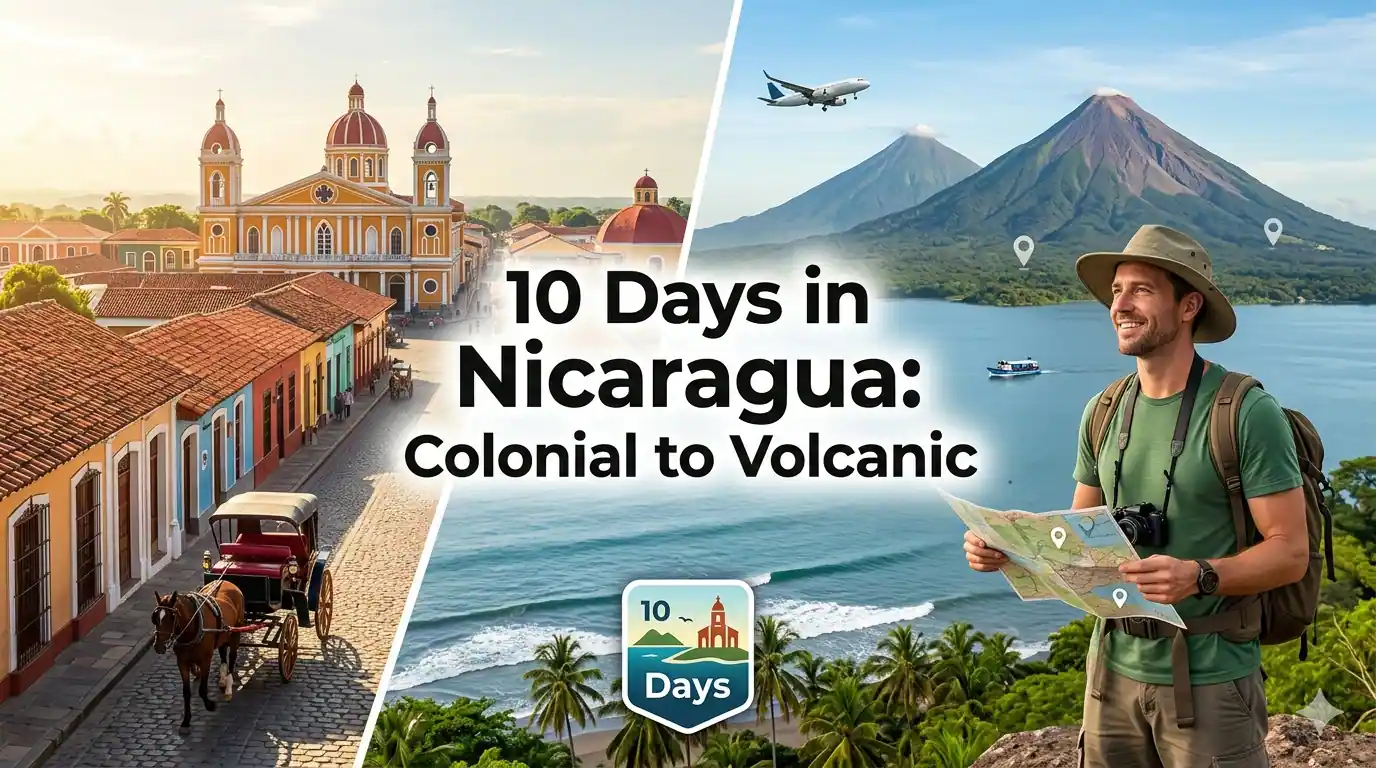
Introduction: Discovering Nicaragua's Diverse Landscapes and Rich Heritage
Nicaragua, Central America's largest country by land area, offers an extraordinary diversity of experiences packed into a compact and accessible destination. From the well-preserved Spanish colonial architecture of Granada and León to the dramatic twin volcanoes of Ometepe Island rising from Lake Nicaragua, from Pacific coast surf breaks to Caribbean-side Corn Islands, this nation delivers an impressive range of landscapes, cultures, and adventures. A ten-day itinerary provides the perfect timeframe to experience Nicaragua's highlights without feeling rushed, allowing you to explore colonial cities, hike active volcanoes, relax on pristine beaches, and immerse yourself in authentic Central American culture.
This comprehensive 10-day Nicaragua itinerary is designed for first-time visitors and experienced travelers alike, balancing must-see attractions with hidden gems, active adventures with relaxation, and cultural immersion with natural wonders. The route flows logically from Managua through Granada and the colonial highlands to Ometepe Island, then optionally extends to the Pacific coast or Caribbean islands, depending on your interests and travel style. Each day is crafted to maximize your experience while maintaining a sustainable pace that allows for spontaneous discoveries and meaningful connections with local communities.
Whether you are drawn to Nicaragua for its volcanic landscapes, colonial heritage, surfing opportunities, or affordable travel costs, this itinerary provides a flexible framework that you can customize based on your priorities. You will explore UNESCO World Heritage sites, hike to volcanic craters, kayak through tropical lagoons, learn about coffee production, and experience the warm hospitality that makes Nicaragua such a beloved destination. With careful planning and this detailed guide, your ten days in Nicaragua will create memories that last a lifetime.
Day 1: Arrival in Managua and Transfer to Granada

Your Nicaragua adventure begins with arrival at Augusto C. Sandino International Airport in Managua, the nation's capital. While Managua serves as the primary international gateway, most travelers choose to base themselves in Granada for its colonial charm, walkable historic center, and proximity to key attractions. Upon clearing immigration and collecting your luggage, arrange transportation to Granada, located approximately 45 kilometers southeast of the airport. The journey takes about one hour by private shuttle or taxi, costing between thirty and fifty United States dollars.
Check into your accommodation in Granada, choosing from boutique hotels in restored colonial mansions, budget-friendly hostels, or mid-range guesthouses. Take time to settle in, freshen up, and acclimate to Nicaragua's tropical climate. In the late afternoon, begin your exploration with a gentle walking tour of Granada's historic center. Start at Parque Central, the main square surrounded by the bright yellow Cathedral of Granada, the Palacio Municipal, and bustling cafes. Observe local life as families gather, vendors sell snacks, and horse-drawn carriages clip-clop along cobblestone streets.
Walk along Calle La Calzada, Granada's pedestrian-friendly street lined with colorful buildings, restaurants, bars, and shops. This vibrant area comes alive in the evening with live music, street performers, and a festive atmosphere. Enjoy your first Nicaraguan dinner at a local restaurant, sampling traditional dishes like gallo pinto (rice and beans), nacatamales (corn dough stuffed with meat and vegetables), or fresh seafood from Lake Nicaragua or the Pacific coast. End your first day with a refreshing drink at a rooftop bar offering views of the city and distant volcanoes, setting the stage for the adventures ahead.
Day 2: Granada Colonial Exploration and Lake Nicaragua

Dedicate your second full day to thoroughly exploring Granada, one of the oldest and best-preserved colonial cities in the Americas. Founded in 1524 by Spanish conquistador Francisco Hernández de Córdoba, Granada showcases remarkable examples of colonial architecture, religious heritage, and historical significance. Begin your morning with a guided walking tour to gain deep insights into the city's history, architecture, and cultural evolution. Knowledgeable local guides will lead you through significant sites including the Granada Cathedral, completed in the mid-19th century and featuring a neoclassical facade with twin bell towers.
Visit the Convento y Museo de San Francisco, the oldest church in Nicaragua, dating back to the 16th century. The attached museum displays an impressive collection of pre-Columbian stone statues excavated from Zapatera Island in Lake Nicaragua, offering glimpses into indigenous cultures that inhabited the region before Spanish colonization. Explore the colorful Mercado Municipal, Granada's central market, where vendors sell fresh produce, meats, spices, textiles, and traditional crafts. This sensory-rich experience provides authentic insight into daily Nicaraguan life and offers opportunities to practice Spanish and interact with local residents.
In the afternoon, embark on a boat tour of Lake Nicaragua, the largest lake in Central America. Depart from Granada's waterfront and cruise among the Isletas de Granada, a cluster of 365 small islands scattered across the lake. These islands range from tiny rocky outcrops to larger inhabited islets with homes, restaurants, and even a small zoo. Learn about the islands' history, from indigenous settlements to pirate hideouts, and observe local wildlife including tropical birds and iguanas. Some tours include stops at specific islands for swimming, snorkeling, or visiting local communities, providing a refreshing break from city exploration.
Return to Granada for dinner and evening leisure time. Consider attending a cultural performance, visiting a local art gallery, or simply enjoying the relaxed atmosphere of La Calzada. Granada's compact size makes it easy to navigate on foot, and the friendly, safe environment encourages evening strolls and spontaneous discoveries.
Day 3: Masaya Volcano and Artisan Markets

On day three, venture beyond Granada to explore nearby attractions that showcase Nicaragua's volcanic geography and rich artisan traditions. Begin your morning with a visit to the Mercado de Artesanías in Masaya, Nicaragua's largest and most famous craft market. This sprawling covered market features hundreds of vendors selling handmade goods including hammocks, leather products, ceramics, textiles, wood carvings, and traditional Nicaraguan souvenirs. The market offers excellent opportunities to purchase gifts, support local artisans, and observe traditional craftsmanship techniques passed down through generations.
Practice respectful bargaining, a common practice in Nicaraguan markets, while maintaining fair prices that value artisans' labor and materials. Many vendors speak basic English and are happy to explain the origins and production methods of their products. Allocate two to three hours for market exploration, allowing time to compare quality and prices across different stalls before making purchases.
In the afternoon, continue to Volcán Masaya, one of Nicaragua's most accessible and active volcanoes. Located within Masaya Volcano National Park, this volcano features a drive-up crater that allows visitors to witness bubbling lava and volcanic gases with minimal hiking required. The park entrance fee is approximately ten dollars per person, and the journey from Masaya takes about thirty minutes. Upon arrival, drive or take a shuttle to the Santiago Crater viewpoint, where you can observe the active lava lake (visibility depends on volcanic activity and weather conditions) and learn about the volcano's geological significance from interpretive displays.
The crater emits sulfuric gases, creating an otherworldly atmosphere and distinctive volcanic scent. Stay on designated paths and follow all safety guidelines, as volcanic conditions can change rapidly. If time permits, explore hiking trails within the park that lead through diverse ecosystems ranging from dry tropical forest to lava fields. Return to Granada in the evening for dinner and rest, or consider staying in Masaya for a more local experience before continuing your journey.
Day 4: Journey to Ometepe Island

Day four marks an exciting transition from colonial cities to natural wonders as you travel to Ometepe Island, one of Nicaragua's most spectacular destinations. Ometepe, derived from Nahuatl words meaning "two mountains," is formed by two volcanoes rising from Lake Nicaragua: Concepción, an active cone-shaped volcano reaching 1,610 meters, and Maderas, a dormant volcano covered in cloud forest reaching 1,394 meters. The island's unique geography, rich biodiversity, archaeological significance, and laid-back atmosphere make it a highlight of any Nicaragua itinerary.
Begin your morning by traveling from Granada to the port city of San Jorge, located near Rivas on the shores of Lake Nicaragua. The journey takes approximately two hours by shuttle or private vehicle. Upon arrival at San Jorge, purchase ferry tickets for the crossing to Ometepe. Two ferry options operate: a larger vehicle ferry taking about one hour and carrying cars, buses, and passengers, and a faster passenger-only lancha taking thirty to forty minutes. Ferry schedules vary by season, with multiple departures daily during high season. Ticket prices range from two to five dollars for passengers and additional fees for vehicles.
During the scenic ferry crossing, enjoy views of the twin volcanoes growing larger on the horizon, spot tropical birds flying overhead, and feel the refreshing lake breeze. Upon arrival at Moyogalpa port on Ometepe's western side, arrange transportation to your accommodation. Options include taxis, pickup trucks adapted for passenger transport, or rental bicycles and scooters for independent exploration. Choose lodging that matches your travel style, from eco-lodges and boutique hotels to budget hostels and family-run guesthouses. Many accommodations are concentrated around Moyogalpa on the western side or around Balgüe and Mérida on the southern slopes of Maderas volcano.
Spend your afternoon settling in and taking an introductory walk around your chosen village. Visit the local beach for a refreshing swim in Lake Nicaragua, enjoy a casual dinner featuring fresh fish or traditional Nica cuisine, and rest in preparation for the following day's volcanic adventures. The island's relaxed pace and natural beauty will quickly work their magic, setting a tranquil tone for your Ometepe experience.
Day 5: Ometepe Island Exploration and Volcano Hiking

Dedicate your first full day on Ometepe to exploring the island's natural attractions and choosing a volcano hiking adventure based on your fitness level and interests. Both Concepción and Maderas volcanoes offer distinct experiences: Concepción provides a challenging, strenuous hike to an active volcanic crater with panoramic views, while Maderas offers a moderate trek through cloud forest to a crater lagoon surrounded by lush vegetation.
If you choose to hike Volcán Concepción, prepare for a demanding six to eight-hour round-trip ascent requiring good physical fitness, proper hiking boots, and an early start. The trail begins near the village of Moyogalpa and climbs steadily through agricultural land, dry forest, and eventually barren volcanic rock near the summit. Hire a local guide, which is mandatory for this hike and enhances safety while providing valuable information about the volcano's geology, flora, and fauna. Guide fees typically range from twenty to thirty dollars and often include transportation to the trailhead.
The Concepción hike involves steep sections, loose volcanic scree, and exposure to sun and wind. Bring ample water (at least three liters per person), energy snacks, sun protection, and rain gear as weather can change rapidly. Upon reaching the 1,610-meter summit, peer into the active crater (visibility depends on volcanic gas emissions and safety conditions) and enjoy breathtaking 360-degree views of Lake Nicaragua, the island's lush landscapes, and distant mainland volcanoes. Descend carefully, as tired legs and loose terrain increase slip hazards.
Alternatively, hike Volcán Maderas for a different experience emphasizing biodiversity and cloud forest ecology. The Maderas trail is less strenuous but still challenging, taking five to seven hours round-trip. The path winds through coffee plantations, primary and secondary forest, and cloud forest zones as you ascend to 1,394 meters. Near the summit, you will reach the crater lagoon, a serene body of water surrounded by vegetation and often shrouded in mist. The hike offers excellent birdwatching opportunities, with species including toucans, parrots, and various tanagers. Waterfalls along the route provide refreshing rest stops.
After your volcano adventure, return to your accommodation for rest and recovery. Celebrate your accomplishment with a hearty meal, perhaps featuring locally grown coffee and fresh tropical fruits. In the evening, consider visiting a natural hot spring near the base of Maderas volcano, where geothermal activity creates soothing thermal pools perfect for relaxing sore muscles under the stars.
Day 6: Ometepe Island Culture and Nature

Use your second full day on Ometepe to explore the island's cultural heritage, archaeological sites, and diverse ecosystems at a more relaxed pace. Begin your morning with a visit to the Museo de Ometepe in Moyogalpa, which houses an impressive collection of pre-Columbian artifacts excavated from the island. The museum displays ceramic pieces, stone tools, petroglyphs, and ceremonial objects that reveal the rich indigenous history of Ometepe, inhabited for thousands of years before Spanish colonization. Knowledgeable staff provide context about the island's archaeological significance and the cultures that created these remarkable works.
After the museum, embark on a bicycle or scooter rental to independently explore the island at your own pace. Cycling is a popular and eco-friendly way to traverse Ometepe's relatively flat coastal areas and rolling hills between the volcanoes. Rent bicycles for five to ten dollars per day or scooters for twenty to thirty dollars, and follow the main road that circles the island or venture onto smaller rural roads. Stop at local farms to observe traditional agricultural practices, visit roadside fruit stands for fresh mangoes, papayas, or coconuts, and chat with friendly island residents.
Visit the Finca Magdalena organic coffee farm on the slopes of Maderas volcano for an educational tour about sustainable coffee production. Learn about the entire process from bean to cup, including cultivation, harvesting, processing, roasting, and brewing. Many coffee tours include tastings of different varieties and the opportunity to purchase high-quality organic coffee directly from the producers. This experience supports local farmers and provides insight into one of Nicaragua's most important agricultural exports.
In the afternoon, explore Ometepe's beaches and natural swimming spots. Playa Santo Domingo on the western side offers black volcanic sand, gentle waves suitable for swimming, and stunning sunset views over Lake Nicaragua. Playa Mérida provides a more secluded experience with fewer visitors and opportunities for birdwatching. For a unique adventure, visit the Ojo de Agua natural pool, a spring-fed swimming hole surrounded by lush vegetation and fed by cool water filtering through volcanic rock. This refreshing oasis is perfect for escaping the afternoon heat and observing local families enjoying recreational time.
Conclude your day with a leisurely dinner at a lakeside restaurant, watching the sun set behind the volcanoes while enjoying fresh seafood or traditional Nicaraguan dishes. Reflect on your Ometepe experiences and prepare for the following day's journey to your next destination.
Day 7: Travel to León and Colonial Heritage

On day seven, bid farewell to Ometepe Island and travel to León, Nicaragua's second-largest city and a treasure trove of colonial architecture, revolutionary history, and vibrant youth culture. The journey requires returning to the mainland via ferry from Moyogalpa to San Jorge, then traveling northwest to León, approximately three to four hours by shuttle or private vehicle. Shuttles typically depart Granada or Rivas in the morning, coordinating with ferry schedules to minimize wait times.
Upon arrival in León, check into your accommodation, choosing from historic boutique hotels in restored colonial buildings, budget hostels popular with backpackers and students, or mid-range guesthouses. León's compact historic center is highly walkable, making location convenient for exploration. Take time to settle in and refresh before beginning your discovery of this dynamic city.
León was founded in 1524 and served as Nicaragua's capital until 1852. The city played a pivotal role in the country's colonial history, independence movement, and 20th-century revolutionary struggles. Begin your exploration with a visit to the León Cathedral, officially the Cathedral Basilica of the Assumption of Mary, a UNESCO World Heritage Site and the largest cathedral in Central America. Construction began in 1747 and took nearly a century to complete, resulting in a baroque masterpiece featuring five naves, eleven domes, and forty-four cupolas. Climb to the rooftop for panoramic views of the city, surrounding volcanoes, and the cathedral's impressive architectural details.
Explore the city's numerous churches and religious sites, including Iglesia de Guadalupe with its distinctive pink facade, Iglesia de San Juan Bautista, and the Ruins of León Viejo, a UNESCO World Heritage Site located about thirty kilometers from modern León. León Viejo, founded in 1524 and destroyed by volcanic eruption in 1610, offers fascinating archaeological ruins that provide insight into early Spanish colonial settlement patterns and architecture.
In the evening, experience León's vibrant cultural scene by visiting local bars, live music venues, or cultural centers. The city's large student population creates an energetic atmosphere with affordable dining, craft beer bars, and opportunities to meet fellow travelers and locals. Enjoy dinner at a restaurant serving traditional Nicaraguan cuisine or international fare, and consider attending a cultural event, poetry reading, or art exhibition if available during your visit.
Day 8: León Adventures and Volcano Boarding

Dedicate your second day in León to adventure activities and deeper cultural immersion. León is renowned as the birthplace of volcano boarding, an exhilarating activity that involves sliding down the slopes of Cerro Negro, an active volcano located about thirty kilometers east of the city. This unique adventure combines hiking and adrenaline as you ascend the volcanic cone wearing protective gear, then descend on a specialized wooden board at speeds reaching up to ninety kilometers per hour.
Book a volcano boarding tour through a reputable operator in León, with prices typically ranging from thirty to fifty dollars including transportation, equipment rental, safety briefing, and guide services. Tours depart early in the morning to avoid afternoon heat and potential rain. The journey to Cerro Negro takes approximately one hour, followed by a thirty to forty-five-minute hike up the volcano's steep, ashy slopes. While challenging, the ascent is manageable for most fitness levels with frequent rest stops and encouragement from guides.
Upon reaching the summit at 728 meters, receive final instructions on board control and braking techniques. The descent takes five to ten minutes of pure exhilaration as you navigate the black volcanic ash slope, kicking up dramatic plumes behind you. Multiple runs are often included, allowing you to refine your technique and increase speed with each attempt. Volcano boarding provides an unforgettable experience and excellent photo opportunities, making it a highlight for adventure-seeking travelers.
After returning to León in the afternoon, explore the city's museums and cultural sites. Visit the Museo de la Revolución, housed in a former National Guard barracks, which chronicles Nicaragua's revolutionary history through photographs, documents, and artifacts. The museum provides important context about the Sandinista revolution, the Somoza dictatorship, and the social changes that shaped modern Nicaragua. Another notable site is the Museo de Arte Sacro, displaying religious art and artifacts from colonial churches.
Wander through León's colorful streets, admiring the well-preserved colonial architecture, vibrant street art, and lively plazas. Stop at local cafes for Nicaraguan coffee, visit artisan shops for handmade souvenirs, or simply people-watch from a park bench. In the evening, enjoy a farewell dinner in León, perhaps trying regional specialties like vigorón (yuca with pork rinds and cabbage salad) or quesillo (cheese-filled tortilla with pickled onions and cream).
Day 9: Return to Managua and Urban Exploration

On day nine, travel from León back to Managua, Nicaragua's capital and largest city, for your final full day in the country. The journey takes approximately two hours by shuttle or private vehicle. While Managua suffered extensive damage from earthquakes in 1931 and 1972, as well as destruction during the 1980s civil war, the city has undergone significant reconstruction and now offers interesting cultural sites, museums, and urban experiences.
Check into your Managua accommodation, choosing from modern hotels near the airport, boutique properties in revitalized neighborhoods, or budget hostels. Use your afternoon to explore Managua's highlights, beginning with the Malecón, a lakeside promenade along Lake Nicaragua offering views, walking paths, and recreational areas. The Malecón has been redeveloped in recent years and provides a pleasant space for exercise, relaxation, and observing local life.
Visit the Old Cathedral of Managua, officially the Cathedral of Santiago, which survived the 1972 earthquake and now serves as a museum. The cathedral's Byzantine-inspired architecture and historical significance make it worth exploring. Adjacent to the old cathedral stands the New Cathedral of Managua, completed in 1993 with a distinctive modern design featuring colorful stained glass and multiple domes.
Explore the National Palace of Culture, which houses the National Museum displaying pre-Columbian artifacts, colonial art, and historical exhibits about Nicaraguan history and culture. The museum provides valuable context about the country's indigenous heritage, Spanish colonization, and path to independence. Another interesting site is the Rubén Darío National Theater, a beautiful neoclassical building honoring Nicaragua's most famous poet.
For shopping and local crafts, visit the Mercado Roberto Huembes, Managua's largest market, where vendors sell everything from fresh produce and clothing to traditional handicrafts and souvenirs. This authentic market experience offers opportunities to practice Spanish, observe daily life, and purchase last-minute gifts. In the evening, enjoy a farewell dinner at a restaurant featuring Nicaraguan cuisine or international options, reflecting on your ten-day journey through this remarkable country.
Day 10: Departure or Optional Extensions

Your tenth day in Nicaragua offers flexibility depending on your departure flight schedule and interests. If you have an afternoon or evening flight, use the morning for final exploration, souvenir shopping, or visiting sites you may have missed. Consider returning to a favorite location in Managua, exploring a different neighborhood, or simply relaxing at a cafe with Nicaraguan coffee while reviewing photos and memories from your journey.
For travelers with additional time or interest in extending their Nicaragua adventure, several excellent options exist. The Pacific coast beaches near San Juan del Sur offer world-class surfing, beautiful sunsets, and a vibrant backpacker scene, making them ideal for adding three to five days of beach relaxation and water sports. The Corn Islands (Big Corn Island and Little Corn Island) in the Caribbean Sea provide a completely different experience with Afro-Caribbean culture, English-speaking communities, pristine beaches, excellent snorkeling and diving, and a laid-back island atmosphere. Reaching the Corn Islands requires a domestic flight from Managua, so plan accordingly if including them in your itinerary.
Alternatively, explore Nicaragua's northern highlands around Estelí and Jinotega, known for coffee production, cloud forests, waterfalls, and cooler mountain climates. The Bosawás Biosphere Reserve, one of the largest rainforest reserves in Central America, offers exceptional biodiversity and eco-tourism opportunities for nature enthusiasts willing to venture off the beaten path.
When ready, transfer to Augusto C. Sandino International Airport for your departure flight, allowing ample time for check-in, security procedures, and potential delays. As you board your flight home or onward to your next destination, carry with you memories of colonial cities, volcanic landscapes, warm hospitality, and the rich cultural heritage that makes Nicaragua such a rewarding travel destination.
Practical Travel Information for Your Nicaragua Journey

Successful travel in Nicaragua requires understanding practical logistics, safety considerations, and cultural norms. This information ensures you are well-prepared for a smooth and enjoyable experience.
Transportation Options
Nicaragua offers various transportation methods suited to different budgets and comfort levels. Private shuttles provide the most convenient and comfortable option for traveling between major destinations, with door-to-door service, air conditioning, and English-speaking drivers. Costs range from thirty to sixty dollars per person for popular routes like Granada to León or Managua to Ometepe. Shared shuttles offer similar service at lower prices but may involve multiple stops and longer travel times.
Public buses are the most economical option, with fares typically costing one to five dollars depending on distance. Chicken buses (repurposed North American school buses) provide authentic local experiences but can be crowded, slow, and challenging for travelers with significant luggage. Microbuses and minibuses offer faster, more comfortable service on main routes at moderate prices. Taxis are readily available in cities and towns; always negotiate fares before entering or ensure the meter is running. Ride-sharing apps like Uber operate in Managua.
Accommodation Recommendations
Nicaragua's accommodation sector caters to all budgets and preferences. Budget hostels charge ten to twenty dollars per night for dorm beds and twenty to forty dollars for private rooms, offering social atmospheres, communal kitchens, and travel information. Mid-range hotels and guesthouses range from forty to eighty dollars per night, providing comfortable rooms, private bathrooms, air conditioning, and often breakfast. Boutique hotels and eco-lodges charge eighty to one hundred fifty dollars or more, featuring unique architecture, personalized service, and beautiful settings.
Book accommodation in advance during high season (December to April) and major holidays to secure preferred options. Read recent reviews to verify current conditions, cleanliness, and service quality. Consider location carefully, prioritizing walkable areas near attractions and safe neighborhoods.
Safety and Health Considerations
Nicaragua is generally safe for tourists who exercise common sense and remain aware of surroundings. Petty crime like pickpocketing and bag snatching occurs in crowded areas and on public transportation, so secure valuables, avoid displaying expensive items, and use hotel safes. Violent crime against tourists is rare but can occur; avoid walking alone at night, especially in unfamiliar areas, and use reputable transportation services.
Drink only bottled or purified water to avoid gastrointestinal illness. Ice in established restaurants and hotels is typically safe, but exercise caution with street vendors. Eat well-cooked foods and peel fruits yourself when possible. Nicaragua's tropical climate means high temperatures and humidity; stay hydrated, use sun protection, and dress in lightweight, breathable clothing. Mosquito-borne illnesses like dengue fever occur; use EPA-registered insect repellent, wear long sleeves and pants in the evening, and sleep under mosquito nets if accommodation lacks air conditioning or screens.
Purchase comprehensive travel insurance covering medical emergencies, evacuation, trip cancellation, and lost belongings. Verify that your policy covers adventure activities if planning volcano hiking, surfing, or other adventurous pursuits. Carry a basic first aid kit including medications for common ailments, as specific brands may be unavailable locally.
Conclusion: Nicaragua's Enduring Appeal

Ten days in Nicaragua provides a remarkable introduction to this diverse and captivating country, balancing colonial heritage, volcanic landscapes, cultural immersion, and natural beauty. From Granada's colorful streets and Ometepe's dramatic volcanoes to León's revolutionary history and Managua's urban energy, this itinerary showcases the highlights while allowing flexibility for personal interests and spontaneous discoveries. Nicaragua rewards travelers with authentic experiences, affordable costs, warm hospitality, and landscapes that inspire awe and adventure.
As you plan your journey, remember that travel is as much about the people you meet and the moments you experience as the places you visit. Engage respectfully with local communities, support sustainable tourism initiatives, and remain open to unexpected opportunities. Nicaragua's charm lies not just in its sights but in its spirit—a resilient, creative, and welcoming nation that leaves lasting impressions on all who visit.
Whether this ten-day itinerary serves as your complete Nicaragua experience or the beginning of a longer Central American adventure, the memories you create will endure long after your return home. Safe travels, and may your Nicaraguan journey be filled with discovery, connection, and wonder.
0 Comments