.webp)
.webp)
A History Buff's Travel Itinerary: Exploring the Hamilton Estate and Alexander Hamilton's Birthplace on Nevis
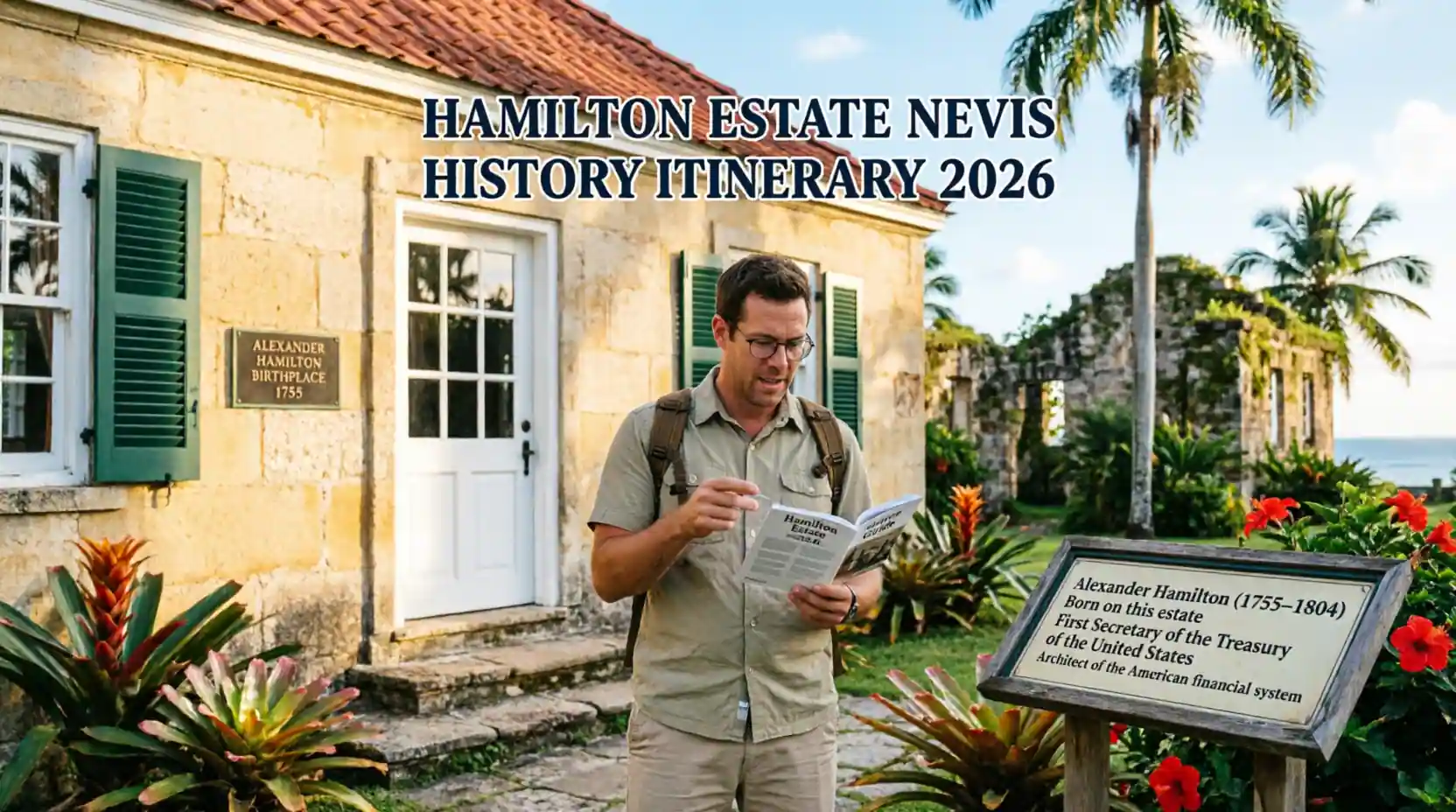
Introduction: Walking in the Footsteps of a Founding Father
For history enthusiasts and fans of American founding history, few destinations offer the profound connection to the past that Nevis provides as the birthplace of Alexander Hamilton. This small Caribbean island, part of the federation of St Kitts and Nevis, holds a unique place in both Caribbean and American historical narratives. Born around 1755 or 1757 in Charlestown, Nevis, Hamilton spent his formative years on this volcanic island before his extraordinary journey to North America, where he would become one of the most influential architects of the United States Constitution and the nation's first Secretary of the Treasury.
Exploring the Hamilton Estate and related historical sites on Nevis offers history buffs an immersive journey into the world that shaped one of America's most compelling founding figures. From the restored Hamilton House museum to colonial-era plantation ruins, from the streets of historic Charlestown to the panoramic views of Nevis Peak that Hamilton would have seen daily, this itinerary connects visitors with the tangible remnants of eighteenth-century Caribbean life and the early influences that molded a revolutionary mind.
This comprehensive travel guide is designed specifically for history enthusiasts seeking to maximize their understanding and appreciation of Alexander Hamilton's Nevis heritage. It covers essential sites, practical visiting information, historical context, and strategies for creating a meaningful itinerary that honors both the complexity of Caribbean colonial history and the remarkable legacy of the man born on this island. Whether you are a scholar, a fan of the Hamilton musical, or simply a traveler fascinated by the intersections of Caribbean and American history, this guide provides the framework for an enriching historical journey.
Understanding Alexander Hamilton's Nevis Origins

Alexander Hamilton's birth on Nevis around 1755 or 1757 placed him at the center of the complex social, economic, and political dynamics of the eighteenth-century Caribbean. His parents, Rachel Faucette Lavien and James Hamilton, were not married, a circumstance that carried significant social stigma in colonial society and would later affect Hamilton's legal status and opportunities. Rachel, of French Huguenot descent, had been previously married to a Danish planter, while James Hamilton was a Scottish trader of noble lineage who had fallen on hard times.
The Hamilton family home stood in Charlestown, Nevis's capital and principal port, a bustling hub of Caribbean commerce where sugar, molasses, and enslaved people were traded alongside goods from Europe and North America. This environment exposed young Alexander to the realities of colonial economics, international trade, and the brutal institution of slavery that underpinned Caribbean prosperity. These early observations would later inform his economic policies and political philosophy as an American statesman.
The Social and Economic Context of Hamilton's Childhood
Eighteenth-century Nevis was a wealthy sugar colony, its economy dependent on enslaved African labor and export-oriented plantation agriculture. The island's elite planter class lived in considerable comfort, while the majority of the population endured the horrors of chattel slavery. Hamilton's family occupied an ambiguous social position: connected to elite circles through his mother's background but marginalized by his parents' unmarried status and his father's financial difficulties.
This complex social positioning likely sharpened Hamilton's observational skills and ambition. Historical accounts suggest he worked as a clerk in a Charlestown counting house during his early teens, gaining practical experience in commerce, accounting, and international trade. These formative experiences provided the foundation for his later expertise in finance and economic policy, demonstrating how his Caribbean upbringing directly influenced his contributions to American nation-building.
Hamilton's Departure from Nevis and Lasting Connections
Hamilton left Nevis around 1772, traveling first to St. Croix and then to North America for education. He would never return to his birthplace, yet the island remained part of his identity and experience. His Caribbean origins distinguished him from many other founding fathers, providing perspectives on slavery, commerce, and imperial politics that informed his unique contributions to American political thought.
For modern history buffs visiting Nevis, understanding this biographical context enriches the experience of exploring Hamilton-related sites. Each location connects not only to Hamilton's personal story but also to broader narratives of Caribbean colonialism, the Atlantic slave trade, and the transnational currents that shaped the Age of Revolution.
The Hamilton House Museum: Centerpiece of the Historical Itinerary

The Hamilton House Museum, located in Charlestown near the site traditionally identified as Alexander Hamilton's birthplace, serves as the focal point for any history-focused visit to Nevis. This restored colonial-era building houses exhibits dedicated to Hamilton's life, Nevis history, and the broader Caribbean context of the eighteenth century. The museum provides essential orientation for visitors seeking to understand Hamilton's origins and the world that shaped his early years.
The museum's exhibits combine historical artifacts, interpretive panels, and multimedia presentations to tell Hamilton's story from his Nevis childhood through his American career. Displays include reproductions of Hamilton's writings, contextual information about colonial Nevis society, and connections between Caribbean experiences and American founding principles. For history buffs, the museum offers both factual information and thoughtful analysis that deepens understanding of Hamilton's complex legacy.
Visiting the Hamilton House: Practical Information
The Hamilton House Museum typically operates with regular hours, though visitors should confirm current schedules before planning their visit, as hours may vary seasonally or due to special events. Admission fees are modest and often include guided tour options that provide expert commentary on exhibits and historical context. Guided tours are particularly valuable for history enthusiasts, as knowledgeable guides can answer questions, share insights not included in static displays, and connect Hamilton's story to broader historical themes.
Photography policies vary, so visitors should inquire about restrictions before capturing images of exhibits. The museum shop offers books, reproductions, and locally made crafts that provide meaningful souvenirs for history-focused travelers. Purchasing items from the museum shop supports preservation efforts and local artisans while providing tangible connections to the Hamilton heritage experience.
Maximizing Your Museum Experience
To make the most of your Hamilton House visit, arrive early in the day when crowds are smaller and guides can provide more personalized attention. Allow at least one to two hours for a thorough exploration of exhibits, with additional time if you plan to participate in a guided tour or attend any special programs. Bring a notebook for recording insights, questions, or connections that arise during your visit.
Before visiting, familiarize yourself with basic Hamilton biography and eighteenth-century Caribbean history through reputable sources. This preparation enables you to engage more deeply with exhibits, ask informed questions, and make meaningful connections between displayed artifacts and broader historical narratives. Consider bringing specific questions about Hamilton's Nevis years that museum staff or guides might help address.
Historic Charlestown: Walking the Streets Hamilton Knew

Beyond the Hamilton House Museum, the town of Charlestown itself offers history buffs opportunities to explore the colonial-era environment that shaped Alexander Hamilton's childhood. As Nevis's capital and principal port during the eighteenth century, Charlestown was a vibrant center of Caribbean commerce, administration, and social life. Walking its streets today, visitors can trace the layout Hamilton would have known and imagine the bustling activity that characterized this colonial town.
Key historical sites in Charlestown include the Nevis Historical and Conservation Society headquarters, which maintains archives and resources for researchers interested in Nevis history. The nearby St. Thomas Anglican Church, with roots dating to the seventeenth century, represents the religious institution that would have been part of Hamilton's social world. While the current church building may post-date Hamilton's residence, the congregation's continuity provides a tangible connection to the past.
Colonial Architecture and Urban Planning
Charlestown's colonial-era architecture reflects the British Caribbean building traditions that shaped Hamilton's visual environment. Stone and timber structures with wide verandas, shuttered windows, and pitched roofs designed for tropical climates create an atmospheric backdrop for historical exploration. While many buildings have been modified or rebuilt over centuries, the town's layout and surviving architectural elements offer insights into eighteenth-century urban design.
History enthusiasts should pay attention to street names, building plaques, and interpretive signage that identify historically significant locations. The waterfront area, where Hamilton would have observed ships loading sugar and molasses for export, provides particular resonance for understanding the commercial dynamics that influenced his later economic thinking. Standing at the harbor today, visitors can appreciate the strategic importance of Nevis in Caribbean trade networks.
Connecting Charlestown to Broader Historical Narratives
Exploring Charlestown offers opportunities to connect Hamilton's personal story to larger historical themes. The town's development as a sugar port illustrates the economic foundations of Caribbean colonialism, while its social structures reflect the complex hierarchies of race, class, and status that characterized eighteenth-century Caribbean society. For history buffs, these connections enrich understanding of both Hamilton's origins and the broader Atlantic world he inhabited.
Consider visiting the Charlestown waterfront at different times of day to observe how light, activity, and atmosphere change. Imagining the harbor as Hamilton would have seen it—filled with sailing ships, bustling with merchants and laborers, dominated by the scent of sugar and salt—creates a vivid mental reconstruction that brings historical understanding to life.
Plantation Ruins and Colonial Heritage Sites

Beyond Charlestown, Nevis features numerous plantation ruins and colonial-era sites that provide context for understanding the economic and social systems that shaped Hamilton's world. These locations, while not directly connected to Hamilton's personal history, illuminate the plantation economy that dominated Caribbean society and influenced the perspectives of all who lived within it, including the young Alexander Hamilton.
The Museum of Nevis History, located in a restored colonial building, offers exhibits on plantation life, slavery, and emancipation that complement Hamilton-focused sites. Visiting this museum provides essential context for understanding the labor systems and social hierarchies that underpinned Caribbean prosperity during Hamilton's childhood. For history buffs committed to comprehensive understanding, these perspectives are indispensable.
Notable Plantation Sites and Ruins
Several plantation ruins on Nevis are accessible to visitors and offer evocative glimpses into colonial-era agriculture and architecture. The ruins of sugar mills, boiling houses, and estate buildings stand as silent witnesses to the island's plantation past. While these sites require respectful engagement with difficult histories, they provide valuable opportunities to understand the material foundations of Caribbean colonial society.
When visiting plantation ruins, bring a guidebook or hire a local guide who can explain the historical significance of remaining structures and connect physical remains to documentary evidence. Understanding how sugar was produced, processed, and exported helps illuminate the economic systems that Hamilton observed as a child and later sought to reform through American financial policy.
Ethical Engagement with Difficult Histories
Exploring plantation heritage sites requires sensitivity to the brutal realities of slavery that underpinned Caribbean colonial prosperity. History buffs should approach these locations with respect for the enslaved people whose labor built the wealth that elite colonists enjoyed. Interpretive materials and guides increasingly acknowledge these complexities, providing more complete and honest historical narratives.
Consider supporting heritage preservation efforts that include diverse perspectives and honor the full range of Nevisian history. Purchasing guides, books, or tours from providers committed to accurate, inclusive historical interpretation helps ensure that heritage tourism contributes to meaningful understanding rather than romanticized nostalgia.
Nevis Peak and Panoramic Perspectives on History

No historical itinerary to Nevis is complete without experiencing the island's dramatic natural landscape, particularly the view from or of Nevis Peak. This iconic volcanic mountain dominated Hamilton's childhood horizon and continues to define the island's visual identity. For history enthusiasts, connecting natural geography to historical experience deepens understanding of how place shaped perspective.
While climbing Nevis Peak requires significant physical effort and preparation, even viewing the mountain from lower elevations provides meaningful connection to Hamilton's visual world. The peak's presence in daily life would have been constant for young Alexander, shaping his sense of place and perhaps influencing his later appreciation for strategic geography and natural resources.
Scenic Viewpoints and Historical Reflection
Several accessible viewpoints around Nevis offer panoramic vistas that include both Nevis Peak and the Caribbean Sea. These locations provide opportunities for historical reflection while enjoying the island's natural beauty. Consider visiting at sunrise or sunset, when lighting creates dramatic effects that enhance both photographic opportunities and contemplative experience.
Bring a journal to record reflections on how geography influenced historical development. Questions to consider: How did Nevis's location in Caribbean trade networks shape its economic importance? How did volcanic soil and tropical climate determine agricultural possibilities? How did island geography affect defense, communication, and community formation?
Integrating Natural and Historical Interpretation
The most enriching historical itineraries integrate natural and cultural interpretation, recognizing that human history unfolds within environmental contexts. Nevis's volcanic origins, tropical climate, and Caribbean location all influenced the colonial society Hamilton experienced. Understanding these connections provides more complete historical understanding than focusing solely on human actors and events.
Consider hiring guides who can speak to both natural history and cultural heritage, or supplement your visit with reputable books that address environmental dimensions of Caribbean history. This integrated approach honors the complexity of historical experience and provides richer insights for serious history enthusiasts.
Archival Resources and Research Opportunities

For history buffs with scholarly interests or deep curiosity about Alexander Hamilton's Nevis connections, the island offers archival resources and research opportunities that extend beyond tourist-oriented sites. The Nevis Historical and Conservation Society maintains collections of documents, maps, and artifacts relevant to eighteenth-century Nevis history, including materials that may shed light on Hamilton's family and social context.
Access to archival materials typically requires advance arrangement and may involve research fees or membership requirements. Serious researchers should contact the society before traveling to discuss their interests, available resources, and access procedures. Even casual history enthusiasts may benefit from consulting published works based on archival research, which provide deeper insights than general guidebooks.
Published Resources for Pre-Visit Preparation
Before traveling to Nevis, history buffs should consult reputable scholarly and popular works on Alexander Hamilton and Caribbean colonial history. Biographies of Hamilton that address his Caribbean origins provide essential context for understanding his Nevis heritage. Works on Caribbean slavery, plantation economies, and colonial society illuminate the broader historical environment that shaped Hamilton's formative years.
Consider bringing key reference materials on your trip to consult while visiting sites. Annotated guidebooks, historical maps, or biographical timelines can enhance on-site interpretation and help you make connections between physical locations and historical narratives. Digital resources on tablets or e-readers offer portable access to reference materials without adding significant weight to travel gear.
Connecting with Local Historical Expertise
Nevis is home to historians, archivists, and heritage professionals whose expertise can enrich your understanding of Hamilton's birthplace and Caribbean colonial history. Consider arranging consultations with local experts through museums, historical societies, or academic institutions. These interactions provide personalized insights, answer specific questions, and may reveal lesser-known sites or perspectives not included in standard tourist itineraries.
When engaging with local experts, approach conversations with respect, curiosity, and openness to perspectives that may challenge familiar narratives. Caribbean historians often emphasize dimensions of Hamilton's story—including connections to slavery, colonialism, and Atlantic commerce—that receive less attention in American-focused accounts. Embracing these perspectives enriches historical understanding and honors the complexity of the past.
Practical Planning for the History-Focused Traveler

Creating a successful historical itinerary to Nevis requires practical planning that balances historical exploration with travel logistics. The island's compact size makes it possible to visit multiple sites in a single day, but thoughtful scheduling ensures adequate time for meaningful engagement with each location. History buffs should prioritize depth over breadth, allowing sufficient time for reflection, note-taking, and questions at key sites.
Transportation on Nevis typically involves rental cars, taxis, or arranged tours. For history-focused itineraries, a rental car provides maximum flexibility for visiting sites at your own pace and returning to locations for additional exploration. However, hiring a knowledgeable driver-guide can enhance historical interpretation while eliminating navigation concerns. Consider your preferences for independence versus expert guidance when making transportation arrangements.
Accommodation Considerations for History Enthusiasts
Choosing accommodation near Charlestown minimizes travel time to Hamilton-focused sites and provides convenient access to the town's historical attractions. Several guesthouses, small hotels, and vacation rentals in or near Charlestown offer comfortable lodging with historical character. Staying in a colonial-era building or property with historical significance can extend the immersive experience beyond scheduled site visits.
For travelers prioritizing historical ambiance over modern amenities, consider properties that preserve architectural heritage or occupy historically significant locations. However, ensure that chosen accommodations meet basic comfort and safety standards, as historical charm should enhance rather than compromise the travel experience.
Timing Your Visit for Optimal Historical Exploration
Nevis experiences a tropical climate with a dry season from December through April and a wetter period from May through November. The dry season offers more reliable weather for outdoor historical exploration but also attracts more visitors, potentially creating crowds at popular sites. The wetter months feature fewer tourists and lower accommodation rates, though afternoon showers may require flexible scheduling.
Consider timing your visit to coincide with historical commemorations, heritage festivals, or special exhibitions that may enhance your experience. The Nevis Historical and Conservation Society and local museums occasionally host lectures, walking tours, or events focused on Hamilton or Caribbean colonial history. Checking event calendars before booking travel may reveal opportunities for enriched historical engagement.
Connecting Nevis History to Broader American and Caribbean Narratives

For history buffs, the value of visiting Hamilton's birthplace extends beyond local interest to connections with broader American and Caribbean historical narratives. Hamilton's Nevis origins provide a lens through which to examine transatlantic connections, the influence of Caribbean experiences on American founding principles, and the complex legacies of colonialism and slavery that shaped both regions.
While exploring Nevis sites, consider how Hamilton's Caribbean upbringing influenced his later political and economic thinking. His exposure to international commerce, diverse populations, and colonial governance provided perspectives that distinguished him from founding fathers with exclusively North American experiences. These Caribbean influences informed his advocacy for strong central government, sophisticated financial systems, and international engagement.
Comparative Historical Perspectives
History enthusiasts may find value in comparing Hamilton's Nevis heritage with the backgrounds of other founding figures. How did Caribbean experiences shape Hamilton's views on slavery, commerce, and federal power differently from contemporaries raised in North American colonies? What perspectives did his island origins provide that enriched American political discourse?
These comparative questions deepen historical understanding and encourage nuanced engagement with founding-era history. Rather than viewing Hamilton solely through an American lens, considering his Caribbean roots provides more complete appreciation of his complex identity and contributions.
Contemporary Relevance of Historical Exploration
Exploring Hamilton's Nevis heritage also offers opportunities to reflect on contemporary issues with historical roots. Questions about immigration, economic inequality, racial justice, and international relationships that animate modern political discourse have connections to the colonial Caribbean world Hamilton inhabited. History buffs can use their Nevis experience to consider how past systems and ideas continue to influence present circumstances.
Approach these reflections with intellectual humility and openness to complexity. Historical understanding rarely provides simple answers to contemporary questions, but it can enrich our capacity for thoughtful engagement with enduring challenges.
Conclusion: Honoring History Through Thoughtful Travel

Exploring the Hamilton Estate and Alexander Hamilton's birthplace on Nevis offers history buffs a unique opportunity to connect with the formative environment of one of America's most influential founding figures. This journey requires more than casual tourism; it demands thoughtful preparation, respectful engagement with difficult histories, and commitment to comprehensive understanding that honors both Hamilton's legacy and the complex Caribbean world that shaped his early years.
As you plan your historical itinerary to Nevis, remember that the value of this experience lies not only in visiting sites associated with Hamilton but in using those locations as entry points to deeper historical understanding. Each museum exhibit, plantation ruin, and panoramic viewpoint offers opportunities to connect personal stories to broader narratives, to consider multiple perspectives on the past, and to reflect on how history continues to shape our present.
For the serious history enthusiast, Nevis provides a compelling destination where Caribbean and American histories intersect in the person of Alexander Hamilton. By approaching this journey with curiosity, respect, and intellectual rigor, you can create a travel experience that enriches your understanding of both the man and the world that produced him. The memories and insights gained from walking in Hamilton's footsteps on Nevis will endure long after your return, inspiring continued exploration of the rich, complex, and endlessly fascinating tapestry of Atlantic history.
0 Comments