.webp)
.webp)
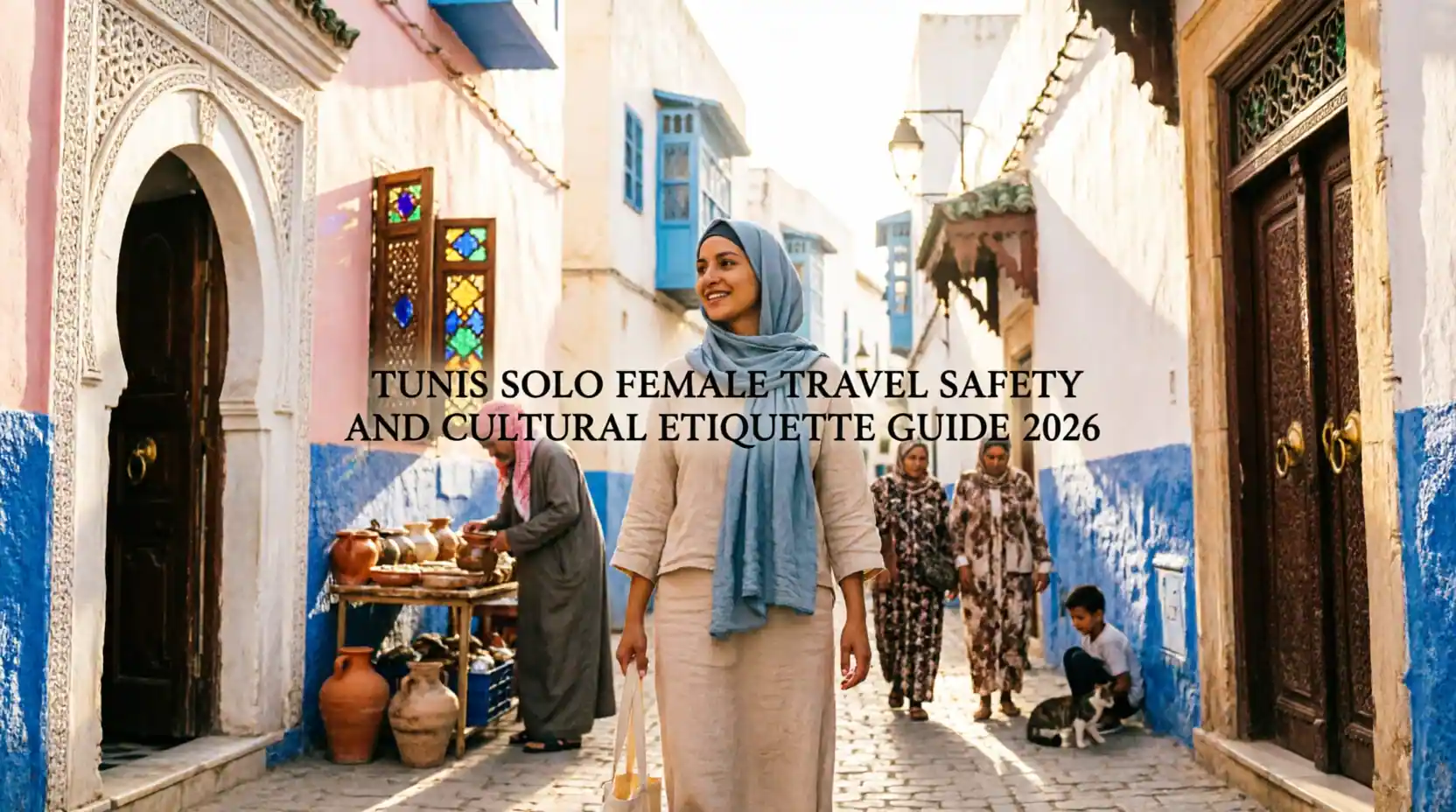
Understanding Safety for Solo Female Travelers in Tunis
Tunis presents a nuanced safety picture for solo female travelers in 2026. As the capital of Tunisia this North African city blends Mediterranean charm with Arab-Berber culture creating unique considerations for women traveling alone.
Most government travel advisories classify Tunisia as requiring increased caution rather than advising against travel. The US State Department maintains a Level 2 advisory citing terrorism and civil unrest as primary concerns.
Solo female travel in Tunis is feasible with proper preparation cultural awareness and standard precautions. Many women report positive experiences though challenges like unwanted attention require management strategies.
Understanding local cultural expectations significantly impacts safety outcomes. Conservative dress respectful behavior and situational awareness reduce risks substantially for female travelers.
This comprehensive guide provides practical safety tips cultural etiquette guidance and realistic expectations for women considering solo travel to Tunis in 2026.
Current Security Situation in Tunis 2026

Tunis maintains relative stability compared to other North African capitals though travelers should remain aware of the broader regional context.
Terrorism concerns persist though security measures have improved significantly since previous incidents. Tourist areas receive enhanced protection and monitoring.
Petty crime including pickpocketing and bag snatching occurs in crowded areas like the medina and transportation hubs. These risks mirror those in many European cities.
Violent crime against tourists remains rare though not impossible. Standard precautions like avoiding isolated areas at night reduce risks effectively.
Political demonstrations occasionally occur in central Tunis. While usually peaceful these gatherings can escalate quickly requiring travelers to monitor local news and avoid protest areas.
Tourist police operate in major areas providing assistance to visitors. Knowing how to contact these specialized officers enhances safety confidence.
Why Solo Female Travel Faces Unique Considerations
Women traveling alone in Tunis encounter cultural dynamics different from Western contexts. Understanding these nuances enables safer more enjoyable experiences.
Tunisian society maintains conservative gender norms particularly outside tourist zones. Solo women may attract curiosity or unwanted attention requiring prepared responses.
Language barriers can complicate situations for non-Arabic speakers. Learning basic French or Arabic phrases facilitates clearer communication and reduces misunderstandings.
Photography restrictions and cultural sensitivities around documenting people require awareness. Asking permission before photographing locals demonstrates respect and prevents conflicts.
Public behavior expectations differ significantly from Western norms. Understanding appropriate conduct in markets mosques and public spaces prevents unintentional offense.
Essential Pre Travel Planning for Safety
Thorough preparation significantly enhances safety for solo female travelers to Tunis. Advance planning addresses potential challenges before they arise.
Research accommodations in safe neighborhoods like La Marsa Sidi Bou Said or central Tunis near the medina. Read recent reviews from female travelers for current insights.
Register with your embassy upon arrival in Tunisia. This facilitates emergency communications if situations change unexpectedly during your stay.
Share your itinerary with trusted contacts including accommodation details and expected check-in times. Regular communication provides security and peace of mind.
Download offline maps translation apps and emergency contact information before traveling. Connectivity issues can complicate navigation without preparation.
Purchase comprehensive travel insurance covering medical emergencies evacuation and trip interruption. Verify coverage includes Tunisia specifically as some policies exclude certain regions.
Cultural Etiquette and Dress Code for Women
Respecting Tunisian cultural norms significantly impacts how solo female travelers are perceived and treated. Appropriate dress and behavior reduce unwanted attention.
Modest clothing covering shoulders knees and chest proves essential particularly in the medina and religious sites. Loose-fitting garments provide both cultural appropriateness and comfort in warm weather.
Carrying a lightweight scarf enables quick head covering when visiting mosques or conservative neighborhoods. This simple accessory demonstrates cultural sensitivity.
Avoiding revealing clothing in public spaces signals respect for local values. Beachwear belongs at resorts not in urban areas or markets.
Maintaining modest body language including avoiding prolonged eye contact with men reduces unwanted interactions. Conservative demeanor signals serious travel intentions.
Understanding that public displays of affection are unacceptable prevents cultural misunderstandings. Even holding hands may draw negative attention in conservative areas.
Safe Accommodation Strategies for Solo Women
Choosing appropriate accommodation proves critical for solo female traveler safety in Tunis. Location amenities and security features all matter significantly.
Hotels with 24-hour reception and controlled access provide enhanced security compared to unstaffed rentals. Staff presence deters potential problems and provides assistance if needed.
Request rooms on middle floors rather than ground level. Ground floor rooms prove more vulnerable to break-ins while very high floors may present evacuation challenges.
Verify that room locks function properly upon check-in. Test all security features and report concerns immediately to management.
Consider accommodations with female-only dormitories or floors if staying in hostels. These options provide additional comfort for solo women travelers.
Read recent reviews specifically from female travelers regarding safety experiences. Recent feedback proves more valuable than older reviews given changing conditions.
Transportation Safety and Getting Around Tunis
Navigating Tunis safely requires understanding transportation options and associated risks for solo female travelers.
Taxis represent the safest transportation option particularly at night. Use official taxis with meters or agree on fares in advance to avoid disputes.
Ride-hailing apps like Bolt operate in Tunis providing tracked rides with driver information. These services offer additional security compared to hailing random taxis.
Public transportation including buses and the light rail TGM proves generally safe during daytime hours. Avoid crowded vehicles where pickpocketing risks increase.
Walking alone at night requires extra caution particularly in less touristy areas. Stick to well-lit main streets and avoid isolated shortcuts after dark.
Keep vehicle doors locked and windows closed while in taxis. Basic precautions reduce risks during transportation throughout the city.
Managing Unwanted Attention and Harassment
Solo female travelers in Tunis may encounter unwanted attention requiring prepared strategies for managing these situations effectively.
Ignoring catcalls and comments often proves most effective. Engaging or responding may encourage further attention rather than deterring it.
Confident body language including walking purposefully and maintaining awareness signals that you are not an easy target. Projecting confidence reduces harassment likelihood.
Learning firm but polite phrases in French or Arabic enables clear boundary setting. Phrases like "no thank you" or "leave me alone" in local languages prove effective.
Seeking assistance from shopkeepers police or other women when feeling uncomfortable provides immediate support. Local women often prove helpful to female travelers in difficult situations.
Documenting persistent harassment with photos or videos when safe to do so creates evidence if reporting becomes necessary. However prioritize personal safety over documentation.
Safe Neighborhoods and Areas to Avoid
Understanding which areas of Tunis prove safest for solo female travelers enables smarter navigation and risk management.
La Marsa and Sidi Bou Said represent the safest neighborhoods with tourist infrastructure and lower crime rates. These coastal suburbs offer relaxed atmospheres suitable for solo women.
Central Tunis near Avenue Habib Bourguiba proves generally safe during daytime with police presence and tourist activity. Evening visits require increased caution.
The medina requires situational awareness particularly in narrow alleyways. While generally safe during busy hours isolated areas warrant caution especially after dark.
Avoid the southern suburbs and certain areas of greater Tunis with higher crime rates. Research current conditions through recent traveler forums and embassy advisories.
University areas and business districts typically maintain good safety records with regular foot traffic and security presence. These zones suit daytime exploration.
Health Precautions and Medical Facilities
Health preparation contributes significantly to safe solo female travel in Tunis. Understanding medical resources and preventive measures proves essential.
Tap water in Tunis is generally safe though bottled water proves prudent for sensitive stomachs. Staying hydrated in warm weather prevents heat-related issues.
Medical facilities in Tunis include both public hospitals and private clinics. Private facilities typically offer better service and English-speaking staff though at higher costs.
Carry a basic medical kit including prescription medications over-the-counter remedies and first aid supplies. Local pharmacies stock many items though brand names may differ.
Travel insurance covering medical evacuation proves essential. Serious conditions may require transfer to European facilities making evacuation coverage critical.
Food safety practices including eating at busy establishments and avoiding raw vegetables reduce gastrointestinal illness risks. Street food requires extra caution for sensitive travelers.
Communication and Language Considerations
Effective communication enhances safety for solo female travelers in Tunis. Language preparation facilitates clearer interactions and reduces misunderstandings.
Arabic serves as the official language though French functions as a widely spoken second language. English proves less common outside tourist areas and younger generations.
Learning basic greetings and phrases in French or Arabic demonstrates respect and facilitates assistance when needed. Simple phrases like "hello" "thank you" and "help" prove valuable.
Download offline translation apps before traveling. Connectivity issues can complicate communication without preparation for language barriers.
Carry written addresses and important information in both Arabic and French. This enables taxi drivers and locals to assist even with limited shared language.
Save emergency contact numbers including tourist police your embassy and accommodation in your phone. Having these accessible proves crucial if situations arise.
Emergency Protocols and Crisis Management
Having clear emergency plans enables solo female travelers to respond effectively if situations deteriorate in Tunis.
Save emergency numbers including 197 for tourist police 190 for regular police and 198 for medical emergencies. Program these into your phone before traveling.
Know the location and contact information for your embassy or consulate. Register your presence upon arrival to facilitate emergency communications.
Establish a code word with family or friends that signals distress. This enables discreet communication if you feel unsafe without alerting potential threats.
Identify multiple evacuation routes from your accommodation and regular destinations. Having backup plans if primary routes become blocked enhances safety.
Keep a go-bag with essential documents cash medications and basic supplies. Being ready to leave quickly if conditions deteriorate proves prudent.
Money Matters and Financial Safety
Managing finances safely in Tunis requires specific strategies for solo female travelers. Financial infrastructure and cultural norms affect money handling.
Tunisian dinars serve as the local currency though euros and dollars are sometimes accepted in tourist areas. Exchange money at banks or official exchange offices for best rates.
ATMs exist throughout Tunis though reliability varies. Withdraw cash during daylight hours in secure locations preferably inside banks or hotels.
Credit cards work at larger establishments though cash remains essential for markets small shops and transportation. Carry small denominations for easier transactions.
Divide money and store it in multiple locations. Never keep all cash and cards in one wallet or bag to minimize loss if theft occurs.
Avoid displaying wealth or counting money in public. Discreet financial management reduces your profile as a potential target for crime.
Technology and Connectivity for Safety
Staying connected in Tunis supports safety for solo female travelers. Planning technology needs ensures reliable communication and navigation.
Local SIM cards from providers like Ooredoo Orange and Telecom provide affordable data and calling. Purchase from official stores at the airport or in the city.
Download offline maps before traveling. Internet connectivity may be intermittent especially in older areas of the medina or during network congestion.
Use VPN services to protect online communications. Internet monitoring exists though primarily targets political content rather than tourist activities.
Backup important documents digitally and store them in secure cloud storage. This ensures access if physical copies are lost stolen or damaged.
Keep devices secure and avoid using them conspicuously in public. Expensive electronics attract criminal attention particularly in crowded areas.
Building Local Contacts and Support Networks
Establishing local connections significantly improves safety for solo female travelers in Tunis. Support networks provide practical assistance and cultural guidance.
Connect with other female travelers through online forums and social media groups. Shared experiences and tips prove invaluable for navigating challenges.
Your hotel staff or hostel managers can provide valuable local knowledge. Build rapport with staff who can alert you to local concerns or unsafe areas.
Join expatriate groups or professional networks if staying longer. These communities share security information and support each other in unfamiliar environments.
Hire local female guides for certain activities. Trusted local women navigate cultural nuances and safety concerns more effectively than solo exploration.
Maintain professional relationships with local colleagues or contacts. They provide cultural context and can assist in difficult situations requiring local intervention.
Psychological Preparation and Mental Health
Travel to culturally different destinations like Tunis creates psychological considerations. Preparing mentally supports successful solo female travel.
Acknowledge real risks without becoming paralyzed by fear. Balanced awareness enables prudent decision-making without unnecessary anxiety.
Develop coping strategies for stress and cultural adjustment. High-alert environments drain mental energy requiring intentional self-care practices.
Maintain connection with supportive people back home. Regular communication provides emotional stability and perspective during challenging moments.
Recognize signs of acute stress or cultural fatigue. Know when situations exceed your comfort level and be willing to adjust plans or leave.
Practice self-care routines even while traveling. Adequate sleep nutrition and rest improve decision-making resilience and overall travel enjoyment.
Red Flags and Warning Signs to Watch For
Recognizing potentially dangerous situations before they escalate proves crucial for solo female travelers in Tunis. Trust your instincts and watch for warning signs.
Unusual crowd gatherings or street activity may signal developing unrest. Avoid these areas immediately and monitor local news for updates.
Increased police or military presence often precedes security incidents or demonstrations. Stay indoors and monitor the situation through reliable sources.
Locals avoiding certain areas or changing their behavior provides important intelligence. Pay attention to local knowledge and adjust your plans accordingly.
Sudden shop closures or empty streets indicate trouble. Return to safe accommodation immediately if you notice these warning signs.
Aggressive approaches from strangers especially men require firm boundaries. Do not engage or provide personal information to persistent individuals.
When to Leave and Exit Strategies
Knowing when to depart Tunis or adjust travel plans can prevent serious problems. Do not wait until situations become critical before taking action.
Monitor travel advisories from your government daily. Escalating warnings indicate deteriorating conditions requiring reconsideration of travel plans.
News of civil unrest political instability or security incidents should trigger departure planning. Early evacuation proves safer than emergency extraction.
Commercial flights may be cancelled with little notice during crises. Maintain flexibility in your schedule and be ready to leave immediately if necessary.
Have multiple exit strategies including different airlines and routes. Single points of failure create dangerous vulnerabilities during emergencies.
Embassy-organized evacuations may occur in severe situations. Stay registered and responsive to official communications to receive timely assistance.
Post Travel Considerations and Reflection
After leaving Tunis take time to process your experience. Solo travel to culturally different destinations affects people in various ways requiring reflection.
Report safety incidents to your embassy or relevant authorities. This information helps protect future travelers and improves destination safety resources.
Share lessons learned with other solo female travelers considering Tunis. Community knowledge improves collective safety and preparation for future visitors.
Seek professional support if you experienced trauma or ongoing stress. Travel to challenging environments can have lasting psychological impacts requiring attention.
Update your personal safety protocols based on what you learned. Continuous improvement enhances future travel safety regardless of destination.
Allow time for decompression after returning home. Transition from high-alert travel mode to normal life requires adjustment and self-compassion.
Alternative Safer Destinations in North Africa
If Tunis seems too risky consider safer alternatives in North Africa. Many destinations offer rich cultural experiences with better security records for solo women.
Marrakech Morocco provides excellent safety standards and established tourist infrastructure. The city is very manageable for solo female travelers with proper precautions.
Valletta Malta offers Mediterranean culture with European safety standards. This island nation provides easy navigation and English-friendly environments.
Lisbon Portugal combines North African proximity with Western European safety. Many solo female travelers visit successfully with standard precautions.
These alternatives provide Mediterranean and North African experiences with better security records. Consider whether Tunis is truly necessary for your travel goals.
Final Safety Assessment and Decision Making
The decision to travel to Tunis as a solo female traveler requires careful honest evaluation. This is not a destination for first-time solo travelers or those unfamiliar with conservative cultures.
Ask yourself if your travel is truly essential. Tourism sightseeing or general exploration may not justify the risks involved compared to safer alternatives.
Consider whether your presence serves a critical purpose. Business essential family visits or specific research may warrant the risk with proper preparation.
Evaluate your experience level with culturally different destinations. Tunis requires cultural sensitivity and adaptability that inexperienced travelers may lack.
Assess your support network and resources. Solo does not mean completely alone. Ensure you have reliable local contacts and emergency support before traveling.
Be honest about your risk tolerance and stress management. Some people thrive in challenging environments while others find them overwhelming. Choose destinations matching your comfort level.
Conclusion and Key Takeaways
Tunis presents moderate challenges for solo female travelers in 2026. The security situation requires vigilance though many women report positive experiences with proper preparation.
Solo female travel requires strict adherence to cultural norms conservative dress and situational awareness. Understanding local expectations significantly improves safety outcomes.
If travel is unavoidable comprehensive preparation is essential. Safe accommodation trusted local contacts modest dress and daylight movement prove non-negotiable for safety.
Cultural understanding and respectful behavior significantly improve safety and enjoyment. Learning local customs and maintaining appropriate conduct reduces unwanted attention.
Emergency planning and exit readiness must be in place before arrival. Situations can change rapidly requiring immediate adaptation or departure.
Consider safer alternatives in North Africa and the Mediterranean that offer rewarding travel experiences with manageable risks. Tunis should be a considered choice not a default destination.
Your safety and wellbeing are more valuable than any travel experience. Make decisions that prioritize your security above all else while respecting the cultures you visit.
0 Comments