.webp)
.webp)
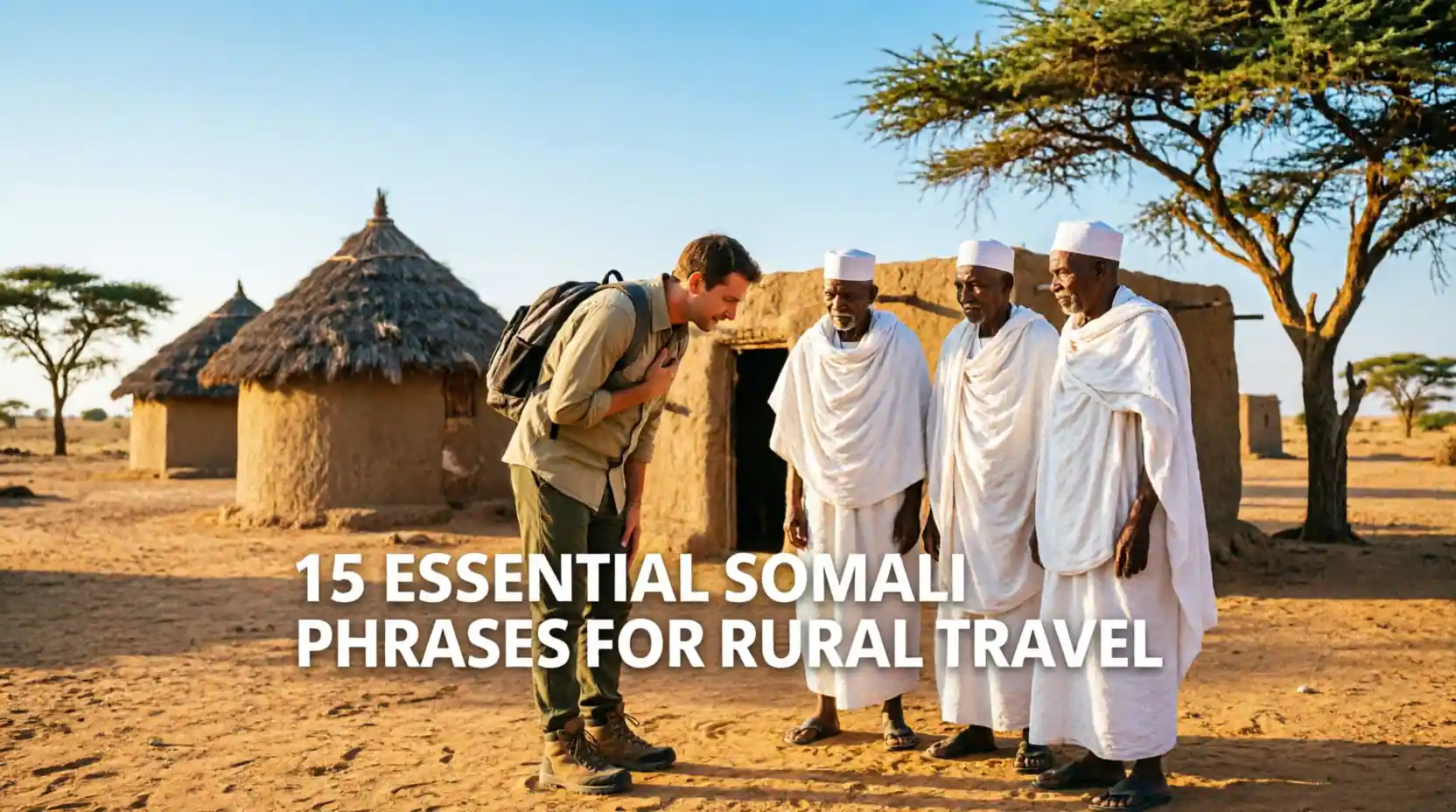
15 Essential Somali Phrases Every Traveler Should Know for Rural Interaction 2026
Somalia's rich cultural heritage and warm hospitality make it a fascinating destination for adventurous travelers willing to explore beyond urban centers. In rural Somalia, where English proficiency is limited and traditional customs prevail, knowing basic Somali phrases becomes essential for meaningful interaction and safe travel.
The Somali language, known as Af-Soomaali, serves as a unifying force across the country's diverse regions. While Arabic and Italian influences exist, Somali remains the primary language of daily life, particularly in rural communities where traditional lifestyles continue unchanged.
Learning even basic Somali phrases demonstrates respect for local culture and opens doors to authentic experiences unavailable to monolingual visitors. Rural Somalis appreciate foreigners who make efforts to communicate in their language, often responding with increased warmth, hospitality, and willingness to assist.
This comprehensive 2026 guide presents 15 essential Somali phrases every traveler should master before visiting rural areas. You will learn proper pronunciation, cultural context, appropriate usage, and the deeper meanings behind common expressions that facilitate positive interactions.
Understanding Somali Language and Culture

Somali belongs to the Cushitic branch of the Afroasiatic language family, making it distinct from Arabic despite Somalia's Islamic heritage and geographic proximity to the Arabian Peninsula. The language uses a Latin alphabet adopted in 1972, though Arabic script remains in use for religious purposes.
Rural Somali society operates on principles of respect, hospitality, and community. Communication styles emphasize politeness, indirectness in sensitive matters, and elaborate greeting rituals that establish social harmony before addressing practical concerns.
Understanding cultural context proves as important as linguistic accuracy. Phrases must be delivered with appropriate tone, body language, and timing to convey intended meanings and avoid misunderstandings that could offend hosts or create awkward situations.
Gender dynamics influence communication patterns, with different expectations for interactions between men and women. Travelers should observe local customs regarding appropriate conversation topics, physical distance, and who initiates greetings.
Pronunciation Fundamentals
Somali pronunciation follows relatively consistent rules once basic patterns are understood. Vowels resemble Italian or Spanish sounds, with five distinct vowel qualities pronounced clearly without the diphthongs common in English.
Consonants include some sounds unfamiliar to English speakers, particularly the emphatic 'dh' sound produced with tongue against the roof of the mouth, and the rolled 'r' similar to Spanish pronunciation.
Stress typically falls on the penultimate (second-to-last) syllable of words, creating a rhythmic speech pattern. Maintaining proper stress helps ensure comprehension and demonstrates linguistic effort appreciated by native speakers.
Tone matters less than in tonal languages, but speaking respectfully and not too loudly proves important in Somali culture where modesty and calmness are valued communication traits.
Essential Greeting Phrases

Greetings form the foundation of Somali social interaction, particularly in rural areas where proper acknowledgment establishes trust and respect before any transaction or request. Rushing through greetings or skipping them entirely signals disrespect and may close doors to assistance.
Somali greeting rituals often extend beyond simple "hello" exchanges to include inquiries about family, health, livestock, and general wellbeing. These questions are not mere formalities but genuine expressions of care that build relationships.
Understanding when to use formal versus informal greetings depends on age, social status, gender, and context. When uncertain, erring toward formal, respectful forms demonstrates cultural sensitivity appreciated by rural Somalis.
Response patterns matter as much as initial greetings. Knowing how to reply appropriately completes the social exchange and shows cultural competence beyond simple phrase memorization.
1. "Salaam alaikum" - Peace Be Upon You
Pronunciation: sah-LAHM ah-lay-KOOM
Literal meaning: Peace be upon you
Usage context: This Islamic greeting serves as the most common and universally appropriate greeting in Somalia, usable at any time of day with anyone regardless of age, gender, or social status. In rural areas, it remains the standard greeting expected in all interactions.
Cultural significance: Using "Salaam alaikum" immediately identifies you as someone respectful of Somali Islamic culture, even if you are not Muslim yourself. Somalis appreciate non-Muslims using this greeting as it shows cultural awareness and respect.
Response: The proper response is "Wa alaikum salaam" (wah ah-LAY-koom sah-LAHM), meaning "And upon you be peace." This exchange may be repeated multiple times in formal situations or when greeting elders.
Variations: In more formal or religious contexts, you might hear "Salaam alaikum wa rahmatullah" (peace and God's mercy be upon you), to which the response adds "wa barakatuh" (and His blessings).
When to use: Use this greeting when arriving anywhere - entering villages, meeting individuals, joining groups, beginning conversations, or answering phones. It serves as the universal key to opening social interactions throughout rural Somalia.
2. "Iska waran" - How Are You?
Pronunciation: ees-kah wah-RAHN
Literal meaning: How are you? / What's your news?
Usage context: This essential follow-up question comes immediately after initial greetings and demonstrates genuine interest in the other person's wellbeing. In rural Somalia, skipping this inquiry appears rude and self-centered.
Cultural significance: Somalis value community connection and mutual care. Asking "Iska waran" shows you understand this cultural value and participate in the social contract of looking out for one another.
Response: Common responses include "Waan fiicanahay" (I am fine), "Alxamdulillah" (praise God), or "Caafimaad" (health/healthy). The response typically includes thanking God, reflecting the Islamic culture's integration into daily conversation.
Extended exchanges: After responding, you should reciprocate by asking "Adigu?" (and you?) or "Idinku?" (and you all?) to show reciprocal interest. This back-and-forth may continue through several exchanges about family, livestock, and general conditions.
When to use: Always ask this after greeting someone, particularly in rural areas where relationships matter more than efficiency. Even in brief encounters, this question maintains social harmony and shows proper respect.
3. "Nabad gelyo" - Goodbye / Go in Peace
Pronunciation: nah-bad GEHL-yo
Literal meaning: Enter in peace / Go in peace
Usage context: This farewell phrase closes interactions as importantly as greetings open them. Proper goodbyes in Somali culture are not rushed but involve well-wishes and sometimes extended exchanges.
Cultural significance: Ending encounters with "Nabad gelyo" leaves positive impressions and maintains relationships for future interactions. Rural Somalis remember those who show proper respect throughout entire encounters, not just beginnings.
Response: The person leaving might respond "Nabad" (peace) or "Mahadsanid" (thank you). Those staying may add "Socdaal wanaagsan" (have a good journey) if the person is traveling.
Variations: "Nabad" alone works as a casual goodbye, while "Nabad gelyo" is more formal and complete. "Habeen wanaagsan" (good night) is used specifically for evening farewells.
When to use: Use when leaving any social situation - departing villages, ending conversations, leaving shops or homes, or concluding business transactions. Never leave without proper farewell as it appears rude and may offend hosts.
Essential Courtesy and Respect Phrases

Somali culture emphasizes respect, particularly toward elders, guests, and those in positions of authority. Using proper courtesy phrases demonstrates understanding of social hierarchies and earns reciprocal respect from rural communities.
Expressions of gratitude, apology, and request must be delivered with appropriate humility and acknowledgment of others' generosity. Somali hospitality is legendary, and guests are expected to show appreciation while not taking generosity for granted.
Understanding when and how to use honorifics, polite forms, and respectful language variations proves crucial in rural areas where traditional social structures remain strong and violations of etiquette cause genuine offense.
4. "Mahadsanid" - Thank You
Pronunciation: mah-had-SAH-neeed
Literal meaning: Thank you / You are thanked
Usage context: This essential phrase expresses gratitude for any kindness, service, or assistance received. In Somali culture, thanking people frequently and sincerely is not excessive but expected and appreciated.
Cultural significance: Expressing gratitude acknowledges the other person's generosity and maintains social balance. Somalis view hospitality and assistance as moral obligations, but appreciation must still be expressed to complete the social exchange.
Response: Common responses include "Waan ku faraxsanahay" (I am happy to help), "Waa waxba" (it's nothing), or "Alle ayaa mahad leh" (thanks be to God), redirecting praise to the divine.
Emphatic forms: "Mahadsanid weyn" (thank you very much) or "Aad baan kuugu mahad celinayaa" (I thank you very much) express deeper gratitude for significant assistance or hospitality.
When to use: Use after receiving anything - food, water, directions, shelter, conversation, or assistance. Thank hosts when leaving their homes, guides after their service, and anyone who has helped you. Frequent thanks demonstrate good character.
5. "Fadlan" - Please
Pronunciation: fad-LAHN
Literal meaning: Please / I beg you
Usage context: This word softens requests and commands, transforming them into polite appeals. Using "fadlan" shows respect for the other person's autonomy and acknowledges that you are asking a favor.
Cultural significance: Direct commands without "fadlan" appear rude and demanding, particularly when speaking to elders or those you have just met. The word demonstrates humility and proper upbringing.
Response: Those receiving polite requests typically respond positively, often with "Haa" (yes) or "Waan sameynayaa" (I will do it), especially when requests are properly framed with "fadlan."
Placement: "Fadlan" can begin sentences ("Fadlan, i caawi" - Please help me) or appear mid-sentence ("Biyo fadlan" - Water, please). Both positions are correct and polite.
When to use: Always use when making requests - asking for water, food, directions, assistance, permission to photograph, or any favor. Never demand; always request politely with "fadlan" to maintain good relationships.
6. "Raalli ahow" - Excuse Me / I'm Sorry
Pronunciation: rah-ah-LEE ah-how
Literal meaning: Be pleased / Be satisfied (with me)
Usage context: This versatile phrase serves multiple functions: apologizing for mistakes, asking forgiveness for offenses, excusing yourself from situations, or getting someone's attention politely.
Cultural significance: Somali culture values maintaining social harmony and avoiding conflict. Acknowledging mistakes or inconveniences with "Raalli ahow" demonstrates humility and commitment to peaceful relations.
Response: Common responses include "Waa la aqbalay" (it is accepted), "Waa waxba" (it's nothing), or "Alle ha kaaga aqbalo" (may God accept it from you), showing forgiveness and moving past the issue.
Variations: For minor inconveniences like bumping someone, "Raalli ahow" suffices. For more serious apologies, add "waan ka xumahay" (I am sorry) or specify what you are apologizing for.
When to use: Use when making mistakes, interrupting conversations, passing through crowds, asking sensitive questions, declining hospitality, or any situation requiring acknowledgment of potential offense or inconvenience.
Essential Practical Communication Phrases

Beyond greetings and courtesy, travelers need practical phrases for navigating daily interactions in rural Somalia. These phrases facilitate basic needs, emergency situations, and meaningful exchanges that enhance travel experiences.
Clear communication about needs, directions, and assistance proves essential in areas where infrastructure is limited and self-reliance is necessary. Knowing how to ask questions properly ensures you receive helpful responses.
Understanding numbers, basic transaction vocabulary, and directional language enables independent navigation of rural areas while maintaining respectful interactions with local residents who provide assistance.
7. "Ma Ingiriisi baad ku hadashaa?" - Do You Speak English?
Pronunciation: mah een-GEE-ree-see baad koo ha-DASH-ah
Literal meaning: Do you speak English?
Usage context: This question helps determine language capabilities before attempting complex communication. In rural areas, English proficiency varies significantly, with younger people and those with education more likely to understand.
Cultural significance: Asking this politely rather than assuming English ability shows respect for Somali as the primary language and acknowledges that you are the visitor who should adapt.
Response: Responses include "Haa, waan ku hadlaa" (Yes, I speak it), "Yar yar" (a little), or "Maya" (No). Some may respond in limited English even if they say "yar yar."
Alternative approach: If the answer is no, switch to simple Somali phrases, gestures, or seek someone younger who might have attended school and learned some English.
When to use: Use when you need complex information, directions, or assistance beyond basic phrase capabilities. Always ask politely after initial greetings rather than immediately demanding English communication.
8. "Xaggee buu ka dhawyahay...?" - Where is...?
Pronunciation: hag-geh boo kah dhah-YAH-hay
Literal meaning: Where is it located...?
Usage context: This essential question structure enables asking for directions to specific locations - water sources, villages, markets, clinics, or landmarks. Mastering this phrase proves crucial for rural navigation.
Cultural significance: Somalis are traditionally nomadic and possess excellent navigational skills and geographic knowledge. Asking directions shows respect for their expertise and local knowledge.
Response: Directions typically reference landmarks (trees, hills, wells), distances in time rather than kilometers ("30 minutes walking"), and cardinal directions. Listen carefully and ask for clarification if needed.
Key vocabulary: Add location words like "biyo" (water), "tuulo" (village), "suuq" (market), "cisbitaal" (hospital), or "masjid" (mosque) after the phrase to specify what you seek.
When to use: Use whenever you need to find locations in rural areas. Always ask multiple people to confirm directions, and thank those who provide assistance with "Mahadsanid."
9. "Biyo ayaan u baahanahay" - I Need Water
Pronunciation: bee-yo ah-yan oo bah-ah-NAH-hay
Literal meaning: I am in need of water
Usage context: This critical phrase addresses one of the most essential needs in Somalia's arid climate. Water scarcity makes this a serious request that Somalis understand and typically respond to generously.
Cultural significance: Providing water to travelers is a sacred duty in Somali culture and Islamic tradition. Asking for water is never considered burdensome, and refusing a traveler water would bring shame.
Response: Expect immediate assistance with water being offered generously, often with food and rest as well. Refusing hospitality after requesting water can offend, so accept graciously even if you only need water.
Variations: "Biyo ma haysaa?" (Do you have water?) works as a question, while "Biyo ayaan u baahanahay" states your need directly. Both are appropriate in different contexts.
When to use: Use when genuinely needing water in rural areas. Carry your own water when possible, but this phrase proves essential in emergencies or when supplies run low during long journeys.
10. "Cunto ma haysaa?" - Do You Have Food?
Pronunciation: coon-to mah hay-SAH
Literal meaning: Do you have food?
Usage context: This question seeks food, either to purchase or as a request for hospitality. In rural Somalia, food sharing is common, and this phrase opens possibilities for meals and cultural exchange.
Cultural significance: Somali hospitality dictates feeding guests, and asking about food often results in generous offers of meals even from families with limited resources. Accept such offers graciously as refusing can cause offense.
Response: Expect either offers to share food ("Haa, fadlan kaalay cun" - Yes, please come eat) or directions to where food can be purchased. Hospitality often exceeds the simple transaction implied by the question.
Cultural note: If offered food, eat with your right hand as is customary, accept what is offered without complaint, and express gratitude repeatedly. Complimenting the food shows appreciation.
When to use: Use when needing food in rural areas, particularly if you have not eaten or lack supplies. Also use when you wish to purchase food from families who might sell homemade meals.
11. "Guri ma haysaa?" - Do You Have a House/Place to Stay?
Pronunciation: goo-ree mah hay-SAH
Literal meaning: Do you have a house?
Usage context: This phrase inquires about accommodation, either seeking a place to stay or asking if someone has shelter to offer. In rural Somalia, this often leads to hospitality offers.
Cultural significance: Providing shelter to travelers is a fundamental Somali value rooted in both nomadic tradition and Islamic teachings. Asking for shelter is acceptable, and hosts take pride in providing it.
Response: Expect offers of accommodation even from modest families. You might hear "Haa, kaalay" (Yes, come) or be directed to someone who can host you. Refusing genuine hospitality requires careful, polite explanation.
Cultural expectations: If offered shelter, bring a small gift if possible, help with chores, respect household rules, and express profound gratitude. Guests are honored but expected to be respectful and not burdensome.
When to use: Use when needing accommodation in rural areas without hotels or formal lodging. Also appropriate when stranded or when travel plans extend unexpectedly.
Essential Emergency and Health Phrases

Travel in rural Somalia requires preparation for potential health issues or emergencies. Knowing how to communicate urgent needs, describe problems, and request assistance can prove critical in areas with limited medical infrastructure.
These phrases should be memorized thoroughly as stress and urgency impair recall of less-familiar language. Practice pronunciation until these phrases come automatically, potentially saving crucial time in emergency situations.
Understanding how to describe symptoms, request specific help, and communicate urgency enables receiving appropriate assistance from rural communities who may lack formal medical training but possess traditional knowledge and willingness to help.
12. "Caafimaad darro ayaan qabaa" - I Am Sick
Pronunciation: cah-ah-fah-MAAD dar-ro ah-yan kah-BAH
Literal meaning: I have illness / I am experiencing lack of health
Usage context: This phrase communicates illness or feeling unwell, essential for requesting medical assistance or explaining inability to continue travel. In rural areas, this alerts communities to provide care or assistance.
Cultural significance: Somalis take care of the sick seriously, viewing it as a religious and moral duty. Announcing illness triggers community support networks and traditional healing knowledge.
Response: Expect immediate concern, offers of help, traditional remedies, or directions to the nearest clinic or traditional healer. Communities may provide shelter, food, and care until recovery.
Follow-up phrases: Be prepared to describe symptoms: "Madax xanuun" (headache), "Calool xanuun" (stomachache), "Qandho" (fever), or "Laba" (diarrhea). Specific descriptions enable better assistance.
When to use: Use when genuinely ill and needing assistance. Do not exaggerate illness as it mobilizes community resources, but do not minimize serious conditions that require help.
13. "Caawi" - Help!
Pronunciation: cah-ah-WEE
Literal meaning: Help!
Usage context: This urgent cry for assistance works in emergencies, dangerous situations, or when immediate help is needed. The word is short, clear, and universally understood throughout Somalia.
Cultural significance: Somalis respond to calls for help as a matter of honor and religious duty. Shouting "Caawi" triggers immediate community response and mobilization of assistance.
Response: Expect rapid response from anyone hearing the call. Somalis take emergency calls seriously and will investigate immediately, bringing others to assist if needed.
Variations: "I caawi" (help me) is more specific, while "Caawi" alone is a general alarm. "Gargaar" (rescue/assistance) is a more formal alternative for less urgent situations.
When to use: Use only in genuine emergencies requiring immediate assistance - accidents, attacks, medical crises, or dangerous situations. Do not use frivolously as it undermines the phrase's urgency and cultural significance.
Essential Social Connection Phrases

Beyond basic needs and emergencies, these phrases enable meaningful social connections that transform travel from mere movement through space to genuine cultural exchange and relationship building.
Somali culture values conversation, storytelling, and getting to know people. These phrases demonstrate interest in others as individuals rather than merely service providers, earning respect and deeper hospitality.
Using these phrases shows cultural sophistication and genuine interest in Somali people and their way of life, opening doors to experiences unavailable to tourists who limit interaction to transactional exchanges.
14. "Magacaa?" - What Is Your Name?
Pronunciation: mah-GAH-kah
Literal meaning: What is your name?
Usage context: This question initiates personal connection and shows interest in individuals beyond their functional roles. In Somali culture, knowing names and using them demonstrates respect and genuine interest.
Cultural significance: Somalis take pride in their names, which often carry meanings related to circumstances of birth, family history, or desired qualities. Asking about names shows respect for identity.
Response: People will provide their names, often with explanations of meanings. Listen carefully and try to pronounce correctly. Follow up with "Waan ku faraxsanahay inaan kuula kulmo" (I am happy to meet you).
Cultural note: Somali names typically include personal name, father's name, and grandfather's name. Using someone's personal name with respect shows proper social awareness.
When to use: Use after initial greetings when meeting someone you will interact with beyond a momentary exchange. Using names throughout conversation strengthens connection and shows attentiveness.
15. "Sidee tahay qoyskaaga?" - How Is Your Family?
Pronunciation: see-deh tah-hay koys-KAH-gah
Literal meaning: How is your family?
Usage context: This question demonstrates genuine interest in someone's wellbeing beyond surface interaction. Family is central to Somali life, and inquiring about family shows cultural understanding and respect.
Cultural significance: Somali society is deeply family-oriented, with extended family networks providing support, identity, and social structure. Asking about family acknowledges this fundamental value.
Response: Expect detailed responses about family members, their health, activities, and sometimes challenges. Listen attentively and respond with appropriate concern or congratulations. This exchange builds genuine relationships.
Cultural note: Be prepared for reciprocal questions about your family. Somalis will ask about your parents, siblings, and children. Answering honestly and showing that you also value family strengthens connections.
When to use: Use after establishing initial rapport, particularly when spending extended time with someone, staying in their home, or developing ongoing relationships. This phrase transforms transactions into relationships.
Cultural Context and Usage Guidelines

Understanding when and how to use these phrases proves as important as memorizing the words themselves. Somali communication involves not just vocabulary but appropriate timing, tone, and cultural awareness.
Respect for elders requires using more formal language and allowing elders to initiate certain topics. Younger Somalis may speak more casually, but visitors should maintain respectful formality until invited to relax.
Gender dynamics affect communication, with men and women often interacting separately in rural areas. Male travelers should respect boundaries when communicating with Somali women, and female travelers should understand appropriate interaction protocols with men.
Patience in communication is essential. Somali conversation often includes extended greetings, inquiries about family and wellbeing, and indirect approaches to practical matters. Rushing through these social requirements appears rude and undermines relationships.
Non-Verbal Communication
Body language complements verbal phrases in Somali culture. Maintaining appropriate eye contact shows honesty and interest, though prolonged staring, particularly between genders, may cause discomfort.
Hand gestures should be used moderately and respectfully. Pointing with the index finger can appear aggressive; using the whole hand or chin to indicate direction is more polite.
Physical distance varies by gender and relationship. Same-gender friends may stand close and touch during conversation, while opposite-gender interactions should maintain respectful distance, particularly in rural conservative areas.
Facial expressions should match verbal content - smiling during greetings, showing concern when discussing illness, and maintaining serious expressions during important discussions demonstrates emotional intelligence and cultural sensitivity.
Timing and Patience
Somali culture operates on different time expectations than Western cultures. Conversations should not be rushed, and allowing time for proper greetings, inquiries, and relationship building before addressing practical matters shows respect.
When asking for assistance, allow time for the person to consider, consult others if needed, and provide thoughtful responses. Pressuring for immediate answers appears disrespectful and may result in less helpful responses.
Hospitality rituals take time - accepting tea or food when offered, engaging in conversation, and not rushing departures demonstrates appreciation for Somali generosity and values relationship over efficiency.
Practice and Pronunciation Tips

Mastering these phrases requires dedicated practice before travel. Somali pronunciation differs significantly from English, and poor pronunciation can render even correctly chosen words incomprehensible or change meanings entirely.
Audio resources prove invaluable for learning proper pronunciation. Seek out Somali language learning materials with native speaker audio, or connect with Somali speakers who can provide feedback on pronunciation attempts.
Recording yourself speaking phrases and comparing to native speakers helps identify pronunciation errors. Focus particularly on vowel sounds, which must be clear and distinct, and the emphatic consonants that do not exist in English.
Practice phrases in context rather than isolation. Create scenarios - greeting someone, asking for water, requesting directions - and practice complete exchanges including expected responses. This prepares you for real interactions rather than just vocabulary recall.
Memory Techniques
Associate phrases with specific situations or images to enhance recall. Link "Biyo ayaan u baahanahay" with images of thirst and water, or "Mahadsanid" with receiving gifts. Emotional and visual associations strengthen memory.
Practice phrases daily leading up to travel, gradually increasing speed and confidence. Repetition builds muscle memory for pronunciation and automatic recall under stress when you actually need these phrases.
Create phrase cards with Somali on one side and English on the other for quick review. Carry these during travel for quick reference if memory fails in crucial moments.
Learn phrases in logical groups - greetings together, courtesy phrases together, emergency phrases together. This organizational structure aids recall by creating mental categories.
Final Thoughts on Somali Language Learning

Learning these 15 essential Somali phrases represents more than practical preparation for travel; it demonstrates respect for Somali culture and people. Rural Somalis appreciate foreigners who make efforts to communicate in their language, viewing such efforts as signs of respect and genuine interest.
While perfect fluency is not expected from short-term visitors, sincere attempts at communication open doors to authentic experiences, deeper hospitality, and meaningful relationships that transform travel from sightseeing to genuine cultural exchange.
Remember that communication involves more than words - tone, body language, patience, and cultural sensitivity all contribute to successful interaction. Approach every conversation with humility, respect, and genuine curiosity about Somali people and their way of life.
These phrases provide foundations for rural travel in Somalia, but remain open to learning more during your journey. Somalis are patient teachers who appreciate students showing genuine interest in their language and culture. Every interaction offers opportunities to learn more and deepen connections.
0 Comments