.webp)
.webp)
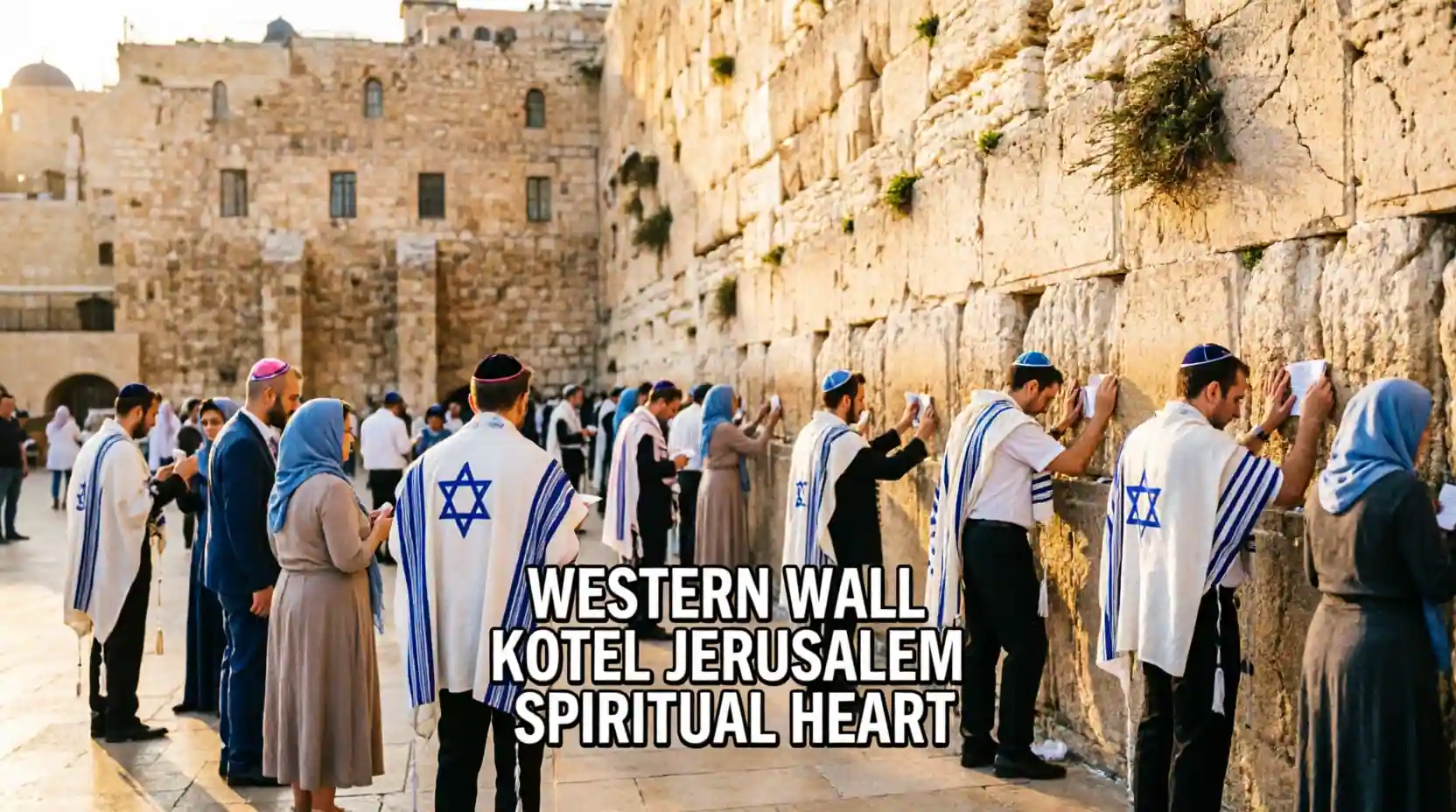
The Western Wall (Kotel): Spiritual Heart of Jerusalem
In the heart of Jerusalem's Old City, where ancient limestone stones rise from the earth like silent witnesses to millennia of human longing, stands the Western Wall—known to Jews worldwide as the Kotel. This sacred remnant of the Second Temple complex is far more than an archaeological artifact; it is the spiritual epicenter of Jewish life, a place where prayers have ascended for centuries, where tears of exile and joy of return have mingled on ancient stones, and where the collective memory of a people finds tangible expression. For travelers exploring Jerusalem in 2026, visiting the Western Wall offers a profound opportunity to witness living faith, to understand the deep historical roots of Jewish connection to this land, and to experience a sacred space that transcends tourism to touch the very soul of human spiritual aspiration.
The Western Wall's significance extends far beyond its physical dimensions. While the visible section stretches approximately 57 meters in length and rises to a height of 19 meters, its spiritual reach encompasses the entire Jewish world. For over two thousand years, since the destruction of the Second Temple by the Romans in 70 CE, Jews have faced this wall in prayer, have made pilgrimage to touch its stones, and have entrusted their deepest hopes to its crevices. The Kotel is not merely a destination; it is a verb—a place of action, of prayer, of connection, of continuity. To stand before the Western Wall is to stand at the intersection of history and hope, of memory and promise, of individual devotion and collective identity.
This comprehensive guide explores everything you need to know about visiting the Western Wall: understanding its profound historical and religious significance within Judaism, appreciating the archaeological and architectural context of this ancient structure, navigating practical considerations for visiting with respect and sensitivity, experiencing prayer traditions and customs, understanding the plaza's organization and facilities, and approaching this sacred space with the humility, preparation, and openness it deserves. Whether you're a Jewish pilgrim fulfilling a lifelong dream, a traveler seeking to understand Jewish faith and culture, a student of history and archaeology, or simply someone curious about one of humanity's most meaningful sacred spaces, this guide provides the insights you need to experience the Western Wall in all its spiritual depth.
Historical Context: From Temple Mount to Western Wall

The Temple Complex: Foundation of Jewish Sacred Geography
To appreciate the Western Wall fully, understanding its historical context is essential:
- First Temple (Solomon's Temple, c. 957-586 BCE): Built by King Solomon on Mount Moriah; central to ancient Israelite worship; destroyed by Babylonians
- Second Temple (516 BCE-70 CE): Rebuilt after Babylonian exile; expanded magnificently by Herod the Great beginning 19 BCE; center of Jewish religious life for centuries
- Herodian expansion: Massive retaining walls built to expand Temple Mount platform; Western Wall is part of this western retaining wall
- Destruction in 70 CE: Roman forces under Titus destroyed Second Temple during Jewish revolt; only western retaining wall remained substantially intact
- Symbolic transformation: As Temple worship ceased, the remaining wall became focal point for Jewish prayer and pilgrimage
- 👉 10 Sri Lanka Road Shocks That Surprise Americans
- 👉 Hidden Gems of Kawkaban Fortress Best Mountain Vibe Near Sanaa
- 👉 The Lebanon eVisa 2026: Step-by-Step Guide for US and EU Citizens.
The Wall Through Centuries of Change
The Western Wall's journey through history reflects Jewish resilience:
- Roman and Byzantine periods: Jews permitted to visit wall on limited basis; wall became site of mourning and prayer
- Early Islamic rule (7th century onward): Generally tolerant policies allowed Jewish access; wall remained sacred site
- Crusader period: Complex and often difficult period for Jewish access to sacred sites
- Ottoman era (1517-1917): Formalized Jewish rights to pray at wall; narrow alleyway developed as prayer space
- British Mandate (1917-1948): Tensions over access and rights; wall became focal point of Jewish-Arab relations
- 1948-1967: Jordanian control; Jews denied access to Western Wall and Old City
- 1967 Six-Day War: Israeli forces capture Old City; Jews regain access to Western Wall after 19 years; emotional moment captured in iconic photographs
- Contemporary era: Western Wall Plaza created; site managed by Western Wall Heritage Foundation; remains central to Jewish religious and national life
- 👉 10 Sri Lanka Road Shocks That Surprise Americans
- 👉 Hidden Gems of Kawkaban Fortress Best Mountain Vibe Near Sanaa
- 👉 The Lebanon eVisa 2026: Step-by-Step Guide for US and EU Citizens.
Archaeological Significance
The Wall and surrounding excavations reveal layers of history:
- Herodian masonry: Massive stones (some weighing hundreds of tons) with distinctive drafted margins; engineering marvel of ancient world
- Robinson's Arch: Remains of monumental staircase that led from street level to Temple Mount; visible in archaeological park
- Wilson's Arch: Ancient arch supporting bridge to Temple Mount; now part of prayer space
- Underground tunnels: Excavations reveal full length of western retaining wall; showcase construction techniques and historical layers
- Stratigraphy: Layers of construction, destruction, and rebuilding visible in wall sections; tangible record of Jerusalem's complex history
- 👉 10 Sri Lanka Road Shocks That Surprise Americans
- 👉 Hidden Gems of Kawkaban Fortress Best Mountain Vibe Near Sanaa
- 👉 The Lebanon eVisa 2026: Step-by-Step Guide for US and EU Citizens.
Religious Significance: The Kotel in Jewish Life

Theological and Spiritual Meaning
For Jews, the Western Wall embodies profound spiritual concepts:
- Divine presence (Shekhinah): Jewish tradition holds that God's presence never departed from the Western Wall; wall serves as conduit for prayer
- Continuity of covenant: Wall represents enduring relationship between God and Jewish people despite exile and suffering
- Hope and redemption: Prayers at wall express longing for messianic redemption and rebuilding of Temple
- Collective memory: Wall serves as tangible link to ancestors who prayed at same site; connects generations across time and space
- Personal devotion: Individuals bring private prayers, hopes, and struggles to wall; intimate relationship with sacred space
- 👉 10 Sri Lanka Road Shocks That Surprise Americans
- 👉 Hidden Gems of Kawkaban Fortress Best Mountain Vibe Near Sanaa
- 👉 The Lebanon eVisa 2026: Step-by-Step Guide for US and EU Citizens.
Prayer Traditions and Customs
Visiting the Kotel involves specific religious practices:
- Prayer times: Three daily prayer services (Shacharit-morning, Mincha-afternoon, Ma'ariv-evening); wall is active prayer site throughout day and night
- Direction of prayer: Jews worldwide face Jerusalem in prayer; at wall, worshippers face the stones themselves
- Prayer books: Siddur (prayer book) used for structured prayers; Psalms particularly associated with wall
- Personal prayers: Individuals recite personal supplications; many place written prayers in wall crevices
- Physical connection: Touching or kissing stones is common expression of devotion; some walk backward when leaving as sign of respect
- 👉 10 Sri Lanka Road Shocks That Surprise Americans
- 👉 Hidden Gems of Kawkaban Fortress Best Mountain Vibe Near Sanaa
- 👉 The Lebanon eVisa 2026: Step-by-Step Guide for US and EU Citizens.
Life Cycle Events at the Kotel
- Bar and Bat Mitzvahs: Many Jewish families celebrate coming-of-age ceremonies at wall; requires advance booking through Western Wall Heritage Foundation
- Weddings: Some couples incorporate wall visit into wedding celebrations; symbolizes foundation of Jewish home
- Military ceremonies: Israeli soldiers often visit wall upon completion of basic training; national and religious significance
- Memorial observances: Yahrzeit (anniversary of death) commemorations; collective remembrance of Holocaust and fallen soldiers
- National holidays: Wall central to celebrations of Yom Yerushalayim (Jerusalem Day), Yom Ha'atzmaut (Independence Day)
- 👉 10 Sri Lanka Road Shocks That Surprise Americans
- 👉 Hidden Gems of Kawkaban Fortress Best Mountain Vibe Near Sanaa
- 👉 The Lebanon eVisa 2026: Step-by-Step Guide for US and EU Citizens.
The Tradition of Prayer Notes
One of the Kotel's most visible customs:
- Origins: Practice of placing written prayers in wall dates back centuries; became widespread in modern era
- Practice: Visitors write personal prayers, hopes, or names of loved ones on small pieces of paper; insert into crevices between stones
- Meaning: Symbolizes entrusting prayers to God; physical act of placing note expresses hope and faith
- Collection and burial: Notes collected twice yearly; buried in Jewish cemetery on Mount of Olives in accordance with respect for sacred writings
- Visitor participation: Non-Jewish visitors may place notes if done respectfully; paper and pens available near entrance
- 👉 10 Sri Lanka Road Shocks That Surprise Americans
- 👉 Hidden Gems of Kawkaban Fortress Best Mountain Vibe Near Sanaa
- 👉 The Lebanon eVisa 2026: Step-by-Step Guide for US and EU Citizens.
Architecture and Archaeology: Understanding the Structure

Herodian Construction Techniques
The Wall showcases remarkable ancient engineering:
- Stone dimensions: Courses of massive limestone blocks; some stones measure up to 12 meters long, 3 meters high, and weigh over 500 tons
- Drafted margins: Characteristic Herodian style: smooth central panel surrounded by raised border; both decorative and functional
- Construction method: Stones cut with iron tools; transported using ramps, rollers, and enormous labor force; fitted without mortar
- Structural purpose: Wall served as retaining wall for expanded Temple Mount platform; supported massive earth fill and structures above
- Survival factors: Wall's position as retaining wall (rather than freestanding) contributed to survival after Temple destruction
- 👉 10 Sri Lanka Road Shocks That Surprise Americans
- 👉 Hidden Gems of Kawkaban Fortress Best Mountain Vibe Near Sanaa
- 👉 The Lebanon eVisa 2026: Step-by-Step Guide for US and EU Citizens.
Visible Sections and Archaeological Context
Understanding what you see at the Wall:
- Prayer plaza section: Most visible portion; includes stones from different periods: Herodian base, later additions, Ottoman-era upper courses
- Gender-separated sections: Traditional Orthodox practice: men's section (larger, southern part), women's section (northern part); mechitzah (partition) divides spaces
- Wilson's Arch: Ancient arch incorporated into prayer space; allows covered prayer area; archaeological significance as part of Temple Mount access
- Robinson's Arch area: Southern end of wall; archaeological park reveals ancient street, shops, and staircase to Temple Mount
- Underground tunnels: Extend north along western retaining wall; reveal full length of Herodian construction; require separate tour booking
- 👉 10 Sri Lanka Road Shocks That Surprise Americans
- 👉 Hidden Gems of Kawkaban Fortress Best Mountain Vibe Near Sanaa
- 👉 The Lebanon eVisa 2026: Step-by-Step Guide for US and EU Citizens.
Conservation and Preservation
- Ongoing maintenance: Western Wall Heritage Foundation employs conservators to monitor stone condition, clean deposits, and prevent deterioration
- Environmental challenges: Air pollution, humidity, and millions of visitors affect ancient stones; conservation balances access with preservation
- Prayer note management: Systematic collection and respectful burial of notes; prevents accumulation that could damage stones
- Archaeological research: Ongoing excavations and studies enhance understanding of wall's construction and history
- Visitor impact: Managing millions of annual visitors while protecting sacred space and ancient structure
- 👉 10 Sri Lanka Road Shocks That Surprise Americans
- 👉 Hidden Gems of Kawkaban Fortress Best Mountain Vibe Near Sanaa
- 👉 The Lebanon eVisa 2026: Step-by-Step Guide for US and EU Citizens.
Visiting the Western Wall: Practical Guidance

Location and Access
The Western Wall is centrally located in Jerusalem's Old City:
- Address: Western Wall Plaza, Jewish Quarter, Old City, Jerusalem
- Entrances: Main entrance via Dung Gate or Jewish Quarter; additional access from Muslim Quarter for Haram al-Sharif visitors
- Security screening: All visitors pass through metal detectors and bag checks; allow extra time, especially during peak hours and holidays
- Public transportation: Light rail to City Hall/Western Wall stop; buses serve Old City entrances; taxis and ride-hailing available
- Walking access: Old City best explored on foot; wear comfortable shoes for cobblestone streets and hills
- 👉 10 Sri Lanka Road Shocks That Surprise Americans
- 👉 Hidden Gems of Kawkaban Fortress Best Mountain Vibe Near Sanaa
- 👉 The Lebanon eVisa 2026: Step-by-Step Guide for US and EU Citizens.
Opening Hours and Best Times to Visit
The Western Wall is accessible 24/7, but timing affects experience:
- 24-hour access: Plaza open continuously; prayer services throughout day and night
- Less crowded times: Early morning (5-7 AM), late evening (after 8 PM), weekdays rather than weekends
- Peak times: Friday afternoons (before Sabbath), Saturday evenings (after Sabbath), Jewish holidays, Rosh Chodesh (new moon)
- Special experiences: Sabbath services, holiday prayers, bar mitzvah ceremonies offer unique atmosphere but larger crowds
- Weather considerations: Covered areas available; summer heat intense; winter can be cool and rainy
- 👉 10 Sri Lanka Road Shocks That Surprise Americans
- 👉 Hidden Gems of Kawkaban Fortress Best Mountain Vibe Near Sanaa
- 👉 The Lebanon eVisa 2026: Step-by-Step Guide for US and EU Citizens.
Dress Code and Modesty Requirements
Respectful attire is required at this sacred site:
- General guideline: Modest dress for all visitors: shoulders and knees covered
- Men: Head covering (kippah/yarmulke) required; available free at entrance if you don't have one
- Women: Shoulders covered; skirts or pants covering knees; head covering recommended but not required for non-Jewish women
- Practical tip: Carry a scarf or shawl for quick coverage; wear easily removable layers for temperature changes
- Respectful approach: Dress code reflects reverence for sacred space; compliance shows respect for Jewish tradition and fellow worshippers
- 👉 10 Sri Lanka Road Shocks That Surprise Americans
- 👉 Hidden Gems of Kawkaban Fortress Best Mountain Vibe Near Sanaa
- 👉 The Lebanon eVisa 2026: Step-by-Step Guide for US and EU Citizens.
Plaza Organization and Facilities
- Gender separation: Traditional Orthodox practice: men's and women's sections divided by mechitzah; follow signage
- Prayer books: Available at entrance for borrowing; return after use
- Writing materials: Paper and pens for prayer notes available near entrance
- Restrooms: Facilities located near plaza entrance
- Information desk: Staff available to answer questions and provide guidance
- Accessibility: Ramps and accessible routes available; inquire at entrance for specific needs
- 👉 10 Sri Lanka Road Shocks That Surprise Americans
- 👉 Hidden Gems of Kawkaban Fortress Best Mountain Vibe Near Sanaa
- 👉 The Lebanon eVisa 2026: Step-by-Step Guide for US and EU Citizens.
Experiencing the Kotel: A Visitor's Journey

Approaching the Wall
Your first encounter with this sacred space:
- Entering the plaza: Pass through security; receive kippah if needed; take moment to orient yourself
- First impressions: Notice the scale of the stones, the sound of prayer, the diversity of visitors, the emotional intensity
- Choosing a location: Find a spot along the wall that feels right; allow space for others; be mindful of those praying
- Preparing mentally: Take a moment for quiet reflection before approaching the stones
- 👉 10 Sri Lanka Road Shocks That Surprise Americans
- 👉 Hidden Gems of Kawkaban Fortress Best Mountain Vibe Near Sanaa
- 👉 The Lebanon eVisa 2026: Step-by-Step Guide for US and EU Citizens.
At the Wall: Prayer and Reflection
Engaging with this sacred space:
- Physical connection: Many visitors touch or kiss the stones; follow your comfort level and respect those praying
- Prayer options: Recite traditional prayers from siddur, read Psalms, offer personal supplications, or simply stand in silent reflection
- Prayer notes: Write a personal prayer or message; place gently in crevice between stones; understand notes are collected and buried respectfully
- Observing others: Watch how different people pray: some rock back and forth (shuckling), some stand still, some weep, some smile
- Respectful presence: Maintain quiet demeanor; avoid loud conversation; turn off phone ringers; be mindful you are in active prayer space
- 👉 10 Sri Lanka Road Shocks That Surprise Americans
- 👉 Hidden Gems of Kawkaban Fortress Best Mountain Vibe Near Sanaa
- 👉 The Lebanon eVisa 2026: Step-by-Step Guide for US and EU Citizens.
Photography Guidelines
- General permission: Photography generally permitted in plaza for personal use
- Respect privacy: Do not photograph individuals praying without explicit permission; many consider prayer deeply personal
- Sabbath and holidays: Photography restrictions may apply during religious observances; follow posted guidelines
- Flash and equipment: Avoid flash photography; tripods may require permission
- Ethical sharing: When sharing images online, provide context about site's sacred nature; avoid exploitative or sensational framing
- Alternative approach: Consider experiencing the moment without camera; some memories are most powerful when carried in heart rather than on memory card
- 👉 10 Sri Lanka Road Shocks That Surprise Americans
- 👉 Hidden Gems of Kawkaban Fortress Best Mountain Vibe Near Sanaa
- 👉 The Lebanon eVisa 2026: Step-by-Step Guide for US and EU Citizens.
Cultural Etiquette and Respectful Engagement

Understanding Jewish Religious Practice
Basic knowledge enhances respectful engagement:
- Prayer times: Three daily services; wall is active prayer site; avoid walking through prayer areas during services
- Sabbath observance: From Friday sunset to Saturday sunset, Orthodox Jews observe Sabbath; no writing, electricity use, or certain activities
- Holiday awareness: Major Jewish holidays (Rosh Hashanah, Yom Kippur, Passover, etc.) bring large crowds and special services
- Gender roles: Traditional Orthodox practice separates men and women in prayer; respect these customs even if different from your tradition
- Religious items: Treat prayer books, kippot, and other religious items with respect; return borrowed items
- 👉 10 Sri Lanka Road Shocks That Surprise Americans
- 👉 Hidden Gems of Kawkaban Fortress Best Mountain Vibe Near Sanaa
- 👉 The Lebanon eVisa 2026: Step-by-Step Guide for US and EU Citizens.
Behavioral Guidelines for All Visitors
- Quiet reverence: Maintain low voice; avoid loud conversation, laughter, or disruptive behavior
- Respect prayer space: Do not walk in front of someone who is praying; allow space for worshippers
- Physical boundaries: Do not climb on stones or touch areas marked as restricted
- Personal items: Keep bags and belongings close; do not leave items unattended
- Children: Supervise children closely; explain appropriate behavior in sacred space
- Food and drink: Consume outside prayer plaza; maintain cleanliness of sacred area
- 👉 10 Sri Lanka Road Shocks That Surprise Americans
- 👉 Hidden Gems of Kawkaban Fortress Best Mountain Vibe Near Sanaa
- 👉 The Lebanon eVisa 2026: Step-by-Step Guide for US and EU Citizens.
Engaging with Worshippers
- Observation vs. interaction: Many visitors come to pray, not to be observed; respect privacy and focus of worshippers
- Questions: If you have questions about Jewish practice, ask respectfully and at appropriate moments; many worshippers are happy to share
- Participation: You may be invited to join prayers; participate respectfully if comfortable, or decline politely
- Learning opportunity: For non-Jewish visitors, the Wall offers chance to learn about Jewish faith; approach with curiosity and humility
- Gratitude: Thank those who share knowledge or welcome you; small gestures of appreciation foster mutual respect
- 👉 10 Sri Lanka Road Shocks That Surprise Americans
- 👉 Hidden Gems of Kawkaban Fortress Best Mountain Vibe Near Sanaa
- 👉 The Lebanon eVisa 2026: Step-by-Step Guide for US and EU Citizens.
Special Experiences and Programs

Bar and Bat Mitzvah Ceremonies
For Jewish families celebrating this milestone:
- Booking process: Reserve well in advance through Western Wall Heritage Foundation; limited slots available
- Ceremony structure: Torah reading, prayers, celebration; can accommodate families and guests
- Logistics: Coordination with rabbis, musicians, and catering; foundation provides guidance
- Visitor consideration: If visiting during scheduled bar/bat mitzvah, be respectful of ceremony; observe from appropriate distance
- 👉 10 Sri Lanka Road Shocks That Surprise Americans
- 👉 Hidden Gems of Kawkaban Fortress Best Mountain Vibe Near Sanaa
- 👉 The Lebanon eVisa 2026: Step-by-Step Guide for US and EU Citizens.
Western Wall Tunnels
Underground exploration of the full retaining wall:
- Tour experience: Guided tours through excavated tunnels along western retaining wall; reveals full length of Herodian construction
- Archaeological highlights: Ancient street, water systems, massive stones not visible from plaza; tangible connection to Temple period
- Booking: Reserve in advance; tours available in multiple languages; moderate walking required
- Accessibility: Tunnels involve stairs and uneven surfaces; inquire about accessibility options
- Spiritual dimension: Many find tunnel experience deeply moving; combines archaeology with spiritual reflection
- 👉 10 Sri Lanka Road Shocks That Surprise Americans
- 👉 Hidden Gems of Kawkaban Fortress Best Mountain Vibe Near Sanaa
- 👉 The Lebanon eVisa 2026: Step-by-Step Guide for US and EU Citizens.
Women's Section and egalitarian Prayer
- Traditional section: Women's prayer area follows Orthodox practice; prayer books and resources available
- Egalitarian option: Robinson's Arch area (southern end) offers mixed-gender prayer space; managed by Israel's Reform and Conservative movements
- Understanding diversity: Jewish practice encompasses range of traditions; respect different expressions of faith
- Visitor choice: Choose section that aligns with your comfort and respect for local customs
- 👉 10 Sri Lanka Road Shocks That Surprise Americans
- 👉 Hidden Gems of Kawkaban Fortress Best Mountain Vibe Near Sanaa
- 👉 The Lebanon eVisa 2026: Step-by-Step Guide for US and EU Citizens.
Combining with Other Jerusalem Sites

Old City Jewish Quarter
- Proximity: Western Wall is heart of Jewish Quarter; easy to combine visits
- Key sites: Cardo (ancient Roman street), Hurva Synagogue, archaeological parks, synagogues
- Cultural context: Quarter blends ancient history with contemporary Jewish life; restaurants, shops, yeshivas
- Walking routes: Explore narrow alleys, visit smaller synagogues, experience daily life in historic neighborhood
- 👉 10 Sri Lanka Road Shocks That Surprise Americans
- 👉 Hidden Gems of Kawkaban Fortress Best Mountain Vibe Near Sanaa
- 👉 The Lebanon eVisa 2026: Step-by-Step Guide for US and EU Citizens.
Temple Mount/Haram al-Sharif
- Adjacent sacred space: Temple Mount (Haram al-Sharif) is platform above Western Wall; sacred to both Judaism and Islam
- Access considerations: Non-Muslim access to Temple Mount restricted to specific hours and entrances; separate from Western Wall visit
- Cultural sensitivity: Recognize complex religious and political significance; approach with respect for both Jewish and Muslim traditions
- Practical planning: Visit Western Wall and Temple Mount on same day if desired; allow time for security procedures at both sites
- 👉 10 Sri Lanka Road Shocks That Surprise Americans
- 👉 Hidden Gems of Kawkaban Fortress Best Mountain Vibe Near Sanaa
- 👉 The Lebanon eVisa 2026: Step-by-Step Guide for US and EU Citizens.
Other Old City Sites
- Church of Holy Sepulchre: Christian sacred site; short walk from Western Wall; understand different religious traditions
- Via Dolorosa: Traditional path of Jesus' crucifixion; connects Christian and Jewish historical narratives
- Muslim Quarter: Vibrant markets and Islamic heritage; experience Jerusalem's diverse cultural fabric
- Integrated itinerary: Plan walking route connecting sites; allow time for reflection at each sacred space
- 👉 10 Sri Lanka Road Shocks That Surprise Americans
- 👉 Hidden Gems of Kawkaban Fortress Best Mountain Vibe Near Sanaa
- 👉 The Lebanon eVisa 2026: Step-by-Step Guide for US and EU Citizens.
Sample Visit Itineraries

Half-Day Spiritual Focus (3-4 Hours)
- Early morning arrival: Enter plaza at opening; experience quieter atmosphere and morning prayers
- First hour: Orientation; find spot at wall; time for personal prayer, reflection, or observation
- Second hour: Explore plaza; visit information desk; learn about history and archaeology
- Third hour: Walk Jewish Quarter; visit nearby synagogues or archaeological sites
- Final time: Return to wall for farewell moment; depart with reflection on experience
- 👉 10 Sri Lanka Road Shocks That Surprise Americans
- 👉 Hidden Gems of Kawkaban Fortress Best Mountain Vibe Near Sanaa
- 👉 The Lebanon eVisa 2026: Step-by-Step Guide for US and EU Citizens.
Full-Day Jerusalem Sacred Sites (6-8 Hours)
- Morning: Western Wall visit; allow ample time for prayer and exploration
- Lunch: Kosher meal in Jewish Quarter; experience traditional Jewish cuisine
- Early afternoon: Temple Mount/Haram al-Sharif visit (if accessible and desired); respect access restrictions
- Late afternoon: Church of Holy Sepulchre or Via Dolorosa; understand Christian sacred geography
- Evening: Return to Western Wall for evening prayers; experience different atmosphere as day transitions
- 👉 10 Sri Lanka Road Shocks That Surprise Americans
- 👉 Hidden Gems of Kawkaban Fortress Best Mountain Vibe Near Sanaa
- 👉 The Lebanon eVisa 2026: Step-by-Step Guide for US and EU Citizens.
Archaeological and Historical Focus
- Western Wall Tunnels: Book guided tour for underground exploration of retaining wall
- Archaeological parks: Visit City of David, Davidson Center for Second Temple period context
- Israel Museum: See artifacts from Temple period, including models of ancient Jerusalem
- Reflection: Connect archaeological evidence with spiritual significance; understand how physical remains inform faith
- 👉 10 Sri Lanka Road Shocks That Surprise Americans
- 👉 Hidden Gems of Kawkaban Fortress Best Mountain Vibe Near Sanaa
- 👉 The Lebanon eVisa 2026: Step-by-Step Guide for US and EU Citizens.
Frequently Asked Questions

Is the Western Wall open to non-Jewish visitors?
Yes, the Western Wall is open to visitors of all faiths and backgrounds. The plaza is a public sacred space welcoming all who approach with respect. Non-Jewish visitors are welcome to observe, reflect, and even place prayer notes if done respectfully. Understand that this is an active place of Jewish worship; maintain appropriate demeanor and follow posted guidelines.
Do I need to be Jewish to pray at the Western Wall?
No, people of all faiths may pray at the Western Wall. Many non-Jewish visitors find the experience spiritually meaningful. If you choose to pray, you may follow your own tradition or simply stand in silent reflection. Respect those praying according to Jewish custom; avoid disrupting worship services.
What is the significance of placing notes in the Wall?
The tradition of placing written prayers in the Wall's crevices symbolizes entrusting one's hopes and supplications to God. The physical act of placing the note expresses faith and vulnerability. Notes are collected twice yearly and buried in a Jewish cemetery on the Mount of Olives, in accordance with Jewish respect for sacred writings containing God's name or prayers.
Can I take photographs at the Western Wall?
Photography is generally permitted in the plaza for personal use. However, always ask permission before photographing individuals praying, as many consider prayer deeply personal. Avoid flash photography, especially during services. During Sabbath and holidays, additional restrictions may apply. When sharing images, provide context about the site's sacred nature.
What should I do if I visit during Sabbath or holidays?
During Sabbath (Friday sunset to Saturday sunset) and Jewish holidays, the Wall is especially crowded with worshippers. Photography may be restricted; electronic devices should not be used by observant Jews. Visitors should maintain quiet reverence, avoid disrupting services, and be prepared for larger crowds. Dress modestly and follow all posted guidelines.
Is there a fee to visit the Western Wall?
Access to the Western Wall Plaza is free. Guided tours, Western Wall Tunnels, and special programs may have fees. Donations to support maintenance and conservation are appreciated but not required.
Conservation and Respect: Protecting a Sacred Heritage

Why Preservation Matters
- Irreplaceable heritage: Ancient stones cannot be replaced; each contributes to historical and spiritual continuity
- Living sacred space: Wall is not museum piece but active site of worship; conservation balances preservation with religious use
- Collective memory: Wall embodies Jewish historical experience; protecting it honors ancestors and educates future generations
- Interfaith significance: As site sacred to multiple faiths, preservation supports mutual respect and understanding
- Global heritage: Western Wall recognized as part of humanity's cultural heritage; protection benefits all
- 👉 10 Sri Lanka Road Shocks That Surprise Americans
- 👉 Hidden Gems of Kawkaban Fortress Best Mountain Vibe Near Sanaa
- 👉 The Lebanon eVisa 2026: Step-by-Step Guide for US and EU Citizens.
How Visitors Can Support Conservation
- Follow guidelines: Respect all rules regarding behavior, photography, and interaction with stones
- Handle prayer notes respectfully: Place notes gently; do not remove others' notes
- Support responsible tourism: Choose guides and services committed to cultural respect and heritage preservation
- Share knowledge: When discussing your visit, emphasize site's sacred nature and importance of respectful engagement
- Consider donations: Contributions to Western Wall Heritage Foundation support conservation, education, and visitor services
- 👉 10 Sri Lanka Road Shocks That Surprise Americans
- 👉 Hidden Gems of Kawkaban Fortress Best Mountain Vibe Near Sanaa
- 👉 The Lebanon eVisa 2026: Step-by-Step Guide for US and EU Citizens.
The Kotel in Contemporary Jewish Life

National and Spiritual Symbol
- Israeli identity: Wall central to Israeli national ceremonies, military oaths, and collective memory
- Diaspora connection: For Jews worldwide, Kotel represents spiritual center and connection to ancestral homeland
- Pilgrimage destination: Life-cycle events, holidays, and personal journeys bring Jews from around world to wall
- Interfaith dialogue: Wall can serve as meeting point for understanding between faiths when approached with respect
- Contemporary challenges: Balancing religious practice, archaeological preservation, tourism, and political complexity
- 👉 10 Sri Lanka Road Shocks That Surprise Americans
- 👉 Hidden Gems of Kawkaban Fortress Best Mountain Vibe Near Sanaa
- 👉 The Lebanon eVisa 2026: Step-by-Step Guide for US and EU Citizens.
Personal Encounters and Transformative Experiences
- Individual stories: Countless visitors report profound spiritual experiences, emotional healing, or renewed faith at wall
- Universal themes: While specifically Jewish, wall's themes of hope, memory, and connection resonate across human experience
- Transformative potential: For many, visiting Kotel changes perspective on faith, history, or personal journey
- Carrying the experience: The wall's lessons of resilience, faith, and community can inform life beyond Jerusalem
- 👉 10 Sri Lanka Road Shocks That Surprise Americans
- 👉 Hidden Gems of Kawkaban Fortress Best Mountain Vibe Near Sanaa
- 👉 The Lebanon eVisa 2026: Step-by-Step Guide for US and EU Citizens.
Conclusion: Standing at the Intersection of Heaven and Earth

The Western Wall is more than ancient stones; it is a threshold between the temporal and the eternal, between individual longing and collective memory, between historical tragedy and enduring hope. To stand before the Kotel is to stand in the presence of something that transcends tourism, archaeology, or even religion as abstract concept. It is to encounter the raw, unfiltered expression of human faith—the tears, the joy, the doubt, the certainty, the questions, and the answers that have been whispered, shouted, and sung at this spot for two thousand years.
For visitors in 2026, the Western Wall offers a rare opportunity to participate in this continuum. Whether you come as a Jew fulfilling a pilgrimage, as a seeker of spiritual experience, as a student of history, or simply as a curious human being, the Wall invites you to slow down, to listen, to reflect. It asks not that you believe as others believe, but that you respect the beliefs of others. It offers not easy answers, but the profound question: What do you place in the crevices of your own life? What hopes, what fears, what dreams do you entrust to something greater than yourself?
As you plan your visit to the Western Wall, approach it with preparation and openness. Learn about its history and significance. Dress respectfully. Silence your phone. Allow yourself to be moved. And when you place your hand on those ancient stones, remember that you touch not just limestone, but the accumulated prayers of generations—the sighs of exiles, the songs of return, the whispers of children, the cries of the brokenhearted, the gratitude of the blessed.
The Western Wall awaits—not as a monument to be photographed, but as a living presence to be encountered. May your visit deepen your understanding of faith, history, and the enduring human search for meaning. May you carry home not just memories of stones, but the resonance of prayers that have ascended from this place, and the hope that continues to rise from the hearts of those who stand here, as you do now, between heaven and earth.
Welcome to the Western Wall. Welcome to the spiritual heart of Jerusalem. Welcome to a place where time stands still, and eternity whispers through ancient stone.
0 Comments