.webp)
.webp)
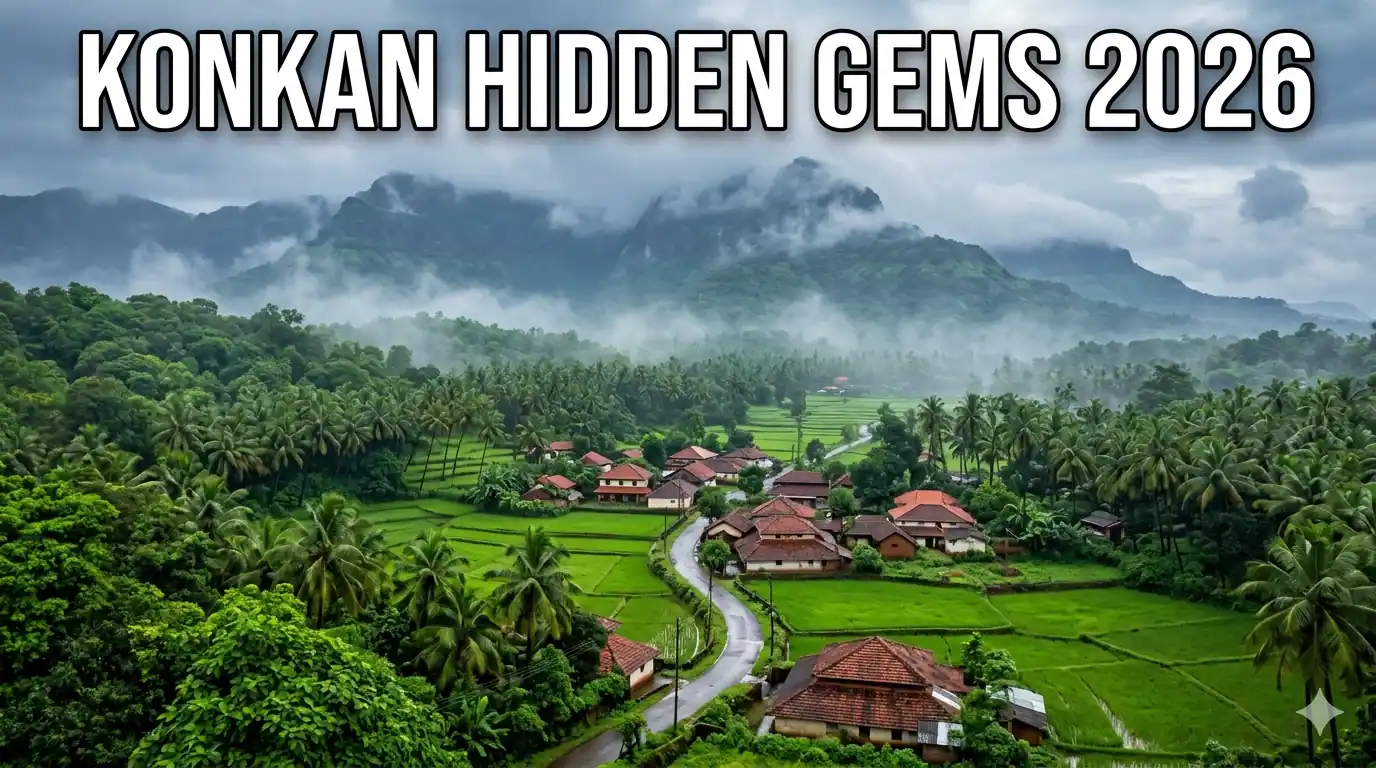
Overview of Konkan Hinterlands for Slow Travelers
The Konkan region of Maharashtra extends beyond its famous coastline into a captivating hinterland of lush Western Ghats valleys [[1]].
These inland areas preserve traditional Konkani culture ancient temples and pristine natural beauty away from tourist crowds [[2]].
Slow travel through Konkan hinterlands allows visitors to experience authentic village life organic farming and centuries old traditions [[3]].
The region encompasses Sindhudurg and Ratnagiri districts featuring red laterite soil dense forests and cascading monsoon waterfalls [[4]].
Seven hidden gems in this area offer transformative experiences for travelers seeking meaningful connections with nature and local communities [[5]].
Why Choose Slow Travel in Konkan
Slow travel emphasizes quality of experience over quantity of destinations allowing deeper cultural immersion [[6]].
Konkan hinterlands provide perfect setting for this approach with unhurried village rhythms and welcoming local communities [[7]].
Visitors can participate in traditional activities like coconut farming cashew processing and organic mango cultivation [[8]].
The region's excellent connectivity via Konkan Railway makes multi day village stays logistically feasible [[9]].
Homestays and eco resorts offer comfortable accommodation while supporting local economies directly [[10]].
Best Time to Visit Konkan Hinterlands
Monsoon season from June to September transforms the hinterlands into emerald green paradise with active waterfalls [[11]].
Post monsoon months of October and November offer lush landscapes with clearer skies ideal for trekking [[12]].
Winter from December to February provides pleasant temperatures perfect for village walks and cultural exploration [[13]].
Summer months March to May showcase Alphonso mango harvest season with unique agricultural experiences [[14]].
Each season offers distinct advantages depending on traveler preferences for weather activities and local festivals [[15]].
Amboli Hill Station The Misty Mountain Retreat

Amboli sits at 690 meters elevation in the Western Ghats offering cool climate and spectacular monsoon scenery [[16]].
This emerging hill station remains less commercialized than Mahabaleshwar or Lonavala attracting conscious travelers [[17]].
Amboli Falls drops 60 meters during monsoon creating one of Konkan's most photographed natural attractions [[18]].
The surrounding forests harbor rich biodiversity including rare birds butterflies and endemic Western Ghats flora [[19]].
Traditional Konkani villages around Amboli maintain ancient agricultural practices and temple traditions [[20]].
Amboli Waterfalls and Viewpoints
Amboli Falls viewpoint provides accessible viewing platform for the dramatic cascade especially spectacular July to September [[21]].
Madhavgad Fort ruins offer panoramic valley views and historical insights into Maratha era fortifications [[22]].
Sunrise Point and Sunset Point provide breathtaking vistas over mist covered valleys and layered mountain ranges [[23]].
Nangarta Falls requires short trek through forest path rewarding visitors with secluded waterfall experience [[24]].
Local guides available for nature walks explaining medicinal plants and ecological significance of Western Ghats [[25]].
Cultural Experiences in Amboli
Visit ancient Ravalnath Temple dedicated to local deity featuring traditional Konkani architecture and stone lamps [[26]].
Participate in organic farming activities at local estates growing spices rice and tropical fruits [[27]].
Sample authentic Konkani cuisine including fish curry rice solkadhi and traditional sweets at village homes [[28]].
Evening cultural programs showcase traditional folk dances like Fugdi and Dhangar Gaha performed by local artists [[29]].
Homestays provide opportunities to learn about daily village life agricultural cycles and local customs [[30]].
Sawantwadi The Royal Heritage Town

Sawantwadi served as capital of princely state under British rule preserving royal architecture and artisan traditions [[31]].
The town maintains its distinctive character through Ganjifa card painting wooden toy making and lacquerware crafts [[32]].
Sawantwadi Palace now functions as heritage hotel allowing visitors to experience royal hospitality and architecture [[33]].
Surrounding countryside features traditional wadas mansions ancient temples and peaceful rural landscapes [[34]].
Slow travelers can spend days exploring craft workshops temple trails and village markets at leisurely pace [[35]].
Sawantwadi Palace and Museums
Sawantwadi Palace built in 18th century showcases Indo Portuguese architecture with ornate wooden balconies [[36]].
Palace museum displays royal artifacts antique weapons traditional costumes and historical photographs [[37]].
Durbar Hall features intricate woodwork crystal chandeliers and period furniture available for guided tours [[38]].
Palace gardens maintain traditional landscaping with tropical plants fountains and peaceful walking paths [[39]].
Heritage accommodation in palace suites offers unique opportunity to experience royal lifestyle with modern comforts [[40]].
Traditional Crafts and Artisan Workshops
Ganjifa playing cards hand painted with natural colors represent dying art form preserved by few master artisans [[41]].
Wooden toy making tradition continues in workshops creating colorful animals dolls and decorative items [[42]].
Lacquerware artisans turn wooden bangles boxes and household items using traditional techniques [[43]].
Visit craft centers to observe artisans at work and purchase authentic handmade souvenirs directly [[44]].
Workshop visits can be arranged through Maharashtra Tourism or local guides with advance notice [[45]].
Devgad Beyond the Famous Mangoes

Devgad taluka gained fame for premium Alphonso mangoes but offers much more for slow travelers [[46]].
The region features pristine beaches backwaters ancient forts and traditional fishing villages inland [[47]].
Devgad's hinterland contains cashew plantations spice gardens and organic farms open for educational visits [[48]].
Traditional Konkani temples with distinctive architecture dot the countryside waiting exploration [[49]].
Slow travel here means spending days understanding agricultural cycles from mango flowering to cashew harvesting [[50]].
Devgad Agricultural Experiences
Visit organic mango orchards during February to April to witness Alphonso mango harvesting and grading process [[51]].
Cashew plantations offer tours explaining cultivation processing and value addition from raw nut to packaged product [[52]].
Spice gardens grow black pepper cardamom vanilla and nutmeg with guided walks explaining cultivation methods [[53]].
Participate in traditional farming activities like coconut climbing rice planting or organic composting [[54]].
Farm stays provide immersive experience of rural Konkan life with home cooked meals from farm produce [[55]].
Devgad Fort and Coastal Hinterland
Devgad Fort stands on headland overlooking Arabian Sea offering panoramic coastal and inland views [[56]].
Fort ruins include ancient temples bastions and water cisterns telling stories of Maratha naval power [[57]].
Trek from fort through coastal villages discovering hidden beaches fishing harbors and traditional boat building [[58]].
Local fishermen demonstrate traditional net casting techniques and share knowledge about marine life [[59]].
Fresh seafood prepared in village homes showcases authentic Konkani coastal cuisine beyond tourist restaurants [[60]].
Vengurla The Quiet Coastal Hinterland

Vengurla combines coastal access with rich hinterland featuring temples beaches and Portuguese colonial heritage [[61]].
The town maintains relaxed atmosphere perfect for slow travelers seeking authentic Konkan experiences [[62]].
Vengurla's inland areas contain ancient rock formations laterite quarries and unique geological features [[63]].
Traditional fishing communities practice sustainable methods passed down through generations [[64]].
Cashew processing units operate seasonally providing insight into important local industry [[65]].
Vengurla Beaches and Rock Formations
Vengurla Rocks or Sagareshwar Beach features dramatic laterite formations creating natural breakwaters [[66]].
Torane Beach offers pristine sands with minimal development ideal for peaceful walks and birdwatching [[67]].
Achara Beach known as Tarkarli's twin provides cleaner quieter alternative with excellent swimming conditions [[68]].
Low tide reveals fascinating rock pools with marine life perfect for nature observation and photography [[69]].
Sunset viewing from beaches accompanied by traditional fishing boats returning to harbor creates magical moments [[70]].
Temple Trails and Spiritual Heritage
Rameshwar Temple dates to 17th century featuring exquisite wood carvings and traditional Konkani architecture [[71]].
Bhagwati Temple in village setting offers glimpse into rural religious practices and community festivals [[72]].
Ancient rock cut caves near Vengurla provide archaeological interest and panoramic valley views [[73]].
Temple festivals throughout year showcase traditional music dance and community feasting open to visitors [[74]].
Local priests and temple committees often provide historical context and architectural details for interested visitors [[75]].
Kudal The Rural Heart of Konkan

Kudal serves as important market town connecting coastal areas with Western Ghats hinterland villages [[76]].
The region exemplifies traditional Konkani agricultural lifestyle with rice paddies coconut groves and spice gardens [[77]].
Kudal's weekly markets or haats offer authentic glimpse into rural commerce and local produce [[78]].
Surrounding villages maintain ancient water management systems temple tanks and community structures [[79]].
Slow travelers can base in Kudal for day trips to multiple villages forts and natural attractions [[80]].
Kudal Village Life and Agriculture
Observe traditional rice cultivation methods from monsoon planting to winter harvesting in terraced fields [[81]].
Coconut palm climbing demonstrations showcase traditional skills still essential for village economy [[82]].
Visit village wells and traditional water conservation structures demonstrating sustainable resource management [[83]].
Participate in seasonal festivals celebrating agricultural cycles harvest and local deities [[84]].
Homestays in farming families provide authentic experience of Konkani rural hospitality and cuisine [[85]].
Kudal Forts and Historical Sites
Nivati Fort near Kudal offers coastal views and historical insights into Maratha coastal defense system [[86]].
Explore fort ruins temples and villages on trekking routes connecting multiple historical sites [[87]].
Local guides share stories of battles trade routes and cultural evolution of Konkan region [[88]].
Photography opportunities abound with laterite architecture ancient temples and dramatic landscapes [[89]].
Combine fort visits with village stops for comprehensive understanding of region's historical development [[90]].
Malvan Hinterland Beyond the Beaches

Malvan taluka famous for beaches also contains rich hinterland of forts temples and traditional villages [[91]].
The inland areas preserve Konkani culture through cuisine crafts festivals and agricultural practices [[92]].
Malvan's spice plantations grow kokum black pepper and exotic fruits in lush Western Ghats foothills [[93]].
Traditional fishing villages practice sustainable methods maintaining ecological balance for generations [[94]].
Slow travel here means understanding interconnection between coastal and inland ecosystems and livelihoods [[95]].
Malvan Spice Plantations and Organic Farms
Guided plantation tours explain cultivation of kokum essential ingredient in Konkani cuisine [[96]].
Black pepper vines cardamom plants and vanilla cultivation demonstrated with processing methods [[97]].
Organic farms practice sustainable agriculture avoiding chemicals preserving soil health and biodiversity [[98]].
Purchase fresh spices directly from farmers ensuring authenticity and supporting local economy [[99]].
Cooking classes using plantation produce teach traditional Konkani recipes and spice combinations [[100]].
Malvan Village Temples and Festivals
Ancient Shiva temples in villages feature traditional architecture with wooden pillars and stone sculptures [[101]].
Local goddess temples or devasthanams serve as community centers hosting festivals and gatherings [[102]].
Annual temple festivals or yatras include processions traditional music folk dances and community feasts [[103]].
Visitors welcome to observe and participate respectfully learning about local religious traditions [[104]].
Temple committees often preserve historical records and artifacts documenting village heritage [[105]].
Tarkarli Backwaters and Inland Waterways

Tarkarli known for beaches also features extensive backwater system connecting villages and mangrove forests [[106]].
Traditional fishing communities depend on these waterways for livelihood using sustainable practices [[107]].
Backwater exploration by small boats reveals bird sanctuaries mangrove ecosystems and riverside villages [[108]].
Inland waterways connect to Karli River providing transportation route used for centuries [[109]].
Slow travel through backwaters offers peaceful alternative to road travel with unique ecological perspectives [[110]].
Backwater Boat Tours and Birdwatching
Local fishermen operate small country boats for backwater tours explaining ecosystem and livelihood [[111]].
Mangrove forests harbor diverse bird species including kingfishers egrets herons and migratory birds [[112]].
Early morning or late afternoon boat rides provide best wildlife viewing and photography opportunities [[113]].
Observe traditional fishing techniques crab trapping and shell collection sustaining local communities [[114]].
Riverside villages accessible only by boat maintain distinct culture and traditional architecture [[115]].
Mangrove Conservation and Eco Tourism
Mangrove ecosystems protect coastline from erosion provide fish breeding grounds and sequester carbon [[116]].
Local conservation groups work to protect mangroves from development pressure and pollution [[117]].
Eco tourism initiatives involve communities in conservation while providing alternative livelihoods [[118]].
Educational programs explain importance of mangroves for coastal ecology and climate resilience [[119]].
Visitors can participate in mangrove planting activities supporting conservation efforts [[120]].
Planning Your Konkan Hinterland Slow Travel Itinerary

Optimal slow travel itinerary allocates 3 to 4 days minimum per destination for meaningful immersion [[121]].
Two week journey could cover Amboli Sawantwadi Devgad and Vengurla with adequate time in each location [[122]].
Konkan Railway connects major towns with scenic route through Western Ghats and coastal plains [[123]].
Local buses autos and taxis provide connectivity to villages though schedules may be infrequent [[124]].
Renting motorcycle or car with driver offers flexibility for exploring remote villages and attractions [[125]].
Accommodation Options for Slow Travelers
Homestays in villages provide authentic experience with home cooked meals and local family interaction [[126]].
MTDC resorts offer comfortable government run accommodation at reasonable rates in key locations [[127]].
Eco resorts and farm stays focus on sustainability organic practices and nature immersion [[128]].
Heritage properties in Sawantwadi and other towns provide colonial or traditional architecture experiences [[129]].
Book accommodation in advance during peak season October to March and monsoon June to September [[130]].
Budget Considerations for Konkan Travel
Homestays cost 800 to 2000 rupees per night including meals providing excellent value for authentic experience [[131]].
MTDC resorts range from 1500 to 4000 rupees depending on room category and season [[132]].
Local transportation by bus or shared taxi costs 200 to 500 rupees daily for inter village travel [[133]].
Private vehicle rental with driver approximately 2500 to 4000 rupees per day including fuel [[134]].
Meals at local restaurants or homestays cost 200 to 500 rupees per person daily for authentic Konkani cuisine [[135]].
Cultural Etiquette and Responsible Travel Practices

Respect local customs by dressing modestly especially when visiting temples and rural villages [[136]].
Always ask permission before photographing people particularly in villages and during religious ceremonies [[137]].
Learn basic Marathi or Konkani greetings to build rapport with local communities [[138]].
Support local economy by purchasing from village artisans farmers and small businesses [[139]].
Practice environmental responsibility by avoiding plastic carrying reusable bottles and respecting natural sites [[140]].
Sustainable Tourism in Konkan Hinterlands
Choose eco certified accommodations implementing water conservation waste management and renewable energy [[141]].
Participate in community based tourism initiatives ensuring benefits reach local residents directly [[142]].
Respect wildlife by maintaining distance not feeding animals and following designated trails [[143]].
Conserve water especially in villages where supply may be limited during dry season [[144]].
Leave no trace when visiting natural areas carrying out all waste and avoiding damage to vegetation [[145]].
Health and Safety Considerations
Konkan hinterlands generally safe but carry basic medications for common travel ailments [[146]].
Monsoon season brings leeches in forested areas requiring protective clothing and salt for removal [[147]].
Stay hydrated and use sunscreen even during cloudy monsoon days due to high humidity [[148]].
Mobile connectivity can be spotty in remote villages so inform accommodation of trekking plans [[149]].
Carry cash as digital payment options limited in rural areas and small villages [[150]].
Best Seasonal Experiences in Konkan Hinterlands
Monsoon June to September offers dramatic waterfalls lush greenery and mystical mist covered landscapes [[151]].
Post monsoon October to November provides clearest skies comfortable temperatures and vibrant green scenery [[152]].
Winter December to February ideal for trekking temple visits and cultural festivals with pleasant weather [[153]].
Summer March to May showcases Alphonso mango harvest with unique agricultural experiences and warm coastal breezes [[154]].
Each season offers distinct advantages allowing repeat visits for different experiences throughout year [[155]].
Festivals and Cultural Events Calendar
Ganesh Chaturthi August or September celebrated with traditional fervor featuring processions and community feasts [[156]].
Diwali October or November includes special temple ceremonies traditional sweets and family gatherings [[157]].
Mango festivals March to April in Devgad and Malvan celebrate Alphonso harvest with tastings and cultural programs [[158]].
Local temple festivals or utsavs occur throughout year varying by village deity and agricultural calendar [[159]].
Check with Maharashtra Tourism or local contacts for specific dates when planning festival focused visits [[160]].
Essential Resources for Konkan Hinterland Travel
Maharashtra Tourism Development Corporation website mtdc.gov.in provides official information on accommodations and attractions [[161]].
Konkan Railway website konkanrailway.com offers train schedules and booking for scenic rail journey [[162]].
Local tourist offices in Ratnagiri and Sindhudurg districts provide maps guides and updated information [[163]].
Homestay networks and eco tourism platforms connect travelers with verified village accommodation options [[164]].
Download offline maps as mobile connectivity can be unreliable in remote hinterland areas [[165]].
Recommended Travel Gear and Preparation
Sturdy walking shoes essential for village walks fort treks and monsoon exploration with good grip [[166]].
Light rain jacket and umbrella necessary during monsoon season even for short outdoor activities [[167]].
Reusable water bottle with purification tablets or filter for safe hydration in rural areas [[168]].
Power bank for charging devices as electricity supply may be intermittent in villages [[169]].
Basic Marathi phrasebook or translation app helpful for communication in non tourist areas [[170]].
0 Comments