.webp)
.webp)
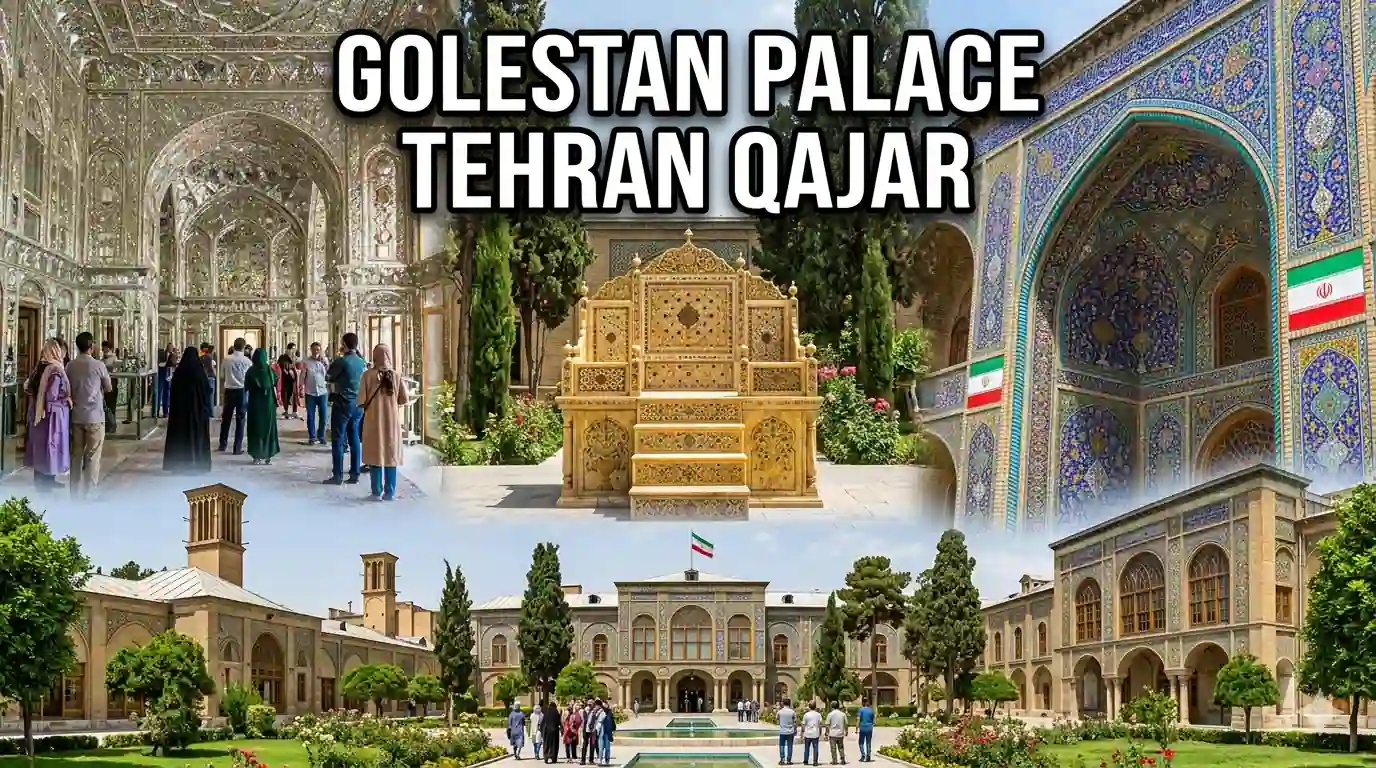
Golestan Palace: A Masterpiece of the Qajar Era
In the heart of Tehran, surrounded by the bustling energy of Iran's modern capital, lies a jewel of Persian architecture and artistic achievement: Golestan Palace. This UNESCO World Heritage Site, a magnificent complex of gardens, palaces, and ceremonial halls, represents the pinnacle of Qajar-era artistry and serves as a tangible link to Iran's royal past. Built and expanded primarily during the 18th and 19th centuries, Golestan Palace is not merely a historical monument; it is a living testament to the sophisticated fusion of Persian traditional craftsmanship with European influences that characterized the Qajar dynasty's engagement with a changing world.
For travelers exploring Tehran in 2026, Golestan Palace offers an unparalleled opportunity to step into the opulent world of Persian royalty while gaining insight into the cultural, political, and artistic currents that shaped modern Iran. From the dazzling mirror work of the Hall of Mirrors (Talar-e Ayeneh) to the imposing Marble Throne (Takht-e Marmar), from intricate tile mosaics depicting mythological scenes to European-style paintings adorning palace walls, every element of the complex tells a story of ambition, artistry, and adaptation. The palace gardens, with their fountains, flowering trees, and shaded walkways, provide a serene counterpoint to Tehran's urban intensity, inviting visitors to linger and absorb the beauty that surrounds them.
This comprehensive guide explores everything you need to know about visiting Golestan Palace: understanding its historical significance and architectural splendor, navigating the complex's key buildings and attractions, appreciating the artistic techniques that make it extraordinary, practical visiting information including tickets and timing, photography guidance for capturing its beauty, cultural context for deeper appreciation, and expert tips for making the most of your visit to this UNESCO World Heritage treasure. Whether you're an architecture enthusiast, a history buff, an art lover, or simply a curious traveler seeking to understand Iran's rich heritage, this guide provides the insights you need to experience Golestan Palace in all its splendor.
Historical Context: The Qajar Dynasty and Palace Evolution

The Qajar Era: Iran at a Crossroads
To appreciate Golestan Palace fully, understanding its historical context is essential:
- Qajar dynasty (1789-1925): Ruled Iran during a period of significant internal transformation and external pressure from European powers
- Cultural synthesis: Qajar art and architecture blended traditional Persian motifs with European influences, reflecting the dynasty's engagement with global trends
- Political center: Golestan Palace served as the official residence and administrative center for Qajar rulers, hosting coronations, diplomatic receptions, and state ceremonies
- Artistic patronage: Qajar shahs were significant patrons of the arts, commissioning paintings, textiles, metalwork, and architectural projects that defined the era's aesthetic
- Modernization efforts: The palace complex itself evolved to incorporate European architectural elements, symbolizing Iran's navigation between tradition and modernity
- 👉 Armenia Group Travel Private Secure Minibus Charter Booking Guide
- 👉 Uzbekistan Transportation Guide Yandex Go App and Shared Taxis
- 👉 Ritz-Carlton Astana Five Day Luxury Itinerary Kazakhstan
Palace Construction and Expansion
Golestan Palace developed over centuries, with major contributions from multiple rulers:
- Safavid origins: The site originally housed a Safavid-era citadel and garden complex
- Zand expansion: Karim Khan Zand (r. 1751-1779) expanded the complex, adding early structures that form the palace's foundation
- Qajar transformation: Agha Mohammad Khan Qajar established Tehran as capital in 1786; subsequent Qajar shahs, particularly Fath-Ali Shah (r. 1797-1834) and Naser al-Din Shah (r. 1848-1896), transformed Golestan into the magnificent complex seen today
- European influences: Naser al-Din Shah's travels to Europe inspired incorporation of neoclassical elements, mirrored halls, and European-style paintings
- Pahlavi period: The palace continued as a royal residence until 1925; later converted to a museum complex
- 👉 Armenia Group Travel Private Secure Minibus Charter Booking Guide
- 👉 Uzbekistan Transportation Guide Yandex Go App and Shared Taxis
- 👉 Ritz-Carlton Astana Five Day Luxury Itinerary Kazakhstan
UNESCO World Heritage Designation
Golestan Palace's exceptional value received international recognition:
- Inscription year: Added to UNESCO World Heritage List in 2013
- Criteria: Recognized for outstanding examples of Qajar art and architecture; fusion of Persian and European artistic traditions; testimony to cultural exchange
- Conservation: UNESCO designation supports ongoing preservation efforts and sustainable tourism management
- Global significance: Represents an important chapter in the architectural and artistic history of Iran and the broader Islamic world
- 👉 Armenia Group Travel Private Secure Minibus Charter Booking Guide
- 👉 Uzbekistan Transportation Guide Yandex Go App and Shared Taxis
- 👉 Ritz-Carlton Astana Five Day Luxury Itinerary Kazakhstan
Architectural Splendor: Key Buildings and Artistic Highlights

The Hall of Mirrors (Talar-e Ayeneh): A Dazzling Masterpiece
The most iconic space within Golestan Palace:
- Architectural concept: Designed during Naser al-Din Shah's reign; inspired by European hall of mirrors but executed with Persian craftsmanship
- Mirror work technique: Thousands of small mirror pieces cut and arranged in intricate geometric and floral patterns; creates mesmerizing light reflections
- Decorative elements: Painted ceilings depicting European-style landscapes and mythological scenes; gilded stucco work; crystal chandeliers
- Ceremonial function: Used for royal receptions, coronations, and important state occasions; the reflective surfaces symbolized divine light and royal power
- Visitor experience: The interplay of light and mirror creates an almost surreal atmosphere; photography is permitted but flash may be restricted
- Photography tips: Visit during morning hours for optimal natural light; use a tripod if permitted; experiment with angles to capture mirror reflections
- 👉 Armenia Group Travel Private Secure Minibus Charter Booking Guide
- 👉 Uzbekistan Transportation Guide Yandex Go App and Shared Taxis
- 👉 Ritz-Carlton Astana Five Day Luxury Itinerary Kazakhstan
The Marble Throne (Takht-e Marmar): Power and Symbolism
The ceremonial heart of the palace complex:
- Construction: Built in 1806 during Fath-Ali Shah's reign; one of the oldest surviving structures in the complex
- Architectural features: Open-air pavilion with 18 marble columns supporting a decorated roof; elevated platform accessed by marble steps
- The throne itself: Carved from yellow marble from Yazd; intricately decorated with floral motifs and inscriptions; symbol of royal authority
- Decorative program: Walls adorned with tile panels depicting royal ceremonies, battles, and European-inspired scenes; painted ceilings with floral and geometric patterns
- Symbolic significance: The throne's elevation and central position represented the shah's role as intermediary between heaven and earth
- Visitor guidance: Observe the throne from designated areas; appreciate the tile work depicting historical events; consider the symbolic geometry of the space
- 👉 Armenia Group Travel Private Secure Minibus Charter Booking Guide
- 👉 Uzbekistan Transportation Guide Yandex Go App and Shared Taxis
- 👉 Ritz-Carlton Astana Five Day Luxury Itinerary Kazakhstan
The Shams-ol-Emareh (Sun Building): European-Persian Fusion
A striking example of Qajar architectural innovation:
- Historical significance: Completed in 1867; one of the first tall buildings in Tehran; designed to provide panoramic views of the city
- Architectural style: Five-story structure blending Persian brickwork with European neoclassical elements; twin towers connected by central section
- Decorative details: Intricate brick patterns, stained glass windows, painted ceilings, and European-style frescoes
- Interior spaces: Royal reception rooms with European furniture, Persian carpets, and decorative arts; upper floors offer city views
- Restoration: Recent conservation work has restored original colors and decorative elements; reveals the building's former splendor
- Visitor experience: Climb to upper floors for views; appreciate the fusion of architectural traditions; note the innovative engineering for its time
- 👉 Armenia Group Travel Private Secure Minibus Charter Booking Guide
- 👉 Uzbekistan Transportation Guide Yandex Go App and Shared Taxis
- 👉 Ritz-Carlton Astana Five Day Luxury Itinerary Kazakhstan
The Ivory Hall (Talar-e Bolour) and Other Treasures
Additional highlights within the complex:
Ivory Hall (Talar-e Bolour):
- Features: Exquisite mirror work similar to Hall of Mirrors but with ivory inlays; used for more intimate royal gatherings
- Artistic details: Painted panels, gilded decorations, and intricate stucco work
- Visitor note: Smaller space allows close appreciation of craftsmanship
- 👉 Armenia Group Travel Private Secure Minibus Charter Booking Guide
- 👉 Uzbekistan Transportation Guide Yandex Go App and Shared Taxis
- 👉 Ritz-Carlton Astana Five Day Luxury Itinerary Kazakhstan
Bride's Pavilion (Kakh-e Arus):
- Purpose: Built for royal weddings and celebrations
- Decorative program: Vibrant tile work depicting floral motifs and romantic scenes
- Architectural charm: Intimate scale with elegant proportions
- 👉 Armenia Group Travel Private Secure Minibus Charter Booking Guide
- 👉 Uzbekistan Transportation Guide Yandex Go App and Shared Taxis
- 👉 Ritz-Carlton Astana Five Day Luxury Itinerary Kazakhstan
Abyaz Hall (White Hall):
- Character: Simpler, more restrained decoration; used for administrative functions
- Historical value: Provides contrast to more ornate spaces; shows range of Qajar architectural expression
- 👉 Armenia Group Travel Private Secure Minibus Charter Booking Guide
- 👉 Uzbekistan Transportation Guide Yandex Go App and Shared Taxis
- 👉 Ritz-Carlton Astana Five Day Luxury Itinerary Kazakhstan
Artistic Techniques: Understanding Qajar Craftsmanship

Mirror Work (Ayeneh-Kari)
The signature decorative technique of Golestan Palace:
- Historical development: Mirror work has ancient Persian roots but reached its zenith during the Qajar era
- Technique: Small mirror pieces cut into geometric shapes; arranged in complex patterns using plaster or adhesive; often combined with painted backgrounds
- Symbolic meaning: Mirrors reflect light, symbolizing divine illumination, purity, and the infinite; in royal context, also represented the shah's all-seeing power
- Conservation challenges: Mirror pieces can detach over time; specialized conservators use traditional techniques for restoration
- Appreciation tips: Observe how light interacts with mirrors throughout the day; notice the precision of geometric patterns; appreciate the labor-intensive craftsmanship
- 👉 Armenia Group Travel Private Secure Minibus Charter Booking Guide
- 👉 Uzbekistan Transportation Guide Yandex Go App and Shared Taxis
- 👉 Ritz-Carlton Astana Five Day Luxury Itinerary Kazakhstan
Tile Mosaics (Kashi-Kari)
Vibrant ceramic art covering palace walls:
- Techniques: Haft rang (seven-color) tiles painted with mineral pigments; mosaic tiles cut and assembled into complex images; cuerda seca technique for precise color separation
- Iconography: Floral motifs (roses, cypress trees), geometric patterns, hunting scenes, royal portraits, European-inspired landscapes, and mythological figures
- Color palette: Dominant blues (lapis lazuli), turquoise, yellow, white, and black; gold leaf accents in some areas
- Regional influences: Techniques and styles from Kashan, Tabriz, and other Persian ceramic centers
- Visitor guidance: Take time to examine tile panels up close; note the narrative scenes depicting historical events; appreciate the technical skill required for complex mosaics
- 👉 Armenia Group Travel Private Secure Minibus Charter Booking Guide
- 👉 Uzbekistan Transportation Guide Yandex Go App and Shared Taxis
- 👉 Ritz-Carlton Astana Five Day Luxury Itinerary Kazakhstan
Painting and Decorative Arts
European influences meet Persian traditions:
- Wall paintings: Large-scale frescoes depicting European landscapes, royal portraits, and ceremonial scenes; often painted by artists trained in both Persian and European techniques
- Miniature influences: Some panels retain Persian miniature painting traditions with detailed figures and intricate borders
- Stucco work: Carved and painted plaster decorations featuring floral motifs, calligraphy, and geometric patterns
- Woodwork and metalwork: Intricately carved doors, windows, and decorative elements showcasing Persian craftsmanship
- Textiles and furnishings: Original and reproduced Persian carpets, royal furnishings, and decorative objects that recreate palace atmosphere
- 👉 Armenia Group Travel Private Secure Minibus Charter Booking Guide
- 👉 Uzbekistan Transportation Guide Yandex Go App and Shared Taxis
- 👉 Ritz-Carlton Astana Five Day Luxury Itinerary Kazakhstan
Practical Visiting Information

Location and Access
Golestan Palace is centrally located in Tehran:
- Address: Arg Square (Meydan-e Arg), downtown Tehran, near the Grand Bazaar
- Metro access: Panzdah-e Khordad Station (Line 1, red line); short walk to palace entrance
- Taxi/ride-hailing: Request "Kakh-e Golestan" or "Meydan-e Arg"; Snapp app works reliably
- Walking from Grand Bazaar: Approximately 5-10 minutes; combine visits for efficient sightseeing
- Parking: Limited street parking; public parking facilities nearby
- 👉 Armenia Group Travel Private Secure Minibus Charter Booking Guide
- 👉 Uzbekistan Transportation Guide Yandex Go App and Shared Taxis
- 👉 Ritz-Carlton Astana Five Day Luxury Itinerary Kazakhstan
Opening Hours and Tickets
Plan your visit with current information:
- Opening hours: Typically 9:00 AM to 4:30 PM daily; closed on certain religious holidays; verify current hours before visiting
- Ticket purchase: Available at palace entrance; combined tickets for multiple buildings offer better value
- Admission fees: Foreign visitors: approximately 500,000-1,000,000 IRR (check current rates); Iranian citizens pay reduced rates
- Guided tours: Available in Persian and sometimes English; highly recommended for historical context and access to restricted areas
- Audio guides: May be available in multiple languages; check at entrance
- 👉 Armenia Group Travel Private Secure Minibus Charter Booking Guide
- 👉 Uzbekistan Transportation Guide Yandex Go App and Shared Taxis
- 👉 Ritz-Carlton Astana Five Day Luxury Itinerary Kazakhstan
Visitor Guidelines and Etiquette
Respectful engagement enhances the experience:
- Dress code: Modest clothing required; women must wear headscarf and loose-fitting clothing covering arms and legs; men should avoid shorts
- Photography: Generally permitted in most areas; flash photography may be restricted in mirror halls to protect delicate surfaces; no tripods without permission
- Behavior: Maintain quiet in interior spaces; do not touch decorative surfaces or artifacts; follow designated pathways
- Group visits: Large groups may need to coordinate with palace management; guided groups often have priority access
- Accessibility: Some areas have steps and uneven surfaces; inquire about accessibility options if needed
- 👉 Armenia Group Travel Private Secure Minibus Charter Booking Guide
- 👉 Uzbekistan Transportation Guide Yandex Go App and Shared Taxis
- 👉 Ritz-Carlton Astana Five Day Luxury Itinerary Kazakhstan
Photography Guidance: Capturing Golestan's Beauty

Best Times and Lighting
Lighting dramatically affects photographic results:
- Morning light: Soft, directional light ideal for exterior shots and tile work; fewer crowds
- Midday considerations: Harsh light can create challenging contrasts; use for interior shots where artificial lighting supplements
- Afternoon/evening: Warm light enhances golden tones in mirror work and tile; Hall of Mirrors particularly spectacular with angled light
- Weather considerations: Overcast days provide even lighting for exterior photography; avoid rainy days if possible
- 👉 Armenia Group Travel Private Secure Minibus Charter Booking Guide
- 👉 Uzbekistan Transportation Guide Yandex Go App and Shared Taxis
- 👉 Ritz-Carlton Astana Five Day Luxury Itinerary Kazakhstan
Technical Tips for Palace Photography
- Lens selection: Wide-angle lens (16-35mm) for architectural interiors; standard zoom (24-70mm) for details; avoid ultra-wide distortion in small spaces
- Tripod use: Low-light interiors may require tripod; check palace policy and obtain permission if needed
- Mirror hall challenges: Reflections can include photographer; use polarizing filter to manage reflections; experiment with angles to minimize self-inclusion
- Exposure considerations: High-contrast scenes (bright windows, dark interiors); use exposure bracketing or HDR techniques if appropriate
- Detail shots: Macro capability useful for tile work, stucco details, and decorative elements
- Respect restrictions: Some areas may prohibit photography; always follow posted guidelines and staff instructions
- 👉 Armenia Group Travel Private Secure Minibus Charter Booking Guide
- 👉 Uzbekistan Transportation Guide Yandex Go App and Shared Taxis
- 👉 Ritz-Carlton Astana Five Day Luxury Itinerary Kazakhstan
Composition and Storytelling
- Architectural context: Include architectural elements to show scale and setting
- Human element: Visitors in traditional dress can add cultural context; always ask permission before photographing people
- Detail and whole: Balance wide shots showing spaces with close-ups highlighting craftsmanship
- Light and reflection: Use mirror reflections creatively; capture how light interacts with decorative surfaces
- Seasonal elements: Garden shots can include seasonal flowers or foliage for temporal context
- 👉 Armenia Group Travel Private Secure Minibus Charter Booking Guide
- 👉 Uzbekistan Transportation Guide Yandex Go App and Shared Taxis
- 👉 Ritz-Carlton Astana Five Day Luxury Itinerary Kazakhstan
Cultural Context: Understanding Golestan's Significance

Symbolism and Royal Ideology
Palace design communicated political and spiritual messages:
- Divine kingship: Mirror work and light symbolism represented the shah as recipient of divine illumination
- Cultural synthesis: Fusion of Persian and European elements reflected Qajar efforts to engage with global powers while maintaining Persian identity
- Garden symbolism: Palace gardens reflected Persian paradise garden (chahar bagh) traditions; represented order, abundance, and divine creation
- Ceremonial spaces: Throne hall orientation and decoration reinforced hierarchical social order and royal authority
- Artistic patronage: Palace decoration showcased Qajar commitment to arts as expression of cultural sophistication and power
- 👉 Armenia Group Travel Private Secure Minibus Charter Booking Guide
- 👉 Uzbekistan Transportation Guide Yandex Go App and Shared Taxis
- 👉 Ritz-Carlton Astana Five Day Luxury Itinerary Kazakhstan
Golestan in Contemporary Iran
The palace's role today extends beyond tourism:
- Cultural preservation: Ongoing conservation efforts employ traditional techniques and train new generations of craftspeople
- Educational function: Palace serves as resource for studying Qajar art, architecture, and history
- Cultural diplomacy: UNESCO designation and international recognition position Golestan as ambassador for Iranian cultural heritage
- Community connection: Palace events and exhibitions engage Tehran residents with their cultural heritage
- Tourism development: Responsible tourism management balances access with preservation
- 👉 Armenia Group Travel Private Secure Minibus Charter Booking Guide
- 👉 Uzbekistan Transportation Guide Yandex Go App and Shared Taxis
- 👉 Ritz-Carlton Astana Five Day Luxury Itinerary Kazakhstan
Combining Golestan Palace with Nearby Attractions

Grand Bazaar: Historic Commerce and Culture
Perfect complement to palace visit:
- Proximity: 5-10 minute walk from Golestan Palace
- Experience: Explore traditional crafts, spices, and textiles; visit historic teahouses
- Cultural context: Bazaar and palace represent complementary aspects of Qajar society: royal power and commercial vitality
- Practical tip: Visit palace in morning, bazaar in afternoon; combine with traditional lunch in bazaar area
- 👉 Armenia Group Travel Private Secure Minibus Charter Booking Guide
- 👉 Uzbekistan Transportation Guide Yandex Go App and Shared Taxis
- 👉 Ritz-Carlton Astana Five Day Luxury Itinerary Kazakhstan
National Museum of Iran
- Distance: Approximately 15 minutes walk or short taxi ride
- Complementary focus: Museum provides broader historical context for artifacts and artistic traditions seen in palace
- Combined ticket: Check for combined admission options
- Time planning: Allow 2-3 hours for museum; full day for palace + museum + bazaar
- 👉 Armenia Group Travel Private Secure Minibus Charter Booking Guide
- 👉 Uzbekistan Transportation Guide Yandex Go App and Shared Taxis
- 👉 Ritz-Carlton Astana Five Day Luxury Itinerary Kazakhstan
Downtown Tehran Exploration
- Ferdowsi Square: Cultural hub with bookstores, cafes, and street life
- Historic mosques: Nearby mosques showcase Islamic architecture and community life
- Traditional restaurants: Experience Persian cuisine in historic settings
- Walking tour: Self-guided or guided walking tours connect palace with broader downtown heritage
- 👉 Armenia Group Travel Private Secure Minibus Charter Booking Guide
- 👉 Uzbekistan Transportation Guide Yandex Go App and Shared Taxis
- 👉 Ritz-Carlton Astana Five Day Luxury Itinerary Kazakhstan
Sample Visit Itineraries

Half-Day Palace Focus (3-4 Hours)
- 9:00 AM: Arrive at opening; purchase tickets and obtain map
- 9:15-10:30: Explore Hall of Mirrors and Marble Throne; focus on architectural highlights
- 10:30-11:30: Visit Shams-ol-Emareh and other pavilions; appreciate decorative arts
- 11:30-12:00: Garden stroll; photograph exterior architecture
- 12:00: Depart for lunch in Grand Bazaar area
- 👉 Armenia Group Travel Private Secure Minibus Charter Booking Guide
- 👉 Uzbekistan Transportation Guide Yandex Go App and Shared Taxis
- 👉 Ritz-Carlton Astana Five Day Luxury Itinerary Kazakhstan
Full-Day Cultural Immersion (6-8 Hours)
- Morning: Golestan Palace comprehensive visit with guided tour
- Lunch: Traditional Persian meal in historic teahouse or restaurant near Grand Bazaar
- Afternoon: Grand Bazaar exploration; visit National Museum or Carpet Museum
- Late afternoon: Return to palace gardens for different lighting; photography session
- Evening: Dinner in downtown Tehran; experience local nightlife
- 👉 Armenia Group Travel Private Secure Minibus Charter Booking Guide
- 👉 Uzbekistan Transportation Guide Yandex Go App and Shared Taxis
- 👉 Ritz-Carlton Astana Five Day Luxury Itinerary Kazakhstan
Photography-Focused Visit
- Early morning: Arrive at opening for optimal light and minimal crowds
- Golden hour planning: Schedule interior shots when natural light complements artificial lighting
- Detail focus: Allocate time for close-up photography of tile work, mirror patterns, and decorative elements
- Exterior shots: Capture palace gardens and architecture in afternoon light
- Respectful practice: Balance photography with appreciation; avoid disrupting other visitors
- 👉 Armenia Group Travel Private Secure Minibus Charter Booking Guide
- 👉 Uzbekistan Transportation Guide Yandex Go App and Shared Taxis
- 👉 Ritz-Carlton Astana Five Day Luxury Itinerary Kazakhstan
Conservation and Sustainable Tourism

Preservation Challenges
Protecting Golestan Palace for future generations:
- Environmental factors: Air pollution, humidity fluctuations, and temperature changes affect delicate materials
- Visitor impact: High foot traffic can damage floors and decorative surfaces; managed through controlled access and protective measures
- Traditional craftsmanship: Conservation requires artisans skilled in mirror work, tile making, and stucco carving; training programs help preserve these skills
- Technical conservation: Scientific analysis informs restoration decisions; balance between preservation and visitor access
- 👉 Armenia Group Travel Private Secure Minibus Charter Booking Guide
- 👉 Uzbekistan Transportation Guide Yandex Go App and Shared Taxis
- 👉 Ritz-Carlton Astana Five Day Luxury Itinerary Kazakhstan
How Visitors Can Support Conservation
- Follow guidelines: Respect photography restrictions, stay on designated paths, avoid touching surfaces
- Support conservation: Consider donating to palace conservation funds if options are available
- Choose responsible operators: Select guides and tour companies committed to heritage preservation
- Share respectfully: When sharing photos online, provide cultural context and credit conservation efforts
- Educate others: Share knowledge about Golestan's significance to promote appreciation and protection
- 👉 Armenia Group Travel Private Secure Minibus Charter Booking Guide
- 👉 Uzbekistan Transportation Guide Yandex Go App and Shared Taxis
- 👉 Ritz-Carlton Astana Five Day Luxury Itinerary Kazakhstan
Frequently Asked Questions

How much time should I allocate for Golestan Palace?
For a comprehensive visit, allocate 2-3 hours. This allows time to appreciate key buildings, read informational panels, and photograph highlights. Photography enthusiasts or those taking guided tours may want 3-4 hours. Combine with nearby attractions for a full-day cultural experience.
Is a guided tour worth it?
Highly recommended, especially for first-time visitors. Knowledgeable guides provide historical context, point out details you might miss, and may access areas not open to general admission. English-language guides may need advance booking; inquire when purchasing tickets.
Can I photograph inside the palace?
Photography is generally permitted in most areas, but flash may be restricted in mirror halls to protect delicate surfaces. Tripods typically require special permission. Always follow posted signs and staff instructions; when in doubt, ask.
What is the best time of day to visit?
Morning visits offer softer light for photography and fewer crowds. Afternoon light can enhance golden tones in decorative elements. Avoid midday if possible, as harsh light creates challenging contrasts. Check seasonal hours and plan accordingly.
Is Golestan Palace accessible for visitors with mobility challenges?
Some areas have steps, uneven surfaces, and narrow passages that may present challenges. Contact palace administration in advance to inquire about accessibility options and alternative routes. Staff are generally helpful in accommodating visitor needs.
Can I visit Golestan Palace and the Grand Bazaar on the same day?
Absolutely, and it's highly recommended. The sites are within walking distance and offer complementary experiences: royal heritage and commercial culture. Plan palace visit in morning, bazaar exploration in afternoon, with traditional lunch in between.
Are there facilities for visitors (restrooms, cafe, shop)?
Yes, the palace complex includes visitor restrooms, a small cafe or refreshment area, and a gift shop selling books, postcards, and crafts. Facilities are basic but adequate; larger dining options are available in nearby Grand Bazaar area.
Conclusion: Experiencing a Persian Masterpiece

Golestan Palace stands as one of Iran's most extraordinary cultural treasures—a place where art, history, and architecture converge to tell the story of a nation navigating tradition and modernity. For visitors in 2026, the palace offers more than aesthetic pleasure; it provides a window into the sophisticated world of Qajar Iran, where Persian craftsmanship met global influences to create something uniquely beautiful.
Walking through the Hall of Mirrors, standing before the Marble Throne, or admiring the intricate tile work that adorns every surface, visitors connect with centuries of artistic achievement and cultural expression. The palace invites not just observation but contemplation: of the skills required to create such beauty, of the historical forces that shaped its development, and of the ongoing efforts to preserve this heritage for future generations.
As you plan your visit to Golestan Palace, approach it with curiosity and respect. Take time to appreciate details—the precision of a tile mosaic, the play of light in a mirrored hall, the symbolism woven into decorative motifs. Engage with guides and staff who can deepen your understanding. And remember that your visit, when conducted responsibly, contributes to the conservation of this extraordinary place.
In a world where cultural heritage faces numerous challenges, Golestan Palace stands as a testament to human creativity and the enduring power of art to transcend time. For travelers seeking meaningful engagement with Iran's rich cultural legacy, this UNESCO World Heritage Site offers an unforgettable experience—one that illuminates not just the splendor of the Qajar era, but the continuing vitality of Persian artistic tradition.
Step into the world of Golestan Palace. Discover the masterpiece of the Qajar era. And carry with you the beauty, history, and inspiration that this extraordinary place offers to all who enter.
0 Comments