.webp)
.webp)
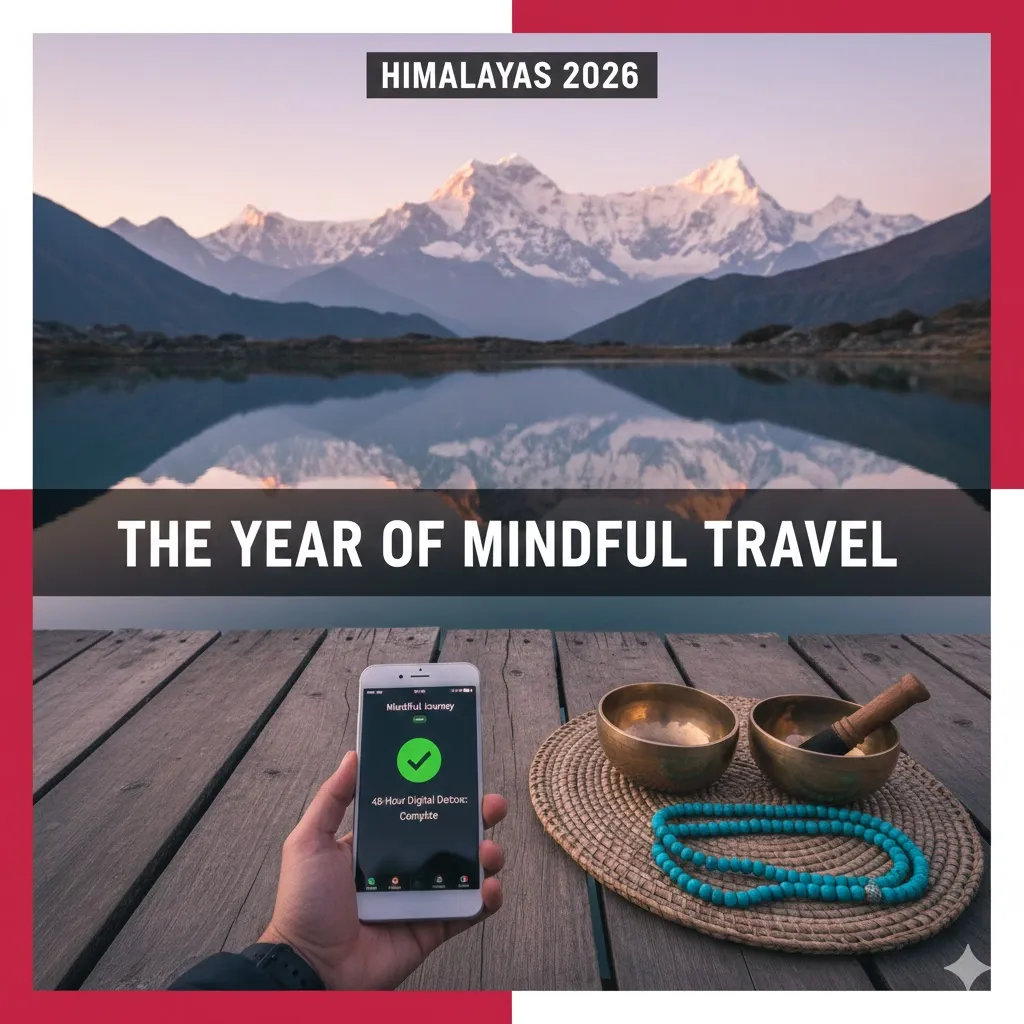
The Dawn of Conscious Exploration in the World's Highest Mountains
As we journey through 2026, a profound shift is reshaping how travelers experience the Himalayas. The era of checklist tourism—rushing from one iconic viewpoint to another, collecting Instagram photos without genuine connection, and treating ancient cultures as backdrops for personal narratives—is giving way to something deeper, more meaningful, and ultimately more transformative. This is the year of mindful travel in the Himalayas, a movement that prioritizes presence over productivity, connection over consumption, and regeneration over extraction.
The Himalayas, stretching across Nepal, Bhutan, Tibet, Northern India, and Pakistan, have long served as more than just a destination for physical adventure. These ancient mountains have been a crucible for spiritual seeking, a sanctuary for those pursuing wisdom, and a mirror reflecting humanity's relationship with nature. Yet for decades, the very qualities that made the Himalayas special—their pristine landscapes, rich cultural heritage, and spiritual significance—faced threats from unsustainable tourism practices, climate change, and the commodification of sacred traditions.
In 2026, mindful travel emerges not as a trendy buzzword but as an essential response to these challenges. It represents a fundamental reimagining of what it means to visit these sacred mountains—a commitment to traveling with intention, awareness, and respect for the places and people we encounter. This movement encompasses everything from how we choose our trekking routes and accommodations to how we engage with local communities, manage our environmental impact, and cultivate inner transformation through our journeys.
This comprehensive guide explores why 2026 has become the pivotal year for mindful travel in the Himalayas, examining the cultural, environmental, and personal factors driving this shift. We'll delve into practical strategies for practicing mindful travel, showcase destinations leading the way in sustainable tourism, and provide actionable insights for travelers ready to embrace a more conscious approach to exploring the world's highest peaks. Whether you're planning your first Himalayan adventure or seeking to deepen your existing practice, understanding the principles of mindful travel will enrich your experience and contribute to the preservation of these extraordinary mountains for generations to come.
Understanding Mindful Travel: Beyond the Buzzword

Before exploring why 2026 marks a turning point for mindful travel in the Himalayas, it's essential to understand what this concept truly encompasses and how it differs from conventional tourism.
Defining Mindful Travel
Mindful travel is an intentional approach to exploration that emphasizes:
- Presence: Being fully engaged in each moment rather than rushing to the next destination
- Awareness: Understanding the impact of your presence on local communities and ecosystems
- Connection: Building genuine relationships with people, places, and cultures
- Respect: Honoring local traditions, customs, and ways of life
- Sustainability: Minimizing environmental impact and supporting regenerative practices
- Inner transformation: Using travel as a catalyst for personal growth and self-discovery
- 👉 The Master Guide to Budget Travel in Japan: How to Feast and Explore Without Breaking the Bank
- 👉 Complete Guide to Tajikistan National Unity Day 2026
- 👉 North Korean Mass Gymnastics History and Training Guide
Unlike conventional tourism, which often prioritizes efficiency, comfort, and ticking boxes on a bucket list, mindful travel values depth over breadth, quality over quantity, and meaning over convenience. It asks travelers to slow down, observe carefully, listen deeply, and engage thoughtfully with their surroundings.
The Evolution from Sustainable to Regenerative Tourism
The mindful travel movement builds upon decades of sustainable tourism advocacy but goes further by embracing regenerative principles:
Sustainable Tourism (Past Focus):
- Minimize negative impacts
- "Do no harm" approach
- Reduce carbon footprint
- Limit waste and pollution
- Protect existing resources
- 👉 The Master Guide to Budget Travel in Japan: How to Feast and Explore Without Breaking the Bank
- 👉 Complete Guide to Tajikistan National Unity Day 2026
- 👉 North Korean Mass Gymnastics History and Training Guide
Regenerative Tourism (2026 Focus):
- Actively improve destinations
- "Leave places better than you found them" approach
- Restore ecosystems and biodiversity
- Strengthen local communities
- Enhance cultural preservation
- Create net-positive impact
- 👉 The Master Guide to Budget Travel in Japan: How to Feast and Explore Without Breaking the Bank
- 👉 Complete Guide to Tajikistan National Unity Day 2026
- 👉 North Korean Mass Gymnastics History and Training Guide
This shift from sustainability to regeneration reflects a maturing understanding that merely reducing harm is insufficient. The Himalayas face urgent challenges—from glacial melt and deforestation to cultural erosion and economic inequality—that require active restoration and positive contribution, not just damage limitation.
The Role of Mindfulness Practice
Mindful travel in the Himalayas draws deeply from Buddhist and Hindu contemplative traditions that have flourished in these mountains for millennia. Core practices include:
- Meditation: Cultivating awareness and presence through formal practice
- Mindful walking: Bringing awareness to each step on the trail
- Contemplative observation: Observing nature and culture without judgment
- Gratitude practice: Acknowledging the gifts of the journey
- Compassionate action: Acting with kindness toward all beings encountered
- 👉 The Master Guide to Budget Travel in Japan: How to Feast and Explore Without Breaking the Bank
- 👉 Complete Guide to Tajikistan National Unity Day 2026
- 👉 North Korean Mass Gymnastics History and Training Guide
These practices transform trekking from a physical challenge into a moving meditation, where each step becomes an opportunity for awareness and each interaction a chance for connection.
Why 2026: The Perfect Storm for Mindful Travel

Several converging factors make 2026 a pivotal year for the mindful travel movement in the Himalayas. Understanding these dynamics helps explain why this shift is happening now and why it matters.
Post-Pandemic Reflection and Reset
The COVID-19 pandemic (2020-2022) fundamentally altered how people think about travel:
Forced Pause and Reflection:
- Years of travel restrictions prompted deep questioning of tourism's purpose
- Travelers reconsidered what they truly value in journeys
- Awareness grew about tourism's impacts on destinations
- Appreciation increased for slower, more meaningful experiences
- 👉 The Master Guide to Budget Travel in Japan: How to Feast and Explore Without Breaking the Bank
- 👉 Complete Guide to Tajikistan National Unity Day 2026
- 👉 North Korean Mass Gymnastics History and Training Guide
Shift in Priorities:
- Health and wellness became central travel motivations
- Connection with nature gained importance
- Authentic experiences valued over luxury amenities
- Smaller groups and less crowded destinations preferred
- 👉 The Master Guide to Budget Travel in Japan: How to Feast and Explore Without Breaking the Bank
- 👉 Complete Guide to Tajikistan National Unity Day 2026
- 👉 North Korean Mass Gymnastics History and Training Guide
Rebuilding Better:
- Himalayan communities used recovery period to reimagine tourism
- New regulations and standards implemented
- Focus shifted from volume to value
- Community-based tourism models expanded
- 👉 The Master Guide to Budget Travel in Japan: How to Feast and Explore Without Breaking the Bank
- 👉 Complete Guide to Tajikistan National Unity Day 2026
- 👉 North Korean Mass Gymnastics History and Training Guide
By 2026, these post-pandemic shifts have crystallized into a coherent movement prioritizing mindful, sustainable, and regenerative travel practices.
Climate Crisis Urgency
The Himalayas face existential threats from climate change that can no longer be ignored:
Glacial Melt:
- Himalayan glaciers retreating at unprecedented rates
- Water security threatened for billions downstream
- Trekking routes becoming unstable and dangerous
- Iconic landscapes transforming before our eyes
- 👉 The Master Guide to Budget Travel in Japan: How to Feast and Explore Without Breaking the Bank
- 👉 Complete Guide to Tajikistan National Unity Day 2026
- 👉 North Korean Mass Gymnastics History and Training Guide
Extreme Weather Events:
- Increased frequency of landslides and floods
- Unpredictable weather patterns disrupting trekking seasons
- Infrastructure damage requiring costly repairs
- Safety concerns for trekkers and locals
- 👉 The Master Guide to Budget Travel in Japan: How to Feast and Explore Without Breaking the Bank
- 👉 Complete Guide to Tajikistan National Unity Day 2026
- 👉 North Korean Mass Gymnastics History and Training Guide
Biodiversity Loss:
- Endemic species facing habitat loss
- Forest ecosystems under pressure
- Agricultural patterns shifting
- Traditional livelihoods threatened
- 👉 The Master Guide to Budget Travel in Japan: How to Feast and Explore Without Breaking the Bank
- 👉 Complete Guide to Tajikistan National Unity Day 2026
- 👉 North Korean Mass Gymnastics History and Training Guide
These realities have made it impossible to continue business-as-usual tourism. Mindful travel emerges as a necessary response, emphasizing low-impact practices, carbon offsetting, and active conservation participation.
Overtourism Backlash
Popular Himalayan destinations reached breaking points in the 2010s and early 2020s:
Everest Region Challenges:
- Traffic jams on climbing routes
- Waste management crises at base camps
- Cultural dilution in Sherpa villages
- Rising costs pricing out local residents
- 👉 The Master Guide to Budget Travel in Japan: How to Feast and Explore Without Breaking the Bank
- 👉 Complete Guide to Tajikistan National Unity Day 2026
- 👉 North Korean Mass Gymnastics History and Training Guide
Annapurna Circuit Changes:
- Road construction diminishing wilderness experience
- Teahouse proliferation altering village character
- Trail erosion from heavy foot traffic
- Water source contamination
- 👉 The Master Guide to Budget Travel in Japan: How to Feast and Explore Without Breaking the Bank
- 👉 Complete Guide to Tajikistan National Unity Day 2026
- 👉 North Korean Mass Gymnastics History and Training Guide
Community Response:
- Local governments implementing visitor caps
- Permit systems restricting access
- Higher fees to manage numbers
- Promotion of alternative, less-visited routes
- 👉 The Master Guide to Budget Travel in Japan: How to Feast and Explore Without Breaking the Bank
- 👉 Complete Guide to Tajikistan National Unity Day 2026
- 👉 North Korean Mass Gymnastics History and Training Guide
By 2026, these measures have created space for a different kind of tourism—one that values quality of experience over quantity of visitors, and that respects carrying capacity limits.
Wellness Tourism Boom
The global wellness tourism industry has exploded, with the Himalayas positioned as a premier destination:
Market Growth:
- Wellness tourism valued at $700+ billion globally
- Travelers seeking mental health benefits from nature immersion
- Digital detox and mindfulness retreats in high demand
- Integration of ancient wisdom with modern wellness science
- 👉 The Master Guide to Budget Travel in Japan: How to Feast and Explore Without Breaking the Bank
- 👉 Complete Guide to Tajikistan National Unity Day 2026
- 👉 North Korean Mass Gymnastics History and Training Guide
Himalayan Advantages:
- Authentic spiritual and contemplative traditions
- Pristine natural environments for healing
- Clean air and water (in remote areas)
- Cultural emphasis on balance and harmony
- Proven benefits of high-altitude environments
- 👉 The Master Guide to Budget Travel in Japan: How to Feast and Explore Without Breaking the Bank
- 👉 Complete Guide to Tajikistan National Unity Day 2026
- 👉 North Korean Mass Gymnastics History and Training Guide
This wellness boom has created economic incentives for developing mindful travel infrastructure, from meditation centers and yoga retreats to nature therapy programs and contemplative trekking experiences.
Technology Enabling Conscious Choices
Paradoxically, technology has made mindful travel more accessible:
- Information access: Travelers can research operators' sustainability practices
- Transparency: Social media exposes greenwashing and unethical practices
- Community platforms: Networks connect conscious travelers and responsible operators
- Digital tools: Apps track carbon footprint, suggest eco-friendly options
- Virtual preparation: Online courses teach mindful travel practices before departure
- 👉 The Master Guide to Budget Travel in Japan: How to Feast and Explore Without Breaking the Bank
- 👉 Complete Guide to Tajikistan National Unity Day 2026
- 👉 North Korean Mass Gymnastics History and Training Guide
By 2026, these technological resources have empowered travelers to make more informed, intentional choices about how they explore the Himalayas.
Core Principles of Mindful Himalayan Travel

Practicing mindful travel in the Himalayas requires understanding and embodying specific principles that guide decision-making and behavior throughout your journey.
1. Slow Down and Immerse
The Practice:
- Spend more time in fewer places
- Walk instead of driving when possible
- Allow for unstructured time and spontaneity
- Resist the urge to maximize sightseeing
- 👉 The Master Guide to Budget Travel in Japan: How to Feast and Explore Without Breaking the Bank
- 👉 Complete Guide to Tajikistan National Unity Day 2026
- 👉 North Korean Mass Gymnastics History and Training Guide
Why It Matters:
- Reduces carbon footprint from transportation
- Deeper cultural understanding develops over time
- Less physical and mental stress
- More meaningful connections with locals
- Better acclimatization to altitude
- 👉 The Master Guide to Budget Travel in Japan: How to Feast and Explore Without Breaking the Bank
- 👉 Complete Guide to Tajikistan National Unity Day 2026
- 👉 North Korean Mass Gymnastics History and Training Guide
Practical Application:
- Choose 7-10 day treks over rushed 5-day itineraries
- Stay 3-4 nights in villages instead of 1-night stops
- Build in rest days for exploration and reflection
- Walk the Annapurna Circuit instead of driving sections
- 👉 The Master Guide to Budget Travel in Japan: How to Feast and Explore Without Breaking the Bank
- 👉 Complete Guide to Tajikistan National Unity Day 2026
- 👉 North Korean Mass Gymnastics History and Training Guide
2. Travel with Intention
The Practice:
- Clarify your purpose for traveling before departure
- Set intentions for what you hope to learn and experience
- Align activities with your values and goals
- Regularly check in with your motivations
- 👉 The Master Guide to Budget Travel in Japan: How to Feast and Explore Without Breaking the Bank
- 👉 Complete Guide to Tajikistan National Unity Day 2026
- 👉 North Korean Mass Gymnastics History and Training Guide
Why It Matters:
- Prevents mindless consumption of experiences
- Creates more meaningful, memorable journeys
- Reduces environmental impact through selective choices
- Enhances personal transformation
- 👉 The Master Guide to Budget Travel in Japan: How to Feast and Explore Without Breaking the Bank
- 👉 Complete Guide to Tajikistan National Unity Day 2026
- 👉 North Korean Mass Gymnastics History and Training Guide
Practical Application:
- Journal about your travel intentions before departing
- Choose operators whose values align with yours
- Select activities that serve your intentions (meditation retreat vs. party hostel)
- Decline experiences that don't serve your purpose
- 👉 The Master Guide to Budget Travel in Japan: How to Feast and Explore Without Breaking the Bank
- 👉 Complete Guide to Tajikistan National Unity Day 2026
- 👉 North Korean Mass Gymnastics History and Training Guide
3. Engage with Cultural Humility
The Practice:
- Approach local cultures as a learner, not an expert
- Respect traditions even when they differ from your values
- Ask permission before photographing people or sacred sites
- Learn basic phrases in local languages
- Understand your position as a guest
- 👉 The Master Guide to Budget Travel in Japan: How to Feast and Explore Without Breaking the Bank
- 👉 Complete Guide to Tajikistan National Unity Day 2026
- 👉 North Korean Mass Gymnastics History and Training Guide
Why It Matters:
- Prevents cultural appropriation and disrespect
- Builds genuine cross-cultural connections
- Supports cultural preservation
- Creates more authentic experiences
- 👉 The Master Guide to Budget Travel in Japan: How to Feast and Explore Without Breaking the Bank
- 👉 Complete Guide to Tajikistan National Unity Day 2026
- 👉 North Korean Mass Gymnastics History and Training Guide
Practical Application:
- Learn about local customs and etiquette before arriving
- Dress modestly according to local norms
- Remove shoes when entering temples and homes
- Ask before photographing people, especially in rural areas
- Support traditional artisans by purchasing authentic crafts
- 👉 The Master Guide to Budget Travel in Japan: How to Feast and Explore Without Breaking the Bank
- 👉 Complete Guide to Tajikistan National Unity Day 2026
- 👉 North Korean Mass Gymnastics History and Training Guide
4. Minimize Environmental Impact
The Practice:
- Follow Leave No Trace principles rigorously
- Use reusable water bottles and containers
- Avoid single-use plastics entirely
- Choose eco-friendly accommodations
- Offset carbon emissions from flights
- 👉 The Master Guide to Budget Travel in Japan: How to Feast and Explore Without Breaking the Bank
- 👉 Complete Guide to Tajikistan National Unity Day 2026
- 👉 North Korean Mass Gymnastics History and Training Guide
Why It Matters:
- Himalayan ecosystems are fragile and slow to recover
- Waste management infrastructure is limited
- Water sources serve both trekkers and local communities
- Climate change threatens the very landscapes we visit
- 👉 The Master Guide to Budget Travel in Japan: How to Feast and Explore Without Breaking the Bank
- 👉 Complete Guide to Tajikistan National Unity Day 2026
- 👉 North Korean Mass Gymnastics History and Training Guide
Practical Application:
- Carry water purification tablets or filters
- Bring biodegradable soap and toiletries
- Pack out all trash, even biodegradable items
- Use toilets when available; otherwise follow proper waste disposal
- Choose lodges with solar power and waste management systems
- 👉 The Master Guide to Budget Travel in Japan: How to Feast and Explore Without Breaking the Bank
- 👉 Complete Guide to Tajikistan National Unity Day 2026
- 👉 North Korean Mass Gymnastics History and Training Guide
5. Support Local Economies Directly
The Practice:
- Stay in locally-owned accommodations
- Eat at local restaurants and teahouses
- Hire local guides and porters
- Purchase goods from local artisans
- Use local transportation when feasible
- 👉 The Master Guide to Budget Travel in Japan: How to Feast and Explore Without Breaking the Bank
- 👉 Complete Guide to Tajikistan National Unity Day 2026
- 👉 North Korean Mass Gymnastics History and Training Guide
Why It Matters:
- Keeps tourism revenue in communities
- Creates sustainable livelihoods
- Reduces economic leakage to foreign companies
- Empowers local decision-making about tourism
- 👉 The Master Guide to Budget Travel in Japan: How to Feast and Explore Without Breaking the Bank
- 👉 Complete Guide to Tajikistan National Unity Day 2026
- 👉 North Korean Mass Gymnastics History and Training Guide
Practical Application:
- Book directly with family-run lodges instead of international chains
- Hire guides through local cooperatives
- Eat dal bhat at teahouses rather than imported foods
- Purchase handmade crafts directly from artisans
- Tip guides and porters fairly (15-20% of tour cost)
- 👉 The Master Guide to Budget Travel in Japan: How to Feast and Explore Without Breaking the Bank
- 👉 Complete Guide to Tajikistan National Unity Day 2026
- 👉 North Korean Mass Gymnastics History and Training Guide
6. Cultivate Inner Awareness
The Practice:
- Incorporate daily meditation or reflection
- Practice mindful walking on the trail
- Journal about your experiences and insights
- Observe thoughts and emotions without judgment
- Embrace discomfort as a teacher
- 👉 The Master Guide to Budget Travel in Japan: How to Feast and Explore Without Breaking the Bank
- 👉 Complete Guide to Tajikistan National Unity Day 2026
- 👉 North Korean Mass Gymnastics History and Training Guide
Why It Matters:
- Transforms physical journey into spiritual practice
- Deepens connection with place and people
- Builds resilience and adaptability
- Creates lasting personal transformation
- 👉 The Master Guide to Budget Travel in Japan: How to Feast and Explore Without Breaking the Bank
- 👉 Complete Guide to Tajikistan National Unity Day 2026
- 👉 North Korean Mass Gymnastics History and Training Guide
Practical Application:
- Meditate for 10-20 minutes each morning
- Walk in silence for portions of each day
- Write in a journal each evening
- Practice gratitude for challenges as well as blessings
- Attend teachings at monasteries when available
- 👉 The Master Guide to Budget Travel in Japan: How to Feast and Explore Without Breaking the Bank
- 👉 Complete Guide to Tajikistan National Unity Day 2026
- 👉 North Korean Mass Gymnastics History and Training Guide
Mindful Travel Destinations Leading the Way in 2026

Certain Himalayan destinations have emerged as pioneers in mindful and regenerative tourism, offering models for sustainable travel that others are beginning to follow.
Bhutan: The Gold Standard
Bhutan's "High Value, Low Volume" tourism policy has made it the global leader in mindful travel:
Key Features:
- Sustainable Development Fee: $100-200 USD per day funds free healthcare and education
- Carbon negative: Only country in the world absorbing more CO2 than it produces
- Cultural preservation: Strict building codes maintain traditional architecture
- Controlled access: Visitor numbers managed to prevent overtourism
- Gross National Happiness: Policy framework prioritizing wellbeing over GDP
- 👉 The Master Guide to Budget Travel in Japan: How to Feast and Explore Without Breaking the Bank
- 👉 Complete Guide to Tajikistan National Unity Day 2026
- 👉 North Korean Mass Gymnastics History and Training Guide
Mindful Travel Opportunities:
- Multi-day meditation retreats at ancient monasteries
- Community-based homestays in rural villages
- Guided nature walks with Buddhist monks
- Traditional arts and crafts workshops
- Organic farm-to-table dining experiences
- 👉 The Master Guide to Budget Travel in Japan: How to Feast and Explore Without Breaking the Bank
- 👉 Complete Guide to Tajikistan National Unity Day 2026
- 👉 North Korean Mass Gymnastics History and Training Guide
Why It Works: Bhutan demonstrates that tourism can be a force for good when carefully managed, with revenue directly supporting community wellbeing and environmental conservation.
Upper Mustang, Nepal: Controlled Access Model
This restricted region of Nepal offers lessons in balancing access with preservation:
Key Features:
- Permit requirements: $500 USD for 10 days limits visitor numbers
- Mandatory guides: Ensures cultural sensitivity and safety
- Preserved culture: Tibetan Buddhist traditions remain vibrant
- Fragile ecosystem: Desert landscape requires careful stewardship
- 👉 The Master Guide to Budget Travel in Japan: How to Feast and Explore Without Breaking the Bank
- 👉 Complete Guide to Tajikistan National Unity Day 2026
- 👉 North Korean Mass Gymnastics History and Training Guide
Mindful Travel Opportunities:
- Ancient cave monastery visits with local guides
- Traditional Tiji Festival participation (with respect)
- Organic apple orchard tours and tastings
- Homestays with Tibetan families
- High-altitude desert trekking with minimal impact
- 👉 The Master Guide to Budget Travel in Japan: How to Feast and Explore Without Breaking the Bank
- 👉 Complete Guide to Tajikistan National Unity Day 2026
- 👉 North Korean Mass Gymnastics History and Training Guide
Why It Works: High permit fees fund conservation while limiting numbers, and mandatory guides ensure cultural respect and economic benefits flow to locals.
Ladakh, India: Community-Led Tourism
This high-altitude desert region has pioneered community-based tourism models:
Key Features:
- Homestay networks: Families host travelers in traditional homes
- Women's cooperatives: Female-led tourism enterprises
- Water conservation: Innovative solutions for arid environment
- Cultural festivals: Authentic celebrations open to respectful visitors
- 👉 The Master Guide to Budget Travel in Japan: How to Feast and Explore Without Breaking the Bank
- 👉 Complete Guide to Tajikistan National Unity Day 2026
- 👉 North Korean Mass Gymnastics History and Training Guide
Mindful Travel Opportunities:
- Markha Valley trek with village homestays
- Buddhist monastery stays and meditation programs
- Organic farming experiences with local families
- Traditional textile weaving workshops
- Solstice and harvest festival participation
- 👉 The Master Guide to Budget Travel in Japan: How to Feast and Explore Without Breaking the Bank
- 👉 Complete Guide to Tajikistan National Unity Day 2026
- 👉 North Korean Mass Gymnastics History and Training Guide
Why It Works: Community ownership ensures tourism serves local needs, and homestay models provide authentic cultural exchange while distributing economic benefits widely.
Sikkim, India: Organic and Sustainable
India's first fully organic state demonstrates environmental leadership:
Key Features:
- 100% organic agriculture: No chemical pesticides or fertilizers
- Plastic ban: Strict enforcement of single-use plastic prohibition
- Community conservation: Local management of forests and water
- Eco-tourism certification: Standards for sustainable operators
- 👉 The Master Guide to Budget Travel in Japan: How to Feast and Explore Without Breaking the Bank
- 👉 Complete Guide to Tajikistan National Unity Day 2026
- 👉 North Korean Mass Gymnastics History and Training Guide
Mindful Travel Opportunities:
- Organic farm stays and farm-to-table dining
- Khangchendzonga National Park treks with local guides
- Buddhist circuit tours of monasteries
- Traditional healing practices and wellness retreats
- Community-led ecotourism initiatives
- 👉 The Master Guide to Budget Travel in Japan: How to Feast and Explore Without Breaking the Bank
- 👉 Complete Guide to Tajikistan National Unity Day 2026
- 👉 North Korean Mass Gymnastics History and Training Guide
Why It Works: Integration of environmental policy with tourism development creates coherent framework for sustainable travel.
Practical Guide: Planning Your Mindful Himalayan Journey

Ready to embrace mindful travel in the Himalayas? Here's your comprehensive planning guide for 2026.
Before You Go: Preparation and Intention-Setting
Research Thoroughly:
- Study local customs, traditions, and etiquette
- Learn about environmental challenges facing your destination
- Research operators' sustainability credentials
- Understand permit requirements and restrictions
- Read accounts from local residents about tourism impacts
- 👉 The Master Guide to Budget Travel in Japan: How to Feast and Explore Without Breaking the Bank
- 👉 Complete Guide to Tajikistan National Unity Day 2026
- 👉 North Korean Mass Gymnastics History and Training Guide
Choose Responsible Operators:
- Look for certifications (Travelife, GSTC, local eco-labels)
- Verify they employ local guides and staff
- Check their environmental and social policies
- Read reviews from conscious travelers
- Ask direct questions about sustainability practices
- 👉 The Master Guide to Budget Travel in Japan: How to Feast and Explore Without Breaking the Bank
- 👉 Complete Guide to Tajikistan National Unity Day 2026
- 👉 North Korean Mass Gymnastics History and Training Guide
Set Clear Intentions:
- Journal about why you want to visit the Himalayas
- Identify what you hope to learn and experience
- Consider how you want to grow from this journey
- Reflect on how you can contribute positively
- Write down your travel intentions and review regularly
- 👉 The Master Guide to Budget Travel in Japan: How to Feast and Explore Without Breaking the Bank
- 👉 Complete Guide to Tajikistan National Unity Day 2026
- 👉 North Korean Mass Gymnastics History and Training Guide
Pack Mindfully:
- Bring reusable water bottle, utensils, and containers
- Pack biodegradable toiletries and sunscreen
- Choose quality gear that will last (buy less, buy better)
- Include items you can leave behind for hosts (useful supplies)
- Minimize packaging and single-use items
- 👉 The Master Guide to Budget Travel in Japan: How to Feast and Explore Without Breaking the Bank
- 👉 Complete Guide to Tajikistan National Unity Day 2026
- 👉 North Korean Mass Gymnastics History and Training Guide
On the Ground: Daily Mindful Practices
Morning Routine:
- Meditate or practice mindful breathing (10-20 minutes)
- Set intentions for the day ahead
- Express gratitude for the opportunity to travel
- Review your impact goals (leave no trace, support locals, etc.)
- 👉 The Master Guide to Budget Travel in Japan: How to Feast and Explore Without Breaking the Bank
- 👉 Complete Guide to Tajikistan National Unity Day 2026
- 👉 North Korean Mass Gymnastics History and Training Guide
On the Trail:
- Walk mindfully, noticing each step
- Observe nature without disturbing it
- Greet locals with respect and genuine interest
- Stay on designated trails to prevent erosion
- Take breaks to appreciate your surroundings
- 👉 The Master Guide to Budget Travel in Japan: How to Feast and Explore Without Breaking the Bank
- 👉 Complete Guide to Tajikistan National Unity Day 2026
- 👉 North Korean Mass Gymnastics History and Training Guide
At Accommodations:
- Conserve water and energy
- Reuse towels and linens
- Engage with hosts and staff as people, not service providers
- Learn about their lives, challenges, and aspirations
- Leave your room cleaner than you found it
- 👉 The Master Guide to Budget Travel in Japan: How to Feast and Explore Without Breaking the Bank
- 👉 Complete Guide to Tajikistan National Unity Day 2026
- 👉 North Korean Mass Gymnastics History and Training Guide
Evening Reflection:
- Journal about the day's experiences and insights
- Reflect on interactions with local people
- Consider your environmental impact
- Acknowledge challenges and how you responded
- Practice gratitude for the day's gifts
- 👉 The Master Guide to Budget Travel in Japan: How to Feast and Explore Without Breaking the Bank
- 👉 Complete Guide to Tajikistan National Unity Day 2026
- 👉 North Korean Mass Gymnastics History and Training Guide
Cultural Engagement: Best Practices
At Religious Sites:
- Remove shoes and hats when required
- Dress modestly (cover shoulders and knees)
- Walk clockwise around stupas and mani walls
- Ask permission before photographing
- Observe silence or speak softly
- Make small donations if appropriate
- 👉 The Master Guide to Budget Travel in Japan: How to Feast and Explore Without Breaking the Bank
- 👉 Complete Guide to Tajikistan National Unity Day 2026
- 👉 North Korean Mass Gymnastics History and Training Guide
With Local People:
- Learn basic greetings in local language
- Ask before photographing people
- Respect privacy and personal space
- Listen more than you speak
- Avoid imposing your values or judgments
- Accept hospitality graciously when offered
- 👉 The Master Guide to Budget Travel in Japan: How to Feast and Explore Without Breaking the Bank
- 👉 Complete Guide to Tajikistan National Unity Day 2026
- 👉 North Korean Mass Gymnastics History and Training Guide
Supporting Local Economy:
- Buy from local markets and artisans
- Eat at local restaurants and teahouses
- Hire local guides and porters
- Stay in locally-owned accommodations
- Tip fairly for services received
- Avoid haggling over small amounts
- 👉 The Master Guide to Budget Travel in Japan: How to Feast and Explore Without Breaking the Bank
- 👉 Complete Guide to Tajikistan National Unity Day 2026
- 👉 North Korean Mass Gymnastics History and Training Guide
Environmental Stewardship: Action Steps
Waste Management:
- Pack out all trash, including biodegradable items
- Use refillable water bottles with purification
- Avoid products with excessive packaging
- Compost food waste when facilities available
- Properly dispose of human waste (use toilets or dig catholes)
- 👉 The Master Guide to Budget Travel in Japan: How to Feast and Explore Without Breaking the Bank
- 👉 Complete Guide to Tajikistan National Unity Day 2026
- 👉 North Korean Mass Gymnastics History and Training Guide
Resource Conservation:
- Take short showers (2-3 minutes max)
- Turn off lights and heaters when leaving rooms
- Use solar charging when available
- Minimize use of hot water
- Respect water scarcity in high-altitude areas
- 👉 The Master Guide to Budget Travel in Japan: How to Feast and Explore Without Breaking the Bank
- 👉 Complete Guide to Tajikistan National Unity Day 2026
- 👉 North Korean Mass Gymnastics History and Training Guide
Wildlife Protection:
- Observe animals from a distance
- Never feed wildlife
- Don't purchase products made from endangered species
- Stay on trails to avoid disturbing habitat
- Keep noise levels low in natural areas
- 👉 The Master Guide to Budget Travel in Japan: How to Feast and Explore Without Breaking the Bank
- 👉 Complete Guide to Tajikistan National Unity Day 2026
- 👉 North Korean Mass Gymnastics History and Training Guide
Carbon Offsetting and Climate Action
Calculate Your Footprint:
- Use online calculators to estimate trip emissions
- Include flights, ground transport, and accommodations
- Understand that Himalayan travel has significant footprint
- 👉 The Master Guide to Budget Travel in Japan: How to Feast and Explore Without Breaking the Bank
- 👉 Complete Guide to Tajikistan National Unity Day 2026
- 👉 North Korean Mass Gymnastics History and Training Guide
Offset Responsibly:
- Invest in verified carbon offset projects
- Prioritize local Himalayan conservation projects
- Support reforestation and renewable energy initiatives
- Consider offsets as minimum, not maximum action
- 👉 The Master Guide to Budget Travel in Japan: How to Feast and Explore Without Breaking the Bank
- 👉 Complete Guide to Tajikistan National Unity Day 2026
- 👉 North Korean Mass Gymnastics History and Training Guide
Go Beyond Offsetting:
- Contribute to local conservation organizations
- Participate in trail maintenance or cleanup projects
- Support climate adaptation initiatives in mountain communities
- Advocate for climate action when you return home
- 👉 The Master Guide to Budget Travel in Japan: How to Feast and Explore Without Breaking the Bank
- 👉 Complete Guide to Tajikistan National Unity Day 2026
- 👉 North Korean Mass Gymnastics History and Training Guide
The Transformative Power of Mindful Himalayan Travel

When practiced authentically, mindful travel in the Himalayas offers profound benefits that extend far beyond the duration of your trip.
Personal Transformation
Inner Growth:
- Develops patience and resilience through physical challenges
- Cultivates gratitude through simplicity and hardship
- Deepens self-awareness through solitude and reflection
- Builds confidence through navigating unfamiliar situations
- Fosters humility in the face of nature's grandeur
- 👉 The Master Guide to Budget Travel in Japan: How to Feast and Explore Without Breaking the Bank
- 👉 Complete Guide to Tajikistan National Unity Day 2026
- 👉 North Korean Mass Gymnastics History and Training Guide
Perspective Shifts:
- Recognizes interconnectedness of all life
- Questions consumerist values and lifestyle assumptions
- Appreciates sufficiency over excess
- Values relationships over possessions
- Understands privilege and global inequality
- 👉 The Master Guide to Budget Travel in Japan: How to Feast and Explore Without Breaking the Bank
- 👉 Complete Guide to Tajikistan National Unity Day 2026
- 👉 North Korean Mass Gymnastics History and Training Guide
Community Impact
Economic Benefits:
- Direct income to local families and businesses
- Job creation in remote areas with limited opportunities
- Preservation of traditional livelihoods
- Investment in community infrastructure
- 👉 The Master Guide to Budget Travel in Japan: How to Feast and Explore Without Breaking the Bank
- 👉 Complete Guide to Tajikistan National Unity Day 2026
- 👉 North Korean Mass Gymnastics History and Training Guide
Cultural Preservation:
- Economic incentive to maintain traditional practices
- Pride in cultural heritage and identity
- Intergenerational transmission of knowledge
- Documentation and revitalization of endangered traditions
- 👉 The Master Guide to Budget Travel in Japan: How to Feast and Explore Without Breaking the Bank
- 👉 Complete Guide to Tajikistan National Unity Day 2026
- 👉 North Korean Mass Gymnastics History and Training Guide
Environmental Conservation
Protection Through Value:
- Natural landscapes become economically valuable to preserve
- Local communities become conservation stewards
- Tourism revenue funds protected area management
- Wildlife protection becomes economically viable
- 👉 The Master Guide to Budget Travel in Japan: How to Feast and Explore Without Breaking the Bank
- 👉 Complete Guide to Tajikistan National Unity Day 2026
- 👉 North Korean Mass Gymnastics History and Training Guide
Regenerative Practices:
- Reforestation projects supported by tourism
- Renewable energy infrastructure development
- Waste management systems improvement
- Water conservation initiatives
- 👉 The Master Guide to Budget Travel in Japan: How to Feast and Explore Without Breaking the Bank
- 👉 Complete Guide to Tajikistan National Unity Day 2026
- 👉 North Korean Mass Gymnastics History and Training Guide
Challenges and Criticisms: Honest Conversations

The mindful travel movement isn't without its challenges and contradictions. Addressing these honestly is essential for authentic progress.
The Privilege Problem
The Reality:
- Mindful travel often requires more time and money
- International flights have significant carbon footprint
- Not everyone has access to "slow travel" options
- Risk of becoming elitist or exclusive
- 👉 The Master Guide to Budget Travel in Japan: How to Feast and Explore Without Breaking the Bank
- 👉 Complete Guide to Tajikistan National Unity Day 2026
- 👉 North Korean Mass Gymnastics History and Training Guide
Addressing It:
- Acknowledge your privilege openly
- Use your resources to support local communities
- Advocate for accessible sustainable tourism
- Share knowledge and resources with others
- Consider overland travel when possible
- 👉 The Master Guide to Budget Travel in Japan: How to Feast and Explore Without Breaking the Bank
- 👉 Complete Guide to Tajikistan National Unity Day 2026
- 👉 North Korean Mass Gymnastics History and Training Guide
Greenwashing Concerns
The Problem:
- Many operators claim sustainability without substance
- "Eco-lodge" may just be marketing language
- Certifications vary in rigor and credibility
- Difficult for travelers to verify claims
- 👉 The Master Guide to Budget Travel in Japan: How to Feast and Explore Without Breaking the Bank
- 👉 Complete Guide to Tajikistan National Unity Day 2026
- 👉 North Korean Mass Gymnastics History and Training Guide
Solutions:
- Research thoroughly before booking
- Ask specific questions about practices
- Look for third-party certifications
- Read reviews from conscious travelers
- Support transparent, accountable operators
- 👉 The Master Guide to Budget Travel in Japan: How to Feast and Explore Without Breaking the Bank
- 👉 Complete Guide to Tajikistan National Unity Day 2026
- 👉 North Korean Mass Gymnastics History and Training Guide
Cultural Commodification
The Risk:
- Sacred traditions become tourist performances
- Authentic practices modified for visitor expectations
- Cultural elements sold as souvenirs
- Loss of meaning and spiritual significance
- 👉 The Master Guide to Budget Travel in Japan: How to Feast and Explore Without Breaking the Bank
- 👉 Complete Guide to Tajikistan National Unity Day 2026
- 👉 North Korean Mass Gymnastics History and Training Guide
Respectful Engagement:
- Approach culture as a learner, not consumer
- Support authentic cultural experiences led by community members
- Respect boundaries around sacred practices
- Compensate fairly for cultural sharing
- Avoid treating people as photo opportunities
- 👉 The Master Guide to Budget Travel in Japan: How to Feast and Explore Without Breaking the Bank
- 👉 Complete Guide to Tajikistan National Unity Day 2026
- 👉 North Korean Mass Gymnastics History and Training Guide
Looking Forward: The Future of Mindful Himalayan Travel

As we move through 2026 and beyond, the mindful travel movement in the Himalayas continues to evolve. Several trends and developments are shaping its future.
Emerging Trends
Technology Integration:
- Apps for tracking environmental impact
- Virtual reality for pre-trip cultural education
- Blockchain for transparent supply chains
- Digital platforms connecting conscious travelers with local communities
- 👉 The Master Guide to Budget Travel in Japan: How to Feast and Explore Without Breaking the Bank
- 👉 Complete Guide to Tajikistan National Unity Day 2026
- 👉 North Korean Mass Gymnastics History and Training Guide
Regenerative Tourism Standards:
- New certification systems for regenerative practices
- Measurement of net-positive impact
- Requirements for community benefit sharing
- Environmental restoration commitments
- 👉 The Master Guide to Budget Travel in Japan: How to Feast and Explore Without Breaking the Bank
- 👉 Complete Guide to Tajikistan National Unity Day 2026
- 👉 North Korean Mass Gymnastics History and Training Guide
Climate Adaptation:
- Shift in trekking seasons due to climate change
- Development of alternative routes as glaciers retreat
- Investment in climate-resilient infrastructure
- Focus on low-carbon transportation options
- 👉 The Master Guide to Budget Travel in Japan: How to Feast and Explore Without Breaking the Bank
- 👉 Complete Guide to Tajikistan National Unity Day 2026
- 👉 North Korean Mass Gymnastics History and Training Guide
Your Role in the Movement
As a mindful traveler, you have the power to:
- Vote with your wallet: Support operators and destinations committed to sustainability
- Share knowledge: Educate fellow travelers about mindful practices
- Advocate for change: Push for better policies and practices
- Lead by example: Demonstrate that mindful travel is possible and rewarding
- Continue learning: Stay informed about best practices and emerging challenges
- Give back: Contribute time, skills, or resources to Himalayan communities
- 👉 The Master Guide to Budget Travel in Japan: How to Feast and Explore Without Breaking the Bank
- 👉 Complete Guide to Tajikistan National Unity Day 2026
- 👉 North Korean Mass Gymnastics History and Training Guide
Conclusion: The Journey Within and Without

2026 marks a pivotal moment in the evolution of Himalayan travel. The mindful travel movement represents more than a trend—it's a necessary response to the urgent challenges facing these sacred mountains and the communities who call them home. It's an acknowledgment that how we travel matters as much as where we go, and that our journeys can be forces for healing rather than harm.
The Himalayas have always been more than just a destination. They are a teacher, offering lessons in humility, resilience, interconnectedness, and the impermanence of all things. When we approach these mountains with mindfulness, respect, and intention, they reveal their deepest wisdom—not just about the external world of peaks and valleys, but about the internal landscape of our own hearts and minds.
Mindful travel in the Himalayas isn't about perfection. It's about intention, awareness, and continuous improvement. It's about making better choices when we can, acknowledging our mistakes when we do harm, and committing to do better next time. It's about recognizing that every interaction, every purchase, every step on the trail is an opportunity to practice the values we claim to hold.
As you plan your own Himalayan journey in 2026 and beyond, remember that the most important destination isn't a mountain peak or a monastery—it's the person you become through the journey. The mountains will remain, with or without us. But how we choose to engage with them, honor them, and learn from them will determine whether future generations can experience the same wonder, wisdom, and transformation that these sacred peaks have offered for millennia.
Travel mindfully. Travel with heart. And may your journey in the Himalayas transform not just your perspective, but the world you leave behind.
0 Comments