.webp)
.webp)
Hidden Gems of Childukhtaron Valley and Valley of Forty Girls Exploration
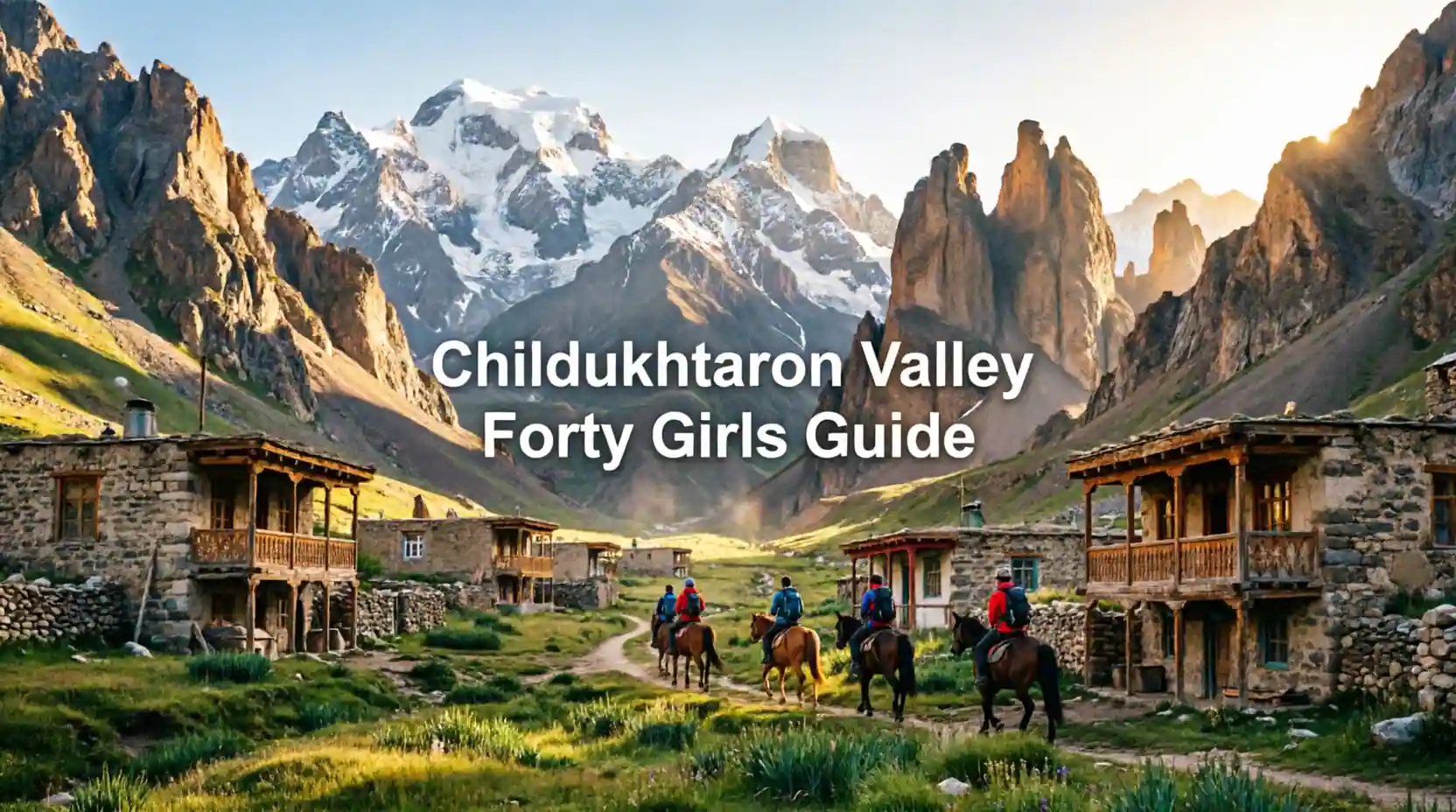
Introduction to Childukhtaron Valley
Childukhtaron Valley known as the Valley of Forty Girls remains one of Tajikistan's most enchanting hidden treasures.
This remote valley in the Pamir Mountains combines dramatic landscapes with ancient legends and cultural heritage.
The name Childukhtaron translates to Forty Girls referencing local folklore about brave maidens who defended the valley.
Visitors to this valley experience pristine nature, traditional Pamiri culture, and remarkable geological formations.
This comprehensive guide reveals the secrets and practical information for exploring this remarkable Tajik destination.
Location and Geography of Childukhtaron

Childukhtaron Valley lies in the Gorno-Badakhshan Autonomous Region of eastern Tajikistan within the Pamir Mountains.
The valley sits at elevations ranging from 2800 to 3500 meters above sea level in rugged highland terrain.
Access requires traveling through remote mountain roads with spectacular scenery and challenging conditions.
The valley features dramatic rock formations, alpine meadows, and traditional Pamiri settlements.
Understanding the geography helps travelers prepare for the physical demands and altitude considerations.
How to Reach Childukhtaron Valley
Journey begins from Khorog the capital of Gorno-Badakhshan region requiring four to six hours of travel.
Route follows the Pamir Highway initially then branches into smaller mountain roads toward the valley.
Private vehicle with experienced driver essential as public transportation to Childukhtaron extremely limited.
Road conditions vary seasonally with summer offering best access and winter often impassable.
Arrange transportation through Khorog tour operators or guesthouses familiar with valley access routes.
Best Time to Visit Childukhtaron
Summer months June through September provide optimal weather and accessible road conditions for valley visits.
July and August offer warmest temperatures though afternoon thunderstorms common in high mountains.
Early autumn September provides stable weather with fewer crowds and beautiful autumn colors.
Winter months October through May often inaccessible due to snow blocking mountain roads.
Spring melt can create challenging river crossings requiring local knowledge and caution.
The Legend of Forty Girls

The name Childukhtaron derives from Tajik words meaning Forty Girls rooted in local folklore and history.
Legend tells of forty young women who defended their village against invaders choosing death over capture.
According to oral tradition these brave maidens leaped from cliffs rather than surrender to enemies.
The rock formations in the valley supposedly represent the forty girls transformed into stone monuments.
This legend reflects Pamiri values of honor, courage, and resistance against oppression.
Cultural Significance of the Legend
The Forty Girls story passed down through generations preserving Pamiri cultural identity and values.
Local communities maintain shrines and memorial sites honoring the legendary maidens.
The legend serves as symbol of female strength and resistance in Pamiri culture.
Annual commemorations sometimes held at valley sites though practices vary by community.
Understanding the legend enhances appreciation for the valley's spiritual and cultural importance.
Historical Context and Interpretations
Historical basis for the legend may relate to actual conflicts in Pamir region centuries ago.
Some scholars connect the story to Mongol invasions or other historical incursions into Pamir.
Multiple versions of the legend exist with variations in details though core narrative consistent.
The forty girls motif appears in other Central Asian folklore suggesting shared cultural heritage.
Local elders serve as keepers of the legend sharing stories with visitors who show respect.
Natural Features and Landscapes

Childukhtaron Valley showcases spectacular Pamir Mountain scenery with diverse geological features.
High altitude environment creates unique ecosystems and dramatic landscape formations throughout the valley.
Seasonal changes dramatically alter the valley's appearance from lush green summers to stark winter landscapes.
Understanding natural features helps visitors appreciate the valley's ecological and aesthetic significance.
These landscapes provide exceptional opportunities for photography, hiking, and nature observation.
Rock Formations and Geological Features
Dramatic rock pillars and formations dominate the valley creating distinctive skyline visible from distances.
Geological processes over millions of years shaped the distinctive Childukhtaron rock structures.
Erosion patterns created natural arches, columns, and balanced rocks throughout the valley.
Rock colors range from reddish-brown to gray creating striking contrasts against blue skies.
Geological significance attracts researchers though formations primarily valued for scenic beauty.
Alpine Meadows and Flora
High altitude meadows bloom with wildflowers during brief summer season from June to August.
Alpine flora includes edelweiss, gentian, and various endemic Pamir plant species.
Medicinal herbs traditionally gathered by local communities though sustainable harvesting essential.
Juniper trees dot the landscape providing shade and traditional resources for Pamiri people.
Meadow ecosystems support diverse wildlife including marmots, ibex, and various bird species.
Cultural Heritage and Pamiri Traditions

Childukhtaron Valley inhabited by Pamiri communities maintaining distinct cultural traditions and Ismaili faith.
Traditional architecture features stone houses with wooden elements adapted to harsh mountain climate.
Local communities practice subsistence agriculture and animal husbandry following centuries-old methods.
Cultural preservation efforts balance modernization with maintaining traditional Pamiri way of life.
Visitors welcomed with traditional hospitality though respectful behavior essential in conservative communities.
Traditional Pamiri Architecture
Stone and wood construction characterizes traditional Pamiri houses in Childukhtaron Valley settlements.
Five-pillar design common in Pamiri architecture representing cosmological and spiritual significance.
Flat roofs serve multiple purposes including drying crops and outdoor living space during summer.
Decorative wooden elements feature geometric patterns reflecting Ismaili artistic traditions.
Traditional building techniques passed through generations though modern materials increasingly used.
Local Communities and Lifestyle
Valley communities small and scattered with populations ranging from fifty to two hundred people.
Agricultural cycles dictate daily life with planting, harvesting, and animal care as primary activities.
Ismaili Muslim faith influences community values emphasizing education, tolerance, and social responsibility.
Traditional crafts including weaving, woodworking, and jewelry making practiced though declining.
Community decision-making follows traditional consultative processes respecting elders and local leaders.
Trekking and Hiking Opportunities

Childukhtaron Valley offers exceptional trekking opportunities through pristine Pamir Mountain terrain.
Routes vary from easy valley walks to challenging high-altitude mountain passes requiring experience.
Local guides essential for navigation, safety, and cultural interpretation in remote areas.
Trekking season limited to summer months when snow melts and mountain passes become accessible.
Proper preparation and equipment essential for high-altitude trekking in challenging mountain environment.
Popular Trekking Routes
Valley floor trek follows traditional paths connecting settlements with moderate difficulty and stunning views.
Forty Girls rock formation viewpoint requires steep climb though rewards with panoramic valley vistas.
High mountain passes connect Childukhtaron to neighboring valleys requiring multi-day expeditions.
Alpine meadow circuits showcase wildflower diversity and wildlife viewing opportunities.
Multi-day treks possible combining Childukhtaron with other Pamir valleys though logistics complex.
Guided Versus Independent Trekking
Local guides provide invaluable knowledge of routes, weather patterns, and cultural protocols.
Independent trekking possible though requires extensive preparation, navigation skills, and local knowledge.
Guide services typically cost twenty to forty USD daily including meals and basic equipment.
Guides facilitate community interactions ensuring respectful engagement with local Pamiri communities.
Booking guides through Khorog tour operators or village recommendations ensures reliability and fair pricing.
Accommodation and Hospitality

Accommodation in Childukhtaron Valley primarily consists of homestays and basic guesthouses.
Traditional Pamiri hospitality ensures warm welcome though facilities remain simple by international standards.
Advance arrangements essential as spontaneous arrivals may find limited availability in small communities.
Homestay experiences provide authentic cultural immersion supporting local community economies directly.
Understanding accommodation expectations prevents disappointment and enhances cultural exchange opportunities.
Homestay Experiences
Family homestays cost ten to twenty USD per person including dinner, breakfast, and basic lodging.
Rooms typically simple with shared facilities though clean and comfortable with traditional furnishings.
Meals feature traditional Pamiri cuisine including bread, dairy products, and seasonal vegetables.
Homestay hosts often share local knowledge, stories, and cultural insights with interested guests.
Respect for household customs and participation in daily activities enhances homestay experience.
Guesthouse and Camping Options
Limited guesthouses in larger settlements offer slightly more privacy though still basic facilities.
Camping possible in designated areas though wild camping requires permission from local communities.
Camping equipment must be carried in as no rental facilities available in remote valley locations.
Weather considerations essential with cold nights even in summer requiring appropriate sleeping gear.
Leave no trace principles critical for preserving pristine valley environment for future visitors.
Photography and Documentation

Childukhtaron Valley presents exceptional photography opportunities with dramatic landscapes and cultural subjects.
Understanding photography etiquette essential for respectful documentation of people and sacred sites.
Light conditions vary dramatically with elevation and weather requiring technical preparation.
Cultural sensitivity must guide all photography decisions especially regarding people and religious sites.
These guidelines enable meaningful documentation while respecting local communities and traditions.
Best Photography Locations
Forty Girls rock formations provide dramatic subjects especially during golden hour lighting.
Valley overlooks offer panoramic compositions capturing the full scope of mountain scenery.
Traditional villages and architecture provide cultural photography opportunities with proper permission.
Alpine meadows and wildflowers create macro photography opportunities during summer bloom season.
Sunrise and sunset positions vary by season requiring location scouting for optimal compositions.
Cultural Photography Etiquette
Always ask permission before photographing people especially women, children, and religious ceremonies.
Respect refusals gracefully without argument recognizing cultural and personal privacy considerations.
Avoid photographing inside mosques or religious sites without explicit permission from community leaders.
Offer to share photographs with subjects when possible building positive relationships through imagery.
Use images respectfully online providing cultural context and avoiding stereotyping representations.
Practical Travel Information

Visiting Childukhtaron Valley requires thorough preparation for remote mountain travel conditions.
Understanding logistics, costs, and local conditions prevents complications during valley exploration.
Flexibility and realistic expectations essential for enjoying remote Pamir Mountain destinations.
Local knowledge and relationships facilitate access and positive interactions with communities.
These practical considerations support successful and respectful Childukhtaron Valley visits.
Permits and Documentation
GBAO permit required for travel to Gorno-Badakhshan region including Childukhtaron Valley.
Permit costs approximately twenty USD and obtained in Dushanbe or Khorog before travel.
Carry passport and permit documentation at all times during travel in GBAO region.
Some valley areas may require additional local permissions though rarely enforced for tourists.
Permit processing takes one to three days requiring advance planning before valley travel.
Costs and Budget Considerations
Transportation from Khorog to Childukhtaron costs fifty to one hundred USD for private vehicle round-trip.
Homestay accommodation ten to twenty USD per person including meals represents excellent value.
Guide services twenty to forty USD daily though optional for experienced independent travelers.
Carry sufficient Tajik somoni cash as no ATMs or card payment facilities available in valley.
Overall daily budget of thirty to sixty USD adequate for comfortable valley visit including all expenses.
Safety and Health Considerations

Remote mountain travel requires awareness of altitude, weather, and emergency preparedness.
High altitude environment presents specific health considerations requiring proper acclimatization.
Weather changes rapidly in mountains requiring flexible plans and appropriate equipment.
Emergency services limited in remote areas requiring self-sufficiency and precaution.
These safety guidelines help ensure secure and healthy Childukhtaron Valley experiences.
Altitude and Health Precautions
Valley elevations between 2800 and 3500 meters require altitude acclimatization before arrival.
Spend at least two days in Khorog at 2200 meters before ascending to Childukhtaron.
Recognize altitude sickness symptoms including headache, nausea, and dizziness requiring descent.
Stay hydrated and avoid alcohol during initial altitude adjustment period in valley.
Carry basic medications for altitude symptoms though descent only cure for severe altitude sickness.
Weather and Environmental Safety
Mountain weather changes rapidly requiring layered clothing and rain gear even in summer.
Afternoon thunderstorms common July and August requiring early starts for hiking activities.
Cold nights even in summer require warm sleeping gear for camping or basic accommodations.
Sun protection essential at high altitude with strong UV radiation even on cloudy days.
River crossings may be necessary requiring caution especially during spring melt and after rains.
Cultural Sensitivity and Responsible Tourism

Visiting Childukhtaron Valley requires cultural sensitivity and commitment to responsible tourism practices.
Pamiri communities maintain conservative values and traditions requiring respectful visitor behavior.
Tourism impacts must be managed to preserve cultural integrity and environmental sustainability.
Positive visitor behavior builds goodwill supporting continued community openness to tourism.
These practices ensure tourism benefits local communities while preserving cultural and natural heritage.
Dress Code and Behavior
Modest dress covering shoulders and knees essential respecting conservative Pamiri cultural norms.
Women should consider headscarf though not always required demonstrating cultural respect.
Public displays of affection inappropriate in conservative mountain communities.
Remove shoes when entering homes or mosques following local custom and showing respect.
Speak respectfully and avoid loud or disruptive behavior maintaining peaceful valley atmosphere.
Supporting Local Communities
Purchase goods and services directly from Childukhtaron residents ensuring economic benefits remain local.
Hire local guides and porters providing employment and supporting community livelihoods.
Buy traditional crafts at fair prices supporting artisan skills and cultural preservation.
Respect local pricing avoiding aggressive haggling over small amounts in poor communities.
Leave no trace principles critical for preserving pristine valley environment for future generations.
Seasonal Variations and Timing
Childukhtaron Valley experiences dramatic seasonal changes affecting accessibility and visitor experience.
Understanding seasonal variations helps travelers plan optimal visits matching interests and capabilities.
Each season offers distinct advantages and challenges requiring different preparation and expectations.
Seasonal timing affects road conditions, weather, and available services throughout the valley.
These seasonal insights enable informed decisions about when to visit Childukhtaron Valley.
Summer Season June to August
Summer offers best accessibility with open roads and warm weather for outdoor activities.
Wildflowers bloom in alpine meadows creating spectacular scenery especially July and August.
Afternoon thunderstorms common requiring flexible scheduling and early morning activity starts.
Peak tourist season though still uncrowded compared to more accessible Tajikistan destinations.
Warmest temperatures though nights remain cold requiring warm clothing and sleeping gear.
Shoulder Seasons May and September
May offers spring wildflowers though some high passes may remain snow-blocked limiting access.
September provides stable weather with fewer visitors and beautiful autumn colors beginning.
Shoulder seasons offer good value with lower prices and more personalized local attention.
Weather less predictable requiring flexible plans and preparation for variable conditions.
Some services may operate reduced schedules during shoulder seasons with fewer tourists.
Conclusion and Final Recommendations
Childukhtaron Valley represents remarkable destination combining natural beauty, cultural heritage, and adventure.
The Valley of Forty Girls legend adds spiritual significance to already spectacular mountain scenery.
Respectful tourism practices ensure valley communities benefit while preserving cultural and natural heritage.
Proper preparation including permits, equipment, and cultural understanding enables successful valley visit.
Childukhtaron Valley offers transformative travel experience for those seeking authentic Pamir Mountain adventure.
0 Comments