.webp)
.webp)
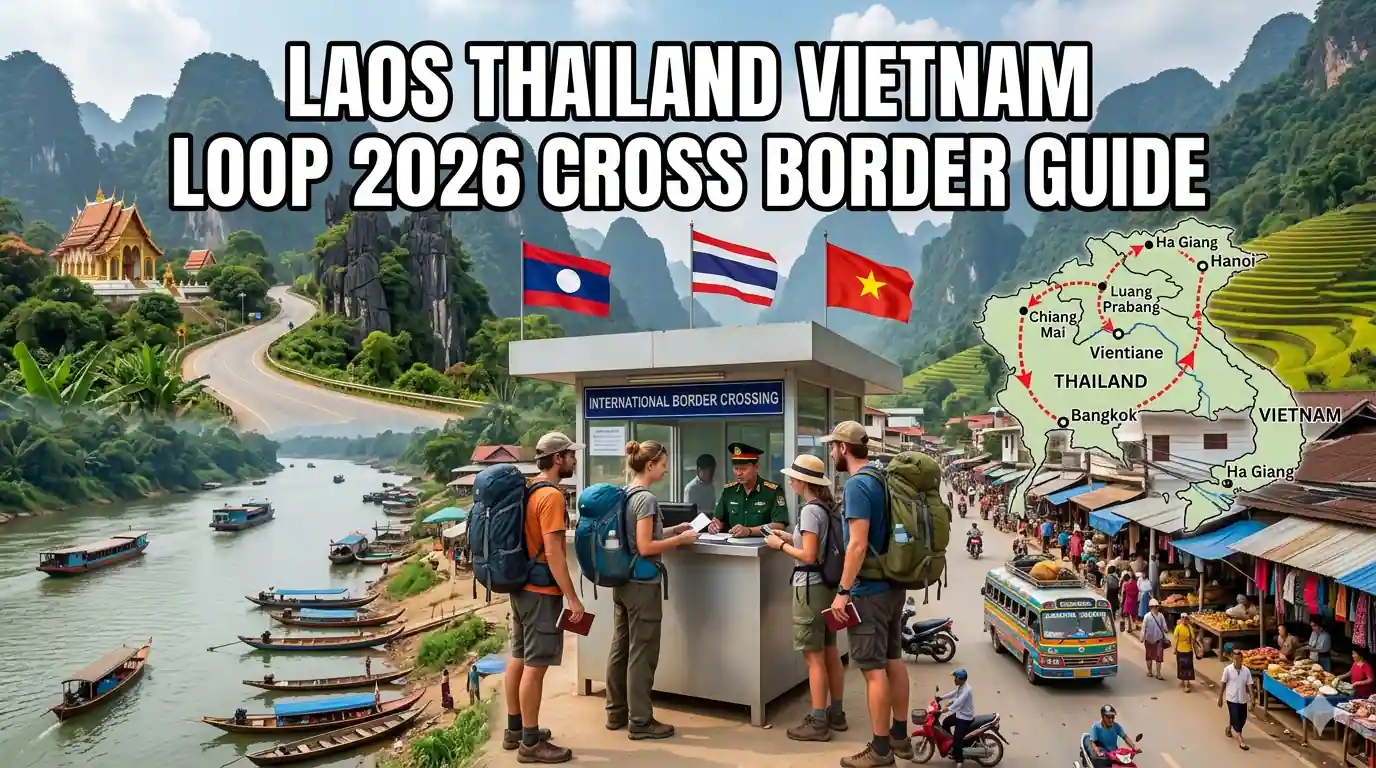
Planning Your Laos-Thailand-Vietnam Multi-Country Loop
The Laos-Thailand-Vietnam loop represents one of Southeast Asia's most rewarding overland adventures, combining ancient temples, stunning landscapes, rich cultures, and incredible cuisine across three distinct yet interconnected countries. This comprehensive guide for 2026 travelers covers everything needed to plan and execute this epic journey through the heart of Indochina.
The route typically spans three to six weeks depending on pace and interests, traversing dramatic mountain passes, following the mighty Mekong River, exploring colonial architecture, and experiencing some of the world's most authentic cultural encounters. Each country offers unique highlights while sharing historical connections that make the journey cohesive and enriching.
With improved infrastructure, streamlined border crossings, and growing tourism facilities, 2026 proves an ideal time to tackle this classic Southeast Asian circuit. Whether traveling by bus, motorbike, boat, or combination of transport modes, this guide provides current information on routes, visas, costs, and logistics to ensure a smooth and memorable journey.
Understanding the Route Options

Multiple route variations exist for the Laos-Thailand-Vietnam loop, each offering different experiences, time requirements, and difficulty levels. Choosing the right route depends on available time, budget, interests, and travel style.
Classic Northern Loop
The classic northern route focuses on northern Laos, northern Thailand, and northern Vietnam, emphasizing mountain scenery, ethnic minority cultures, and colonial heritage. This route typically requires three to four weeks minimum.
Starting point options include Bangkok, Chiang Mai, or Luang Prabang. The route generally flows: Bangkok or Chiang Mai to northern Laos (Luang Prabang, Nong Khiaw, Phongsali), crossing into northern Vietnam (Dien Bien Phu, Sapa, Hanoi), then south through central Vietnam (Ninh Binh, Phong Nha, Hue, Hoi An) before crossing back to Thailand or continuing south.
This route features dramatic mountain scenery, trekking opportunities, ethnic village visits, and some of Southeast Asia's most spectacular landscapes. It proves ideal for travelers interested in culture, nature, and slower-paced exploration.
Mekong River Route
The Mekong-focused route follows the great river through all three countries, emphasizing river travel, riverside towns, and water-based culture. This route requires four to five weeks for comfortable completion.
The journey typically begins in northern Laos or southern China, descending the Mekong through Luang Prabang, Vang Vieng, and Vientiane, crossing into Thailand at various points, then re-entering the Mekong region through Cambodia before entering southern Vietnam's Mekong Delta.
This route emphasizes river culture, floating markets, riverside temples, and the communities whose lives revolve around the Mekong. Slow boat travel between Luang Prabang and Huay Xai remains a highlight, though bus options exist for time-pressed travelers.
Southern Circuit
The southern route focuses on central and southern regions of all three countries, emphasizing beaches, islands, ancient ruins, and urban experiences. This route works well in three to four weeks.
Starting in Bangkok, the route moves through central Thailand to Laos via Savannakhet or Pakse, explores southern Laos including the Bolaven Plateau and Four Thousand Islands (Si Phan Don), crosses into Vietnam at Lao Bao or other southern crossings, then explores central and southern Vietnam including Ho Chi Minh City and the Mekong Delta before returning to Thailand or continuing onward.
This route suits travelers interested in beaches, islands, French colonial architecture, ancient temples like My Son and Angkor (if extending to Cambodia), and vibrant city life combined with laid-back island time.
Complete Grand Loop
The comprehensive loop covers all three countries extensively, requiring six to eight weeks minimum. This route combines elements of all other routes for the ultimate Indochina experience.
Starting in Bangkok, the journey moves north to Chiang Mai and northern Laos, crosses to northern Vietnam, descends through central Vietnam, explores southern Vietnam and the Mekong Delta, crosses to southern Laos, moves through central Laos, enters northeastern Thailand, and completes the circuit through central Thailand back to Bangkok.
This route proves ideal for travelers with extended time seeking comprehensive cultural immersion, diverse landscapes from mountains to beaches, and thorough exploration of each country's highlights.
Visa Requirements and Documentation for 2026

Understanding visa requirements proves critical for smooth border crossings. Requirements vary by nationality, with this guide focusing on common passport holders (US, UK, EU, Australia, Canada). Always verify current requirements before travel as policies change.
Thailand Visa Requirements
Most Western passport holders receive thirty-day visa-free entry to Thailand when arriving by air, or fifteen days when entering by land. This policy remains in effect for 2026 though subject to change.
Extensions of thirty days possible at immigration offices for a fee of approximately one thousand nine hundred baht. Multiple extensions sometimes granted but not guaranteed.
Tourist visas (sixty days) available from Thai embassies/consulates before travel, extendable by thirty days. These prove useful for those planning longer stays or multiple entries.
Border runs to reset the thirty-day clock remain possible but immigration officers may scrutinize frequent entries. Having proof of onward travel and sufficient funds helps.
Laos Visa Requirements
Most nationalities require visas for Laos, available on arrival at most international border crossings and airports for approximately thirty to forty USD depending on nationality. US passport holders pay around thirty-five USD.
Visa on arrival requires passport photos (one or two), completed application form, and fee in USD. Having exact change in USD simplifies the process though some borders accept Thai baht or local currency at poor rates.
E-visas available online before travel for certain entry points, costing approximately fifty USD. These prove convenient for avoiding border queues but limit entry points to designated crossings.
Visa validity typically thirty days with extensions possible at immigration offices in major cities for additional fees. Extensions usually granted in fifteen or thirty-day increments.
Vietnam Visa Requirements
Vietnam visa policies changed significantly in 2023-2024, with most nationalities now eligible for ninety-day e-visas valid for single or multiple entries. This represents a major improvement for overland travelers.
E-visas cost approximately twenty-five USD for single entry or fifty USD for multiple entry, processed within three to five business days through the official government portal. Apply at least one week before intended entry.
E-visas valid for entry at designated airports, land borders, and seaports. Verify your intended crossing accepts e-visas before applying.
Visa exemptions exist for certain nationalities and stays under fifteen days, though these typically do not apply to US, UK, Canadian, or Australian passport holders for tourism.
Visa on arrival available only at certain airports with pre-approval letter, not recommended for overland travelers. E-visas prove far more convenient for land crossings.
Major Border Crossings and Procedures

Understanding border crossing procedures, operating hours, and transportation connections proves essential for smooth transitions between countries. This section covers the most commonly used crossings for the loop.
Thailand-Laos Border Crossings
Chiang Khong (Thailand) - Huay Xai (Laos): The most popular northern crossing connects Chiang Rai province to Bokeo province. Open 6 AM to 8 PM daily. The Fourth Thai-Lao Friendship Bridge opened in 2013, replacing slow boat crossings though boats still operate.
Transportation: Buses connect Chiang Khong to Chiang Rai (2 hours) and Bangkok (12-14 hours). From Huay Xai, slow boats to Luang Prabang take 2 days, speedboats 6-8 hours, or buses 6-8 hours on improved roads.
Facilities: Both sides have banks, ATMs, guesthouses, and restaurants. Money changers operate at the border though rates prove poor.
Nong Khai (Thailand) - Vientiane (Laos): The First Friendship Bridge connects Thailand's Isaan region to Laos' capital. Open 6 AM to 10 PM. This proves the busiest crossing with excellent transportation connections.
Transportation: Regular buses and trains connect Nong Khai to Bangkok. From Vientiane, buses connect throughout Laos. The crossing sits just kilometers from both city centers.
Facilities: Full services on both sides including banks, hotels, restaurants. Thai side more developed for tourism.
Mukdahan (Thailand) - Savannakhet (Laos): The Second Friendship Bridge in central region. Open 6 AM to 10 PM. Good option for accessing central Vietnam via Lao Bao crossing.
Transportation: Buses connect Mukdahan to Bangkok (8-10 hours). Savannakhet connects to Pakse and southern Laos.
Laos-Vietnam Border Crossings
Nam Phao (Laos) - Cau Treo (Vietnam): Connects Khammouane province to Ha Tinh province. Open 7 AM to 7 PM. Popular crossing for those traveling between Vientiane and central Vietnam.
Transportation: Buses connect Nam Phao to Thakhek and Vientiane. Vietnamese side connects to Vinh and Hanoi. Direct buses operate between Vientiane and Vinh.
Facilities: Basic facilities at border. Better services in nearby towns.
Na Meo (Laos) - Nam Can (Vietnam): Connects Houaphanh province to Nghe An province. Open 7 AM to 6 PM. Less crowded crossing good for accessing northern Vietnam.
Transportation: Buses connect to Sam Neua in Laos and Vinh in Vietnam. Less frequent service than major crossings.
Lao Bao (Laos) - Lao Bao (Vietnam): Actually one town split by border, connecting Savannakhet province to Quang Tri province. Open 7 AM to 6 PM. Popular for accessing central Vietnam from southern Laos.
Transportation: Buses connect Lao Bao to Savannakhet, Pakse, Dong Ha, and Hue. Good transportation hub.
Phou Keua (Laos) - Bo Y (Vietnam): Connects Attapeu province to Kon Tum province in the south. Open 7 AM to 6 PM. Good for accessing central highlands of Vietnam.
Vietnam-Thailand Border Crossings
Note: Vietnam and Thailand do not share a land border. Travelers must pass through Laos or Cambodia to travel overland between these countries.
Vietnam-Cambodia-Thailand route: Most common path from Vietnam to Thailand goes through Cambodia. Popular crossings include Moc Bai (Vietnam) - Bavet (Cambodia), then Poipet (Cambodia) - Aranyaprathet (Thailand).
Transportation Options and Costs

Multiple transportation options exist for navigating the loop, each with different costs, comfort levels, and time requirements. Mixing transport modes often proves most efficient.
Bus Travel
Buses represent the most common and economical transportation method throughout the region. Quality varies dramatically from basic local buses to modern sleeper coaches.
VIP/Sleeper Buses: Modern buses with reclining seats or sleeper berths, air conditioning, and sometimes WiFi. Prices range from fifteen to forty USD for long-distance routes. Recommended for overnight journeys.
Operators: Companies like Green Bus (Thailand), Sinh Tourist (Vietnam), and various Lao companies operate comfortable services. Book through hotels, travel agencies, or online platforms.
Local Buses: Cheaper but less comfortable options with basic seats, frequent stops, and no air conditioning. Costs five to fifteen USD for similar routes. Good for short distances and budget travelers.
Train Travel
Train options remain limited but are expanding, particularly with new infrastructure projects.
Thailand: Extensive rail network connects Bangkok to Chiang Mai, Udon Thani, and Nong Khai (Laos border). Overnight sleeper trains offer comfortable travel with berths costing eight hundred to fifteen hundred baht.
Laos: The Laos-China Railway opened in 2021, connecting Boten (Chinese border) to Vientiane with stops including Luang Prabang and Vang Vieng. Modern trains cost more than buses but offer speed and comfort. Vientiane to Luang Prabang takes approximately 2 hours versus 6-8 hours by bus.
Vietnam: The Reunification Express runs from Hanoi to Ho Chi Minh City with stops at major cities. Overnight sleeper berths cost thirty to sixty USD depending on class. Trains prove scenic but slow compared to buses or flights.
Boat Travel
River transport remains important, particularly along the Mekong.
Slow Boats: Traditional two-day journey between Huay Xai and Luang Prabang remains popular despite road improvements. Costs approximately thirty to forty USD including overnight stop in Pak Beng. Basic wooden benches, bring your own food or purchase on board.
Speedboats: Faster but less comfortable and potentially dangerous option taking 6-8 hours. Not recommended due to safety concerns and rough ride.
Mekong Delta boats: Various boat services connect towns in Vietnam's Mekong Delta, offering scenic travel between destinations.
Motorbike Travel
Motorbikes offer ultimate flexibility and adventure but require experience, proper documentation, and acceptance of risks.
Renting: Motorbikes available for rent in most tourist areas, costing five to fifteen USD daily for basic bikes. Always inspect thoroughly, take photos of existing damage, and ensure you have proper license and insurance.
Buying/Selling: Some travelers purchase bikes in Bangkok or Hanoi, travel the loop, then sell. This proves cost-effective for extended travel but involves paperwork and risk.
Border Crossings: Taking motorbikes across borders requires temporary import/export documentation, adding complexity. Most travelers rent separately in each country.
Safety: Southeast Asian roads prove dangerous, particularly in mountainous areas. Always wear helmets, drive defensively, and avoid night driving.
Domestic Flights
Flying between major cities saves time and sometimes money compared to overland travel.
Low-Cost Carriers: Airlines like AirAsia, Nok Air, VietJet, and Lao Airlines offer competitive fares. Bangkok to Chiang Mai costs twenty to sixty USD, Hanoi to Luang Prabang fifty to one hundred USD.
When to Fly: Flying proves worthwhile for long distances (Bangkok to Luang Prabang versus 24+ hour bus journey) or when time proves limited.
Suggested Itineraries by Duration

Different timeframes require different route priorities. These sample itineraries provide frameworks adaptable to individual interests.
Three Week Express Loop
For travelers with limited time, this itinerary hits major highlights while maintaining reasonable pace.
Days 1-4: Northern Thailand
Bangkok to Chiang Mai (fly or overnight train). Explore Chiang Mai temples, night markets, and cooking schools. Day trip to Chiang Rai if time permits.
Days 5-8: Northern Laos
Cross at Chiang Khong/Huay Xai. Speedboat or bus to Luang Prabang. Explore UNESCO old town, Kuang Si waterfalls, Pak Ou caves. Fly or bus to Vientiane.
Days 9-11: Vientiane and Crossing
Brief exploration of Laos capital. Cross to Nong Khai/Udon Thani or continue to Vietnam via Nam Phao crossing.
Days 12-16: Northern/Central Vietnam
Enter Vietnam, travel to Hanoi (if northern route) or Vinh/Hue (if central). Explore Hanoi's Old Quarter or Hue's imperial city. Travel to Hoi An.
Days 17-19: Hoi An and Departure
Explore Hoi An ancient town, beaches, and countryside. Fly out from Da Nang or continue to Ho Chi Minh City for departure.
Five Week Comprehensive Loop
This itinerary allows deeper exploration and inclusion of more destinations.
Days 1-6: Northern Thailand
Bangkok to Chiang Mai. Explore Chiang Mai thoroughly including Doi Suthep, night bazaars, elephant sanctuaries. Day trips to Chiang Rai, Pai, or Mae Hong Son.
Days 7-12: Northern Laos
Cross at Chiang Khong/Huay Xai. Two-day slow boat to Luang Prabang with overnight in Pak Beng. Explore Luang Prabang extensively. Bus to Vang Vieng for karst scenery and activities. Continue to Vientiane.
Days 13-15: Vientiane and Central Laos
Explore Vientiane. Optional side trip to Thakhek for Kong Lor Cave or Bolaven Plateau for coffee plantations and waterfalls.
Days 16-20: Northern Vietnam
Cross at Nam Phao/Cau Treo or Na Meo/Nam Can. Travel to Hanoi via Vinh. Explore Hanoi's Old Quarter, Ho Chi Minh Mausoleum, Temple of Literature. Day trip to Halong Bay or Ninh Binh.
Days 21-26: Central Vietnam
Travel south to Phong Nha for caves, Hue for imperial history, Da Nang for beaches, Hoi An for ancient town. Spend adequate time in each location.
Days 27-30: Southern Vietnam
Fly or overnight bus to Ho Chi Minh City. Explore Cu Chi Tunnels, Mekong Delta, war museums. Fly out from HCMC or continue to Cambodia.
Days 31-35: Return Through Laos or Cambodia
Option A: Return north through Laos via Pakse, Four Thousand Islands, Savannakhet, crossing to Thailand at Mukdahan.
Option B: Continue to Cambodia, explore Angkor Wat, return to Thailand via Poipet/Aranyaprathet.
Eight Week Grand Loop
For travelers with extended time, this itinerary allows comprehensive exploration including off-the-beaten-path destinations.
This extended itinerary includes all destinations from the five-week loop plus: additional time in each location, side trips to Luang Namtha and northern Laos trekking, Bolaven Plateau extended stay, Phong Nha cave exploration, Dalat in central highlands, Con Dao or Phu Quoc islands, extended Mekong Delta exploration, and additional Thailand destinations like Sukhothai, Ayutthaya, or southern islands.
Budget Planning and Costs

Understanding costs helps travelers budget appropriately. The Laos-Thailand-Vietnam loop remains affordable compared to Western destinations though costs vary significantly by travel style.
Daily Budget Ranges
Budget Traveler: 25-40 USD per day
- Dorm beds or basic guesthouses: 5-10 USD
- Street food and local restaurants: 8-12 USD
- Local buses and shared transport: 5-10 USD
- Activities and entrance fees: 5-8 USD
- Total: 25-40 USD daily
Mid-Range Traveler: 50-80 USD per day
- Private rooms in guesthouses or 3-star hotels: 15-30 USD
- Mix of street food and restaurant meals: 15-25 USD
- VIP buses, trains, occasional flights: 10-20 USD
- Tours and activities: 10-15 USD
- Total: 50-80 USD daily
Comfortable Traveler: 100-150+ USD per day
- 4-star hotels and boutique properties: 40-80 USD
- Restaurant dining and cafes: 25-40 USD
- Private transport and domestic flights: 20-40 USD
- Private tours and premium activities: 15-30 USD
- Total: 100-150+ USD daily
Major Expense Categories
Accommodation: Ranges from 3 USD dorm beds to 100+ USD luxury hotels. Average mid-range guesthouses cost 15-25 USD for private rooms with AC and bathroom.
Food: Street food costs 1-3 USD per dish. Local restaurants 3-8 USD per meal. Western restaurants and upscale dining 10-25 USD per meal.
Transportation: Local buses 5-15 USD, VIP buses 15-40 USD, trains 10-50 USD, domestic flights 30-150 USD, motorbike rental 5-15 USD daily.
Visas: Thailand visa-free (30 days), Laos visa on arrival 30-40 USD, Vietnam e-visa 25-50 USD. Budget 100-150 USD total for visas.
Activities: Temple entrance fees 1-5 USD, guided tours 20-50 USD, adventure activities 30-100 USD, cooking classes 20-40 USD.
Money-Saving Tips
Travel during shoulder seasons (April-May, September-October) for lower accommodation rates and fewer crowds.
Use local buses instead of VIP buses or flights when time permits. Savings prove significant though comfort decreases.
Eat street food and at local restaurants. Not only cheaper but more authentic and often more delicious than tourist-oriented establishments.
Negotiate accommodation prices for extended stays. Many guesthouses offer discounts for stays of one week or longer.
Book buses and trains directly rather than through hotels or agencies that add commissions.
Use ATMs strategically to minimize fees. Withdraw larger amounts less frequently.
Health and Safety Considerations

Staying healthy and safe ensures uninterrupted travel. Preparation and awareness prevent most problems.
Health Precautions
Vaccinations: Recommended vaccines include Hepatitis A and B, Typhoid, Tetanus, and Japanese Encephalitis for rural areas. Consult travel clinic 4-6 weeks before departure.
Malaria: Malaria risk exists in rural areas, particularly near borders and in southern Laos. Consult doctor about prophylaxis. Urban areas and major tourist destinations pose minimal risk.
Dengue Fever: Present throughout the region, transmitted by mosquitoes active during daytime. Use repellent, wear long sleeves, and sleep under nets when possible.
Food and Water Safety: Drink only bottled or filtered water. Avoid ice in drinks unless certain it is made from filtered water. Eat freshly cooked food, avoid raw vegetables and fruits you cannot peel.
Travel Insurance: Essential for covering medical emergencies, evacuation, and trip interruption. Ensure policy covers all three countries and adventure activities if planned.
Safety Considerations
Road Safety: Southeast Asian roads prove dangerous. Traffic accidents represent the greatest risk to travelers. Use reputable bus companies, avoid night buses when possible, always wear helmets on motorbikes.
Petty Crime: Generally safe region but petty theft occurs, particularly in tourist areas. Use hotel safes, do not flash valuables, be vigilant in crowded areas.
Scams: Common tourist scams include tuk-tuk drivers taking you to overpriced shops, gem scams, and fake tour operators. Book through reputable sources, be skeptical of deals that seem too good to be true.
Border Scams: At borders, watch for overcharging on visas, fake officials demanding bribes, and transportation scams. Know official visa costs, have exact change, use official transportation.
Cultural Etiquette and Responsible Travel

Respecting local customs and traveling responsibly enhances experiences and minimizes negative impacts.
Cultural Sensitivity
Temples and Religious Sites: Dress modestly covering shoulders and knees. Remove shoes before entering. Do not point feet at Buddha images. Women should not touch monks in Theravada Buddhist countries (Thailand, Laos).
Photography: Ask permission before photographing people, particularly ethnic minorities and in rural areas. Some temples prohibit photography inside. Respect signs and requests.
Head and Feet: The head is considered sacred, feet dirty. Do not touch people's heads or point feet at people or religious objects.
Public Behavior: Public displays of affection prove frowned upon, particularly in rural areas. Maintain composure and avoid raising your voice or showing anger (loss of face proves important in Asian cultures).
Responsible Travel Practices
Support Local Economy: Stay in locally-owned guesthouses, eat at local restaurants, hire local guides. This ensures tourism benefits reach communities.
Environmental Impact: Avoid single-use plastics, bring reusable water bottles and bags. Do not litter, particularly in natural areas. Respect wildlife and do not participate in exploitative animal tourism.
Ethical Elephants: If visiting elephant camps, choose ethical sanctuaries that do not offer riding or performances. Research thoroughly before booking.
Cultural Preservation: Do not touch or climb on ancient structures. Purchase souvenirs from legitimate sources, not from children or vendors who may be exploited.
Packing Essentials for the Loop

Packing appropriately for varied climates and activities proves crucial. The region's tropical climate and casual culture allow light packing.
Clothing
Lightweight, breathable fabrics: Cotton and linen work well in hot, humid climate. Pack 5-7 shirts, 3-4 pairs of shorts/pants, 1-2 dresses or skirts if desired.
Temple clothing: At least one outfit covering shoulders and knees for temple visits. Lightweight long pants and shirts with sleeves work well.
Rain gear: Lightweight rain jacket or poncho essential during rainy season (May-October). Quick-dry clothing proves useful.
Footwear: Comfortable walking shoes or sandals with good support. Flip-flops for beaches and casual wear. Shoes must be removable for temples.
Essentials
Documents: Passport with 6+ months validity, visa documentation, travel insurance, copies of important documents stored separately and digitally.
Money: Mix of cash (USD for visas, local currency for daily expenses) and cards. Notify banks of travel plans.
Electronics: Phone, camera, chargers, universal adapter (Type A, B, C, F plugs used in region), power bank.
Toiletries: Sunscreen (high SPF), insect repellent (DEET-based), basic medications, personal hygiene items. Many items available locally but brands may differ.
Day pack: Comfortable backpack for daily use, water bottle, and valuables.
Communication and Connectivity

Staying connected proves easier and cheaper than ever in Southeast Asia.
SIM Cards and Data
Local SIM Cards: Available at airports, convenience stores, and mobile shops in all three countries. Costs 5-15 USD including data. Requires passport registration.
Coverage: Generally excellent in cities and tourist areas, spotty in remote mountainous regions. 4G widely available, 5G expanding in major cities.
Recommended Providers: Thailand: AIS, TrueMove, DTAC. Laos: Lao Telecom, Unitel. Vietnam: Viettel, Vinaphone, Mobifone.
Regional SIMs: Some providers offer SIMs valid across multiple countries, though often more expensive than buying locally in each country.
Internet Access
WiFi widely available in hotels, cafes, and restaurants in tourist areas. Speed and reliability vary from excellent in cities to non-existent in remote areas.
Download offline maps (Google Maps, Maps.me), translation apps, and important information before traveling to remote areas.
Best Time to Travel
Climate varies across the region, affecting when to visit different areas.
Seasonal Overview
Cool/Dry Season (November-February): Ideal time for most of the region. Comfortable temperatures (20-28°C), minimal rain, clear skies. Peak tourist season with higher prices and crowds.
Hot Season (March-May): Temperatures soar to 35-40°C, particularly in April. Humidity increases. Fewer tourists, lower prices. Challenging for outdoor activities during midday.
Rainy Season (June-October): Daily afternoon showers, high humidity, lush landscapes. Least crowded, lowest prices. Some roads may flood, boat services affected. Mornings often clear.
Regional Variations
Northern areas (northern Laos, northern Vietnam, northern Thailand) experience cooler temperatures, particularly November-February when temperatures can drop to 10-15°C at night.
Southern areas remain warm year-round with less temperature variation.
Central Vietnam experiences different patterns with rainy season September-November, potentially causing flooding in Hoi An and Hue.
Conclusion: Your Indochina Adventure Awaits
The Laos-Thailand-Vietnam loop offers an unforgettable journey through some of Southeast Asia's most captivating destinations. From the temples of Chiang Mai and Luang Prabang to the karst landscapes of Vang Vieng and Ninh Binh, from the bustling streets of Hanoi and Bangkok to the tranquil beaches of Hoi An and the islands, this route delivers diversity, culture, adventure, and natural beauty.
With improved infrastructure, streamlined visa processes, and growing tourism facilities, 2026 proves an excellent time to tackle this classic journey. Whether you have three weeks or three months, a shoestring budget or comfortable funds, this route adapts to your needs while delivering authentic experiences and lasting memories.
Plan thoughtfully, remain flexible, respect local cultures, embrace the unexpected, and allow yourself to be transformed by the warmth of the people, the richness of the cultures, and the stunning beauty of this remarkable region. The Laos-Thailand-Vietnam loop awaits your exploration.
Safe travels on your Indochina adventure!
0 Comments