.webp)
.webp)
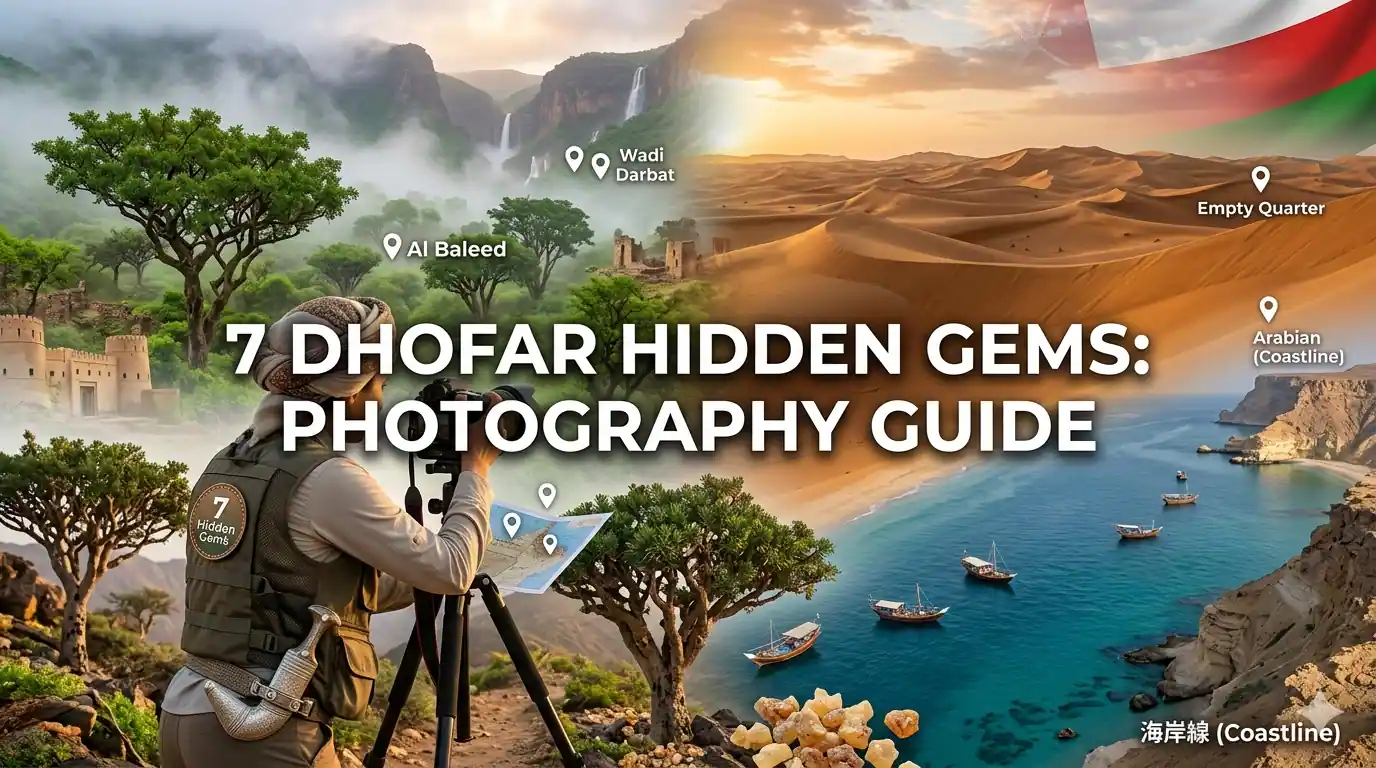
Introduction: Discovering Dhofar, Oman's Enigmatic Southern Jewel
The Dhofar Region, Oman's southernmost governorate, stands as one of the Arabian Peninsula's most photogenic and culturally rich destinations. Unlike the arid landscapes that characterize much of the Gulf region, Dhofar offers a stunning diversity of environments—from the mist-shrouded mountains transformed by the annual khareef (monsoon) season to the golden dunes of the Empty Quarter, from ancient frankincense groves to pristine Arabian Sea coastlines. For adventure photographers seeking landscapes and cultural experiences that defy Arabian stereotypes, Dhofar delivers an extraordinary visual feast.
Centered around the city of Salalah, Dhofar has been a crossroads of civilization for over 5,000 years. As the ancient homeland of frankincense, this region fueled trade routes that connected Arabia to Egypt, Rome, India, and China. The wealth generated by this precious resin built magnificent ports, attracted legendary visitors like Marco Polo and Sinbad the Sailor, and left behind archaeological treasures that remain remarkably well-preserved. Today, Dhofar's unique culture, distinct from northern Oman, blends Arab, African, and Indian influences into a tapestry as colorful as its landscapes.
For photographers, Dhofar presents unparalleled opportunities. The khareef monsoon, which transforms the region from June to September, creates a surreal landscape of emerald mountains, cascading waterfalls, and mist-shrouded valleys—a phenomenon unique in the Arabian Peninsula. Ancient frankincense trees, some over 2,000 years old, stand as living monuments to the region's storied past. The dramatic Empty Quarter desert offers endless dunes and stark beauty, while the Arabian Sea coastline provides pristine beaches, dramatic cliffs, and traditional fishing villages where time seems to stand still.
This comprehensive guide reveals seven hidden gems in the Dhofar Region that every adventure photographer needs to capture. From secret wadis and ancient ports to remote frankincense groves and desert oases, these locations showcase the full splendor of this remarkable region. Whether you are a landscape photographer chasing dramatic light, a cultural documentarian seeking authentic traditions, or an adventure photographer drawn to remote wilderness, Dhofar offers experiences that will transform your portfolio and broaden your perspective on what Arabia can be.
Hidden Gem #1: Wadi Darbat - The Monsoon Wonderland

Wadi Darbat represents Dhofar's crown jewel during the khareef season, transforming from a dry valley into a lush paradise of waterfalls, turquoise pools, and verdant vegetation that seems almost impossible in the Arabian context. This spectacular wadi, located approximately 40 kilometers from Salalah, offers adventure photographers one of the most unique and photogenic landscapes in the entire Middle East.
During the khareef monsoon (June-September), Wadi Darbat comes alive with multiple waterfalls cascading down limestone cliffs, natural springs creating emerald pools, and vegetation exploding in shades of green. The main waterfall, dropping approximately 30 meters into a series of natural pools, creates a misty atmosphere that softens light and adds drama to compositions. Water buffalo, introduced to the region centuries ago, graze peacefully in the shallows, adding an unexpected element that challenges viewers' perceptions of Arabia.
For photographers, Wadi Darbat offers extraordinary diversity within a compact area. Wide-angle lenses capture the grandeur of waterfalls framed by limestone cliffs and lush vegetation. Macro photography reveals water droplets on leaves, colorful wildflowers, and intricate patterns in the limestone. The turquoise pools, fed by natural springs, create stunning reflections and opportunities for long-exposure photography that smooths the water's surface into glass.
The best photography occurs during early morning when mist rises from the pools and waterfalls, creating ethereal atmosphere. The soft, diffused light during khareef season eliminates harsh shadows and creates even illumination perfect for landscape photography. Late afternoon brings warm tones that enhance the greens and create golden highlights on the waterfalls.
Beyond the main waterfall, hiking upstream reveals additional cascades, natural pools, and hidden grottos. The trail involves scrambling over rocks and crossing streams, so waterproof camera protection is essential. The journey rewards photographers with increasingly intimate and dramatic scenes—narrow canyons where water has carved smooth channels through limestone, secluded pools perfect for reflection photography, and viewpoints offering panoramic vistas of the entire wadi system.
During the dry season (October-May), Wadi Darbat presents a different but equally compelling character. While waterfalls diminish to trickles, the wadi's geological features remain spectacular. The limestone formations, carved by millennia of water flow, create dramatic textures and patterns. The natural springs continue to flow, maintaining pools of clear water. This season offers opportunities to photograph the wadi's geological story and the resilience of vegetation adapted to arid conditions.
Wildlife photography opportunities abound year-round. Water buffalo, a unique feature of Wadi Darbat, provide compelling subjects, particularly during morning and evening when they gather at the pools. Migratory birds stop at the wadi during spring and autumn, adding avian diversity. The lush vegetation attracts insects, reptiles, and small mammals that reward patient observers with intimate wildlife encounters.
Practical considerations for photographing Wadi Darbat include bringing waterproof protection for camera equipment, sturdy footwear with good grip for scrambling over wet rocks, and ample memory cards—the photographic opportunities are endless. The wadi can be accessed via a short hike from the parking area, or by boat during the wet season for a different perspective. Local guides can lead you to hidden waterfalls and the best photography locations.
For the most dramatic images, visit during the khareef season when the wadi is at its most spectacular. However, be prepared for crowds during peak monsoon months, as Wadi Darbat attracts visitors from across the Gulf seeking relief from summer heat. Early morning visits provide the best light and fewest crowds, while weekdays are less busy than weekends.
Hidden Gem #2: Al Baleed Archaeological Park - Where Frankincense Built an Empire

Al Baleed Archaeological Park, a UNESCO World Heritage Site located on the eastern outskirts of Salalah, offers adventure photographers a rare opportunity to document one of the ancient world's most important ports. This remarkably well-preserved medieval city, which flourished between the 9th and 15th centuries, served as a crucial hub in the frankincense trade that connected Arabia to civilizations across the Indian Ocean.
The park's ruins tell the story of a sophisticated Islamic city that controlled the flow of frankincense, one of the ancient world's most valuable commodities. Walking through the site, photographers can capture the remains of mosques, houses, warehouses, and port facilities that once bustled with merchants from across the known world. The architecture, built from local materials and adapted to the coastal environment, showcases Islamic design principles and Omani building traditions.
For photographers, Al Baleed offers compelling contrasts and layers of history. The white limestone ruins stand against the backdrop of modern Salalah and the Arabian Sea, creating compositions that juxtapose ancient and contemporary. The park's museum, housed in a striking modern building designed to complement the archaeological site, provides context and displays artifacts recovered from excavations, including ceramics, coins, and frankincense burners that illustrate the city's far-reaching trade connections.
The best photography light occurs during golden hour, when the setting sun casts warm tones on the limestone ruins and creates long shadows that emphasize architectural details. The park's proximity to the sea means that marine weather can create dramatic skies—storm clouds rolling in from the Arabian Sea, mist rising from morning waters, or clear blue skies that contrast beautifully with the white stone.
Beyond the main archaeological site, the park includes the ancient harbor where ships once loaded frankincense for journeys to Egypt, Rome, India, and China. Today, the harbor area offers opportunities to photograph traditional fishing dhows that continue to use these same waters, creating a living connection between past and present. The mangrove forests that fringe the harbor provide habitat for birds and marine life, adding ecological diversity to the historical significance.
The park's museum deserves dedicated photographic attention. The building itself is an architectural masterpiece, blending contemporary design with traditional Omani elements. Inside, carefully curated exhibits display artifacts that illuminate daily life in medieval Al Baleed, the frankincense trade routes, and the city's role in Indian Ocean commerce. The museum's lighting and display design create excellent opportunities for detail photography of ancient ceramics, jewelry, and trade goods.
For cultural photographers, Al Baleed offers opportunities to document the ongoing archaeological work and conservation efforts. Archaeologists and conservators work at the site year-round, preserving the ruins for future generations. Capturing their work adds a human dimension to the historical narrative and illustrates the ongoing effort to understand and protect this important heritage site.
Practical considerations for photographing Al Baleed include bringing a variety of lenses—wide-angle for architectural shots and landscape compositions, standard zoom for general documentation, and macro for detail work on artifacts and architectural elements. The site is extensive, requiring 2-3 hours to photograph comprehensively. Comfortable walking shoes, sun protection, and plenty of water are essential, as much of the site is exposed to the sun.
Visit during the cooler months (October-April) for the most comfortable photography conditions. During khareef season, the site takes on a different character with lush vegetation and misty atmosphere, though rain can limit photography opportunities. The park is open daily with reasonable entrance fees, and the museum provides excellent context that enhances understanding and photography of the archaeological remains.
Hidden Gem #3: The Frankincense Trees of Wadi Dawkah - Living Monuments

Wadi Dawkah, located approximately 40 kilometers northeast of Salalah, protects one of the world's last remaining wild frankincense forests—a living heritage site that has been recognized as a UNESCO World Heritage Site. This remarkable grove of Boswellia sacra trees, some over 2,000 years old, offers adventure photographers a unique opportunity to document the source of one of history's most precious commodities and capture trees that have witnessed millennia of human history.
The frankincense trees of Wadi Dawkah are not merely botanical specimens; they are living witnesses to ancient trade routes that connected civilizations. These gnarled, twisted trees, with their distinctive peeling bark and small compound leaves, produce the aromatic resin that was once more valuable than gold. The resin, harvested by making incisions in the bark and collecting the hardened tears, was burned in temples across the ancient world, used in embalming, and traded along routes that stretched from Dhofar to Egypt, Rome, India, and China.
For photographers, Wadi Dawkah presents unique challenges and rewards. The frankincense trees, with their twisted trunks, peeling bark, and sparse foliage, create sculptural forms that are inherently photogenic. The trees' adaptation to the harsh environment—storing water in their trunks, shedding leaves during drought, and producing aromatic resin as protection—creates visual interest and tells a story of survival and resilience.
The best photography occurs during early morning and late afternoon when the angle of light emphasizes the trees' textures and forms. The golden light of sunrise and sunset enhances the warm tones of the bark and creates long shadows that add depth and drama. During khareef season, the trees are surrounded by lush green vegetation, creating striking contrast between the ancient, gnarled trunks and the vibrant new growth.
Macro photography reveals the intricate details of frankincense production—the fresh resin oozing from incisions in the bark, the hardened "tears" in shades of white, gold, and amber, and the intricate patterns of the peeling bark. These intimate details tell the story of frankincense harvesting, a practice that continues today much as it did thousands of years ago.
The wadi itself, a dry riverbed that occasionally fills with water during rare rains, adds another dimension to the photography. The contrast between the arid wadi bed and the resilient trees that survive in this harsh environment illustrates the adaptation and persistence of life in extreme conditions. During the brief periods when water flows through the wadi, the transformation is dramatic, with vegetation exploding and the entire landscape taking on a different character.
Cultural photography opportunities abound in Wadi Dawkah. Local frankincense harvesters, many from families that have practiced this trade for generations, continue to tap the trees using traditional methods. Documenting their work—the careful selection of trees, the precise cuts made in the bark, the collection of resin—adds human narrative to the botanical story and illustrates the living heritage that continues to connect modern Oman to its ancient past.
The frankincense trees of Wadi Dawkah are not just a photographic subject; they are a symbol of Oman's cultural identity and economic history. The resin continues to be harvested and exported, maintaining a connection to the ancient trade that built the region's prosperity. For photographers, capturing these trees means documenting not just a plant species, but a living link to one of history's most important trade networks.
Practical considerations for photographing Wadi Dawkah include bringing lenses suitable for both wide landscape shots and intimate detail work. The trees are scattered across the wadi, requiring walking to find the best specimens and compositions. Sun protection, sturdy footwear, and ample water are essential, as the site is exposed and temperatures can be extreme outside the khareef season.
Visit during the cooler months (November-March) for the most comfortable photography conditions, or during khareef season (June-September) for the dramatic contrast of green vegetation surrounding the ancient trees. The site is accessible via a short drive from Salalah and requires minimal entrance fees. Local guides can provide insights into frankincense harvesting and help locate the most photogenic trees.
Hidden Gem #4: Mughsayl Beach and the Blowholes - Where Sea Meets Stone

Mughsayl Beach, located approximately 60 kilometers west of Salalah, offers adventure photographers one of the most dramatic coastal landscapes in the Arabian Peninsula. This spectacular beach, backed by towering limestone cliffs and famous for its natural blowholes, creates a dynamic environment where the power of the Arabian Sea meets ancient geological formations, producing photographic opportunities that range from serene seascapes to explosive displays of natural power.
The beach itself stretches for several kilometers, featuring golden sand that contrasts beautifully with the turquoise waters of the Arabian Sea and the cream-colored limestone cliffs that rise dramatically behind. The cliffs, carved by millennia of wind and water erosion, feature caves, arches, and unusual formations that add visual interest and provide shelter for nesting seabirds. The combination of beach, cliffs, and ocean creates a classic coastal landscape that rewards photographers in all seasons.
However, Mughsayl's most famous feature is the blowholes—natural holes in the limestone platform through which seawater shoots dramatically during high tide and rough seas. These geological features, known locally as "Al Mughsayl Blowholes" or "Marneef Cave," create spectacular displays as waves force water through narrow channels in the rock, sending jets of seawater several meters into the air. The phenomenon is most dramatic during high tide and rough seas, when the power of the ocean is most evident.
For photographers, the blowholes offer dynamic subjects that require patience and timing. Capturing the perfect moment when water erupts from the holes requires anticipating the wave action and being ready to shoot. Fast shutter speeds freeze the water in mid-air, creating dramatic sculptures of liquid against the sky. Slower shutter speeds blur the water, creating ethereal, misty effects that convey movement and power.
The best photography at Mughsayl occurs during different times depending on the desired effect. Early morning provides soft light and often calmer seas, ideal for capturing the beach and cliffs in serene conditions. Late afternoon and sunset bring warm tones that enhance the golden sand and cream-colored cliffs, creating classic coastal landscape compositions. During rough seas and high tide, the blowholes are most active, providing opportunities for dramatic action photography.
Beyond the blowholes, the beach and cliffs offer diverse photographic opportunities. The limestone caves carved into the cliffs provide dramatic frames for seascapes and opportunities for silhouette photography against the bright ocean. The rock pools that form in the limestone platform during low tide create miniature ecosystems perfect for macro photography—sea anemones, small fish, crabs, and colorful algae create intimate scenes within the larger coastal drama.
The cliffs themselves tell a geological story visible in their layers and formations. Sedimentary layers, fossilized shells, and erosion patterns create textures and patterns that reward close examination and detail photography. The contrast between the hard, ancient limestone and the constantly moving sea creates a visual narrative about time, permanence, and change.
Wildlife photography opportunities at Mughsayl include seabirds that nest in the cliff caves and feed in the ocean waters. Ospreys, terns, and gulls are common, and patient observers may spot more unusual species. The rock pools teem with small marine life during low tide, providing opportunities for underwater and macro photography.
Practical considerations for photographing Mughsayl include bringing waterproof protection for camera equipment—the blowholes can spray seawater considerable distances, and ocean spray is constant. Sturdy footwear is essential for navigating the rocky platform and cliffs safely. A polarizing filter helps reduce glare from the water and enhances the blue tones of the sea and sky. Tripods are useful for long exposures and for stability when shooting the blowholes.
Timing is crucial for capturing the blowholes at their most dramatic. Check tide tables and plan visits during high tide, particularly when rough seas are forecast. The phenomenon is most spectacular during the winter months when northern winds create larger waves, though the beach is photogenic year-round. Visit multiple times if possible, as the character of the beach changes dramatically with tide, weather, and light conditions.
The beach is easily accessible from Salalah via a well-maintained road, with parking areas and basic facilities available. The site is popular with local families, particularly during weekends and holidays, so early morning visits provide the best light and fewest crowds. The combination of geological drama, coastal beauty, and dynamic action makes Mughsayl Beach an essential destination for any photographer visiting Dhofar.
Hidden Gem #5: Jebel Samhan Nature Reserve - The Leopard's Domain

Jebel Samhan Nature Reserve, one of Oman's most remote and pristine wilderness areas, offers adventure photographers an extraordinary opportunity to document one of the Arabian Peninsula's last strongholds for the endangered Arabian leopard. This vast mountain reserve, covering over 4,500 square kilometers of dramatic escarpment that drops from 2,100 meters to the Arabian Sea, represents one of the most spectacular and challenging photography destinations in Dhofar.
The reserve's dramatic topography creates one of the most visually stunning landscapes in Oman. The escarpment, where the Dhofar mountains meet the coastal plain, features sheer cliffs, deep wadis, and terraced slopes that cascade toward the sea. From the plateau, photographers can capture panoramic views that stretch from the green mountains (during khareef) to the blue Arabian Sea, with layers of mountains and valleys creating depth and drama in every direction.
For wildlife photographers, Jebel Samhan represents the holy grail—the chance to photograph the elusive Arabian leopard, one of the world's rarest big cats. With fewer than 200 individuals remaining in the wild, most inhabiting the mountains of Dhofar, encountering an Arabian leopard is extremely rare and requires immense patience, local knowledge, and luck. However, even without a leopard sighting, the reserve offers exceptional wildlife photography opportunities including Arabian wolves, striped hyenas, Nubian ibex, and diverse bird species adapted to the mountain environment.
The reserve's vegetation varies dramatically with elevation and season. During the khareef monsoon, the mountains transform into a lush landscape of green grass, wildflowers, and flowing waterfalls. Juniper trees, some hundreds of years old, cling to the mountainsides, their twisted forms creating compelling subjects. During the dry season, the landscape takes on golden and brown tones, with hardy acacia and frankincense trees dominating the lower elevations.
For landscape photographers, Jebel Samhan offers unparalleled diversity. Wide-angle lenses capture the vastness of the escarpment and the layers of mountains stretching to the horizon. Telephoto lenses compress the dramatic topography and isolate wildlife subjects. The interplay of light and shadow across the rugged terrain creates constantly changing compositions throughout the day.
Sunrise and sunset are particularly spectacular from the plateau, when the low angle of light illuminates the escarpment and creates dramatic shadows in the wadis below. The clear air at elevation provides exceptional visibility, allowing photographers to capture details at considerable distances. During khareef season, mist and clouds rolling over the escarpment create ethereal atmosphere and soft, diffused light perfect for landscape photography.
The reserve's remote location and limited infrastructure make it a true adventure photography destination. Access requires a 4WD vehicle and experienced local guides who know the terrain and can navigate the challenging mountain roads. Accommodation is basic—camping is the primary option, though a few simple guesthouses exist in villages on the plateau. This remoteness ensures pristine conditions and minimal light pollution, making Jebel Samhan exceptional for astrophotography.
At night, the reserve's dark skies reveal the Milky Way in stunning clarity. The combination of dramatic mountain silhouettes and the star-filled sky creates opportunities for compelling nightscape photography. The absence of light pollution, combined with the elevation and clear air, makes this one of the best stargazing locations in the region.
Cultural photography opportunities exist in the small villages scattered across the plateau, where traditional mountain life continues largely unchanged. The people of Jebel Samhan have adapted to the challenging environment through terraced agriculture, goat herding, and frankincense harvesting. Documenting their traditional practices, architecture, and relationship with the land adds human narrative to the natural landscape.
Practical considerations for photographing Jebel Samhan are significant. The remote location requires careful planning, adequate supplies, and reliable equipment. Weather can change rapidly in the mountains, with fog, rain, and temperature swings requiring appropriate clothing and camera protection. The challenging terrain demands good physical fitness and sure footing.
Wildlife photography in Jebel Samhan requires immense patience and local knowledge. Arabian leopards are nocturnal and extremely elusive, with densities of perhaps one leopard per 100 square kilometers. Successful photography typically requires spending multiple days or weeks in the reserve, working with local guides who know leopard territories and sign, and accepting that sightings are never guaranteed.
The best time to visit depends on photographic goals. For lush green landscapes and waterfalls, visit during khareef season (June-September). For wildlife photography, the cooler months (November-March) are more comfortable for extended field work, and animals are more active during daylight hours. For astrophotography, any clear night works, though winter months provide longer nights.
Access to Jebel Samhan requires permission from Omani authorities, as the reserve has restricted access to protect wildlife and habitat. Arrange permits in advance through the Ministry of Environment and Climate Affairs or work with licensed tour operators who can handle logistics. The effort required to reach and photograph Jebel Samhan is substantial, but the rewards—pristine wilderness, dramatic landscapes, and the possibility of encountering one of the world's rarest big cats—make it an essential destination for serious adventure photographers.
Hidden Gem #6: Taqah Castle and the Fishing Village - Timeless Coastal Heritage

Taqah, a charming coastal town located approximately 40 kilometers east of Salalah, offers adventure photographers a perfect blend of living heritage and architectural beauty. This traditional fishing village, centered around the 19th-century Taqah Castle, provides authentic glimpses into Dhofar's maritime culture and coastal architecture that has remained largely unchanged for generations.
Taqah Castle, built in the mid-1800s during the reign of Said bin Sultan, stands as one of the best-preserved examples of coastal Omani fortification. Unlike the massive inland forts of northern Oman, Taqah Castle reflects the region's maritime orientation, with thick walls designed to withstand both attack and the corrosive sea air, strategic positioning overlooking the harbor, and architectural details that blend Omani and East African influences.
For photographers, Taqah Castle offers compelling architectural subjects and historical context. The castle's cream-colored stone walls, traditional Omani doors with intricate carvings, and defensive towers create classic compositions. The interior, open to visitors, features traditional rooms, defensive positions, and exhibits that illustrate coastal life and the castle's role in protecting the town and regulating the frankincense trade.
However, Taqah's true photographic treasure lies beyond the castle walls—in the living village that surrounds it. The traditional fishing harbor, where colorful wooden dhows bob at anchor, provides vibrant color and cultural authenticity. Local fishermen mend nets, prepare boats for the next voyage, and unload catches of kingfish, tuna, and sardines that have sustained this community for centuries.
The village architecture, with its distinctive Dhofari style, offers endless photographic opportunities. Traditional houses built from coral stone and gypsum, with wooden doors and windows featuring intricate geometric carvings, create intimate street scenes. The narrow alleys, shaded by overhanging buildings, provide relief from the sun and opportunities for atmospheric photography that captures the rhythm of daily life.
For cultural photographers, Taqah offers authentic interactions and documentation opportunities. The town maintains traditional practices with less tourism impact than Salalah, allowing for more genuine cultural exchange. Local residents, accustomed to visitors but not overwhelmed by tourism, are generally welcoming to respectful photographers interested in documenting their way of life.
The fishing industry provides dynamic photographic subjects throughout the day. Early morning brings the return of fishing boats, with crews working together to haul nets and unload catches. The harbor comes alive with activity—fishermen sorting fish, merchants negotiating prices, and families purchasing the fresh catch for daily meals. The colors of the boats, the nets, and the fish create vibrant compositions that celebrate the maritime heritage.
During the khareef season, Taqah transforms dramatically. The normally arid landscape surrounding the town turns lush green, waterfalls flow in the nearby wadis, and mist rolls in from the sea, creating ethereal atmosphere. The contrast between the traditional architecture and the verdant landscape creates unique photographic opportunities unavailable in other seasons.
The area around Taqah also offers natural photography opportunities. The nearby beaches provide pristine coastline with golden sand and clear water. Rocky headlands create dramatic seascapes, and tide pools offer macro photography subjects. The combination of cultural heritage and natural beauty makes Taqah a versatile photography destination.
Practical considerations for photographing Taqah include bringing lenses suitable for both architectural detail work and wider street scenes. A standard zoom (24-70mm) handles most situations, while a telephoto lens allows candid street photography from a respectful distance. Early morning and late afternoon provide the best light for both architecture and harbor activity.
Cultural sensitivity is essential when photographing in Taqah. Always ask permission before photographing people, particularly women. Respect privacy and local customs—some areas and activities may be inappropriate for photography. Learn basic Arabic greetings to facilitate positive interactions, and be prepared to share photos with subjects who show interest.
Taqah is easily accessible from Salalah via a well-maintained coastal road. The town can be explored in a half-day, though photographers may want to spend more time capturing the changing light and daily rhythms. Basic facilities are available, though most visitors return to Salalah for accommodation. The combination of well-preserved heritage, living culture, and coastal beauty makes Taqah an essential stop for any photographer exploring Dhofar.
Hidden Gem #7: The Empty Quarter's Southern Edge - Desert Meets Mountain

The southern edge of the Empty Quarter (Rub' al Khali), where the world's largest continuous sand desert meets the Dhofar mountains, offers adventure photographers one of the most dramatic and remote landscapes on Earth. This frontier zone, where golden dunes rise against dark mountains, represents one of the planet's most extreme environments and provides photographic opportunities that challenge and reward in equal measure.
The Empty Quarter, covering over 650,000 square kilometers across Saudi Arabia, Oman, UAE, and Yemen, is the largest sand desert in the world. While most of the Empty Quarter lies in Saudi Arabia, the Omani portion in Dhofar offers unique access and dramatic scenery where the desert meets the mountains. Here, massive dunes, some exceeding 250 meters in height, create a sea of sand that stretches to the horizon, broken only by the dark silhouettes of mountain ranges.
For landscape photographers, this desert-mountain interface creates compositions of unparalleled drama. The contrast between the warm golden tones of the sand and the cool dark tones of the mountains creates natural visual tension. The curves and ridges of the dunes, sculpted by wind into elegant forms, lead the eye toward the imposing mountains, creating depth and scale. During sunrise and sunset, the low angle of light emphasizes every ripple and ridge, creating textures that invite close examination.
The scale of the Empty Quarter challenges photographers to convey the immensity and emptiness of this landscape. Wide-angle lenses capture the vastness and the patterns created by wind and sand. Telephoto lenses compress the distance between dune ridges and isolate specific features. The absence of vegetation and human presence in many areas creates minimalist compositions that emphasize form, texture, and light.
For photographers willing to venture deeper into the desert, the Empty Quarter offers increasingly remote and pristine landscapes. The dunes change character with location—some areas feature sharp-crested barchan dunes that migrate across the desert floor, while others display complex star dunes formed by multidirectional winds. Each dune field has its own character, requiring different photographic approaches and compositions.
The desert's extreme environment creates unique atmospheric conditions that affect photography. Heat haze can distort distant subjects during midday, while the clear, dry air provides exceptional visibility and color saturation. Dust storms, when they occur, create dramatic skies and diffused light, though they also present challenges for equipment protection.
Wildlife photography in the Empty Quarter's southern edge requires patience and local knowledge. Despite the harsh conditions, life persists. Arabian oryx, reintroduced after extinction in the wild, can be spotted in protected areas. Desert foxes, hares, and various reptiles have adapted to the extreme environment. Bird species, including larks and wheatears, find niches in this seemingly barren landscape.
For adventure photographers, camping in the Empty Quarter offers unparalleled opportunities for astrophotography. The complete absence of light pollution reveals the Milky Way in stunning clarity, and the dark desert landscape provides dramatic foreground elements. The combination of star-filled skies and sculpted dunes creates images that convey both the beauty and the immensity of this environment.
The best photography occurs during the cooler months (November-March) when temperatures are more manageable and the light is clearer. Summer months bring extreme heat that can exceed 50°C (122°F), making photography challenging and potentially dangerous. During khareef season, the contrast between the green mountains and golden desert creates unique photographic opportunities, though access to some areas may be limited by weather.
Practical considerations for photographing the Empty Quarter's southern edge are significant. Access requires a capable 4WD vehicle, experienced desert driving skills, and thorough preparation. The desert is unforgiving—equipment failure, navigation errors, or insufficient supplies can have serious consequences. Always travel with experienced guides who know the terrain, carry adequate water and emergency supplies, and inform others of your itinerary.
Camera equipment requires special protection in the desert environment. Fine sand penetrates even well-sealed equipment, so minimize lens changes and use protective covers when possible. Carry ample memory cards and batteries, as charging opportunities are limited. Protect equipment from extreme temperatures—heat can damage electronics and batteries, while rapid temperature changes can cause condensation.
The Empty Quarter's southern edge represents the ultimate challenge and reward for adventure photographers. The combination of dramatic landscapes, extreme environment, and profound solitude creates images that convey the power and beauty of one of Earth's last great wildernesses. For photographers willing to accept the challenges, the Empty Quarter offers experiences and images that few will ever capture.
Practical Photography Tips for Dhofar Region

Successfully photographing Dhofar's hidden gems requires preparation, appropriate equipment, and respect for the environment and local culture. These practical tips will help you maximize your photographic opportunities while ensuring a safe and enriching experience.
Best Time to Visit: Dhofar offers two distinct photographic seasons. The khareef monsoon (late June to September) transforms the region into a lush green landscape with flowing waterfalls, misty mountains, and dramatic atmosphere. This season is unique in the Arabian Peninsula and attracts photographers seeking landscapes that defy regional stereotypes. However, khareef also brings rain, fog, and crowds. The dry season (October to May) offers clear skies, comfortable temperatures, and access to remote areas. Winter months (November-February) provide the most pleasant conditions for extended field work.
Essential Equipment: Dhofar's diverse landscapes require versatile equipment. Bring a wide-angle lens (16-35mm) for landscapes and architecture, a standard zoom (24-70mm) for general photography, and a telephoto lens (70-200mm or longer) for wildlife and compressing mountain landscapes. A sturdy tripod is essential for long exposures, astrophotography, and low-light situations. Bring polarizing filters to reduce glare and enhance colors, neutral density filters for long exposures of waterfalls and seascapes, and lens cleaning equipment to combat dust and moisture.
Weather and Light: Dhofar's light varies dramatically by season and location. During khareef, the frequent clouds and mist create soft, diffused light ideal for landscape photography but challenging for clear views. The dry season brings harsh midday sun but spectacular golden hours. Plan shoots around sunrise and sunset for the best light. During khareef, be prepared for rapid weather changes—fog can roll in quickly, reducing visibility, while rain can create dramatic atmosphere but threaten equipment.
Cultural Sensitivity: Dhofar's culture is conservative and distinct from northern Oman. Dress modestly in public areas, particularly in villages and towns. Always ask permission before photographing people, especially women. Some locations, particularly military installations and certain government buildings, may have photography restrictions—observe posted signs and ask when uncertain. Respect religious sites and local customs.
Safety Considerations: Dhofar's remote locations require careful planning. Many photography destinations are far from medical facilities and communication. Always inform someone of your itinerary and expected return. Carry adequate water, food, and emergency supplies. Travel with local guides for remote areas like Jebel Samhan and the Empty Quarter. Be aware of flash flood risks in wadis, particularly during khareef. Respect wildlife and maintain safe distances.
Permits and Access: Some locations require permits or have restricted access. Jebel Samhan Nature Reserve requires permission from the Ministry of Environment and Climate Affairs. Archaeological sites may have photography restrictions or require special permits for professional work. Arrange necessary permissions in advance through official channels or licensed tour operators.
Conclusion: Dhofar's Enduring Photographic Appeal
The Dhofar Region stands as one of the Arabian Peninsula's most photogenic and culturally rich destinations—a place where ancient frankincense trees stand as living monuments to trade routes that shaped civilization, where monsoon mists transform arid mountains into emerald paradises, where golden desert dunes meet dramatic coastal cliffs, and where traditional culture continues to thrive alongside modern development.
The seven hidden gems explored in this guide—Wadi Darbat's monsoon waterfalls, Al Baleed's ancient port, Wadi Dawkah's frankincense forest, Mughsayl's dramatic blowholes, Jebel Samhan's leopard habitat, Taqah's living heritage, and the Empty Quarter's desert frontier—represent just the beginning of what Dhofar has to offer. Each location tells a different story about this remarkable region: its geological diversity, its cultural heritage, its ecological significance, and its enduring connection to ancient traditions.
For adventure photographers, Dhofar provides opportunities that challenge technical skills, expand creative vision, and deepen understanding of a region that defies stereotypes about Arabia. The khareef monsoon creates landscapes found nowhere else in the Gulf. The frankincense trees connect present to a past that shaped global trade. The Empty Quarter offers one of the planet's last great wilderness experiences. The living culture of fishing villages and mountain communities demonstrates traditions maintained across millennia.
As you plan your photographic journey to Dhofar, approach the region with respect, curiosity, and openness. Engage with local guides who possess irreplaceable knowledge about the landscape and culture. Support sustainable tourism that benefits local communities and protects fragile environments. Practice Leave No Trace principles in wilderness areas. Your photographs can do more than capture beautiful scenes—they can tell stories that promote understanding, appreciation, and conservation of this remarkable region.
Whether you come for the dramatic landscapes, the ancient heritage, the unique wildlife, or simply the opportunity to experience a different side of Arabia, Dhofar rewards photographers with images that inspire and memories that endure. The region's combination of natural beauty, cultural depth, and photographic diversity makes it an essential destination for any photographer seeking to expand their vision of what the Arabian Peninsula can be.
The hidden gems of Dhofar await—waterfalls cascading through green mountains, frankincense trees standing sentinel over ancient trade routes, desert dunes sculpted by wind into elegant forms, and coastal cliffs where the power of the sea meets the permanence of stone. Your photographic journey through this remarkable region begins with a single step, a single frame, a single moment of light. May your images capture not just what Dhofar looks like, but what it means—a place where past and present converge, where nature and culture intertwine, and where the Arabian Peninsula reveals its most surprising and beautiful face.
0 Comments