.webp)
.webp)
Ultimate Guide Hazrat Imam Complex Worlds Oldest Quran 2026
Introduction to Hazrat Imam Complex
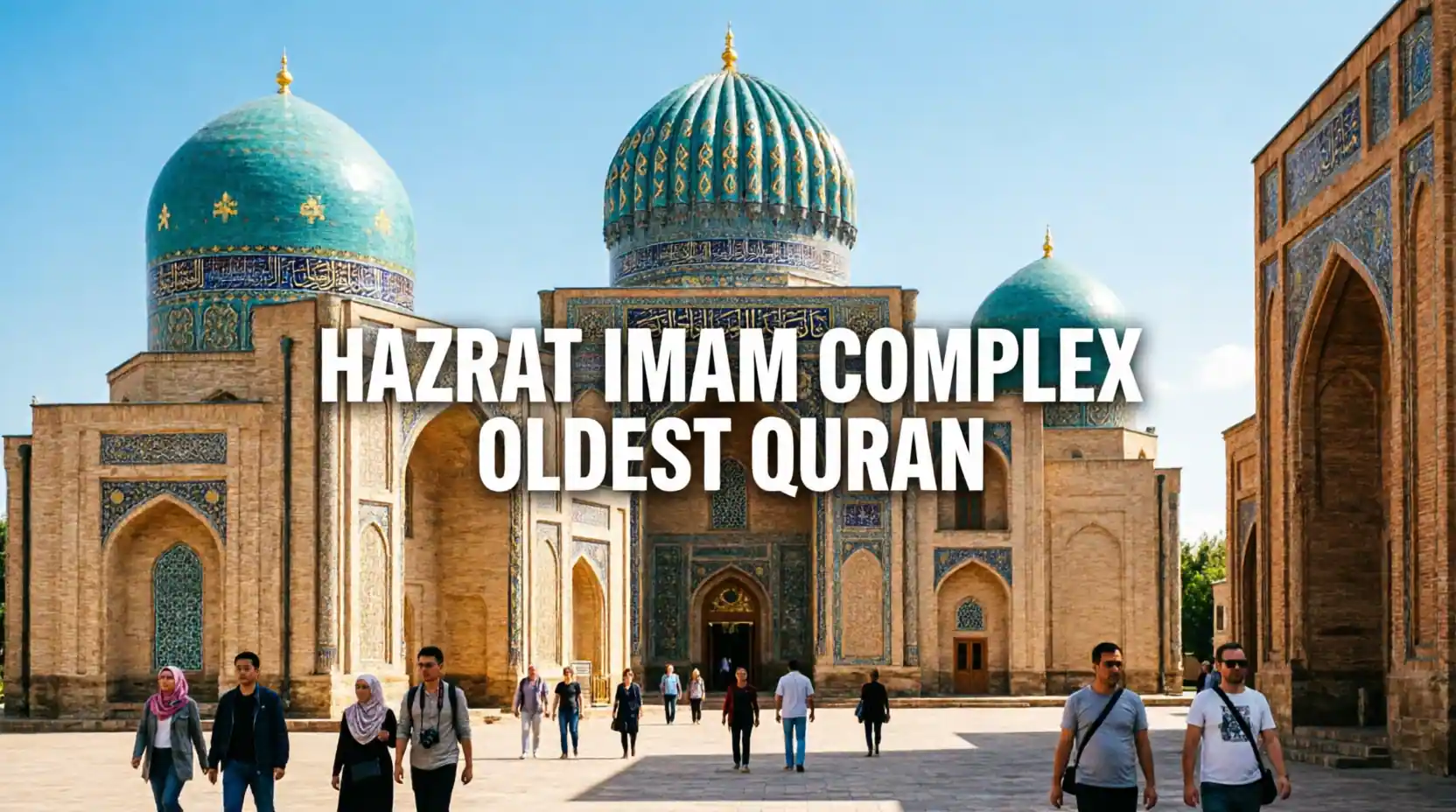
The Hazrat Imam Complex stands as one of Central Asia's most significant Islamic spiritual centers. Located in the heart of Tashkent, this architectural masterpiece houses what many scholars believe to be the world's oldest surviving Quran manuscript.
This sacred complex attracts thousands of pilgrims and tourists annually. Visitors come to witness the ancient Uthman Quran and marvel at the stunning Islamic architecture that has defined this site for centuries.
The complex serves as the administrative center for Muslims in Uzbekistan. It represents the country's deep Islamic heritage and commitment to preserving religious traditions dating back over a millennium.
Modern renovations have enhanced visitor facilities while maintaining historical authenticity. The site now offers improved accessibility, informative exhibits, and guided tours that enrich the experience for international visitors.
Understanding the Hazrat Imam Complex provides crucial insights into Uzbekistan's cultural identity. This guide covers everything you need to know about visiting this remarkable religious and historical landmark in 2026.
Why the Hazrat Imam Complex Matters to Islamic History

The complex's significance extends far beyond its architectural beauty. It houses religious artifacts and manuscripts that connect modern Muslims to the earliest days of Islam.
The Uthman Quran, attributed to the third Caliph of Islam, represents an invaluable link to Islamic origins. This manuscript supposedly contains bloodstains from when Caliph Uthman was martyred while reading it.
Scholars debate the exact dating of various Quran fragments housed here. However, the historical and spiritual importance remains undisputed regardless of academic discussions about precise chronology.
The complex survived Soviet-era religious suppression when many mosques were destroyed or repurposed. Its preservation demonstrates the resilience of Islamic faith in Central Asia through challenging political periods.
Today, the site functions as both an active place of worship and a museum. This dual purpose allows visitors to experience living religious tradition alongside historical preservation.
What Makes the Uthman Quran Special?
The Uthman Quran manuscript measures approximately 70 by 53 centimeters. Its large format reflects the importance placed on Quranic transcription in early Islamic civilization.
The manuscript is written in Hijazi script on parchment made from deer skin. This ancient writing style differs significantly from modern Arabic calligraphy, offering a glimpse into early Islamic artistic expression.
Only portions of the original manuscript survive today. The complex preserves these precious fragments with climate-controlled conditions and strict security measures to prevent deterioration.
Photography of the manuscript is strictly prohibited. This policy protects the fragile parchment while maintaining the sacred atmosphere appropriate for such a revered religious object.
Viewing opportunities are limited to specific times and require respectful behavior. Visitors must dress modestly and maintain silence when viewing the ancient text.
Architecture and Historical Development of the Complex

The Hazrat Imam Complex evolved over several centuries through various construction phases. Its current appearance reflects restoration efforts from the 19th and 20th centuries.
The main mosque features classic Central Asian Islamic architectural elements. Turquoise blue domes, intricate tilework, and soaring minarets create a visually stunning religious environment.
The complex includes multiple structures serving different religious functions. Prayer halls, madrasas, mausoleums, and libraries form an integrated spiritual center.
Traditional Uzbek craftsmanship is evident throughout the site. Master artisans created elaborate geometric patterns, floral motifs, and Quranic calligraphy that adorn walls and ceilings.
Recent renovations have stabilized aging structures while preserving historical integrity. Modern engineering techniques reinforce foundations without compromising architectural authenticity.
Key Structures Within the Complex
The Tilla Sheikh Mosque serves as the complex's primary prayer hall. This beautiful structure accommodates thousands of worshippers during major Islamic holidays and Friday prayers.
The Barak Khan Madrasah represents educational heritage. This historic Islamic school once taught theology, law, and sciences to students from across Central Asia.
The Mausoleum of Kaffal Shashi honors a revered 10th-century Islamic scholar. His tomb remains a pilgrimage destination for those seeking spiritual blessing and guidance.
The Muyi Mubarak Library houses the Uthman Quran and other precious manuscripts. This specialized facility maintains strict environmental controls to protect ancient texts.
The Imam Al-Bukhari Mosque commemorates the famous hadith collector. Though the scholar is buried elsewhere, this mosque honors his contributions to Islamic scholarship.
How to Reach Hazrat Imam Complex in Tashkent

The complex sits in Tashkent's old city district, easily accessible from most areas of the capital. Multiple transportation options accommodate different budgets and preferences.
The Tashkent Metro provides the most economical access route. Take the Yunusobod Line to Minor station, then walk approximately 10 minutes to reach the complex entrance.
Taxi services offer convenient door-to-door transportation. Yandex Go app works reliably in Tashkent with fares from city center ranging from 15,000 to 25,000 Som.
Public buses numbers 1, 9, and 83 stop near the complex. These routes connect major city areas though they may be challenging for visitors unfamiliar with Cyrillic signage.
Walking tours often include the complex as a key stop. Guided groups provide historical context while eliminating navigation concerns for first-time visitors.
Transportation from Tashkent Airport
Tashkent International Airport lies approximately 12 kilometers from the complex. The journey takes 20 to 30 minutes depending on traffic conditions.
Airport taxis charge 80,000 to 120,000 Som for this route. Official airport taxis are more expensive but provide reliable service with fixed pricing.
Yandex Go from airport costs 40,000 to 60,000 Som. This app-based option offers significant savings while maintaining safety and reliability.
Hotel shuttle services may be available for guests. Check with your accommodation about airport transfer options before arrival.
Public transportation from airport requires transfers and local knowledge. This budget option costs under 5,000 Som but takes over an hour with luggage.
Getting Around Tashkent to Visit Multiple Sites
Combine your Hazrat Imam visit with nearby attractions. Chorsu Bazaar, Kukeldash Madrasah, and the Old City all lie within walking distance.
Full-day city tours typically include the complex. These organized excursions provide efficient overview of Tashkent's major religious and cultural sites.
Metro day passes cost 14,000 Som for unlimited rides. This option works well for visitors planning multiple stops across the city.
Private car with driver costs 400,000 to 600,000 Som daily. This premium option provides flexibility and comfort for extensive sightseeing.
Visa Requirements for Visiting Uzbekistan in 2026

Uzbekistan has simplified visa procedures significantly in recent years. Most nationalities now enjoy visa-free or e-visa access for tourism purposes.
Citizens of over 85 countries can enter visa-free for up to 30 days. This includes European Union nations, United Kingdom, Canada, Australia, Japan, and South Korea.
Visa-free entry requires passport valid for at least three months beyond departure date. Ensure your travel documents meet this requirement before booking flights.
E-visa applications process within three business days for eligible nationalities. The online system costs $20 for single entry and allows 30-day stays.
Visit e-visa.gov.uz for official application portal. Avoid third-party services that charge excessive fees for simple application assistance.
Entry Requirements and Documentation
Proof of onward travel may be requested at immigration. Keep printed copies of return or continuation flight tickets readily accessible.
Hotel reservations or invitation letters satisfy accommodation requirements. Book your first night's accommodation before arrival to present if requested.
Registration is mandatory for stays exceeding three days. Hotels handle this automatically, but private accommodations require OVIR office registration.
Passports with Israeli stamps face entry denial. This policy is strictly enforced without exceptions, so plan travel accordingly.
Travel insurance is recommended though not mandatory. Comprehensive coverage including medical emergencies provides peace of mind during your visit.
GCC and Regional Visa Policies
Gulf Cooperation Council citizens enjoy visa-free entry. Bahrain, Kuwait, Oman, Qatar, Saudi Arabia, and UAE passport holders enter without restrictions.
CIS country citizens have varying visa requirements. Check specific bilateral agreements for your nationality before travel planning.
Transit visas allow 72-hour stays for connecting flights. This option works for travelers with extended layovers wanting brief Tashkent exploration.
Best Time to Visit Hazrat Imam Complex in 2026

Spring and autumn offer ideal weather for exploring the complex. April through June and September through October provide comfortable temperatures for walking and outdoor photography.
Summer months from June to August bring intense heat. Temperatures regularly exceed 35 degrees Celsius, making midday visits uncomfortable without air conditioning.
Winter from December to February sees cooler temperatures and occasional rain. The complex remains beautiful in winter light though fewer tourists visit during this period.
Islamic holidays create both opportunities and challenges. Ramadan and Eid celebrations bring special atmosphere but also larger crowds and modified visiting hours.
Fridays represent the Muslim day of rest and prayer. The complex welcomes visitors but restricts access to prayer areas during congregational prayers.
Optimal Visiting Hours
Morning hours from 9 AM to 11 AM offer peaceful exploration. Cooler temperatures and fewer crowds create ideal conditions for photography and contemplation.
Late afternoon between 4 PM and 6 PM provides beautiful lighting. The setting sun illuminates turquoise domes creating spectacular photographic opportunities.
Avoid midday hours from 12 PM to 3 PM in summer. Intense heat and harsh sunlight diminish the experience and create uncomfortable visiting conditions.
Evening visits may be possible during Ramadan. Special nighttime prayers and illuminations create unique atmosphere during the holy month.
Seasonal Events and Religious Observances
Navruz celebrations in late March bring festive atmosphere. This Persian New Year features special prayers and cultural events at the complex.
Ramadan dates shift annually based on lunar calendar. Check 2026 Islamic calendar for exact dates when planning your visit.
Eid al-Fitr and Eid al-Adha draw massive crowds. These major holidays offer vibrant cultural experiences though access may be limited for non-worshippers.
Friday prayers occur weekly around midday. Non-Muslim visitors should plan around this time or observe respectfully from designated areas.
Complete Cost Breakdown for Visiting Hazrat Imam Complex

Visiting the Hazrat Imam Complex involves minimal expenses compared to many global religious sites. Budget-conscious travelers can experience this landmark affordably.
Entrance to the complex grounds is completely free. You can walk through courtyards, admire architecture, and photograph exteriors without any charge.
Museum and library access requires small entrance fees. Expect to pay 15,000 to 25,000 Som for entry to areas housing historical manuscripts and artifacts.
Guided tours cost 50,000 to 100,000 Som depending on language and duration. English-speaking guides charge premium rates but provide valuable historical context.
Photography permits for interior spaces may cost extra. Some areas prohibit photography entirely while others allow it with paid permission.
Transportation Costs to and Within Complex
Metro rides cost 1,400 Som per trip from anywhere in Tashkent. This budget option provides reliable access though it requires walking from the station.
Yandex Go taxi from city center costs 15,000 to 25,000 Som. This convenient option provides door-to-door service at reasonable prices.
Private taxi negotiation typically starts at 30,000 to 50,000 Som. Always agree on price before entering the vehicle to avoid disputes.
Organized tour packages including complex visit cost $30 to $80. These tours bundle transportation, guide, and multiple Tashkent attractions.
Additional Expenses to Consider
Modest clothing may need purchase if you lack appropriate attire. Scarves for women and long pants for men can be bought nearby for 20,000 to 40,000 Som.
Refreshments and snacks cost 10,000 to 20,000 Som at nearby cafes. Bringing water is advisable especially during summer months.
Religious souvenirs and books range from 10,000 to 100,000 Som. The complex gift shop offers Islamic literature and traditional crafts.
Donations are appreciated though not required. Contributing to maintenance and preservation efforts supports this important cultural heritage site.
Sample Itinerary for Hazrat Imam Complex Visit

A well-planned visit maximizes your experience at this significant religious and cultural site. This itinerary balances thorough exploration with respect for the sacred environment.
Half-Day Visit Itinerary
Arrive at 9 AM when the complex opens and crowds are minimal. Morning light beautifully illuminates the turquoise domes and intricate tilework.
Begin with exterior photography and architectural appreciation. Walk around the main mosque capturing different angles before interior visits.
Visit the Muyi Mubarak Library by 10 AM to view the Uthman Quran. Morning hours provide best viewing conditions before afternoon crowds arrive.
Explore the Barak Khan Madrasah and learn about Islamic education history. The courtyard and student cells offer insights into traditional learning environments.
Pay respects at the Mausoleum of Kaffal Shashi by 11 AM. This peaceful space provides opportunity for quiet reflection and spiritual connection.
Conclude with Tilla Sheikh Mosque visit around noon. If timing aligns with prayer time, observe respectfully from designated visitor areas.
Full-Day Tashkent Religious Sites Tour
Start at Hazrat Imam Complex at 9 AM following the half-day itinerary above. Allocate three hours for thorough exploration of all structures.
Walk to nearby Chorsu Bazaar for lunch at 12 PM. This historic market offers authentic Uzbek cuisine and vibrant local atmosphere.
Visit Kukeldash Madrasah in the early afternoon. This 16th-century educational institution complements your morning's Islamic architecture study.
Explore the Old City district between 2 PM and 4 PM. Traditional houses, craft workshops, and local life provide cultural context for religious sites.
Return to Hazrat Imam Complex for evening prayers if interested. Sunset creates magical atmosphere as lights illuminate the domes against darkening sky.
End your day at a nearby restaurant serving traditional Uzbek dinner. Reflect on your spiritual and cultural experiences while enjoying plov and tea.
Safety and Etiquette Guidelines for Visitors

The Hazrat Imam Complex is a functioning religious site requiring respectful behavior. Understanding and following proper etiquette ensures positive experiences for all visitors.
Dress Code Requirements
Women must cover their heads, arms, and legs completely. Scarves, long sleeves, and full-length skirts or pants are mandatory for female visitors.
Men should wear long pants and avoid sleeveless shirts. Modest dress demonstrates respect for the sacred nature of the complex.
Remove shoes before entering prayer halls and mosques. Shoe storage facilities are typically available near entrances to prayer areas.
Scarves and coverings can be borrowed at entrance if needed. However, bringing your own ensures proper fit and hygiene.
Behavioral Expectations
Maintain quiet voices throughout the complex. Loud conversations disrupt worshippers and violate the peaceful atmosphere.
Photography restrictions must be strictly observed. Interior prayer areas and the Uthman Quran manuscript prohibit all photography.
Follow designated visitor pathways and respect restricted areas. Some sections are reserved for worshippers only and should not be entered by tourists.
Avoid visiting during peak prayer times if you are not praying. Friday noon prayers particularly draw large crowds and limit tourist access.
Ask permission before photographing individuals. Many worshippers prefer privacy during prayer and religious observance.
Security Considerations
Security screening occurs at complex entrances. Cooperate with guards and allow bag inspections as part of standard safety procedures.
Large bags and backpacks may need to be checked. Travel light with only essential items to streamline entry process.
Keep valuables secure and maintain awareness of belongings. While Uzbekistan is generally safe, crowded tourist sites attract opportunistic theft.
Follow all instructions from security personnel and guides. These protocols exist to protect both visitors and sacred artifacts.
Photography Guidelines and Best Practices

The Hazrat Imam Complex offers exceptional photographic opportunities. Understanding restrictions and techniques helps you capture stunning images while respecting religious protocols.
Permitted Photography Areas
Exterior architecture can be photographed freely. The turquoise domes, ornate facades, and courtyard views provide endless compositional possibilities.
Gardens and pathways allow unrestricted photography. These spaces offer peaceful settings for capturing the complex's serene atmosphere.
Some interior spaces permit photography without flash. Always verify with staff before photographing inside buildings as policies vary.
People photography requires explicit permission. Approach individuals respectfully and accept refusals gracefully without argument.
Prohibited Photography Zones
The Uthman Quran manuscript strictly prohibits all photography. This policy protects the fragile ancient text and maintains appropriate reverence.
Active prayer areas restrict photography during worship. Even when empty, some prayer halls prohibit photography entirely out of respect.
Private religious ceremonies may limit photography. Observe posted signs and staff instructions regarding camera use during special events.
Close-up details of religious artifacts often require special permission. Request authorization from complex administration for detailed documentation photography.
Technical Photography Tips
Wide-angle lenses capture architectural grandeur effectively. The 16-35mm range works well for interior spaces and courtyard compositions.
Early morning and late afternoon provide optimal lighting. Harsh midday sun creates difficult contrast and washes out turquoise tile colors.
Polarizing filters enhance blue dome saturation. These filters reduce reflections and deepen sky color for more dramatic images.
Tripods may be restricted in crowded areas. Handheld shooting with image stabilization provides flexibility when tripods are prohibited.
Historical Significance of the Uthman Quran
The Uthman Quran represents one of Islam's most treasured manuscripts. Understanding its history enhances appreciation for this sacred artifact.
Origins and Historical Journey
Caliph Uthman ibn Affan commissioned this Quran in the 7th century. As the third Caliph, he standardized the Quranic text to preserve unity among Muslims.
The manuscript allegedly contains Uthman's blood from his martyrdom. According to tradition, he was killed while reading this very Quran in 656 CE.
The Quran traveled through various Islamic capitals over centuries. It moved from Medina to Damascus, Baghdad, and eventually to Central Asia.
Tamerlane brought the manuscript to Samarkand in the 14th century. His conquests relocated many treasures to his capital city.
Russian forces transferred the Quran to Tashkent in 1868. The manuscript eventually found its permanent home at the Hazrat Imam Complex.
Scholarly Analysis and Dating
Carbon dating places some fragments in the 7th to 8th centuries. Scientific analysis supports claims of great antiquity though exact dating remains debated.
Hijazi script characteristics indicate early Islamic period origin. The angular writing style predates later calligraphic developments.
Parchment quality and preparation methods align with early Islamic practices. Deer skin was commonly used for important manuscripts in this era.
Scholars continue studying the manuscript for historical insights. Ongoing research reveals information about early Quranic compilation and preservation.
Preservation Efforts
Climate-controlled environment protects the fragile parchment. Temperature and humidity regulation prevents deterioration of the ancient material.
Limited handling minimizes physical stress on the manuscript. Only qualified scholars and conservators may touch the original text.
Digital preservation projects create high-resolution records. These digital copies allow study without risking damage to the original.
International collaboration ensures best conservation practices. UNESCO and Islamic heritage organizations support ongoing preservation efforts.
Conclusion and Final Recommendations
The Hazrat Imam Complex offers profound spiritual and cultural experiences for visitors to Tashkent. Seeing the world's oldest Quran manuscript creates lasting memories and deeper understanding of Islamic heritage.
Plan your visit during comfortable weather seasons for optimal experience. Spring and autumn provide ideal conditions for exploring the complex's beautiful grounds.
Respect dress codes and behavioral expectations at all times. Modest attire and reverent conduct ensure access to all areas and positive interactions with staff and worshippers.
Allocate sufficient time for thorough exploration. Rushing through this significant site diminishes the experience and may cause you to miss important details.
Consider hiring a knowledgeable guide for deeper historical context. Expert commentary enriches understanding of architectural features and religious significance.
Combine your visit with other Tashkent attractions for comprehensive cultural experience. The complex serves as perfect introduction to Uzbekistan's rich Islamic heritage.
Your visit to the Hazrat Imam Complex connects you to over 1,400 years of Islamic history. This sacred site continues inspiring pilgrims and travelers, preserving ancient traditions for future generations to appreciate and honor.
0 Comments