.webp)
.webp)
Best Spots for Seeing Marco Polo Sheep in the Pamirs 2026 Season Guide
Introduction to Marco Polo Sheep in the Pamirs
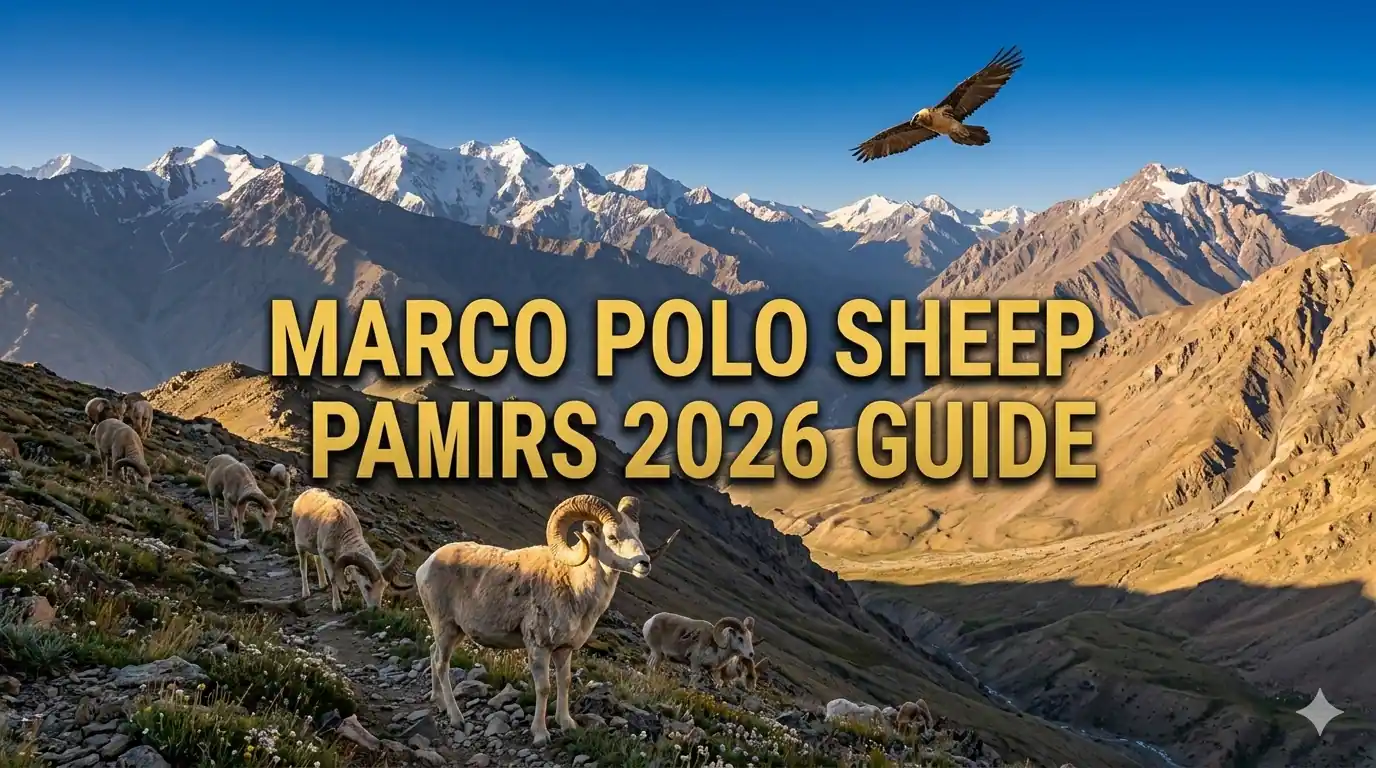
Marco Polo sheep represent one of the world's most spectacular and elusive mountain animals.
These magnificent argali subspecies inhabit the remote highlands of the Pamir Mountains across Central Asia.
The 2026 season offers exceptional opportunities for wildlife enthusiasts to observe these iconic creatures.
This comprehensive guide reveals the best viewing locations, timing, and practical information for your expedition.
Witnessing Marco Polo sheep in their natural habitat creates unforgettable memories of wilderness and wildlife.
Where to See Marco Polo Sheep in the Pamirs

The Pamir Mountains span multiple countries offering diverse viewing opportunities for Marco Polo sheep.
Tajikistan's Pamir National Park provides the most accessible and reliable viewing locations for wildlife observers.
The Wakhan Corridor in Afghanistan hosts significant populations though access requires careful planning.
Kyrgyzstan's southern Pamir regions offer excellent viewing with developing ecotourism infrastructure.
China's Taxkorgan Nature Reserve protects Marco Polo sheep though permits are challenging to obtain.
Tajikistan Pamir National Park
Pamir National Park established in 1992 protects over two million hectares of critical Marco Polo sheep habitat.
The park encompasses the entire Tajik Pamirs including the highest peaks and most remote valleys.
Zorkul State Nature Reserve in the eastern Pamirs holds particularly dense Marco Polo sheep populations.
Guided tours from Khorog provide the most practical access for international wildlife viewers.
Permits cost approximately fifty to one hundred US dollars and must be arranged in advance.
Wakhan Corridor Afghanistan
The Wakhan Corridor offers spectacular Marco Polo sheep viewing in a dramatic mountain setting.
Remote valleys like the Little Pamir and Big Pamir host substantial argali populations.
Access requires coordination with local Wakhi guides who know sheep movement patterns intimately.
Security considerations necessitate careful planning and current information before travel.
The corridor's isolation preserves pristine habitat though infrastructure remains extremely limited.
Kyrgyzstan Southern Pamirs
Kyrgyzstan's Alay Valley and surrounding mountains provide excellent Marco Polo sheep viewing opportunities.
The region benefits from better road access and developing community-based tourism initiatives.
Sary Mogol and surrounding pastures host seasonal Marco Polo sheep populations.
Local shepherds often serve as knowledgeable guides for wildlife viewing expeditions.
Combined itineraries with other Pamir attractions maximize the value of your journey.
Best Time to See Marco Polo Sheep

Timing your visit significantly impacts your chances of observing Marco Polo sheep in the Pamirs.
Summer months from June through August offer the most reliable weather and accessibility.
Early autumn September and October provides excellent viewing as sheep descend to lower elevations.
The rutting season in November creates dramatic behavioral displays though weather becomes challenging.
Winter and spring present extreme conditions limiting access though dedicated observers may find opportunities.
Seasonal Behavior Patterns
Summer finds Marco Polo sheep at highest elevations between four thousand and five thousand meters.
Animals spread across alpine meadows feeding on nutritious grasses and forbs during warm months.
Autumn brings descent to lower elevations between three thousand and four thousand meters.
Winter concentrates sheep in sheltered valleys where snow depth allows grazing access.
Spring lambing season occurs in May and June with ewes seeking secluded birthing areas.
2026 Season Specific Considerations
Climate patterns suggest normal seasonal movements for the 2026 viewing year.
June through September represents optimal window balancing weather, access, and animal behavior.
July and August offer warmest temperatures though afternoon thunderstorms common in high mountains.
September provides stable weather, fewer tourists, and excellent sheep visibility before snow.
Book guides and permits at least three months in advance for 2026 season to ensure availability.
Accessing Marco Polo Sheep Habitat

Reaching Marco Polo sheep viewing areas requires careful logistical planning and realistic expectations.
Most viewing locations lie in extremely remote areas far from paved roads and services.
Four wheel drive vehicles essential for accessing trailheads and remote mountain valleys.
Trekking and horseback riding often necessary to reach prime viewing elevations.
Physical fitness and altitude acclimatization critical for successful wildlife viewing expeditions.
Transportation Options
Fly into Dushanbe Tajikistan or Osh Kyrgyzstan as primary gateways to the Pamirs.
Hire experienced drivers with suitable four wheel drive vehicles for mountain travel.
Shared taxis and marshrutkas reach major towns but not remote wildlife viewing areas.
Domestic flights to Khorog Tajikistan save time though weather causes frequent cancellations.
Border crossings between Pamir countries require advance visa planning and current regulations.
Trekking and Horseback Routes
Multi-day treks provide deepest access to remote Marco Polo sheep habitat.
Horse rentals from local Kyrgyz or Wakhi families enable higher elevation travel.
Experienced guides know traditional routes and sheep movement patterns from generations of knowledge.
Camping equipment necessary for overnight expeditions as villages are widely spaced.
Porter or pack animal support allows carrying adequate supplies for extended backcountry travel.
Guided Tours and Operators

Professional guides dramatically increase your chances of successfully observing Marco Polo sheep.
Local expertise in animal behavior, habitat knowledge, and tracking skills proves invaluable.
Reputable operators handle permits, logistics, and safety allowing you to focus on wildlife viewing.
Community-based tourism initiatives ensure economic benefits reach local Pamir communities.
Research operators carefully verifying credentials, safety records, and environmental ethics.
Recommended Tour Operators
Pamir Trek in Tajikistan specializes in wildlife viewing with experienced naturalist guides.
Peak Adventures Kyrgyzstan offers Marco Polo sheep expeditions with community-based tourism approach.
Wakhan Treks provides Afghanistan corridor access with local Wakhi guides and cultural sensitivity.
Social responsibility and conservation commitments should factor into operator selection decisions.
Expect to pay two hundred to five hundred US dollars daily for guided wildlife viewing tours.
What to Expect from Guided Tours
Pre-trip planning includes permits, equipment lists, and physical preparation guidance.
Experienced guides use spotting scopes and binoculars to locate sheep at great distances.
Knowledge of wind direction, animal behavior, and stalking techniques maximizes viewing opportunities.
Guides facilitate respectful wildlife interactions maintaining safe distances and minimizing disturbance.
Cultural interpretation enriches experience with local knowledge of Pamir ecology and traditions.
Permits and Regulations

Legal requirements vary by country and must be understood before planning your Marco Polo sheep expedition.
Tajikistan requires GBAO permits for Pamir travel obtainable in Dushanbe or online.
Pamir National Park entry permits cost approximately twenty US dollars per person per day.
Afghanistan Wakhan Corridor requires special permits and coordination with local authorities.
Kyrgyzstan border zone permits necessary for areas near Tajik and Chinese borders.
Tajikistan Permit Requirements
GBAO permit allows travel in Gorno-Badakhshan Autonomous Oblast including most Marco Polo sheep habitat.
Apply online through Tajikistan e-visa portal or obtain in person at OVIR office in Dushanbe.
Processing takes three to five business days so plan accordingly before your travel dates.
Cost is approximately twenty US dollars plus potential facilitation fees if using agencies.
Carry multiple copies as checkpoints throughout the Pamirs require permit verification.
Protected Area Regulations
Pamir National Park regulations prohibit approaching wildlife closer than two hundred meters.
Drones require special authorization and are generally discouraged in wildlife areas.
Camping only in designated areas helps minimize environmental impact on fragile alpine ecosystems.
Fire restrictions apply above treeline requiring camp stoves for all cooking needs.
Pack out all trash and follow leave no trace principles in these pristine wilderness areas.
Wildlife Viewing Ethics and Best Practices

Responsible wildlife viewing protects Marco Polo sheep populations while providing meaningful experiences.
Maintain minimum distances of two hundred meters to avoid stressing animals or altering behavior.
Use optical equipment like spotting scopes and telephoto lenses rather than approaching closely.
Move slowly and quietly avoiding sudden movements or loud noises that startle wildlife.
Respect seasonal sensitivities especially during lambing season and harsh winter conditions.
Photography Guidelines
Telephoto lenses of three hundred millimeters or longer enable quality images from safe distances.
Avoid using flash photography which can startle animals and disrupt natural behaviors.
Patience yields better results than actively pursuing or chasing sheep for better angles.
Share photographs responsibly avoiding precise location data that could facilitate poaching.
Support conservation by contributing images to research organizations monitoring Marco Polo sheep populations.
Minimizing Environmental Impact
Stay on established trails and routes to prevent erosion and habitat damage.
Avoid contaminating water sources with soap, waste, or other pollutants.
Respect vegetation by not trampling alpine plants that grow slowly in harsh conditions.
Use established campsites and minimize footprint in these fragile high altitude environments.
Support local conservation initiatives through park fees and community-based tourism purchases.
Equipment and Gear Recommendations

Proper equipment significantly enhances your Marco Polo sheep viewing success and comfort.
Quality optics are essential as sheep often visible only at considerable distances in vast landscapes.
Layered clothing systems accommodate extreme temperature variations common in high mountains.
Sturdy footwear with ankle support necessary for rugged terrain and variable conditions.
Altitude sickness prevention and treatment medications should be part of your medical kit.
Essential Viewing Equipment
Binoculars with eight by forty two or ten by forty two specifications provide excellent general viewing.
Spotting scopes with twenty to sixty power magnification enable detailed observation at extreme distances.
Tripods stabilize optics for extended glassing sessions reducing fatigue and improving image quality.
Camera with telephoto lens of three hundred millimeters or longer captures quality wildlife images.
Field guides and apps help identify Marco Polo sheep behavior and distinguish from other wildlife.
Clothing and Personal Gear
Moisture wicking base layers manage perspiration during active hiking and temperature regulation.
Insulating mid layers like fleece or down provide warmth during cold mornings and high elevations.
Windproof and waterproof outer shell protects against sudden mountain weather changes.
Warm hat, gloves, and neck gaiter essential even in summer at high Pamir elevations.
Sunglasses with UV protection and high SPF sunscreen critical at altitude with intense solar radiation.
Accommodation Options

Marco Polo sheep viewing expeditions require various accommodation types depending on location and access.
Remote areas necessitate camping while towns and villages offer guesthouses and homestays.
Comfort levels range from basic to moderate with luxury options extremely limited in the Pamirs.
Booking in advance essential during peak season though flexibility required for remote locations.
Community-based homestays provide cultural immersion while supporting local economies directly.
Camping in Marco Polo Sheep Habitat
Four season tents withstand high altitude winds and sudden weather changes common in the Pamirs.
Sleeping bags rated to minus ten degrees Celsius or lower necessary even in summer months.
Inflatable sleeping pads provide insulation from cold ground and improve comfort on rough terrain.
Portable camp stoves required as open fires prohibited above treeline and in many areas.
Experienced guides typically arrange camping logistics though self-sufficient expeditions possible for experienced mountaineers.
Town and Village Accommodations
Khorog Tajikistan serves as primary base with hotels ranging from basic to comfortable standards.
Guesthouses in villages like Langar, Bulunkul, and Zorkul offer authentic Pamiri hospitality.
Sary Mogol and Gulcha in Kyrgyzstan provide simple accommodations for Pamir wildlife expeditions.
Homestays arranged through community tourism initiatives typically cost fifteen to thirty dollars per night.
Expect basic amenities with shared facilities though cleanliness and warmth generally adequate.
Physical Preparation and Health Considerations

Marco Polo sheep viewing occurs at extreme altitudes requiring proper physical preparation and health awareness.
Most viewing areas sit between three thousand and five thousand meters above sea level.
Altitude sickness affects many visitors and can range from mild discomfort to life threatening conditions.
Gradual ascent and proper acclimatization significantly reduce altitude illness risks.
Medical evacuation from remote Pamir locations is difficult and expensive requiring comprehensive insurance.
Altitude Acclimatization Strategies
Spend two to three days at intermediate elevations before ascending to highest viewing areas.
Follow the climb high sleep low principle ascending during day but sleeping at lower elevations.
Stay well hydrated drinking three to four liters of water daily at altitude.
Avoid alcohol and sedatives which can worsen altitude sickness symptoms and impair acclimatization.
Consider acetazolamide medication after consulting with travel medicine physician about prevention.
Recognizing Altitude Illness
Mild symptoms include headache, nausea, fatigue, and difficulty sleeping at altitude.
Severe symptoms like confusion, difficulty breathing, and inability to walk require immediate descent.
High altitude pulmonary edema and cerebral edema are life threatening requiring emergency evacuation.
Never ascend further with symptoms of altitude illness and descend if symptoms worsen.
Carry supplemental oxygen and know evacuation procedures when traveling in remote high altitude areas.
Safety and Security Considerations

The remote Pamir Mountains present various safety challenges requiring careful planning and awareness.
Weather can change rapidly creating dangerous conditions even during summer months.
Border regions require awareness of current political situations and travel advisories.
Limited communication infrastructure means self-reliance essential in emergency situations.
Travel insurance covering high altitude trekking and medical evacuation absolutely essential.
Weather and Environmental Hazards
Afternoon thunderstorms common in summer bringing lightning, hail, and sudden temperature drops.
Start early and plan to be below exposed ridges by early afternoon during storm season.
River crossings can become dangerous after rain or during afternoon snowmelt.
Extreme cold possible at any time of year above four thousand meters elevation.
UV radiation intensity at altitude causes severe sunburn requiring diligent sun protection.
Border and Security Issues
Tajikistan Afghanistan and Tajikistan China borders have periodic tensions requiring current information.
Carry permits and identification at all times as military checkpoints common in border regions.
Avoid photographing military installations, bridges, or security personnel which can cause serious problems.
Register with your embassy when traveling in remote border areas of the Pamirs.
Hire local guides who understand current security situations and can navigate checkpoints smoothly.
Cultural Context and Local Communities

The Pamirs are home to diverse ethnic groups with rich cultural traditions and hospitality.
Understanding local customs enhances your experience and demonstrates respect for host communities.
Marco Polo sheep hold cultural significance for Pamir peoples beyond their ecological importance.
Community-based tourism initiatives provide economic alternatives to hunting and poaching.
Cultural sensitivity and appropriate behavior facilitate positive interactions and future access.
Pamir Ethnic Groups
Kyrgyz nomadic pastoralists dominate the eastern Pamirs with traditional yurt camps and livestock herding.
Wakhi people inhabit the Wakhan Corridor speaking an eastern Iranian language and practicing Ismaili Islam.
Pamiri peoples of Tajikistan maintain distinct cultural identity with unique architecture and traditions.
Respect conservative dress and behavior norms especially in rural villages and religious communities.
Learning basic greetings in Kyrgyz, Wakhi, or Tajik demonstrates respect and facilitates interactions.
Supporting Local Communities
Hire local guides and porters ensuring economic benefits reach Pamir communities directly.
Stay in community homestays rather than external operators when available and appropriate.
Purchase local crafts and products supporting traditional skills and providing income diversification.
Respect cultural sites and ask permission before photographing people especially women and religious ceremonies.
Contribute to community conservation projects that protect Marco Polo sheep while supporting local livelihoods.
Conservation and Research Opportunities

Marco Polo sheep populations face ongoing threats from poaching, habitat degradation, and climate change.
Tourism done responsibly can provide economic incentives for conservation and anti-poaching efforts.
Citizen science opportunities allow visitors to contribute to research and monitoring efforts.
Understanding conservation challenges enhances appreciation and promotes responsible wildlife viewing.
Your visit can directly support protection efforts through park fees and community conservation programs.
Conservation Challenges
Poaching for trophy horns remains a significant threat despite legal protections and enforcement efforts.
Competition with domestic livestock for grazing resources creates habitat pressure in some areas.
Climate change affects alpine ecosystems and may alter Marco Polo sheep distribution and behavior.
Limited enforcement capacity in remote areas allows illegal hunting to continue in some regions.
International cooperation essential as sheep move across borders between Tajikistan, Kyrgyzstan, Afghanistan, and China.
How Visitors Can Help
Pay all required park fees and permits which fund conservation management and anti-poaching patrols.
Report any suspicious activity or signs of poaching to park authorities and your guides immediately.
Support organizations working on Pamir conservation through donations or volunteer contributions.
Share responsible wildlife viewing practices with other travelers promoting ethical tourism standards.
Contribute photographs and observations to research programs monitoring Marco Polo sheep populations and movements.
Cost Planning and Budgeting
Marco Polo sheep viewing expeditions require significant financial investment though costs vary widely.
Independent travel costs less than guided tours though requires more planning and risk acceptance.
Remote location access, specialized equipment, and permit fees all contribute to overall expenses.
Budget for unexpected costs as remote travel often presents unforeseen expenses and challenges.
Quality guides and proper equipment worth the investment for safety and viewing success.
Typical Expense Categories
International flights to Central Asia typically cost eight hundred to fifteen hundred US dollars from Europe or North America.
Domestic transportation including four wheel drive rental and fuel costs one hundred to two hundred dollars daily.
Guide services range from one hundred to three hundred dollars daily depending on expertise and services included.
Permits and park fees total approximately one hundred to two hundred dollars for typical expeditions.
Accommodation and meals cost twenty to fifty dollars daily in towns and fifty to one hundred dollars for camping expeditions.
Money Saving Tips
Travel in small groups sharing vehicle, guide, and equipment costs reduces per person expenses significantly.
Book permits and major services in advance avoiding last minute premium pricing and availability issues.
Use local transportation and guesthouses rather than tourist services where practical and safe.
Bring your own camping and viewing equipment avoiding rental fees though consider shipping costs.
Travel during shoulder seasons May or September when prices lower though weather less predictable.
Conclusion and Final Recommendations
Seeing Marco Polo sheep in the Pamirs represents a rare privilege in one of the world's last great wildernesses.
The 2026 season offers excellent opportunities for dedicated wildlife enthusiasts willing to invest in proper planning.
Prioritize responsible tourism practices that protect these magnificent animals and support local communities.
Patience, preparation, and respect for both wildlife and culture yield the most rewarding experiences.
The memory of observing Marco Polo sheep against the backdrop of the Roof of the World will last a lifetime.
0 Comments