.webp)
.webp)
Is North Korea Safe for Tourists? The Reality Behind the 2026 Headlines
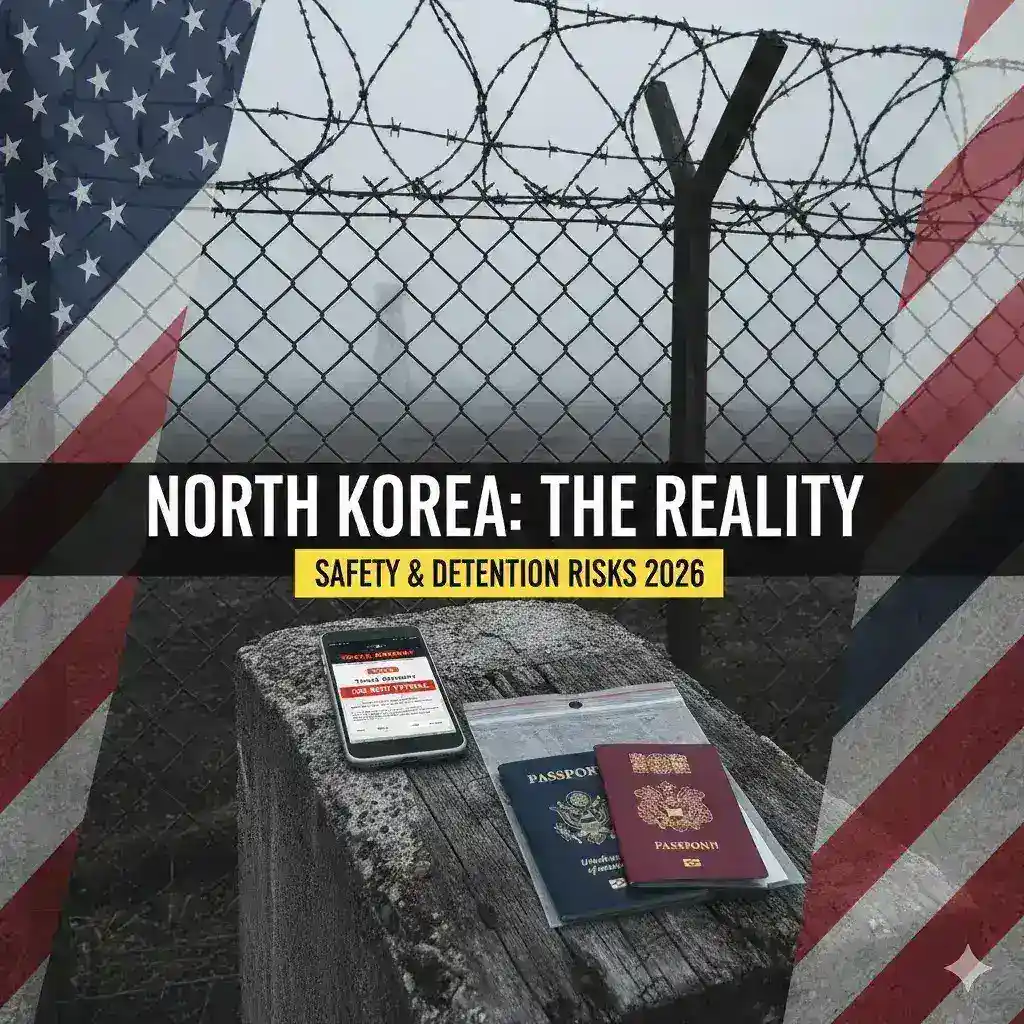
Is North Korea Safe for Tourists? The Reality Behind the 2026 Headlines
The honest answer: North Korea is "safe" in the sense that violent crime against tourists is virtually nonexistent—but it is profoundly unsafe in ways that matter far more: arbitrary detention, lack of due process, no consular protection, and the constant risk that minor actions could lead to severe consequences.
North Korea (Democratic People's Republic of Korea, DPRK) presents one of the world's most complex travel safety questions. On the surface, organized tours operate smoothly: tourists visit Pyongyang, the DMZ, and selected sites under the watchful eyes of guides, with no reported incidents of street crime, theft, or violence against visitors. Yet beneath this controlled surface lies a reality where the rule of law as understood in democratic nations does not apply, where foreigners have been detained for actions not considered crimes elsewhere, and where geopolitical tensions can instantly transform a tourist into a political pawn.
This comprehensive guide separates sensational headlines from documented realities, examining what "safety" truly means for tourists in North Korea in 2026. We analyze detention risks, tour operator practices, geopolitical factors, and practical considerations to help you make an informed decision about whether visiting the DPRK aligns with your risk tolerance and values.
Understanding "Safety" in the North Korean Context
What Tourists Experience: The Controlled Environment
For tourists who follow all rules, North Korea can feel remarkably orderly:
- Violent crime: Virtually nonexistent against tourists
- Theft: Extremely rare; guides monitor tourists constantly
- Traffic safety: Low vehicle density in tourist areas
- Health infrastructure: Basic medical care available in Pyongyang
- Food safety: Tourist meals prepared to international standards
- Physical security: Tourists are valuable; harm to them brings unwanted attention
- 👉 Complete Guide to Tajikistan National Unity Day 2026
- 👉 North Korea for Digital Nomad Families Navigating Secure Housing and Schooling
- 👉 Uzbekistan 2026 Visa-Free Entry for US Citizens: Everything you need to know about the 30-day stay.
Why This "Safety" Is Misleading
The absence of street crime does not equal overall safety. The real risks in North Korea are systemic:
- Arbitrary detention: Authorities can detain foreigners for any reason
- No due process: Legal system lacks transparency and independence
- No consular access: Most countries have no diplomatic presence in DPRK
- Political vulnerability: Tourists can become leverage in diplomatic disputes
- Unpredictable enforcement: Rules applied inconsistently
- 👉 Complete Guide to Tajikistan National Unity Day 2026
- 👉 North Korea for Digital Nomad Families Navigating Secure Housing and Schooling
- 👉 Uzbekistan 2026 Visa-Free Entry for US Citizens: Everything you need to know about the 30-day stay.
Key Insight: In North Korea, safety depends not on avoiding criminals, but on avoiding actions that might be interpreted as disrespectful, political, or threatening by authorities whose interpretations are unpredictable and whose power is absolute.
Documented Risks: What Has Actually Happened to Tourists
Detention Cases: Patterns and Lessons
While most tourists complete visits without incident, several high-profile cases illustrate real risks:
Otto Warmbier (USA, 2016-2017):
- Alleged offense: Attempting to take propaganda poster from hotel
- Outcome: Sentenced to 15 years hard labor; returned to US in coma; died days later
- Lesson: Minor actions can trigger severe consequences
- 👉 Complete Guide to Tajikistan National Unity Day 2026
- 👉 North Korea for Digital Nomad Families Navigating Secure Housing and Schooling
- 👉 Uzbekistan 2026 Visa-Free Entry for US Citizens: Everything you need to know about the 30-day stay.
Other Detained Tourists (2014-2019):
- Jeffrey Fowle (USA): Left Bible at hotel; detained 6 months
- Kenneth Bae (USA): Missionary activities; detained 2 years
- Matthew Miller (USA): Tore up tourist visa at airport; detained 6 months
- Alex Sigalov (Australia): Alleged "hostile acts"; detained briefly
- Multiple South Koreans: Detained for various alleged offenses
- 👉 Complete Guide to Tajikistan National Unity Day 2026
- 👉 North Korea for Digital Nomad Families Navigating Secure Housing and Schooling
- 👉 Uzbekistan 2026 Visa-Free Entry for US Citizens: Everything you need to know about the 30-day stay.
Common Factors in Detention Cases:
- Actions involving religious materials or political expression
- Perceived disrespect to leadership or national symbols
- Attempts to interact with locals outside guided tours
- Photography of restricted areas or military personnel
- Geopolitical timing (detentions often increase during tensions)
- 👉 Complete Guide to Tajikistan National Unity Day 2026
- 👉 North Korea for Digital Nomad Families Navigating Secure Housing and Schooling
- 👉 Uzbekistan 2026 Visa-Free Entry for US Citizens: Everything you need to know about the 30-day stay.
Release Patterns:
- Most detainees released through diplomatic negotiations
- Release often coincides with diplomatic gestures or concessions
- Some detainees required public apologies or confessions
- Detention duration varies from weeks to years
- 👉 Complete Guide to Tajikistan National Unity Day 2026
- 👉 North Korea for Digital Nomad Families Navigating Secure Housing and Schooling
- 👉 Uzbekistan 2026 Visa-Free Entry for US Citizens: Everything you need to know about the 30-day stay.
Current Travel Advisories (2026)
United States: Level 4 - Do Not Travel
The US State Department maintains the highest advisory level:
- Primary concern: "Serious risk of arrest and long-term detention"
- Passport restriction: US passports invalid for DPRK travel (with limited exceptions)
- Consular access: No US diplomatic presence; Sweden serves as protecting power with limited ability
- Specific warning: "North Korean authorities have detained US citizens without due process"
- 👉 Complete Guide to Tajikistan National Unity Day 2026
- 👉 North Korea for Digital Nomad Families Navigating Secure Housing and Schooling
- 👉 Uzbekistan 2026 Visa-Free Entry for US Citizens: Everything you need to know about the 30-day stay.
United Kingdom: FCDO Advises Against All Travel
- Risk assessment: "Unacceptable risk" of arbitrary detention
- Consular support: Extremely limited; no embassy in Pyongyang
- Specific concerns: Lack of due process, potential for long detention
- 👉 Complete Guide to Tajikistan National Unity Day 2026
- 👉 North Korea for Digital Nomad Families Navigating Secure Housing and Schooling
- 👉 Uzbekistan 2026 Visa-Free Entry for US Citizens: Everything you need to know about the 30-day stay.
Canada: Avoid All Travel
- Advisory: "Do not travel to North Korea"
- Rationale: "Risk of arbitrary arrest and detention"
- Consular services: Very limited; Sweden represents Canadian interests
- 👉 Complete Guide to Tajikistan National Unity Day 2026
- 👉 North Korea for Digital Nomad Families Navigating Secure Housing and Schooling
- 👉 Uzbekistan 2026 Visa-Free Entry for US Citizens: Everything you need to know about the 30-day stay.
Australia: Do Not Travel
- Advisory level: Highest warning
- Key risks: Arbitrary detention, strict laws, limited consular support
- 👉 Complete Guide to Tajikistan National Unity Day 2026
- 👉 North Korea for Digital Nomad Families Navigating Secure Housing and Schooling
- 👉 Uzbekistan 2026 Visa-Free Entry for US Citizens: Everything you need to know about the 30-day stay.
Other Countries:
- Most Western nations advise against travel
- Some Asian nations have less restrictive advisories but still note risks
- All acknowledge the fundamental uncertainty of the legal environment
- 👉 Complete Guide to Tajikistan National Unity Day 2026
- 👉 North Korea for Digital Nomad Families Navigating Secure Housing and Schooling
- 👉 Uzbekistan 2026 Visa-Free Entry for US Citizens: Everything you need to know about the 30-day stay.
Who Faces Higher Risk?
Nationality Matters
Risk levels vary significantly by passport:
Highest Risk:
- US citizens: Subject to passport ban; highest-profile detention cases
- South Korean citizens: DPRK considers them "hostile"; extreme risk
- Israeli citizens: Geopolitical tensions increase vulnerability
- 👉 Complete Guide to Tajikistan National Unity Day 2026
- 👉 North Korea for Digital Nomad Families Navigating Secure Housing and Schooling
- 👉 Uzbekistan 2026 Visa-Free Entry for US Citizens: Everything you need to know about the 30-day stay.
Elevated Risk:
- Western nationals: UK, Canada, Australia, EU citizens face higher scrutiny
- Journalists: Even with approval, at higher risk of detention
- Religious travelers: Any religious activity viewed with suspicion
- 👉 Complete Guide to Tajikistan National Unity Day 2026
- 👉 North Korea for Digital Nomad Families Navigating Secure Housing and Schooling
- 👉 Uzbekistan 2026 Visa-Free Entry for US Citizens: Everything you need to know about the 30-day stay.
Relatively Lower (But Still Significant) Risk:
- Chinese tourists: Largest tourist group; DPRK values economic relationship
- Russian tourists: Growing numbers; geopolitical alignment provides some protection
- Other Asian nationals: Generally lower profile, but risks remain
- 👉 Complete Guide to Tajikistan National Unity Day 2026
- 👉 North Korea for Digital Nomad Families Navigating Secure Housing and Schooling
- 👉 Uzbekistan 2026 Visa-Free Entry for US Citizens: Everything you need to know about the 30-day stay.
Personal Factors That Increase Risk
- Religious affiliation: Carrying religious materials or discussing faith
- Political views: Expressing criticism of DPRK government or leadership
- Journalistic activity: Taking notes, interviewing locals, photography beyond guidelines
- Social media use: Posting real-time updates from inside DPRK
- Attempting to leave tour group: Any unsupervised movement
- Photography violations: Military sites, construction, poverty, unauthorized subjects
- 👉 Complete Guide to Tajikistan National Unity Day 2026
- 👉 North Korea for Digital Nomad Families Navigating Secure Housing and Schooling
- 👉 Uzbekistan 2026 Visa-Free Entry for US Citizens: Everything you need to know about the 30-day stay.
How Tours Operate: The Safety Illusion
The Controlled Experience
Understanding how tours work explains both the surface-level safety and underlying risks:
Constant Supervision:
- Two guides per group (minimum); often more
- Guides monitor all interactions, conversations, and movements
- Tourists cannot leave hotel or tour vehicle without guides
- Phone and internet access severely restricted or monitored
- 👉 Complete Guide to Tajikistan National Unity Day 2026
- 👉 North Korea for Digital Nomad Families Navigating Secure Housing and Schooling
- 👉 Uzbekistan 2026 Visa-Free Entry for US Citizens: Everything you need to know about the 30-day stay.
Pre-Approved Itineraries:
- Every location, meal, and activity pre-arranged
- No spontaneous changes or independent exploration
- Photography restricted to approved subjects and angles
- Conversations with locals scripted or prevented
- 👉 Complete Guide to Tajikistan National Unity Day 2026
- 👉 North Korea for Digital Nomad Families Navigating Secure Housing and Schooling
- 👉 Uzbekistan 2026 Visa-Free Entry for US Citizens: Everything you need to know about the 30-day stay.
Behavioral Expectations:
- Show respect to leadership portraits and monuments
- No criticism of DPRK government, policies, or leaders
- No religious proselytizing or distribution of materials
- No attempts to interact with military personnel or facilities
- Compliance with all guide instructions, even if seemingly arbitrary
- 👉 Complete Guide to Tajikistan National Unity Day 2026
- 👉 North Korea for Digital Nomad Families Navigating Secure Housing and Schooling
- 👉 Uzbekistan 2026 Visa-Free Entry for US Citizens: Everything you need to know about the 30-day stay.
Why Most Tours Proceed Without Incident
- Economic incentive: Tourism revenue matters; DPRK wants tourists to return
- Reputation management: Incidents bring unwanted international attention
- Screening: Tour operators vet participants; high-risk individuals discouraged
- Control: Constant supervision prevents most rule violations
- Timing: Tours often suspended during periods of high tension
- 👉 Complete Guide to Tajikistan National Unity Day 2026
- 👉 North Korea for Digital Nomad Families Navigating Secure Housing and Schooling
- 👉 Uzbekistan 2026 Visa-Free Entry for US Citizens: Everything you need to know about the 30-day stay.
The Fragility of This "Safety"
The controlled environment creates an illusion of safety that can vanish instantly:
- A misunderstood comment could trigger detention
- Geopolitical tensions could make tourists targets
- Guide discretion determines what constitutes a "violation"
- No independent oversight or appeal process
- Consular access, if available, is limited and delayed
- 👉 Complete Guide to Tajikistan National Unity Day 2026
- 👉 North Korea for Digital Nomad Families Navigating Secure Housing and Schooling
- 👉 Uzbekistan 2026 Visa-Free Entry for US Citizens: Everything you need to know about the 30-day stay.
Geopolitical Factors: How Politics Affects Tourist Safety
Current Tensions (2026)
Several factors increase uncertainty for tourists:
- Nuclear program: Continued weapons development increases international tensions
- US-DPRK relations: No diplomatic engagement; sanctions remain
- Regional dynamics: China-Russia-DPRK alignment vs. US-South Korea-Japan
- Internal politics: Leadership consolidation may increase sensitivity to perceived slights
- 👉 Complete Guide to Tajikistan National Unity Day 2026
- 👉 North Korea for Digital Nomad Families Navigating Secure Housing and Schooling
- 👉 Uzbekistan 2026 Visa-Free Entry for US Citizens: Everything you need to know about the 30-day stay.
How Tensions Affect Tourists
- Increased scrutiny: Tourists may face more questioning, searches, monitoring
- Suspended tours: Operators may cancel tours during high-tension periods
- Detention risk: Foreigners may be detained as leverage in diplomatic disputes
- Exit restrictions: Borders could close suddenly, stranding tourists
- 👉 Complete Guide to Tajikistan National Unity Day 2026
- 👉 North Korea for Digital Nomad Families Navigating Secure Housing and Schooling
- 👉 Uzbekistan 2026 Visa-Free Entry for US Citizens: Everything you need to know about the 30-day stay.
Historical Pattern:
- Detentions of foreigners often increase during diplomatic crises
- Releases often coincide with diplomatic gestures or concessions
- Tourists have been used as bargaining chips in negotiations
- Individual risk is tied to factors beyond personal control
- 👉 Complete Guide to Tajikistan National Unity Day 2026
- 👉 North Korea for Digital Nomad Families Navigating Secure Housing and Schooling
- 👉 Uzbekistan 2026 Visa-Free Entry for US Citizens: Everything you need to know about the 30-day stay.
Practical Safety Considerations for Those Who Choose to Go
Choosing a Tour Operator
If you decide to travel despite risks, operator selection matters:
Reputable Operators:
- Young Pioneer Tours (China-based; experienced with Western tourists)
- Koryo Tours (China-based; long operational history)
- Uri Tours (US-based; focuses on cultural exchange)
- 👉 Complete Guide to Tajikistan National Unity Day 2026
- 👉 North Korea for Digital Nomad Families Navigating Secure Housing and Schooling
- 👉 Uzbekistan 2026 Visa-Free Entry for US Citizens: Everything you need to know about the 30-day stay.
Questions to Ask Operators:
- What is your safety record with [your nationality] tourists?
- What happens if a tourist is detained? What support do you provide?
- How do you handle emergencies or medical issues?
- What insurance do you carry? What must I purchase separately?
- What are the specific rules I must follow to minimize risk?
- 👉 Complete Guide to Tajikistan National Unity Day 2026
- 👉 North Korea for Digital Nomad Families Navigating Secure Housing and Schooling
- 👉 Uzbekistan 2026 Visa-Free Entry for US Citizens: Everything you need to know about the 30-day stay.
Red Flags in Operators:
- Downplaying risks or guaranteeing "complete safety"
- Unwillingness to discuss detention scenarios or emergency procedures
- No clear emergency contact procedures
- Pressure to book without adequate risk disclosure
- 👉 Complete Guide to Tajikistan National Unity Day 2026
- 👉 North Korea for Digital Nomad Families Navigating Secure Housing and Schooling
- 👉 Uzbekistan 2026 Visa-Free Entry for US Citizens: Everything you need to know about the 30-day stay.
Pre-Travel Preparation
Documentation:
- Ensure passport validity (6+ months beyond travel dates)
- Check if your nationality requires special visas or approvals
- Make multiple copies of passport, visa, insurance; store separately
- Register with your embassy's traveler program (if available)
- 👉 Complete Guide to Tajikistan National Unity Day 2026
- 👉 North Korea for Digital Nomad Families Navigating Secure Housing and Schooling
- 👉 Uzbekistan 2026 Visa-Free Entry for US Citizens: Everything you need to know about the 30-day stay.
Insurance:
- Standard travel insurance typically excludes DPRK
- Specialized providers (e.g., Global Rescue) may offer limited coverage
- Verify what is covered: medical evacuation, detention support, repatriation
- Understand that even "coverage" may be impossible to activate in DPRK
- 👉 Complete Guide to Tajikistan National Unity Day 2026
- 👉 North Korea for Digital Nomad Families Navigating Secure Housing and Schooling
- 👉 Uzbekistan 2026 Visa-Free Entry for US Citizens: Everything you need to know about the 30-day stay.
Health Preparations:
- Bring all necessary medications in original packaging with prescriptions
- Carry basic first aid supplies; medical facilities are limited
- Get recommended vaccinations; DPRK has had cholera outbreaks
- Understand that medical evacuation is extremely difficult to arrange
- 👉 Complete Guide to Tajikistan National Unity Day 2026
- 👉 North Korea for Digital Nomad Families Navigating Secure Housing and Schooling
- 👉 Uzbekistan 2026 Visa-Free Entry for US Citizens: Everything you need to know about the 30-day stay.
Behavioral Guidelines to Minimize Risk
Absolute Rules:
- Never criticize the government, leadership, or policies
- Never bring religious materials or discuss proselytizing
- Never photograph military personnel, installations, or construction
- Never attempt to leave your group or guides without permission
- Never interact with locals without guides present and approving
- Always show respect at monuments, portraits, and official sites
- 👉 Complete Guide to Tajikistan National Unity Day 2026
- 👉 North Korea for Digital Nomad Families Navigating Secure Housing and Schooling
- 👉 Uzbekistan 2026 Visa-Free Entry for US Citizens: Everything you need to know about the 30-day stay.
Photography Guidelines:
- Ask guides before photographing people, buildings, or scenes
- Avoid photos that could be interpreted as showing poverty or hardship
- Never photograph checkpoints, soldiers, or restricted areas
- Be prepared for guides to review and delete photos
- 👉 Complete Guide to Tajikistan National Unity Day 2026
- 👉 North Korea for Digital Nomad Families Navigating Secure Housing and Schooling
- 👉 Uzbekistan 2026 Visa-Free Entry for US Citizens: Everything you need to know about the 30-day stay.
Communication Precautions:
- Assume all communications are monitored
- Avoid discussing politics, religion, or sensitive topics
- Do not use social media to post real-time updates from DPRK
- Be cautious in conversations with fellow tourists; guides may report
- 👉 Complete Guide to Tajikistan National Unity Day 2026
- 👉 North Korea for Digital Nomad Families Navigating Secure Housing and Schooling
- 👉 Uzbekistan 2026 Visa-Free Entry for US Citizens: Everything you need to know about the 30-day stay.
What If Something Goes Wrong?
If You Are Detained
While hoping never to face this scenario, understanding the reality is important:
Immediate Actions:
- Remain calm and compliant; resistance can worsen outcomes
- Request contact with your embassy (though access may be denied or delayed)
- Ask to speak with your tour operator's emergency contact
- Do not sign documents you do not understand
- Request consular access repeatedly (Sweden represents many Western interests)
- 👉 Complete Guide to Tajikistan National Unity Day 2026
- 👉 North Korea for Digital Nomad Families Navigating Secure Housing and Schooling
- 👉 Uzbekistan 2026 Visa-Free Entry for US Citizens: Everything you need to know about the 30-day stay.
What Your Government Can (and Cannot) Do
- Cannot: Force DPRK to release you; provide legal representation; guarantee due process
- Can: Make diplomatic inquiries; work through protecting power (Sweden); apply political pressure; negotiate for release
- Reality: Release often depends on diplomatic negotiations, not legal processes
- 👉 Complete Guide to Tajikistan National Unity Day 2026
- 👉 North Korea for Digital Nomad Families Navigating Secure Housing and Schooling
- 👉 Uzbekistan 2026 Visa-Free Entry for US Citizens: Everything you need to know about the 30-day stay.
Role of Tour Operators
- Reputable operators have emergency protocols and local contacts
- They can advocate with DPRK authorities (limited influence)
- They can coordinate with your embassy and family
- They cannot guarantee release or provide legal protection
- 👉 Complete Guide to Tajikistan National Unity Day 2026
- 👉 North Korea for Digital Nomad Families Navigating Secure Housing and Schooling
- 👉 Uzbekistan 2026 Visa-Free Entry for US Citizens: Everything you need to know about the 30-day stay.
Post-Detention Realities
- Psychological impact can be severe; seek professional support
- Legal proceedings in your home country may follow (e.g., for violating travel restrictions)
- Media attention can be intense; prepare for public scrutiny
- Future travel to certain countries may be complicated
- 👉 Complete Guide to Tajikistan National Unity Day 2026
- 👉 North Korea for Digital Nomad Families Navigating Secure Housing and Schooling
- 👉 Uzbekistan 2026 Visa-Free Entry for US Citizens: Everything you need to know about the 30-day stay.
Alternatives for Those Interested in North Korea
If the risks of visiting DPRK are unacceptable, consider these alternatives:
Visit the DMZ (Demilitarized Zone)
- Location: South Korea (legal and safe for all nationalities)
- Experience: See the border, tunnels, observation posts, Joint Security Area
- Cost: $50-150 for day tours from Seoul
- Requirements: Passport; book through authorized tour operators
- Value: Experience the division of Korea without entering DPRK
- 👉 Complete Guide to Tajikistan National Unity Day 2026
- 👉 North Korea for Digital Nomad Families Navigating Secure Housing and Schooling
- 👉 Uzbekistan 2026 Visa-Free Entry for US Citizens: Everything you need to know about the 30-day stay.
Educational Resources
- Books: Memoirs by defectors (e.g., "Nothing to Envy" by Barbara Demick)
- Documentaries: "Inside North Korea" (National Geographic), "The Mole" (Vice)
- Academic programs: Universities offer North Korean studies courses
- Museums: War Memorial of Korea (Seoul), defector museums
- 👉 Complete Guide to Tajikistan National Unity Day 2026
- 👉 North Korea for Digital Nomad Families Navigating Secure Housing and Schooling
- 👉 Uzbekistan 2026 Visa-Free Entry for US Citizens: Everything you need to know about the 30-day stay.
Virtual Experiences
- Some organizations offer virtual reality tours of Pyongyang
- Limited but growing availability of online content
- Educational institutions sometimes host virtual exchanges
- 👉 Complete Guide to Tajikistan National Unity Day 2026
- 👉 North Korea for Digital Nomad Families Navigating Secure Housing and Schooling
- 👉 Uzbekistan 2026 Visa-Free Entry for US Citizens: Everything you need to know about the 30-day stay.
Support Ethical Engagement
- Support organizations working on humanitarian issues in DPRK
- Advocate for diplomatic engagement and human rights
- Amplify voices of North Korean defectors
- Support responsible journalism about the region
- 👉 Complete Guide to Tajikistan National Unity Day 2026
- 👉 North Korea for Digital Nomad Families Navigating Secure Housing and Schooling
- 👉 Uzbekistan 2026 Visa-Free Entry for US Citizens: Everything you need to know about the 30-day stay.
Common Questions About North Korea Tourist Safety
Q: Have any tourists been killed in North Korea?
A: No foreign tourist has been intentionally killed by DPRK authorities. However, Otto Warmbier died after being detained and returned to the US in a coma. The circumstances remain controversial, but his case illustrates that detention can have fatal consequences.
Q: Is it safe to take photos in North Korea?
A: Photography is permitted but heavily restricted. Always ask guides before photographing people, buildings, or scenes. Never photograph military personnel, installations, construction, or anything that could be interpreted as showing poverty. Guides may review and delete photos. Violating photography rules can lead to detention.
Q: Can I get medical help if I'm sick in North Korea?
A: Basic medical care is available in Pyongyang, but facilities are limited by international standards. Serious medical emergencies are extremely difficult to handle; medical evacuation is complex and may be impossible. Bring all necessary medications and comprehensive travel insurance that explicitly covers DPRK (rare).
Q: What if I accidentally break a rule?
A: "Accidental" violations are still violations. Guides have significant discretion in interpreting rules. Minor infractions may result in warnings or photo deletion. More serious perceived offenses can lead to detention. There is no independent appeal process. Compliance is the only reliable risk mitigation.
Q: Are group tours safer than independent travel?
A: Independent travel to North Korea is not permitted for foreigners. All tourists must be part of organized tours with guides. Within that framework, reputable operators with experience handling Western tourists may provide better risk management, but no tour can eliminate the fundamental risks of the DPRK legal and political environment.
Q: Has tourism to North Korea decreased due to safety concerns?
A: Yes. Western tourist numbers declined significantly after 2017 due to travel advisories and the Warmbier case. Chinese and Russian tourist numbers have been more stable. Many tour operators have reduced or suspended DPRK programs. The pandemic further reduced tourism; recovery has been slow and selective.
The Bottom Line: Weighing the Decision
Reasons Some Travelers Choose to Go
- Curiosity: Desire to see one of the world's most closed societies
- Historical interest: Understanding Cold War dynamics and Korean division
- Photography: Unique visual documentation of DPRK life (within restrictions)
- Personal challenge: Testing oneself in an extreme environment
- Advocacy: Gathering firsthand information to inform policy or public understanding
- 👉 Complete Guide to Tajikistan National Unity Day 2026
- 👉 North Korea for Digital Nomad Families Navigating Secure Housing and Schooling
- 👉 Uzbekistan 2026 Visa-Free Entry for US Citizens: Everything you need to know about the 30-day stay.
Reasons to Reconsider
- Detention risk: Real possibility of arbitrary arrest and long-term detention
- No consular protection: Your government cannot effectively assist if detained
- Unpredictable enforcement: Rules applied inconsistently; no due process
- Geopolitical vulnerability: Tourists can become pawns in diplomatic disputes
- Ethical concerns: Tourism revenue supports a regime accused of human rights abuses
- Psychological impact: Constant surveillance and behavioral restrictions can be stressful
- 👉 Complete Guide to Tajikistan National Unity Day 2026
- 👉 North Korea for Digital Nomad Families Navigating Secure Housing and Schooling
- 👉 Uzbekistan 2026 Visa-Free Entry for US Citizens: Everything you need to know about the 30-day stay.
A Framework for Decision-Making
Ask yourself:
- Am I accepting risks that could affect not just me but my family, employer, and government?
- Have I fully researched the legal and diplomatic realities, not just tour operator marketing?
- Do I have a clear purpose that justifies the risks, beyond curiosity or bucket-list travel?
- Am I prepared for the possibility of detention, with no guarantee of timely release?
- Have I considered alternatives that satisfy my interests with lower risk?
Conclusion: Safety Is Relative, Risk Is Real
Is North Korea "safe" for tourists in 2026? The answer depends entirely on how you define safety.
If safety means freedom from street crime, theft, or random violence, then yes—North Korea is remarkably safe for tourists who follow the rules. The controlled environment, constant supervision, and economic incentives for the DPRK to avoid incidents create a surface-level security that most visitors experience.
But if safety means the rule of law, due process, consular protection, and freedom from arbitrary detention, then North Korea is profoundly unsafe. The risks are not about avoiding criminals; they are about navigating a political and legal system where the rules are opaque, enforcement is unpredictable, and the consequences of perceived violations can be severe and disproportionate.
For most travelers, the risks outweigh the rewards. The unique experience of visiting North Korea is real, but so is the possibility that a misunderstood comment, a poorly timed photograph, or a shift in geopolitical tensions could transform a vacation into a years-long ordeal with no reliable path to resolution.
For those who choose to go despite the risks, thorough preparation, strict compliance with rules, and realistic expectations are essential. But preparation cannot eliminate the fundamental uncertainty of the DPRK environment.
For those who decide the risks are unacceptable, alternatives exist: visiting the DMZ from South Korea, engaging with educational resources, supporting ethical advocacy, and waiting for a time when diplomatic engagement creates safer pathways for understanding this complex nation.
The reality behind the headlines is this: North Korea tourism is not about adventure travel risks like altitude sickness or rough roads. It is about navigating a political system where your freedom depends on the interpretations of authorities you cannot appeal to, in a country where your government cannot effectively help you. That is a risk calculation each potential visitor must make for themselves—with eyes wide open.
Disclaimer: This information is based on available data and reports as of 2026. The security situation in North Korea can change rapidly. Always check current travel advisories from your government before making any travel decisions. This article is for informational purposes only and does not constitute legal or security advice. Travel to North Korea carries inherent risks that cannot be eliminated through preparation alone.
Resources:
- US State Department DPRK Travel Advisory: travel.state.gov
- UK FCDO North Korea Advice: gov.uk/foreign-travel-advice
- Canada Travel Advice: travel.gc.ca
- Australia Smartraveller: smartraveller.gov.au
- Sweden Embassy Pyongyang (protecting power for many Western nations)
- 👉 Complete Guide to Tajikistan National Unity Day 2026
- 👉 North Korea for Digital Nomad Families Navigating Secure Housing and Schooling
- 👉 Uzbekistan 2026 Visa-Free Entry for US Citizens: Everything you need to know about the 30-day stay.
0 Comments