.webp)
.webp)
Understanding the Current Security Landscape in Myanmar
Myanmar, formerly known as Burma, presents one of the most complex and challenging travel safety scenarios for US tourists in 2026. Since the military coup in February 2021, the country has experienced unprecedented political upheaval, civil unrest, and armed conflict that has fundamentally transformed the security environment for international visitors.
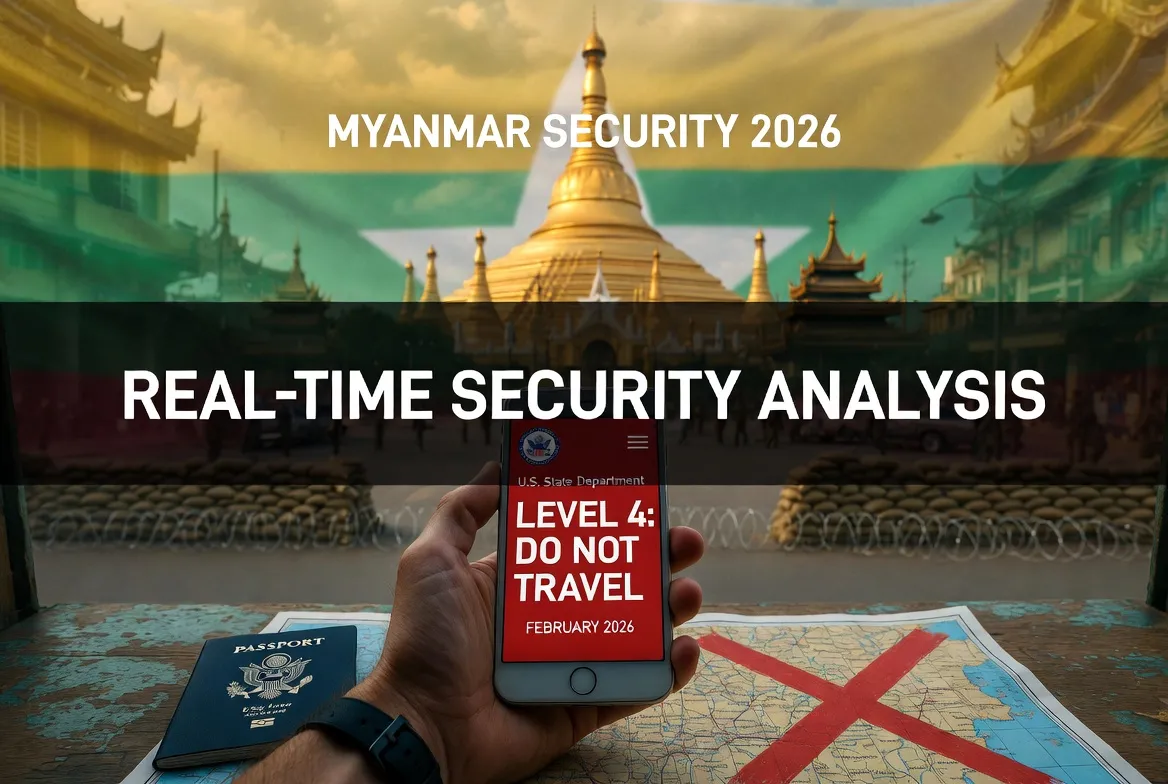
The US State Department currently maintains a Level 4 "Do Not Travel" advisory for Myanmar, which is the highest warning level issued. This advisory reflects serious concerns about civil unrest, armed conflict, arbitrary enforcement of local laws, and limited healthcare resources. For US citizens considering travel to Myanmar in 2026, understanding these risks is not just advisable—it's essential for personal safety.
The security situation varies significantly across different regions of the country. While major tourist destinations like Yangon and Bagan may appear relatively calm on the surface, the underlying political tensions and potential for sudden escalation remain constant concerns. Armed conflicts between military forces and various ethnic armed organizations continue in border regions, particularly in Shan State, Rakhine State, and parts of Karen State.
US State Department Travel Advisory: What It Means for You

The US State Department's Level 4 travel advisory for Myanmar is not issued lightly. This designation indicates that the risks to US citizens are so severe that the government recommends against all travel to the country. Understanding the specific reasons behind this advisory helps travelers make informed decisions about their safety.
Civil Unrest and Armed Conflict: Since the 2021 coup, Myanmar has experienced widespread protests and violent crackdowns by security forces. What began as peaceful demonstrations has evolved into an ongoing civil war in many parts of the country. Armed resistance groups have formed across multiple states, and clashes between these groups and military forces occur regularly.
Arbitrary Detention: US citizens face significant risks of arbitrary arrest and detention. The military government has demonstrated a willingness to detain foreigners on questionable charges, and the US government's ability to provide consular assistance is severely limited. Several Western nationals have been detained since the coup, often with little due process or clear charges.
Limited Embassy Support: The US Embassy in Yangon has suspended most operations and maintains only emergency services. This means that if you encounter legal troubles, medical emergencies, or security incidents, the level of assistance available from US diplomatic missions is minimal compared to normal circumstances.
Healthcare Infrastructure: Myanmar's healthcare system has deteriorated significantly since the coup. Many healthcare workers have participated in civil disobedience movements, and medical facilities face severe resource constraints. In case of medical emergencies, the quality of care available may be inadequate, and medical evacuation options are limited and expensive.
Regional Safety Variations Across Myanmar

While the overall security situation in Myanmar remains volatile, risks vary considerably depending on location. Understanding these regional differences is crucial for anyone considering travel to the country.
Yangon: As Myanmar's largest city and former capital, Yangon remains the most accessible destination for tourists. The city has seen periodic protests and security operations, but day-to-day life continues with relative normalcy in many areas. However, the situation can change rapidly, and security checkpoints, internet shutdowns, and sudden curfews remain possible. Tourist areas like downtown Yangon, with its colonial architecture and markets, are generally calmer but not without risk.
Bagan: The ancient temple city of Bagan, a UNESCO World Heritage site, has remained relatively insulated from the worst of the conflict. This archaeological zone with over 2,000 temples continues to receive some tourists, and the local economy depends heavily on tourism. However, access to Bagan can be affected by transportation disruptions, and the overall security situation in the surrounding Mandalay Region should be considered.
Mandalay: Myanmar's second-largest city has experienced significant unrest and periodic violent crackdowns. The city has been a center of resistance to military rule, and security operations have been frequent. While some tourist sites remain open, the risk level in Mandalay is considerably higher than in Yangon or Bagan.
Inle Lake: This popular tourist destination in Shan State has maintained relative stability, though the broader Shan State experiences ongoing armed conflict. The lake region itself is generally calm, but transportation to and from the area can be affected by security conditions in surrounding regions.
Border Regions to Avoid: US tourists should strictly avoid all border regions, including areas bordering Thailand, China, India, Laos, and Bangladesh. These regions experience active armed conflict, landmine contamination, and frequent military operations. Specific areas of extreme danger include:
- Rakhine State, particularly northern areas
- Shan State, especially northern and eastern regions
- Karen State and Kayah State
- Kachin State
- Chin State
- 👉 Ultimate Guide to Tajikistan Apricot Route and Orchard Tours in North
- 👉 Wahiba Sands Desert Camps: Budget Bedouin vs Luxury Glamping 2026
- 👉 How to visit "Upper Mustang" on a budget in 2026: Permission hacks.
Specific Threats and Risks for US Tourists

US citizens face unique risks when traveling to Myanmar in 2026. These threats extend beyond general security concerns and include specific challenges related to nationality, legal status, and the current political environment.
Anti-Western Sentiment: While not universal, there are elements within Myanmar who view Western nationals, particularly Americans, with suspicion. This sentiment is fueled by US sanctions and diplomatic positions opposing the military government. While most ordinary Myanmar people remain welcoming to tourists regardless of nationality, the political climate creates potential risks.
Wrongful Detention Risk: The US government has identified Myanmar as a country where wrongful detention of US nationals is a risk. This can occur for various reasons, including:
- Photographing military installations or government buildings
- Participating in or appearing to support protests
- Journalistic activities without proper accreditation
- Simply being in the wrong place at the wrong time
- Arbitrary enforcement of laws against foreigners
- 👉 Ultimate Guide to Tajikistan Apricot Route and Orchard Tours in North
- 👉 Wahiba Sands Desert Camps: Budget Bedouin vs Luxury Glamping 2026
- 👉 How to visit "Upper Mustang" on a budget in 2026: Permission hacks.
Communication Challenges: Internet and telecommunications in Myanmar are subject to frequent disruptions. The military government has repeatedly shut down or restricted internet access, particularly in areas experiencing unrest. This creates serious safety concerns for tourists who may find themselves unable to:
- Contact emergency services
- Access real-time security information
- Communicate with family or the US Embassy
- Use digital payment systems or access funds
- Navigate using online maps
- 👉 Ultimate Guide to Tajikistan Apricot Route and Orchard Tours in North
- 👉 Wahiba Sands Desert Camps: Budget Bedouin vs Luxury Glamping 2026
- 👉 How to visit "Upper Mustang" on a budget in 2026: Permission hacks.
Financial and Banking Issues: International sanctions and the country's economic crisis have created significant banking challenges. Credit and debit cards from US banks may not work reliably, ATMs frequently run out of cash, and currency exchange can be complicated. The dual exchange rate system (official versus black market) creates additional complications for travelers.
Practical Safety Considerations for 2026

For those who determine that travel to Myanmar is necessary despite the risks, understanding practical safety measures is essential. However, it's important to emphasize that no safety precautions can eliminate the fundamental risks present in Myanmar's current environment.
Pre-Travel Preparations:
Comprehensive travel insurance is absolutely essential, but extremely difficult to obtain for Myanmar in 2026. Most major insurance providers exclude coverage for countries under Level 4 travel advisories, and those that do offer coverage charge premium rates with significant exclusions. Any insurance policy must specifically cover:
- Medical evacuation (which can cost $100,000 or more)
- Political evacuation
- Trip cancellation due to security incidents
- Detention and legal assistance
- 👉 Ultimate Guide to Tajikistan Apricot Route and Orchard Tours in North
- 👉 Wahiba Sands Desert Camps: Budget Bedouin vs Luxury Glamping 2026
- 👉 How to visit "Upper Mustang" on a budget in 2026: Permission hacks.
Registration with the US Embassy's Smart Traveler Enrollment Program (STEP) is critical, though the Embassy's ability to respond is limited. Travelers should also establish multiple communication plans, including satellite communication devices, as cellular networks are unreliable.
On-the-Ground Safety Practices:
Maintaining a low profile is essential for safety in Myanmar. This means:
- Avoiding all protests and political gatherings
- Not photographing military personnel, installations, or checkpoints
- Carrying identification and visa documents at all times
- Avoiding travel after dark
- Using reputable transportation and accommodation
- Maintaining situational awareness at all times
- Having contingency plans for rapid departure
- 👉 Ultimate Guide to Tajikistan Apricot Route and Orchard Tours in North
- 👉 Wahiba Sands Desert Camps: Budget Bedouin vs Luxury Glamping 2026
- 👉 How to visit "Upper Mustang" on a budget in 2026: Permission hacks.
Cultural Sensitivity:
Understanding local dynamics is crucial for safety. Myanmar's population has suffered greatly since the coup, and many people are living in fear. Discussing politics openly can put both tourists and locals at risk. While empathy for the Myanmar people's situation is natural, expressing political opinions or engaging in activism as a tourist can have serious consequences.
Healthcare and Medical Considerations

Myanmar's healthcare system faces severe challenges in 2026, creating significant risks for travelers. The medical infrastructure has deteriorated due to:
Healthcare Worker Shortages: Thousands of doctors, nurses, and other healthcare professionals have either fled the country or joined civil disobedience movements refusing to work under military rule. This has created critical staffing shortages at medical facilities.
Medical Supply Shortages: Economic sanctions, currency devaluation, and banking restrictions have made it difficult to import essential medicines and medical equipment. Even basic supplies may be unavailable.
Limited Emergency Services: Ambulance services are unreliable, and emergency response capabilities are minimal outside major cities. In rural areas, emergency medical care may be virtually non-existent.
Disease Risks: Myanmar has endemic diseases including malaria, dengue fever, tuberculosis, and various tropical diseases. The disruption to public health programs has increased these risks. Vaccination requirements and preventive medications are essential, but even with precautions, medical care for serious illnesses may be inadequate.
For US tourists, the combination of limited healthcare infrastructure and the difficulty of medical evacuation creates a serious risk profile. Any significant medical emergency could require evacuation to Thailand or Singapore, which may be complicated by the security situation and border closures.
Transportation Safety and Infrastructure

Getting around Myanmar in 2026 presents multiple challenges and risks that travelers must carefully consider.
Domestic Flights: Air travel within Myanmar remains operational but faces several issues. Flight schedules can be unpredictable, with last-minute cancellations common. Some domestic carriers face sanctions-related challenges, and safety standards vary. International flights to Yangon continue from limited destinations, primarily in Asia, but schedules are reduced compared to pre-coup levels.
Road Travel: Road conditions in Myanmar range from poor to dangerous. Risks include:
- Military checkpoints where travelers may be questioned or detained
- Poor road maintenance and hazardous driving conditions
- Risk of encountering armed conflict in rural areas
- Landmines in conflict-affected regions
- Limited emergency services for accidents
- 👉 Ultimate Guide to Tajikistan Apricot Route and Orchard Tours in North
- 👉 Wahiba Sands Desert Camps: Budget Bedouin vs Luxury Glamping 2026
- 👉 How to visit "Upper Mustang" on a budget in 2026: Permission hacks.
Long-distance bus travel, once popular with tourists, has become increasingly risky due to security checkpoints and the potential for encountering unrest. Night travel is particularly dangerous and should be avoided.
River and Water Transport: Ferry services on the Irrawaddy River and other waterways continue to operate but may be subject to disruptions. Safety standards on vessels vary, and emergency response capabilities on waterways are limited.
Legal and Documentation Requirements

US citizens face specific legal requirements and documentation challenges when considering travel to Myanmar in 2026.
Visa Requirements: Tourist visas remain available, though the application process has become more stringent. Requirements include:
- Valid passport with at least six months validity
- Completed visa application
- Proof of onward travel
- Proof of accommodation
- Recent photographs
- Visa fee payment
- 👉 Ultimate Guide to Tajikistan Apricot Route and Orchard Tours in North
- 👉 Wahiba Sands Desert Camps: Budget Bedouin vs Luxury Glamping 2026
- 👉 How to visit "Upper Mustang" on a budget in 2026: Permission hacks.
E-visa services are available but subject to periodic suspension. Processing times can be unpredictable, and approval is not guaranteed.
Entry and Exit Considerations: Immigration officials have broad discretion to deny entry or exit. US citizens have been denied entry without explanation and have faced difficulties departing the country. Having proper documentation, return tickets, and proof of sufficient funds is essential but does not guarantee smooth passage.
Local Laws: Myanmar's legal system operates differently from US law, and protections available in the United States do not apply. Laws are sometimes applied arbitrarily, particularly against foreigners. Activities that might be legal or minor offenses in the US can result in serious penalties in Myanmar, including:
- Drug offenses (carry severe penalties including life imprisonment)
- Importing or possessing religious materials deemed offensive
- Defamation laws used against critics
- Emergency laws allowing detention without charge
- 👉 Ultimate Guide to Tajikistan Apricot Route and Orchard Tours in North
- 👉 Wahiba Sands Desert Camps: Budget Bedouin vs Luxury Glamping 2026
- 👉 How to visit "Upper Mustang" on a budget in 2026: Permission hacks.
Financial Considerations and Economic Situation

Myanmar's economic crisis, exacerbated by sanctions and political instability, creates practical challenges for travelers.
Currency Issues: The Myanmar kyat has experienced significant devaluation, and there are multiple exchange rates. The official rate differs substantially from the market rate, creating confusion and potential for exploitation. US dollars in crisp, new condition are preferred for exchange, but even then, rates and availability fluctuate.
Banking Limitations: International banking connections are limited due to sanctions. US credit and debit cards rarely work, and ATM availability and reliability are inconsistent. Travelers must bring sufficient cash in US dollars for their entire trip, which creates security risks.
Cost Considerations: While Myanmar was once known as a budget-friendly destination, costs have become unpredictable. Some services have become more expensive due to inflation and currency issues, while others may be cheaper due to reduced tourism. Budgeting is difficult in this volatile environment.
Alternative Destinations and Recommendations

Given the significant risks associated with travel to Myanmar in 2026, US tourists interested in Southeast Asian culture, history, and Buddhism should consider alternative destinations that offer similar experiences without the severe security concerns:
Thailand: Neighboring Thailand offers rich cultural experiences, stunning temples, and historical sites similar to Myanmar's attractions but in a much safer environment. Cities like Chiang Mai, Ayutthaya, and Sukhothai provide Buddhist temple experiences and historical exploration.
Laos: Laos offers a more relaxed pace, beautiful temples in Luang Prabang, and the ancient city of Vientiane. The country maintains political stability and welcomes tourists safely.
Cambodia: While Cambodia has its own complex history, it currently offers safe travel conditions and incredible historical sites including Angkor Wat, one of the world's most impressive archaeological sites.
Vietnam: Vietnam provides diverse cultural experiences, rich history, and excellent tourism infrastructure with significantly lower security risks than Myanmar.
Making an Informed Decision

The decision to travel to Myanmar in 2026 requires careful consideration of multiple factors. US tourists must weigh their desire to visit this culturally rich country against very real and serious risks to personal safety.
Questions to Ask Yourself:
- Is this travel essential, or can it be postponed until conditions improve?
- Do I have comprehensive insurance that covers all potential scenarios?
- Am I prepared for the possibility of detention or inability to leave the country?
- Do I have contingency plans for medical emergencies?
- Am I comfortable with limited or no US government support if problems arise?
- Have I researched current conditions thoroughly, not just pre-trip but continuously?
- 👉 Ultimate Guide to Tajikistan Apricot Route and Orchard Tours in North
- 👉 Wahiba Sands Desert Camps: Budget Bedouin vs Luxury Glamping 2026
- 👉 How to visit "Upper Mustang" on a budget in 2026: Permission hacks.
Professional and Essential Travel: For journalists, humanitarian workers, and others whose travel to Myanmar is professionally necessary, additional precautions and specialized training are essential. These travelers should coordinate with their organizations, obtain specialized insurance, and maintain constant communication with security focal points.
Tourism Considerations: For leisure travelers, the risks currently outweigh the benefits. The Myanmar people are suffering, and tourism dollars may inadvertently support the military government through taxes and fees. Many ethical travelers are choosing to postpone visits until democracy is restored.
Current Situation Monitoring and Resources
For those who must travel to Myanmar or are monitoring the situation for future travel, staying informed is critical:
Official Resources:
- US State Department Travel Advisory for Myanmar (updated regularly)
- US Embassy in Yangon website and social media
- Smart Traveler Enrollment Program (STEP)
- CDC Travel Health Notices for Myanmar
- 👉 Ultimate Guide to Tajikistan Apricot Route and Orchard Tours in North
- 👉 Wahiba Sands Desert Camps: Budget Bedouin vs Luxury Glamping 2026
- 👉 How to visit "Upper Mustang" on a budget in 2026: Permission hacks.
Information Sources:
Reliable information about Myanmar's security situation can be difficult to obtain due to internet restrictions and media controls. Travelers should consult multiple sources including international news organizations, security consulting firms, and regional experts. However, be aware that information can be outdated quickly, and the situation can change dramatically in hours.
Local Contacts: Maintaining contact with trusted local contacts, hotel staff, and tour operators can provide real-time information about conditions on the ground. However, recognize that locals may face risks for sharing information with foreigners.
Conclusion: Prioritizing Safety in Uncertain Times
The answer to whether Myanmar is safe for US tourists in 2026 is complex but clear: Myanmar currently presents severe and unacceptable risks for American travelers. The Level 4 travel advisory from the US State Department reflects genuine dangers that cannot be mitigated through careful planning or precautionary measures.
The country's ongoing civil conflict, arbitrary detention risks, limited healthcare infrastructure, and minimal US government support capability create a risk profile that exceeds what most travelers should accept. While Myanmar's cultural treasures and the warmth of its people remain compelling reasons to visit, the current political and security environment makes tourism inadvisable.
For those with essential reasons to travel, thorough preparation, comprehensive insurance, constant situational awareness, and contingency planning are absolute necessities. However, even with these measures, significant risks remain that could result in detention, injury, or inability to depart the country.
The Myanmar people's struggle for democracy and human rights continues, and many advocates suggest that postponing tourism until the political situation improves is both a safety imperative and an ethical choice. The temples of Bagan, the streets of Yangon, and the beauty of Inle Lake will remain when conditions allow safe and responsible travel.
US tourists considering Myanmar in 2026 should carefully weigh their personal safety, the limited support available in emergencies, and the broader implications of traveling to a country experiencing such profound crisis. In most cases, the wisest choice is to explore the many other incredible destinations Southeast Asia has to offer while monitoring Myanmar's situation for future travel when peace and stability return.
0 Comments