.webp)
.webp)
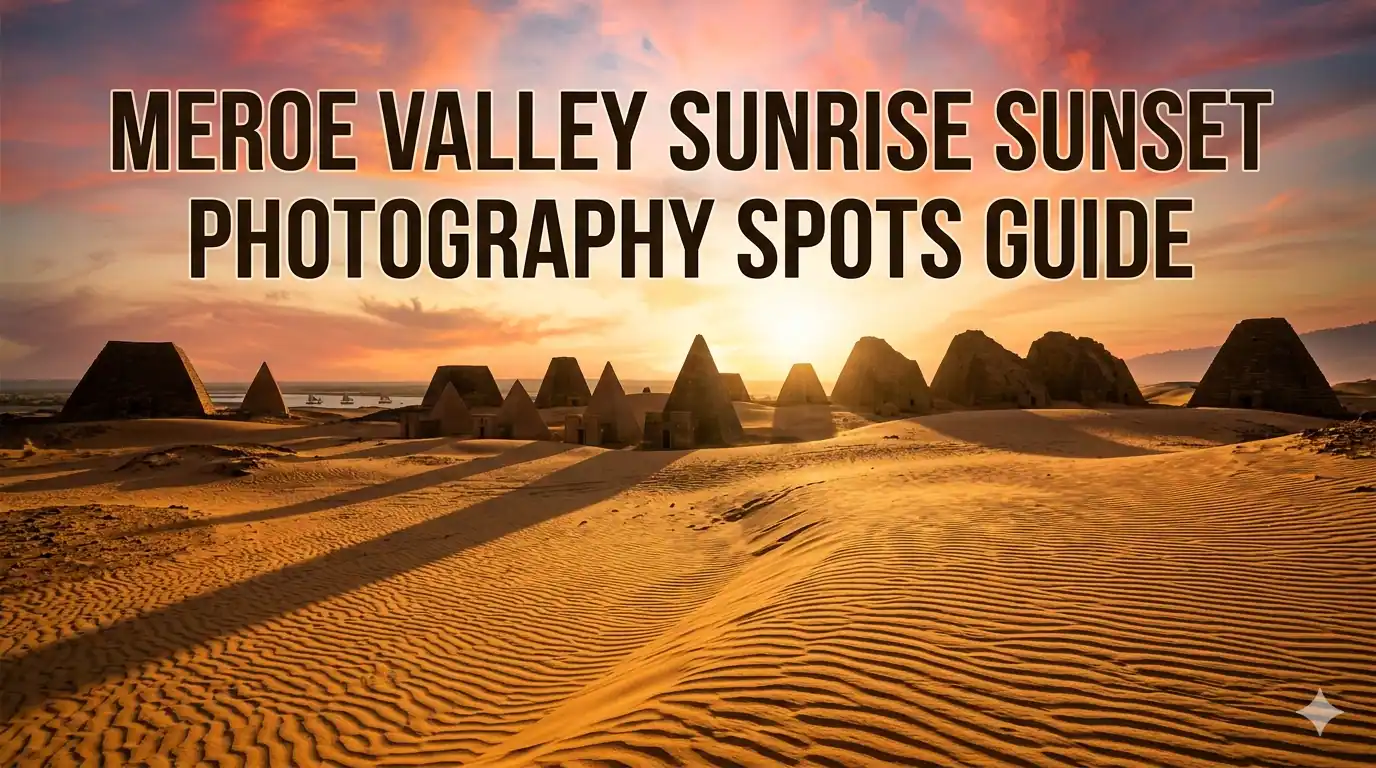
Discovering Meroe Valleys Photographic Magic
Meroe Valley stands as one of the worlds most spectacular destinations for sunrise and sunset photography. The ancient Nubian pyramids create dramatic silhouettes against colorful skies.
This UNESCO World Heritage Site contains over 200 pyramids dating from 720 BC to 300 AD. The steep-sided structures offer unique photographic opportunities unavailable at Egyptian pyramid sites.
The golden desert landscape provides perfect foreground elements for compositions. Sand dunes rocky outcrops and scattered acacia trees add visual interest to pyramid photographs.
Photographers benefit from minimal crowds and unrestricted access. Unlike crowded Egyptian sites Meroe allows intimate photography sessions without tourists obstructing views.
Understanding optimal locations timing and techniques maximizes photographic success. This guide reveals the best spots for capturing Meroes pyramids during magical golden hours.
Understanding Golden Hour in the Desert

Golden hour in Meroe Valley offers exceptional photographic conditions. The desert atmosphere creates unique lighting qualities worth understanding.
Sunrise typically occurs between 5:30 AM and 6:30 AM depending on season. Arriving 45 minutes before sunrise allows setup time and captures pre-dawn colors.
Sunset happens between 5:30 PM and 7:00 PM throughout the year. The best light begins 90 minutes before the sun dips below the horizon.
Desert air quality affects color saturation and clarity. Dry conditions typically produce vibrant oranges pinks and purples during golden hours.
Temperature drops rapidly after sunset requiring preparation. Photographers should bring warm clothing for evening sessions despite hot daytime temperatures.
Atmospheric dust can enhance or diminish photographic quality. Moderate dust creates dramatic rays while heavy dust reduces clarity and color saturation.
Western Cemetery The Premier Sunrise Location

The Western Cemetery pyramid field offers the most spectacular sunrise photography opportunities. This location faces east providing perfect pyramid silhouettes against morning skies.
Over 100 pyramids populate this cemetery creating multiple compositional possibilities. The density of structures allows foreground middle ground and background layering.
Arrive 45 minutes before sunrise to scout positions and set up equipment. The pre-dawn blue hour provides excellent opportunities for atmospheric shots.
Position yourself west of the pyramid cluster for eastward facing compositions. This angle captures pyramids with the rising sun creating dramatic backlighting.
Wide angle lenses between 16mm and 35mm work best for capturing multiple pyramids. Telephoto lenses compress perspectives creating dramatic stacked pyramid images.
The sandy foreground provides leading lines toward pyramid structures. Early morning light creates long shadows adding depth and dimension to photographs.
Eastern Cemetery Sunset Photography

The Eastern Cemetery faces west making it ideal for sunset photography. This location offers different pyramid configurations and photographic opportunities.
Fewer pyramids exist here compared to the Western Cemetery creating less crowded compositions. This allows individual pyramid studies with clean backgrounds.
Arrive 90 minutes before sunset to capture the full progression of golden light. The changing colors and shadows create dynamic photographic sequences.
Position yourself east of the pyramids for westward sunset compositions. The setting sun creates rim lighting on pyramid edges producing dramatic effects.
Telephoto lenses excel at isolating individual pyramids against colorful skies. Focal lengths between 70mm and 200mm provide versatile framing options.
The rocky terrain offers interesting foreground elements. Incorporating stones and desert vegetation adds texture and context to sunset pyramid photographs.
Southern Pyramids Unique Angles

The Southern pyramid cluster provides unique photographic perspectives. These structures offer different orientations and compositional possibilities.
Smaller pyramid groups allow focused compositions without overwhelming elements. This suits photographers seeking minimalist aesthetic approaches.
Both sunrise and sunset work well at this location depending on specific pyramid positioning. Scout during midday to plan golden hour shooting positions.
The southern orientation creates interesting side lighting during golden hours. This illumination reveals architectural details obscured by front or back lighting.
Medium focal lengths between 35mm and 85mm work effectively here. These lenses balance pyramid detail with environmental context.
The area features better preserved pyramid structures in some cases. Intact capstones and clearer architectural details provide superior photographic subjects.
Royal Cemetery Premium Photography Locations

The Royal Cemetery contains the most impressive and well-preserved pyramids. These structures belonged to Meroitic kings and queens offering premium photographic subjects.
Larger pyramid sizes create more dramatic silhouettes against skies. The scale difference from commoner cemeteries provides visual variety.
Some royal pyramids retain decorative capstones adding unique elements. These architectural features distinguish Meroe pyramids from Egyptian counterparts.
Both sunrise and sunset work exceptionally well at royal pyramids. The superior preservation justifies multiple visits during different lighting conditions.
Wide to medium focal lengths capture both pyramid grandeur and architectural details. Versatile zoom lenses between 24mm and 105mm prove ideal.
The cemetery layout allows circular shooting routes. This facilitates capturing pyramids from multiple angles during a single golden hour session.
Foreground Elements and Compositional Techniques

Strong foreground elements elevate pyramid photographs beyond simple documentation. Desert features provide essential compositional components.
Sand dunes create natural leading lines toward pyramid structures. Early morning or late afternoon light emphasizes dune textures and patterns.
Acacia trees scattered throughout the valley add scale and interest. These drought-resistant trees frame pyramids beautifully when positioned carefully.
Rocky outcrops and boulders provide textural contrast to smooth pyramid surfaces. Incorporating these elements adds visual complexity to compositions.
Desert vegetation including grasses and shrubs softens foreground areas. These elements work particularly well with wide angle lenses creating depth.
Human figures can provide scale references in vast desert landscapes. Silhouetted photographers or guides add narrative elements to pyramid images.
Camera Settings for Pyramid Photography

Optimal camera settings vary with lighting conditions and creative goals. Understanding technical requirements ensures sharp well-exposed images.
Aperture settings between f/8 and f/16 provide adequate depth of field. These settings keep both foreground elements and pyramids acceptably sharp.
ISO settings should remain as low as possible typically 100 to 400. Clean images with minimal noise prove essential for large prints.
Shutter speeds vary dramatically from sunrise to full daylight. Tripods enable slower shutter speeds during low light golden hour conditions.
RAW format capture provides maximum post-processing flexibility. Desert lighting challenges benefit from RAW files ability to recover highlights and shadows.
Focus stacking techniques work well for foreground to infinity sharpness. Multiple focus points combined in post-processing ensure overall image sharpness.
Essential Photography Equipment for Meroe

Proper equipment selection significantly impacts photographic success in Meroe Valley. Desert conditions demand specific gear considerations.
Wide angle lenses between 16mm and 35mm capture expansive pyramid fields. These lenses excel at sunrise and sunset landscape compositions.
Telephoto lenses from 70mm to 300mm isolate individual pyramids. Compression effects create dramatic stacked pyramid perspectives.
Sturdy tripods prove essential for golden hour photography. Wind resistance matters in exposed desert locations so quality construction is important.
Lens cleaning equipment combats desert dust and sand. Microfiber cloths blowers and lens pens should be used regularly throughout shooting sessions.
Extra batteries are crucial as extreme temperatures drain power quickly. Keep spare batteries warm in pockets during cold morning shoots.
Polarizing filters reduce glare and enhance sky colors. These filters work particularly well during golden hour when sun angles are low.
Seasonal Variations in Photography Conditions

Seasonal changes significantly affect photographic conditions in Meroe Valley. Understanding these variations helps plan optimal visits.
November through February offers the most comfortable shooting conditions. Moderate temperatures allow extended outdoor photography sessions.
Winter months produce clearer atmospheric conditions. Reduced dust and haze result in sharper images with better color saturation.
March through May brings increasing heat and occasional dust storms. Early morning shoots become essential as midday heat becomes extreme.
June through September represents challenging photography conditions. Extreme heat and potential rain limit comfortable shooting windows.
October marks the transition back to favorable conditions. Landscapes may show slight greening from seasonal rains creating interesting color contrasts.
Sun position varies seasonally affecting optimal shooting locations. Winter sun rises further south changing ideal pyramid positioning for sunrise shots.
Blue Hour and Twilight Photography Opportunities

Blue hour periods before sunrise and after sunset offer unique photographic possibilities. These times deserve attention alongside golden hour.
Pre-dawn blue hour creates cool toned atmospheric images. Pyramids appear as dark silhouettes against deep blue skies.
Post-sunset blue hour provides similar opportunities with warming tones. The residual light creates subtle color gradients worth capturing.
Long exposures during blue hour smooth desert sands. Shutter speeds of several seconds or minutes create ethereal effects.
Star photography becomes possible after twilight ends. The Milky Way rising behind pyramids creates spectacular nighttime compositions.
Light painting techniques work well during extended exposures. Carefully illuminating pyramids with flashlights adds creative elements to night images.
Exposure bracketing proves essential during twilight transitions. Multiple exposures ensure proper capture of rapidly changing light conditions.
Weather Considerations and Atmospheric Effects

Weather conditions dramatically influence photographic outcomes in Meroe Valley. Understanding atmospheric effects helps photographers adapt techniques.
Clear skies produce vibrant color saturation during golden hours. These conditions are ideal for dramatic sunrise and sunset photography.
Light cloud cover enhances sunrise and sunset colors. Clouds catch and reflect light creating spectacular pink orange and purple displays.
Dust storms create challenging but potentially dramatic conditions. Reduced visibility and unusual lighting can produce unique atmospheric images.
Haze reduces contrast and color saturation but adds atmosphere. Distant pyramids appear softer creating depth through atmospheric perspective.
Wind affects tripod stability and equipment safety. Securing gear and using weight bags prevents equipment damage in gusty conditions.
Rain is rare but creates extraordinary photographic opportunities. Wet sand reflects light differently and dust-free air produces exceptional clarity.
Composition Strategies for Pyramid Photography

Strong composition separates memorable images from simple snapshots. Applying photographic principles enhances pyramid photographs significantly.
Rule of thirds placement positions pyramids off-center for dynamic compositions. This classic technique creates visual interest and balance.
Leading lines guide viewer eyes toward pyramid subjects. Sand ripples paths and shadows all serve as effective leading elements.
Framing techniques using foreground elements add depth. Acacia branches or rock formations can frame pyramids effectively.
Symmetry works well with individual pyramid compositions. Centering pyramids creates powerful formal images particularly at sunrise or sunset.
Layering foreground middle ground and background adds dimension. Desert elements pyramids and sky create three distinct visual layers.
Negative space emphasizes pyramid isolation in vast landscapes. Minimalist compositions with large sky areas create dramatic impact.
Post Processing Techniques for Desert Photography

Post processing enhances but should not replace proper in-camera technique. Strategic editing brings out Meroe Valleys natural beauty.
Exposure adjustments recover shadow detail in pyramid structures. Careful brightening reveals architectural details without losing sky color.
Color temperature adjustments enhance golden hour warmth. Slight warming emphasizes the magical quality of sunrise and sunset light.
Contrast adjustments compensate for atmospheric haze. Increased clarity and dehaze tools improve image punch without appearing artificial.
Graduated filters balance bright skies with darker foregrounds. This technique mimics traditional graduated neutral density filters used in-camera.
Crop adjustments refine compositions and remove distractions. Tightening frames emphasizes pyramid subjects and improves overall impact.
Noise reduction maintains image quality from higher ISO settings. Careful application preserves detail while reducing grain in shadow areas.
Safety and Practical Considerations for Photographers

Desert photography requires attention to safety and practical concerns. Proper preparation ensures productive and safe shooting sessions.
Hydration proves critical in hot desert conditions. Carry at least 3 liters of water per person for extended photography sessions.
Sun protection including hats sunscreen and sunglasses prevents burns. Desert sun intensity exceeds most photographers expectations.
Navigation tools prevent getting lost in vast pyramid fields. GPS devices or smartphone apps with offline maps ensure safe returns.
Informing others of shooting locations and return times provides safety backup. Solo photographers should take extra precautions.
Respecting archaeological site boundaries protects both pyramids and photographers. Stay on designated paths and avoid climbing structures.
Wildlife including snakes and scorpions inhabit desert areas. Watch footing and shake out equipment before use.
Working with Local Guides for Best Results

Local guides enhance photography experiences through knowledge and access. Their expertise proves invaluable for capturing Meroes best images.
Guides know optimal shooting locations based on experience. They can position photographers for best pyramid angles and compositions.
Local knowledge of weather patterns improves timing decisions. Guides predict atmospheric conditions affecting photographic quality.
Cultural insights add context to pyramid photography. Understanding Meroitic history enriches photographic storytelling.
Guides facilitate access to restricted areas when possible. Special permissions may allow unique photographic perspectives.
Building relationships with guides creates return visit opportunities. Ongoing partnerships benefit both photographers and local communities.
Multi Day Photography Planning Strategies

Multiple days in Meroe Valley maximize photographic opportunities. Strategic planning ensures comprehensive coverage of locations.
First day should focus on scouting locations during midday light. Identifying promising compositions before golden hour saves valuable shooting time.
Second day can concentrate on sunrise photography at Western Cemetery. Morning sessions benefit from fresh energy and clear focus.
Afternoon rest periods prevent burnout during extended shoots. Midday heat makes photography challenging anyway so rest proves practical.
Evening sessions at Eastern Cemetery capture sunset opportunities. Different locations each day provide variety and comprehensive coverage.
Third day allows return visits to favorite locations. Second looks often reveal new compositional possibilities missed initially.
Flexibility in planning accommodates weather changes. Backup locations ensure productive shooting regardless of conditions.
Capturing the Human Element in Pyramid Photography
Including human elements adds scale and narrative to pyramid photographs. People provide context for these ancient structures.
Silhouetted figures against sunrise or sunset skies create powerful images. Human shapes emphasize pyramid scale and dramatic lighting.
Local guides in traditional dress add cultural authenticity. These elements distinguish Meroe photographs from generic pyramid images.
Photographer silhouettes working at dawn or dusk tell stories. Including fellow photographers adds relatable human interest.
Respectful portrait photography of local people requires permission. Building rapport before photographing ensures positive interactions.
Human activity around pyramids demonstrates ongoing cultural significance. Contemporary use of ancient sites adds temporal depth to images.
Conclusion Maximizing Your Meroe Photography Experience
Meroe Valley offers unparalleled opportunities for sunrise and sunset photography. The combination of ancient pyramids dramatic desert landscapes and minimal crowds creates ideal conditions.
Western and Eastern Cemeteries provide the premier locations for golden hour photography. Understanding optimal positions timing and techniques ensures successful images.
Proper equipment preparation and safety considerations enable productive shooting sessions. Desert conditions demand respect and planning for best results.
Multiple days in Meroe allow comprehensive exploration of photographic possibilities. Patience and flexibility reward photographers with exceptional images.
The Nubian pyramids of Meroe deserve recognition as one of the worlds great photography destinations. Sunrise and sunset transform these ancient structures into magical subjects worthy of documentation and celebration.
Visiting Meroe Valley for photography contributes to sustainable tourism supporting preservation of these remarkable archaeological treasures. Your images can share this hidden gem with the world while respecting its cultural significance.
0 Comments