.webp)
.webp)
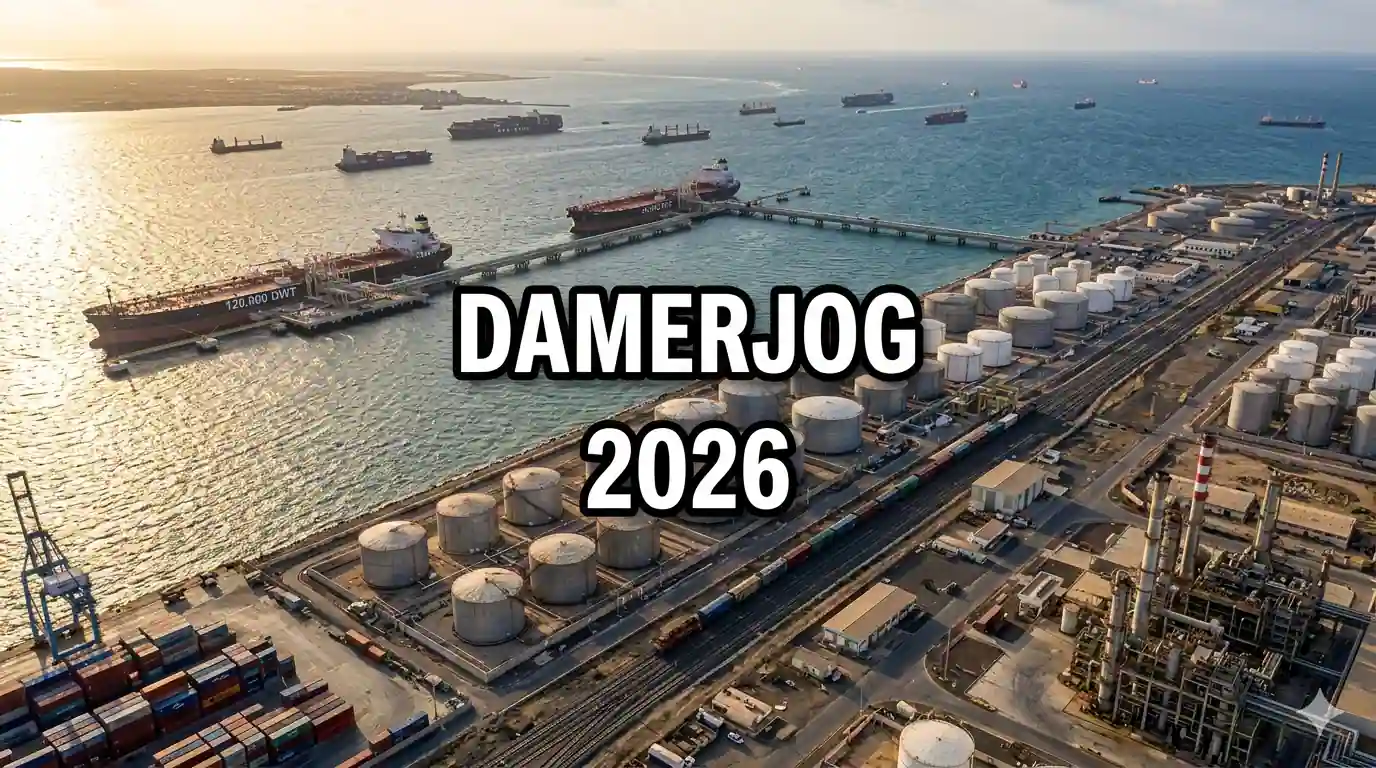
Damerjog Liquid Bulk Port 2026: Complete Guide to the Energy Port Completion and Its Impact
A transformative energy infrastructure project is reaching completion in the Horn of Africa. The Damerjog Liquid Bulk Port in Djibouti, one of the continent's most ambitious oil terminal developments, is now 99.84% complete and poised to revolutionize energy logistics across East Africa . Launched in 2020 as a flagship project under Djibouti Vision 2035, this state-of-the-art facility represents a strategic investment in regional energy security, economic integration, and Djibouti's ambition to become a leading logistics hub connecting Africa to global markets.
With an annual handling capacity of 25 million tonnes, a 2.5-kilometer oil jetty capable of accommodating next-generation tankers up to 120,000 DWT, and integration with the Ethio-Djibouti Railway, the Damerjog terminal is more than just infrastructure—it's a geopolitical game-changer . As Ethiopia plans to relocate its primary petroleum storage operations from the aging Horizon depot to Damerjog, and as Ethiopia Djibouti Railway develops a dedicated 17-kilometer rail link to connect the terminal to Nagad station, the port's completion in 2026 marks a pivotal moment for regional energy dynamics .
This comprehensive guide explores every aspect of the Damerjog Liquid Bulk Port: from technical specifications and financing structures to Ethiopia's strategic shift, regional economic impacts, and what this means for East Africa's energy future in 2026 and beyond.
Project Overview: Damerjog Liquid Bulk Port at a Glance

Strategic Location and Vision
The Damerjog Liquid Bulk Port occupies a position of extraordinary strategic importance, situated southeast of Djibouti City at the crossroads of the Red Sea and the Bab el-Mandeb Strait—one of the world's most critical maritime chokepoints . This location places the terminal directly on the global shipping corridor connecting Europe, the Middle East, and Asia, through which approximately 30% of global seaborne oil trade passes annually.
Launched in 2020 with a foundation-laying ceremony led by His Excellency Mr. Ismaïl Omar Guelleh, President of the Republic of Djibouti, the project embodies Djibouti Vision 2035—a comprehensive national development strategy aimed at transforming the country into a regional logistics and services hub . The terminal is a cornerstone of the broader Damerjog Djibouti Industrial Zone mega-project, which encompasses industrial parks, free trade zones, and multimodal transport infrastructure.
Construction Progress and Timeline
As of early 2025, construction had reached 99.84% completion, with soil treatment for the Oil & Gas Storage Terminal successfully finalized . The construction works are being executed by SOMAGEC, a Moroccan firm, as part of the financing deal and Afreximbank's Intra-African Trade Champion program aimed at supporting African companies in securing contracts across the continent .
The project timeline reflects both ambition and complexity:
- 2020: Official launch with presidential ceremony
- 2023: Secured $120 million Afreximbank financing + $35 million from BCIMR
- 2024: Construction reached 95% completion; oil jetty erection operations began
- Early 2025: Achieved 99.84% completion status
- 2026: Expected full operationalization with Ethiopia's planned fuel storage relocation
- 👉 Abidjan Business City 2026: 5,000-Person Conference Hub Impact
- 👉 Malawi Airlines 2026: Fleet Expansion to 27 Routes
- 👉 Mount Afadja Peak Hiking Guide for Volta Region Adventures
Ownership and Governance Structure
The Damerjog Liquid Bulk Port is owned and operated by Great Horn Investment Holding (GHIH), Djibouti's state-owned logistics and transportation infrastructure investment vehicle . GHIH works in close coordination with the Djibouti Ports & Free Zones Authority (DPFZA), which provides regulatory oversight and strategic direction.
The project has attracted significant international financial support, reflecting its regional importance and bankable structure.
Technical Specifications and Infrastructure

The Oil Jetty: Engineering Excellence
The terminal's centerpiece is a massive 2.5-kilometer oil jetty extending into the Gulf of Aden, connected to shore by a 315-meter access bridge leading to a central Matrix Manifold . This sophisticated configuration enables the simultaneous handling of multiple product types through nine piggable pipelines, allowing for efficient segregation and transfer of different liquid bulk commodities.
Jetty specifications include:
- Length: 2.5 kilometers
- Access bridge: 315 meters connecting jetty to shore facilities
- Pipeline system: Nine piggable pipelines for product segregation
- Marine Loading Arms: Nine modern MLA systems ensuring fast, safe, and compliant operations
- 👉 Abidjan Business City 2026: 5,000-Person Conference Hub Impact
- 👉 Malawi Airlines 2026: Fleet Expansion to 27 Routes
- 👉 Mount Afadja Peak Hiking Guide for Volta Region Adventures
Berth Capacity and Vessel Accommodation
The terminal features two strategically designed berths capable of serving a wide range of vessel sizes:
- Berth 1 (Large Vessels): Accommodates tankers up to 120,000 DWT (Deadweight Tonnage), enabling the terminal to receive next-generation oil tankers and maximize economies of scale
- Berth 2 (Medium Range): Serves vessels between 6,000 and 30,000 DWT, providing flexibility for regional distribution and smaller cargo movements
- 👉 Abidjan Business City 2026: 5,000-Person Conference Hub Impact
- 👉 Malawi Airlines 2026: Fleet Expansion to 27 Routes
- 👉 Mount Afadja Peak Hiking Guide for Volta Region Adventures
This dual-berth configuration allows Damerjog to serve both large-scale international shipments and smaller regional deliveries, maximizing operational flexibility and market reach.
Storage Capacity and Modular Design
The terminal incorporates a modular storage depot designed to provide flexible capacity that can be expanded based on market demand . The initial phase includes:
- Base storage capacity: 150,000 cubic meters for the oil jetty terminal completion
- Aggregate static storage: Approximately 2 million cubic meters across the broader Damerjog complex, significantly larger than the aging Horizon terminal that Ethiopia currently utilizes
- Product versatility: Capable of storing diesel, jet fuel, gasoline, heavy fuel oil, LPG (liquefied petroleum gas), and edible oils
- 👉 Abidjan Business City 2026: 5,000-Person Conference Hub Impact
- 👉 Malawi Airlines 2026: Fleet Expansion to 27 Routes
- 👉 Mount Afadja Peak Hiking Guide for Volta Region Adventures
The modular design allows for phased expansion as demand grows, particularly from Ethiopia, South Sudan, and other landlocked countries seeking reliable energy storage solutions.
Navigational Channel and Maritime Access
Vessel access to the terminal is facilitated by a purpose-built navigational channel engineered to accommodate large-tonnage vessels:
- Channel length: 14 kilometers
- Depth: 18-30 meters, sufficient for deep-draft tankers
- Navigation aids: Fully marked with 15 buoys ensuring safe passage
- Turning basin: Adequate space for vessel maneuvering
- 👉 Abidjan Business City 2026: 5,000-Person Conference Hub Impact
- 👉 Malawi Airlines 2026: Fleet Expansion to 27 Routes
- 👉 Mount Afadja Peak Hiking Guide for Volta Region Adventures
This infrastructure ensures that even the largest vessels can access the terminal safely and efficiently, regardless of tidal conditions.
Annual Handling Capacity
The Damerjog Liquid Bulk Port boasts an impressive annual handling capacity of 25 million tonnes of liquid bulk products . This positions the terminal as one of East Africa's largest oil terminals, capable of serving:
- Djibouti's domestic fuel import requirements
- Ethiopia's growing energy demand (population 120+ million)
- South Sudan's fuel import needs
- Somalia's petroleum product requirements
- International bunkering services for ships transiting the Red Sea
- Transshipment operations for regional redistribution
- 👉 Abidjan Business City 2026: 5,000-Person Conference Hub Impact
- 👉 Malawi Airlines 2026: Fleet Expansion to 27 Routes
- 👉 Mount Afadja Peak Hiking Guide for Volta Region Adventures
Financing and Investment Structure

Total Project Cost and Funding Sources
The Damerjog Liquid Bulk Port represents a significant capital investment in African energy infrastructure. The financing structure demonstrates strong confidence from international financial institutions and reflects the project's strategic importance:
- Afreximbank financing: $120 million loan facility led by the African Export-Import Bank
- Local banking participation: $35 million from Banque pour le Commerce et l'Industrie Mer Rouge (BCIMR) of Djibouti
- Total secured financing: $155 million for the oil jetty and storage depot components
- 👉 Abidjan Business City 2026: 5,000-Person Conference Hub Impact
- 👉 Malawi Airlines 2026: Fleet Expansion to 27 Routes
- 👉 Mount Afadja Peak Hiking Guide for Volta Region Adventures
The Afreximbank facility was structured under the bank's Intra-African Trade Champion program, which aims to support African companies in securing contracts across the continent . This aligns with broader African Union objectives to increase intra-African trade and infrastructure connectivity.
Strategic Rationale for Lenders
"The establishment of a jetty and bulk port in the Djibouti Free Trade Zone will add significant value to Djibouti's role as a trans-shipment hub for neighboring landlocked countries," said Benedict Oramah, President & Chairman of Afreximbank .
The financing reflects several key investment considerations:
- Strategic location: Control of Bab el-Mandeb Strait provides natural competitive advantage
- Anchor tenant: Ethiopia's commitment to utilize the facility provides revenue certainty
- Regional demand: Growing energy consumption in East Africa ensures long-term viability
- Government support: Strong political commitment from Djibouti and regional partners
- Multimodal integration: Railway connection enhances competitiveness and market access
- 👉 Abidjan Business City 2026: 5,000-Person Conference Hub Impact
- 👉 Malawi Airlines 2026: Fleet Expansion to 27 Routes
- 👉 Mount Afadja Peak Hiking Guide for Volta Region Adventures
Additional Investment and Partnerships
Beyond the core financing, the project has attracted interest from multiple stakeholders:
- Marsa Maroc: The Moroccan port operator announced investment in Damerjog Oil FZE in January 2025, expanding its footprint into East Africa
- Ethio-Djibouti Railway: Planning to take a major stake in the fuel facility and construct the 17-kilometer rail connection
- FuelStor FZE: Signed agreement for access to Damerjog facilities for import, export, and storage operations
- Ethiopian Investment Holdings (EIH): Requested 10-hectare plot at Damerjog Industrial Park for 150,000 cubic meter fuel depot
- 👉 Abidjan Business City 2026: 5,000-Person Conference Hub Impact
- 👉 Malawi Airlines 2026: Fleet Expansion to 27 Routes
- 👉 Mount Afadja Peak Hiking Guide for Volta Region Adventures
Ethiopia's Strategic Shift to Damerjog

From Horizon to Damerjog: A Major Transition
In February 2026, Ethiopia officially announced plans to relocate its primary petroleum storage operations from the aging Horizon depot to the modern Damerjog Liquid Bulk Port . This strategic shift represents a fundamental reorganization of Ethiopia's energy logistics infrastructure and has profound implications for both countries.
The Horizon Terminal Challenge:
- The Horizon terminal, Ethiopia's current primary fuel storage facility, is aging and operating at capacity constraints
- Limited storage capacity restricts Ethiopia's ability to maintain strategic fuel reserves
- Infrastructure limitations create bottlenecks in fuel distribution
- Reliance on road transport from Djibouti ports increases costs and delivery times
- 👉 Abidjan Business City 2026: 5,000-Person Conference Hub Impact
- 👉 Malawi Airlines 2026: Fleet Expansion to 27 Routes
- 👉 Mount Afadja Peak Hiking Guide for Volta Region Adventures
Damerjog's Advantages for Ethiopia:
- Massive capacity increase: Damerjog's 2 million cubic meter aggregate storage significantly exceeds Horizon's capacity
- Modern infrastructure: State-of-the-art facilities reduce losses, improve safety, and enhance operational efficiency
- Larger vessel accommodation: Ability to receive 120,000 DWT tankers enables economies of scale in fuel procurement
- Railway integration: Direct rail connection to Ethiopia reduces transport costs and delivery times
- Product diversity: Capability to store multiple fuel types including jet fuel, diesel, gasoline, and LPG
- 👉 Abidjan Business City 2026: 5,000-Person Conference Hub Impact
- 👉 Malawi Airlines 2026: Fleet Expansion to 27 Routes
- 👉 Mount Afadja Peak Hiking Guide for Volta Region Adventures
Ethiopian Investment Holdings' Fuel Depot Proposal
In March 2026, Ethiopian Investment Holdings (EIH) formalized its commitment by requesting a 10-hectare plot at Damerjog Industrial Park to develop a 150,000 cubic meter fuel storage facility . This proposal represents more than just storage—it's a strategic investment in regional energy security.
EIH characterizes the project as "a high-impact, high-return regional infrastructure investment" that accelerates East Africa's efforts toward regional integration and trade facilitation . The facility would serve not only Ethiopia but also provide storage and distribution services to South Sudan, Somalia, and other regional markets.
The 17-Kilometer Railway Connection
To ensure efficient fuel transport from Damerjog to Ethiopia, a critical infrastructure component is under development: a dedicated 17-kilometer rail spur connecting the Damerjog terminals to Nagad Railway Station in Djibouti .
Railway connection details:
- Route: Damerjog Liquid Bulk Port to Nagad Railway Station (Djibouti's largest rail hub)
- Length: 17 kilometers of dedicated freight line
- Integration: Connects to the existing Ethio-Djibouti Railway, providing direct access to Addis Ababa and Ethiopian interior
- Timeline: Planned for completion by November 2026
- Capacity: Designed to handle bulk fuel tankers and containerized petroleum products
- 👉 Abidjan Business City 2026: 5,000-Person Conference Hub Impact
- 👉 Malawi Airlines 2026: Fleet Expansion to 27 Routes
- 👉 Mount Afadja Peak Hiking Guide for Volta Region Adventures
Ethiopia Djibouti Railway (EDR) is not just building the line—it's eyeing a major stake in the Damerjog fuel facility itself, recognizing the strategic and commercial value of integrated rail-port operations .
Impact on Ethiopia's Energy Security
The shift to Damerjog addresses several critical challenges facing Ethiopia's energy sector:
- Supply reliability: Larger storage capacity enables Ethiopia to maintain strategic reserves, buffering against global supply disruptions
- Cost reduction: Rail transport is significantly cheaper than road haulage; larger vessels reduce per-unit shipping costs
- Demand growth: Ethiopia's fuel consumption is rising with economic growth and vehicle fleet expansion; Damerjog provides scalable capacity
- Diversification: Reduces dependence on any single storage facility or transport route
- Quality control: Modern facilities reduce contamination and product degradation
- 👉 Abidjan Business City 2026: 5,000-Person Conference Hub Impact
- 👉 Malawi Airlines 2026: Fleet Expansion to 27 Routes
- 👉 Mount Afadja Peak Hiking Guide for Volta Region Adventures
Regional Economic and Geopolitical Impact

Transforming Djibouti's Economic Landscape
The Damerjog Liquid Bulk Port is a cornerstone of Djibouti's economic transformation strategy. The port sector already helped drive average economic growth of 4.4% in Djibouti between 2000 and 2021 and enabled a significant increase in foreign direct investment . Damerjog amplifies this trajectory.
Economic benefits for Djibouti:
- Revenue generation: Port fees, storage charges, and bunkering services create substantial government revenue
- Employment creation: Direct jobs in port operations plus indirect employment in supporting services
- FDI attraction: World-class infrastructure attracts additional logistics and industrial investments
- GDP growth: Contributes to Djibouti's Vision 2035 goal of becoming a middle-income country
- Skills development: Technology transfer and workforce training in advanced port operations
- 👉 Abidjan Business City 2026: 5,000-Person Conference Hub Impact
- 👉 Malawi Airlines 2026: Fleet Expansion to 27 Routes
- 👉 Mount Afadja Peak Hiking Guide for Volta Region Adventures
Serving Landlocked Nations: Ethiopia, South Sudan, and Beyond
The Damerjog terminal's strategic value extends far beyond Djibouti's borders. By providing marine services to Ethiopia, South Sudan, and Somalia, the project aims to drive GDP growth across the region while reinforcing Djibouti's position as an indispensable logistics hub .
Ethiopia (Population: 120+ million):
- Currently relies on Djibouti for 95% of its import-export traffic
- Rapidly growing economy requires reliable, scalable energy infrastructure
- Damerjog provides the capacity and efficiency needed for sustained growth
- 👉 Abidjan Business City 2026: 5,000-Person Conference Hub Impact
- 👉 Malawi Airlines 2026: Fleet Expansion to 27 Routes
- 👉 Mount Afadja Peak Hiking Guide for Volta Region Adventures
South Sudan:
- Landlocked nation with limited storage infrastructure
- Political instability in Sudan has disrupted traditional supply routes through Port Sudan
- Damerjog offers an alternative, stable supply corridor
- 👉 Abidjan Business City 2026: 5,000-Person Conference Hub Impact
- 👉 Malawi Airlines 2026: Fleet Expansion to 27 Routes
- 👉 Mount Afadja Peak Hiking Guide for Volta Region Adventures
Somalia:
- Rebuilding economy with growing fuel demand
- Proximity to Djibouti makes Damerjog a natural supply source
- Supports reconstruction and development efforts
- 👉 Abidjan Business City 2026: 5,000-Person Conference Hub Impact
- 👉 Malawi Airlines 2026: Fleet Expansion to 27 Routes
- 👉 Mount Afadja Peak Hiking Guide for Volta Region Adventures
Bunkering Services: Capturing Red Sea Maritime Traffic
One of Damerjog's most significant revenue opportunities lies in bunkering services—providing fuel to ships transiting the Red Sea and Gulf of Aden . This strategic positioning leverages Djibouti's location on one of the world's busiest maritime corridors.
Bunkering market potential:
- Strategic location: At the southern entrance to the Red Sea, adjacent to Bab el-Mandeb Strait
- Traffic volume: Thousands of vessels transit annually, many requiring refueling
- Competitive advantage: Modern facilities, competitive pricing, and efficient service
- Revenue opportunity: High-margin business that generates foreign exchange
- 👉 Abidjan Business City 2026: 5,000-Person Conference Hub Impact
- 👉 Malawi Airlines 2026: Fleet Expansion to 27 Routes
- 👉 Mount Afadja Peak Hiking Guide for Volta Region Adventures
By capturing even a modest share of regional bunkering demand, Damerjog can generate substantial revenue while establishing Djibouti as a preferred refueling stop between the Suez Canal and the Indian Ocean.
Geopolitical Implications: Diversification and Sovereignty
The Damerjog project carries significant geopolitical weight, particularly in the context of shifting Red Sea dynamics and regional power competition.
For Ethiopia:
- Reduces vulnerability to port access disruptions
- Provides leverage in negotiations with other port providers
- Strengthens strategic partnership with Djibouti
- Demonstrates commitment to regional integration
- 👉 Abidjan Business City 2026: 5,000-Person Conference Hub Impact
- 👉 Malawi Airlines 2026: Fleet Expansion to 27 Routes
- 👉 Mount Afadja Peak Hiking Guide for Volta Region Adventures
For Djibouti:
- Solidifies position as indispensable regional hub
- Attracts diverse international partners (China, UAE, Morocco, EU)
- Balances relationships with multiple powers
- Enhances negotiating power with all stakeholders
- 👉 Abidjan Business City 2026: 5,000-Person Conference Hub Impact
- 👉 Malawi Airlines 2026: Fleet Expansion to 27 Routes
- 👉 Mount Afadja Peak Hiking Guide for Volta Region Adventures
For the Region:
- Creates interdependencies that promote stability
- Provides alternatives to traditional supply routes
- Strengthens African-led infrastructure development
- Supports AfCFTA (African Continental Free Trade Area) objectives
- 👉 Abidjan Business City 2026: 5,000-Person Conference Hub Impact
- 👉 Malawi Airlines 2026: Fleet Expansion to 27 Routes
- 👉 Mount Afadja Peak Hiking Guide for Volta Region Adventures
Services and Operational Capabilities

Core Services Offered
The Damerjog Liquid Bulk Port provides a comprehensive suite of services designed to meet diverse market needs:
- Bunkering Services: Marine fuel supply to ships transiting the Red Sea, including heavy fuel oil, marine diesel oil, and marine gas oil
- Domestic Fuel Imports: Supports Djibouti's petroleum product requirements with efficient import and distribution capabilities
- Transshipment Operations: Facilitates cargo transfer between large ocean-going vessels and smaller regional distribution ships
- Landlocked Country Supply: Dedicated services for Ethiopia, South Sudan, and other hinterland nations requiring reliable energy access
- Storage Services: Short-term and long-term storage for traders, governments, and oil companies
- Blending and Additives: Potential for fuel blending and additive injection to meet specific market requirements
- 👉 Abidjan Business City 2026: 5,000-Person Conference Hub Impact
- 👉 Malawi Airlines 2026: Fleet Expansion to 27 Routes
- 👉 Mount Afadja Peak Hiking Guide for Volta Region Adventures
Product Handling Capabilities
The terminal's nine piggable pipelines enable simultaneous handling of multiple product types without cross-contamination :
- Diesel/Gasoil: For transportation, power generation, and industrial use
- Jet Fuel (Jet A-1): For aviation sector, serving Djibouti and Ethiopian airports
- Gasoline/Petrol: For light vehicles and small engines
- Heavy Fuel Oil (HFO): For power plants, industrial boilers, and marine bunkering
- LPG (Liquefied Petroleum Gas): For cooking, heating, and industrial applications
- Edible Oils: For food processing and consumption, addressing regional food security
- 👉 Abidjan Business City 2026: 5,000-Person Conference Hub Impact
- 👉 Malawi Airlines 2026: Fleet Expansion to 27 Routes
- 👉 Mount Afadja Peak Hiking Guide for Volta Region Adventures
This product diversity allows Damerjog to serve multiple market segments simultaneously, maximizing facility utilization and revenue generation.
Quality Control and Safety Standards
The terminal operates to international standards for health, safety, and environmental protection:
- ISO certifications: Compliance with international quality management standards
- Marine safety: Adherence to International Maritime Organization (IMO) regulations
- Environmental protection: Oil spill prevention and response capabilities
- Product quality: Laboratory testing to ensure specifications are met
- Security: 24/7 surveillance and access control
- 👉 Abidjan Business City 2026: 5,000-Person Conference Hub Impact
- 👉 Malawi Airlines 2026: Fleet Expansion to 27 Routes
- 👉 Mount Afadja Peak Hiking Guide for Volta Region Adventures
Digital Systems and Automation
Modern port operations rely heavily on digital technologies:
- Tank gauging systems: Real-time inventory monitoring
- Load management: Automated control of Marine Loading Arms
- Vessel traffic management: Coordinated ship movements and berth allocation
- Customs integration: Electronic documentation and clearance systems
- Customer portals: Online booking, tracking, and invoicing
- 👉 Abidjan Business City 2026: 5,000-Person Conference Hub Impact
- 👉 Malawi Airlines 2026: Fleet Expansion to 27 Routes
- 👉 Mount Afadja Peak Hiking Guide for Volta Region Adventures
Environmental and Social Considerations

Environmental Impact Management
Large-scale port infrastructure inevitably raises environmental concerns. The Damerjog project incorporates several mitigation measures:
- Oil spill prevention: Advanced containment systems, double-hulled pipelines, and emergency response protocols
- Wastewater treatment: Facilities to treat ballast water and operational effluents
- Air quality monitoring: Controls on vapor emissions and particulate matter
- Marine ecosystem protection: Careful siting to minimize impact on coral reefs and marine life
- Climate resilience: Infrastructure designed to withstand sea-level rise and extreme weather events
- 👉 Abidjan Business City 2026: 5,000-Person Conference Hub Impact
- 👉 Malawi Airlines 2026: Fleet Expansion to 27 Routes
- 👉 Mount Afadja Peak Hiking Guide for Volta Region Adventures
Social Impact and Community Development
The project generates significant social benefits for local communities:
- Employment: Direct jobs in port operations, maintenance, and administration
- Skills development: Training programs in technical and professional disciplines
- Local procurement: Sourcing goods and services from Djiboutian suppliers
- Infrastructure spillovers: Road improvements, power supply upgrades, and water infrastructure benefiting surrounding areas
- Economic diversification: Creating alternatives to traditional livelihoods
- 👉 Abidjan Business City 2026: 5,000-Person Conference Hub Impact
- 👉 Malawi Airlines 2026: Fleet Expansion to 27 Routes
- 👉 Mount Afadja Peak Hiking Guide for Volta Region Adventures
Competitive Landscape and Market Positioning

Regional Competition
Damerjog operates in a competitive regional environment with several other major ports vying for East African trade:
Competing facilities:
- Berbera Port (Somaliland): UAE-backed expansion creating competition for Ethiopian cargo
- Mombasa Port (Kenya): Traditional gateway for East Africa with established infrastructure
- Dar es Salaam (Tanzania): Growing capacity and competitive pricing
- Port Sudan: Historically important but currently disrupted by conflict
- Lamu Port (Kenya): LAPSSET corridor development (though facing delays)
- 👉 Abidjan Business City 2026: 5,000-Person Conference Hub Impact
- 👉 Malawi Airlines 2026: Fleet Expansion to 27 Routes
- 👉 Mount Afadja Peak Hiking Guide for Volta Region Adventures
Damerjog's Competitive Advantages
Despite competition, Damerjog possesses several unique strengths:
- Proximity to Ethiopia: Shortest route to Ethiopia's economic heartland
- Railway integration: Direct rail connection reduces costs and improves reliability
- Strategic location: At Bab el-Mandeb, ideal for bunkering and transshipment
- Modern infrastructure: Purpose-built facilities versus aging competitors
- Political stability: Djibouti's stable governance versus regional volatility
- Government support: Strong political commitment and Vision 2035 alignment
- Financial backing: Afreximbank and international partner support
- 👉 Abidjan Business City 2026: 5,000-Person Conference Hub Impact
- 👉 Malawi Airlines 2026: Fleet Expansion to 27 Routes
- 👉 Mount Afadja Peak Hiking Guide for Volta Region Adventures
Future Expansion and Development Plans

Phase 2 and Beyond
While the initial phase focuses on the 25 million tonne annual capacity, the modular design allows for expansion:
- Additional storage tanks: Potential to double or triple storage capacity based on demand
- Third berth: Possible expansion to accommodate more simultaneous vessel operations
- LNG terminal: Separate but related Damerjog LNG terminal project with 14 billion cubic meters annual capacity (though this is a distinct $4 billion project)
- Petrochemical complex: Potential downstream development including refineries and petrochemical plants
- Industrial park integration: Co-location of manufacturing and processing facilities
- 👉 Abidjan Business City 2026: 5,000-Person Conference Hub Impact
- 👉 Malawi Airlines 2026: Fleet Expansion to 27 Routes
- 👉 Mount Afadja Peak Hiking Guide for Volta Region Adventures
Integration with Broader Infrastructure
The port's value multiplies through integration with other infrastructure:
- Ethio-Djibouti Railway: The 17-kilometer Damerjog-Nagad link integrates with the 756-kilometer railway to Addis Ababa
- Djibouti International Free Trade Zone (DIFTZ): Synergies with Africa's largest free trade zone
- Damerjog Industrial Park: Co-located manufacturing and processing facilities
- Renewable energy: Potential solar and wind power integration to reduce carbon footprint
- 👉 Abidjan Business City 2026: 5,000-Person Conference Hub Impact
- 👉 Malawi Airlines 2026: Fleet Expansion to 27 Routes
- 👉 Mount Afadja Peak Hiking Guide for Volta Region Adventures
Practical Information for Businesses and Investors

How to Access Damerjog Services
Companies seeking to utilize Damerjog Liquid Bulk Port should follow these steps:
- Initial inquiry: Contact Djibouti Ports & Free Zones Authority (DPFZA) or Great Horn Investment Holding (GHIH)
- Service requirements: Specify product type, volume, storage duration, and distribution needs
- Commercial negotiations: Discuss tariffs, service levels, and contractual terms
- Regulatory compliance: Obtain necessary permits and licenses from Djiboutian authorities
- Operational planning: Coordinate vessel schedules, storage allocation, and distribution logistics
- Railway booking: If utilizing rail transport, coordinate with Ethio-Djibouti Railway
- 👉 Abidjan Business City 2026: 5,000-Person Conference Hub Impact
- 👉 Malawi Airlines 2026: Fleet Expansion to 27 Routes
- 👉 Mount Afadja Peak Hiking Guide for Volta Region Adventures
Investment Opportunities
Beyond using port services, there are multiple investment opportunities:
- Storage facilities: Lease or develop dedicated storage tanks
- Distribution networks: Build downstream distribution infrastructure in landlocked countries
- Service provision: Offer maritime services, logistics, or technical support
- Industrial activities: Establish manufacturing or processing in Damerjog Industrial Park
- Public-private partnerships: Participate in future expansion phases
- 👉 Abidjan Business City 2026: 5,000-Person Conference Hub Impact
- 👉 Malawi Airlines 2026: Fleet Expansion to 27 Routes
- 👉 Mount Afadja Peak Hiking Guide for Volta Region Adventures
Regulatory Framework
Djibouti offers a favorable investment climate:
- Free zone status: Tax incentives and customs exemptions within designated zones
- Investment code: Protections for foreign investors and repatriation of profits
- One-stop shop: Simplified administrative procedures through DPFZA
- International arbitration: Access to neutral dispute resolution mechanisms
- 👉 Abidjan Business City 2026: 5,000-Person Conference Hub Impact
- 👉 Malawi Airlines 2026: Fleet Expansion to 27 Routes
- 👉 Mount Afadja Peak Hiking Guide for Volta Region Adventures
Challenges and Risk Mitigation

Potential Challenges
While the outlook is positive, several challenges require attention:
- Regional security: Instability in neighboring countries could impact operations
- Competition: Aggressive pricing from other regional ports
- Infrastructure dependencies: Reliance on railway and road networks
- Environmental risks: Oil spills or accidents could damage reputation
- Market volatility: Fluctuations in global oil demand and prices
- Geopolitical tensions: Red Sea security concerns and great power competition
- 👉 Abidjan Business City 2026: 5,000-Person Conference Hub Impact
- 👉 Malawi Airlines 2026: Fleet Expansion to 27 Routes
- 👉 Mount Afadja Peak Hiking Guide for Volta Region Adventures
Risk Mitigation Strategies
Damerjog and its partners employ several risk mitigation approaches:
- Diversification: Multiple revenue streams (bunkering, storage, transshipment, domestic supply)
- Insurance: Comprehensive coverage for operational and liability risks
- Security partnerships: Coordination with international naval forces for maritime security
- Maintenance excellence: Rigorous inspection and maintenance programs
- Stakeholder engagement: Strong relationships with customers, governments, and communities
- Financial resilience: Strong balance sheet and diversified funding sources
- 👉 Abidjan Business City 2026: 5,000-Person Conference Hub Impact
- 👉 Malawi Airlines 2026: Fleet Expansion to 27 Routes
- 👉 Mount Afadja Peak Hiking Guide for Volta Region Adventures
Conclusion: A Transformative Infrastructure for East Africa's Future

The Damerjog Liquid Bulk Port represents far more than a new oil terminal—it embodies a transformative vision for East Africa's energy security, economic integration, and industrial development. As the facility reaches 99.84% completion and prepares for full operationalization in 2026, its impact is already being felt across the region .
For Ethiopia, Damerjog offers a solution to critical energy infrastructure constraints, providing the storage capacity, logistical efficiency, and supply reliability needed to sustain economic growth for its 120+ million citizens. The planned relocation from Horizon depot, coupled with the 17-kilometer railway connection to Nagad, demonstrates Ethiopia's confidence in Djibouti as a long-term strategic partner .
For Djibouti, the terminal validates Vision 2035's ambition to become a regional logistics hub, creating thousands of jobs, generating substantial revenue, and attracting further investment in industrial and commercial activities. The Afreximbank financing, Marsa Maroc partnership, and Ethiopian Investment Holdings' fuel depot proposal all signal strong market confidence in the project's viability .
For the broader Horn of Africa—South Sudan, Somalia, and beyond—Damerjog provides a stable, modern, and scalable energy infrastructure that can support reconstruction, development, and regional trade integration. The terminal's 25 million tonne annual capacity and ability to serve multiple product types position it as a cornerstone of regional energy security .
Looking ahead, the success of Damerjog will depend on several factors: efficient operational management, competitive pricing, seamless railway integration, and the ability to adapt to evolving market conditions including the global energy transition. However, with its strategic location, world-class infrastructure, strong financial backing, and committed regional partners, the Damerjog Liquid Bulk Port is well-positioned to fulfill its promise as East Africa's premier energy gateway.
As 2026 unfolds and the terminal transitions from construction to full commercial operations, stakeholders across the region will be watching closely. The Damerjog Liquid Bulk Port isn't just moving oil—it's moving East Africa forward.
0 Comments