.webp)
.webp)
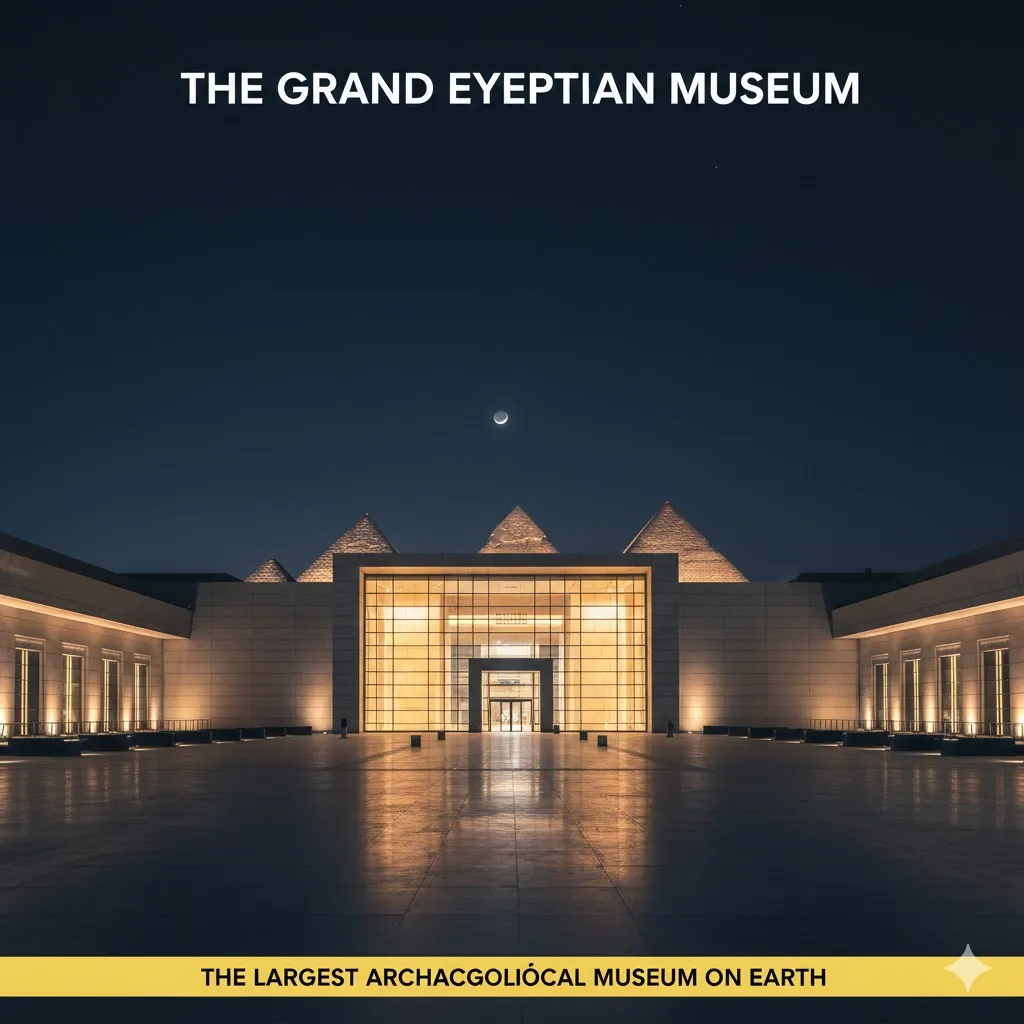
THE GRAND EGYPTIAN MUSEUM (GEM): THE LARGEST ARCHAEOLOGICAL MUSEUM IN THE WORLD
Rising majestically on the Giza Plateau, just two kilometers from the Great Pyramids, the Grand Egyptian Museum (GEM) represents one of the most ambitious cultural projects of the 21st century. When fully operational in 2026, this extraordinary institution will stand as the largest archaeological museum in the world, housing over 100,000 artifacts spanning 5,000 years of Egyptian history within a stunning architectural masterpiece that harmonizes modern design with ancient heritage. For travelers seeking meaningful connections to human history and cultural achievement, the Grand Egyptian Museum offers an unparalleled opportunity to engage with the richest collection of ancient Egyptian artifacts ever assembled, presented through cutting-edge conservation science, immersive exhibitions, and panoramic views of the pyramids that inspired them.
This comprehensive guide invites you to explore the Grand Egyptian Museum with deeper understanding and greater appreciation. We will examine the historical context that gave rise to this extraordinary institution, decode the architectural innovations that make the building itself a work of art, explore the unparalleled collections including the complete Tutankhamun treasures displayed together for the first time, and provide practical information for visiting in 2026. Whether you are a history enthusiast drawn by pharaonic mysteries, an architecture lover fascinated by innovative design, a conservation enthusiast interested in cutting-edge preservation science, or simply a curious traveler inspired by the museum's legendary status, this guide will help you prepare for an unforgettable encounter with humanity's greatest archaeological treasure house.
Understanding the Grand Egyptian Museum requires more than admiring its impressive scale; it demands engaging with the beliefs that inspired the artifacts within, the sophisticated conservation techniques that protect them for future generations, and the ongoing scholarly work that continues to reveal new insights into ancient Egyptian civilization. By approaching the museum with curiosity and respect, you will discover not just ancient objects but a living dialogue between past and present, between preservation and interpretation, between Egyptian heritage and global humanity.
HISTORICAL CONTEXT: FROM CONCEPTION TO REALIZATION
The story of the Grand Egyptian Museum begins with a recognition that Egypt's extraordinary archaeological heritage deserved a world-class institution capable of preserving, studying, and presenting it to the world. For decades, the Egyptian Museum in Cairo's Tahrir Square served as the primary repository for pharaonic treasures, but its 1902 building was increasingly inadequate for the demands of modern museology, conservation science, and visitor experience.
In 2002, the Egyptian government announced plans for a new museum near the Giza pyramids, launching an international architectural competition that attracted proposals from renowned firms worldwide. The winning design, submitted by the Dublin-based firm Heneghan Peng Architects in collaboration with engineering firm Arup and conservation specialists, was selected for its elegant synthesis of modern architecture and ancient symbolism. The design's triangular form echoes the pyramids themselves, while its translucent marble facade allows natural light to illuminate the collections while protecting them from harmful UV radiation.
Construction began in 2011 on a 50-hectare (124-acre) site at the foot of the Giza Plateau, chosen for its proximity to the pyramids and its symbolic connection to the ancient necropolis. The project represented one of the largest cultural infrastructure investments in modern history, with an estimated cost exceeding $1 billion USD and involvement from international partners including Japan, which provided significant financial support through the Japan International Cooperation Agency (JICA).
The museum's development occurred against a backdrop of political change in Egypt, including the 2011 revolution and subsequent transitions. Despite these challenges, construction continued, with major milestones including the completion of the main structure in 2018, the installation of the iconic glass facade in 2020, and the gradual transfer of artifacts from the Tahrir Museum beginning in 2021.
In 2026, the Grand Egyptian Museum stands as a testament to international cooperation, cultural commitment, and visionary planning. Its opening represents not just the inauguration of a new building but the culmination of decades of scholarly work, conservation effort, and cultural diplomacy dedicated to preserving and sharing Egypt's extraordinary heritage with the world.
ARCHITECTURAL INNOVATION: DESIGNING A MONUMENT TO HISTORY
The Grand Egyptian Museum's architecture is itself a masterpiece that deserves exploration and appreciation. Designed by Heneghan Peng Architects, the building embodies a sophisticated dialogue between ancient and modern, between form and function, between preservation and presentation.
The Triangular Form:
The museum's most distinctive feature is its vast triangular facade, which rises 45 meters (148 feet) high and extends 800 meters (2,625 feet) in length. This geometric form was deliberately chosen to echo the pyramids themselves, creating a visual harmony between the ancient monuments and the modern institution dedicated to their study. The triangle also serves practical functions: it provides structural stability, optimizes interior space for exhibitions, and creates a dramatic backdrop for the pyramids visible through the building's glass elements.
Translucent Marble Facade:
The museum's exterior is clad in translucent white marble panels imported from Oman. These panels serve multiple purposes:
- Light Control: They filter natural light, providing illumination for interior spaces while protecting light-sensitive artifacts from harmful UV radiation.
- Thermal Regulation: The marble helps regulate interior temperatures, reducing energy consumption for climate control—a critical consideration for artifact preservation.
- Aesthetic Harmony: The white marble echoes the original casing stones of the pyramids, creating visual continuity between ancient and modern structures.
- Symbolic Meaning: The translucent quality suggests the museum's role as a window into the past, allowing visitors to glimpse the treasures within while maintaining their protection.
The Grand Staircase and Atrium:
Upon entering the museum, visitors are greeted by one of the world's most dramatic interior spaces: a vast atrium dominated by a monumental staircase that ascends through multiple levels. This staircase serves both practical and symbolic functions:
- Chronological Journey: The ascent represents a journey through time, with lower levels dedicated to prehistoric and early dynastic periods, and upper levels focusing on the New Kingdom and later periods.
- Visual Drama: The staircase's scale and design create a sense of awe appropriate to the treasures it leads to, preparing visitors for the extraordinary collections ahead.
- Social Space: The atrium serves as a gathering space, orientation point, and resting area, enhancing the visitor experience through thoughtful spatial design.
Conservation Laboratories:
One of the GEM's most innovative features is its integration of conservation science into the visitor experience. State-of-the-art conservation laboratories are visible to the public through glass walls, allowing visitors to observe conservators at work preserving and studying artifacts. This transparency serves multiple purposes:
- Education: Visitors learn about the science of preservation, the challenges of caring for ancient materials, and the ongoing work of Egyptologists.
- Transparency: The visible laboratories demonstrate the museum's commitment to scientific rigor and ethical stewardship of cultural heritage.
- Inspiration: Observing conservation work may inspire visitors to consider careers in archaeology, conservation, or museum studies.
Panoramic Pyramid Views:
Perhaps the museum's most spectacular feature is its relationship to the Giza pyramids. Large glass windows and terraces are strategically positioned to frame views of the pyramids, creating a constant visual dialogue between the artifacts inside and the monuments that inspired them. This design choice reinforces the museum's role not as a replacement for the pyramids but as a complement—a place to deepen understanding of the civilization that created these enduring wonders.
THE COLLECTIONS: TREASURES OF FIVE MILLENNIA
The Grand Egyptian Museum houses over 100,000 artifacts spanning 5,000 years of Egyptian history, making it the most comprehensive collection of ancient Egyptian material culture in the world. While the full scope of the collection is too vast to detail completely, several highlights deserve special attention.
The Complete Tutankhamun Collection:
For the first time in history, all 5,398 artifacts from the tomb of Tutankhamun will be displayed together in a dedicated gallery within the Grand Egyptian Museum. This unprecedented presentation includes:
- The Golden Mask: The iconic funerary mask that has become the most recognizable symbol of ancient Egypt, crafted from 11 kilograms of solid gold and inlaid with semi-precious stones.
- The Golden Coffins: Three nested coffins, the innermost made of solid gold weighing 110.4 kilograms, demonstrating the extraordinary craftsmanship of New Kingdom metalworkers.
- Throne and Furniture: Exquisitely crafted chairs, beds, and chests decorated with gold, ivory, and ebony, revealing the luxury of royal life.
- Weapons and Chariots: Ceremonial weapons, armor, and two dismantled chariots that demonstrate the military technology of the period.
- Personal Items: Clothing, jewelry, games, and cosmetics that provide intimate glimpses into the young pharaoh's daily life.
- Canopic Equipment: The shrine and canopic jars that protected the pharaoh's internal organs for the afterlife.
This complete presentation allows visitors to understand the tomb not as a collection of isolated treasures but as a comprehensive funerary assemblage designed to equip the pharaoh for eternal life.
Prehistoric and Early Dynastic Galleries:
The museum's lower levels feature artifacts from Egypt's earliest periods, including:
- Narmer Palette: The iconic ceremonial palette depicting the unification of Upper and Lower Egypt, often considered the founding document of the Egyptian state.
- Early Dynastic Sculpture: Statues and reliefs from the First and Second Dynasties that reveal the emergence of royal iconography and artistic conventions.
- Predynastic Pottery: Ceramics from the Naqada culture that demonstrate the development of artistic styles and technological skills before the pharaonic period.
Old Kingdom Masterpieces:
The Old Kingdom galleries showcase the artistic achievements of the pyramid-building era:
- Royal Statuary: Life-size and colossal statues of pharaohs including Khufu, Khafre, and Menkaure that demonstrate the evolution of royal portraiture.
- Tomb Reliefs: Painted and carved reliefs from mastaba tombs that depict daily life, religious rituals, and funerary practices.
- Architectural Elements: Columns, doorways, and decorative elements from pyramid complexes that reveal the sophistication of Old Kingdom construction.
Middle and New Kingdom Treasures:
The museum's extensive Middle and New Kingdom collections include:
- Temple Sculpture: Colossal statues of pharaohs and gods from temples at Karnak, Luxor, and Abu Simbel.
- Royal Jewelry: Exquisite necklaces, bracelets, and pectorals crafted from gold, lapis lazuli, carnelian, and other precious materials.
- Funerary Equipment: Sarcophagi, ushabti figures, and Book of the Dead papyri that reveal ancient Egyptian beliefs about death and the afterlife.
- Administrative Documents: Papyri, seals, and inscriptions that illuminate the bureaucracy, economy, and daily life of ancient Egypt.
Special Exhibitions and Rotating Displays:
In addition to its permanent collections, the GEM features spaces for special exhibitions that explore specific themes, recent discoveries, or comparative perspectives. These rotating exhibitions ensure that repeat visitors always discover something new and that the museum remains at the forefront of Egyptological scholarship.
CONSERVATION AND RESEARCH: SCIENCE MEETS HERITAGE
One of the Grand Egyptian Museum's most significant contributions to Egyptology is its integration of cutting-edge conservation science and research facilities into the visitor experience.
Conservation Laboratories:
The museum houses one of the world's most advanced conservation facilities, featuring:
- Climate-Controlled Environments: Specialized chambers that maintain precise temperature, humidity, and light conditions for different types of artifacts.
- Analytical Equipment: X-ray fluorescence, CT scanning, and other non-invasive techniques that allow conservators to study artifacts without damaging them.
- Treatment Spaces: Dedicated areas for cleaning, stabilizing, and restoring artifacts using both traditional techniques and modern technology.
- Storage Facilities: State-of-the-art storage that protects artifacts not currently on display while allowing researchers access for study.
Research Institute:
The GEM includes a research institute that supports Egyptological scholarship through:
- Library and Archives: One of the world's most comprehensive collections of Egyptological literature, excavation records, and historical documents.
- Laboratories for Scientific Analysis: Facilities for materials analysis, dating techniques, and other scientific investigations.
- Collaboration Spaces: Areas for international scholars to collaborate on research projects, conferences, and publications.
- Digital Resources: Digitized collections, 3D models, and online databases that make the museum's collections accessible to researchers worldwide.
Educational Programming:
The museum's conservation and research facilities support extensive educational programming:
- Workshops: Hands-on programs that teach visitors about conservation techniques, archaeological methods, and ancient Egyptian crafts.
- Lectures and Symposia: Presentations by leading Egyptologists that share new discoveries and scholarly debates.
- School Programs: Curriculum-aligned programs that bring ancient Egyptian history to life for students of all ages.
- Professional Training: Programs that train Egyptian conservators, curators, and museum professionals in best practices.
VISITOR EXPERIENCE: EXPLORING THE GEM
Visiting the Grand Egyptian Museum in 2026 offers multiple ways to engage with ancient Egyptian culture, from self-guided exploration to immersive exhibitions and educational programs.
Planning Your Visit:
Ticketing and Entry:
- General Admission: Provides access to permanent collections, conservation laboratories (viewing areas), and panoramic terraces.
- Tutankhamun Gallery: May require a separate ticket or timed entry due to high demand; book in advance when possible.
- Special Exhibitions: Additional fees may apply for temporary exhibitions; check the museum website for current offerings.
- Combination Tickets: May offer savings for visiting both the GEM and the Giza pyramids; inquire at ticket offices.
Opening Hours:
- The museum is generally open daily from 9 AM to 9 PM, though hours may vary seasonally and for special events.
- Last entry is typically one hour before closing.
- Check the official website for current hours, holiday closures, and special event schedules.
Navigating the Museum:
Wayfinding and Layout:
- The museum is organized chronologically, with lower levels dedicated to earlier periods and upper levels to later periods.
- Clear signage in Arabic, English, and other major languages helps visitors navigate the vast collections.
- Interactive maps and digital guides are available at entrances and throughout the building.
Suggested Itineraries:
- Highlights Tour (2-3 hours): Focus on the Tutankhamun collection, royal statuary, and panoramic pyramid views.
- Comprehensive Visit (4-6 hours): Explore the full chronological sequence, conservation laboratories, and special exhibitions.
- Research-Focused Visit (full day): Combine collection exploration with library access, conservation demonstrations, and scholarly programs.
Amenities and Services:
Dining:
- The museum features multiple dining options, from casual cafes to fine dining restaurants, many with panoramic views of the pyramids.
- Menus feature both Egyptian and international cuisine, with options for various dietary needs.
- Outdoor terraces provide opportunities to dine while enjoying views of the Giza plateau.
Shopping:
- The museum gift shop offers high-quality reproductions, scholarly publications, and authentic Egyptian crafts.
- Purchases support the museum's conservation and educational programs.
- Look for items certified as ethically sourced and fairly traded.
Accessibility:
- The museum is fully wheelchair accessible, with elevators, ramps, and accessible restrooms throughout.
- Assistive listening devices, large-print guides, and tactile exhibits are available for visitors with disabilities.
- Service animals are welcome; contact the museum in advance to arrange specific accommodations.
Photography and Digital Engagement:
Photography Policy:
- Personal photography is permitted in most areas for non-commercial use.
- Flash photography, tripods, and selfie sticks may be restricted in certain galleries to protect artifacts and ensure visitor safety.
- Commercial photography and filming require special permits arranged in advance.
Digital Resources:
- The museum offers a comprehensive mobile app with audio guides, interactive maps, and additional content about featured artifacts.
- Virtual tours and online collections allow remote access to the museum's treasures.
- Social media channels share behind-the-scenes content, conservation updates, and educational resources.
PRACTICAL VISITOR INFORMATION FOR 2026
Planning a visit to the Grand Egyptian Museum requires consideration of logistics, timing, and cultural norms. This section provides essential information for traveling responsibly to the GEM in 2026.
Getting to the Grand Egyptian Museum:
The museum is located on the Giza Plateau, approximately 20 kilometers (12 miles) southwest of central Cairo and just 2 kilometers from the Great Pyramids.
By Taxi or Ride-Hailing:
- Uber and Careem operate reliably in Cairo and can drop visitors directly at the museum entrance.
- Agree on fares in advance or use app pricing to avoid confusion.
- Allow 30-60 minutes for the journey from central Cairo, depending on traffic.
- Cost: Approximately 150-300 EGP ($5-10 USD) each way.
By Organized Tour:
- Many tour operators offer combined GEM and Giza pyramid tours with transportation, guides, and sometimes meals included.
- Ideal for first-time visitors or those preferring structured experiences.
- Book through reputable companies with good reviews.
- Cost: Varies widely from $40-200 USD depending on inclusions and group size.
By Public Transportation:
- Metro Line 2 to Giza Station, then taxi or bus to the museum.
- Budget-friendly but requires navigation and local knowledge.
- Allow extra time for transfers and potential delays.
- Cost: Approximately 20-50 EGP ($0.60-1.50 USD).
Shuttle Services:
- The museum may operate shuttle services from central Cairo or major hotels; check the official website for current offerings.
- Some hotels offer private transfers for guests; inquire when booking accommodation.
Best Times to Visit:
To avoid crowds and enjoy optimal conditions:
Weekday Mornings (9-11 AM):
- Smallest crowds, especially Tuesday-Thursday.
- Soft morning light ideal for photography of the building and pyramid views.
- Cooler temperatures, especially important in summer months.
- Best time for focused exploration of collections without distraction.
Late Afternoon (4-7 PM):
- Golden hour lighting creates dramatic views of the museum facade and pyramids.
- Crowds begin to thin as day-trippers depart.
- Ideal for photography and panoramic terrace visits.
- Museum remains open late, allowing extended exploration.
Avoid Peak Times:
- Weekends (Friday-Saturday in Egypt) and public holidays attract larger crowds.
- Midday (12-3 PM) in summer months can be hot and crowded.
- School groups often visit weekday mornings; check with the museum about group schedules if seeking a quieter experience.
Seasonal Considerations:
October to April (Peak Season):
- Pleasant temperatures (15-25°C / 59-77°F) ideal for extended exploration.
- Largest crowds, especially December-January; book tickets and tours well in advance.
- Ideal weather for combining museum visit with outdoor exploration of the Giza plateau.
May to September (Off-Peak):
- Extreme heat (often exceeding 35°C / 95°F); plan indoor museum activities for midday.
- Fewer tourists; shorter queues and more personalized experiences.
- Lower accommodation prices in Cairo and Giza.
- The museum's climate-controlled environment provides comfortable refuge from outdoor heat.
Weather Considerations:
Giza has a desert climate:
- Summer: Extremely hot and dry; the museum's air-conditioned environment provides comfortable refuge.
- Winter: Pleasant days, cool evenings; bring layers for morning or evening visits.
- Sandstorms: Occasional khamsin winds can bring sand and dust; the museum's sealed environment protects collections and visitors.
- Rain: Extremely rare; no need for rain gear typically.
Accessibility:
The Grand Egyptian Museum is designed to be fully accessible:
- Wheelchair Access: Ramps, elevators, and wide corridors throughout the building.
- Accessible Restrooms: Available on all levels.
- Assistive Devices: Wheelchairs available for loan at entrance; assistive listening devices and large-print guides available upon request.
- Service Animals: Welcome throughout the museum; contact in advance to arrange specific accommodations.
- Sensory Considerations: Quiet spaces and sensory-friendly programming available; check the website for current offerings.
Photography Tips:
The Grand Egyptian Museum offers exceptional photography opportunities:
Best Times for Photography:
- Golden Hour: Sunrise and sunset provide warm, directional light that enhances the museum's marble facade and creates dramatic pyramid views through glass elements.
- Interior Lighting: The museum's carefully designed lighting enhances artifact visibility while protecting sensitive materials; trust the museum's lighting design rather than using flash.
Composition Techniques:
- Architectural Details: Focus on the interplay of marble, glass, and light that defines the building's design.
- Pyramid Views: Frame artifacts or interior spaces with the pyramids visible through windows for powerful contextual shots.
- Conservation in Action: Photograph conservators at work through glass walls (with permission) to document the science of preservation.
Technical Considerations:
- Low-Light Capability: Interior galleries may have controlled lighting; a camera with good low-light performance is helpful.
- Wide-Angle Lens: Captures the scale of the atrium and grand staircase.
- Telephoto Lens: Isolates artifact details or compresses pyramid views through windows.
- Tripod: May be restricted in galleries; check policy before bringing.
Respect Restrictions:
- Flash photography is prohibited in most galleries to protect light-sensitive artifacts.
- Commercial photography requires special permits arranged in advance.
- Always respect signage and staff instructions regarding photography.
Health and Safety:
The museum environment is generally safe and comfortable:
Climate Control:
- The museum maintains precise temperature and humidity for artifact preservation; dress in layers as interior temperatures may feel cool.
- Air filtration systems protect both artifacts and visitors from dust and pollutants.
Hydration and Comfort:
- Water fountains and cafes are available throughout the building.
- Seating areas are provided in galleries for rest and contemplation.
- Comfortable walking shoes are recommended for extended exploration.
Personal Belongings:
- Lockers or coat check may be available for large bags; check museum policy.
- Keep valuables secure; use hotel safes for passports and excess cash.
- Be aware of your surroundings in crowded areas.
Guidance:
- Follow instructions from museum staff and security personnel.
- Do not touch artifacts unless explicitly invited to do so in interactive exhibits.
- Stay on designated paths and respect barriers protecting exhibits.
Cultural Etiquette:
Egypt is a predominantly Muslim country with conservative social norms:
Dress Modestly:
- While the museum environment is international, modest dress (covering shoulders and knees) is appreciated as a sign of respect.
- Lightweight, breathable fabrics are ideal for the climate while maintaining modesty.
Respect Local Customs:
- Ask permission before photographing other visitors, particularly families and children.
- Be mindful of prayer times; the museum may pause certain activities during call to prayer.
Language:
- Learning basic Arabic phrases is appreciated:
- "Salam alaykum" (Peace be upon you / Hello)
- "Shukran" (Thank you)
- "Min fadlak" (Please)
Tipping (Baksheesh):
- Small tips are customary for guides, porters, and restroom attendants.
- Carry small denominations of Egyptian currency (5, 10, 20 EGP notes).
- Typical tips: 10-20 EGP for small services, 50-100 EGP for guides.
SUSTAINABLE AND RESPONSIBLE TOURISM
Visiting the Grand Egyptian Museum carries responsibility to protect this irreplaceable heritage for future generations. In 2026, sustainable tourism practices enhance the experience for all.
Protect the Collections:
The museum's artifacts face ongoing conservation challenges:
- Light Sensitivity: Many materials (textiles, papyri, pigments) degrade with exposure to light.
- Environmental Control: Precise temperature and humidity are essential for long-term preservation.
- Physical Protection: Even gentle touching can transfer oils and accelerate deterioration.
How You Can Help:
- Follow Photography Guidelines: Avoid flash and respect restricted areas to protect light-sensitive artifacts.
- Maintain Distance: Respect barriers and do not touch artifacts unless explicitly invited.
- Report Concerns: Notify staff if you observe potential risks to artifacts or exhibits.
Minimize Environmental Impact:
The museum is designed with sustainability in mind, and visitors can support these efforts:
- Reduce Waste: Carry a reusable water bottle; avoid single-use plastics. Egypt faces significant waste management challenges.
- Proper Disposal: Use designated recycling and waste bins throughout the building.
- Energy Conservation: The museum's design minimizes energy consumption; support these efforts by respecting climate-controlled environments.
- Sustainable Transportation: Use public transportation, ride-sharing, or museum shuttles to reduce carbon footprint.
Support Local Communities:
Tourism can be a powerful force for economic development when benefits reach local people:
- Choose Local Guides: Hire licensed Egyptian guides who provide authentic perspectives and support the local economy.
- Purchase Responsibly: Buy crafts from the museum shop or reputable sources that fairly compensate artisans. Avoid mass-produced souvenirs.
- Respect Workers: Treat museum staff, guards, and service workers with dignity and fairness. Tip appropriately for services rendered.
- Choose Local Accommodations: Stay in locally-owned hotels and eateries when possible to support the Giza and Cairo communities.
Engage with Cultural Heritage Respectfully:
The Grand Egyptian Museum houses treasures that belong to Egypt and to humanity:
- Educate Yourself: Learn about the history and significance of key artifacts before visiting; understanding deepens appreciation.
- Listen to Egyptian Voices: Prioritize Egyptian guides, scholars, and conservators who interpret their own heritage.
- Avoid Pseudoscience: Be skeptical of claims about curses, aliens, or lost civilizations; these theories often disrespect Egyptian culture and scholarship.
- Share Responsibly: When sharing your experience on social media, promote accurate information and cultural respect rather than sensationalism.
Support Conservation and Research:
Consider contributing to the ongoing work of preservation and scholarship:
- Museum Memberships: Support the GEM through membership programs that fund conservation and education.
- Donations: Contribute to specific conservation projects or research initiatives.
- Advocacy: Share accurate information about the importance of cultural heritage preservation with your networks.
CONCLUSION: A NEW CHAPTER IN EGYPT'S STORY
The Grand Egyptian Museum represents more than a building or a collection; it represents a new chapter in Egypt's ongoing relationship with its extraordinary past. By creating a world-class institution dedicated to preserving, studying, and sharing ancient Egyptian heritage, Egypt affirms the enduring relevance of its ancient civilization and its commitment to sharing that heritage with the world.
In 2026, as travelers seek meaningful connections to history, culture, and human achievement, the Grand Egyptian Museum offers an unparalleled opportunity to engage with the richest collection of ancient Egyptian artifacts ever assembled. Whether you marvel at the golden mask of Tutankhamun, observe conservators at work preserving fragile papyri, contemplate royal statuary that has endured for millennia, or simply gaze through glass walls at the pyramids that inspired it all, the GEM invites reflection on questions that have animated human existence across the ages: What endures? How do we balance preservation with access? What legacy do we wish to leave?
As you plan your visit to the Grand Egyptian Museum, approach this extraordinary institution with curiosity, humility, and respect. Listen to the stories told by Egyptologists and conservators, engage with the scholarship that continues to reveal new insights, and allow the beauty and sophistication of ancient Egyptian culture to inspire your own appreciation for human creativity and enduring questions. By traveling responsibly and supporting conservation efforts, you can contribute to the preservation of this remarkable heritage while creating memories that will last a lifetime.
May your encounter with the Grand Egyptian Museum deepen your appreciation for the achievements of ancient civilizations and inspire your commitment to protecting the cultural treasures that make our world extraordinary. As the artisans, priests, and pharaohs who created these treasures understood, true legacy lies not just in objects that endure but in the knowledge, values, and stories that inspire future generations. May you carry that understanding forward, wherever your journey leads.
Useful resources include the Grand Egyptian Museum official website for visitor information and ticketing, the Egyptian Ministry of Tourism and Antiquities for official travel guidance, and your country's travel advisory service for safety updates. Emergency services in Egypt can be reached at 122 for police, 123 for ambulance, and 180 for fire. Disclaimer: Information is accurate as of early 2026. Museum hours, ticket prices, exhibition schedules, and policies may change; verify details through official channels before travel. This guide is for informational purposes only and does not constitute professional travel advice.
0 Comments