.webp)
.webp)
Ashgabat Digital Nomad Internet and Connectivity Guide 2026
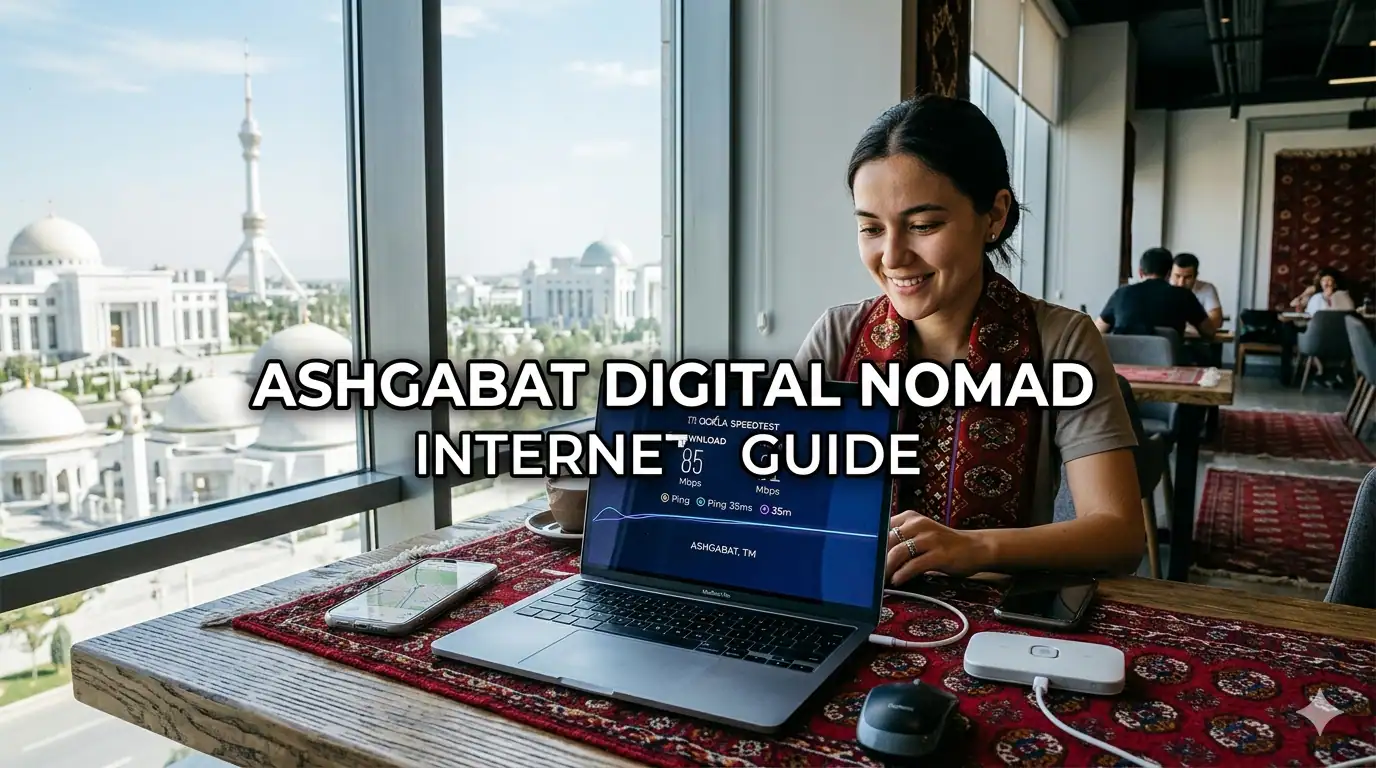
Understanding Internet Reality in Ashgabat
Ashgabat presents one of the most challenging internet environments for digital nomads anywhere in the world. Turkmenistan maintains extremely restrictive internet policies with heavy censorship, slow speeds, and limited connectivity options that fundamentally impact remote work possibilities.
The capital city features modern marble architecture and appears developed on the surface, but digital infrastructure lags significantly behind international standards. Understanding this reality proves essential before planning any extended stay for remote work.
Internet speeds average between one and five megabits per second for broadband connections, far below global averages. Mobile data performs similarly with frequent interruptions and inconsistent coverage throughout the city.
Government censorship blocks most major international platforms including social media sites, messaging apps, and many news outlets. Accessing restricted content requires VPN services though their use exists in a legal gray area.
Despite these challenges, some digital nomads successfully work from Ashgabat by adjusting expectations, employing multiple connectivity strategies, and focusing on low-bandwidth work. Success requires thorough preparation and realistic planning.
Internet Speed Performance in 2026

Actual internet performance in Ashgabat varies significantly by location, time of day, and connection type. Understanding realistic speed expectations helps determine whether remote work remains feasible for your specific needs.
Broadband Internet Speeds
Fixed broadband connections in Ashgabat typically deliver download speeds between one and five megabits per second during optimal conditions. Upload speeds prove even slower, often ranging from zero point five to two megabits per second.
Peak usage hours between seven and eleven in the evening see speeds drop significantly, sometimes below one megabit per second. Planning bandwidth-intensive tasks for early morning or late night hours improves success rates.
Latency remains high with ping times often exceeding two hundred milliseconds. This proves problematic for video conferencing, real-time collaboration tools, and online gaming applications.
Connection stability varies with frequent brief disconnections occurring throughout the day. Automatic reconnection usually happens within minutes though this interrupts ongoing work and communications.
Mobile Data Performance
Mobile internet through Turkmenistan's primary provider Altyn Asyr offers similar speeds to broadband with three to five megabits per second download in optimal urban locations. Real-world performance often proves slower.
Four G LTE networks exist in central Ashgabat but coverage remains spotty. Signal strength fluctuates dramatically even within short distances, affecting reliability for consistent work.
Mobile data costs approximately ten to twenty USD monthly for moderate usage plans. However, data caps and throttling after certain usage thresholds limit practical utility for heavy internet users.
Tethering mobile connections to laptops provides backup internet though battery drain proves significant. Carrying power banks becomes essential for mobile work sessions.
Speed Test Results and Benchmarks
Independent speed tests consistently rank Turkmenistan among the world's slowest internet nations. Global rankings typically place the country between one hundred seventieth and one hundred eightieth positions out of approximately two hundred countries measured.
Average download speeds of two to three megabits per second compare unfavorably to regional neighbors. Uzbekistan and Kazakhstan offer speeds five to ten times faster on average.
Upload speeds prove particularly problematic for video calls and file sharing. The asymmetrical nature of connections favors downloads while severely limiting upload capacity.
Speed consistency remains poor with significant variations throughout the day. Morning hours between six and nine typically provide the fastest and most reliable connections.
Internet Service Providers and Options

Ashgabat's internet service market offers limited choices with state-controlled providers dominating the landscape. Understanding available options helps maximize connectivity within constraints.
Altyn Asyr Primary Provider
Altyn Asyr operates as Turkmenistan's state telecommunications monopoly controlling both mobile and fixed-line internet services. This provider offers the most widespread coverage though service quality varies.
Residential broadband plans start around fifteen USD monthly for basic speeds up to three megabits per second. Higher-tier plans cost twenty-five to forty USD but rarely deliver advertised speeds consistently.
Registration requires passport documentation and local address verification. The signup process involves significant bureaucracy with activation taking three to seven business days typically.
Customer service proves limited with minimal English language support. Technical issues may take days or weeks to resolve requiring patience and persistence.
Mobile Data Alternatives
Altyn Asyr mobile SIM cards provide primary mobile internet access with prepaid plans offering flexibility for short-term visitors. Postpaid plans require local registration and proof of residence.
Data packages range from five USD for one gigabyte to twenty USD for five gigabytes monthly. Overage charges apply steeply after caps are reached making usage monitoring essential.
Mobile WiFi routers available for rent or purchase provide connectivity for multiple devices. These devices cost fifty to one hundred USD to purchase outright.
Network coverage extends throughout central Ashgabat with decreasing reliability in suburban areas. Indoor signal strength varies significantly by building construction materials.
Hotel and Cafe WiFi
Upscale hotels in Ashgabat provide guest WiFi though speeds rarely exceed one to two megabits per second. Business centers sometimes offer marginally better connections.
International hotels like Yyldyz and Arkadag maintain slightly better infrastructure than local establishments. However, even these properties cannot overcome national infrastructure limitations.
Cafes and restaurants rarely offer public WiFi and those that do typically provide extremely slow connections unsuitable for work. Do not rely on cafe WiFi for productivity.
Co-working spaces in the traditional sense essentially do not exist in Ashgabat. The concept remains undeveloped due to internet limitations and regulatory environment.
Internet Censorship and Restrictions

Turkmenistan maintains some of the world's most restrictive internet censorship regimes. Understanding blocked content and workarounds proves essential for digital nomads.
Blocked Platforms and Services
Major social media platforms including Facebook, Twitter, Instagram, and YouTube remain completely blocked. Attempting to access these sites without VPN results in connection timeouts or government warning pages.
Messaging applications like WhatsApp, Telegram, Signal, and Viber face blocking or severe throttling. Communication with clients and colleagues requires alternative solutions.
International news sites including BBC, Radio Free Europe, and many Western outlets face censorship. Access to information about Turkmenistan itself from external sources proves particularly restricted.
Cloud storage services like Google Drive, Dropbox, and OneDrive experience intermittent blocking and slow speeds. File sharing and backup require creative approaches.
VPN Usage and Legality
VPN usage exists in a legal gray area in Turkmenistan. While not explicitly criminalized for personal use, authorities monitor and sometimes restrict VPN traffic.
Many VPN services face active blocking with providers needing to constantly adapt. Premium VPNs with obfuscation features prove most reliable though none guarantee consistent access.
Installing VPN software before arrival proves essential as VPN websites themselves face blocking. Download multiple VPN options to ensure backup connectivity.
VPN speeds prove significantly slower than already-slow direct connections due to encryption overhead and server distances. Expect fifty to seventy percent speed reduction when using VPN.
Alternative Communication Methods
Email remains the most reliable communication method though Gmail and other major providers sometimes face throttling. Multiple email accounts across different providers provide redundancy.
Skype and Zoom video conferencing work intermittently with quality varying dramatically. Scheduling important calls during off-peak hours improves success rates.
SMS and traditional phone calls provide backup communication when internet fails. International calling costs prove high but reliability exceeds internet-based alternatives.
Offline work strategies become essential with cloud-dependent workflows proving impractical. Local file storage and asynchronous communication reduce connectivity dependencies.
Practical Connectivity Strategies for Remote Work

Successful remote work in Ashgabat requires employing multiple connectivity strategies simultaneously. Redundancy and flexibility prove essential for maintaining productivity.
Multiple Connection Redundancy
Maintaining both broadband and mobile data connections provides essential backup when one fails. Switching between connections during outages minimizes work disruption.
Carrying multiple mobile SIM cards from different providers though options remain limited. Having backup SIMs helps when primary service experiences outages.
Portable WiFi hotspots enable connection sharing between devices and locations. These devices prove invaluable for maintaining connectivity while moving around the city.
Identifying locations with marginally better internet including certain hotels or business centers provides emergency work options. Scout these locations upon arrival.
Work Schedule Adaptation
Scheduling bandwidth-intensive tasks during early morning hours between six and nine AM maximizes speed and reliability. Saving large uploads and downloads for these windows improves success.
Asynchronous work styles prove more sustainable than real-time collaboration. Reducing dependency on instant communication accommodates connectivity limitations.
Batch processing communications and file transfers reduces constant connectivity requirements. Checking email and messages at set intervals rather than continuously conserves bandwidth.
Planning offline work periods around predictable outage times maintains productivity despite interruptions. Having offline tasks ready prevents wasted time during disconnections.
Technology Optimization
Data compression tools and browser extensions reduce bandwidth consumption. Enabling data-saver modes on all applications extends usable data allowances.
Offline-capable applications allow work without constant internet access. Google Docs offline mode, offline email clients, and local development environments reduce connectivity dependency.
Content delivery network selection for web services impacts speed. Choosing servers geographically closer to Central Asia though options remain limited improves latency.
Regular speed testing monitors connection quality and identifies optimal work windows. Tracking patterns helps schedule important tasks during reliable periods.
Cost of Internet and Connectivity

Internet costs in Ashgabat prove relatively high considering the poor quality received. Budgeting adequately for connectivity expenses prevents unexpected financial strain.
Monthly Service Costs
Residential broadband plans range from fifteen to forty USD monthly depending on advertised speed tiers. Actual speeds rarely match advertised rates making value poor.
Mobile data plans cost ten to twenty-five USD monthly for moderate usage. Heavy users requiring substantial data face overage charges or throttling that effectively limits usage.
VPN subscriptions add another ten to fifteen USD monthly for reliable services. Free VPNs prove unreliable and potentially insecure making paid services necessary.
Backup connectivity options including secondary SIM cards and mobile hotspots add five to ten USD monthly. These costs prove essential for maintaining work continuity.
Equipment and Setup Expenses
Mobile WiFi router purchase costs fifty to one hundred USD one-time. Rental options exist but prove more expensive long-term for extended stays.
Signal boosters and external antennas cost thirty to eighty USD and can marginally improve mobile reception in weak signal areas. Results vary significantly by location.
Uninterruptible power supply units prove essential given occasional power fluctuations. These cost forty to one hundred USD but protect equipment and maintain connectivity during brief outages.
Quality ethernet cables and networking equipment ensure optimal wired connections when available. Ten to twenty USD investment improves stability.
Hidden and Indirect Costs
Time lost to connectivity issues represents significant indirect cost. Reduced productivity during slow periods or outages affects earning potential.
International calling costs for client communication when internet fails add up. Budget five to ten USD monthly for voice calls as backup.
Hotel business center usage fees for emergency work sessions cost ten to twenty USD per hour. These prove expensive but sometimes necessary.
Travel to locations with better internet including cafes or hotels with marginally superior connectivity incurs transportation costs.
Accommodation and Internet Quality

Choosing accommodation strategically based on internet quality significantly impacts remote work success in Ashgabat.
Hotel Internet Reliability
International standard hotels like Yyldyz, Arkadag, and Wagtail offer the most reliable internet though speeds remain slow. These properties invest in better infrastructure than local establishments.
Business center facilities in upscale hotels sometimes provide dedicated connections with marginally better speeds. Requesting business center access proves worthwhile for important video calls.
Hotel internet costs typically included in room rates though some properties charge ten to twenty USD daily for premium access. Verify internet policies before booking.
Room location within hotels affects signal strength with lower floors sometimes receiving better connectivity. Requesting specific rooms based on internet quality proves worthwhile.
Apartment Rental Considerations
Long-term apartment rentals require verifying internet availability and quality before signing leases. Many buildings lack broadband infrastructure entirely.
Newer apartment complexes in central Ashgabat more likely to have internet infrastructure than older buildings. Prioritizing modern properties improves connectivity odds.
Landlord assistance proves essential for internet installation as registration requirements involve property documentation. Establishing good landlord relationships facilitates setup.
Monthly rent for apartments with reliable internet runs twenty to fifty percent higher than those without. This premium proves worthwhile for remote workers.
Alternative Work Locations
Embassy facilities sometimes offer better internet for their citizens though access remains restricted. Checking if your embassy provides workspace proves worthwhile.
International organization offices including UN and development agencies maintain superior internet but access requires official business.
Library facilities provide limited public internet access though speeds prove extremely slow. These serve as last-resort options only.
Communication Tools and Alternatives

Adapting communication strategies to Ashgabat's internet reality requires using alternative tools and methods.
Email and Messaging
Email remains most reliable communication method with providers like ProtonMail and Outlook performing better than Gmail. Maintaining multiple email accounts ensures redundancy.
SMS messaging through mobile networks proves more reliable than internet-based messaging apps. International SMS costs apply but delivery reliability exceeds WhatsApp or similar services.
Voice calls via traditional phone networks provide backup when internet calling fails. International calling cards or VoIP-to-phone services bridge connectivity gaps.
Scheduled communication windows accommodate time zone differences and connectivity limitations. Setting expectations with clients about response times prevents frustration.
Video Conferencing Solutions
Zoom and Skype work intermittently with quality varying dramatically. Testing connections before important meetings identifies potential issues.
Audio-only calls prove significantly more reliable than video. Defaulting to voice calls when possible improves communication success rates.
Recording meetings when connectivity allows provides backup for participants experiencing connection issues. Asynchronous video updates supplement live calls.
Lower resolution video settings reduce bandwidth requirements improving call stability. Sacrificing video quality for connection reliability proves worthwhile.
File Sharing and Collaboration
Email attachments remain primary file sharing method though size limits prove restrictive. Compressing files before sending maximizes utility.
FTP servers and dedicated file transfer services sometimes work when cloud storage fails. Establishing alternative transfer methods before arrival proves essential.
Physical media including USB drives and external hard drives provide offline file transfer for large projects. Courier services enable physical file delivery when necessary.
Version control systems with offline capabilities allow continued work during outages. Local development environments reduce cloud dependency.
Security and Privacy Considerations

Internet usage in Turkmenistan requires heightened security awareness given surveillance and censorship environment.
VPN and Encryption
Always-on VPN usage protects privacy and enables access to blocked content. Choosing VPNs with strong encryption and no-logs policies enhances security.
End-to-end encryption for all communications including email and messaging prevents interception. Services like ProtonMail and Signal though blocked provide security when accessible.
Two-factor authentication adds security layer though SMS-based verification proves problematic with local SIM cards. Authenticator apps work offline providing better solution.
Regular security updates and antivirus software protect against malware given limited local technical support. Prevention proves easier than remediation.
Data Privacy Practices
Avoiding sensitive work on public or hotel WiFi reduces interception risk. Using personal encrypted connections whenever possible enhances security.
Limiting stored data on devices minimizes exposure if equipment gets inspected. Cloud backup though challenging provides off-device data security.
Being cautious about online activities and communications given surveillance environment. Assuming all internet activity faces monitoring encourages appropriate caution.
Secure password management using password managers prevents credential compromise. Unique passwords for each service limit damage from potential breaches.
Preparing for Ashgabat Remote Work

Thorough preparation before arrival significantly improves remote work success in Ashgabat's challenging internet environment.
Pre-Arrival Setup
Download and install multiple VPN applications before travel as VPN websites face blocking. Testing VPNs ensures functionality before dependency develops.
Configure offline modes for all essential applications including email clients, document editors, and development tools. Practicing offline workflows before arrival builds proficiency.
Download offline maps, translation tools, and essential reference materials. Assuming limited internet access encourages comprehensive preparation.
Establish communication protocols with clients explaining connectivity limitations and setting realistic expectations. Transparency prevents misunderstandings later.
Equipment Checklist
Unlocked mobile phone compatible with Turkmenistan networks enables local SIM usage. Verifying compatibility before travel prevents connectivity issues.
Portable WiFi hotspot device provides connection flexibility and sharing capability. Purchasing before arrival ensures immediate connectivity upon landing.
Multiple power adapters and backup batteries accommodate power fluctuations and outages. Power reliability issues make backup power essential.
External hard drives and USB storage enable offline file storage and transfer. Physical media proves more reliable than cloud services.
Mental Preparation
Accepting slower internet speeds and frequent interruptions reduces frustration. Adjusting expectations to local reality improves experience quality.
Developing patience and flexibility proves essential for maintaining productivity despite connectivity challenges. Rigid work styles struggle in unpredictable environments.
Building buffer time into project deadlines accommodates connectivity-related delays. Planning for problems prevents crisis when issues inevitably occur.
Cultivating offline hobbies and activities provides balance when internet proves unusable. Diversifying activities reduces dependency on connectivity.
Is Ashgabat Viable for Digital Nomads
Honestly assessing whether Ashgabat suits your remote work needs requires weighing significant challenges against unique opportunities.
Major Challenges
Extremely slow and unreliable internet fundamentally limits remote work possibilities. Jobs requiring consistent high-speed connectivity prove impractical.
Heavy censorship and blocking of major platforms complicates communication and access to tools. Workarounds exist but add complexity and reduce efficiency.
High costs relative to quality received makes Ashgabat poor value for digital nomads. Better internet exists in neighboring countries at lower costs.
Limited digital nomad community and support networks create isolation. Lack of co-working spaces and nomad infrastructure reduces networking and collaboration opportunities.
Potential Advantages
Extremely low cost of living outside internet expenses allows extended stays on modest budgets. Accommodation, food, and transportation prove very affordable.
Unique cultural experience and opportunity to visit one of world's most isolated countries appeals to adventurous travelers. The novelty factor attracts certain nomads.
Low crime rate and physical safety prove excellent. Walking alone at night poses minimal security risks unlike many other destinations.
Slower pace forces healthier work-life balance and reduced screen time. Internet limitations inadvertently encourage offline activities and local exploration.
Who Should Consider Ashgabat
Experienced digital nomads comfortable with challenges and able to adapt work styles find Ashgabat manageable. Prior experience in difficult connectivity environments helps.
Remote workers with asynchronous, low-bandwidth job requirements including writing, offline development, or design can succeed. Real-time collaboration roles struggle significantly.
Travelers prioritizing cultural exploration over productivity view internet as secondary concern. Those treating Ashgabat as travel destination with occasional work fit better than pure digital nomads.
Adventurous individuals seeking unique experiences and willing to accept inconvenience for novelty find Ashgabat rewarding. Conventional nomads preferring reliable infrastructure should look elsewhere.
Alternative Recommendations
Neighboring countries like Kazakhstan and Uzbekistan offer significantly better internet with similar cultural experiences. Consider these as primary bases with Ashgabat as short visit.
Limiting Ashgabat stays to two to four weeks reduces connectivity frustration while allowing cultural immersion. Extended stays prove challenging for most remote workers.
Combining Ashgabat visit with neighboring countries balances unique experience with practical work needs. Regional travel maximizes both adventure and productivity.
Considering Ashgabat as working vacation rather than primary nomad base sets appropriate expectations. Treating it as special experience rather than routine destination improves satisfaction.
Ashgabat presents extraordinary challenges for digital nomads with some of the world's slowest internet speeds, heaviest censorship, and most restrictive connectivity. While physically safe and culturally fascinating, the capital of Turkmenistan proves impractical for most remote work requiring reliable internet. Successful digital nomad life in Ashgabat demands exceptional adaptability, multiple backup connectivity strategies, asynchronous work styles, and significantly lowered expectations. Those with low-bandwidth work requirements, adventurous spirits, and patience for technological limitations can manage though productivity will suffer compared to better-connected destinations. For most digital nomads, visiting Ashgabat as a short-term cultural experience while maintaining primary residence in neighboring countries with superior internet infrastructure proves the most practical approach. The city offers unique experiences unavailable elsewhere but remains unsuitable as a primary digital nomad hub in 2026.
0 Comments