.webp)
.webp)
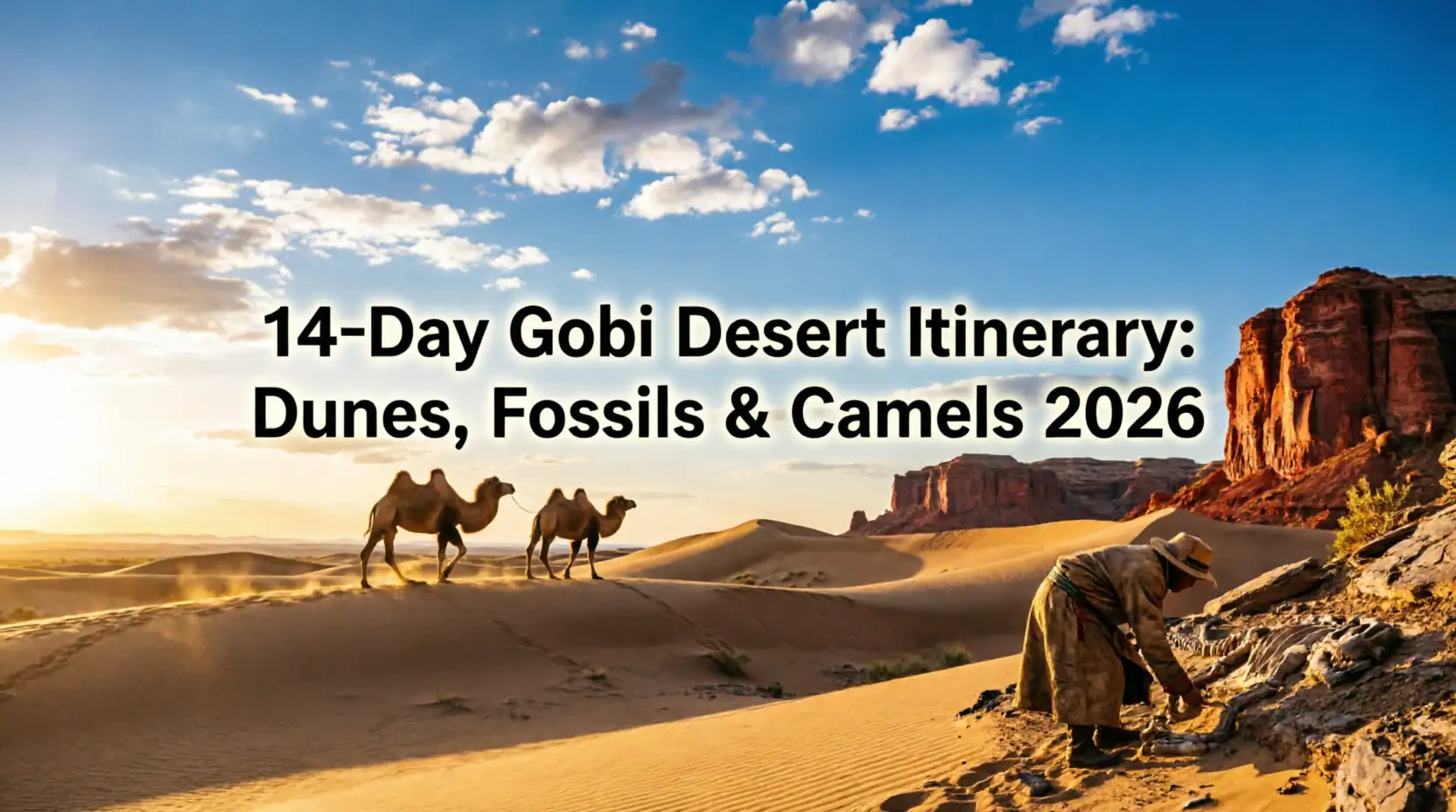
The Ultimate 14-Day Gobi Desert Travel Itinerary: Dunes, Fossils, and Camels
The Gobi Desert, spanning southern Mongolia and northern China, represents one of Earth's most extraordinary and least-explored landscapes. This vast expanse of golden sand dunes, rugged mountains, ancient fossil beds, and nomadic culture offers adventurous travelers an unparalleled opportunity to experience raw, unspoiled wilderness while connecting with one of the world's last truly nomadic societies.
For travelers seeking an authentic desert adventure far from mass tourism, a 14-day Gobi Desert itinerary delivers the perfect balance of iconic landmarks, hidden gems, cultural immersion, and outdoor adventure. From the singing sand dunes of Khongoryn Els to the dinosaur fossil beds of Bayanzag (Flaming Cliffs), from ice-filled gorges of Yolyn Am to endless camel trekking across golden sands, this comprehensive guide provides everything you need to plan an unforgettable Mongolian desert expedition.
Updated for 2026 with current logistics, accommodation recommendations, cost breakdowns, and practical tips from recent travelers, this itinerary ensures you maximize your time in one of the world's most remote and rewarding destinations while traveling responsibly and respectfully.
Why visit the Gobi Desert?
The Gobi Desert offers a unique combination of dramatic landscapes, ancient history, and living culture: towering sand dunes that sing in the wind, fossil beds where dinosaur eggs were first discovered, ice-filled valleys that persist into summer, and nomadic herders who maintain traditions unchanged for centuries. Unlike commercialized desert destinations, the Mongolian Gobi remains largely untouched, offering genuine wilderness experiences, uncrowded sites, and authentic cultural encounters at affordable prices.
Day 1-2: Ulaanbaatar Arrival and Desert Preparation

Day 1: Arrival in Ulaanbaatar
• Arrive at Chinggis Khaan International Airport (UBN)
• Complete immigration and customs procedures
• Arrange airport transfer to accommodation:
- Pre-booked hotel pickup: $15-25 USD
- Taxi: $20-30 USD
- Tour operator transfer (if booked): Often included
• Check into Ulaanbaatar accommodation:
- Budget: Hostel Mongolia, Nomad's Guesthouse ($15-30/night)
- Mid-range: Hotel Mongolia, Kempinski Hotel Khan Palace ($60-120/night)
- Higher-end: Shangri-La Hotel, Blue Sky Hotel ($120-250/night)
• Rest and acclimatize to time zone (UTC+8) and altitude
• Evening: Light exploration of Sukhbaatar Square, dinner at local restaurant
Day 2: Gobi Desert Preparation and Departure
• Morning: Final Gobi Desert preparations
- Confirm tour operator or rental vehicle arrangements
- Purchase desert essentials: sunscreen, lip balm, water bottles, snacks
- Exchange currency: USD to Mongolian Tugrik (MNT) at banks
- Download offline maps and translation apps
• Visit Gandan Monastery (optional):
- Mongolia's most important Buddhist monastery
- Stunning architecture and peaceful atmosphere
- Entry: $3-5 USD donation
• Afternoon: Depart Ulaanbaatar for Gobi Desert
- Transportation Options:
- Private 4WD vehicle with driver/guide: $150-250/day (recommended)
- Domestic flight to Dalanzadgad: $150-300 one-way, then ground transport
- Public bus to Dalanzadgad: $15-25, 10-12 hours (budget option)
- Journey to first Gobi destination: 4-6 hours driving
- Scenic route through rolling steppe transitioning to desert
• Evening: Arrive at first ger camp, settle in, stargazing
• Preparation Tips:
- Pack layers: Desert temperatures swing dramatically (hot days, cold nights)
- Bring cash: ATMs scarce in Gobi; credit cards rarely accepted
- Download offline maps: Cell service limited outside towns
- Respect nomadic culture: Ask permission before photographing people
What is the best way to travel in the Gobi Desert?
The best way to travel in the Gobi Desert is by private 4WD vehicle with an experienced local driver/guide. The desert's vast distances, unpaved roads, and remote locations require reliable transportation and local knowledge. Private vehicles offer flexibility to explore at your own pace, access remote sites, and adjust itineraries for weather or interests. Domestic flights to Dalanzadgad save time but still require ground transport. Public buses are affordable but inflexible and time-consuming. For most travelers, a private 4WD tour ($150-250/day including driver, fuel, and sometimes meals) provides the best balance of comfort, flexibility, and value.
Day 3-4: Khongoryn Els – The Singing Sand Dunes

Day 3: Journey to Khongoryn Els
• Morning: Depart ger camp for Khongoryn Els sand dunes
- Distance: Approximately 200 km from Ulaanbaatar
- Driving time: 4-5 hours on mixed paved and unpaved roads
- Scenic route through desert steppe, occasional wildlife sightings
• Afternoon: Arrive at Khongoryn Els (Khongor Sand Dunes)
- One of Mongolia's most spectacular natural wonders
- Dunes stretch 100 km long, up to 300 meters high
- "Singing dunes" produce humming sound when wind blows or sand slides
• Check into ger camp near dunes:
- Traditional Mongolian gers with basic amenities
- Shared bathroom facilities; some camps offer private bathrooms
- Meals included in most tour packages
• Late afternoon: First dune exploration
- Climb dunes for panoramic desert views
- Sunset photography: Golden light on sand creates stunning images
- Camel ride option: Short rides available near camp ($15-30)
• Evening: Traditional Mongolian dinner at ger camp
- Buuz (steamed dumplings), khorkhog (meat cooked with hot stones)
- Storytelling, stargazing in pristine dark sky
Day 4: Khongoryn Els Exploration and Camel Trekking
• Morning: Sunrise at the dunes
- Early climb for sunrise photography (temperatures cool, light spectacular)
- Listen for "singing" sand phenomenon
- Explore different dune formations and ridges
• Mid-morning: Camel trekking experience
- Bactrian (two-humped) camels native to Gobi Desert
- Guided trek: 1-3 hours depending on preference
- Cost: $20-50 USD depending on duration
- Experience: Slow, meditative pace; unique desert perspective
- Tips: Wear comfortable pants; camels can be smelly! Hold on during mounting
• Afternoon: Free time or optional activities
- Relax at ger camp, read, photograph
- Visit nearby nomadic family (arranged through guide)
- Learn about desert ecology and wildlife
• Evening: Farewell dinner at ger camp, prepare for next destination
Khongoryn Els Practical Information:
• Best Time: May-September for warm weather; June-August peak season
• What to Bring: Sturdy shoes for dune climbing, sunglasses, hat, sunscreen
• Photography: Golden hour (sunrise/sunset) best for dune photography
• Wildlife: Watch for argali sheep, ibex, desert foxes, eagles
• Environmental Respect: Stay on established paths; don't disturb wildlife or vegetation
Can you ride camels in the Gobi Desert?
Yes, camel trekking is a highlight of Gobi Desert travel. Bactrian (two-humped) camels, native to the region, offer short rides (1-3 hours) near Khongoryn Els sand dunes and other desert locations. Rides cost $20-50 USD and provide a unique, meditative way to experience the desert landscape. Camels are generally gentle but can be unpredictable; follow guide instructions. Wear comfortable clothing, hold on during mounting, and bring water. Camel trekking supports local herders and offers authentic cultural interaction.
Day 5-6: Yolyn Am – The Ice Valley

Day 5: Journey to Yolyn Am
• Morning: Depart Khongoryn Els for Yolyn Am (Vulture's Gorge)
- Distance: Approximately 150 km
- Driving time: 3-4 hours through desert landscape
- Scenic route with occasional wildlife sightings
• Afternoon: Arrive at Yolyn Am National Park
- Dramatic gorge in the Gurvan Saikhan Mountains
- Famous for ice formations that persist into summer
- Home to endangered bearded vultures (lammergeiers)
• Check into ger camp near park entrance
• Late afternoon: First exploration of Yolyn Am
- Hike into gorge (easy to moderate trail)
- Observe ice fields (thickest in spring, may melt by late summer)
- Watch for lammergeiers soaring above cliffs
- Photography: Dramatic rock formations, ice, wildlife
• Evening: Dinner at ger camp, rest after hiking
Day 6: Yolyn Am Hiking and Wildlife
• Morning: Extended hike in Yolyn Am
- Deeper exploration of gorge system
- Multiple trails ranging from easy walks to challenging climbs
- Ice viewing: Best in morning when ice is firm
- Wildlife spotting: Lammergeiers, ibex, marmots
• Midday: Picnic lunch in gorge (arranged by tour operator)
• Afternoon: Optional activities
- Visit park museum for geology and wildlife information
- Relax at ger camp
- Photography session in golden light
• Evening: Traditional Mongolian entertainment at ger camp
- Throat singing, horsehead fiddle music
- Cultural exchange with camp staff
- Stargazing: Gobi's dark skies offer exceptional astronomy
Yolyn Am Practical Information:
• Entrance Fee: $5-10 USD per person
• Hiking: Wear sturdy shoes; trails can be rocky and uneven
• Ice Viewing: Best May-June; ice may melt by August
• Wildlife: Bring binoculars for bird watching; maintain distance
• Weather: Mountain weather unpredictable; bring layers and rain gear
When is the best time to see ice in Yolyn Am?
The best time to see ice formations in Yolyn Am is May through June, when winter ice remains thick in the shaded gorge. By July-August, ice may partially melt, though some patches often persist. September offers cooler temperatures and fewer crowds, though ice may be minimal. Winter visits (November-March) are possible but require specialized equipment and guides due to extreme cold (-30°C/-22°F). For most travelers, late spring (May-June) provides the best balance of accessible ice, moderate temperatures, and good road conditions.
Day 7-8: Bayanzag – The Flaming Cliffs and Dinosaur Fossils

Day 7: Journey to Bayanzag (Flaming Cliffs)
• Morning: Depart Yolyn Am for Bayanzag
- Distance: Approximately 200 km
- Driving time: 4-5 hours through dramatic desert landscape
- Scenic route with occasional fossil hunting opportunities
• Afternoon: Arrive at Bayanzag (Flaming Cliffs)
- World-famous paleontological site
- Red sandstone cliffs glow orange at sunset ("Flaming Cliffs")
- Site where first dinosaur eggs were discovered (1923)
• Check into ger camp near cliffs
• Late afternoon: Explore Flaming Cliffs
- Walk among red sandstone formations
- Learn about paleontological discoveries
- Photography: Dramatic cliffs, desert landscape, sunset colors
- Fossil hunting: Surface collecting permitted (no digging); respect protected areas
• Evening: Dinner at ger camp, fossil storytelling
Day 8: Bayanzag Fossil Exploration and Desert Culture
• Morning: Fossil exploration and paleontology
- Guided fossil walk with local expert (if available)
- Learn about dinosaur species discovered at Bayanzag:
• Protoceratops: Small horned dinosaur
• Velociraptor: Famous predator (smaller than in movies)
• Oviraptor: Egg-stealing dinosaur (misnamed)
- Surface fossil hunting: Look for bone fragments, shells (do not remove protected fossils)
- Photography: Fossil sites, cliff formations, desert flora
• Midday: Picnic lunch among cliffs
• Afternoon: Cultural experiences
- Visit nearby nomadic family (arranged through guide)
- Learn about desert nomadic lifestyle
- Traditional activities: Felt making, dairy preparation
- Optional: Short camel ride or horseback ride
• Evening: Farewell dinner at ger camp, prepare for return journey
Bayanzag Practical Information:
• Fossil Regulations: Surface collecting allowed; digging prohibited; protected fossils cannot be removed
• Photography: Sunset provides spectacular "flaming" light on cliffs
• Wildlife: Watch for desert foxes, eagles, lizards
• Respect: Bayanzag is a protected paleontological site; follow all guidelines
• Weather: Desert conditions extreme; bring sun protection and layers
Can you find dinosaur fossils in the Gobi Desert?
Yes, the Gobi Desert is one of the world's most important paleontological sites. Bayanzag (Flaming Cliffs) is where the first dinosaur eggs were discovered in 1923, along with fossils of Protoceratops, Velociraptor, and Oviraptor. Surface fossil hunting is permitted in designated areas—you may find bone fragments, shells, or plant fossils. However, digging is prohibited, and significant fossils are protected by law. Always follow guide instructions and local regulations. For serious fossil enthusiasts, consider specialized paleontology tours with expert guides.
Day 9-10: Hermen Tsav and Remote Desert Exploration

Day 9: Journey to Hermen Tsav
• Morning: Depart Bayanzag for Hermen Tsav
- Distance: Approximately 100 km
- Driving time: 2-3 hours through remote desert
- Scenic route with minimal traffic, vast landscapes
• Afternoon: Arrive at Hermen Tsav
- Lesser-known but equally dramatic fossil site
- Colorful badlands and eroded formations
- Rich fossil beds with fewer visitors than Bayanzag
• Wild camping or basic ger accommodation
- Experience true desert wilderness
- Minimal facilities; self-sufficient camping
- Alternative: Return to Bayanzag ger camp for comfort
• Late afternoon: Explore Hermen Tsav
- Hike among colorful badlands
- Fossil hunting (surface collecting)
- Photography: Dramatic geology, desert light
• Evening: Campfire dinner under stars
- Traditional Mongolian cooking
- Storytelling, stargazing in pristine darkness
- Experience true desert solitude
Day 10: Remote Desert Experience and Return Route
• Morning: Sunrise in the desert
- Early photography session
- Desert wildlife spotting: Foxes, eagles, lizards
- Breakfast at camp
• Mid-morning: Continue desert exploration
- Visit additional fossil sites or geological formations
- Learn about desert ecology from guide
- Optional: Short hike or photography walk
• Afternoon: Begin return journey toward Ulaanbaatar
- Scenic drive through changing landscapes
- Stop at interesting sites along route
- Arrive at intermediate ger camp or town
• Evening: Rest at accommodation, reflect on desert experiences
Remote Desert Practical Information:
• Wild Camping: Requires self-sufficiency: water, food, shelter, navigation
• Guides Essential: Never venture into remote Gobi without experienced local guide
• Communication: Satellite phone recommended for remote areas; cell service limited
• Weather: Desert conditions extreme; prepare for temperature swings, wind, dust
• Leave No Trace: Pack out all trash; minimize impact on fragile desert ecosystem
Is wild camping safe in the Gobi Desert?
Wild camping in the Gobi Desert can be safe with proper preparation and experienced local guides. The desert has low crime rates, but challenges include extreme weather, navigation difficulties, limited water, and wildlife encounters. Always travel with an experienced guide who knows the terrain, carries emergency supplies, and can communicate in remote areas. Never camp alone; inform someone of your itinerary. Bring sufficient water (4+ liters per person per day), shelter for temperature extremes, and emergency communication devices. For most travelers, staying at established ger camps offers a safer, more comfortable desert experience.
Day 11-12: Tsagaan Suvarga and Cultural Immersion

Day 11: Journey to Tsagaan Suvarga
• Morning: Depart previous location for Tsagaan Suvarga (White Stupa)
- Distance: Approximately 150 km
- Driving time: 3-4 hours through desert steppe
- Scenic route with occasional nomadic encampments
• Afternoon: Arrive at Tsagaan Suvarga
- Dramatic white limestone cliffs rising from desert
- Erosion formations resembling ancient stupas (Buddhist monuments)
- Less visited than other Gobi sites; peaceful atmosphere
• Check into ger camp or nomadic family stay
• Late afternoon: Explore Tsagaan Suvarga
- Hike among white cliffs and formations
- Photography: Unique geology, desert light
- Learn about local geology and folklore
• Evening: Cultural immersion experience
- Stay with nomadic family (if arranged)
- Participate in daily activities: Herding, dairy preparation
- Traditional dinner with host family
- Cultural exchange: Learn about nomadic life, traditions
Day 12: Nomadic Culture and Return Journey
• Morning: Experience nomadic morning routine
- Assist with morning herding (if invited)
- Learn traditional dairy preparation
- Breakfast with host family
• Mid-morning: Continue cultural experiences
- Felt making demonstration
- Traditional crafts or music
- Photography: Nomadic life, landscapes
• Afternoon: Begin return journey toward Ulaanbaatar
- Scenic drive through steppe transitioning to more vegetated landscape
- Stop at interesting sites or nomadic camps along route
- Arrive at accommodation near Ulaanbaatar or in city
• Evening: Farewell dinner in Ulaanbaatar
- Celebrate Gobi Desert adventure
- Share experiences with fellow travelers
- Prepare for departure or extension
Cultural Immersion Practical Information:
• Respect: Nomadic families welcome visitors but value privacy and respect
• Gifts: Small gifts appreciated (school supplies, tea, sugar); avoid cash
• Photography: Always ask permission before photographing people
• Participation: Join activities when invited; observe customs
• Language: Learn basic Mongolian greetings; guides facilitate communication
Can I stay with nomadic families in the Gobi Desert?
Yes, many Gobi Desert tours offer opportunities to stay with nomadic families or visit their encampments. These experiences provide authentic cultural immersion: participating in daily activities like herding or dairy preparation, sharing traditional meals, and learning about nomadic traditions. Stays are typically arranged through tour operators or ger camps. Always approach with respect, ask permission before photographing, and bring small gifts (school supplies, tea) rather than cash. Nomadic hospitality is legendary, but remember you are a guest in their home and lifestyle.
Day 13-14: Return to Ulaanbaatar and Departure

Day 13: Return to Ulaanbaatar
• Morning: Final Gobi Desert experiences
- Last desert photography session
- Visit any missed sites along return route
- Purchase souvenirs: Fossils (legal surface finds), crafts, local products
• Afternoon: Arrive in Ulaanbaatar
- Check into city accommodation
- Rest and refresh after desert journey
• Evening: Farewell dinner in Ulaanbaatar
- Modern Mongolian cuisine or international options
- Reflect on Gobi Desert adventure
- Optional: Cultural performance or city exploration
Day 14: Departure or Extension
• Morning: Final Ulaanbaatar activities
- Visit missed attractions: National Museum, Zaisan Memorial
- Last-minute souvenir shopping
- Pack and prepare for departure
• Afternoon: Transfer to airport
- Allow 30-45 minutes to Chinggis Khaan International Airport
- Complete departure formalities
• Evening: Depart Mongolia with unforgettable Gobi Desert memories
• Extension Options:
- Add days in Ulaanbaatar for city exploration
- Extend to other Mongolian regions: Khuvsgul Lake, Hustai National Park
- Combine with Trans-Siberian Railway journey
Departure Practical Tips:
• Documentation: Keep passport, tickets, and important documents accessible
• Souvenirs: Check customs regulations for fossils, crafts, animal products
• Gratitude: Thank guides, drivers, and hosts who made your journey possible
• Feedback: Share reviews to help future travelers and support local tourism
How many days do you need in the Gobi Desert?
14 days is ideal for a comprehensive Gobi Desert itinerary, allowing time for Khongoryn Els dunes, Yolyn Am ice valley, Bayanzag fossil sites, remote exploration, cultural immersion, and travel days. Minimum 7-10 days to see major highlights; 14+ days for deeper exploration and flexibility. The Gobi's vast distances require significant travel time; rushing diminishes the experience. Build buffer days for weather delays, which are common in remote desert regions.
Practical Travel Information for the Gobi Desert

Best Time to Visit:
• Peak Season (June-August):
- Warmest weather: 25-35°C (77-95°F) days, cool nights
- Best for: Dune climbing, camel trekking, wildlife viewing
- Drawbacks: Peak prices, more tourists, occasional dust storms
• Shoulder Season (May, September):
- Mild temperatures: 15-25°C (59-77°F)
- Best for: Photography, hiking, fewer crowds
- Drawbacks: Cooler nights, some facilities may close late season
• Off-Season (October-April):
- Cold to extreme cold: -10 to 10°C (14-50°F), winter -30°C (-22°F)
- Best for: Winter photography, solitude, lower prices
- Drawbacks: Extreme cold, limited services, some roads impassable
• Recommendation: May-June or September for best balance of weather, crowds, and value
Getting to the Gobi Desert:
• From Ulaanbaatar:
- Private 4WD vehicle with driver/guide: Most flexible, recommended
- Domestic flight to Dalanzadgad: Saves time, then ground transport
- Public bus: Budget option, less flexible, longer travel time
• Within the Gobi:
- 4WD vehicle essential for desert roads
- Distances vast: Plan 3-6 hours driving between major sites
- Fuel: Carry extra fuel; stations sparse in remote areas
- Navigation: GPS essential; offline maps recommended
Accommodation Options:
• Ger Camps:
- Traditional Mongolian gers with basic to comfortable amenities
- Shared or private bathrooms; meals often included
- Cost: $30-80/night per person including meals
- Best for: Authentic experience, social atmosphere
• Nomadic Family Stays:
- Stay with nomadic families for cultural immersion
- Basic facilities; meals with host family
- Cost: $20-50/night including meals
- Best for: Cultural exchange, authentic experience
• Wild Camping:
- Self-sufficient camping in remote desert
- Requires all gear, water, food, navigation
- Cost: Minimal (gear rental if needed)
- Best for: Experienced adventurers, solitude seekers
Food and Dining:
• Traditional Mongolian Cuisine:
- Buuz: Steamed dumplings with meat
- Khorkhog: Meat cooked with hot stones
- Boodog: Goat cooked inside its own skin
- Airag: Fermented mare's milk (acquired taste)
• Ger Camp Meals:
- Typically included in tour packages
- Mix of Mongolian and international dishes
- Vegetarian options available with advance notice
• Self-Catering:
- Possible in towns; limited in remote areas
- Bring snacks, water, emergency food
- Water: Bring sufficient supply; purification recommended
Health and Safety:
• Medical Facilities:
- Basic care in Dalanzadgad; serious conditions require evacuation to Ulaanbaatar
- Travel insurance with medical evacuation essential
• Health Precautions:
- Vaccinations: Routine plus hepatitis A/B, typhoid recommended
- Water: Drink bottled or treated water only
- Sun protection: Extreme desert sun; high SPF sunscreen essential
- Temperature: Prepare for extreme swings; layers essential
• Safety:
- Low crime; normal precautions sufficient
- Desert hazards: Extreme weather, navigation, wildlife
- Always travel with experienced guide in remote areas
- Emergency communication: Satellite phone recommended for remote travel
Packing List for Gobi Desert:
• Clothing:
- Layers for temperature extremes: Base layers, fleece, windproof jacket
- Sturdy hiking boots for dunes and rocky terrain
- Wide-brimmed hat, sunglasses, buff for dust protection
- Sleepwear for cold nights in gers
• Essentials:
- High SPF sunscreen (50+), lip balm with SPF
- Reusable water bottles (4+ liters capacity)
- Headlamp or flashlight for ger camps
- Basic first aid kit, personal medications
- Camera with dust protection, extra batteries
• Optional:
- Binoculars for wildlife viewing
- Field guide to Gobi Desert flora/fauna
- Journal for desert reflections
- Small gifts for nomadic hosts (school supplies, tea)
What should I pack for the Gobi Desert?
Essential packing: Layers for extreme temperature swings (base layers, fleece, windproof jacket), sturdy hiking boots, wide-brimmed hat, sunglasses, high SPF sunscreen (50+), lip balm with SPF, reusable water bottles (4+ liters), headlamp, basic first aid kit, personal medications, camera with dust protection. Optional: Binoculars for wildlife, field guides, journal, small gifts for nomadic hosts. Pack light but prepare for desert extremes: hot days, cold nights, dust, and intense sun.
Cost Breakdown for 14-Day Gobi Desert Itinerary

Budget Traveler: $1,200-2,500 USD Total
• Profile: Backpacker or budget-conscious traveler, comfortable with basic accommodations
• International Flights (to Ulaanbaatar): $800-1,500 USD
• Accommodation (13 nights): $260-650 USD ($20-50/night ger camps, hostels)
• Food (14 days): $140-350 USD ($10-25/day local food, self-catering)
• Transportation: $300-600 USD (public transport, shared 4WD, budget tours)
• Activities: $200-400 USD (entrance fees, camel rides, basic tours)
• Travel Insurance: $80-150 USD
• Miscellaneous: $100-200 USD (souvenirs, tips, unexpected costs)
• Daily Average (excluding flights): $40-70 USD
• Best For: Experienced budget travelers, flexible itineraries, cultural immersion focus
Mid-Range Traveler: $2,500-5,000 USD Total
• Profile: Comfort-seeking traveler, balance of adventure and comfort
• International Flights: $1,000-2,000 USD
• Accommodation (13 nights): $520-1,300 USD ($40-100/night comfortable ger camps)
• Food (14 days): $280-700 USD ($20-50/day mix of local and restaurant meals)
• Transportation: $600-1,200 USD (private 4WD with driver/guide)
• Activities: $400-800 USD (guided tours, camel trekking, fossil tours)
• Travel Insurance: $120-200 USD
• Miscellaneous: $200-400 USD
• Daily Average (excluding flights): $80-150 USD
• Best For: Most travelers seeking authentic experiences with reasonable comfort
Luxury Traveler: $5,000-10,000+ USD Total
• Profile: Comfort-prioritizing traveler, exclusive experiences
• International Flights: $1,500-3,000 USD (premium economy/business)
• Accommodation (13 nights): $1,040-2,600 USD ($80-200/night luxury ger camps, hotels)
• Food (14 days): $560-1,400 USD ($40-100/day fine dining, private chefs)
• Transportation: $1,200-2,500 USD (private 4WD, domestic flights, premium transfers)
• Activities: $800-2,000 USD (private guides, exclusive tours, specialized experiences)
• Travel Insurance: $200-400 USD
• Miscellaneous: $400-800 USD
• Daily Average (excluding flights): $200-400+ USD
• Best For: Luxury seekers, special occasions, exclusive desert experiences
Cost-Saving Tips:
• Travel shoulder season (May, September) for lower prices and fewer crowds
• Book tours and accommodation in advance for better rates
• Share private vehicle costs with other travelers
• Choose ger camps over luxury options for authentic experience at lower cost
• Eat local food; self-cater when possible
• Focus on free activities: Hiking, photography, cultural experiences
How much does a 14-day Gobi Desert trip cost?
A 14-day Gobi Desert itinerary costs $1,200-2,500 for budget travelers, $2,500-5,000 for mid-range, and $5,000-10,000+ for luxury, excluding international flights ($800-3,000). Budget includes basic ger camps, local food, shared transport. Mid-range includes comfortable ger camps, mix of dining, private 4WD with guide. Luxury includes premium accommodations, fine dining, exclusive experiences. Daily costs in Gobi: $40-70 budget, $80-150 mid-range, $200-400+ luxury. Private 4WD with guide ($150-250/day) is the largest expense but essential for desert travel.
Final Thoughts: Why the Gobi Desert Deserves Your Adventure

The Gobi Desert represents one of the world's last great wilderness adventures—a place where vast landscapes, ancient history, and living culture converge to create experiences that transform travelers. In 14 days, you can climb singing sand dunes at sunrise, discover dinosaur fossils where paleontology history was made, trek across endless golden sands on camelback, and share meals with nomadic families who maintain traditions unchanged for centuries.
This itinerary balances iconic landmarks with hidden gems, adventure with cultural immersion, and comfort with authenticity. Whether you're a photographer chasing golden light on sand dunes, a paleontology enthusiast hunting fossils, a culture seeker connecting with nomadic life, or simply an adventurer craving wilderness, the Gobi Desert delivers experiences that linger long after you return home.
The desert's remoteness and raw beauty demand respect and preparation, but reward travelers with unparalleled solitude, stunning landscapes, and genuine human connections. As you depart the Gobi after your two-week journey, you'll carry more than photos and souvenirs. You'll carry the silence of endless dunes, the warmth of nomadic hospitality, the thrill of discovery, and the profound perspective that comes from experiencing one of Earth's most extraordinary places.
The Gobi Desert awaits. Your Mongolian adventure begins now.
Bayarlalaa (thank you in Mongolian) and safe travels in the Gobi Desert!
0 Comments