.webp)
.webp)
Why Travel Insurance is Essential for Laos Adventures
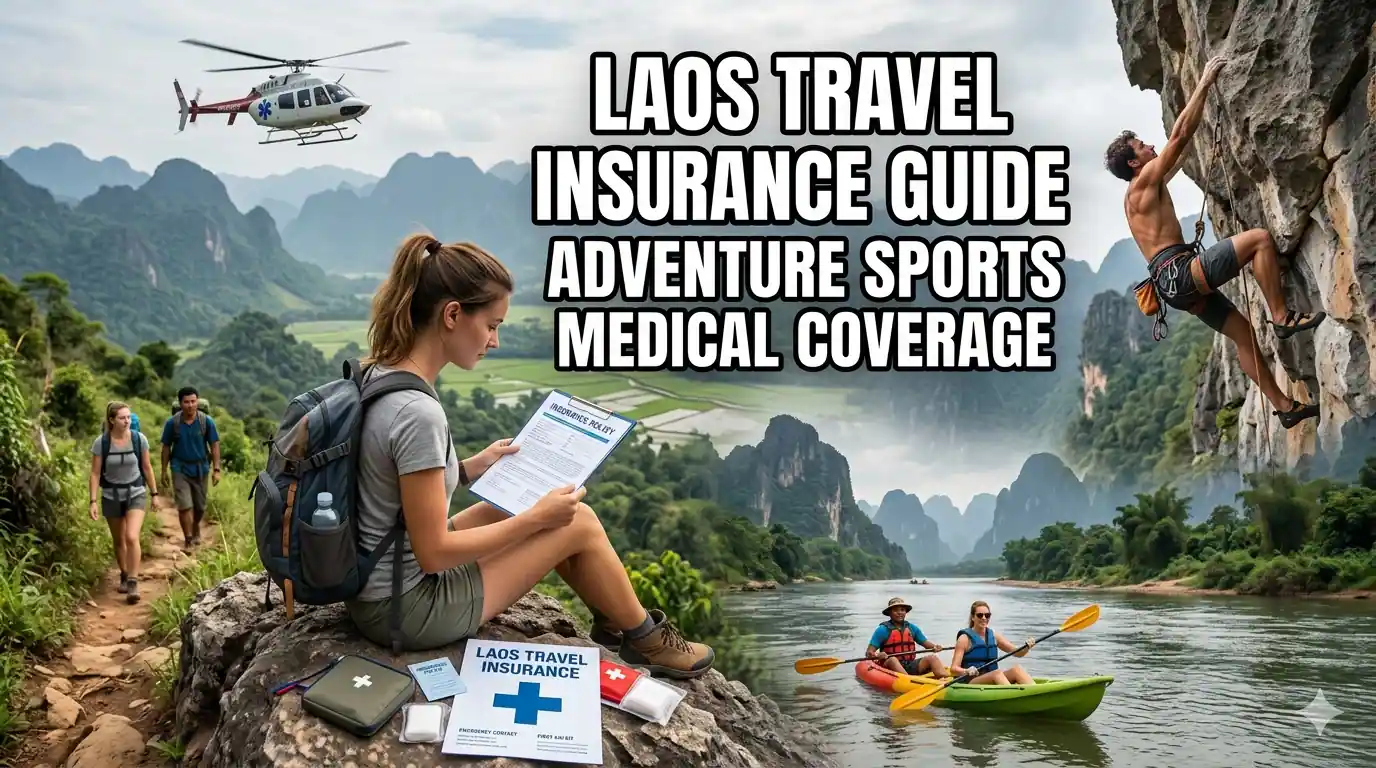
Laos offers some of Southeast Asia's most thrilling adventure opportunities, from rock climbing in Vang Vieng's dramatic karst formations to trekking through remote hill tribe villages, caving in Kong Lor, and kayaking down pristine rivers. However, these adventures come with inherent risks that make comprehensive travel insurance not just recommended but absolutely essential.
Laos's remote terrain, limited medical infrastructure outside major cities, and the popularity of high-risk activities create a perfect storm where medical emergencies can quickly become financial catastrophes without proper coverage. A simple trekking accident in a remote area can require helicopter evacuation costing fifteen thousand to fifty thousand USD, while serious injuries may necessitate medical evacuation to Thailand, adding tens of thousands more.
Many travelers underestimate the risks associated with adventure activities in Laos, assuming their standard travel insurance or credit card coverage will suffice. Unfortunately, most basic policies exclude high-risk activities, have inadequate medical evacuation coverage, or exclude treatment in countries with limited medical facilities.
This comprehensive guide examines why specialized travel insurance proves crucial for Laos adventures, what coverage you need, which activities require special attention, and how to choose the right policy for your specific itinerary and risk tolerance.
Understanding Laos's Medical Infrastructure

Understanding the limitations of Laos's healthcare system proves crucial for appreciating why comprehensive insurance with medical evacuation coverage is essential.
Medical Facilities in Laos
Vientiane, the capital, has the country's best medical facilities including the Mahosot Hospital and several private clinics. However, even these facilities have limited resources, equipment, and specialist availability compared to Western standards or even neighboring Thailand.
Outside Vientiane, medical facilities become increasingly basic. Provincial hospitals may lack emergency services, surgical capabilities, and adequate supplies. Rural health centers handle only minor issues and stabilize patients for transfer to larger facilities.
Luang Prabang has better facilities than most provincial areas but still lacks advanced trauma care and specialist services. Serious injuries or illnesses require evacuation to Vientiane or Thailand.
Remote areas where many adventures occur—trekking routes, caving areas, climbing locations—may be hours or days from even basic medical care. Communication can prove difficult, and transportation challenging or impossible depending on weather and terrain.
Medical Evacuation Realities
Medical evacuation from Laos typically means transport to Thailand, usually Bangkok or Chiang Mai, where world-class medical facilities exist. This evacuation can occur via ground ambulance for less serious cases near the border, or via air ambulance/helicopter for serious cases or remote locations.
Ground ambulance evacuation to Thailand costs approximately two thousand to five thousand USD depending on distance and medical support required. Air ambulance evacuation costs fifteen thousand to fifty thousand USD or more depending on distance, aircraft type, and medical equipment needed.
Helicopter rescue from remote trekking areas adds complexity and cost. Limited helicopter services exist in Laos, often requiring coordination with Thai or international rescue services, adding significant time and expense.
Time proves critical in medical emergencies. Without insurance that arranges and guarantees payment for evacuation, patients may face delays while facilities demand upfront payment or while families arrange funds from abroad.
Cost of Medical Treatment
Basic medical care in Laos proves relatively inexpensive. Simple consultations cost ten to thirty USD, basic medications affordable. However, serious medical treatment quickly becomes expensive.
Emergency surgery in Vientiane private hospitals costs three thousand to ten thousand USD. Complex procedures requiring specialists, ICU care, or extended hospitalization can exceed twenty thousand to fifty thousand USD.
Medical evacuation to Thailand adds fifteen thousand to fifty thousand USD. Treatment in Thailand's international hospitals costs similar to Western prices—fifty thousand to two hundred thousand USD or more for serious injuries or illnesses requiring surgery, ICU care, or extended treatment.
Repatriation to your home country after treatment or in case of death adds another ten thousand to thirty thousand USD.
Adventure Sports Risks in Laos

Laos offers diverse adventure activities, each carrying specific risks that require appropriate insurance coverage.
Trekking and Remote Hiking
Trekking represents one of Laos's most popular activities, with routes ranging from easy day hikes to multi-day remote expeditions through mountainous terrain. Popular destinations include Nong Khiaw, Muang Ngoi, Phongsali, and the Bolaven Plateau.
Risks include falls on slippery trails, especially during rainy season; ankle sprains and fractures on uneven terrain; dehydration and heat exhaustion; altitude sickness on higher routes; encounters with wildlife including snakes; and getting lost in remote areas with limited communication.
Remote trekking areas may be several days walk from medical facilities. Emergency evacuation requires helicopter rescue, which proves expensive and weather-dependent. Rainy season (May-October) increases risks significantly with slippery trails, flash floods, and reduced visibility.
Multi-day treks with ethnic minority villages often venture far from roads and medical facilities. Guides prove essential but cannot prevent all accidents or provide advanced medical care.
Rock Climbing in Vang Vieng
Vang Vieng has become a world-class rock climbing destination with hundreds of routes on dramatic limestone karsts. The area attracts climbers of all levels from beginners to advanced.
Risks include falls from height (the leading cause of serious climbing injuries); rockfall hitting climbers below; equipment failure or improper use; inadequate instruction for beginners; and weather-related hazards including rain making rock slippery.
While many climbing accidents prove minor (sprains, fractures), serious falls can cause head injuries, spinal damage, or death. Rescue from climbing routes often requires technical rope rescue and potentially helicopter evacuation.
Many climbers underestimate the risks, particularly beginners who may lack experience assessing route difficulty or using equipment properly. Even experienced climbers face risks from rockfall and changing conditions.
Caving and Cave Exploration
Laos features spectacular cave systems including Kong Lor Cave (seven kilometers long), Tham Nam Water Cave, and numerous others. Activities range from simple walking tours to technical caving requiring ropes and equipment.
Risks include falls on slippery surfaces; head injuries from low ceilings; getting lost in complex cave systems; flooding during rainy season trapping cavers; hypothermia from cold water and temperatures; and respiratory issues from poor air quality in some caves.
Kong Lor Cave requires seven kilometers of river travel by boat through the mountain. While generally safe, flooding can trap visitors inside. Other caves require technical equipment and training for safe exploration.
Cave rescue proves extremely difficult and dangerous, requiring specialized teams and equipment. Evacuation from deep within cave systems can take many hours or even days.
Water Activities
Kayaking, tubing, and rafting prove popular on Laos's rivers including the Nam Song in Vang Vieng, Mekong River, and various tributaries. Activities range from gentle floating to whitewater rafting.
Risks include drowning (the leading cause of death in water activities); collisions with rocks or other boats; hypothermia from cold water; waterborne illnesses from contaminated water; and injuries from falls or collisions.
Tubing in Vang Vieng, while appearing harmless, has caused numerous deaths and injuries from collisions with rocks, getting trapped underwater, and alcohol-related accidents. Several countries have issued warnings about tubing risks.
Whitewater rafting on more challenging rivers carries higher risks requiring proper guides, equipment, and safety protocols. Rapids classification and water levels significantly affect risk levels.
Motorbike and Bicycle Travel
Many travelers explore Laos by motorbike or bicycle, particularly the scenic routes between Luang Prabang, Vang Vieng, and Vientiane, or the Bolaven Plateau loop.
Risks include traffic accidents (Laos has high traffic accident rates); poor road conditions including potholes, gravel, and landslides; limited medical facilities along remote routes; and mechanical breakdowns in remote areas.
Traffic accidents represent one of the leading causes of serious injury and death among travelers in Laos. Roads prove dangerous with poor conditions, aggressive driving, livestock on roads, and limited emergency services.
Medical evacuation from remote roads proves difficult and expensive. Even minor accidents can require evacuation if injuries prove serious or if travelers cannot continue independently.
Essential Insurance Coverage for Laos

Standard travel insurance often proves inadequate for Laos adventures. Understanding what coverage you need helps you choose appropriate policies.
Medical Expense Coverage
Medical expense coverage should be at least one hundred thousand USD, though two hundred thousand to five hundred thousand USD proves preferable for adventure travelers. This covers hospital stays, surgery, medications, and doctor visits.
Ensure coverage includes treatment in both Laos and Thailand, as evacuation to Thailand often proves necessary. Some policies limit coverage by country or have lower limits for certain destinations.
Check whether the policy covers pre-existing conditions if applicable. Many standard policies exclude pre-existing conditions unless you purchase a waiver or specialized policy.
Verify that coverage includes emergency dental treatment, as dental emergencies can occur and prove expensive even for routine procedures.
Medical Evacuation and Repatriation
Medical evacuation coverage should be at least two hundred thousand USD, with five hundred thousand USD or more ideal for remote trekking and high-risk activities. This covers air ambulance, helicopter rescue, and ground ambulance transport.
Repatriation coverage (returning you to your home country after treatment or in case of death) should be at least fifty thousand USD. This covers medical escort if needed and transport costs.
Ensure the policy includes "medical evacuation to country of choice" rather than just "nearest adequate facility." This allows evacuation to Thailand or directly to your home country depending on the situation.
Verify that evacuation coverage includes search and rescue costs, which can be substantial for remote mountain or cave rescues.
Adventure Sports Coverage
Standard policies often exclude "hazardous activities" or "adventure sports." You need a policy that specifically covers your planned activities.
Ensure coverage explicitly includes: trekking (specify maximum altitude if trekking above three thousand meters); rock climbing (check if technical climbing requires additional coverage); caving; kayaking and rafting; motorbike riding (check engine size limits, often fifty cc to two hundred fifty cc); and zip-lining or canopy tours.
Some insurers offer "adventure sports packages" or "extreme sports coverage" as add-ons to standard policies. These cost more but provide necessary coverage.
Read exclusions carefully. Some policies cover activities only with licensed guides or operators, or exclude certain activities above specific difficulty levels.
Trip Cancellation and Interruption
Trip cancellation coverage reimburses prepaid, non-refundable expenses if you must cancel before departure due to covered reasons (illness, injury, family emergency, etc.). Coverage should equal your total trip cost.
Trip interruption coverage reimburses additional expenses if you must cut your trip short due to covered reasons, plus the cost of a last-minute flight home.
"Cancel for any reason" (CFAR) coverage provides more flexibility, allowing cancellation for reasons not covered by standard policies, but typically reimburses only fifty to seventy-five percent of costs and costs more.
Baggage and Personal Effects
Coverage for lost, stolen, or damaged baggage should be at least one thousand to two thousand USD. This covers luggage, electronics, cameras, and adventure gear.
Check per-item limits, as expensive cameras or climbing equipment may exceed single-item limits. You may need to schedule high-value items separately.
Baggage delay coverage (typically five hundred to one thousand USD) reimburses essential purchases if your baggage is delayed, useful for replacing medications or essential gear.
24/7 Assistance Services
Quality assistance services prove crucial in emergencies. The insurer should provide 24/7 multilingual assistance that can: arrange and guarantee payment for medical evacuation; locate appropriate medical facilities; arrange hospital admission; provide translation services; coordinate with family; and assist with lost documents or legal issues.
Test the assistance line before you travel to ensure it works from Laos and that operators speak your language fluently.
Recommended Insurance Providers for Laos

Several insurers specialize in adventure travel and provide comprehensive coverage suitable for Laos adventures.
World Nomads
World Nomads remains one of the most popular choices for adventure travelers, offering comprehensive coverage for over two hundred activities including trekking, rock climbing, caving, and water sports.
Strengths: Covers many adventure activities; allows purchase after departure; good medical evacuation coverage (up to five hundred thousand USD); covers electronics and adventure gear; straightforward claims process.
Limitations: Premiums can be expensive; some activities require additional coverage; age restrictions apply (typically under seventy years).
Cost: Approximately five to ten percent of trip cost, varying by age, trip length, and coverage level.
SafetyWing
SafetyWing offers affordable long-term travel insurance popular with digital nomads and extended travelers, with good coverage for medical emergencies and evacuation.
Strengths: Affordable premiums; covers travel to multiple countries; allows purchase after departure; good for long-term travel; covers some adventure activities.
Limitations: Lower coverage limits than specialized adventure policies; some activities excluded; less comprehensive than dedicated adventure policies.
Cost: Approximately forty-two USD per twenty-eight days for most travelers under forty years old.
IMG (International Medical Group)
IMG offers various plans including the Patriot series designed for international travelers, with good medical and evacuation coverage.
Strengths: High medical coverage limits (up to eight million USD); good evacuation coverage; covers many adventure activities; flexible plan options.
Limitations: Can be expensive for comprehensive coverage; some activities require additional coverage; complex plan options can be confusing.
Cost: Varies significantly by plan, age, and coverage level, typically one hundred to three hundred USD for two-week trips.
Allianz Travel Insurance
Allianz offers various travel insurance plans with good coverage for medical emergencies, though adventure sports coverage requires careful plan selection.
Strengths: Reputable global insurer; good assistance services; various plan options; covers trip cancellation well.
Limitations: Many plans exclude adventure sports; must carefully select appropriate plan; can be expensive for comprehensive adventure coverage.
Cost: Varies by plan and coverage level, typically four to ten percent of trip cost.
Specialized Adventure Insurers
Companies like Global Rescue, Ripcord, and Redpoint specialize in high-risk travel and evacuation services, offering premium coverage for serious adventurers.
Strengths: Highest coverage limits; specialized in remote area rescue; excellent assistance services; covers extreme activities.
Limitations: Expensive; often designed for serious expeditions rather than casual adventure travel; may require membership.
Cost: Can exceed five hundred to two thousand USD for comprehensive coverage depending on trip length and activities.
Understanding Policy Exclusions and Limitations

Understanding what your policy does NOT cover proves as important as understanding what it does cover. Common exclusions and limitations include:
Common Exclusions
Pre-existing medical conditions: Most policies exclude conditions you had before purchasing insurance unless you buy a waiver or specialized policy. Read definitions carefully as they vary.
Alcohol and drug-related incidents: Injuries or illnesses related to alcohol or drug use typically excluded. This proves important in Laos where tubing and party culture can lead to risky behavior.
High-altitude trekking: Many policies exclude trekking above certain altitudes (often three thousand to four thousand meters) unless you purchase additional coverage. Specify your maximum altitude when purchasing.
Motorbike accidents: Many policies exclude motorbike accidents unless you have a valid motorcycle license from your home country AND wear a helmet. Some exclude bikes over certain engine sizes (often fifty cc to two hundred fifty cc).
Unlicensed operators: Activities with unlicensed guides or operators may not be covered. Always use licensed, reputable operators.
War and civil unrest: Most policies exclude injuries from war, civil unrest, or terrorism, though some offer limited coverage.
Important Limitations
Deductibles: The amount you pay before insurance kicks in. Higher deductibles lower premiums but increase out-of-pocket costs in claims.
Coverage limits: Maximum amounts the policy will pay. Ensure limits adequately cover potential costs, especially for medical evacuation.
Geographic limitations: Some policies limit coverage in certain countries or regions. Verify Laos is fully covered.
Time limitations: Maximum trip length covered (often thirty, sixty, or ninety days). Ensure your policy covers your entire trip.
Claims Process and Documentation

Understanding the claims process before you need it helps ensure smooth reimbursement when emergencies occur.
Before You Travel
Save your policy number and emergency contact information in multiple places: phone, email, cloud storage, and with a trusted contact at home.
Download the insurer's app if available, which often provides easier access to documents and claims filing.
Understand the claims process: whether you pay upfront and file for reimbursement, or whether the insurer pays providers directly (more common for large medical expenses).
During an Emergency
Contact your insurer's emergency assistance line IMMEDIATELY in serious situations. They can arrange evacuation, guarantee payment to hospitals, and coordinate care.
For non-emergency medical treatment, contact the assistance line before seeking treatment when possible. They can direct you to appropriate facilities and arrange payment.
Keep all documentation: medical reports, receipts, prescriptions, police reports (for theft or accidents), and any other relevant documents. Take photos of damaged items or accident scenes.
Get itemized bills from medical providers showing all treatments, medications, and costs.
Filing Claims
File claims as soon as possible after returning home, typically within thirty to ninety days depending on the insurer.
Complete claim forms thoroughly and accurately. Incomplete forms delay processing.
Submit all required documentation: claim form, receipts, medical reports, police reports, proof of payment, and any other requested documents.
Keep copies of everything you submit.
Follow up if you do not receive acknowledgment or payment within the stated timeframe (typically thirty to sixty days).
Cost Considerations and Budget Planning

Travel insurance represents a significant expense but proves essential for Laos adventures. Understanding costs helps you budget appropriately.
Typical Insurance Costs
For a two-week Laos adventure trip including trekking and moderate adventure activities, expect to pay:
Basic coverage (medical only, limited adventure coverage): fifty to one hundred fifty USD
Comprehensive coverage (medical, evacuation, trip cancellation, good adventure coverage): one hundred fifty to four hundred USD
Premium coverage (high limits, extensive adventure sports, CFAR): four hundred to eight hundred USD or more
Costs increase with: age (significant increase after age fifty); trip length; coverage limits; inclusion of high-risk activities; pre-existing conditions; and "cancel for any reason" coverage.
Is It Worth the Cost?
Consider that medical evacuation from remote Laos can cost fifteen thousand to fifty thousand USD. A serious injury requiring surgery and evacuation can easily exceed one hundred thousand USD.
Insurance typically costs four to ten percent of your total trip cost. For most travelers, this proves a reasonable price for financial protection and peace of mind.
Consider your risk tolerance, financial situation, and the specific activities you plan. High-risk activities in remote areas justify higher coverage levels.
Special Considerations for Different Traveler Types

Different types of travelers have different insurance needs.
Solo Travelers
Solo travelers face unique risks including no one to assist in emergencies. Ensure your policy includes robust assistance services and consider higher medical evacuation coverage.
Some policies offer "travel companion" coverage that pays for a friend or family member to join you if you are hospitalized alone for extended periods.
Families with Children
Ensure children are covered under your policy, and that coverage limits adequately cover potential pediatric care and evacuation.
Some activities have age restrictions. Verify your policy covers your children's planned activities.
Older Travelers (50+)
Insurance costs increase significantly after age fifty, and some policies have age limits (often sixty-five to seventy years).
Pre-existing conditions become more common and require careful policy selection. Look for policies with pre-existing condition waivers.
Some insurers specialize in coverage for older travelers and may offer better rates and coverage.
Long-term Travelers and Digital Nomads
Standard travel insurance often limits trip length to thirty, sixty, or ninety days. Long-term travelers need specialized policies.
Consider annual multi-trip policies if making multiple trips, or long-term travel insurance designed for extended travel.
Ensure coverage remains valid if you extend your trip or change your itinerary.
Conclusion: Don't Leave Home Without It
Laos offers incredible adventure opportunities that create lifelong memories, but these adventures carry real risks that can result in serious injury, expensive medical treatment, or complex evacuations from remote areas.
Comprehensive travel insurance with adequate medical coverage, robust medical evacuation benefits, and specific coverage for your planned adventure activities is not optional—it is essential. The relatively modest cost of insurance (typically four to ten percent of your trip cost) provides protection against potentially catastrophic expenses that could reach hundreds of thousands of dollars.
Take time to carefully select a policy that matches your specific itinerary, activities, and risk tolerance. Read the fine print, understand exclusions, verify coverage limits, and ensure your planned activities are explicitly covered. When in doubt, choose higher coverage limits rather than lower ones.
Remember that the best insurance is the one that actually covers your specific needs and that you can rely on in an emergency. Choose reputable insurers with strong assistance services and straightforward claims processes.
With proper insurance in place, you can fully embrace Laos's incredible adventures with peace of mind, knowing that if things go wrong, you have the support and financial protection you need. Invest in comprehensive coverage before your trip—it may prove the most important preparation you make for your Laos adventure.
Travel safely, adventure responsibly, and enjoy everything this beautiful country has to offer!
0 Comments